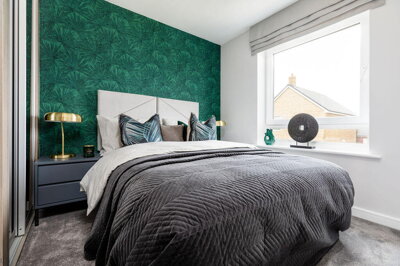
Browse 1 home new builds in Claughton, Wyre from local developer agents.
The 2 bed house market features detached, semi-detached, and terraced properties with two separate bedrooms plus living spaces. Properties in Claughton range across contemporary developments, with pricing varying across different neighbourhoods.
£247k
1
0
235
Source: home.co.uk
Showing 1 results for 2 Bedroom Houses new builds in Claughton, Wyre. The median asking price is £246,995.
Source: home.co.uk
Semi-Detached
1 listings
Avg £246,995
Source: home.co.uk
Source: home.co.uk
East Cambridgeshire's property market reflects its position as one of Cambridgeshire's most sought-after rural districts, with 1,228 property sales completing in the past twelve months. The market offers exceptional variety, from substantial detached family homes averaging £474,863 down to more accessible terraced properties at £265,373 and flats starting from £177,500. Semi-detached homes, which make up 30.1% of the housing stock, provide an excellent middle ground at an average price of £306,477, appealing to families seeking generous room sizes without premium detached costs.
New build developments continue to enhance the area's housing offer. The Sycamores in Bottisham presents two, three, and four-bedroom homes from £340,000, while The Pavilions in Ely by David Wilson Homes showcases larger four and five-bedroom properties from £379,995. For buyers seeking village living, Kingfisher Meadow in Fordham offers Taylor Wimpey homes from £315,000, and Wicken Green brings three and four-bedroom family homes from £430,000. These developments provide modern specifications and energy efficiency while benefiting from the established character of their respective communities.
The housing stock spans multiple construction periods, each presenting different characteristics for buyers to consider. Approximately 60.6% of properties were built before 1980, with 19.3% dating from before 1919. Older properties often feature solid brick construction, timber frames, and traditional details like lime mortar and slate or clay tile roofs. Mid-century properties from 1945-1980 typically use cavity wall construction with brick or rendered finishes and concrete tiled roofs. Modern properties benefit from contemporary building standards but often sit at higher price points reflecting their condition and specifications.

East Cambridgeshire stretches across productive Fenland countryside, home to approximately 90,300 residents across 37,200 households. The district's character is defined by its flat, expansive landscape punctuated by historic market towns and distinctive villages. Ely stands as the cultural heart, dominated by its extraordinary cathedral and absorbing centuries of history in every cobbled street and timber-framed building. The wider district embraces this heritage, with conservation areas in Soham, Littleport, Fordham, and Burwell preserving the architectural character that makes Cambridgeshire's eastern settlements so visually compelling.
Beyond the historic towns, community spirit thrives in village life throughout East Cambridgeshire. Local events, farmers' markets, sports clubs, and parish councils provide regular opportunities for residents to connect and build lasting relationships. The strong sense of community makes the district particularly appealing to families establishing roots in Cambridgeshire, where neighbours become familiar faces and local schools benefit from active parental engagement. This community cohesion distinguishes East Cambridgeshire from more anonymous urban environments, providing residents with genuine belonging.
The local economy balances traditional agriculture with modern employment. The Fenland's fertile soils continue supporting significant farming operations, while Ely Cathedral and surrounding historic sites attract visitors year-round, sustaining hospitality and retail sectors. Many residents benefit from the area's strategic position near Cambridge, commuting via the A10 and rail services to employment in technology, research, and education. The A14 corridor passes nearby, opening logistics and distribution opportunities that provide local jobs without requiring Cambridge travel. This economic diversity gives East Cambridgeshire genuine resilience while maintaining its essentially rural character.

East Cambridgeshire offers families an impressive range of educational options, making it a standout choice for buyers with school-age children. Primary education is well-served across the district, with schools in Ely, Soham, Littleport, and the surrounding villages providing strong foundations. The King's School in Ely, with its historic origins and established reputation, draws students from across the district, while additional primary schools in market towns and larger villages ensure most families can access good school provision within reasonable travelling distance.
The district's primary schools consistently perform well in local rankings, reflecting strong teaching standards and engaged parent communities. Village primary schools often benefit from smaller class sizes and dedicated staff who know students individually, while town schools typically offer broader facilities and extracurricular programmes. Most families in East Cambridgeshire can find a good primary school within comfortable travelling distance, whether they settle in Ely's cathedral close, a larger village like Bottisham or Burwell, or a smaller community setting.
Secondary education in East Cambridgeshire includes several well-regarded comprehensive schools serving their local communities effectively. Sixth form provision across the district enables students to continue their education locally, with pathways into further education colleges nearby for those seeking vocational qualifications. The district's proximity to Cambridge also provides access to the city's renowned grammar schools and independent schools for families willing to navigate the selective admissions process. For buyers prioritising educational outcomes, East Cambridgeshire represents a sensible investment in family life within Cambridgeshire's school system.
East Cambridgeshire enjoys excellent connectivity despite its rural setting, with the A10 providing direct road access to Cambridge and Ely station offering reliable rail services. Commuters from Ely reach Cambridge in approximately 25 minutes by train, with direct services supporting the significant number of residents who work in the city without requiring daily city centre living. The rail network extends to Cambridge North and beyond, connecting East Cambridgeshire to Stansted Airport and London's King Cross via Cambridge, positioning the district within national transport networks.
Local bus services connect market towns and larger villages throughout East Cambridgeshire, providing essential transport options for residents without private vehicles. The flat Fenland landscape makes cycling a practical option for shorter journeys, with cycling routes connecting towns and villages across the district. Many residents find that cycling serves perfectly for local trips to schools, shops, and railway stations, reducing car dependence while maintaining full access to the area's amenities.
Road infrastructure continues developing, with the nearby A14 providing crucial links to Huntingdon, Peterborough, and connections to the M1 motorway network. For commuters working in Cambridge's growing technology and biotechnology sectors, East Cambridgeshire offers a compelling combination of lower property prices, superior space, and manageable journey times that increasingly attract professionals seeking alternatives to Cambridge's more expensive housing market.
Contact a mortgage broker to obtain an agreement in principle before viewing properties. This demonstrates your buying capacity to sellers and strengthens your position when making offers on East Cambridgeshire homes. Having your mortgage arranged in principle also helps you understand your true budget, avoiding wasted time viewing properties outside your price range.
Explore different towns and villages within East Cambridgeshire to understand local character, amenities, and property prices. Ely offers cathedral city sophistication with excellent rail connections, while villages like Fordham and Bottisham provide quieter community living with new development options. Consider factors like school catchments, commuting requirements, and lifestyle preferences when narrowing your search area.
Once you have your mortgage agreement, schedule viewings of properties matching your criteria. Take time to assess the property's condition, garden space, and proximity to schools and transport links that matter to your household. In East Cambridgeshire, pay particular attention to the property's foundation situation and flood risk status given the district's clay soils and Fenland geography.
For properties in East Cambridgeshire, we strongly recommend a Level 2 Survey, particularly given the prevalence of clay soils and older housing stock. Survey costs in the area typically range from £400 to £700 depending on property size. With approximately 60.6% of properties built before 1980, professional surveys frequently identify issues requiring attention or providing negotiating leverage.
Choose a conveyancing solicitor to handle the legal aspects of your purchase. Your solicitor will conduct searches including drainage, water, environmental, and local authority checks, review contracts, and manage the transfer of ownership through to completion. For properties in East Cambridgeshire's conservation areas or listed buildings, additional specialist searches may be required.
Once searches are satisfactory and both parties agree on terms, you will exchange contracts and pay your deposit. Completion typically follows within weeks, when you receive your keys and move into your new East Cambridgeshire home.
Properties in East Cambridgeshire require careful inspection, particularly regarding ground conditions. The district's geology includes clay deposits in southern and eastern areas, creating moderate to high shrink-swell risk that can affect foundations. Older properties built on these soils may show signs of subsidence during dry periods or heave during wet spells. A thorough RICS Level 2 Survey is essential for identifying these issues before purchase, and buyers should note the position of trees near properties, as moisture-seeking roots can exacerbate clay-related movement.
Flood risk awareness is equally important in this low-lying Fenland district. The River Great Ouse and its tributaries, including the River Cam and River Lark, pose fluvial flood risk to properties near waterways, particularly in Ely and Littleport. Surface water flooding can occur across the flat topography during heavy rainfall when drainage systems are overwhelmed. Your solicitor should conduct appropriate drainage and flood risk searches, and properties in designated flood zones may require specialist insurance arrangements. Understanding these environmental factors enables informed purchasing decisions that protect your investment.
East Cambridgeshire's heritage brings planning considerations that buyers should understand. Numerous conservation areas exist across the district, particularly in Ely's historic core, with strict regulations governing external alterations and extensions. Listed buildings require listed building consent for most works, adding complexity and cost to renovation projects. If you are purchasing a period property in a conservation area, factor in these constraints when assessing renovation potential and budget accordingly for specialist surveys and permissions.
Given that approximately 60.6% of properties in East Cambridgeshire were built before 1980, buyers should be aware of defect types that surveys frequently identify in this housing stock. Damp problems affect many older properties, particularly those in low-lying Fenland areas where rising damp, penetrating damp, or condensation may be present. Properties with solid walls and limited insulation are especially susceptible to condensation issues, particularly in kitchens and bathrooms where moisture generation is highest.
Subsidence and heave relate directly to the clay geology present across much of East Cambridgeshire. Properties built with inadequate foundations or those situated near mature trees may experience ground movement during dry periods, causing subsidence, or during subsequent wet spells when the clay expands, causing heave. Our inspectors regularly identify signs of this movement in properties across the district, including cracked walls, sticking doors, and uneven floors. The presence of trees close to properties significantly increases this risk, and moisture readings form an important part of any survey in this area.
Roof defects commonly appear in older East Cambridgeshire properties, with slipped tiles, worn roofing felt, failing lead flashing, and deteriorating guttering frequently reported. Timber elements including roof trusses, floor joists, and window frames may show evidence of woodworm or fungal decay, particularly where damp issues have gone unaddressed. Our inspectors examine these elements carefully, noting any areas requiring immediate attention or future maintenance planning.
Outdated electrical systems and plumbing represent another common concern in East Cambridgeshire's older properties. Properties constructed before 1980 frequently contain wiring and pipework that does not meet current safety standards, requiring upgrading before or shortly after purchase. Consumer unit replacement, additional socket outlets, and complete re-wiring may be necessary for properties with original installations, adding significant cost to renovation budgets that buyers should factor into their financial planning.
The current average house price in East Cambridgeshire stands at £350,974, based on recent sales data. Detached properties average £474,863, semi-detached homes £306,477, terraced properties £265,373, and flats £177,500. The market has experienced a modest 2.3% decrease over the past twelve months, creating opportunities for buyers in a market where Cambridgeshire accessibility meets Fenland value.
Council tax bands in East Cambridgeshire follow the valuation banding system used across England, with properties assessed from Band A through to Band H based on their 1991 value. Most terraced properties and smaller semis fall into Bands A-C, while larger detached homes often occupy Bands E-G. East Cambridgeshire District Council sets the annual charge based on your property's band, available through the local authority website or your solicitor's searches.
East Cambridgeshire offers strong educational provision across all levels. Primary schools in Ely, Soham, Littleport, and surrounding villages provide solid foundations, with The King's School in Ely serving as a notable historic establishment drawing students from across the district. Secondary education is well-represented by comprehensives serving local communities, with sixth form options enabling students to continue locally. Families also access Cambridge's selective grammar schools and independent schools within reasonable commuting distance, though the travel involved may be a consideration for some households.
Rail services from Ely station provide direct connections to Cambridge in approximately 25 minutes, with services extending to Cambridge North, Stansted Airport, and London King's Cross. Local bus networks connect towns and villages throughout the district, while the A10 runs directly through to Cambridge. The nearby A14 provides road connections to Huntingdon and Peterborough, making East Cambridgeshire more accessible than its rural character might suggest.
East Cambridgeshire presents solid investment fundamentals, combining Cambridgeshire's economic strength with more accessible entry prices than Cambridge itself. The district benefits from continued Cambridge commuting demand, ongoing new development activity, and a diverse economy spanning agriculture, tourism, and logistics. Properties in conservation areas and near good schools tend to maintain their values well, while the modest recent price adjustment may offer buying opportunities for longer-term investors.
Stamp duty rates for 2024-25 charge nothing on properties up to £250,000, 5% on the portion from £250,001 to £925,000, 10% up to £1.5 million, and 12% above that threshold. First-time buyers benefit from relief on the first £425,000, with 5% charged between £425,001 and £625,000. At East Cambridgeshire's average price of £350,974, a standard buyer would pay approximately £5,049 in stamp duty, while first-time buyers would pay £0 on most purchases.
The primary risks when purchasing older properties in East Cambridgeshire relate to ground conditions and construction type. Clay soils across much of the district create shrink-swell risk that may affect foundations, while flood risk near rivers requires careful investigation through solicitor searches. Properties built before 1980 often contain outdated electrics, plumbing, and insulation requiring upgrading. A thorough RICS Level 2 Survey identifies these issues before purchase, enabling informed decisions and providing negotiating leverage where defects are found.
Several new build developments are currently available across East Cambridgeshire. The Sycamores in Bottisham offers two, three, and four-bedroom homes from £340,000 through Orbit Homes. The Pavilions in Ely presents David Wilson Homes four and five-bedroom properties from £379,995. Kingfisher Meadow in Fordham provides Taylor Wimpey homes from £315,000, while Wicken Green brings Cannon Kirk Homes three and four-bedroom properties from £430,000. These developments offer modern specifications and energy efficiency while benefiting from established local communities.
Purchasing a property in East Cambridgeshire involves several costs beyond the purchase price that buyers should budget for from the outset. Stamp duty Land Tax represents the most significant additional cost, with current thresholds providing relief for properties up to £250,000 at zero rate. For a typical East Cambridgeshire property at £350,974, a standard buyer would calculate stamp duty on the amount above £250,000, resulting in approximately £5,049 payable. First-time buyers purchasing properties up to £625,000 benefit from enhanced relief, potentially reducing this liability substantially.
Legal costs for conveyancing typically range from £499 for basic transactions, rising with complexity for properties with unusual titles, conservation area restrictions, or planning conditions requiring specialist attention. Your solicitor will also conduct local searches including drainage and water searches, environmental searches, and local authority checks, typically costing between £250 and £400. Survey costs merit particular attention in East Cambridgeshire given the prevalence of clay soils and older properties; a RICS Level 2 Survey costs between £400 and £700 depending on property size, with larger or more complex homes at the higher end.
Moving costs, removals, and potential renovation works complete the financial picture. If you are purchasing a flat or leasehold property, your solicitor should review the lease terms carefully, including ground rent provisions and service charge levels that can significantly impact ongoing costs. East Cambridgeshire's varied property stock includes everything from modern new builds to historic cottages requiring varying degrees of maintenance investment. Obtaining thorough surveys and understanding all costs upfront enables confident purchasing decisions that protect your investment in this attractive Cambridgeshire district.
Properties New Builds In London

Properties New Builds In Plymouth

Properties New Builds In Liverpool

Properties New Builds In Glasgow

Properties New Builds In Sheffield

Properties New Builds In Edinburgh

Properties New Builds In Coventry

Properties New Builds In Bradford

Properties New Builds In Manchester

Properties New Builds In Birmingham

Properties New Builds In Bristol

Properties New Builds In Oxford

Properties New Builds In Leicester

Properties New Builds In Newcastle

Properties New Builds In Leeds

Properties New Builds In Southampton

Properties New Builds In Cardiff

Properties New Builds In Nottingham

Properties New Builds In Norwich

Properties New Builds In Brighton

Properties New Builds In Derby

Properties New Builds In Portsmouth

Properties New Builds In Northampton

Properties New Builds In Milton Keynes

Properties New Builds In Bournemouth

Properties New Builds In Bolton

Properties New Builds In Swansea

Properties New Builds In Swindon

Properties New Builds In Peterborough

Properties New Builds In Wolverhampton

Enter your details to see if this property is within your budget.
Loans, cards, car finance
Estimated property budget
Borrowing + deposit
You could borrow between
Typical borrowing
Monthly repayment
Est. at 4.5%
Loan-to-value
This is an estimate only. Your actual budget may vary depending on interest rates, credit history, and personal circumstances. For an accurate affordability assessment, speak to one of our free mortgage advisors.
This calculator provides estimates for illustrative purposes only and does not constitute financial advice. Your home may be repossessed if you do not keep up repayments on your mortgage. Estimates based on 4.5% interest rate, repayment mortgage. Actual rates depend on your circumstances.
Homemove is a trading name of HM Haus Group Ltd (Company No. 13873779, registered in England & Wales). Homemove Mortgages Ltd (Company No. 15947693) is an Appointed Representative of TMG Direct Limited, trading as TMG Mortgage Network, which is authorised and regulated by the Financial Conduct Authority (FRN 786245). Homemove Mortgages Ltd is entered on the FCA Register as an Appointed Representative (FRN 1022429). You can check registrations at NewRegister or by calling 0800 111 6768.

We use cookies to show you personalised content and improve your experience of our website. Find out more in our Privacy policy and Cookie policy.