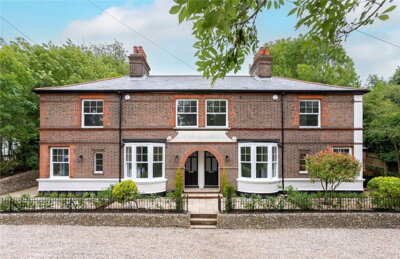
Browse 2 homes new builds in Chesham Bois from local developer agents.
The Byford property market has demonstrated remarkable resilience and growth in recent years. Our data shows that historical sold prices in the village have risen 25% compared to the previous year and now sit 18% above the 2021 peak of £676,000. This upward trajectory reflects the increasing demand for rural properties across Herefordshire as buyers seek more space, access to nature, and a better work-life balance following the shift towards remote and hybrid working patterns. The village attracts buyers from Birmingham, Bristol, and further afield who are willing to pay a premium for the lifestyle offered by such an attractive rural location.
While specific breakdowns of property types are not publicly available through current listings data, properties in Byford typically include traditional stone and brick cottages, period farmhouses, and detached family homes set within generous plots. The village's housing stock reflects its historical origins, with many homes dating back several generations. The Grade II Listed Reading Room Cottage exemplifies the architectural heritage that characterises the village, with its traditional construction using local materials that have stood the test of time. These period properties often feature thick walls, high ceilings, and original features that appeal to buyers seeking authentic rural character.
New build activity in Byford itself remains limited, which means that buyers seeking modern specifications may need to consider sympathetic renovation projects or properties that have been recently updated while retaining their period character. This scarcity of new supply helps maintain property values and ensures that Byford homes remain highly desirable among discerning buyers. The older housing stock does mean that properties may require ongoing maintenance investment, making thorough surveys before purchase particularly important for this village.

Byford embodies the essence of rural English village life, offering residents a close-knit community atmosphere that is becoming increasingly rare in modern Britain. The village is situated along the River Wye, one of Britain's most iconic rivers, which provides stunning natural scenery and excellent opportunities for walking, fishing, and outdoor pursuits. The surrounding Herefordshire countryside is characterised by rolling hills, apple orchards, and traditional farmland, creating a landscape that has inspired artists and writers for centuries. Local community events bring residents together throughout the year, fostering the kind of neighbourly connections that make village life so rewarding.
The character of Byford is defined by its traditional architecture and unhurried pace of life. Properties in the village often feature traditional construction using local stone and brick, reflecting the building techniques that have served Herefordshire for generations. The Grade II Listed Reading Room Cottage stands as testament to the village's historical significance and adds to the area's architectural heritage. Daily life in Byford revolves around simple pleasures: walking the lanes, enjoying the local pub, and appreciating the dramatic seasonal changes that transform the surrounding countryside. The village pub serves as a focal point for community gatherings, where locals gather to share news and celebrate special occasions.
For families and individuals seeking an escape from urban congestion and a return to more sustainable, community-focused living, Byford offers an exceptional quality of life. The village location provides easy access to the beautiful Wye Valley, while the wider Herefordshire countryside offers countless footpaths, bridleways, and public rights of way for exploration. The changing seasons bring different delights, from spring blossom in the orchards to autumn colour in the woodland areas that surround the village. Residents often comment on the therapeutic benefits of rural living, with the sounds of birdsong replacing traffic noise and views across open countryside replacing the built environment.

Families considering a move to Byford will find a selection of educational options within reasonable travelling distance. The village itself and surrounding hamlets are typically served by local primary schools in nearby villages, which provide excellent foundation education within a supportive, community environment. Herefordshire as a county maintains a strong tradition of educational provision in rural areas, with many primary schools serving small, tight-knit cohorts where children receive individual attention and support. Parents should research specific catchment areas and admission policies for their preferred schools, as these can vary across the county.
Secondary education is typically accessed through schools in the nearby market towns, with Herefordshire offering several well-regarded secondary schools and academies. The county also provides access to grammar school provision for families who meet the entrance criteria, with schools in Hereford and Leominster serving the wider area. For older students, sixth form colleges and further education institutions in the market towns offer a wide range of academic and vocational courses. Many families appreciate that the school run becomes an opportunity to appreciate the beautiful Herefordshire countryside rather than a stressful urban journey.
The smaller class sizes and individual attention available at rural schools are frequently cited as advantages by families who have made the move from larger towns and cities. Teachers often develop close relationships with students and their families, creating an educational environment that supports both academic achievement and personal development. Extra-curricular activities may include rural skills, agricultural awareness, and outdoor education that draw on the natural environment surrounding the village. Families moving to Byford from urban areas often find that the educational journey becomes part of the adventure, transforming what was previously a chore into an enjoyable part of daily life.
Transport connections from Byford reflect its rural village character, with residents typically relying on private vehicles for daily commuting and larger shopping trips. The village sits approximately 15 miles from Hereford, the county capital, which provides access to broader rail connections and comprehensive retail services. The A438 and A480 roads provide the main arterial routes connecting Byford to the wider road network, linking residents to Hereford, Brecon, and the M50 motorway for travel further afield. Many residents enjoy the relative simplicity of rural driving, appreciating the scenic routes that transform the commute into a pleasure rather than a chore.
For those who need to commute to major employment centres, Hereford railway station offers direct and connecting services to destinations including Birmingham, Manchester, and London. Journey times to Birmingham New Street typically take around 90 minutes, while the journey to London Paddington via Birmingham or Newport can be completed in approximately three to four hours. The shift towards hybrid working has made rural locations like Byford increasingly practical for professionals who need to travel to offices only two or three days per week. This flexible working pattern has opened up village living to a wider range of buyers who previously would not have considered such a rural location.
Local bus services connect the village to nearby towns, though these operate on limited timetables that suit school runs and occasional trips rather than daily commuting. Village residents typically regard car ownership as essential, though the modest mileages involved make running costs more affordable than in urban areas. For visitors without a car, the combination of occasional bus services and the nearby railway station at Hereford provides manageable access for those who do not need to commute daily. The relative isolation of village living is mitigated by the excellent mobile phone coverage now available across most of Herefordshire, allowing residents to stay connected while enjoying rural tranquility.
Start by exploring current listings in Byford on Homemove and familiarise yourself with the £800,000 average price point. Given the village's rural character and limited stock, early engagement with available properties is advisable. Understanding the market conditions specific to rural Herefordshire will help you make informed decisions throughout your property search.
Before arranging viewings, obtain a mortgage agreement in principle from a lender. This strengthens your position when making offers and demonstrates your seriousness to sellers in what can be a competitive market. Given the higher property values in Byford, securing suitable financing is essential before proceeding with viewings.
Visit properties that match your requirements, paying particular attention to the condition of traditional stone and brick buildings. Consider whether renovation work might be needed and factor this into your budget and timeline. We recommend attending multiple viewings to develop a good understanding of what is available within your budget.
Given Byford's older housing stock and listed properties, we strongly recommend booking a RICS Level 2 Survey before proceeding. This thorough inspection identifies any structural issues, defects, or maintenance requirements specific to period properties. Our inspectors have experience with traditional Herefordshire construction and understand the common issues affecting properties in this area.
Choose a solicitor experienced in rural property transactions to handle the legal aspects of your purchase. They will conduct searches, review contracts, and manage the transfer of ownership through to completion. Rural transactions may involve additional considerations such as rights of way, agricultural drainage, and flooding matters.
Once all searches are satisfactory and your mortgage is finalised, you will exchange contracts and agree a completion date. On the day of completion, you will receive the keys to your new Byford home. We wish you every happiness in your new village life.
Purchasing property in Byford requires careful consideration of factors specific to rural Herefordshire living. The presence of traditional construction materials means that buyers should pay particular attention to the condition of stone walls, thatched or traditional roof coverings, and older drainage systems. Properties dating from earlier periods may require more ongoing maintenance than modern equivalents, and prospective buyers should budget accordingly for the upkeep of character features. A thorough RICS Level 2 Survey is essential for identifying any hidden defects before you commit to the purchase.
Byford contains at least one Grade II Listed property, and the village may fall within planning zones that affect what you can do with a property. If you are considering purchasing a listed building or making alterations to a period property, you should consult with Herefordshire Council planning department regarding permitted development rights and any relevant heritage considerations. Listed buildings often require consent for alterations that would be permitted on unlisted properties, and this restriction is an important factor to consider when evaluating a property's potential.
Flood risk in Byford should be assessed on a property-by-property basis, as inland rural properties can be subject to surface water or river flooding depending on their specific location and proximity to watercourses. Insurance costs may vary accordingly, so obtaining quotes before finalising your purchase is prudent. Our inspectors pay particular attention to signs of previous water damage, damp penetration, and the condition of drainage systems during surveys of properties in this area. The age of properties in Byford also means that electrical systems and heating installations may require updating to meet current standards.
Common issues found in older rural properties include damp, roof condition concerns, potential subsidence from ground movement, and outdated electrical installations. Our surveyors are experienced in identifying these defects and will provide detailed reports that help you understand the true condition of any property you are considering. Budget considerations should include not only the purchase price but also potential renovation costs and the ongoing maintenance requirements that come with period properties. Many buyers find that the character and charm of a traditional village property more than compensates for the additional care required.
The housing stock in Byford predominantly consists of traditional properties built using local materials that reflect the building heritage of Herefordshire. Stone and brick construction is common, with many homes featuring the characteristic red sandstone and brickwork found throughout this part of the county. These traditional materials require specific maintenance approaches that differ from modern construction, and understanding these requirements is important for prospective buyers. Properties often feature thick walls that provide excellent thermal mass but may require attention to insulation and damp proofing.
Roof construction in Byford properties ranges from traditional slate and tile to thatch on older buildings, with each material having its own maintenance requirements and expected lifespan. Thatched roofs, while highly attractive, require specialist knowledge and regular maintenance by experienced craftsmen. Our surveyors assess roof condition carefully, identifying any signs of deterioration, slipped tiles, or structural movement that might indicate underlying issues. The steep pitches common on period properties help ensure effective water shedding but can complicate access for future maintenance.
Many properties in Byford retain original features such as exposed beams, inglenook fireplaces, flagstone floors, and traditional sash windows that form part of their historical character. These features add to the appeal of village properties but may require restoration work to bring them back to good condition or to improve their functionality. Windows in particular often need attention, with single-glazed frames and worn joinery being common issues on older properties. Our inspectors document the condition of all significant features during surveys, giving you a clear picture of what might need investment in future.
The average sold house price in Byford, Herefordshire, stands at £800,000 based on transactions over the past year. This represents significant growth, with prices rising 25% compared to the previous year and 18% above the 2021 peak of £676,000. This strong performance reflects the increasing demand for rural properties in Herefordshire as buyers seek the lifestyle benefits of village living. The village's attractive setting along the River Wye and its proximity to the beautiful Herefordshire countryside contribute to sustained demand for properties in this area.
Council tax bands in Byford are set by Herefordshire Council and vary according to property value and type. Most traditional cottages and farmhouses in the village fall into bands C through E, though specific bands depend on the individual property's characteristics and recent valuation. Properties with higher values or those that have been recently improved may be placed in higher bands. Prospective buyers should check the specific band for any property they are considering through the Herefordshire Council website or their solicitor during conveyancing.
Byford itself is served by local primary schools in surrounding villages, with families typically travelling to nearby market towns for secondary education. Herefordshire has several well-regarded primary and secondary schools, with particular strengths in smaller, community-focused settings. The county's grammar schools in Hereford and Leominster serve the wider area for families who meet the entrance criteria. Parents should research specific school performance data, Ofsted ratings, and catchment areas to identify the best options for their children.
Byford is a rural village with limited public transport options. Local bus services connect the village to nearby towns, though these operate on restricted timetables that make daily commuting impractical for most residents. Hereford railway station, approximately 15 miles away, provides access to national rail services including routes to Birmingham and London, with journey times to Birmingham taking around 90 minutes. Most residents rely on private vehicles as their primary means of transport, and this should be factored into your decision-making process when considering a move to the village.
The Byford property market has demonstrated consistent growth, with prices rising 25% year-on-year. The scarcity of available properties, combined with strong demand for rural lifestyles, suggests that property values are likely to remain robust. The village's beautiful setting along the River Wye, its historical character, and the excellent local environment make it attractive to buyers seeking both primary residences and countryside retreats. However, as with any property investment, you should consider your long-term plans and consult with financial advisors before making commitments.
Stamp Duty Land Tax rates for 2024-25 are 0% on the first £250,000, 5% on £250,001 to £925,000, 10% on £925,001 to £1.5 million, and 12% above £1.5 million. Given Byford's average price of £800,000, a typical buyer would pay £27,500 in SDLT. First-time buyers benefit from relief on the first £425,000, reducing their SDLT to £18,750 on an £800,000 property. Your solicitor will calculate the exact amount due based on your circumstances and ensure timely submission to HMRC.
Byford contains at least one Grade II Listed property, the Reading Room Cottage, which is a designated heritage asset. Listed buildings are protected for their architectural and historical interest, meaning that owners must seek consent before making alterations that might affect the building's character. This protection helps preserve the village's traditional appearance but does require additional consideration when purchasing. Our surveyors are experienced in assessing listed buildings and will identify any specific concerns relevant to heritage properties in the village.
Properties in Byford typically feature traditional construction using local stone and brick, which may present issues such as damp penetration, cracking from seasonal ground movement, and the condition of aging roof structures. Our inspectors pay particular attention to the integrity of stone walls, the condition of traditional roof coverings, and the effectiveness of drainage systems. Given the age of many village properties, we also assess electrical installations, heating systems, and any signs of structural movement that might indicate foundation issues.
Understanding the full costs of purchasing property in Byford is essential for budgeting effectively. The current SDLT thresholds for 2024-25 apply 0% tax on the first £250,000 of property value, 5% on the portion between £250,001 and £925,000, 10% on amounts between £925,001 and £1.5 million, and 12% on anything above £1.5 million. For a typical Byford property priced around the £800,000 average, you would expect to pay £27,500 in stamp duty at the standard rates. Your solicitor will handle the SDLT submission to HMRC following completion of your purchase.
First-time buyers purchasing property in Byford benefit from increased thresholds, paying 0% on the first £425,000 and 5% on the portion between £425,001 and £625,000. This relief reduces the SDLT on an £800,000 property to £18,750, saving £8,750 compared to standard rates. Beyond stamp duty, you should budget for solicitor fees typically ranging from £500 to £2,000 depending on complexity, search fees of approximately £300 to £500, and lender arrangement fees if applicable. A RICS Level 2 Survey costs from £350 depending on property value, while mortgage arrangement fees typically range from 0% to 1.5% of the loan amount.
Additional costs to consider include moving expenses, potential renovation work on period properties, and the ongoing maintenance requirements that come with traditional construction. Buildings insurance should be arranged before completion, and you may wish to obtain quotes before finalising your purchase as premiums can vary significantly depending on the property's condition, age, and flood risk profile. Setting aside a contingency fund for unexpected repairs is advisable, particularly for older properties where issues may not be apparent during initial viewings.
Properties New Builds In London

Properties New Builds In Plymouth

Properties New Builds In Liverpool

Properties New Builds In Glasgow

Properties New Builds In Sheffield

Properties New Builds In Edinburgh

Properties New Builds In Coventry

Properties New Builds In Bradford

Properties New Builds In Manchester

Properties New Builds In Birmingham

Properties New Builds In Bristol

Properties New Builds In Oxford

Properties New Builds In Leicester

Properties New Builds In Newcastle

Properties New Builds In Leeds

Properties New Builds In Southampton

Properties New Builds In Cardiff

Properties New Builds In Nottingham

Properties New Builds In Norwich

Properties New Builds In Brighton

Properties New Builds In Derby

Properties New Builds In Portsmouth

Properties New Builds In Northampton

Properties New Builds In Milton Keynes

Properties New Builds In Bournemouth

Properties New Builds In Bolton

Properties New Builds In Swansea

Properties New Builds In Swindon

Properties New Builds In Peterborough

Properties New Builds In Wolverhampton

Enter your details to see if this property is within your budget.
Loans, cards, car finance
Estimated property budget
Borrowing + deposit
You could borrow between
Typical borrowing
Monthly repayment
Est. at 4.5%
Loan-to-value
This is an estimate only. Your actual budget may vary depending on interest rates, credit history, and personal circumstances. For an accurate affordability assessment, speak to one of our free mortgage advisors.
This calculator provides estimates for illustrative purposes only and does not constitute financial advice. Your home may be repossessed if you do not keep up repayments on your mortgage. Estimates based on 4.5% interest rate, repayment mortgage. Actual rates depend on your circumstances.
Homemove is a trading name of HM Haus Group Ltd (Company No. 13873779, registered in England & Wales). Homemove Mortgages Ltd (Company No. 15947693) is an Appointed Representative of TMG Direct Limited, trading as TMG Mortgage Network, which is authorised and regulated by the Financial Conduct Authority (FRN 786245). Homemove Mortgages Ltd is entered on the FCA Register as an Appointed Representative (FRN 1022429). You can check registrations at NewRegister or by calling 0800 111 6768.

We use cookies to show you personalised content and improve your experience of our website. Find out more in our Privacy policy and Cookie policy.