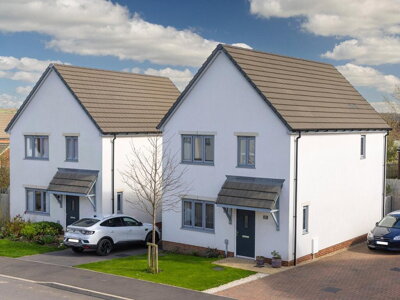
Browse 1 home new builds in Chardstock, East Devon from local developer agents.
Three bedroom properties represent a significant portion of the Chardstock housing market, offering space for families with multiple reception rooms and gardens in many cases. Browse detached, semi-detached, and terraced options ranging across new residential developments.
£0k
0
0
0
Source: home.co.uk
Showing 0 results for 3 Bedroom Houses new builds in Chardstock, East Devon.
The Chardstock property market has demonstrated remarkable strength over the past twelve months, with sold prices rising 107% compared to the previous year and sitting 18% above the 2022 peak of £510,125. According to the most recent data, the average house price in Chardstock stands at approximately £601,950 according to Rightmove, with Zoopla reporting an average sold price of £551,625 over the past year. OnTheMarket recorded an average price of £508,000 as of January 2026, with the platform noting significant price appreciation during this period. These figures underscore the enduring appeal of village living in East Devon and the strong demand that continues to drive values upward in this coveted location. The village has recorded 301 total sales historically, with 8 sales in 2025 alone demonstrating continued market activity despite limited new supply entering the market.
Property type analysis reveals distinct market dynamics across different segments. Detached homes in Chardstock achieved a median sale price of £397,250 across seven sales in 2025, representing a substantial 17.8% increase compared to 2024. Semi-detached properties commanded a median price of £280,000 based on two recorded sales in 2024, up 16.2% from the previous year. Terraced properties showed a slight softening, with one sale recorded at £280,000 in 2025, down 6.7% from 2024. Flats remain exceptionally rare in this village setting, with the most recent recorded sale dating to 2019 at £130,000, reflecting the overwhelming predominance of houses over apartments in this rural community. The EX13 7BW postcode area, which encompasses Chardstock, has recorded 34 property sales over the past 30 years, with the most recent transaction completing in September 2025.
New build activity in Chardstock has been deliberately limited by the Chardstock Neighbourhood Plan, adopted in 2017, which allocated a quota of ten houses that have since been constructed. Planning permission for a further four dwellings has been granted since the neighbourhood plan was implemented, ensuring managed growth that preserves the village's essential character. A past development called The Chardstones, constructed by Jameson Homes in around 2015, offered 3, 4, and 5-bedroom homes in Chardstock village with designs intended to echo the natural stonework and traditional architecture of the locality. This development, which included Chardstone Grove and Chardstone Place, is now likely fully occupied, representing established housing within the village. More recently, a planning application for two self-build homes north of Axminster in Chardstock (reference 25/1682/FUL) faced local opposition in 2025 over flooding concerns and design concerns regarding the proposal being considered overly urban and out of character for this rural village.

Chardstock epitomises the appeal of rural East Devon living, sitting within the Blackdown Hills Area of Outstanding Natural Beauty where rolling farmland, ancient hedgerows, and wooded valleys create a landscape of considerable beauty. The parish encompasses a varied underlying geology that gives rise to diverse vegetation and wildlife habitats, supporting insect assemblages that reflect conditions ranging from base-rich to acidic soils. This geological variety contributes to the character of the surrounding countryside, offering residents an environment rich in natural interest and opportunities for outdoor exploration. The village's position within this protected landscape ensures that its rural character and scenic qualities will be preserved for generations to come, making property investment here both a lifestyle choice and a safeguard for the future.
The village centre retains the architectural character expected of a historic Devon settlement, with numerous listed buildings concentrated within and around the designated Conservation Area. The Church of St Andrew stands as a Grade II* listed building of considerable heritage significance, while other notable structures include Lower Ridge, The Court, and The George Public House, all featuring the traditional stone rubble construction and thatched or tiled roofing typical of the region. The general store and Post Office provide essential daily provisions, while the historic thatched pub serves as a focal point for community social life. The Chardstock Neighbourhood Plan, adopted in 2017, has guided development within the village, with an allocated quota of ten houses having been constructed and planning permission subsequently granted for four additional dwellings, ensuring managed growth that preserves the village's essential character.
Beyond the immediate village centre, the parish extends across varied terrain supporting scattered farms and dispersed rural dwellings. Properties such as Canterbury Cottage, Crabb's, Crooked Chimney, Dommetts House, and Eggmoor Cottage and Tudor Cottage represent the traditional working buildings that once served the agricultural community. Further afield, farmhouses including Higher Farway Farmhouse, Home Farmhouse, Hook Farmhouse, Hooper's Farmhouse, and Keate's Farmhouse illustrate the scale of agricultural operations that shaped the landscape over centuries. Yew Tree Cottage, The Old House, The Priory, and Rose Cottage demonstrate the variety of domestic architecture found throughout the parish, from modest workers' cottages to more substantial period dwellings. The concentration of 26 listed buildings within the Conservation Area reflects the village's historical significance and explains the careful approach taken to new development in recent years.

Families considering a move to Chardstock will find a selection of educational establishments serving the village and surrounding parishes. St Andrew's Primary School in Chardstock provides early years and Key Stage 1 education within the village itself, with the historic St Andrews School House nearby reflecting the long-standing educational tradition in this community. For secondary education, pupils typically travel to nearby market towns where a broader range of secondary schools and specialist subjects are available. The village's position within East Devon means that several secondary options fall within reasonable daily commuting distance, making Chardstock viable for families with children of various ages.
The presence of St Andrews School House as a Grade II listed building reflects the educational heritage of Chardstock, with school buildings in rural villages often holding significant historical interest alongside their contemporary educational function. Parents are advised to research current catchment areas and admission arrangements directly with Devon County Council, as these can change and may influence which schools serve specific properties within the parish. For families prioritising educational provision, viewing the full range of primary and secondary options within acceptable travel distance should form part of the property search process, alongside consideration of the excellent independent schooling options available in Devon. Schools in nearby Axminster, Honiton, and Colyton serve the secondary phase, with each offering different specialisms and extracurricular programmes that may suit particular children's needs and interests.
Transport connections from Chardstock reflect its rural character, with the village situated approximately six miles from Axminster, the nearest town offering mainline railway services. Axminster station provides regular train services connecting to Exeter, Salisbury, and London Waterloo, with journey times to the capital typically taking around two and a half hours. This rail link makes Chardstock viable for commuters who require occasional access to major employment centres while enjoying the benefits of countryside residence during the working week. The village's position away from major trunk roads contributes to its peaceful character but necessitates car ownership for day-to-day logistics.
Local bus services operate between Chardstock and surrounding villages and towns, providing essential connections for those without private vehicles, though frequencies reflect the rural nature of the area. The A35 trunk road passes nearby, providing access to Honiton and the M5 motorway at junction 25, connecting the village to the wider regional road network. For air travel, Exeter International Airport offers domestic and international flights within approximately 30 miles, adding to the connectivity package for those who travel frequently. Cycling enthusiasts will appreciate the scenic country lanes and bridleways that radiate from the village, though the hilly terrain of the Blackdown Hills presents a challenge for less experienced riders. The nearby River Axe, designated as a Site of Special Scientific Interest and Special Area of Conservation, flows through the parish and offers opportunities for riverside walks, though the river itself is barely touched by the village itself, remaining a short distance away for much of the parish boundary.
Spend time exploring Chardstock at different times of day and week to understand the community, check local amenities, and verify flood risk areas given the village's history of flash flooding in June 2021. Consider attending village events or visiting the local pub to meet residents and gain firsthand insight into what daily life entails in this Blackdown Hills community. Pay particular attention to the Conservation Area boundaries and the location of listed buildings, as these designations affect what changes may be permissible to any property you purchase.
Speak to lenders to secure an agreement in principle before viewing properties, as this strengthens your position when bidding in a market where demand consistently exceeds supply. Given Chardstock's average property values of £500,000 to £600,000, securing appropriate mortgage finance is essential before committing to viewings. A broker familiar with rural properties can help navigate the sometimes complex valuation considerations for non-standard construction or listed buildings that may be encountered in this area.
View multiple properties across different price ranges to understand what is available, paying particular attention to construction materials given the prevalence of traditional stone rubble buildings and listed properties in the Conservation Area. Make notes on property condition, noting that many homes date from the medieval period through to Georgian and Victorian eras, with corresponding variations in construction methods and potential defect types. Ask about the history of any property you view seriously, including previous renovations, listed building consents obtained, and any known issues with flooding or structural movement.
Given the age of many properties in Chardstock and the prevalence of pre-1919 construction, arrange a thorough survey to identify any defects common to older buildings such as damp, roof condition, or structural movement. Properties in Chardstock often feature solid walls without cavity insulation, thatched roofs requiring specialist maintenance, and traditional timber-frame elements that may show signs of woodworm or rot. A RICS Level 2 Survey typically costs from £350 for standard properties but may be higher for larger, older, or listed properties where the survey requires more detailed investigation.
Appoint a conveyancing specialist familiar with rural Devon properties to handle searches, review the property's title, and ensure all Conservation Area and listed building implications are properly addressed. Your solicitor should conduct specific searches for flood risk given the village's documented history of surface water flooding, including the June 2021 incident when vehicles were stranded in floodwater across Chardstock and neighbouring Wadeford. Drainage and utility searches are particularly important for older properties that may have private water supplies or non-mains drainage systems.
Once all surveys and legal work are satisfactory, your solicitor will exchange contracts and set a completion date, after which you will receive the keys to your new Chardstock home. Budget for additional time if purchasing a listed building, as specialist surveys and listed building considerations may extend the conveyancing timeline. The River Axe SAC Nutrient catchment area may also require specific considerations for certain properties, particularly those with septic tanks or private drainage systems that may need upgrading to comply with current regulations.
Prospective buyers in Chardstock should pay particular attention to flood risk, given the village's documented history of flash flooding. In June 2021, vehicles were reported stuck in floodwater in Chardstock and the neighbouring village of Wadeford, while surface water runoff from nearby fields proved a significant flooding mechanism across the wider area including Nimmer. Any property in a low-lying position or near watercourses should be carefully assessed, and buyers should request Flood Risk searches as part of the conveyancing process. The River Axe, designated as a Site of Special Scientific Interest and Special Area of Conservation, flows near the parish, placing certain areas within the River Axe SAC Nutrient catchment that may have implications for development or alterations.
The extensive presence of listed buildings and the Conservation Area designation create important considerations for property purchase in Chardstock. Properties such as Lower Ridge, The Court, and The George Public House represent just a sample of the historic structures that contribute to the village's character, and any property within or adjoining the Conservation Area may be subject to additional planning controls. The Court itself holds particular historical significance as a former manor house of the Bishops of Salisbury with origins dating to the early 14th century. Buyers considering older properties should verify whether they are listed and understand that any alterations, including extensions or material changes, may require Listed Building Consent from East Devon District Council. The traditional construction methods used throughout the village, featuring stone rubble walls and thatched or tiled roofs, require ongoing maintenance and specialist knowledge when repairs are needed.
Ground conditions and construction type warrant careful investigation before purchase. Properties constructed before 1919 may have solid walls without cavity insulation and shallower foundations than modern standards, making them potentially susceptible to subsidence, particularly those near large trees or on clay soils. The village's historic building stock may also feature hidden defects such as aging pipework, outdated electrical systems, or inadequate insulation that would be identified by a thorough RICS Level 2 Survey. Given that many properties in Chardstock date from the medieval period through to the Georgian and Victorian eras, buyers should budget for potential maintenance and upgrade costs when assessing overall purchase affordability. Properties with thatched roofs require particular attention, as re-thatching is a specialist trade that can represent significant expense when compared to standard tiled roofs.
Properties in the River Axe SAC Nutrient catchment area may face specific requirements regarding drainage and wastewater disposal. Septic tanks serving properties in this area may require upgrading to meet current environmental standards, and buyers should establish the condition and compliance status of any private drainage systems during the conveyancing process. Insurance premiums for properties in flood-risk areas may be higher, and buyers should confirm adequate cover is available before committing to purchase. The Chardstock Neighbourhood Plan's approach to managed growth means that development opportunities are limited, which helps preserve property values but also means that the supply of homes available for purchase will remain constrained relative to demand.
Understanding the full cost of purchasing property in Chardstock requires careful consideration of stamp duty alongside other associated fees. Based on the village's average house price of approximately £551,625, a standard purchase would attract stamp duty on the portion between £250,001 and £551,625 at 5%, resulting in a bill of around £15,081. First-time buyers may benefit from relief on purchases up to £425,000, reducing their stamp duty liability to approximately £6,331 on an average-priced property. Those purchasing above £625,000 receive no first-time buyer relief, meaning the full standard rates apply regardless of buyer status. Given Chardstock's average prices, many buyers will pay stamp duty on at least some portion of their purchase.
Beyond stamp duty, buyers should budget for solicitor conveyancing costs, which typically range from £500 to £1,500 depending on complexity and whether the property involves additional considerations such as listed building status or Conservation Area constraints. Survey costs warrant particular attention in Chardstock given the prevalence of older properties, with a RICS Level 2 Survey starting from approximately £350 for standard properties but potentially higher for larger, older, or non-standard construction homes. A RICS Level 3 Building Survey, recommended for listed buildings or properties of unusual construction, starts from around £600 and provides more comprehensive analysis of structural condition and defects. Pre-1900 properties typically incur a 20-40% increase in survey costs due to the additional time and expertise required to assess traditional construction methods.
Land Registry fees, local authority searches, and mortgage arrangement fees complete the typical purchase cost package, and buyers should ensure they have sufficient funds beyond the property price to cover these expenses. Flood Risk searches are particularly important for Chardstock properties given the village's documented history of surface water flooding, and these specialist searches should be budgeted for alongside standard local authority and drainage searches. For properties with thatched roofs, specialist insurance should also be factored into ongoing costs, as thatch properties often require policies from insurers with experience of traditional building materials and the specific risks associated with them. Buyers purchasing listed buildings should additionally budget for potential Listed Building Consent fees and the costs of using appropriate materials and contractors for any future works.
The average house price in Chardstock currently ranges from approximately £508,000 according to OnTheMarket to £601,950 according to Rightmove, with Zoopla reporting an average sold price of £551,625 over the past year. Detached homes have achieved median prices of £397,250 in recent sales across seven recorded transactions in 2025, while semi-detached and terraced properties have sold at median prices around £280,000. The market has shown strong growth, with sold prices rising 107% year-on-year and sitting 18% above the previous 2022 peak of £510,125, demonstrating continued demand for village properties in this Blackdown Hills location.
Properties in Chardstock fall under East Devon District Council's jurisdiction for council tax purposes. Specific bands depend on property valuation, with the full range of bands A through H applicable across the village's diverse housing stock that ranges from modest traditional cottages to substantial period farmhouses. Band values for specific properties can be verified through the Valuation Office Agency website or by requesting this information during the conveyancing process. Rural villages like Chardstock typically feature a mix of bands reflecting the variety of property types from modest cottages to substantial farmhouses, with the highest value properties commanding bands F through H.
St Andrew's Primary School serves the village and immediate surrounding area, providing early years and Key Stage 1 education within Chardstock itself, with the historic St Andrews School House nearby reflecting the school's established presence in the community since at least the 19th century. For secondary education, pupils typically attend schools in nearby market towns including Axminster, Honiton, or Colyton, with admission determined by catchment areas administered by Devon County Council. Families should verify current catchment arrangements and consider the distances involved when assessing school suitability for their circumstances, as daily travel times can significantly impact family routines.
Chardstock is served by local bus services connecting to surrounding villages and towns, though frequencies reflect the rural nature of the area and car ownership remains advisable for day-to-day convenience. The nearest railway station is Axminster, approximately six miles away, offering regular services to Exeter, Salisbury, and London Waterloo with journey times to the capital taking around two and a half hours. The village's position near the A35 provides road access to Honiton and the M5 motorway at junction 25, while Exeter International Airport is approximately 30 miles distant for those who travel frequently by air.
Chardstock offers several factors that appeal to property investors, including its location within the Blackdown Hills Area of Outstanding Natural Beauty, the scarcity of properties coming to market given limited new development controlled by the Chardstock Neighbourhood Plan, and strong demand from buyers seeking rural lifestyles within reach of major transport links. The Neighbourhood Plan, adopted in 2017, allocated only ten houses for development with a further four permissions granted since, ensuring that new supply remains severely constrained relative to buyer demand. However, buyers should note that investment in listed buildings or properties within the Conservation Area carries additional responsibilities and potential costs, and the village's tranquil nature means rental demand may be more limited than in larger towns.
Stamp duty rates for Chardstock follow standard England rates as no relief zones apply to this location. For purchases under £250,000, no stamp duty is payable. Properties between £250,001 and £925,000 attract 5% on that portion, while those between £925,001 and £1.5 million pay 10% above £925,000. Properties exceeding £1.5 million pay 12% on amounts above this threshold. First-time buyers relief applies to purchases up to £625,000, with no relief available above this value. Given Chardstock's average prices of £500,000 to £600,000, most buyers will pay stamp duty on at least the portion between £250,001 and their purchase price at the 5% rate, resulting in bills of approximately £15,000 on average-priced properties.
Chardstock has experienced significant flash flooding, notably in June 2021 when vehicles were stranded in floodwater and surface water runoff caused widespread issues across the village and neighbouring communities including Wadeford and Nimmer. Properties in low-lying areas or near natural drainage channels carry elevated flood risk, and buyers should request a full Flood Risk Assessment as part of their legal searches. Properties within the River Axe SAC catchment area may also face specific considerations regarding drainage and wastewater disposal. Insurance premiums for flood-prone properties may be higher, and buyers should confirm adequate cover is available before committing to purchase. A 2025 planning application for new homes in the area faced opposition over flooding concerns, with local residents highlighting the importance of pasture land in offsetting flood risk across the wider area.
The Chardstock property market predominantly features traditional stone-built houses, with detached family homes commanding the highest prices at a median of £397,250 in 2025. Semi-detached properties sold at a median of £280,000 in 2024, while terraced cottages are also available at similar price points. Flats are exceptionally rare in this village setting, with the most recent recorded sale dating to 2019 at £130,000, reflecting the overwhelming dominance of house types over apartments. Many properties are listed buildings or located within the Conservation Area, featuring traditional construction methods including stone rubble walls, thatched or tiled roofs, and solid wall construction without cavity insulation. A limited number of new build properties were constructed at The Chardstones development in 2015, but completed sales of these homes are likely now absorbed into the existing housing stock.
From 4.5%
Get mortgage advice and competitive rates for your Chardstock purchase
From £499
Specialist solicitors for rural Devon property transactions
From £350
Thorough inspection for traditional properties and older buildings
From £600
Comprehensive structural survey for listed and period properties
Properties New Builds In London

Properties New Builds In Plymouth

Properties New Builds In Liverpool

Properties New Builds In Glasgow

Properties New Builds In Sheffield

Properties New Builds In Edinburgh

Properties New Builds In Coventry

Properties New Builds In Bradford

Properties New Builds In Manchester

Properties New Builds In Birmingham

Properties New Builds In Bristol

Properties New Builds In Oxford

Properties New Builds In Leicester

Properties New Builds In Newcastle

Properties New Builds In Leeds

Properties New Builds In Southampton

Properties New Builds In Cardiff

Properties New Builds In Nottingham

Properties New Builds In Norwich

Properties New Builds In Brighton

Properties New Builds In Derby

Properties New Builds In Portsmouth

Properties New Builds In Northampton

Properties New Builds In Milton Keynes

Properties New Builds In Bournemouth

Properties New Builds In Bolton

Properties New Builds In Swansea

Properties New Builds In Swindon

Properties New Builds In Peterborough

Properties New Builds In Wolverhampton

Enter your details to see if this property is within your budget.
Loans, cards, car finance
Estimated property budget
Borrowing + deposit
You could borrow between
Typical borrowing
Monthly repayment
Est. at 4.5%
Loan-to-value
This is an estimate only. Your actual budget may vary depending on interest rates, credit history, and personal circumstances. For an accurate affordability assessment, speak to one of our free mortgage advisors.
This calculator provides estimates for illustrative purposes only and does not constitute financial advice. Your home may be repossessed if you do not keep up repayments on your mortgage. Estimates based on 4.5% interest rate, repayment mortgage. Actual rates depend on your circumstances.
Homemove is a trading name of HM Haus Group Ltd (Company No. 13873779, registered in England & Wales). Homemove Mortgages Ltd (Company No. 15947693) is an Appointed Representative of TMG Direct Limited, trading as TMG Mortgage Network, which is authorised and regulated by the Financial Conduct Authority (FRN 786245). Homemove Mortgages Ltd is entered on the FCA Register as an Appointed Representative (FRN 1022429). You can check registrations at NewRegister or by calling 0800 111 6768.

We use cookies to show you personalised content and improve your experience of our website. Find out more in our Privacy policy and Cookie policy.