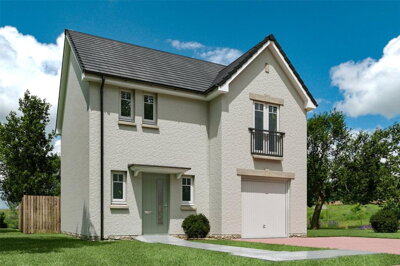
Browse 1 home new builds in Central Dunfermline from local developer agents.
Three bedroom properties represent a significant portion of the Central Dunfermline housing market, offering space for families with multiple reception rooms and gardens in many cases. Browse detached, semi-detached, and terraced options ranging across new residential developments.
The Central Dunfermline property market offers diverse options across all price points, with average prices ranging from approximately £108,125 for flats to £311,540 for detached homes. Our data shows semi-detached properties average £195,190, while terraced homes typically sell for around £156,051, providing good entry points for first-time buyers. The town recorded 1,003 property sales in the past 12 months, demonstrating a healthy and active market that offers buyers genuine choice when searching for their next home.
Several significant new-build developments are currently underway in Central Dunfermline, expanding options for buyers seeking modern living. The Linen Quarter by Bellway on Pilmuir Street offers 1 and 2-bedroom apartments from £129,995, ideal for first-time buyers and investors. Persimmon Homes at Lapwing Brae provides larger 2, 3, 4, and 5-bedroom homes from £184,995, catering to families seeking more space. For buyers seeking premium accommodation, Stewart Milne Homes at Spencerfield on Spencerfield Road offers 3, 4, and 5-bedroom homes from £299,995. House prices in Dunfermline have increased by 2.22% over the past year, indicating steady and sustainable growth that suggests long-term investment potential.
The local property market benefits from a diverse buyer pool that includes commuters working in Edinburgh, families seeking spacious family homes, first-time buyers taking advantage of Scottish first-time buyer relief, and investors attracted by the strong rental demand. Dunfermline railway station, located in the town centre on St Margaret's Drive, provides regular services to Edinburgh Waverley, making the daily commute practical for those who work in the capital but live in more affordable Fife. This commuter appeal has helped maintain stable property values even during broader market fluctuations, supporting continued growth in the local housing market.

Central Dunfermline offers a diverse housing landscape that reflects its rich history and modern development. According to ONS Census data, the area features a balanced mix of property types, with flats and maisonettes accounting for approximately 30% of homes, semi-detached properties at 26%, terraced homes at 24.8%, and detached houses at 18.5%. This variety means buyers can find everything from compact city centre apartments to spacious family homes within the same neighbourhood, making Central Dunfermline suitable for a wide range of buyers and lifestyles.
The architectural character of Central Dunfermline is defined by its traditional construction, with many properties built using local sandstone, stone, and brick materials featuring slate or tiled roofs. The town centre and older districts contain substantial Victorian and Edwardian housing stock, including elegant tenements and characterful villas that often retain original features such as fireplaces, cornices, and timber floors. Dunfermline has a significant concentration of listed buildings and several conservation areas, particularly around the historic town centre including the Dunfermline Abbey and Palace area, where planning restrictions preserve the architectural heritage.
With a population of approximately 55,150, Dunfermline is a substantial town that offers the amenities and employment opportunities of a city while maintaining a strong sense of community. The town centre provides excellent shopping and dining options centred around Kingsgate Shopping Centre, while numerous parks and green spaces including Pittencrennan Park and the historic Dunfermline Palace grounds offer recreational opportunities. The local economy is supported by key employers in retail, public services, financial services, and logistics, with the town's proximity to Edinburgh making it particularly attractive to commuters seeking more affordable housing than the capital.

Dunfermline's history as a significant coal mining centre has shaped much of the town's built environment and continues to affect properties in the area today. The Carboniferous geology underlying Central Dunfermline contains sandstone, shales, and coal seams that were extensively worked during the Industrial Revolution, leaving a legacy of old mine workings beneath many neighbourhoods. This mining history means that buyers should understand the potential ground stability implications when purchasing property in the area, particularly in districts where historic collieries and pit villages once stood.
Properties built above old mine workings may be subject to ground movement or subsidence risks, which can manifest as cracks in walls, uneven floors, or doors and windows that stick or fail to close properly. While not all properties in Central Dunfermline are affected, the risk varies significantly depending on location and the depth of historic workings. A coal mining report from The Coal Authority provides essential information about past mining activity in a specific area, including the location of mine entries, recorded subsidence claims, and any mine gas incidents. These reports are inexpensive and should be considered a standard part of due diligence for any property purchase in Dunfermline.
The shift from traditional mining communities to modern residential areas has left an architectural imprint across Central Dunfermline, with traditional sandstone miners' cottages and terraces sitting alongside Victorian and Edwardian villa developments built for professionals and business owners. Many of the older mining terraces around the town centre have been sympathetically maintained and updated, retaining their distinctive character while incorporating modern facilities. Understanding this heritage adds depth to the property search process and helps buyers appreciate why certain areas developed as they did.
The construction methods used throughout Central Dunfermline reflect both the local geology and the era in which properties were built. Traditional sandstone construction dominates the older town centre areas, where local sandstone was quarried and used for walls that can be two feet thick or more. This solid wall construction provides excellent thermal mass but lacks the cavity insulation found in more modern properties, often resulting in higher heating costs and requiring different approaches to energy efficiency improvements. The slate and tile roofs on these older properties have stood for over a century but frequently require maintenance, with slipped slates, damaged leadwork, and deteriorating guttering being common findings during property surveys.
Properties built during the post-war period from 1945 to 1980 represent a significant portion of Central Dunfermline's housing stock, particularly in areas like Bellyeoman and the surrounding residential districts. These semi-detached and terraced homes typically feature cavity wall construction using brick or concrete block, which provides better insulation than solid walls but can still suffer from issues such as damp penetration if the cavity becomes bridged by debris or if pointing deteriorates. Roof construction in these properties usually involves traditional cut timber rafters with tiled coverings, and like all older properties, these roofs require regular inspection and maintenance to prevent water ingress.
The newer developments at locations like The Linen Quarter on Pilmuir Street and Persimmon Homes at Lapwing Brae represent contemporary construction standards with features designed to meet current building regulations. These properties typically include cavity wall insulation, modern uPVC windows and doors, and efficient heating systems, making them attractive options for buyers prioritising energy efficiency and low maintenance. However, even new-build properties can have defects, and commissioning a thorough survey before purchase remains advisable regardless of property age. The variety of construction methods across Central Dunfermline means that understanding the specific characteristics of your chosen property type is essential for effective budgeting and maintenance planning.
Families considering a move to Central Dunfermline will find a good selection of schools serving all age groups. Primary education is well-represented in the central area, with schools including St Margaret's RC Primary School, Bellyeoman Primary School, and Parkside Primary School serving local communities. Many of these schools have earned positive reputations within the town, and parents are encouraged to research individual school performance through Education Scotland inspection reports to identify the best fit for their children.
Secondary education in Dunfermline is served by several establishments including Dunfermline High School and Queen Anne High School, both offering comprehensive curricula and extracurricular programmes. For families seeking faith-based education, Dunfermline College provides secondary schooling in a different setting. Post-16 students have access to Fife College, which offers a wide range of vocational and academic courses from its Dunfermline campus, providing clear educational pathways from school through further education and into employment or university study.
The quality of local schools can influence property values and demand in specific neighbourhoods, making school catchment areas an important consideration for families buying in Central Dunfermline. Properties within the catchment areas of highly-performing schools often command premiums, and families are advised to verify current catchment boundaries before making an offer, as these can change. Transport options to schools are generally good, with school bus services available for properties further from school gates, though proximity to a good school remains a significant factor for many family buyers when choosing where to purchase in the area.
Transport connectivity is one of Central Dunfermline's strongest attributes, making it particularly attractive to commuters working in Edinburgh or other major cities. Dunfermline railway station provides regular train services to Edinburgh Waverley with journey times of approximately 50 minutes, offering a practical alternative to driving for those working in the capital. The station also provides connections to other Fife destinations and beyond, with services operated by ScotRail providing reliable access to the wider rail network.
Road connections are equally well-developed, with the M90 motorway linking Dunfermline to Perth and Edinburgh via the Clackmannanshire Bridge. This provides straightforward access to Edinburgh city centre and the M8 for connections to Glasgow. For air travel, Edinburgh Airport is accessible in approximately 35-40 minutes by car or public transport, making international travel convenient for residents. Local bus services operated by Stagecoach and other carriers provide comprehensive coverage of Dunfermline and surrounding areas, while parking facilities in the town centre accommodate those who prefer to drive locally.
The commute to Edinburgh from Central Dunfermline compares favourably with many other Fife towns, with the 50-minute train journey being significantly shorter than the driving time during peak hours. Dunfermline station offers good parking facilities, though these can fill early on weekday mornings, and cycle storage is available for those who prefer to combine cycling with train travel. For commuters working in Edinburgh but seeking more affordable housing, the combination of rail connectivity and property prices that remain substantially below Edinburgh levels makes Central Dunfermline an increasingly popular choice that is reflected in sustained demand for local properties.
Buyers considering properties in Central Dunfermline should be aware of several area-specific factors that can affect purchasing decisions. Given Dunfermline's coal mining history, many properties are built above old mine workings, and obtaining a coal mining report is strongly recommended before completing a purchase. This report identifies any potential ground instability risks from historic mining activity and is an essential part of due diligence for any property in the area.
The prevalence of older properties in Central Dunfermline means buyers should expect to encounter common issues associated with traditional construction. Traditional sandstone and stone-built properties often feature solid wall construction without cavity insulation, which can result in higher heating costs and issues with damp if not properly maintained. Timber defects including woodworm and rot can affect older properties, particularly in areas with delayed maintenance. Electrical wiring in pre-1960s properties may not meet current safety standards and often requires updating.
Properties located within conservation areas or those that are listed buildings offer distinctive character but come with specific responsibilities. Planning restrictions in these areas limit the scope for alterations, extensions, and even external decorations, which buyers should factor into their decision-making process. Surface water flooding represents the primary flood risk in parts of Central Dunfermline, particularly in low-lying areas or where urban drainage systems may be challenged during heavy rainfall. The Scottish Environment Protection Agency provides detailed flood mapping that buyers should consult for specific property locations.
Properties in Central Dunfermline may also have varying energy efficiency ratings that affect both running costs and mortgage eligibility. Older solid-walled properties often have EPC ratings in the D to F range, which can limit mortgage options as some lenders have restrictions on properties below certain energy efficiency thresholds. Commissioning an EPC assessment before purchase, or including it as a condition of sale, helps identify any required improvements and ensures you can accurately budget for energy costs and potential upgrades.
Before searching for properties, obtain a mortgage agreement in principle from a lender to understand your budget and demonstrate your seriousness to sellers when making offers. This involves a basic credit check and assessment of how much you can borrow based on your income and expenditure.
Browse our full selection of properties for sale in Central Dunfermline, from traditional sandstone homes to modern new-build apartments, and arrange viewings to find properties that match your requirements. Take time to visit properties at different times of day and consider factors like noise, light, and the neighbourhood atmosphere.
For older properties, which make up a significant portion of Central Dunfermline's housing stock, a RICS Level 2 Survey helps identify issues such as damp, timber defects, or roof problems. Given the prevalence of solid-walled sandstone properties and the area's mining history, a thorough survey is particularly valuable for identifying potential issues before you commit. Local survey costs range from £400-700 depending on property size and type.
Choose a solicitor to handle the legal aspects of your purchase, including property searches, contract review, and title verification. Your solicitor will also order essential reports including a mining report, local authority searches, and water and drainage searches for your specific property. Homemove offers conveyancing services from £499.
Once all surveys and legal work are satisfactory, sign contracts and pay your deposit to secure the property. Completion typically follows within 2-4 weeks, when you receive your keys and take ownership of your new home in Central Dunfermline.
The average house price in Dunfermline was £198,829 as of February 2026, according to recent market data. Property prices in the area range significantly by type, with flats averaging around £108,125, terraced homes at approximately £156,051, semi-detached properties at £195,190, and detached homes reaching an average of £311,540. House prices in Dunfermline have increased by 2.22% over the past 12 months, indicating steady and sustainable growth in the local market. This growth rate compares favourably with some Edinburgh suburbs where prices have remained flat or declined, suggesting that Dunfermline continues to offer good value for buyers seeking long-term capital growth.
Properties in Central Dunfermline fall under Fife Council's council tax banding system, which categorises properties into bands A through H based on assessed value. Specific band allocations depend on individual property valuations and characteristics. The average property in Dunfermline would typically fall into bands B to D, with the specific band affecting your annual council tax liability. Buyers can check their property's council tax band through the Scottish Assessors Association website or their property information pack. Fife Council's website provides detailed information about council tax rates for each band and any applicable discounts for eligible households.
Central Dunfermline offers good educational provision across all levels. Primary schools in the area include St Margaret's RC Primary School, Bellyyeoman Primary School, and Parkside Primary School, with secondary options such as Dunfermline High School and Queen Anne High School. For post-16 education, Fife College provides vocational and academic courses from its Dunfermline campus. Parents are encouraged to research individual school performance through Education Scotland inspection reports to identify the best options for their children's educational needs. School catchment areas can significantly affect which properties are most suitable for families, so verifying current boundaries is advisable before purchasing.
Central Dunfermline enjoys excellent public transport connections that make commuting and travel convenient. Dunfermline railway station provides regular services to Edinburgh Waverley with journey times of approximately 50 minutes, and connects to other destinations across Fife and Scotland. Local bus services operated by Stagecoach and other carriers provide comprehensive coverage of Dunfermline and surrounding communities, with routes serving residential areas, the town centre, and nearby towns including Kirkcaldy and Glenrothes. For air travel, Edinburgh Airport is accessible within 35-40 minutes by car or combined public transport via the train to Edinburgh and onward tram connection.
Central Dunfermline offers several factors that make it attractive for property investment. The town's proximity to Edinburgh combined with more affordable average property prices than the capital makes it popular with commuters and first-time buyers. The local rental market benefits from steady demand driven by factors including students, young professionals, and families who appreciate the excellent transport links to Edinburgh. House prices have shown consistent growth of approximately 2.22% year-on-year. New developments like The Linen Quarter, Lapwing Brae, and Spencerfield continue to attract buyer interest, and the mix of traditional and modern properties provides options for different investment strategies. As with any property investment, conducting thorough local market research and considering personal circumstances is essential before committing.
Beyond the purchase price, buyers should budget for several additional costs that form part of the total purchase expense in Central Dunfermline. Survey costs for a RICS Level 2 Survey typically range from £400-700 depending on property size and type, with larger detached homes commanding higher fees than flats or terraced properties. Conveyancing fees typically start from around £499 for straightforward purchases, covering legal work including property searches, contract preparation, and registration of title. Land and Buildings Transaction Tax (Scotland's equivalent to Stamp Duty) applies on purchases above £145,000, though first-time buyers qualify for relief on purchases up to £425,000, meaning many Dunfermline properties attract no LBTT at all. Factor in additional costs including mortgage arrangement fees, moving expenses, and potential renovation costs if purchasing an older property that requires updating.
Central Dunfermline generally has a low risk of flooding from rivers and the sea due to its elevated position above the Firth of Forth. However, surface water flooding can be a concern in some localised areas, particularly during heavy rainfall when urban drainage systems may be challenged. The Scottish Environment Protection Agency provides detailed flood maps that show historical surface water flood events and potential risk areas, which buyers should consult for specific property locations. Low-lying areas near watercourses or in parts of the town where drainage infrastructure is older may be more susceptible to surface water accumulation during extreme weather events. Properties in areas identified as having elevated surface water flood risk may face higher buildings insurance premiums, so obtaining an insurance quote before purchase is advisable.
Given Dunfermline's significant coal mining history, obtaining a coal mining report is strongly recommended for any property purchase in Central Dunfermline. The Coal Authority provides these reports, which identify the location of historic mine entries, recorded subsidence damage claims, and any mine gas risks in the area surrounding a specific property. While not all properties are affected by mining issues, the risk varies significantly by location depending on the depth and extent of historic workings. Mining-related problems can manifest as structural movement, cracks in walls, or issues with doors and windows, and can be expensive to rectify. The cost of a mining report is relatively small compared to the potential expense of dealing with mining-related property damage, making it an essential part of due diligence for any purchase in the area.
Understanding the full costs of buying a property in Central Dunfermline is essential for budgeting effectively. Scotland operates its own Land and Buildings Transaction Tax system rather than Stamp Duty, and first-time buyers in Scotland benefit from relief on purchases up to £425,000. On a typical Dunfermline property priced around £198,829, a first-time buyer would pay no LBTT at all, representing significant savings compared to other parts of the UK. For those who do not qualify as first-time buyers, the standard LBTT rates apply with relief available on purchases up to £145,000.
Beyond the purchase price, buyers should budget for several additional costs that form part of the total purchase expense. Survey costs for a RICS Level 2 Survey in Central Dunfermline typically range from £400-700 depending on property size and type, with larger detached homes commanding higher fees than flats or terraced properties. Given the significant number of older properties in Central Dunfermline, a thorough survey is particularly valuable for identifying issues such as damp, timber defects, roof problems, or the need for electrical rewiring in pre-1960s properties. Conveyancing fees typically start from around £499 for straightforward purchases, covering legal work including property searches, contract preparation, and registration of title.
Factor in ongoing costs including council tax (bands vary by property within Fife Council's jurisdiction), building insurance, and potential energy efficiency improvements for older properties. Properties with solid wall construction common in Dunfermline's traditional sandstone buildings may have higher heating costs and lower EPC ratings, so requesting an EPC assessment before purchase or including it as a condition of sale helps identify any required improvements. Homemove provides access to all these services, making it straightforward to budget accurately for your Central Dunfermline property purchase and ensure a smooth transaction from offer through to keys in hand.
Properties New Builds In London

Properties New Builds In Plymouth

Properties New Builds In Liverpool

Properties New Builds In Glasgow

Properties New Builds In Sheffield

Properties New Builds In Edinburgh

Properties New Builds In Coventry

Properties New Builds In Bradford

Properties New Builds In Manchester

Properties New Builds In Birmingham

Properties New Builds In Bristol

Properties New Builds In Oxford

Properties New Builds In Leicester

Properties New Builds In Newcastle

Properties New Builds In Leeds

Properties New Builds In Southampton

Properties New Builds In Cardiff

Properties New Builds In Nottingham

Properties New Builds In Norwich

Properties New Builds In Brighton

Properties New Builds In Derby

Properties New Builds In Portsmouth

Properties New Builds In Northampton

Properties New Builds In Milton Keynes

Properties New Builds In Bournemouth

Properties New Builds In Bolton

Properties New Builds In Swansea

Properties New Builds In Swindon

Properties New Builds In Peterborough

Properties New Builds In Wolverhampton

Enter your details to see if this property is within your budget.
Loans, cards, car finance
Estimated property budget
Borrowing + deposit
You could borrow between
Typical borrowing
Monthly repayment
Est. at 4.5%
Loan-to-value
This is an estimate only. Your actual budget may vary depending on interest rates, credit history, and personal circumstances. For an accurate affordability assessment, speak to one of our free mortgage advisors.
This calculator provides estimates for illustrative purposes only and does not constitute financial advice. Your home may be repossessed if you do not keep up repayments on your mortgage. Estimates based on 4.5% interest rate, repayment mortgage. Actual rates depend on your circumstances.
Homemove is a trading name of HM Haus Group Ltd (Company No. 13873779, registered in England & Wales). Homemove Mortgages Ltd (Company No. 15947693) is an Appointed Representative of TMG Direct Limited, trading as TMG Mortgage Network, which is authorised and regulated by the Financial Conduct Authority (FRN 786245). Homemove Mortgages Ltd is entered on the FCA Register as an Appointed Representative (FRN 1022429). You can check registrations at NewRegister or by calling 0800 111 6768.

We use cookies to show you personalised content and improve your experience of our website. Find out more in our Privacy policy and Cookie policy.