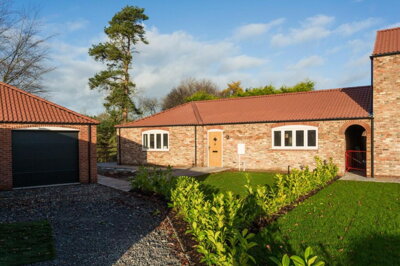
Browse 1 home new builds in Catton from local developer agents.
The 2 bed house market features detached, semi-detached, and terraced properties with two separate bedrooms plus living spaces. Properties in Catton range across contemporary developments, with pricing varying across different neighbourhoods.
The property market in Catton presents a distinctive picture of rural North Yorkshire living, where the volume of transactions remains modest but the character of available properties more than compensates. PropertyResearch.uk recorded 9 sales in Catton during 2025, with property types spanning detached family homes, traditional terraced cottages, and occasional semi-detached properties. This limited transaction volume is typical for smaller villages in the region, meaning each property that becomes available tends to attract significant interest from buyers seeking the village lifestyle.
Price data across different sources shows considerable variation, with overall averages ranging from around 192,000 pounds to over 768,000 pounds depending on the source and methodology used. The more conservative Rightmove data puts the average around 310,000 pounds over the past year, while PropertyResearch.uk suggests a median price of 192,000 pounds. Detached properties consistently outperform other types, with PropertyResearch.uk recording a 2025 median of 463,385 pounds for detached homes based on 6 sales. Terraced properties in the village have sold at around 310,000 to 320,000 pounds, while semi-detached homes have achieved approximately 225,000 pounds.
Price trends in Catton show some volatility, which is common in smaller markets where individual sales can significantly influence averages. OnTheMarket reports a 12-month price increase of 34.6 percent, while PropertyResearch.uk indicates a 20.5 percent decline over the same period. This discrepancy likely reflects differences in which properties were included in each analysis, with a smaller number of higher-value sales potentially skewing results. For prospective buyers, this volatility suggests the importance of looking at specific properties rather than relying solely on aggregate statistics when considering a purchase in the village.

Catton, North Yorkshire, embodies the essence of traditional English village life, set within rolling countryside that characterises this part of Yorkshire. The village forms part of the Harrogate district and lies within easy reach of some of the region's most celebrated landscapes. Residents benefit from the peace and quiet of rural living while maintaining reasonable access to the amenities offered by nearby towns. The village community maintains a close-knit character, with local events and traditions that bring neighbours together throughout the year.
The surrounding landscape of North Yorkshire provides exceptional opportunities for outdoor recreation and appreciation of natural beauty. The area falls within reach of the North York Moors National Park, offering extensive walking, cycling, and wildlife observation opportunities. Local footpaths and bridleways crisscross the countryside, providing scenic routes for exploration. The area geology, typical of the Magnesian Limestone belt that runs through this part of Yorkshire, creates distinctive rolling terrain with well-drained agricultural land and traditional dry stone walls that define field boundaries.
Daily amenities in Catton itself are limited due to the village's small scale, but residents typically travel to nearby towns for shopping, healthcare, and other services. The local economy is primarily agricultural, with farms in the surrounding area producing crops and livestock that contribute to the rural character. Community facilities may include a village hall hosting various events and gatherings. The demographic profile tends to include families, retirees, and those who work remotely or commute to larger centres, all drawn by the quality of life that rural North Yorkshire offers.
Education provision in Catton itself is limited due to the village's small population, with no primary or secondary schools located within the parish boundaries. Families with children typically rely on schools in nearby towns and villages, making careful consideration of school catchment areas an important factor when purchasing property in the Catton area. The nearest primary schools are likely located in surrounding villages or market towns, with the nearest secondary school probably situated in a larger settlement within reasonable daily commuting distance.
Parents researching schools in the area should consult the North Yorkshire County Council school admissions portal for the most current information on catchment boundaries and available places. Secondary education options in the broader area include both state schools and potentially grammar schools, depending on proximity to towns with selective admission policies. For families prioritising education in their property search, thorough research into specific school performance data and admission criteria is essential before committing to a purchase in the village.
Further education opportunities for older students are available at colleges and sixth forms in nearby towns, with York and Harrogate offering particularly good provision for post-16 education. The University of York and York St John University provide higher education options within reasonable travelling distance, making Catton potentially suitable for families with older children who are considering university but wish to remain within the family home during their studies.
Transport connections from Catton reflect its rural village character, with residents typically dependent on private vehicles for daily commuting and essential journeys. The village is situated within the North Yorkshire countryside, with road connections linking to nearby towns and villages. The A1(M) motorway passes through the wider region, providing north-south connectivity to major cities including Leeds, Newcastle, and York. Local road networks connect Catton to surrounding communities, though journey times to larger centres may be longer than in more urban locations.
Public transport options in rural North Yorkshire villages are limited, with bus services typically operating on reduced frequencies compared to urban areas. Residents without access to private vehicles may need to travel to nearby towns to access railway stations with connections to regional and national rail networks. The nearest mainline railway stations are likely located in larger towns within the region, offering services to cities including York, Leeds, Newcastle, and London. Planning for transport requirements is an important consideration for anyone considering a move to Catton, particularly those who commute regularly or have family members without driving licences.
Cycling can be a viable option for shorter journeys within the local area, with North Yorkshire promoting cycling infrastructure and the flat to gently rolling terrain of the Magnesian Limestone area being relatively accommodating for cyclists. Walking for leisure and local errands is popular, with footpaths providing access to surrounding countryside. For commuters working from home, which has become increasingly common, the rural location presents fewer challenges, with fast broadband becoming increasingly available even in smaller villages across the region.
Before committing to a purchase in Catton, thoroughly investigate the village and surrounding area. Consider your daily transport requirements, proximity to schools and amenities, and how the rural lifestyle aligns with your priorities. Visit at different times of day and week to get a genuine feel for the neighbourhood.
Speak to a mortgage broker early in your search to understand your borrowing capacity and obtain an agreement in principle. This strengthens your position when making offers and demonstrates to sellers that you are a serious, financially prepared buyer. Our partners can help you find competitive rates.
Once you have identified properties of interest, arrange viewings through estate agents listing homes in Catton. Our platform aggregates listings from multiple agents, making it easy to compare available properties and schedule visits. Take notes and photographs during viewings to help with later decision-making.
Before completing your purchase, commission a RICS Level 2 Survey to assess the property condition and identify any issues that might affect your decision or require negotiation. This is particularly important in older rural properties where traditional construction methods may have specific maintenance requirements.
Choose a conveyancing solicitor to handle the legal aspects of your purchase. They will conduct searches, handle contracts, and manage the transfer of ownership. Our conveyancing partners offer competitive fixed fees and specialise in residential property transactions.
Once all searches are satisfactory and contracts are signed, your solicitor will arrange the exchange of contracts and set a completion date. On completion day, the remaining funds are transferred and you receive the keys to your new home in Catton.
Properties in Catton typically reflect traditional North Yorkshire construction, with many homes built using local stone and traditional methods that contribute to the village's character. When viewing properties, pay attention to the condition of stone walls, which may require ongoing maintenance, and look for signs of any structural issues that can be more costly to address in older properties. The age of properties in the village can vary considerably, from historic cottages to more modern developments built within the last few decades.
Rural properties in the North Yorkshire countryside may have specific considerations around flooding risk, drainage, and access arrangements. Environmental searches should reveal any flood risk associated with the property, while information about septic tanks or private drainage systems should be obtained for properties not connected to mains sewage. Access rights over private roads or tracks may also require investigation, particularly for properties located off the main village roads.
Many properties in rural villages like Catton may be leasehold or have unusual ownership arrangements that require careful investigation. Confirmation of freehold or leasehold status, any service charges, and ground rent terms should be obtained before proceeding. Properties in conservation areas, which are common in villages with significant historical character, may have additional planning restrictions affecting what alterations or extensions are permitted. A thorough review of all property documentation with your solicitor is essential before completing your purchase.
House prices in Catton show considerable variation across different data sources, reflecting the small number of transactions in this rural village. The Rightmove average over the past year sits around 310,354 pounds, while PropertyResearch.uk suggests a median price of approximately 192,000 pounds. Detached properties command higher prices, with 2025 medians around 463,385 pounds, while terraced properties have sold at approximately 310,000 to 320,000 pounds. The variation in reported figures highlights the importance of looking at specific property details rather than aggregate statistics when considering a purchase in Catton.
Properties in Catton fall under the council tax jurisdiction of North Yorkshire County Council. Specific council tax bands vary by property depending on the valuation band assigned by the Valuation Office Agency. Buyers should check the specific band for any property they are considering, as this will affect annual running costs. North Yorkshire County Council sets council tax rates annually, with bands ranging from A through to H, with lower band properties paying less than higher band properties.
Catton itself does not have schools within the village boundaries, so families should look to nearby towns and villages for educational provision. The nearest primary and secondary schools will be located in surrounding communities, and catchment areas should be verified with North Yorkshire County Council before purchasing property. The wider area offers access to both state schools and potentially selective grammar schools, depending on proximity to towns with grammar school provision. Parents should research individual school performance data and Ofsted ratings when evaluating educational options in the surrounding area.
Public transport connectivity in Catton is limited, reflecting the rural village setting. Bus services in the surrounding North Yorkshire countryside typically operate on reduced frequencies compared to urban areas. Residents generally rely on private vehicles for daily commuting and essential journeys. The nearest railway stations with connections to regional and national rail networks are located in nearby larger towns. Prospective buyers without access to a car should carefully consider the practical implications of limited public transport options before committing to a purchase in Catton.
Property investment in small rural villages like Catton requires careful consideration of market dynamics and rental demand. The village's rural character and proximity to attractive countryside can appeal to certain tenant groups, though the limited local amenities and transport connections may restrict rental demand compared to more accessible locations. Capital growth potential in small villages can be volatile, with limited transaction volumes meaning prices may fluctuate significantly based on individual sales. Any investment decision should consider both the character of the local market and the specific property type being considered.
Stamp Duty Land Tax (SDLT) rates for residential property purchases in England start at zero percent on the first 250,000 pounds of the purchase price. From 250,001 pounds to 925,000 pounds, the rate is 5 percent, rising to 10 percent for the portion between 925,001 pounds and 1.5 million pounds, and 12 percent on any amount above 1.5 million pounds. First-time buyers benefit from relief on the first 425,000 pounds, with 5 percent charged between 425,001 pounds and 625,000 pounds, though no relief applies above 625,000 pounds. Based on typical property prices in Catton, many purchases may fall within the lower SDLT bands or potentially qualify for first-time buyer relief.
When viewing properties in Catton, pay particular attention to the condition of traditional stone construction, which may require specialist maintenance. Check the age and condition of any private drainage systems, as properties in rural areas may not be connected to mains sewage. Investigate access arrangements for properties located off main roads, and verify whether the property falls within a conservation area with potential planning restrictions. Given the rural setting, also assess broadband speeds and mobile phone signal strength, as these can vary considerably in countryside locations.
From 4.5%
Compare mortgage rates and find the best deal for your Catton property
From 499 pounds
Expert solicitors to handle your property purchase
From 350 pounds
Comprehensive homebuyer report for your new property
From 85 pounds
Energy performance certificate for your Catton home
Understanding the full costs of purchasing property in Catton, North Yorkshire, requires consideration of Stamp Duty Land Tax alongside other fees and charges. For residential purchases in England, SDLT applies at varying rates depending on the purchase price and whether you qualify as a first-time buyer. Given that typical property prices in Catton often fall within the 192,000 pounds to 320,000 pounds range, many buyers may find their SDLT liability falls within the lower rate bands, potentially making the purchase more affordable than in higher-priced markets.
First-time buyers purchasing property in Catton benefit from increased SDLT thresholds compared to those who have previously owned property. The first-time buyer relief applies to the first 425,000 pounds of the purchase price, with 5 percent charged between 425,001 pounds and 625,000 pounds. This means that for a first-time buyer purchasing a typical Catton property at around 300,000 pounds, the SDLT liability would be zero, representing a significant saving. Those purchasing above 625,000 pounds receive no first-time buyer relief, with standard rates applying to the full purchase price.
Beyond SDLT, buyers should budget for solicitor conveyancing costs, which typically start from around 499 pounds for standard transactions but can increase depending on complexity. A RICS Level 2 Survey to assess property condition generally costs from 350 pounds, while an Energy Performance Certificate is required before sale and typically costs from 85 pounds. Mortgage arrangement fees, valuation fees, and search costs from the local authority should also be factored into your budget. Together, these additional costs can amount to several thousand pounds, so obtaining a comprehensive estimate before committing to a purchase is essential for financial planning.
Properties New Builds In London

Properties New Builds In Plymouth

Properties New Builds In Liverpool

Properties New Builds In Glasgow

Properties New Builds In Sheffield

Properties New Builds In Edinburgh

Properties New Builds In Coventry

Properties New Builds In Bradford

Properties New Builds In Manchester

Properties New Builds In Birmingham

Properties New Builds In Bristol

Properties New Builds In Oxford

Properties New Builds In Leicester

Properties New Builds In Newcastle

Properties New Builds In Leeds

Properties New Builds In Southampton

Properties New Builds In Cardiff

Properties New Builds In Nottingham

Properties New Builds In Norwich

Properties New Builds In Brighton

Properties New Builds In Derby

Properties New Builds In Portsmouth

Properties New Builds In Northampton

Properties New Builds In Milton Keynes

Properties New Builds In Bournemouth

Properties New Builds In Bolton

Properties New Builds In Swansea

Properties New Builds In Swindon

Properties New Builds In Peterborough

Properties New Builds In Wolverhampton

Enter your details to see if this property is within your budget.
Loans, cards, car finance
Estimated property budget
Borrowing + deposit
You could borrow between
Typical borrowing
Monthly repayment
Est. at 4.5%
Loan-to-value
This is an estimate only. Your actual budget may vary depending on interest rates, credit history, and personal circumstances. For an accurate affordability assessment, speak to one of our free mortgage advisors.
This calculator provides estimates for illustrative purposes only and does not constitute financial advice. Your home may be repossessed if you do not keep up repayments on your mortgage. Estimates based on 4.5% interest rate, repayment mortgage. Actual rates depend on your circumstances.
Homemove is a trading name of HM Haus Group Ltd (Company No. 13873779, registered in England & Wales). Homemove Mortgages Ltd (Company No. 15947693) is an Appointed Representative of TMG Direct Limited, trading as TMG Mortgage Network, which is authorised and regulated by the Financial Conduct Authority (FRN 786245). Homemove Mortgages Ltd is entered on the FCA Register as an Appointed Representative (FRN 1022429). You can check registrations at NewRegister or by calling 0800 111 6768.

We use cookies to show you personalised content and improve your experience of our website. Find out more in our Privacy policy and Cookie policy.