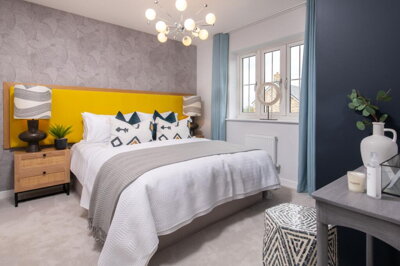
Browse 1 home new builds in Catterall, Wyre from local developer agents.
Three bedroom properties represent a significant portion of the Catterall housing market, offering space for families with multiple reception rooms and gardens in many cases. Browse detached, semi-detached, and terraced options ranging across new residential developments.
£275k
8
0
88
Source: home.co.uk
Showing 8 results for 3 Bedroom Houses new builds in Catterall, Wyre. The median asking price is £275,000.
Source: home.co.uk
Detached
5 listings
Avg £319,990
Semi-Detached
3 listings
Avg £244,983
Source: home.co.uk
Source: home.co.uk
The Great Aycliffe property market offers something for every buyer, with detached family homes averaging £219,905, semi-detached properties at £121,352, and terraced houses providing the most affordable entry point at around £85,193. Over 1,100 terraced properties have changed hands since 2018, demonstrating strong demand for this property type among first-time buyers and investors seeking rental opportunities. Flats in the area average £66,239, though these represent a smaller segment of the market with only 46 sales recorded in recent years. The market benefits from a healthy transaction volume, with 222 recorded sales in 2025 alone, indicating robust buyer interest and good liquidity for sellers looking to move.
The Copelaw housing development represents a significant addition to the local property landscape, with Church Commissioners for England and Durham County Council submitting an outline planning application for up to 1,343 high-quality homes east of Newton Aycliffe. This major scheme, located beyond the A167 and bordered by Ricknall Lane to the south, includes 92 extra care apartments, 15% affordable housing, and properties designed for older residents such as bungalows and level access flats. Reference DM/24/01978/OUT was submitted to Durham County Council in July 2024, and while this development works through the planning process, existing homeowners can take confidence from the established nature of current neighbourhoods and the area's proven track record of capital growth, with prices currently sitting just 10% below the 2008 market peak.
Property types in Great Aycliffe reflect its dual heritage, with Aycliffe Village featuring traditional stone cottages and listed buildings surrounding the historic village green, while Newton Aycliffe offers post-war semis and later 20th-century housing constructed using brick, render, and local stone materials. The housing stock includes significant numbers of properties built since the New Town designation in 1947, meaning many homes are now over 50 years old and may benefit from modernisation. Understanding the construction era and materials used helps buyers assess potential maintenance requirements and renovation opportunities when viewing properties across different neighbourhoods.

Great Aycliffe, home to approximately 26,838 residents across 11,462 households, offers a balanced mix of residential neighbourhoods shaped by its unique history as both an ancient village and a post-war New Town. The area's character varies dramatically between the historic core of Aycliffe Village, with its traditional stone cottages and listed buildings surrounding the central green, and the planned layouts of Newton Aycliffe with their generous green spaces and tree-lined avenues. The Great Aycliffe Neighbourhood Plan identifies 15 distinct character areas, each reflecting different phases of development from the original New Town construction through to more recent residential additions. Notably, the area has a higher than average ageing population, which influences the types of facilities and services available locally.
The local economy centres on Aycliffe Business Park, one of the largest employment sites in County Durham, hosting around 250 companies and providing employment for approximately 8,000 people in manufacturing and related industries. Major employers include Gestamp Tallent, one of the biggest employers in the area, alongside Husqvarna, Ebac, Permoid, Lucite, Compound Photonics, Lidl, Stiller, and Hitachi. The business park covers over 400 hectares and was fundamental to the formation of Newton Aycliffe New Town, creating sustained demand for housing from local workers. This sub-regional economic role as a main town in South Durham provides fundamentals that support long-term property demand, though buyers should note that parts of Great Aycliffe are ranked within the poorest 20% of deprived areas nationally.
Community facilities include local shops, traditional pubs such as those found along the High Street in Aycliffe Village, and recreational areas throughout the residential estates. The surrounding County Durham countryside provides ample opportunity for outdoor activities and family days out, while the area's blend of historic and modern environments creates diverse lifestyle options. Families moving to the area will find playgrounds, parks, and community centres spread throughout different neighbourhoods, supporting the local community atmosphere that attracts buyers seeking a friendly, established place to call home.

Families considering a move to Great Aycliffe will find a selection of primary and secondary schools serving the local community, with several educational establishments within easy reach of residential areas. Primary schools in the vicinity include Middlestone Moor Primary School, which serves families in the eastern parts of Newton Aycliffe, and several other primary options distributed across different neighbourhoods to ensure local coverage. The area's school catchment areas are important considerations for parents seeking to secure places at particular establishments, so buyers with school-age children should research admission criteria and catchment boundaries before committing to a property purchase. Attending open days and speaking with school administrators can provide valuable insight into each school's culture and facilities.
Secondary education in the area includes Greenfield Community College, which provides secondary education for students from across Great Aycliffe and surrounding villages. School performance data, including Ofsted inspection results, provides valuable context for parents evaluating different neighbourhoods, and properties in areas with well-regarded schools often command a premium in the local market. Parents should review current Ofsted ratings through the official website and consider factors such as exam results, extracurricular offerings, and pupil wellbeing provisions when comparing schools. The proximity of Great Aycliffe to Durham also provides access to highly regarded grammar and independent schools in the wider region, including those in Durham city centre which can be reached via the A167 and A1(M).
The presence of educational facilities extends to further and higher education options within reasonable travelling distance, with colleges in nearby towns offering A-levels and vocational qualifications for older students. Students can access further education at colleges in Darlington and Durham, with both towns offering a range of academic and vocational pathways. For families prioritising educational opportunities, the accessibility of Durham's university and its associated amenities adds another dimension to the area's appeal as a place to raise children, while the relatively short commute times mean older students can live at home while pursuing higher education qualifications.
Great Aycliffe benefits from excellent road connections, with the A167 providing direct access to the A1(M) motorway, linking residents to Newcastle upon Tyne to the north and Leeds and York to the east. This strategic positioning makes the area particularly attractive to commuters working in larger cities who seek more affordable housing options while maintaining practical travel connections. The road network also serves local employers at Aycliffe Business Park, reducing commute times for residents lucky enough to work close to home. Bus services operate throughout the area, providing connections to Durham, Darlington, and surrounding towns as an alternative to car travel for daily commuting and local journeys.
For those travelling further afield, the railway stations at Darlington and Durham provide access to national rail services, with journey times to major cities varying depending on connections and service availability. Darlington station offers particularly good connectivity with east coast main line services to London, Edinburgh, and other major destinations. The proximity of Teesside Airport offers additional connectivity for business and leisure travel, while the port facilities at Teesport provide freight connections for commercial purposes. Cyclists and pedestrians are well-served by local footpaths and cycle routes, though parking availability varies across different neighbourhoods and represents a practical consideration for car-owning households.
Bus routes serving Great Aycliffe connect residents to neighbouring towns and villages, making it possible to commute without a car for those working locally or studying at colleges in nearby towns. The local bus network links Newton Aycliffe with Middlesbrough, Stockton-on-Tees, and Bishop Auckland, providing public transport options for those without vehicles. Planning a journey using public transport before moving can help prospective buyers understand their commute options and factor travel times into their property search, particularly if considering areas further from the main bus routes.
Before beginning your property search, obtain a mortgage agreement in principle from a lender to understand your budget and demonstrate your seriousness to sellers when making offers. At current Great Aycliffe average prices of £148,731, most buyers will need smaller mortgages than those required in nearby Durham or Newcastle, making the area particularly accessible for first-time buyers with modest deposits. Factor in additional costs including solicitor fees, survey costs, and stamp duty to ensure your total budget covers the full cost of buying.
Explore current listings in Great Aycliffe, attend open viewings, and familiarise yourself with different neighbourhoods from historic Aycliffe Village with its Conservation Area restrictions to the established residential areas of Newton Aycliffe with their post-war housing stock. Understanding the differences between property types, from terraced cottages near the village green to modern detached homes on outer estates, helps buyers focus their search on areas that match their priorities and lifestyle requirements.
Once you find your ideal property, submit a competitive offer through your estate agent, negotiate terms, and agree a completion date that works for both parties. In a market with 222 recorded sales in 2025, competitive offers may be required for popular properties, particularly those near good schools or with desirable features. Your estate agent can advise on local market conditions and help structure an offer that stands the best chance of acceptance.
Commission a RICS Level 2 Survey to assess the property condition, particularly important given the mix of older properties and post-1960s housing stock in the area. Our inspectors regularly identify common issues in local properties including damp in solid-walled construction, roof deterioration, and outdated electrical systems. A thorough survey before completion can save buyers thousands in unexpected repair costs and provide leverage to renegotiate or request repairs before completing.
Appoint a conveyancing solicitor to handle the legal aspects of your purchase, including searches, contracts, and registration of ownership at HM Land Registry. Solicitors can also advise on specific local issues such as flood risk from the River Skerne or Woodham Burn, conservation area requirements in Aycliffe Village, and any environmental concerns that may affect the property. Budget around £499 for basic conveyancing services, with more complex transactions requiring additional fees.
Finalise your mortgage, sign contracts, pay your deposit, and collect your keys on completion day to take ownership of your new Great Aycliffe home. At average prices of £148,731, most buyers purchasing at or near the local average will pay zero stamp duty, making the completion process more affordable than in many other UK markets. Celebrate your new home with a visit to one of the local pubs or a walk through the County Durham countryside.
Property buyers in Great Aycliffe should be aware of specific local factors that could affect their purchase, beginning with flood risk considerations given the area's proximity to the River Skerne and Woodham Burn. Properties in low-lying areas near these watercourses, particularly in parts of Newton Aycliffe around Kirkstone Place, Honister Place, Ashfield, and Oakfield, carry elevated flood risk according to Environment Agency mapping. At Aycliffe Village, properties at Well Bank, Monks End, and Mill House face river flooding risk from the River Skerne, which has burst its banks historically. Surface water flooding has also been reported on Stephenson Way and in surrounding streets including Wright Close and Lilburn Crescent following heavy rainfall, so prospective buyers should review flood risk assessments and consider whether properties have appropriate drainage and resistance measures in place.
The Aycliffe Village Conservation Area imposes planning restrictions on properties within its boundaries, affecting permitted development rights and requirements for maintaining historic character. Any buyer considering a property in this designated area should familiarise themselves with conservation area requirements and factor potential restoration costs into their budget, especially for traditional stone buildings that may require specialist maintenance. Listed buildings scattered throughout Great Aycliffe, including the Grade I listed St. Andrew's Church and numerous Grade II structures along the High Street and The Green, carry additional obligations for preservation that specialist surveys can help buyers understand before committing to a purchase.
Environmental considerations extend beyond flooding, with the former Aycliffe Quarry landfill site having generated concern among residents in Aycliffe Village and Brafferton regarding noxious odours. While not a structural issue, this environmental factor may affect quality of life for properties in proximity to the quarry, and prospective buyers should investigate the location relative to their chosen property. The local geology, which includes limestone from the former quarry, means that ground conditions should be considered during property surveys, particularly for older properties with potential for shrink-swell movement in clay soils.
Our inspectors frequently encounter issues specific to the local housing stock, including damp and condensation problems in traditional stone cottages with solid walls lacking modern cavity construction. Properties from the post-1960s era may show signs of roof deterioration, original single-glazed windows, and electrical systems that do not meet current standards. A RICS Level 2 Survey typically costs between £350-£500 depending on property value and size, and this investment identifies defects before completion, giving buyers the information needed to make confident decisions about their purchase.
The average sold price for properties in Great Aycliffe (Aycliffe Parish) is £148,731 based on 222 recorded sales in 2025. Detached homes average £219,905, semi-detached properties £121,352, terraced houses £85,193, and flats approximately £66,239. Prices in Aycliffe Village have risen 23% year-on-year, reflecting strong demand in the local market, though prices remain 10% below the 2008 peak of £266,667.
Council tax bands in Great Aycliffe are set by Durham County Council and vary by property value and type. Most residential properties in the area fall within bands A through D, which are among the lower council tax brackets applicable across County Durham. Prospective buyers should check specific band ratings for individual properties through the Durham County Council website or their solicitor during conveyancing, as the band can significantly affect annual running costs.
Great Aycliffe offers a range of primary and secondary schools serving local families, including Middlestone Moor Primary School for younger children and Greenfield Community College for secondary education. Parents should research current Ofsted ratings and admission catchment areas when evaluating schools, as these factors can significantly influence educational outcomes and place availability. The area's proximity to Durham also provides access to highly regarded grammar and independent schools in the wider region for families seeking additional options.
Great Aycliffe is served by local bus routes connecting to Durham, Darlington, Bishop Auckland, Middlesbrough, and surrounding towns, while the A167 provides direct access to the A1(M) for car travel. Rail connections are available from nearby Darlington and Durham stations, offering services to major cities including Newcastle, Leeds, and London via the east coast main line. The area's road connections make it particularly accessible for commuters to Teesside, County Durham, and beyond, with journey times to Newcastle typically taking around 45 minutes by car.
Great Aycliffe offers several investment considerations, including relatively affordable entry prices compared to nearby metropolitan areas, a strong rental market driven by local employment at Aycliffe Business Park with 8,000 workers, and ongoing development activity including the proposed Copelaw scheme of up to 1,343 homes. The area's status as the oldest New Town in northern England and its proximity to major employers provide fundamentals that support long-term demand, though buyers should conduct thorough research on specific locations and property types before committing.
Stamp duty rates from April 2025 start at 0% on the first £250,000 of residential property purchases, rising to 5% on values between £250,001 and £925,000, 10% up to £1.5 million, and 12% on amounts exceeding £1.5 million. First-time buyers benefit from relief on purchases up to £625,000, paying 0% on the first £425,000. At current Great Aycliffe average prices of £148,731, most buyers would pay no stamp duty at all, making this one of the most tax-efficient markets in the UK for property purchases.
Flood risk is a material consideration in parts of Great Aycliffe, particularly near the River Skerne at Aycliffe Village where properties at Well Bank, Monks End, and Mill House face elevated risk, and along the Woodham Burn through Newton Aycliffe with areas around Kirkstone Place, Honister Place, Ashfield, and Oakfield identified as significant risk. Surface water flooding has affected areas near Stephenson Way, Wright Close, and Lilburn Crescent following heavy rainfall when drainage has struggled to cope. Buyers should request flood risk searches and consider property surveys that assess flood resilience measures, with particular attention to ground floor properties in identified risk zones.
Beyond flood risk, prospective buyers should be aware that the former Aycliffe Quarry landfill site has generated noxious odour complaints from residents in Aycliffe Village and Brafferton. The quarry has accepted waste since the 1970s, and landfill gas can produce the characteristic "rotten egg" smell that has affected local air quality during certain weather conditions. Properties located near the quarry boundary may experience this issue, and buyers should investigate the distance between any property they are considering and the quarry location before completing their purchase.
From £350
A professional survey to assess property condition before purchase
From £60
Energy performance certificate required for all property sales
From 4.5%
Competitive mortgage rates from trusted lenders
From £499
Professional legal services for your property purchase
Purchasing a property in Great Aycliffe involves several costs beyond the purchase price, with stamp duty representing one of the most significant expenses for buyers. At current average prices of £148,731, most buyers purchasing at or near the local average will pay zero stamp duty, making Great Aycliffe an attractive option for first-time buyers and those trading up from smaller properties. This compares favourably with prices in nearby Durham or Newcastle, where stamp duty costs can quickly accumulate on higher-value purchases. First-time buyers purchasing properties up to £425,000 benefit from full relief, while those spending between £425,001 and £625,000 pay just 5% on the amount above the threshold.
Additional buying costs include solicitor fees for conveyancing, which typically range from £499 for basic transactions upwards depending on complexity and property value. Survey costs represent another important budget item, with a RICS Level 2 Survey costing approximately £350-£500 depending on the property type and value. This investment provides valuable protection against hidden defects in a housing stock that includes both traditional cottages in Aycliffe Village and post-1960s properties in Newton Aycliffe, where our inspectors commonly identify issues including damp, roof deterioration, and outdated electrical systems. Mortgage arrangement fees, valuation charges, and local authority search fees add further costs, and buyers should budget for these additional expenses when calculating their total moving costs.
The relatively affordable nature of Great Aycliffe property prices means that total buying costs as a percentage of purchase price remain competitive compared to more expensive markets. For a typical terraced property at £85,193, buyers would face minimal stamp duty, reduced survey costs based on property value, and lower overall legal fees. Budgeting around 3-5% of the purchase price in addition costs provides a reasonable contingency for most transactions, though buyers of listed buildings or properties in the Conservation Area should allow additional funds for specialist surveys and heritage-consented works that may be required.
Properties New Builds In London

Properties New Builds In Plymouth

Properties New Builds In Liverpool

Properties New Builds In Glasgow

Properties New Builds In Sheffield

Properties New Builds In Edinburgh

Properties New Builds In Coventry

Properties New Builds In Bradford

Properties New Builds In Manchester

Properties New Builds In Birmingham

Properties New Builds In Bristol

Properties New Builds In Oxford

Properties New Builds In Leicester

Properties New Builds In Newcastle

Properties New Builds In Leeds

Properties New Builds In Southampton

Properties New Builds In Cardiff

Properties New Builds In Nottingham

Properties New Builds In Norwich

Properties New Builds In Brighton

Properties New Builds In Derby

Properties New Builds In Portsmouth

Properties New Builds In Northampton

Properties New Builds In Milton Keynes

Properties New Builds In Bournemouth

Properties New Builds In Bolton

Properties New Builds In Swansea

Properties New Builds In Swindon

Properties New Builds In Peterborough

Properties New Builds In Wolverhampton

Enter your details to see if this property is within your budget.
Loans, cards, car finance
Estimated property budget
Borrowing + deposit
You could borrow between
Typical borrowing
Monthly repayment
Est. at 4.5%
Loan-to-value
This is an estimate only. Your actual budget may vary depending on interest rates, credit history, and personal circumstances. For an accurate affordability assessment, speak to one of our free mortgage advisors.
This calculator provides estimates for illustrative purposes only and does not constitute financial advice. Your home may be repossessed if you do not keep up repayments on your mortgage. Estimates based on 4.5% interest rate, repayment mortgage. Actual rates depend on your circumstances.
Homemove is a trading name of HM Haus Group Ltd (Company No. 13873779, registered in England & Wales). Homemove Mortgages Ltd (Company No. 15947693) is an Appointed Representative of TMG Direct Limited, trading as TMG Mortgage Network, which is authorised and regulated by the Financial Conduct Authority (FRN 786245). Homemove Mortgages Ltd is entered on the FCA Register as an Appointed Representative (FRN 1022429). You can check registrations at NewRegister or by calling 0800 111 6768.

We use cookies to show you personalised content and improve your experience of our website. Find out more in our Privacy policy and Cookie policy.