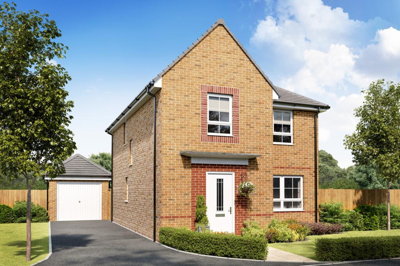
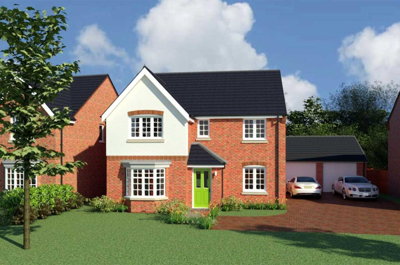
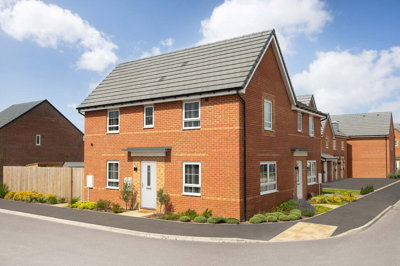
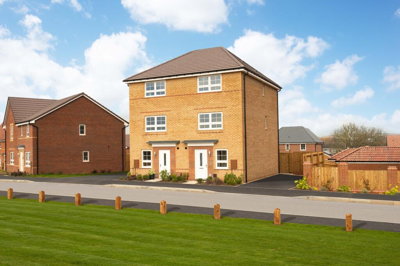
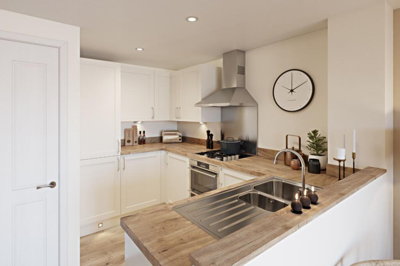
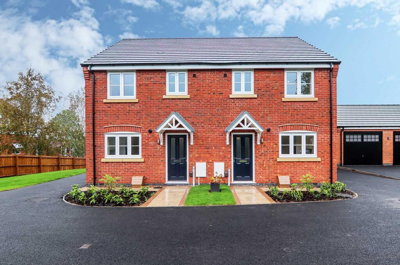
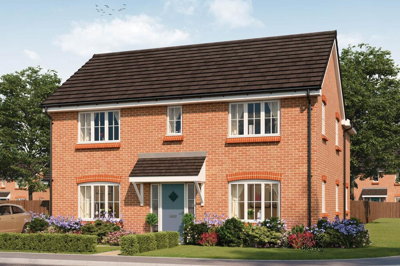
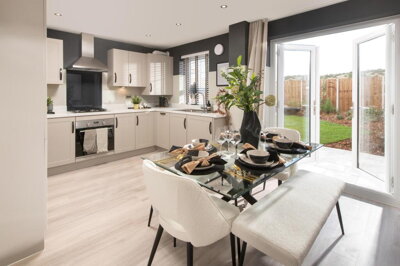
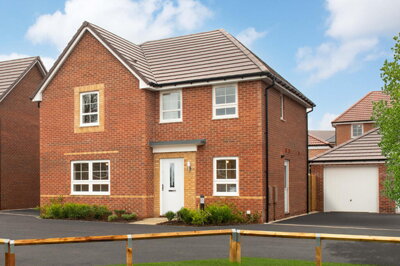
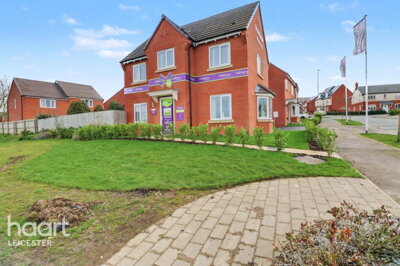
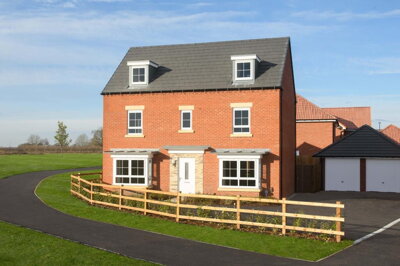
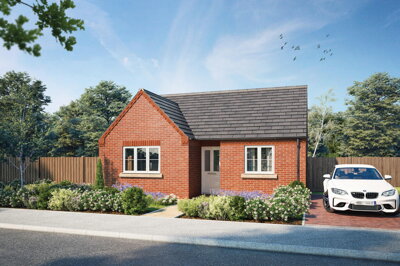
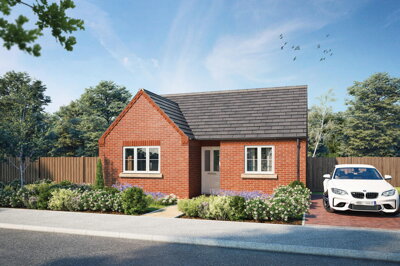
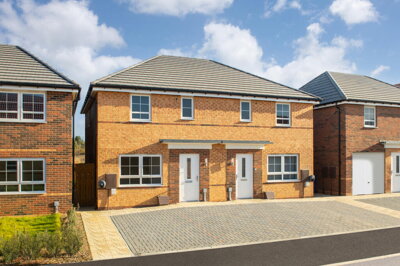
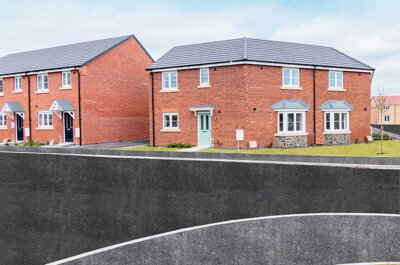
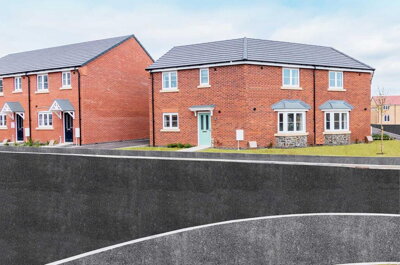
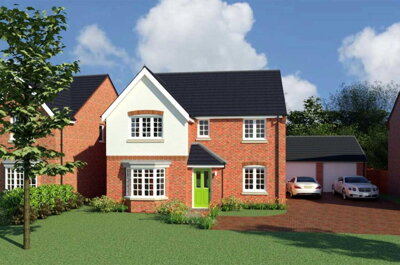
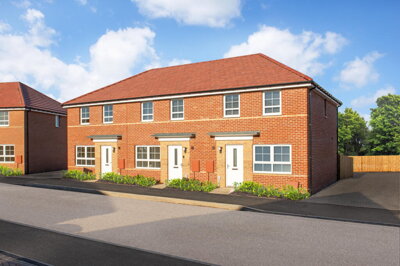
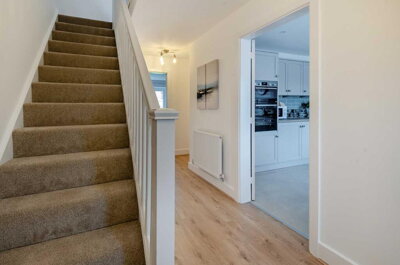
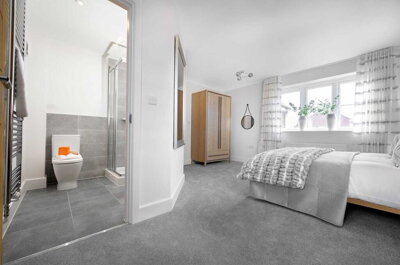
Browse 21 homes new builds in Burton and Dalby from local developer agents.
The Burton And Dalby property market offers detached, semi-detached, and terraced houses spanning various price ranges and neighbourhoods. Each listing includes detailed property information, photographs, and direct contact with the marketing agent.
The Burton and Dalby property market offers a distinctive mix of housing types that reflect the parish's rich history and rural character. In Burton Lazars, detached properties command premium prices averaging around £492,500, while the village also offers more affordable options including flats averaging approximately £86,000. Great Dalby presents a different price profile, with terraced properties surprisingly averaging £535,000, semidetached homes at £440,000, and detached properties at £427,500. This variation suggests strong demand across different property types within the parish.
Recent market activity indicates some cooling from previous peaks, with Burton Lazars showing prices approximately 22% lower than the previous year and 26% down from the 2023 peak of £483,000. Similarly, Great Dalby properties have softened by around 3% from the previous year and stand approximately 30% below the 2016 peak of £656,167. These corrections present potential opportunities for buyers who may find the current market more accessible than the height of the pandemic-era boom. A new planning application for four two-bedroom dwellings at Lime Street in Burton Lazars, submitted in December 2025, suggests continued development interest in the area.
The predominant housing stock in Burton and Dalby reflects centuries of continuous habitation, with many properties featuring traditional construction methods including thatch roofing and period architectural details. The Great Dalby Conservation Area preserves the character of the village centre, ensuring that new development respects the historic environment. Properties within this parish often require careful consideration during purchase, and a thorough survey is advisable given the age of much of the housing stock.

Life in Burton and Dalby revolves around the rhythms of rural Leicestershire, where the tight-knit community creates a genuine sense of belonging that is increasingly rare in modern Britain. The parish covers a low-density landscape of just 37 people per square kilometre, offering residents ample space and proximity to countryside walks, farmland, and open views across the Leicestershire countryside. The villages maintain their individual characters while sharing community facilities and events that bring residents together throughout the year.
The local economy centres largely on agriculture, with approximately ten farm-based businesses operating within the parish boundaries. Small business units at Lower Hall Farm in Burton Lazars and the former Melton Airfield provide workspace for local enterprises, while numerous home-based businesses contribute to the economic fabric of the community. This diversification reflects the adaptability of rural economies and provides employment opportunities without the need for lengthy commutes to larger towns.
Community life in the parish is supported by active local organisations and the Burton and Dalby Parish Council, which works to maintain services and represent residents' interests. The parish council has identified a particular need for smaller properties, specifically two and three-bedroom houses and bungalows, suggesting that the market may not fully meet demand from downsizers or first-time buyers seeking to remain in the area. This undersupply of smaller properties represents both a challenge for some buyers and a potential opportunity for investors.

Families considering a move to Burton and Dalby will find educational provision centred on the nearby market town of Melton Mowbray, which offers a range of primary and secondary schools serving the wider area. The parish's small population means that local primary education may be accessed through schools in neighbouring villages, with school transport arrangements typically available for families beyond walking distance. Secondary education options in Melton Mowbray include both comprehensive schools and grammar school provision for those who meet the academic entry requirements.
The presence of the Great Dalby Conservation Area and the historic character of properties throughout the parish means that families should consider how school catchment areas interact with their preferred property location. School performance data, Ofsted inspection outcomes, and admission criteria are all factors that merit research before committing to a purchase, particularly given the rural nature of the area where school transport arrangements can affect daily routines significantly. Many families in similar rural Leicestershire settings choose to prioritise school accessibility alongside property features when house hunting.
For families with older children considering further education, Leicestershire offers good access to colleges and sixth forms in Melton Mowbray, Leicester, and surrounding towns. The proximity of the parish to Leicester means that university options are within reasonable commuting distance for older students, while the city itself provides extensive higher education opportunities. Parents are encouraged to research specific school admissions policies and catchment areas directly, as these can change and may not align exactly with parish boundaries.
Transport connectivity in Burton and Dalby reflects its rural character, with the parish relying primarily on road connections to access larger centres of employment and services. The A606 runs through the nearby town of Melton Mowbray, providing links to Nottingham to the north and Leicester to the south. The A1 motorway is accessible via the A46, connecting residents to broader national road networks and making day commuting to cities such as Nottingham, Leicester, and Derby feasible for those willing to travel.
Public transport options are limited, consistent with the pattern found across rural Leicestershire. Bus services connect the villages to Melton Mowbray, providing access to the town's railway station and wider rail connections. Melton Mowbray station offers CrossCountry services connecting to Birmingham, Leicester, and Nottingham, though frequencies may not suit those requiring daily peak-time commuting to major cities. Many residents of similar rural parishes choose to maintain car ownership as essential for daily living, and this practical consideration should inform property search decisions.
For cyclists and walkers, the Leicestershire countryside offers scenic routes through the parish and beyond, with the area's low traffic volumes making rural lanes relatively pleasant for recreational cycling. The proximity to Rutland Water, a popular reservoir and nature reserve, provides additional recreational cycling opportunities and is accessible by road from the parish. Those considering a move to Burton and Dalby should evaluate their commuting requirements carefully against available transport options and determine whether working arrangements might need to adapt to rural living.
Begin by exploring the Burton and Dalby property market thoroughly, understanding price differences between the constituent villages of Burton Lazars, Great Dalby, and Little Dalby. Review recent sales data to understand how current listings compare to historical prices, noting that properties in the area have seen reductions from previous peaks. Register with local estate agents who can alert you to new listings before they appear on major portals.
Before viewing properties, obtain a mortgage agreement in principle from a lender or broker. This demonstrates to sellers that you are a serious buyer with financing secured, which is particularly important in competitive rural markets where properties may attract multiple offers. Use Homemove's mortgage comparison tools to explore rates and find a suitable product for your circumstances.
Schedule viewings of properties that match your requirements, paying attention to the construction type and age of properties you are considering. Given the prevalence of older housing stock in Burton and Dalby, viewings should include assessment of roof condition, original features, and any signs of maintenance needs. Take photographs and notes during each viewing to help compare properties later.
Once you have found a property and agreed a price, instruct a RICS Level 2 Homebuyer Report to assess the condition of the property comprehensively. Given the age of many properties in the parish and their traditional construction methods including thatched elements, a professional survey is essential to identify any defects or structural concerns before you commit to purchase.
Appoint a solicitor to handle the legal aspects of your purchase, including searches, contracts, and registration at HM Land Registry. Your solicitor will liaise with the seller's representatives, coordinate the transfer of funds, and ensure that all local authority searches are completed satisfactorily for the Burton and Dalby area.
Once all enquiries are resolved and financing is confirmed, you will exchange contracts and pay your deposit. Completion typically follows shortly after, at which point the property legally transfers to you and you can collect your keys and move into your new Burton and Dalby home.
Purchasing property in Burton and Dalby requires attention to specific factors that reflect the parish's rural character and older housing stock. Many properties in the area feature traditional construction methods that may include thatched roofing, which requires specialist maintenance and carries higher insurance costs than standard roof types. When viewing properties, ask about the age and condition of the roof, any history of repairs, and whether the property has been re-thatched in recent decades. The historical use of corrugated iron on some properties, later replaced with thatch, indicates ongoing investment in roof maintenance may be necessary.
Properties within the Great Dalby Conservation Area are subject to planning restrictions that limit external alterations without consent. If you are considering making changes to a period property, you should investigate what permissions may be required and factor this into your purchase decision. The presence of listed buildings throughout the parish means that some properties carry additional obligations regarding maintenance and restoration, which a survey should identify clearly.
Given the agricultural nature of the surrounding area, prospective buyers should consider potential sources of rural disturbance including farm operations, agricultural traffic on country lanes, and seasonal activities that are normal parts of countryside living but may surprise those new to rural areas. Noise and odour considerations differ from urban settings, and visits to properties at different times of day and week can reveal aspects of local life that a single viewing might miss. The parish council and local residents can provide valuable insights into day-to-day living that formal viewings cannot always capture.
Average house prices in Burton and Dalby vary significantly between the constituent villages. In Burton Lazars, the average property price is approximately £357,000, with detached properties averaging around £492,500. Great Dalby commands higher average prices at approximately £460,000, though interestingly terraced properties average £535,000, higher than detached homes at £427,500. Recent market activity shows prices have softened from previous peaks, with Burton Lazars down 22% from last year and Great Dalby down 3%, presenting potential opportunities for buyers in this correcting market.
Properties in Burton and Dalby fall under Melton Borough Council for council tax purposes. Bandings depend on the assessed value of individual properties, and buyers should obtain specific band information for any property they are considering. As a general guide, older period properties in the parish may fall into higher bands due to their size and character, while smaller modern homes may occupy lower bands. Contact Melton Borough Council directly or check the government council tax valuation website for specific band information on any listed property.
Primary and secondary education in the Burton and Dalby area is primarily accessed through schools in Melton Mowbray, the nearest market town. Families should research specific school catchments, Ofsted ratings, and admission policies relevant to their property location. Schools in the Melton Mowbray area include both state and grammar school options, with the latter requiring pass marks in selective entrance examinations. Visiting schools and speaking with local parents can provide valuable insights beyond official statistics.
Public transport connectivity in Burton and Dalby reflects its rural character, with limited bus services connecting the villages to Melton Mowbray. The nearest railway station is Melton Mowbray, offering CrossCountry services to Birmingham, Leicester, and Nottingham. However, service frequencies may not suit daily commuters, and most residents rely on private vehicle ownership for everyday transport needs. The A606 provides road connections to surrounding towns, while the A1 and A46 motorways are accessible for longer journeys.
Burton and Dalby offers potential for property investment, particularly given the identified undersupply of two and three-bedroom houses and bungalows within the parish. The rural lifestyle appeal continues to attract buyers seeking space and community away from urban centres, supporting demand for quality properties. Price corrections from previous peaks may present entry opportunities, though buyers should recognise that rural markets can be less liquid than urban ones, potentially affecting resale timelines. The Great Dalby Conservation Area and general character of the area suggest that well-presented period properties should retain their appeal.
Stamp Duty Land Tax rates from April 2025 apply to all properties in England, including Burton and Dalby. For standard purchases, you pay 0% on the first £250,000, 5% on £250,001 to £925,000, and 10% on £925,001 to £1.5 million. First-time buyers benefit from relief on the first £425,000, with 5% charged between £425,001 and £625,000. Given average property prices in the area, many purchases may incur SDLT in the lower bands, though specific calculations depend on purchase price and buyer status.
Given the age of many properties in Burton and Dalby, with some dating back centuries, a professional survey is strongly recommended before purchase. The RICS Level 2 Homebuyer Report is suitable for most properties and will identify structural issues, roof condition, damp, and other defects common to period properties. Properties with thatched roofs or those listed may require the more comprehensive RICS Level 3 Building Survey. Typical survey costs range from £400 to £900 depending on property size and value.
Understanding the full costs of buying property in Burton and Dalby extends beyond the purchase price to include stamp duty, legal fees, survey costs, and other expenses that together can add several thousand pounds to your budget. The Stamp Duty Land Tax rates applying from April 2025 set the zero-rate threshold at £250,000 for standard purchases, meaning that buyers of properties priced below this figure pay no stamp duty. For most properties in Burton and Dalby, where average prices exceed this threshold, SDLT will apply at 5% on the portion between £250,001 and £925,000.
First-time buyers purchasing residential property may qualify for increased relief, with zero stamp duty payable on the first £425,000 of a purchase and 5% on the next £200,000 up to £625,000. This relief applies to buyers who have never owned property anywhere in the world and do not intend to retain any interest in another property after completion. Given average prices in Burton Lazars at £357,000 and Great Dalby at £460,000, many first-time buyers in the area could benefit from this relief, substantially reducing their SDLT liability compared to previous thresholds.
Beyond stamp duty, buyers should budget for solicitor conveyancing fees typically ranging from £500 to £1,500 depending on complexity, a mortgage arrangement fee if your lender charges one, a RICS Level 2 survey costing approximately £400 to £900, and an Energy Performance Certificate at around £80 to £120. Land Registry registration fees, local authority searches, and moving costs add further expenses. Altogether, buyers should anticipate spending approximately £3,000 to £5,000 on purchase costs excluding the mortgage itself, though these figures vary based on property price, individual circumstances, and whether mortgage arrangement fees are added to the loan.
Properties New Builds In London

Properties New Builds In Plymouth

Properties New Builds In Liverpool

Properties New Builds In Glasgow

Properties New Builds In Sheffield

Properties New Builds In Edinburgh

Properties New Builds In Coventry

Properties New Builds In Bradford

Properties New Builds In Manchester

Properties New Builds In Birmingham

Properties New Builds In Bristol

Properties New Builds In Oxford

Properties New Builds In Leicester

Properties New Builds In Newcastle

Properties New Builds In Leeds

Properties New Builds In Southampton

Properties New Builds In Cardiff

Properties New Builds In Nottingham

Properties New Builds In Norwich

Properties New Builds In Brighton

Properties New Builds In Derby

Properties New Builds In Portsmouth

Properties New Builds In Northampton

Properties New Builds In Milton Keynes

Properties New Builds In Bournemouth

Properties New Builds In Bolton

Properties New Builds In Swansea

Properties New Builds In Swindon

Properties New Builds In Peterborough

Properties New Builds In Wolverhampton

Enter your details to see if this property is within your budget.
Loans, cards, car finance
Estimated property budget
Borrowing + deposit
You could borrow between
Typical borrowing
Monthly repayment
Est. at 4.5%
Loan-to-value
This is an estimate only. Your actual budget may vary depending on interest rates, credit history, and personal circumstances. For an accurate affordability assessment, speak to one of our free mortgage advisors.
This calculator provides estimates for illustrative purposes only and does not constitute financial advice. Your home may be repossessed if you do not keep up repayments on your mortgage. Estimates based on 4.5% interest rate, repayment mortgage. Actual rates depend on your circumstances.
Homemove is a trading name of HM Haus Group Ltd (Company No. 13873779, registered in England & Wales). Homemove Mortgages Ltd (Company No. 15947693) is an Appointed Representative of TMG Direct Limited, trading as TMG Mortgage Network, which is authorised and regulated by the Financial Conduct Authority (FRN 786245). Homemove Mortgages Ltd is entered on the FCA Register as an Appointed Representative (FRN 1022429). You can check registrations at NewRegister or by calling 0800 111 6768.

We use cookies to show you personalised content and improve your experience of our website. Find out more in our Privacy policy and Cookie policy.