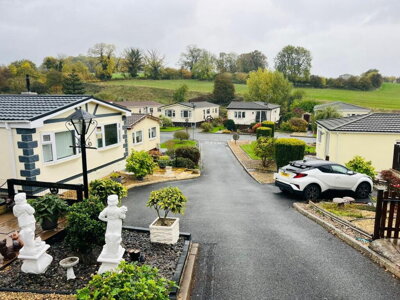
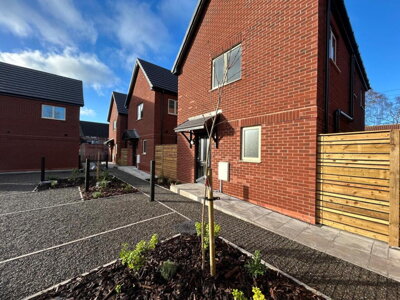
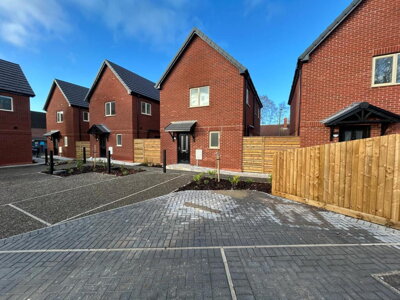
Browse 5 homes new builds in Bromyard and Winslow from local developer agents.
The Booton property market reflects the broader trends of rural Norfolk, with detached homes dominating the sales mix and prices that represent good value compared to more metropolitan areas of the UK. Recent sales data shows properties on Norwich Road and Booton Road achieving prices around £199,000 to £250,000, while premium period properties with additional land or barn conversions have commanded significantly higher figures. A detached bungalow on The Street sold for £600,000 in 2021, demonstrating the premium that quality rural properties can achieve in this sought-after village location.
The wider North Norfolk market saw average prices of £289,000 in late 2025, representing a 3.6% decline from the previous year as the national market adjusts. However, Booton's village character and limited supply of quality homes mean that well-presented properties continue to attract strong interest from buyers seeking village living in Broadland. The sales data for Booton shows individual transactions including a detached house at £220,000 in late 2024 and a significant 7-bedroom period property, Booton House, which last changed hands for £935,000, indicating the upper end of the market for those seeking substantial rural estates in the village.
Semi-detached properties in Booton have also performed well, with sales including a property at 1 Grove Lane achieving £375,000 in April 2020 and a barn conversion at Grove Farm Barns selling for £550,000 in August 2017. A 5-bedroom barn conversion currently listed on The Street carries a guide price of £925,000, reflecting the premium buyers place on converted agricultural buildings with modern amenities. These figures demonstrate that the village offers properties across a wide price range, from modest cottages to substantial rural estates.

Booton is a small, tight-knit village community in the Broadland district of Norfolk, offering residents a genuine sense of rural English life while remaining well-connected to surrounding towns and cities. The village character is defined by its mix of historic Norfolk red brick properties, period homes featuring traditional timber framing, and converted agricultural buildings that reflect the area's agricultural heritage. Properties in Booton often feature the distinctive flint and brick construction typical of Norfolk, giving the village a cohesive architectural identity that newer developments rarely replicate.
The local landscape around Booton comprises rolling Norfolk countryside, with agricultural fields, hedgerows, and scattered woodland creating the patchwork scenery that defines this part of East Anglia. The geology of the region features chalk bedrock with superficial clay deposits, which can influence local soil conditions and is worth considering when purchasing period properties. As a rural settlement, Booton offers immediate access to countryside walks and outdoor pursuits, with the broader North Norfolk coast accessible within a reasonable drive for those seeking coastal recreation during weekends and holidays.
The village lacks its own primary school or convenience shop, which is typical for settlements of this size in rural Norfolk. Instead, residents typically travel to nearby Reepham for everyday amenities, with the market town of Aylsham providing a wider range of services including supermarkets, independent shops, and healthcare facilities. This arrangement is common in villages throughout the Broadland district, where the pattern of living revolves around the car for regular errands while maintaining a strong sense of community within the village itself.

Families considering a move to Booton will find a selection of primary and secondary schools within reasonable travelling distance, serving the village and surrounding communities in the Broadland district. Primary education is typically provided through village and town schools in nearby settlements such as Reepham and Aylsham, which serve as local education hubs for the surrounding rural area. Reepham School serves as a combined primary and secondary school, providing education from early years through to GCSE level for families preferring a single-school option.
Secondary education options include schools in the market towns, with many families travelling to Aylsham or further afield to Norwich for a broader range of educational choices and specialist subjects. The journey times from Booton to schools in surrounding towns typically range from 10 to 25 minutes by car, depending on the specific school and time of day. Many families find that the school run becomes a regular part of daily life, with parents often combining school runs with shopping trips to nearby towns.
The wider Norfolk area has seen continued investment in educational facilities, with schools in market towns often performing well in national assessments and offering comprehensive curricula for students of all abilities. Check specific school catchments and admission policies before purchasing a property in Booton, as rural school catchments can span considerable distances and entry criteria vary between institutions. Sixth form and further education provision is available in Norwich, easily accessible by car or public transport for older students pursuing advanced qualifications. Norwich also offers the University of East Anglia and Norwich University of the Arts for higher education options.
Transport connectivity from Booton centres on road travel, with the village situated in rural Norfolk where the car remains the primary means of getting around for most residents. The A1067 and A140 roads provide access to surrounding market towns and eventually to Norwich, with the journey to Norwich city centre taking approximately 30 to 40 minutes by car depending on traffic conditions. The A140 provides a direct route north towards Cromer, while the A1067 connects through the village towards Fakenham.
For those commuting to employment in the city, Booton offers a viable base for workers who prefer rural living but need access to urban job markets, with the balance of peaceful village life against commuting time a key consideration for buyers. Norwich provides substantial employment opportunities across sectors including financial services, healthcare, education, and technology, making it an attractive destination for professionals willing to make the daily commute. The journey is generally straightforward outside of peak hours, though traffic on the approaches to Norwich can build up during the morning and evening rush.
Public transport options for Booton residents are limited, as is typical for rural Norfolk villages, with bus services connecting the village to nearby towns on set timetables that may not suit all working patterns. The bus route connecting Booton to Reepham and beyond operates several times daily, but evening and weekend services are significantly reduced compared to urban areas. The nearest railway stations are located in Norwich and other larger towns, providing access to the national rail network for longer-distance travel to London, Cambridge, and other major destinations. Norwich station offers regular services to London Liverpool Street, with journey times of approximately two hours.
Before committing to a purchase, spend time researching property values, recent sales, and the types of homes available in Booton and surrounding villages. Our platform provides current listings, sold price data, and market trends to help you understand what your money buys in this rural Norfolk village. Pay particular attention to the difference between older period properties, which may require maintenance, and more recent conversions, which often offer modern fixtures and fittings.
Visit properties that match your criteria and take time to explore the village at different times of day. Consider the proximity to schools, shops, and transport links, and speak to residents to understand what daily life in Booton is really like for families, commuters, or retirees. A daytime viewing gives you a different impression than an evening visit, and speaking to existing residents can reveal insights that no estate agent will tell you.
Once you have found a property you wish to pursue, approach lenders to obtain a mortgage agreement in principle. This demonstrates your financial credibility to sellers and agents, strengthening your position when making an offer on a property in a competitive market. Rural properties in desirable villages like Booton can attract multiple interested buyers, so having your finances organised from the outset gives you an advantage.
Given Booton's mix of period properties and converted buildings, a RICS Level 2 Survey is essential for assessing the condition of any property you intend to buy. Our team of qualified surveyors will inspect the property thoroughly, identifying defects common in older Norfolk properties, including damp, roof condition, timber issues, and any signs of subsidence related to local soil conditions. This survey provides you with a detailed report that can inform your purchase decision and give you leverage for price negotiations.
Appoint a conveyancing solicitor to handle the legal aspects of your purchase, including searches, contracts, and registration of ownership. Your solicitor will liaise with the seller's representatives to ensure a smooth transaction through to completion. Local searches will include drainage and water searches specific to Norfolk, as well as environmental searches that consider the local geology and any flood risk.
Once all legal checks are complete and financing is confirmed, you will exchange contracts and agree a completion date with the seller. On completion day, you will receive the keys to your new Booton home and can begin settling into your new rural Norfolk lifestyle. We recommend arranging buildings insurance from the moment of exchange, as you become legally responsible for the property at that point.
Purchasing a property in Booton requires careful consideration of the rural setting and the age of much of the local housing stock. Many properties in the village are period homes or converted agricultural buildings, which offer tremendous character but may require ongoing maintenance and updating. When viewing properties, pay particular attention to the condition of roofs, which can be expensive to repair on period properties, and look for signs of damp, which is a common issue in older Norfolk homes, particularly those with solid walls rather than modern cavity construction.
The geology of Norfolk, with its clay deposits over chalk bedrock, means that shrink-swell movement can affect properties with foundations in areas of significant clay content. Our inspectors frequently identify issues in older Norfolk properties where foundations may not have been designed to accommodate the movement that occurs as clay soils expand and contract with moisture changes. Look for signs of cracking or movement in walls and seek professional advice on the condition of foundations, particularly for older properties that may not have deep footings.
Flood risk in Booton appears limited based on available data, though as with any rural village, surface water flooding during heavy rainfall and proximity to minor watercourses should be considered during surveys and property assessments. Our surveyors will report on any visible signs of damp, water ingress, or previous flooding, and will advise on the drainage characteristics of the property. Given the prevalence of barn conversions in the village, pay particular attention to the quality of conversions, including insulation standards, ventilation, and the condition of any original structural elements that may have been incorporated into the modern structure.
Electrical and plumbing systems in older properties often require updating to meet current standards. Rewiring a period property is a significant expense that may not be immediately apparent when viewing, so look for updated consumer units and ask about the age of wiring during your survey. Similarly, older heating systems based on oil or LPG may need replacement or upgrading, which is worth factoring into your overall budget when purchasing a rural property in Booton.
Average sold prices in Booton have ranged significantly depending on property type and size. Data for the local NR10 area shows average sold prices around £199,000 to £250,000 for standard properties, with detached homes and barn conversions commanding premium prices. A detached bungalow sold for £600,000 in 2021, while larger period properties like Booton House have achieved over £900,000. The wider North Norfolk market averaged £289,000 in late 2025, with prices declining approximately 3.6% over the previous twelve months as the national market adjusted. Norfolk county as a whole saw average prices decline by around 2% over the same period.
Properties in Booton fall under Broadland District Council and Norfolk County Council for council tax purposes. Banding depends on the property's assessed value, with most rural Norfolk homes typically falling into bands B through E. Specific band information for individual properties can be obtained from the Valuation Office Agency or checked on the HMRC council tax valuation website before purchase. Council tax rates for Band D properties in Broadland are set annually and can be confirmed through the local council website.
As a small village, Booton does not have its own school, but primary education is available at schools in nearby villages and towns such as Reepham and Aylsham, which serve as local education hubs. Reepham School provides combined primary and secondary education, making it a practical option for families wanting a single-school arrangement. Secondary schools in the surrounding market towns provide additional options, with many families travelling to Aylsham or Norwich for secondary education. Parents should check specific catchment areas and admission policies, as these can vary and change over time.
Public transport connectivity in Booton is limited, as is typical for rural Norfolk villages. Bus services operate to nearby towns on scheduled routes, but frequency may not suit all commuting requirements. The nearest railway stations are in Norwich and other larger towns, providing connections to the national rail network including direct services to London. Most residents rely primarily on car travel for daily commuting and activities, with Norwich city centre approximately 30 to 40 minutes away by road via the A1067 or A140 routes.
Booton and the surrounding North Norfolk villages offer appeal for buyers seeking rural character and village lifestyle, which can translate to stable long-term demand. The village has no active new-build developments, meaning supply remains constrained, which typically supports values in the longer term. The broader Norfolk market has seen slight price declines of around 2% over the past year, but rural villages with limited supply often maintain their appeal for buyers seeking countryside living. Properties with character, good condition, and practical features tend to retain value well in this segment of the market.
Stamp duty Land Tax applies to all residential property purchases in England. For standard purchases, there is no SDLT on the first £250,000 of the purchase price, with 5% charged on the portion between £250,001 and £925,000. First-time buyers benefit from relief on the first £425,000, with 5% on the portion up to £625,000. For properties above £925,000, rates increase to 10% and 12% on higher values. Your solicitor will calculate the exact SDLT liability based on your purchase price and circumstances.
A RICS Level 2 Survey is strongly recommended for any property purchase in Booton, given the prevalence of period properties, barn conversions, and older housing stock in the village. Our surveyors are experienced in assessing traditional Norfolk construction, including Norfolk red brick, flint work, and timber-framed properties that are common in the area. The survey will identify defects such as damp, structural movement, roof condition, and any issues with converted elements, giving you the information needed to make an informed purchase decision or negotiate on the price.
The main risks when buying in rural Norfolk include hidden defects in period properties, potential issues with converted buildings, and the limited availability of local services and public transport. Our surveyors pay particular attention to common problems in older Norfolk homes, including rising damp in solid-walled properties, timber decay in structures with traditional oak framing, and any signs of movement related to the local clay geology. A thorough survey will identify these issues before you commit to purchase, allowing you to make an informed decision or renegotiate the price if significant defects are found.
From £400
Essential survey for assessing property condition across all house types, identifying defects common to period and converted properties in Booton
From £500
Comprehensive building survey recommended for older properties, period homes, and barn conversions requiring detailed structural assessment
From £60
Energy Performance Certificate required for all property sales, assessing energy efficiency and running costs
From £499
Legal services for property purchase including searches, contracts, and registration
From 4.5% APR
Finance arrangements for property purchase with competitive rates for Norfolk buyers
Understanding the full cost of purchasing a property in Booton is essential for budgeting effectively, and stamp duty Land Tax represents a significant element of the upfront costs. For a typical property priced at £250,000, there is no SDLT to pay under current thresholds, making Booton's average price point attractive for first-time buyers who may benefit from nil SDLT on the first £425,000 if they qualify as first-time buyers. For properties priced at £400,000, a first-time buyer would pay 5% on £125,000 above their threshold relief, amounting to £6,250 in stamp duty.
Beyond stamp duty, budget for solicitor conveyancing fees, which typically start from around £499 for standard transactions in the Norfolk area, plus disbursements for local searches, land registry fees, and telegraphic transfer charges. Local searches in Norfolk include drainage and water searches specific to the Broadland district, as well as environmental searches that will identify any flood risk, ground instability, or contamination issues relevant to the property. These searches are essential for understanding any risks associated with the local geology and rural setting of Booton.
A RICS Level 2 Survey costs from approximately £400 to £900 depending on property size and complexity, which is particularly important for older properties in Booton where defects may not be immediately apparent. Our surveyors have extensive experience with Norfolk properties and will provide a detailed report on the condition of the property, including any issues specific to local construction methods. An Energy Performance Certificate costs from £60 and is a legal requirement for all property sales, providing information on the energy efficiency of the property and estimated running costs. Total buying costs, excluding mortgage arrangement fees and stamp duty, typically range from £2,000 to £4,000 depending on property value and the services required.
Properties New Builds In London

Properties New Builds In Plymouth

Properties New Builds In Liverpool

Properties New Builds In Glasgow

Properties New Builds In Sheffield

Properties New Builds In Edinburgh

Properties New Builds In Coventry

Properties New Builds In Bradford

Properties New Builds In Manchester

Properties New Builds In Birmingham

Properties New Builds In Bristol

Properties New Builds In Oxford

Properties New Builds In Leicester

Properties New Builds In Newcastle

Properties New Builds In Leeds

Properties New Builds In Southampton

Properties New Builds In Cardiff

Properties New Builds In Nottingham

Properties New Builds In Norwich

Properties New Builds In Brighton

Properties New Builds In Derby

Properties New Builds In Portsmouth

Properties New Builds In Northampton

Properties New Builds In Milton Keynes

Properties New Builds In Bournemouth

Properties New Builds In Bolton

Properties New Builds In Swansea

Properties New Builds In Swindon

Properties New Builds In Peterborough

Properties New Builds In Wolverhampton

Enter your details to see if this property is within your budget.
Loans, cards, car finance
Estimated property budget
Borrowing + deposit
You could borrow between
Typical borrowing
Monthly repayment
Est. at 4.5%
Loan-to-value
This is an estimate only. Your actual budget may vary depending on interest rates, credit history, and personal circumstances. For an accurate affordability assessment, speak to one of our free mortgage advisors.
This calculator provides estimates for illustrative purposes only and does not constitute financial advice. Your home may be repossessed if you do not keep up repayments on your mortgage. Estimates based on 4.5% interest rate, repayment mortgage. Actual rates depend on your circumstances.
Homemove is a trading name of HM Haus Group Ltd (Company No. 13873779, registered in England & Wales). Homemove Mortgages Ltd (Company No. 15947693) is an Appointed Representative of TMG Direct Limited, trading as TMG Mortgage Network, which is authorised and regulated by the Financial Conduct Authority (FRN 786245). Homemove Mortgages Ltd is entered on the FCA Register as an Appointed Representative (FRN 1022429). You can check registrations at NewRegister or by calling 0800 111 6768.

We use cookies to show you personalised content and improve your experience of our website. Find out more in our Privacy policy and Cookie policy.