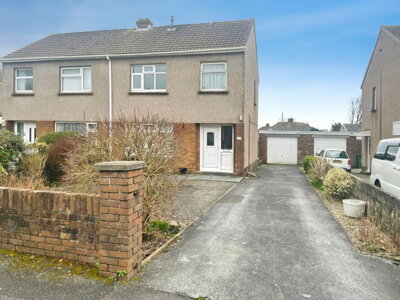
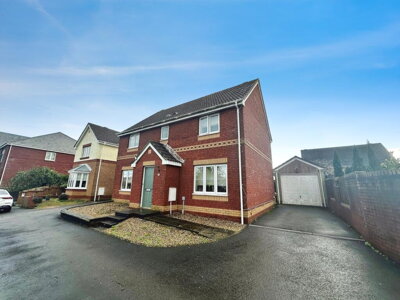
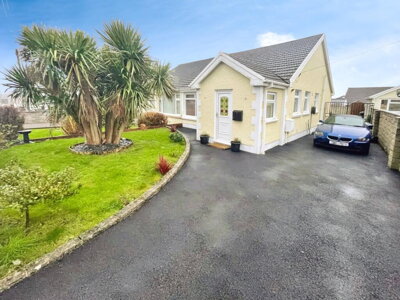
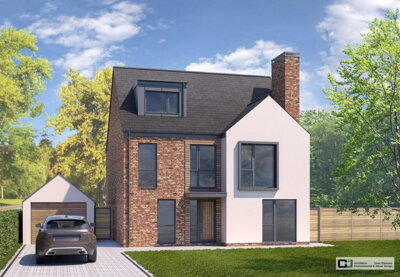
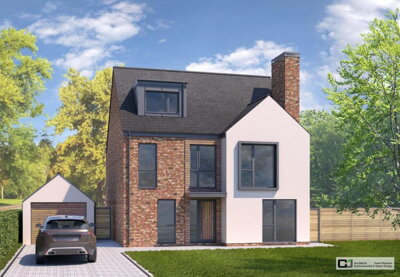
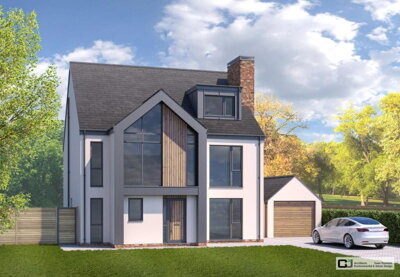
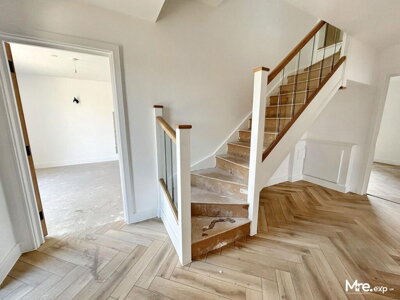
Browse 8 homes new builds in Bridgend, Bridgend from local developer agents.
The Bridgend property market offers detached, semi-detached, and terraced houses spanning various price ranges and neighbourhoods. Each listing includes detailed property information, photographs, and direct contact with the marketing agent.
£285k
54
8
84
Source: home.co.uk
Showing 54 results for Houses new builds in Bridgend, Bridgend. 8 new listings added this week. The median asking price is £285,000.
Source: home.co.uk
Detached
24 listings
Avg £466,869
Semi-Detached
18 listings
Avg £294,994
Terraced
12 listings
Avg £179,995
Source: home.co.uk
Source: home.co.uk
The Bridgend property market offers diverse options across all price ranges, with detached homes averaging £321,208, semi-detached properties at £212,398, terraced houses at £166,400, and flats starting from £110,879. Over the past year, house prices in the area have decreased by 1.1%, creating potential opportunities for buyers who are ready to act in a market where negotiation may be more favourable. The local authority area encompasses a population of 144,300 across 61,000 households, supporting a robust housing market with consistent demand across all property types. First-time buyers will find terraced properties and flats particularly accessible, while families often gravitate toward the generous space offered by semi-detached and detached homes.
Several new-build developments are currently active in and around Bridgend, providing options for buyers seeking modern construction with contemporary finishes. Parc Derwen in Coity offers homes ranging from 2 to 5 bedrooms through Persimmon Homes and Charles Church, while The Pastures development by Barratt Homes features 3 and 4-bedroom properties. Llanmoor Homes has developments at Maesteg Road and Parc Tondu, and David Wilson Homes is building at Coed Y Parc with Charles Church offering additional premium options at The Grange. These developments range across various price points, allowing buyers to compare the benefits of new-build convenience against the character often found in older properties.
Property types in Bridgend reflect the town's historical development pattern, with the housing stock showing clear evidence of different eras of construction. According to Census data, semi-detached properties dominate at 32.7%, followed by detached homes at 26.6% and terraced houses at 26.0%, with flats, maisonettes, and apartments accounting for 14.2% of the housing stock. Property ages vary significantly, with 19.3% of homes built before 1919, 14.1% constructed between 1919 and 1945, a substantial 38.2% built during the post-war boom years of 1945 to 1980, and 28.4% representing more recent construction. This mix provides buyers with genuine choice between characterful period properties and modern homes with contemporary insulation and systems.

Bridgend's housing stock reflects its rich history and steady growth throughout the twentieth century. The town developed significantly during the industrial era and expanded rapidly in the post-war period, resulting in the diverse property types visible today. Properties built before 1919 often feature traditional construction with solid walls, original sash windows, and period fireplaces that require careful maintenance. Post-war properties from the 1945-1980 period frequently use cavity wall construction with brick or rendered blockwork, though older examples may still feature solid wall construction requiring different approaches to insulation and damp proofing.
The local economy in Bridgend benefits from a diverse range of employers across the public sector, retail, and light manufacturing industries. The Bridgend Industrial Estate provides significant local employment, while the proximity to major motorway connections makes commuting to Cardiff and Swansea feasible for those working in larger cities. The town itself offers good everyday amenities including supermarkets, independent shops, restaurants, and leisure facilities. Surrounding villages within the county borough provide additional character and community spirit, with access to countryside walks and local attractions that make Bridgend an appealing place to put down roots.
Bridgend's traditional construction typically uses local stone or brick with slate or tile roofs, with mortar types varying depending on the specific era of construction. Properties in older neighbourhoods such as those near the conservation areas around Newcastle Hill may feature traditional lime mortar pointing that requires specialist repair approaches. Cavity wall construction became standard from the mid-twentieth century onwards, with many post-war properties built using this method. Modern new-build properties predominantly use cavity wall construction with brick or block and render, timber frames where specified, and contemporary roofing materials designed for longevity and energy efficiency.
Education provision in Bridgend serves families well across all stages, with numerous primary and secondary schools located throughout the town and surrounding areas. The local authority maintains a strong focus on educational standards, and parents researching schools should consult the latest Estyn reports to identify the highest-performing options in their catchment area. Secondary education options include both comprehensive schools and, in some areas, grammar school provisions, with sixth form facilities available for students continuing their education locally. Several primary schools in Bridgend have earned excellent reputations for their pastoral care and academic achievement, making the area particularly attractive to families with younger children.
For families considering the Bridgend area, understanding school catchment areas is essential, as property prices can vary significantly depending on proximity to the most sought-after schools. Streets within the catchment of top-performing secondary schools often command a premium, so buyers with school-age children should verify their intended property falls within their preferred school's boundary before proceeding. The county borough also offers various independent schooling options for those preferring an alternative to state education. Further and higher education opportunities are accessible through colleges in Bridgend itself and through easy travel to the universities in Cardiff and Swansea.
Beyond state education, Bridgend offers access to further education colleges providing vocational qualifications and apprenticeships that serve the local economy well. Students seeking university education can commute daily to institutions in Cardiff or Swansea, with train journey times of around 30-40 minutes making this practical for many. Alternatively, several universities in South Wales offer residential options for those preferring to study on campus. Families moving to Bridgend should factor school quality and catchment boundaries into their property search early in the process, as securing access to preferred educational establishments often influences which neighbourhoods prove most suitable.
Bridgend benefits from excellent transport connections that make it a practical choice for commuters and those who travel regularly for work or leisure. The town sits on the main South Wales rail line, providing direct services to Cardiff Central and Swansea, with regular trains making city centre commuting viable for those working in either direction. The nearby M4 motorway runs through the Bridgend area, offering road access to the wider region and connections to the M4 corridor stretching across South Wales. Local bus services provide public transport options within the town and to surrounding villages, reducing car dependency for everyday journeys.
For those travelling further afield, Cardiff Wales Airport is accessible from Bridgend, providing both domestic and international flights. The town also benefits from good parking provision at the railway station, making multi-modal commuting practical for those combining rail and car travel. Cyclists will find varying infrastructure across the area, with some dedicated routes and ongoing improvements to active travel connections. Commuters to Cardiff should note that journey times by train to the capital typically fall within 30-40 minutes, making Bridgend an attractive option for those who wish to benefit from city employment without the higher property prices closer to Cardiff.
The strategic position of Bridgend within the M4 corridor provides road access to employment centres throughout South Wales, from Newport in the east to Swansea in the west. The A4063 and A4061 routes connect the town to surrounding valleys and villages, while the A48 provides an alternative route toward Cardiff without using the motorway. For those who work in the valleys to the north, the town serves as a practical hub with multiple routes available depending on destination. The combination of rail and road connectivity makes Bridgend particularly suitable for buyers who need flexibility in their commuting options.
Spend time exploring different neighbourhoods in Bridgend, from the town centre to surrounding villages, to find the area that best matches your lifestyle needs and budget. Consider factors such as commute times, school catchments, and proximity to amenities when narrowing down your preferred locations. The diverse property types range from Victorian terraces to modern new-builds, so understanding which neighbourhoods match your requirements will focus your search effectively.
Before viewing properties, speak to a mortgage broker or lender to obtain an Agreement in Principle. This strengthens your position when making offers and demonstrates to sellers that you are a serious buyer with financing already arranged. Given that the average property price in Bridgend is £227,330, most buyers will require a mortgage, and having your financial position confirmed early prevents delays during the transaction process.
Use Homemove to browse all available properties in Bridgend and contact estate agents directly to arrange viewings. Take notes on each property and compare features, conditions, and prices to help identify your preferred options. Given that over 70% of properties in Bridgend were built before 1980, pay particular attention to the condition of older properties during viewings, noting any signs of damp, roof issues, or potential structural concerns.
Once your offer is accepted, arrange a RICS Level 2 Survey to assess the property condition. Given that over 70% of Bridgend properties were built before 1980, surveys are particularly valuable for identifying issues such as damp, roof condition, subsidence risk, and outdated electrics. Budget between £400 and £700 depending on property size, with typical costs of £450-£600 for a standard 3-bedroom semi-detached property.
Appoint a solicitor experienced in Welsh property transactions to handle the legal work. They will conduct searches, handle contracts, and manage the transfer of ownership through to completion. In Bridgend specifically, searches should include mining searches given the area's history, along with drainage, environmental, and flood risk assessments depending on the property location.
Once all searches are satisfactory and contracts are signed, you will exchange deposits and agree on a completion date. On completion day, your solicitor transfers the remaining funds and you receive the keys to your new Bridgend home. Factor in removal costs, potential renovation budgets, and any immediate repairs identified during your survey when planning your move.
Several area-specific factors deserve careful attention when purchasing property in Bridgend. The local geology includes clay-rich soils, particularly around the Lias Group formations, which can present moderate to high shrink-swell risk affecting foundations. A professional survey will assess whether the property has adequate foundations for the local soil conditions and identify any signs of subsidence or movement. Properties with mature trees nearby are particularly worth examining closely, as these can exacerbate subsidence issues by extracting moisture from clay soils during dry periods.
Bridgend sits in a former coal mining area, and while active mining has ceased, properties built on or near former mine workings may face ground instability risks including subsidence from collapsing shafts or shallow workings. A mining search should be included in your conveyancing investigations to identify any historical mining activity affecting the property. Flood risk is another consideration, particularly for properties near the River Ogmore and its tributaries, with some areas also facing tidal flood risk and surface water flooding during heavy rainfall. Your solicitor should commission appropriate drainage and environmental searches to flag any flood plain designations or historical flooding incidents.
Properties built before 1980 commonly exhibit specific defects that our inspectors frequently identify during surveys. Rising damp and penetrating damp appear regularly in solid wall construction properties, especially where original damp-proof courses have failed or been bridged by external ground levels. Roof condition issues including slipped tiles, damaged flashing, and general wear and tear are common in older properties and may require significant expenditure to remedy. Electrical systems installed before current standards often require partial or complete rewiring, while plumbing may use outdated materials such as lead or galvanised steel that should be replaced.
Conservation areas exist in parts of Bridgend, particularly around the town centre and Newcastle Hill, where planning restrictions may limit permitted developments and alterations. Numerous listed buildings throughout the area, including historic churches, bridges, and older residential properties, carry additional obligations regarding maintenance and alterations. If purchasing a leasehold property, review the terms carefully, including ground rent arrangements and service charges, as these can vary significantly and affect ongoing costs. Properties in conservation areas or those that are listed buildings may require specialist surveys such as a RICS Level 3 Building Survey that provides deeper analysis of traditional construction methods and heritage considerations.
The average property price in Bridgend is £227,330, based on recent sales data covering the past twelve months when 1,023 properties changed hands. Property prices vary significantly by type, with detached homes averaging £321,208, semi-detached properties at £212,398, terraced houses at £166,400, and flats at £110,879. Over the past twelve months, prices have decreased by 1.1%, which may create opportunities for buyers in a market where vendors may be more willing to negotiate on price.
Council tax bands in Bridgend are set by Bridgend County Borough Council and vary according to property value, ranging from Band A for the lowest value properties up to Band H for the highest. Band A properties typically cover homes valued up to £44,000, while Band H encompasses properties over £324,000. You can check the specific band for any property through the Valuation Office Agency website, and your solicitor can confirm the current charges during the conveyancing process. Council tax charges can be verified on the Bridgend County Borough Council website for current rates applicable to each band.
Bridgend offers a range of educational options across all key stages, with numerous primary and secondary schools serving the town and surrounding villages. Several primary schools in the area have achieved excellent reputations for academic achievement and pastoral care, with ongoing Estyn inspections providing objective assessments of school performance. For secondary education, comprehensive schools serve most areas, and families should research current Estyn inspection reports to identify the highest-performing options and understand their catchment area boundaries. School performance can significantly impact property values in specific streets, so parents should verify school catchments before purchasing, as properties within sought-after school catchments often command a premium in the local market.
Bridgend has excellent public transport connections, with the town railway station offering direct services to Cardiff with journey times of approximately 30-40 minutes and to Swansea with regular trains throughout the day. The M4 motorway runs nearby, providing road access across South Wales and connections to the wider motorway network. Local bus services operate throughout the town and to surrounding villages, providing public transport options for those without cars. For air travel, Cardiff Wales Airport is within reasonable driving distance, offering domestic and international flights for business and leisure travel.
Bridgend offers several factors that may appeal to property investors, with its strategic position in the M4 corridor providing access to major employment centres while maintaining more affordable property prices than locations closer to Cardiff or Swansea. The local rental market benefits from demand driven by commuters, public sector workers, and those seeking more affordable housing than nearby cities. With over 1,000 property sales annually, the market shows consistent activity suggesting reasonable liquidity for investors. The presence of the Bridgend Industrial Estate and other local employers supports tenant demand, though investors should carefully consider factors including potential flood risk in certain areas, mining legacy issues affecting some properties, and the age of much of the housing stock when assessing specific investments.
Stamp Duty Land Tax rates for 2024-25 are 0% on properties up to £250,000, 5% on the portion between £250,001 and £925,000, 10% on the portion between £925,001 and £1.5 million, and 12% on amounts exceeding £1.5 million. For a typical Bridgend property averaging £227,330, a buyer who is not a first-time purchaser would pay no SDLT at all, as the entire purchase falls within the zero-rate threshold. First-time buyers purchasing properties up to £625,000 benefit from relief, paying 0% on the first £425,000 and 5% on the portion between £425,001 and £625,000. Your solicitor will calculate the exact SDLT liability based on your purchase price and circumstances.
Given Bridgend's geology and history, buyers should specifically investigate several area-specific risks. The shrink-swell clay risk is particularly relevant near the Lias Group formations where clay-rich soils can affect foundations, especially in properties with mature trees nearby. A mining search is essential given Bridgend's former coal mining activity, as properties may sit above historical mine workings that could cause ground instability. Flood risk from the River Ogmore and its tributaries affects certain areas, with surface water flooding also occurring during heavy rainfall. Your survey should assess foundation conditions, damp issues common in older properties, roof condition, and the condition of electrical and plumbing systems. Properties in conservation areas or listed buildings may have additional restrictions on alterations that affect future plans.
From 3.5%
Compare mortgage deals from leading lenders
From £499
Expert solicitors handling your property purchase
From £400
Professional property survey by RICS qualified inspectors
From £80
Energy performance certificate for your property
Understanding the full costs of purchasing property in Bridgend helps you budget accurately and avoid surprises during your transaction. Beyond the property price, the main upfront cost is Stamp Duty Land Tax, which for most standard purchases attracts zero duty on the first £250,000, 5% on the portion between £250,001 and £925,000, 10% on the portion between £925,001 and £1.5 million, and 12% on any amount exceeding £1.5 million. For a typical Bridgend property averaging £227,330, a buyer who is not a first-time purchaser would pay no SDLT at all, as the entire purchase falls within the zero-rate threshold.
First-time buyers purchasing properties up to £625,000 benefit from SDLT relief, paying nothing on the first £425,000 and 5% only on the portion between £425,001 and £625,000. For a property at the Bridgend average price of £227,330, a first-time buyer would therefore pay no SDLT. Beyond stamp duty, buyers should budget for solicitor conveyancing fees, which typically range from £500 to £1,500 depending on complexity, plus disbursements for searches including local authority searches, drainage searches, environmental searches, and potentially mining searches specific to the Bridgend area. Survey costs for a RICS Level 2 Homebuyer Report typically range from £400 to £700 depending on property size, while an EPC assessment costs from around £80. Removal costs, mortgage arrangement fees, and potential renovation or repair costs should also factor into your complete budget.
When budgeting for your Bridgend purchase, factor in the specific risks identified in the area that may require remediation. Given that over 71% of properties were built before 1980, many will require upgrades to electrical systems, plumbing, insulation, or heating to meet current standards. The average cost for a full rewire of a mid-sized property ranges from £3,000 to £6,000, while boiler replacement typically costs between £2,000 and £4,000. Properties identified with damp issues, subsidence concerns, or roof defects during survey may require additional expenditure that should be factored into your negotiations with the seller or your renovation budget.
Properties New Builds In London

Properties New Builds In Plymouth

Properties New Builds In Liverpool

Properties New Builds In Glasgow

Properties New Builds In Sheffield

Properties New Builds In Edinburgh

Properties New Builds In Coventry

Properties New Builds In Bradford

Properties New Builds In Manchester

Properties New Builds In Birmingham

Properties New Builds In Bristol

Properties New Builds In Oxford

Properties New Builds In Leicester

Properties New Builds In Newcastle

Properties New Builds In Leeds

Properties New Builds In Southampton

Properties New Builds In Cardiff

Properties New Builds In Nottingham

Properties New Builds In Norwich

Properties New Builds In Brighton

Properties New Builds In Derby

Properties New Builds In Portsmouth

Properties New Builds In Northampton

Properties New Builds In Milton Keynes

Properties New Builds In Bournemouth

Properties New Builds In Bolton

Properties New Builds In Swansea

Properties New Builds In Swindon

Properties New Builds In Peterborough

Properties New Builds In Wolverhampton

Enter your details to see if this property is within your budget.
Loans, cards, car finance
Estimated property budget
Borrowing + deposit
You could borrow between
Typical borrowing
Monthly repayment
Est. at 4.5%
Loan-to-value
This is an estimate only. Your actual budget may vary depending on interest rates, credit history, and personal circumstances. For an accurate affordability assessment, speak to one of our free mortgage advisors.
This calculator provides estimates for illustrative purposes only and does not constitute financial advice. Your home may be repossessed if you do not keep up repayments on your mortgage. Estimates based on 4.5% interest rate, repayment mortgage. Actual rates depend on your circumstances.
Homemove is a trading name of HM Haus Group Ltd (Company No. 13873779, registered in England & Wales). Homemove Mortgages Ltd (Company No. 15947693) is an Appointed Representative of TMG Direct Limited, trading as TMG Mortgage Network, which is authorised and regulated by the Financial Conduct Authority (FRN 786245). Homemove Mortgages Ltd is entered on the FCA Register as an Appointed Representative (FRN 1022429). You can check registrations at NewRegister or by calling 0800 111 6768.

We use cookies to show you personalised content and improve your experience of our website. Find out more in our Privacy policy and Cookie policy.