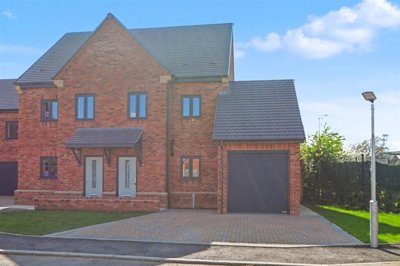
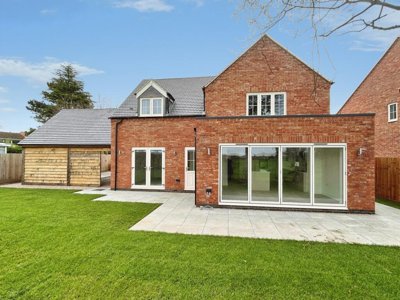
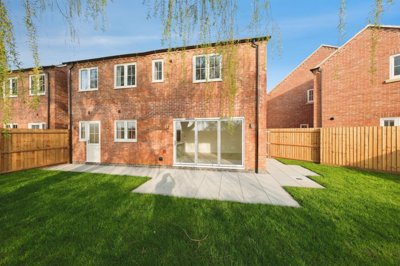
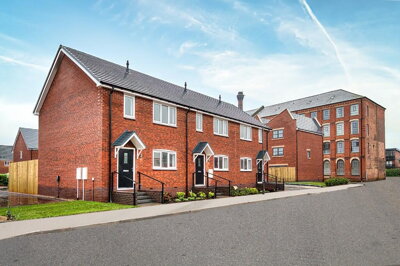
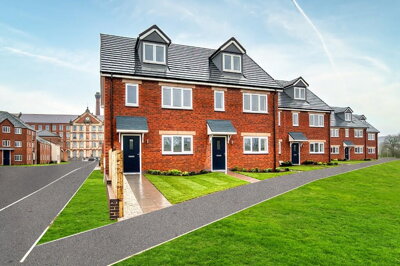
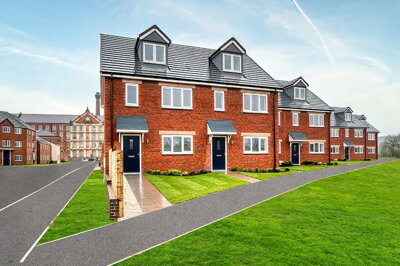
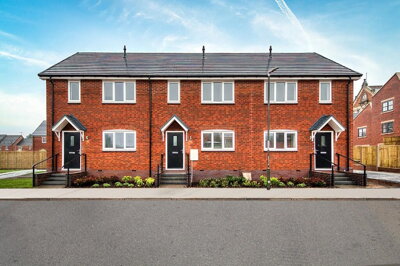
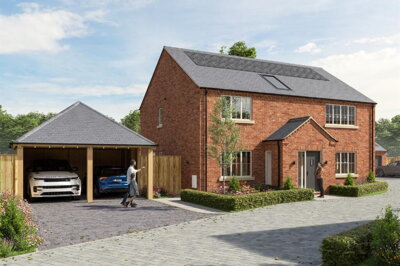
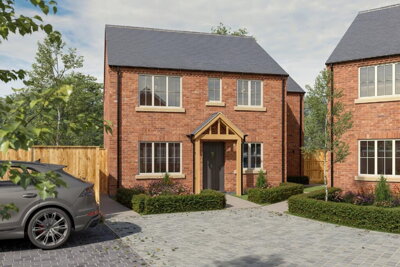
Browse 9 homes new builds in Breaston, Erewash from local developer agents.
£415k
39
1
98
Source: home.co.uk
Source: home.co.uk
Detached
16 listings
Avg £625,937
Semi-Detached
12 listings
Avg £297,833
Detached Bungalow
6 listings
Avg £492,500
Bungalow
2 listings
Avg £462,500
End of Terrace
1 listings
Avg £225,000
Terraced
1 listings
Avg £225,000
detached
1 listings
Avg £425,000
Source: home.co.uk
Source: home.co.uk
The Breaston property market has shown significant activity over the past decade, with 661 properties sold in the area during the last ten years. Our data shows current average prices of £407,945 according to homedata.co.uk, though home.co.uk reports figures closer to £456,000, reflecting the variety of properties available. Detached properties command an average of around £412,840, representing excellent value for families seeking generous living space and gardens in a desirable location. The semi-detached market averages £465,500, with these family homes proving particularly popular among buyers seeking traditional construction with modern comforts.
Price trends over the past twelve months have shown mixed results across different streets within Breaston. home.co.uk reports a significant rise in sold prices overall, though individual streets tell different stories. Properties on Wilsthorpe Road have seen impressive growth, with prices averaging £481,667 over the past year, representing a 103% increase on the previous year. In contrast, Longmoor Lane properties have averaged £258,000, down 27% on the previous year. The Crescent has seen prices settle at around £270,000, 32% up on the previous year but still 16% below the 2022 peak of £321,500. Terraced properties in Breaston average £212,020, while flats remain more affordable at around £126,000, providing entry points for first-time buyers looking to establish themselves in this sought-after village.

Breaston offers a distinctive quality of life that combines village charm with modern convenience, making it an increasingly popular choice for families and professionals alike. The village maintains a strong sense of community, with local amenities including a Co-op convenience store, several welcoming cafes, a popular bistro, and a farm shop selling locally sourced produce. Additional services within the village include hairdressers, an optician, charity shops, a car repair garage, and a petrol station, meaning residents can fulfil most daily needs without travelling to larger towns. The village's Bourne Square provides a focal point for community gatherings, while the historic United Methodist Church, built in 1876, continues to serve the spiritual needs of residents.
The local economy in Breaston benefits from its strategic position within the Erewash borough, with Derbyshire's economy showing particular strength in manufacturing, which accounts for 15.9% of employment, followed by health services at 12.6% and retail at 9.2%. The village has transitioned from its historical roots in agriculture and railway industry employment to serving primarily as a commuter settlement. Residents benefit from proximity to major employers in both Derby and Nottingham, while the nearby M1 motorway junction 25 provides straightforward access to the broader regional road network. The 2021 Census recorded 4,369 residents living in 1,780 households across the civil parish, with the population showing only a slight decrease from the 4,455 recorded in 2011, indicating a stable and sustainable community.

Education provision in Breaston serves families with children of all ages, with the village hosting its own primary school that draws pupils from the surrounding area. The historic National School on Main Street, dating from 1857, represents the village's long-standing commitment to education and remains an important local institution. For secondary education, residents have access to well-regarded schools in the wider Erewash area, with several notable secondary schools located within easy commuting distance. Parents considering Breaston should research current catchment areas and admission arrangements, as these can significantly impact school placement decisions for families moving to the area.
The village's proximity to both Derby and Nottingham provides access to an extensive range of educational options, including grammar schools, independent schools, and further education colleges. Sixth form provision is available at secondary schools in nearby towns, while the University of Nottingham and University of Derby both offer higher education opportunities within reasonable travelling distance. For families prioritising educational outcomes, Breaston's location provides flexibility to choose from various schooling options across Derbyshire and Nottinghamshire, making it an attractive proposition for parents seeking to balance village living with academic opportunities for their children.

Breaston enjoys exceptional transport connections that have cemented its reputation as a desirable commuter village. The village sits along the A6005 road, placing it just 8 miles west of Derby city centre and approximately 10 miles east of Nottingham. Junction 25 of the M1 motorway is located nearby, providing direct access to Sheffield to the north and Leicester to the south. This strategic position means residents can reach major employment hubs in both cities within 30 to 40 minutes by car, making Breaston particularly attractive to professionals working in either location or who travel regularly across the East Midlands region.
Public transport options serve the village reasonably well, with bus connections providing links to both Derby and Nottingham for those who prefer not to drive. The nearby East Midlands Parkway railway station offers connections to London St Pancras in around 90 minutes, making national travel accessible without the need to travel into central Nottingham or Derby. For cyclists, the local road network includes routes suitable for confident riders, while the proximity to the River Trent corridor offers opportunities for recreational cycling. Parking provision varies throughout the village, with on-street parking common in established residential areas and more formal arrangements available near local shops and amenities.

Obtain a mortgage agreement in principle before beginning your property search. This strengthens your position when making offers and demonstrates to sellers that you are a serious buyer with confirmed borrowing capacity. Breaston properties attract competitive interest, so having your finances ready gives you an advantage in a potentially busy market.
Spend time exploring Breaston at different times of day and week to understand the community feel. Visit local amenities, check commute times to your workplace, and research the specific street where you hope to buy. The village has flood risk areas near Golden Brook and Golden Stream, so understanding which streets are affected matters for certain properties.
Book viewings through Homemove to see a range of properties matching your criteria. Pay attention to construction materials, property condition, and any signs of damp or structural movement in older homes. The village has many properties over 50 years old, and a thorough viewing helps identify properties that may need specialist surveys.
Once you have an offer accepted, arrange a Level 2 survey before committing fully. Given Breaston's mix of older properties and local geology including clay deposits with shrink-swell potential, a professional survey identifies any issues that might affect your purchase decision or require negotiation with the seller.
Choose a conveyancing solicitor to handle the legal aspects of your purchase. They will conduct searches including flood risk checks, mining records, and local authority enquiries. For listed buildings or properties in the Conservation Area, additional checks may be required to ensure compliance with planning conditions.
Once all searches are satisfactory and your mortgage is confirmed, you will exchange contracts and pay your deposit. Completion typically follows within weeks, at which point you will receive your keys and can move into your new Breaston home.
Purchasing property in Breaston requires attention to several area-specific factors that differ from other UK locations. Flood risk is a significant consideration, as Breaston sits within the Trent Valley floodplain and the Golden Brook and Golden Stream are designated Flood Warning Areas. Properties most at risk include those on Draycott Road, Gregory Avenue, Hind Avenue, Festival Avenue, and Marlborough Road, where buyers should carefully review flood history and any flood resilience measures already in place. Surface water flooding risk affects a high proportion of homes in the village, defined as greater than 3.3% Annual Exceedance Probability, so this should form part of your due diligence for any property purchase.
The local geology presents another important consideration for prospective buyers. Breaston sits on the Beeston terrace with deposits of sands, gravels, and Cotgrave sandstone, combined with mudstones and superficial clay deposits to the north. This clay-rich geology creates potential for shrink-swell behaviour, where soil volume changes with moisture content, potentially causing ground heave or settlement affecting structures. Older properties with shallow foundations are particularly susceptible, and signs of structural movement should be investigated thoroughly. Listed building and Conservation Area properties may require specialist surveys due to their traditional construction using red brick, plain tiles, and timber framing that requires knowledgeable assessors.
Properties within Breaston's designated Conservation Area, centred on the historic village, are subject to specific planning controls aimed at preserving and enhancing village character. Any alterations to these properties may require Conservation Area consent in addition to standard planning permission. The six listed buildings, including the Grade I listed Church of Saint Michael and several Grade II properties, carry additional obligations for owners regarding maintenance and alterations. Buyers should factor these considerations into their purchasing decisions and budget accordingly for any specialist surveys that may be required for historic properties.

Understanding the construction methods used in Breaston helps buyers know what to expect from local properties. Traditional Breaston buildings predominantly use red brick and plain tile, with local mudstones and clay deposits historically providing source material for brick production. Pre-Victorian buildings typically feature narrow, irregular bricks in a subdued reddish-brown colour, with approximately 40% rendered or painted and around 40% roofed in natural slate. Some historic buildings, such as 6 Church View, incorporate timber-framed construction with brick infill panels and tile roofs. Victorian properties are predominantly faced in red brick with occasional render, with roofing typically using machine-made tiles rather than natural slate on later buildings.
A notable characteristic of pre-Victorian buildings is the use of lime-based mortars and renders rather than modern cement products. These traditional materials require specialist knowledge for proper assessment and repair, as inappropriate modern materials can actually cause damage to historic structures. When viewing older properties in Breaston's Conservation Area, buyers should be aware that traditional construction techniques often result in different performance characteristics compared to modern buildings, particularly regarding breathability, moisture management, and thermal performance. Our inspectors are experienced in assessing these traditional construction methods and can identify where original features have been maintained or where modernisation may have introduced issues.
When inspecting older properties in Breaston, several defect categories commonly require attention. Dampness manifests in multiple forms, including rising damp from failed damp-proof courses, penetrating damp from degraded wall finishes or failed gutters, and condensation resulting from inadequate ventilation. Each type presents different visual indicators and requires different remediation approaches. Roof deterioration is common on properties with aging plain tiles or natural slate, where individual tiles may be cracked, slipped, or missing, leading to leaks that cause timber decay and structural damage if unaddressed. Outdated electrics in properties built before the 1960s may contain deteriorated VIR cabling that poses fire risks, and even properties from the 1980s and 1990s might have wiring that does not meet current safety standards.
The combination of Breaston's clay geology and older properties creates potential for subsidence and structural movement. Soil volume changes caused by moisture fluctuations in shrink-swell clays can result in ground movement affecting foundations and superstructure, manifesting as cracking in walls and ceilings. Drainage issues in older properties often involve galvanized steel or lead pipes that have corroded internally, and root ingress from trees and shrubs damaging underground drainage systems. Understanding these common defect patterns helps buyers prioritise inspection focus and budget appropriately for any necessary repairs following their purchase.
Average house prices in Breaston currently range from approximately £333,000 to £456,000 depending on the source, with homedata.co.uk reporting £407,945 as a reliable benchmark. Detached properties average around £412,840, semi-detached homes £465,500, terraced properties £212,020, and flats around £126,000. The market has shown mixed trends recently, with some streets like Wilsthorpe Road seeing significant price increases while others have experienced corrections from 2022 peaks. Prices have generally shown a significant upward trend over the past twelve months according to property market intelligence.
Breaston falls under Erewash Borough Council, which sets council tax bands for all properties within its jurisdiction. The specific band depends on your property's valuation, with bands ranging from A through to H. Properties in Breaston's Conservation Area or listed buildings do not have different council tax arrangements but may have additional obligations regarding their maintenance and appearance. You can check the specific band for any property through the Valuation Office Agency website or by contacting Erewash Borough Council directly.
Breaston has a well-established primary school serving the village, with the historic National School on Main Street dating from 1857 continuing to provide local education. For secondary education, residents access schools in the wider Erewash area, with several good options within reasonable travelling distance. The village's proximity to both Derby and Nottingham provides access to grammar schools and independent schools in both cities. Parents should research current admission policies and catchment areas, as these can change and directly affect school placement for families moving to the area.
Breaston has reasonable public transport connections despite its village status. Local bus services provide links to both Derby and Nottingham, enabling residents to commute without a car. The nearby East Midlands Parkway railway station offers direct services to London St Pancras in around 90 minutes, making national rail travel highly accessible. The village's position on the A6005 road and proximity to M1 junction 25 means those with cars enjoy straightforward access to the motorway network. For international travel, East Midlands Airport is located within easy reach.
Breaston represents a solid investment opportunity given its desirable location between Derby and Nottingham, strong transport connections, and village character protected by Conservation Area designation. Property values have shown long-term resilience with 661 properties sold over the past decade, demonstrating active market activity. The limited supply of new build properties locally means existing housing stock retains value, while the village's appeal to commuters ensures ongoing demand. However, buyers should be aware of local flood risk areas and factor this into their investment considerations, particularly for properties near the Golden Brook corridor.
Stamp Duty Land Tax (SDLT) applies to all property purchases in England, including Breaston. For standard purchases, you pay 0% on the first £250,000, 5% on £250,001 to £925,000, 10% on £925,001 to £1.5 million, and 12% on any amount above £1.5 million. First-time buyers benefit from relief on the first £425,000, paying 5% on the amount between £425,001 and £625,000, with no relief above that threshold. Given Breaston's average property prices around £400,000, most buyers would pay SDLT only on amounts above the nil-rate threshold, though first-time buyers purchasing below £425,000 would pay no stamp duty at all.
Flood risk is a genuine consideration for some properties in Breaston. The village sits within the Trent Valley floodplain, and the Golden Brook and Golden Stream are designated Flood Warning Areas. Properties on Draycott Road, Gregory Avenue, Hind Avenue, Festival Avenue, and Marlborough Road face particular flood risk from these watercourses. Additionally, surface water flooding affects a high proportion of homes across the village. A Flood Alert is currently available for Breaston, meaning residents can receive advance warning of potential flooding. Any buyer should review the Environment Agency flood maps and property history before committing to a purchase.
Breaston offers a diverse range of property types to suit various budgets and preferences. The village features Victorian terraces in the historic centre, spacious semi-detached family homes from various eras, substantial detached properties particularly in established roads, and a smaller selection of flats and apartments. The traditional construction uses red brick and plain tiles, reflecting the local vernacular established over centuries. Given the absence of large-scale new build developments within the village itself, buyers are primarily looking at existing housing stock ranging from period properties dating back to the 17th century through to mid-20th century homes.
Competitive mortgage rates available through Homemove
From 4.5% APR
Professional legal services for your Breaston property purchase
From £499
Professional survey for your Breaston property
From £375
Energy performance certificate for your new home
From £85
Understanding the full costs of buying property in Breaston extends beyond the purchase price to include stamp duty, legal fees, survey costs, and other associated expenses. The current SDLT thresholds for 2024-25 mean standard buyers pay nothing on the first £250,000 of their purchase, then 5% on the portion between £250,001 and £925,000. Given that Breaston's average property price sits around £407,000, a typical buyer purchasing at this level would pay approximately £7,850 in stamp duty. First-time buyers purchasing properties up to £425,000 pay no SDLT, providing significant savings for those entering the property market in this desirable village location.
Legal costs for conveyancing typically start from around £499 for straightforward purchases, though properties in the Conservation Area or listed buildings may require additional work that increases fees. Your solicitor will conduct essential searches including local authority checks, environmental searches covering flood risk and land contamination, and mining records where relevant. Survey costs vary based on property type and value, with RICS Level 2 surveys for Breaston's typical family homes ranging from £400 to £900 depending on size and complexity. An EPC assessment costs from £85 and is legally required before marketing your new home. When budgeting for your Breaston purchase, you should also allow for mortgage arrangement fees, potentially moving costs, and immediate repairs or renovations once you take ownership.

Properties New Builds In London

Properties New Builds In Plymouth

Properties New Builds In Liverpool

Properties New Builds In Glasgow

Properties New Builds In Sheffield

Properties New Builds In Edinburgh

Properties New Builds In Coventry

Properties New Builds In Bradford

Properties New Builds In Manchester

Properties New Builds In Birmingham

Properties New Builds In Bristol

Properties New Builds In Oxford

Properties New Builds In Leicester

Properties New Builds In Newcastle

Properties New Builds In Leeds

Properties New Builds In Southampton

Properties New Builds In Cardiff

Properties New Builds In Nottingham

Properties New Builds In Norwich

Properties New Builds In Brighton

Properties New Builds In Derby

Properties New Builds In Portsmouth

Properties New Builds In Northampton

Properties New Builds In Milton Keynes

Properties New Builds In Bournemouth

Properties New Builds In Bolton

Properties New Builds In Swansea

Properties New Builds In Swindon

Properties New Builds In Peterborough

Properties New Builds In Wolverhampton

Enter your details to see if this property is within your budget.
Loans, cards, car finance
Estimated property budget
Borrowing + deposit
You could borrow between
Typical borrowing
Monthly repayment
Est. at 4.5%
Loan-to-value
This is an estimate only. Your actual budget may vary depending on interest rates, credit history, and personal circumstances. For an accurate affordability assessment, speak to one of our free mortgage advisors.
This calculator provides estimates for illustrative purposes only and does not constitute financial advice. Your home may be repossessed if you do not keep up repayments on your mortgage. Estimates based on 4.5% interest rate, repayment mortgage. Actual rates depend on your circumstances.
Homemove is a trading name of HM Haus Group Ltd (Company No. 13873779, registered in England & Wales). Homemove Mortgages Ltd (Company No. 15947693) is an Appointed Representative of TMG Direct Limited, trading as TMG Mortgage Network, which is authorised and regulated by the Financial Conduct Authority (FRN 786245). Homemove Mortgages Ltd is entered on the FCA Register as an Appointed Representative (FRN 1022429). You can check registrations at NewRegister or by calling 0800 111 6768.

We use cookies to show you personalised content and improve your experience of our website. Find out more in our Privacy policy and Cookie policy.