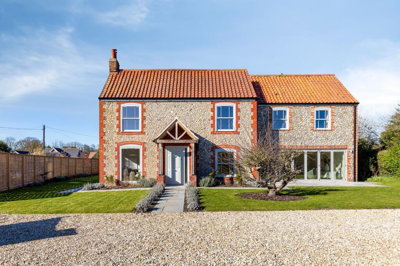
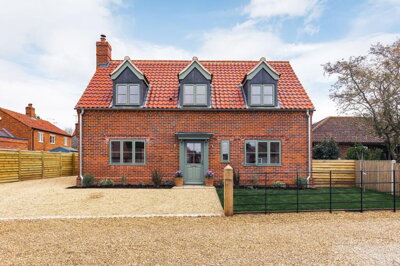
Browse 3 homes new builds in Blakeney, North Norfolk from local developer agents.
£695k
27
4
141
Source: home.co.uk
Source: home.co.uk
Detached
8 listings
Avg £1.12M
Semi-Detached
5 listings
Avg £563,000
Detached Bungalow
3 listings
Avg £708,333
Cottage
2 listings
Avg £492,475
End of Terrace
2 listings
Avg £462,500
House
2 listings
Avg £1.07M
Terraced
2 listings
Avg £545,000
Character Property
1 listings
Avg £695,000
Not Specified
1 listings
Avg £295,000
Terraced Bungalow
1 listings
Avg £280,000
Source: home.co.uk
Source: home.co.uk
The Stanford property market offers a distinctive selection of period homes, with detached properties commanding prices averaging £790,000 and semi-detached homes typically reaching around £381,250. These figures reflect the premium placed on character properties in this historic village, where stone-built homes with original features such as beams, inglenook fireplaces, and vaulted ceilings are highly sought after. The village market has experienced a 19% adjustment from the 2017 peak of £640,000, creating opportunities for buyers who previously found the area beyond their budget. Unlike larger towns, Stanford's property stock is limited, making early registration with local agents advisable for serious buyers.
Recent market analysis shows that West Northamptonshire as a whole saw property prices rise by 2.9% in the year to December 2025, with semi-detached properties increasing by 4.1%. However, Stanford's village market operates somewhat independently, driven more by the scarcity of period properties than broader county trends. No large-scale new build developments exist within the village itself, meaning buyers typically choose between existing period properties and any recently renovated homes that come to market. Properties described as newly refurbished cottages or modern country homes occasionally appear, offering alternatives to those seeking move-in-ready accommodation without extensive renovation projects.
The limited supply of homes for sale in Stanford creates a competitive environment for buyers, particularly for properties with riverside positioning along the River Avon or those offering uninterrupted countryside views. West Northamptonshire recorded 5,041 property sales in the twelve months to February 2026, though the village itself sees only a handful of transactions each year due to its small population and constrained housing stock. This relative scarcity means properties in the village centre or along arterial village roads like those leading to the parish church and village green attract particular interest from buyers seeking authentic period homes. Our search tool monitors listings across major property portals and local estate agents serving the NN6 area, helping you stay informed about new properties as they reach the market.

Properties in Stanford on Avon predominantly feature traditional construction methods that reflect the village's heritage as a Northamptonshire settlement. Stone walls constructed from local ironstone form the backbone of many period cottages and farmhouses, with properties along the village's historic core particularly notable for their solid-wall construction. Timber framing, often visible internally as exposed beams or partition walls, characterises several early 19th-century properties, with some featuring the distinctive jetted upper floors common to Northamptonshire vernacular architecture. Roof construction typically uses traditional cut or trussed rafters covered with slate or clay tile, though some older properties may retain thatch in limited cases.
The geology of Northamptonshire includes significant deposits of clay, which can present shrink-swell risks for properties with trees or hedgerows nearby. Our inspectors frequently note that period properties with solid walls and traditional construction may show signs of movement related to seasonal moisture changes in the underlying soil. Foundation depths on older properties can be variable, and our surveyors pay particular attention to any cracking patterns or door frame distortions that might indicate subsidence or settlement issues. Understanding the specific construction and ground conditions helps buyers appreciate the maintenance requirements of their chosen property before completing a purchase in Stanford on Avon.
Many homes for sale in Stanford feature the distinctive architectural elements that define Northamptonshire's vernacular style, including stone-mullioned windows, deep window reveals, and substantial chimneys with prominent chimney stacks. Original fireplaces with raised hearths and decorative cast-iron grates remain features in well-preserved properties, adding both character and potential value for buyers. Our property search includes detailed listings that highlight these period features, helping you identify homes that match your requirements for traditional English architecture. Properties that retain their original joinery, including skirting boards, door frames, and staircase details, often command premiums in the village market due to their authenticity and the cost of reproducing such features today.
Stanford on Avon embodies the quintessential English village experience, with its centre featuring historic stone cottages, a traditional parish church, and the gentle flow of the River Avon nearby. The village has maintained its character through careful preservation of period architecture, with many homes retaining original features that speak to the area's long history. Residents enjoy a close-knit community atmosphere where local events, village pubs, and countryside walks form the foundation of daily life. The village appears on historical maps dating back centuries, with properties consistently featuring construction techniques using local stone and timber that define the Northamptonshire vernacular style.
Demographically, Stanford attracts buyers seeking escape from urban congestion while remaining within commuting distance of larger employment centres. The village forms part of a cluster of rural communities in the NN6 postcode area, each offering their own amenities while sharing facilities with nearby towns. Average private rents in West Northamptonshire reached £1,066 in January 2026, though ownership remains the preferred route for those establishing permanent roots in the village. The surrounding countryside provides excellent walking and cycling opportunities, with public footpaths crossing farmland and along watercourses. Local amenities include a village shop or post office, traditional pub, and community facilities, with comprehensive shopping and services available in nearby towns within a short drive.
Community life in Stanford revolves around seasonal events and regular gatherings at the village pub, where new residents are warmly welcomed into the established social fabric. The River Avon provides opportunities for riverside walks and wildlife observation, with the waterway supporting diverse birdlife and natural vegetation along its banks. The parish church serves as both a spiritual centre and a historic landmark, its tower visible across the village and surrounding farmland. For families, the prospect of raising children in a village environment with access to countryside creates appeal that continues to draw buyers to Stanford on Avon, despite the limited property supply and premium prices associated with village life.

Families considering a move to Stanford will find educational options within reasonable driving distance, reflecting the village's rural character and position within the West Northamptonshire education system. Primary education is typically accessed through village schools in surrounding communities, with schools in nearby towns providing additional options for families preferring wider choices. The local primary school network serves Reception through Year 6, before pupils progress to secondary education at schools in surrounding market towns. Many families factor school quality and catchment areas into their property search, making early investigation of local admission arrangements essential for those with school-age children.
Several primary schools serve the wider Stanford area, with schools in nearby villages and market towns providing Reception through Year 6 education for families willing to travel. The admission catchment areas for these schools can influence property selection significantly, as places are allocated based on proximity to the school address. Secondary education in the area includes options across West Northamptonshire, with schools in Daventry and Northampton serving families from Stanford. Grammar school provision exists within the wider Northamptonshire area, with the county maintaining selection at 11-plus for those seeking academic routes for their children.
Post-16 education is available at sixth forms in local secondary schools and further education colleges in nearby towns, providing clear progression pathways for older students. Families are advised to research current Ofsted ratings for all options in the area, as school performance can vary and catchment boundaries may change annually. Visiting potential schools and meeting headteachers provides valuable insight beyond official statistics, allowing families to assess the school environment and ethos directly. The relatively short journey times to secondary schools from Stanford mean that families are not limited solely to the nearest option, though transport arrangements should be confirmed before finalising any property purchase.
Stanford on Avon sits at the intersection of rural Northamptonshire, offering residents moderate connectivity to the surrounding road network without the noise and bustle of major arterial routes. The village connects to nearby towns via a network of B-roads and country lanes, with the A14 running to the north providing access to the wider regional road network including connections to the M1 motorway. This positioning means residents typically require private transport for daily commuting, with major employment centres in Northampton, Leicester, and Milton Keynes accessible by car within reasonable journey times. The village's rural location means that access to public transport is limited, so car ownership forms an essential consideration for prospective residents.
For rail travel, residents typically travel to stations in surrounding larger towns, with Northampton offering regular services to London Euston and Birmingham New Street. The broader West Northamptonshire area has benefited from improved rail connections in recent years, though direct services from Stanford village itself are not available. Bus services connecting rural villages to market towns operate on limited timetables, making them most suitable for occasional journeys rather than daily commuting. Cyclists benefit from quieter country lanes for recreational cycling, though the undulating Northamptonshire countryside presents challenges for less experienced riders. Major airports at Birmingham and East Midlands provide international travel connections for those needing to fly regularly.
Commute times from Stanford vary depending on destination and time of day, with the journey to Northampton typically taking around 30 minutes by car under normal traffic conditions. The A14 provides direct access to the M1 motorway at junction 19, opening routes to Birmingham, Leicester, and beyond for those working in regional centres. Many residents combine remote working with occasional office attendance, taking advantage of the village's peaceful environment for daily productivity while maintaining professional connections. The village's position offers a balance between rural tranquility and practical connectivity that continues to attract buyers seeking the best of both worlds in Northamptonshire.
Spend time exploring Stanford on Avon at different times of day and week to understand the community atmosphere and daily routines. Visit local amenities including the village shop, local pub, and parish church to get a feel for village life. Check planning applications at West Northamptonshire Council to understand any proposed developments or alterations in the area that might affect your purchase.
Contact our recommended mortgage broker to secure your agreement in principle before viewing properties. This strengthens your position when making offers on homes for sale in Stanford and demonstrates your seriousness to sellers. Current mortgage rates remain competitive for well-qualified buyers, though the premium nature of Stanford properties means larger loan amounts are typically required.
Work with local estate agents familiar with the Stanford village market to arrange viewings of available properties. View multiple properties including both detached homes and period cottages to understand the full range of options available at different price points. Pay particular attention to the condition of period features, original windows, and roof coverings during viewings.
Given Stanford's heritage properties dating to the early 19th century, a comprehensive homebuyer report is essential before proceeding to purchase. Our inspectors will identify issues common in period properties such as damp, roof condition, outdated electrics, and potential listed building considerations. The survey report provides documented evidence of property condition that supports your negotiation position with the seller.
Choose a solicitor experienced in rural property transactions including listed buildings to handle the legal aspects of your purchase. Our panel of recommended conveyancers understand the specific requirements of West Northamptonshire property transactions and will handle local authority searches, contracts, and liaison with your mortgage provider through to completion. For listed properties, the solicitor will advise on any restrictions affecting the property.
Once surveys are satisfactory and legal work is complete, your solicitor will exchange contracts and set a completion date that suits your requirements. On completion day, the keys are handed over and the property is officially yours. Our team can recommend removal firms experienced with rural property moves if required.
Buying a period property in Stanford requires careful attention to issues common in older construction, particularly given the village's collection of Grade II listed homes. Properties dating from the early 19th century often feature traditional building materials including stone walls, timber frames, and original thatch or slate roofing that require specialist maintenance. Common defects identified in period properties include rising and penetrating damp, which can affect solid walls and ground floors, along with roof coverings that may need renewal after decades of weather exposure. Electrical systems in older homes frequently predate modern standards, so a thorough inspection by a qualified electrician is advisable before purchase.
Conservation area considerations may apply to properties within Stanford, potentially limiting permitted development rights and requiring planning approval for external alterations. Listed building status imposes additional obligations, meaning that alterations, extensions, or even internal changes may require consent from the local planning authority. These designations protect the village's character but require buyers to understand their responsibilities when purchasing such properties. Service charges and maintenance arrangements for any shared facilities should be clarified, along with the tenure of the property. Freehold houses are the predominant property type in Stanford, offering outright ownership without ground rent or service charge concerns that affect some urban properties.
When viewing homes for sale in Stanford, pay close attention to the condition of original features that contribute to the property's character and value. Stone walls should be examined for signs of cracking, spalling, or previous repair work using mismatched materials. Timbers require inspection for beetle activity or woodworm, particularly in less obvious locations such as roof voids and underfloor spaces. Our inspectors check these details during surveys and will advise on any remedial works required, allowing you to budget appropriately for your purchase.
The average house price in Stanford on Avon stands at approximately £517,500 based on recent sales data. Detached properties average £790,000 while semi-detached homes typically reach around £381,250. The village market saw a 19% adjustment from the 2017 peak of £640,000, though this reflects the premium attached to period properties in this historic location. Prices can vary significantly based on property condition, size, and specific features such as listed status or riverside positioning along the River Avon.
Properties in Stanford fall under West Northamptonshire Council's jurisdiction for council tax purposes. Specific bands vary by property based on the Valuation Office Agency's assessment, with period cottages and modern family homes potentially falling into different bands depending on their assessed value. You can check the specific band for any property by searching the Council Tax band database on the government website using the property address or council tax reference number.
Primary education is available through village schools in surrounding communities, with secondary options in nearby towns including Daventry and Northampton. Families should research current Ofsted ratings and school websites to identify options best suited to their children's needs. Grammar schools in the wider Northamptonshire area provide academic options for pupils passing the 11-plus selection process. Visiting schools and meeting headteachers can provide valuable insight beyond official statistics and statistics alone.
Stanford on Avon has limited public transport options, reflecting its rural village character. Bus services connecting to nearby towns operate on reduced timetables, making private transport essential for most daily activities. Rail connections require travel to stations in surrounding towns, with Northampton offering services to London and Birmingham. Residents commuting to major employment centres typically rely on car travel, with the A14 and M1 providing access to the regional road network.
Stanford offers potential for capital appreciation given its mix of period properties and limited supply within the village. The village attracts buyers seeking rural lifestyles within commuting distance of major towns, maintaining demand for quality homes. Properties in conservation areas or with listed status may hold additional value due to their irreplaceable character. However, the village market is relatively illiquid, meaning properties may take longer to sell than in urban areas, and investment returns depend on individual property condition and the broader economic environment. The lack of new build development in the village helps maintain the scarcity premium associated with period properties.
Standard SDLT rates apply to purchases of homes for sale in Stanford: 0% on the first £250,000, 5% on £250,001 to £925,000, 10% on £925,001 to £1.5 million, and 12% above £1.5 million. First-time buyers receive relief on the first £425,000, with 5% applied between £425,001 and £625,000. Given that most Stanford properties exceed £425,000, first-time buyer relief is limited for this price range. For a typical detached home at £790,000, stamp duty would be approximately £22,500 under standard rates.
Grade II listed properties in Stanford require particular attention during the survey process due to their historic construction and the planning restrictions that apply to their maintenance and alteration. A RICS Level 2 Survey provides detailed assessment of condition suitable for many period properties, though our surveyors may recommend a RICS Level 3 Building Survey for complex or significantly altered historic properties. Listed building considerations will be highlighted in the survey report, and you should consult with West Northamptonshire Council planning department regarding any proposed works before purchase completion.
From £350
Comprehensive homebuyer report ideal for period properties in Stanford. Identifies defects common in early 19th-century construction including damp, roof condition, and timber issues.
From £500
Detailed building survey recommended for complex or significantly altered historic properties. Provides thorough assessment of construction, condition, and maintenance requirements.
From 4.5%
Expert mortgage advice tailored to rural property purchases. Competitive rates available for buyers purchasing in the NN6 postcode area.
From £499
Specialist property solicitors experienced in rural and listed property transactions in West Northamptonshire.
From £85
Energy Performance Certificate required for marketing your property. Essential for both buying and selling in Stanford.
Understanding the full costs of purchasing property in Stanford requires budgeting beyond the advertised price, with stamp duty land tax forming a significant element of the total investment. For a detached property at the village average of £790,000, standard SDLT rates would result in approximately £22,500 of stamp duty, calculated as 0% on £250,000 plus 5% on the next £540,000. First-time buyers purchasing at this price point would still pay substantial stamp duty since first-time relief only applies up to £625,000, after which no relief is available regardless of buyer status. Properties priced above £925,000 enter the 10% bracket, making accurate budget calculations essential before making offers on homes for sale in Stanford.
Additional buying costs include solicitor fees for conveyancing, which typically range from £500 to £1,500 depending on complexity and whether the property is freehold or leasehold. Searches and surveys form part of the legal work, with local authority searches in West Northamptonshire, environmental searches, and water/drainage reports typically included. A RICS Level 2 Survey for a period property in Stanford would cost approximately £350 to £600 depending on property size, while an EPC assessment for marketing purposes costs around £85 to £150. Mortgage arrangement fees, valuation fees, and broker charges should also be factored into your budget, bringing total additional costs to between £2,000 and £5,000 for a typical Stanford property purchase.
When budgeting for your Stanford purchase, remember to account for potential renovation costs if you are buying a period property requiring updating. Properties dating from the early 19th century may need rewiring, replumbing, or heating system replacement that falls outside standard purchase costs. Listed building consent may be required for such works, adding time and cost to any renovation project. Our team can recommend local contractors experienced with period properties in the village if required.
Properties New Builds In London

Properties New Builds In Plymouth

Properties New Builds In Liverpool

Properties New Builds In Glasgow

Properties New Builds In Sheffield

Properties New Builds In Edinburgh

Properties New Builds In Coventry

Properties New Builds In Bradford

Properties New Builds In Manchester

Properties New Builds In Birmingham

Properties New Builds In Bristol

Properties New Builds In Oxford

Properties New Builds In Leicester

Properties New Builds In Newcastle

Properties New Builds In Leeds

Properties New Builds In Southampton

Properties New Builds In Cardiff

Properties New Builds In Nottingham

Properties New Builds In Norwich

Properties New Builds In Brighton

Properties New Builds In Derby

Properties New Builds In Portsmouth

Properties New Builds In Northampton

Properties New Builds In Milton Keynes

Properties New Builds In Bournemouth

Properties New Builds In Bolton

Properties New Builds In Swansea

Properties New Builds In Swindon

Properties New Builds In Peterborough

Properties New Builds In Wolverhampton

Enter your details to see if this property is within your budget.
Loans, cards, car finance
Estimated property budget
Borrowing + deposit
You could borrow between
Typical borrowing
Monthly repayment
Est. at 4.5%
Loan-to-value
This is an estimate only. Your actual budget may vary depending on interest rates, credit history, and personal circumstances. For an accurate affordability assessment, speak to one of our free mortgage advisors.
This calculator provides estimates for illustrative purposes only and does not constitute financial advice. Your home may be repossessed if you do not keep up repayments on your mortgage. Estimates based on 4.5% interest rate, repayment mortgage. Actual rates depend on your circumstances.
Homemove is a trading name of HM Haus Group Ltd (Company No. 13873779, registered in England & Wales). Homemove Mortgages Ltd (Company No. 15947693) is an Appointed Representative of TMG Direct Limited, trading as TMG Mortgage Network, which is authorised and regulated by the Financial Conduct Authority (FRN 786245). Homemove Mortgages Ltd is entered on the FCA Register as an Appointed Representative (FRN 1022429). You can check registrations at NewRegister or by calling 0800 111 6768.

We use cookies to show you personalised content and improve your experience of our website. Find out more in our Privacy policy and Cookie policy.