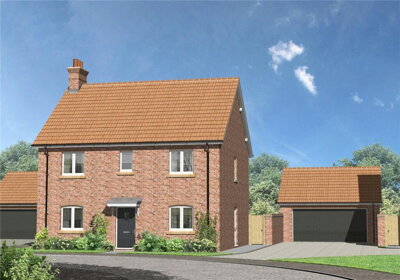
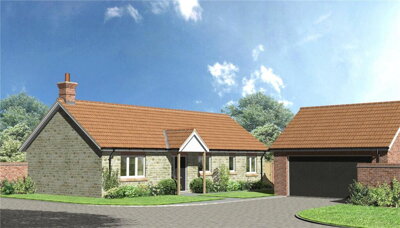
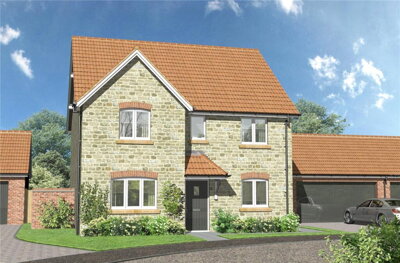
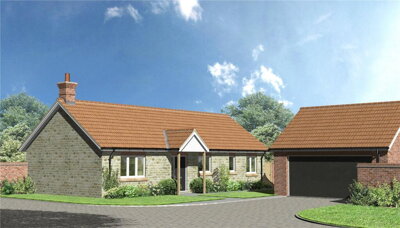
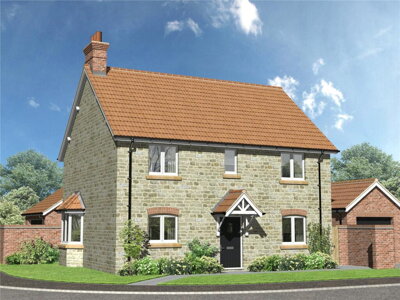
Browse 8 homes new builds in Barrington from local developer agents.
The Barrington property market offers detached, semi-detached, and terraced houses spanning various price ranges and neighbourhoods. Each listing includes detailed property information, photographs, and direct contact with the marketing agent.
The Barrington property market reflects the character of this historic Somerset village, offering primarily detached and semi-detached homes that cater to families and those seeking generous living space. Detached properties command the highest prices, averaging £560,000, while semi-detached homes provide more accessible entry at around £350,000. Terraced properties, though rarer in this rural setting, trade at approximately £290,000, making them attractive option for first-time buyers or those seeking a smaller footprint without sacrificing village charm.
Market activity in Barrington has demonstrated consistent growth over the past twelve months, with terraced properties leading appreciation at 3.57% and semi-detached homes following closely at 2.94%. Detached properties showed steady gains of 1.82%, indicating sustained demand for family-sized homes in this desirable location. Our data draws from the broader TA19 postcode area to provide comprehensive market intelligence for prospective buyers exploring opportunities in this sought-after corner of the county.
The village falls within South Somerset, where comparable market towns including Ilminster, Chard, and Crewkerne all show similar pricing patterns. Properties in Barrington with period features or thatched roofs typically command premiums within the village, reflecting the additional character and maintenance considerations these features bring. First-time buyers will find terraced options limited but priced competitively relative to surrounding towns, while families seeking larger family homes with gardens will appreciate the generous proportions available in detached properties throughout the village.

Barrington is a village where time seems to move at a gentler pace, centred around a distinctive elongated village green that has served as the heart of community life for centuries. The Conservation Area encompasses the historic core, protecting the architectural character that makes this village so appealing to discerning buyers. Properties throughout the conservation zone feature characteristic white-rendered walls beneath thatched roofs, constructed from local Hamstone quarried at nearby Ham Hill, creating a warm golden appearance that defines the Somerset countryside aesthetic.
The village is home to several notable listed buildings that contribute to its architectural significance. All Saints Church stands as a Grade I listed building the community, while the Royal Oak public house and Newlyn at 14 West Green hold Grade II* status. The village also features numerous Grade II listed buildings constructed from the characteristic local Hamstone, creating the warm honey-coloured walls that define the village streetscape. These heritage designations reflect the village's importance within South Somerset's architectural heritage.
The village community benefits from several amenities including a traditional public house, while the nearby National Trust property at Barrington Court attracts visitors throughout the year and provides local employment opportunities. With a population of 419 residents across 179 households according to the 2021 Census, Barrington offers an intimate community atmosphere where neighbours know one another and local events foster genuine connection. The River Isle flows near the village, contributing to the rural landscape while also necessitating awareness of flood risk in certain areas, particularly during periods of heavy rainfall. Recent drainage improvements including new silt traps have been installed to reduce flood risks by capturing sediments that might otherwise clog the local highways drainage system.
The Conservation Area status brings specific planning considerations that buyers should understand before committing to a purchase. Any significant alterations to exterior appearances, including window replacements, roof changes, or extensions, will typically require Conservation Area Consent or Listed Building Consent. These requirements preserve the village character but mean that renovation projects require careful planning and potentially longer timescales than in non-designated areas.
Families considering a move to Barrington will find educational provision centred around nearby market towns, with primary schools serving the local community and secondary options accessible through school transport arrangements. The village location means parents should research specific catchment areas and admission arrangements for schools in the surrounding South Somerset district. Primary education in the immediate area includes village schools that have served communities for generations, providing a solid foundation for young learners within a short distance of home.
Secondary education options for Barrington residents typically include schools in Ilminster, Chard, and Crewkerne, each offering distinct characteristics and specialisms. Parents are advised to check current Ofsted ratings and consider transportation logistics when evaluating options, as school transport arrangements vary depending on the specific school and Somerset County Council policies. For families prioritising educational excellence, visiting schools, reviewing performance data, and understanding admission catchment boundaries should form an essential part of the property search process in this rural location.
The village location does mean that school transport arrangements play a significant role in family decisions about where to live in Barrington. Somerset County Council provides school transport for eligible pupils, with routes often serving multiple villages and requiring pick-up points within the community. Parents should confirm current arrangements and any changes to routes before finalising a property purchase, as these logistics can significantly impact daily routines.

Connectivity from Barrington strikes an effective balance between rural tranquility and practical accessibility, with the A303 trunk road providing convenient access to the wider region. The village sits approximately 8 miles from the market town of Ilminster, offering everyday shopping, banking, and healthcare services without requiring lengthy journeys. For commuters or those seeking broader amenities, the county town of Taunton lies within reasonable driving distance, providing direct rail connections to London Paddington and Bristol.
Local bus services operate routes connecting Barrington with surrounding villages and market towns, though prospective residents should review current timetables as rural services may operate less frequently than urban equivalents. Essential travel for work, shopping, or leisure typically requires private vehicle ownership in this countryside location. The village benefits from proximity to the A358 and A30 corridors, facilitating journeys toward Yeovil, Exeter, and the south coast. For international travel, Bristol Airport and Exeter Airport offer connections to destinations beyond the region.
The A303 serves as the primary arterial route through South Somerset, connecting Barrington to the M3 corridor toward London and providing access to larger centres including Southampton and Winchester. The A358 links toward Taunton and the M5 motorway, while the A30 offers routes toward Cornwall and the south-west peninsula. Many Barrington residents commute to larger towns and cities for work, with Taunton, Yeovil, and Exeter all accessible within reasonable driving times for those requiring daily office attendance.
Spend time exploring Barrington at different times of day and week to understand the rhythm of village life. Visit the village green, explore Barrington Court, and speak with long-term residents about what makes the village special. Understanding the implications of living within a Conservation Area, including planning restrictions and the responsibilities this brings, should form part of your research before making any commitment.
Contact lenders or mortgage brokers to obtain an agreement in principle before making offers. This demonstrates seriousness to sellers and helps you understand your true budget based on current interest rates and lending criteria. Given the higher property values in Barrington, you may require a larger mortgage than in surrounding towns, so understanding your borrowing capacity early prevents disappointment later in the process.
View multiple properties across different price ranges to understand what Barrington homes offer. Consider property age, construction materials including Hamstone, cob, and thatched roofs, and proximity to the River Isle when evaluating flood risk. Many properties in Barrington feature traditional construction methods that require specialist knowledge, so taking time to understand these differences will help you make an informed decision.
Given the age of many properties in Barrington, a comprehensive survey is essential. A Level 2 HomeBuyer Report typically costs £400-900+ in the Somerset area and will identify defects common to period properties including damp in solid walls, roof condition, timber issues, and potential movement related to the local clay soils. For listed buildings or properties with unusual construction, our team may recommend a Level 3 Building Survey for more detailed assessment.
Our team will handle legal searches including local authority queries, drainage and water searches, and environmental assessments for flood risk and ground stability. For Barrington specifically, searches should address Conservation Area implications and any historic property considerations relevant to the 39 listed buildings in the village. Instructing early helps keep the process moving and allows time for addressing any issues that arise.
Once surveys are satisfactory and legal queries are resolved, you will exchange contracts and pay your deposit. Completion typically follows within weeks, handing you the keys to your new Barrington home. Our team will coordinate with all parties to ensure a smooth transition to your new village property.
Properties in Barrington require careful inspection given the prevalence of older construction methods and traditional building materials throughout the village. Many homes feature solid walls constructed from Hamstone or brick without cavity insulation, which can lead to condensation and damp issues if ventilation is inadequate. Some properties in the village are built from cob, a traditional mixture of earth and straw that requires specific maintenance approaches different from modern construction. Thatched roofs, while charming, require specialist maintenance and insurance considerations that differ from standard tiled properties. Prospective buyers should factor these unique characteristics into their property budget and ongoing maintenance planning.
The local geology presents specific considerations for property purchasers in Barrington. The parish sits on Martock clayey soils, with Yeovil Sands in the southern areas and Pennard siltstone subsoils to the north of the village street. The underlying Jurassic limestones and clays, including the Charmouth Mudstone Formation, create potential for shrink-swell movement affecting foundations over time, particularly during periods of extreme wet or dry weather. Properties with large trees positioned close to buildings may be particularly susceptible to foundation movement as root systems extract moisture from the clay substrate, a consideration given the mature trees lining many Barrington gardens and streets.
Flood risk awareness is also important when purchasing in Barrington, with the River Isle presenting fluvial flood potential in low-lying areas and surface water flooding possible during heavy rainfall events. New silt trap installations along the river have helped manage drainage, but buyers should still consult Environment Agency flood maps and request specific searches during conveyancing to assess risk for individual properties. Our inspectors pay particular attention to basement areas, ground floor levels, and evidence of previous flooding when surveying properties near watercourses or in low-lying positions.
Beyond structural considerations, older properties in Barrington frequently feature electrical wiring, plumbing, and heating systems that fall below current standards. Rewiring, replumbing, or heating upgrades represent common costs in period properties that buyers should anticipate when budgeting for their purchase. Properties within the Conservation Area may also require Listed Building Consent for certain works, adding complexity to renovation projects that buyers should factor into their planning.
As of February 2026, the average property price in Barrington (TA19 postcode) stands at £468,750. Detached properties average £560,000, semi-detached homes around £350,000, and terraced properties approximately £290,000. The market has shown steady growth with a 12-month price increase of 1.96%, indicating sustained demand for homes in this historic Somerset village. Flats are extremely rare in Barrington given the predominantly rural and period housing stock, with most properties being houses of various types.
Council tax bands in Barrington are set by Somerset Council (formerly South Somerset District Council) and vary according to property value and type. Most family homes in the village typically fall within bands C through E, reflecting the mix of period cottages and larger family properties found throughout the village. Prospective buyers should check specific bandings on the Valuation Office Agency website or request this information during the conveyancing process.
Primary education near Barrington is served by village schools in the surrounding area, with secondary options in nearby towns such as Ilminster, Chard, and Crewkerne. Parents should research individual school Ofsted ratings, admission policies, and school transport arrangements, as catchment boundaries determine eligibility. The village location means that school transport logistics require careful consideration, with routes typically serving multiple communities and pick-up points within the village itself. Visiting schools and understanding travel logistics forms an important part of the house-hunting process for families.
Barrington has limited public transport options typical of a rural Somerset village. Bus services connect the village to nearby market towns, though frequencies are reduced compared to urban areas. The A303 provides road connections to the region, while train services are accessed in larger towns like Taunton or Crewkerne. Most residents rely on private vehicles for daily transportation needs, though the strategic location near multiple major road corridors provides flexibility for those who travel further afield regularly.
Barrington offers appeal as a property investment destination due to its Conservation Area status, limited housing supply, and desirable village character. Property values have shown consistent appreciation, with terraced homes gaining 3.57% over twelve months and all property types showing positive growth. The National Trust presence at Barrington Court provides tourism and employment that supports the local economy, while the village's strong community spirit and regular events help maintain demand. However, buyers should consider that rural village properties may experience longer marketing times compared to urban equivalents, particularly for higher-value detached properties.
Standard Stamp Duty Land Tax rates apply to purchases in Barrington: 0% on properties up to £250,000, 5% on the portion from £250,001 to £925,000, 10% from £925,001 to £1.5 million, and 12% above £1.5 million. First-time buyers may claim relief on properties up to £625,000, paying 0% up to £425,000 then 5% on the remainder, provided all purchasers meet first-time buyer criteria. For a typical Barrington home at the village average of £468,750, standard rate buyers would pay £8,437 in Stamp Duty.
Flood risk in Barrington comes primarily from the River Isle, which flows near the village and can cause fluvial flooding in adjacent areas. Surface water flooding also presents risk during heavy rainfall, particularly in low-lying zones. The village has benefited from new silt trap installations to manage drainage and reduce flood risks by preventing sediment accumulation in the local highway drainage system. Buyers should consult Environment Agency flood maps and request specific searches during conveyancing to assess risk for individual properties, particularly those near the river or in lower-lying positions throughout the village.
When viewing period properties in Barrington, pay particular attention to the condition of Hamstone walls, which can suffer from weathering and structural issues in older properties. Check for signs of damp in solid-walled properties, as cavity insulation is often absent in traditional construction. For thatched properties, verify the condition of the thatch and confirm specialist insurance is in place. Examine foundations carefully given the clay soils in the area, looking for cracks or movement indicators, particularly near mature trees. Our inspectors can provide detailed assessments of these traditional construction methods during a RICS survey.
From 4.5% APR
From 4.5% APR available for Barrington property purchases
From £499
Legal services for your Barrington property purchase
From £400
Essential for period properties with Hamstone, cob, or thatched construction
From £600
Detailed assessment for listed buildings and historic properties
Understanding the full costs of purchasing property in Barrington extends beyond the advertised price to include Stamp Duty Land Tax, legal fees, survey costs, and moving expenses. For a typical family home priced at the village average of £468,750, a standard rate buyer would pay £8,437 in Stamp Duty, calculated as 0% on the first £250,000 plus 5% on the remaining £218,750. First-time buyers could benefit from relief worth £4,375 if purchasing within the £625,000 threshold, though all purchasers must meet the first-time buyer criteria to qualify.
RICS Level 2 Survey costs in the Somerset region typically range from £400 to £900 or more depending on property size, value, and complexity. For older Barrington properties with unique construction or listed status, a RICS Level 3 Building Survey may prove more appropriate despite higher costs, providing the detailed assessment these distinctive homes require. Given that a significant proportion of Barrington properties predate 1919 and feature traditional construction methods, the investment in a thorough survey is particularly valuable for identifying issues before completion.
Conveyancing fees generally start from £499 for standard transactions, rising for leasehold properties or those with complex title issues common in historic villages. Given the Conservation Area status and prevalence of listed buildings in Barrington, legal searches may require additional investigation and specialist knowledge of historic property considerations. Factor in removal costs, mortgage arrangement fees, and a contingency for unexpected repairs discovered during surveys when budgeting for your Barrington purchase, particularly as older properties may require rewiring, replumbing, or other upgrades not visible during viewings.
Properties New Builds In London

Properties New Builds In Plymouth

Properties New Builds In Liverpool

Properties New Builds In Glasgow

Properties New Builds In Sheffield

Properties New Builds In Edinburgh

Properties New Builds In Coventry

Properties New Builds In Bradford

Properties New Builds In Manchester

Properties New Builds In Birmingham

Properties New Builds In Bristol

Properties New Builds In Oxford

Properties New Builds In Leicester

Properties New Builds In Newcastle

Properties New Builds In Leeds

Properties New Builds In Southampton

Properties New Builds In Cardiff

Properties New Builds In Nottingham

Properties New Builds In Norwich

Properties New Builds In Brighton

Properties New Builds In Derby

Properties New Builds In Portsmouth

Properties New Builds In Northampton

Properties New Builds In Milton Keynes

Properties New Builds In Bournemouth

Properties New Builds In Bolton

Properties New Builds In Swansea

Properties New Builds In Swindon

Properties New Builds In Peterborough

Properties New Builds In Wolverhampton

Enter your details to see if this property is within your budget.
Loans, cards, car finance
Estimated property budget
Borrowing + deposit
You could borrow between
Typical borrowing
Monthly repayment
Est. at 4.5%
Loan-to-value
This is an estimate only. Your actual budget may vary depending on interest rates, credit history, and personal circumstances. For an accurate affordability assessment, speak to one of our free mortgage advisors.
This calculator provides estimates for illustrative purposes only and does not constitute financial advice. Your home may be repossessed if you do not keep up repayments on your mortgage. Estimates based on 4.5% interest rate, repayment mortgage. Actual rates depend on your circumstances.
Homemove is a trading name of HM Haus Group Ltd (Company No. 13873779, registered in England & Wales). Homemove Mortgages Ltd (Company No. 15947693) is an Appointed Representative of TMG Direct Limited, trading as TMG Mortgage Network, which is authorised and regulated by the Financial Conduct Authority (FRN 786245). Homemove Mortgages Ltd is entered on the FCA Register as an Appointed Representative (FRN 1022429). You can check registrations at NewRegister or by calling 0800 111 6768.

We use cookies to show you personalised content and improve your experience of our website. Find out more in our Privacy policy and Cookie policy.