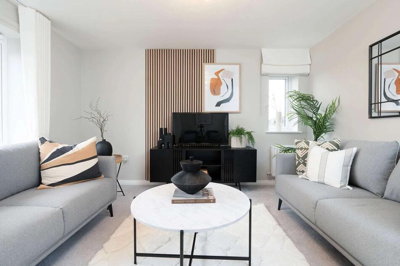
Browse 1 home new builds in Austerfield, Doncaster from local developer agents.
Three bedroom properties represent a significant portion of the Austerfield housing market, offering space for families with multiple reception rooms and gardens in many cases. Browse detached, semi-detached, and terraced options ranging across new residential developments.
£0k
0
0
0
Source: home.co.uk
Showing 0 results for 3 Bedroom Houses new builds in Austerfield, Doncaster.
£317,500
Average Property Price
7%
Annual Price Growth
551
Village Population
30.3%
Properties with 4+ Bedrooms
The Austerfield property market presents a diverse range of housing options to suit various budgets and preferences. Our data shows an overall average house price of £317,500 based on recent transactions, with detached properties commanding premium prices of around £387,500. Semi-detached homes offer more accessible entry points at approximately £180,000, while terraced properties average £315,000, reflecting the character and appeal of traditional village housing. This pricing structure makes Austerfield particularly attractive to buyers seeking generous living space without the premium associated with larger regional centres.
Looking at the broader housing stock in the combined Bawtry and Austerfield area, most properties are whole houses or bungalows at 90.9%, with a significant proportion featuring four or more bedrooms at 30.3% - double the Doncaster average of 16%. This indicates a market skewed toward larger family homes suitable for buyers needing space. The property type breakdown across the wider Doncaster area shows semi-detached homes at 31.5%, detached at 23.2%, terraced at 23.2%, and flats or maisonettes at 21.7%, though flats in Austerfield specifically average around £165,000 according to Liveable data.
Recent market activity indicates healthy demand for properties in this South Yorkshire village. Zoopla records an average sold price of £363,333 for properties in Austerfield over the past twelve months, suggesting strong buyer interest in the area. The combination of village charm, historical architecture, and proximity to employment centres has sustained property values even as wider market conditions have fluctuated. Looking ahead, significant new development is planned for the area with Albemarle Homes proposing to transform the former Bawtry Carbon Plant site into approximately 267 energy-efficient homes, ranging from two to five bedrooms, alongside a 66-bed care home and community facilities.
For buyers considering investment in the local property market, the planned Albemarle Homes development represents a notable addition to housing supply that could influence future demand patterns. The public consultation period ran from May 7 to May 30, 2025, and once completed, the 32-acre brownfield site will offer modern homes appealing to a range of buyer profiles, potentially increasing the area's attractiveness to families seeking new-build properties within the village setting.

Understanding the types of properties available in Austerfield helps buyers narrow their search and anticipate potential property characteristics. The village contains a mix of housing spanning several eras, from historic properties dating to the 16th and 17th centuries through to post-war construction and contemporary developments. Properties built before 1919 represent a significant portion of the older housing stock nationally at 23%, and Austerfield's presence of 11th-century buildings and manor houses from the late 1500s and early 1600s confirms a substantial number of heritage properties in the area.
The construction methods used in Austerfield reflect the village's historical development. Older properties such as The Manor House were built using timber-framed methods with later brick infill, a technique common in Yorkshire during the 16th and 17th centuries. Properties from the late Victorian period, including the village primary school built in 1882, typically feature traditional solid brick construction with period features such as sash windows and original fireplaces. Modern properties constructed post-1980 use contemporary building materials and methods, offering different maintenance requirements compared to their older counterparts.
When viewing properties in Austerfield, our inspectors frequently identify several common issues associated with the local housing stock. Traditional brick properties built before modern building regulations may show signs of penetrating damp, particularly where original lime mortar has been replaced with cement, which does not allow the walls to breathe. Timber-framed properties require attention to woodworm and rot in structural elements, especially where ventilation has been compromised by modern extensions or improvements. Roof conditions on older properties warrant close inspection, as traditional ridge tiles and flashings may have deteriorated over decades of exposure to South Yorkshire weather.
Life in Austerfield revolves around community spirit and the unhurried pace of rural South Yorkshire. The village maintains its own primary school, Austerfield Village Primary School, which was originally built in 1882 and continues to serve local families, fostering a tight-knit atmosphere where neighbours often know one another. The community falls within the combined Bawtry and Austerfield area, which is characterised as relatively affluent compared to other parts of Doncaster, with a significant proportion of larger family homes featuring four or more bedrooms. The village pub provides a traditional gathering point, while local events throughout the year bring residents together to celebrate the area's heritage and community bonds.
The wider Doncaster area offers comprehensive amenities within easy reach, including shopping centres, healthcare facilities, and recreational options. Doncaster itself has evolved significantly since the decline of coal mining in the 1970s and 1980s, developing a diversified service-based economy. The town's historical associations with horse racing and the railways have created additional tourism and employment opportunities, while retail development at locations including the Frenchgate Centre provides modern shopping facilities. For residents of Austerfield, the village provides an ideal base combining tranquil countryside living with practical access to urban employment, education, and entertainment.
The British Geological Survey notes that clay-rich soils are common throughout the region, a factor that has shaped local building traditions and continues to influence property conditions today. Clay soils absorb water during wet periods and shrink during dry spells, a cycle that can cause foundation movement in properties with shallow or inadequate footings. This shrink-swell behaviour represents a significant geohazard across the UK, and climate change predictions suggest the risk will increase as weather patterns become more extreme. Our team always recommends that buyers commissioning surveys in Austerfield specifically request assessment of foundation conditions, particularly for properties built before 1950. The village is situated away from major flood risk zones, with GOV.UK indicating very low flood risk for the area, though surface water flooding should always be verified with the local council when considering any property purchase.

Education provision in Austerfield centres on Austerfield Village Primary School, a community school with historical roots dating back to 1882. This establishment provides primary education for children in the village and surrounding rural areas, serving families who appreciate the benefits of local schooling within a small community setting. The school forms part of the educational infrastructure that makes Austerfield particularly appealing to families with young children, offering quality education without the need for lengthy daily commutes. Parents considering property purchase in the area should directly verify current school performance metrics and catchment area boundaries, as these can influence property values and admission chances.
For secondary education, residents typically access schools in nearby towns, with Doncaster offering a range of secondary schools including grammar schools and comprehensive options. Doncaster's educational landscape includes several well-established secondary institutions, with varying performance ratings and specialisms. Doncaster College and other further education providers serve older students seeking vocational qualifications or higher education pathways. The wider South Yorkshire area provides additional options for families seeking specialist educational settings, including faith schools and institutions with particular academic or vocational focuses.
Families moving to Austerfield should research specific school admission criteria and travel arrangements, as daily transportation to secondary schools in surrounding towns will need to be factored into lifestyle planning and household logistics. School bus services may be available, or families may need to arrange private transport. Properties in certain locations within the village may fall within different catchment areas depending on the proximity to neighbouring villages and the specific admission policies of nearby secondary schools. Ofsted ratings should be checked alongside admission criteria when evaluating properties for families with school-age children.
Austerfield enjoys convenient transport connections that make it practical for residents to commute to major employment centres while enjoying village life. The village is strategically positioned near the A1(M) corridor, providing straightforward road access to Leeds, Sheffield, and Nottingham. The M18 motorway is also readily accessible, connecting the area to the wider motorway network and facilitating journeys to Robin Hood Airport Doncaster Sheffield, which serves both domestic and international destinations. This connectivity has contributed to Austerfield's appeal as a location for commuters who require access to regional business hubs without residing in urban centres.
Public transport options include bus services connecting Austerfield with nearby towns and villages, while railway stations at nearby locations provide access to the national rail network. Doncaster railway station offers direct services to major cities including London, Edinburgh, Birmingham, and Bristol, with frequent trains to London King's Cross taking around two hours. The station has undergone significant redevelopment in recent years, improving facilities and passenger experience. For air travel, Robin Hood Airport is within easy driving distance, offering a range of domestic and European flights from its location near Doncaster.
Daily commuters should consider that while the village benefits from these connections, journey times and schedules will influence practical feasibility of working in more distant cities. Traffic conditions on the A1(M) and M18 vary throughout the day, with peak periods potentially adding significant time to commutes. Our team recommends that buyers who anticipate regular commuting requirements should test their proposed journey during typical working hours before committing to a purchase. The combination of road, rail, and air links makes Austerfield well-connected for both professional and leisure travel requirements, supporting the village's position as an attractive option for buyers seeking rural character with urban accessibility.
Begin your property search by exploring current listings in Austerfield and understanding recent sale prices. With average prices around £317,500 and the market showing 7% annual growth, understanding local values will help you set realistic expectations and identify opportunities. Review property types available, from traditional terraced homes to detached family houses, and consider proximity to amenities that matter most to your household. Zoopla data showing properties averaging £363,333 in recent sales provides useful context for competitive positioning.
Before arranging viewings, approach a lender to obtain a mortgage agreement in principle. This demonstrates your financial readiness to estate agents and sellers, strengthening your position when making offers. Current RICS Level 2 survey costs in the Doncaster area range from £395 to £1,250 depending on property value and size, costs you will need to budget alongside your mortgage, deposit, and legal fees. Having your finances arranged before viewing properties also helps you move quickly when you find a suitable home in a competitive market.
Once you have identified properties matching your criteria, arrange and attend viewings to assess each home in person. Pay attention to the property's condition, noting that older village properties may have timber-framed construction or period features requiring maintenance. Check for signs of damp, roof condition, and any structural concerns that might warrant further investigation through a building survey. Our inspectors recommend viewing properties at different times of day to assess natural light levels and any issues with noise or traffic.
For properties over 50 years old, which represents a significant proportion of Austerfield's housing stock, a RICS Level 2 Homebuyers Survey is strongly recommended. With clay soils prevalent in the region, the survey should specifically assess any potential shrink-swell movement affecting foundations. Survey costs for a typical three-bedroom home in the Doncaster area average around £437, while four-bedroom properties typically cost approximately £495. Pre-1919 properties may incur additional charges of 20-40% due to their construction complexity.
Once your offer is accepted, instruct a solicitor experienced in South Yorkshire property transactions to handle the legal aspects of your purchase. They will conduct searches with Doncaster Metropolitan Borough Council, investigate the property's title, and manage the transfer of ownership. Factor in costs of approximately £499 or more for conveyancing services, with additional costs likely for leasehold properties or those involving a mortgage. Listed buildings require additional due diligence to verify any planned renovations have received appropriate consent.
Your solicitor will coordinate with the seller's legal team to exchange contracts, at which point your deposit becomes legally binding. On completion day, the remaining funds are transferred, and you receive the keys to your new Austerfield home. If purchasing a listed building such as The Farmhouse or The Manor House, ensure your solicitor has verified all necessary consents for any planned renovations. Specialist heritage assessments for listed buildings typically cost an additional £150-400 on top of standard survey fees.
Purchasing property in Austerfield requires careful consideration of several area-specific factors that could affect your investment. The village contains several listed buildings including the Grade II* Church of St Helena, The Farmhouse, and The Manor House, meaning that nearby properties may be situated within the setting of these heritage assets, potentially affecting permitted development rights and planning considerations. If you are considering purchasing a listed building yourself, be aware that specialist surveys and Listed Building Consent will be required for any alterations, with additional costs of £150-400 for specialist heritage assessments. Properties adjacent to listed buildings may also be subject to increased scrutiny from planning authorities regarding external alterations.
Given the prevalence of clay soils in South Yorkshire, foundation conditions warrant particular attention when evaluating properties. The British Geological Survey indicates that clay-rich soils exhibit shrink-swell behaviour in response to moisture changes, which can cause subsidence affecting older properties. When viewing homes, look for signs of cracking in walls, particularly diagonal cracks extending from door and window frames, uneven floors that slope or bounce, and doors and windows that stick or fail to close properly, which may indicate ground movement. The presence of trees close to properties can exacerbate shrink-swell issues as vegetation absorbs moisture from the soil, particularly during summer months.
Our inspectors frequently identify several defect categories when surveying properties in the Austerfield area. Damp and moisture problems appear in traditional brick properties where modern cement mortar has replaced original lime pointing, trapping moisture within walls. Roof defects including slipped tiles, deteriorating ridge mortar, and failing flashings are common in older properties that have not received regular maintenance. Electrical systems in properties built before the 1970s may not meet current standards and should be inspected by a qualified electrician. Timber decay including rot and woodworm can affect structural elements where ventilation has been compromised.
Our team recommends commissioning a RICS Level 2 survey before committing to purchase, particularly for properties over 50 years old which comprise a significant portion of Austerfield's housing stock. The survey provides a detailed assessment of the property's condition, identifies defects requiring attention, and helps buyers negotiate repairs or price adjustments with sellers. Additionally, verify drainage and guttering condition during viewings, as defects in these systems can lead to penetrating damp, a common issue in traditional brick properties throughout the region. For properties with loft spaces, check insulation levels as inadequate insulation is frequently found in older homes and represents a significant cost to address.
The average house price in Austerfield is currently around £317,500 based on recent sales data from Rightmove. Detached properties average £387,500, semi-detached homes cost approximately £180,000, terraced properties sell for around £315,000, and flats average £165,000 according to Liveable data. Property values have increased by 7% over the past year and are 13% higher than the 2022 peak of £281,707, indicating sustained demand for homes in this South Yorkshire village. Zoopla reports an average sold price of £363,333 for the most recent twelve-month period, suggesting strong buyer competition for properties in this sought-after village location.
Properties in Austerfield fall under Doncaster Metropolitan Borough Council's jurisdiction for council tax purposes. Specific bands depend on property value and are assessed by the Valuation Office Agency, ranging from Band A for properties valued up to £40,000 through to Band H for those exceeding £320,000. You can verify the exact band for any specific property by checking the Council Tax band on the Gov.uk website or requesting this information during the conveyancing process through local authority searches. The council provides online facilities for checking bands and estimated annual charges for any property in the borough.
Austerfield Village Primary School serves the village and surrounding areas, having been established in 1882 as a traditional community school providing primary education for children aged 5-11. The school forms part of a village educational tradition dating back over a century, serving families who appreciate the benefits of local schooling within a small community setting. For secondary education, residents typically access schools in Doncaster, which offers various options including grammar schools and comprehensive institutions such as Hall Cross Academy and Danum Academy. Doncaster College and other further education providers serve older students. School performance data and catchment area details should be verified directly with schools or through Ofsted's website when planning your move.
Austerfield is served by local bus routes connecting to nearby towns including Bawtry and Doncaster, providing essential access for residents without private vehicles. Doncaster railway station provides comprehensive national rail connections with direct services to London King's Cross taking approximately two hours, Leeds, Sheffield, Edinburgh, Birmingham, and Bristol. For air travel, Robin Hood Airport Doncaster Sheffield is within easy driving distance, offering domestic and European flights. The village's position near the A1(M) and M18 provides excellent road connectivity to the wider region, with straightforward access to Leeds, Sheffield, and Nottingham, making it practical for commuters with access to private vehicles.
Austerfield offers several factors that may appeal to property investors, including the planned development of 267 new homes at the former Bawtry Carbon Plant site by Albemarle Homes, which could increase demand in the area as the development brings new residents and community facilities. House prices have shown consistent growth with 7% annual appreciation, and the village benefits from proximity to major employment centres in South Yorkshire. The relative affordability compared to Leeds and Sheffield, combined with good transport links, positions the area as potentially attractive for commuters seeking lower property costs while maintaining access to urban employment. Properties with four or more bedrooms command premiums in the area, reflecting demand from families seeking space.
Stamp Duty Land Tax rates from April 2025 are 0% on the first £250,000 of residential property, 5% on £250,001 to £925,000, 10% on £925,001 to £1.5 million, and 12% above £1.5 million. First-time buyers receive relief on properties up to £625,000, paying 0% on the first £425,000 and 5% between £425,001 and £625,000. Given Austerfield's average price of around £317,500, most buyers would pay no stamp duty at all, making it particularly attractive for first-time purchasers. For a property at the average price, only £67,500 would fall into the 5% bracket, resulting in stamp duty of £3,375 for standard buyers.
Significant new development is planned for the Austerfield area with Albemarle Homes proposing to transform the former Bawtry Carbon Plant site into approximately 267 energy-efficient homes, ranging from two to five bedrooms, alongside a 66-bed care home and community facilities. The public consultation period ran from May 7 to May 30, 2025, and construction is expected to commence following planning approval. Additionally, Willow Paddocks by Albemarle Homes in neighbouring Beckingham offers 15 four-bedroom executive homes, providing new-build options within the local area. New-build properties typically offer lower maintenance requirements and improved energy efficiency compared to older stock, though they often command premiums over equivalent older properties.
Given the prevalence of clay soils in South Yorkshire, foundation conditions warrant particular attention when evaluating properties in Austerfield. Clay-rich soils exhibit shrink-swell behaviour during wet and dry periods, which can cause subsidence affecting properties with shallow or inadequate footings. Look for diagonal cracks extending from window and door frames, uneven floors, and doors or windows that stick, which may indicate ground movement. Traditional brick properties may show signs of penetrating damp where cement mortar has replaced original lime pointing. Timber-framed properties require inspection for woodworm and rot in structural elements. Our team recommends commissioning a RICS Level 2 survey to identify potential structural issues before committing to purchase, particularly for properties over 50 years old.
From 4.5%
Expert mortgage advice and competitive rates for Austerfield buyers
From £499
Conveyancing solicitors experienced in Doncaster property transactions
From £395
Professional survey covering all major defects and construction issues
From £60
Energy performance certificate for your new Austerfield home
Understanding the full costs of purchasing property in Austerfield is essential for budgeting effectively. For properties priced at the current average of £317,500, most buyers will benefit from the standard SDLT threshold of £250,000, meaning only £67,500 would be subject to the 5% rate, resulting in stamp duty of £3,375. First-time buyers purchasing properties up to £425,000 would pay no stamp duty whatsoever, making Austerfield's pricing particularly favourable for those taking their first step onto the property ladder. These thresholds represent significant savings compared to purchasing in higher-value regions where properties routinely exceed £625,000.
Beyond stamp duty, buyers should budget for several additional costs associated with purchasing property in South Yorkshire. RICS Level 2 survey fees in the Doncaster area range from £395 to £1,250 depending on property value and bedroom count, with a typical three-bedroom home attracting costs of approximately £437, while larger four-bedroom properties average around £495. Older properties built before 1919 may incur additional survey fees of 20-40% due to their construction complexity and the potential for hidden defects. Conveyancing fees typically start from £499 for straightforward transactions, though more complex purchases involving listed buildings or leasehold properties may cost considerably more.
Mortgage arrangement fees of around 0.5% of the loan amount are common among lenders, though some offer fee-free mortgages. Survey costs for listed buildings add £150-400 for specialist heritage assessments, while searches with Doncaster Metropolitan Borough Council typically cost £200-300. Removal costs vary depending on the volume of belongings being transported and distance travelled. For a property purchase of £317,500, total additional costs excluding mortgage payments and deposit typically range between £1,500 and £3,000, making the overall transaction affordable compared to many other parts of the country. Our team recommends obtaining quotes from multiple providers to ensure competitive pricing on survey and legal services.
Properties New Builds In London

Properties New Builds In Plymouth

Properties New Builds In Liverpool

Properties New Builds In Glasgow

Properties New Builds In Sheffield

Properties New Builds In Edinburgh

Properties New Builds In Coventry

Properties New Builds In Bradford

Properties New Builds In Manchester

Properties New Builds In Birmingham

Properties New Builds In Bristol

Properties New Builds In Oxford

Properties New Builds In Leicester

Properties New Builds In Newcastle

Properties New Builds In Leeds

Properties New Builds In Southampton

Properties New Builds In Cardiff

Properties New Builds In Nottingham

Properties New Builds In Norwich

Properties New Builds In Brighton

Properties New Builds In Derby

Properties New Builds In Portsmouth

Properties New Builds In Northampton

Properties New Builds In Milton Keynes

Properties New Builds In Bournemouth

Properties New Builds In Bolton

Properties New Builds In Swansea

Properties New Builds In Swindon

Properties New Builds In Peterborough

Properties New Builds In Wolverhampton

Enter your details to see if this property is within your budget.
Loans, cards, car finance
Estimated property budget
Borrowing + deposit
You could borrow between
Typical borrowing
Monthly repayment
Est. at 4.5%
Loan-to-value
This is an estimate only. Your actual budget may vary depending on interest rates, credit history, and personal circumstances. For an accurate affordability assessment, speak to one of our free mortgage advisors.
This calculator provides estimates for illustrative purposes only and does not constitute financial advice. Your home may be repossessed if you do not keep up repayments on your mortgage. Estimates based on 4.5% interest rate, repayment mortgage. Actual rates depend on your circumstances.
Homemove is a trading name of HM Haus Group Ltd (Company No. 13873779, registered in England & Wales). Homemove Mortgages Ltd (Company No. 15947693) is an Appointed Representative of TMG Direct Limited, trading as TMG Mortgage Network, which is authorised and regulated by the Financial Conduct Authority (FRN 786245). Homemove Mortgages Ltd is entered on the FCA Register as an Appointed Representative (FRN 1022429). You can check registrations at NewRegister or by calling 0800 111 6768.

We use cookies to show you personalised content and improve your experience of our website. Find out more in our Privacy policy and Cookie policy.