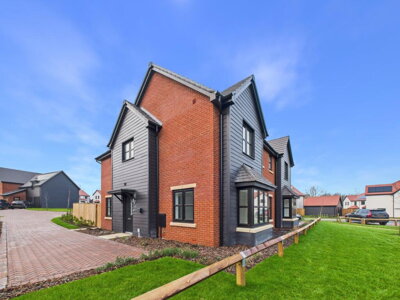
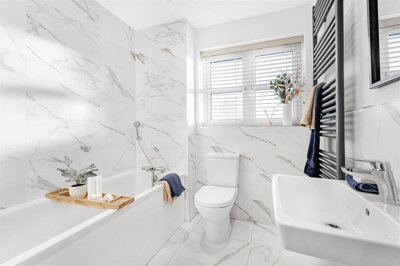
Browse 2 homes new builds in Ashwell, North Hertfordshire from local developer agents.
Three bedroom properties represent a significant portion of the Ashwell housing market, offering space for families with multiple reception rooms and gardens in many cases. Browse detached, semi-detached, and terraced options ranging across new residential developments.
£500k
5
0
120
Source: home.co.uk
Showing 5 results for 3 Bedroom Houses new builds in Ashwell, North Hertfordshire. The median asking price is £500,000.
Source: home.co.uk
Semi-Detached
4 listings
Avg £600,000
Terraced
1 listings
Avg £399,995
Source: home.co.uk
Source: home.co.uk
The Ashwell property market reflects the village's desirable location and the strong demand for character homes in North Hertfordshire. Zoopla records indicate an average house price of £554,088 over the last twelve months, with detached properties commanding premium prices averaging £777,333. Semi-detached homes in the village typically sell for around £501,889, while terraced properties average approximately £499,256. These figures demonstrate the premium placed on Ashwell's period properties and the village's appeal to buyers seeking space and character without the prices found in larger towns.
New build opportunities in Ashwell remain limited but notable. Senuna Park on Station Road offers 3, 4, and 5 bedroom homes from Matthew Homes starting at £825,000, with shared ownership options available through First Garden Cities Homes from £132,125 for a 35% share of a two-bedroom property. Additional planning applications for smaller developments at Land North of Ashwell Street and Green Lane indicate continued growth in the village's housing stock. Price trends over the past year show fluctuation, with some sources reporting increases of around 11% and others noting correction from previous highs, suggesting a market that is settling into a more sustainable pattern following recent volatility.

Ashwell offers a distinctive village lifestyle characterised by its rich heritage, welcoming community, and practical amenities. The village centre centres around the historic High Street, where timber-framed buildings dating from medieval times stand alongside elegant 17th-century brick properties. The Church of St Mary, a Grade I listed flint and stone structure from the 14th century, anchors the village spiritually and architecturally. Local facilities include a nursery, doctors surgery, dental practice, pharmacy, general store, butchers, bakers, coffee shop, and several public houses, ensuring daily needs are met without requiring travel to larger towns.
The village sits at the spring line on the chalk scarp, a geological feature that has shaped both the landscape and the settlement pattern. Large, flat agricultural fields extend to the north, while the rising chalk escarpment to the south provides an attractive backdrop and walking country. The local Neighbourhood Plan identifies Ashwell as a thriving parish that encourages incubator and flexible start-up business space, supporting a degree of economic self-sufficiency alongside residential appeal. The village grew by 9.2% between 2011 and 2019, with 116 units built or granted planning permission in the preceding decade, reflecting sustained demand for this North Hertfordshire location.
Community life in Ashwell benefits from numerous clubs, societies, and events that bring residents together throughout the year. The local primary school serves as a focal point for families, while the Ashwell Museum on Swan Street preserves and shares the village's fascinating history. Walking routes radiate from the village across the surrounding countryside, taking advantage of the varied geology and the distinctive chalk landscape. The proximity to Royston provides access to additional shopping facilities, supermarkets, and rail services, while the market towns of Baldock and Hitchin offer wider retail and leisure options within a short drive.
Education provision in Ashwell centres on Ashwell Primary School, a community school serving children from Reception through to Year 6. The school is situated within the village and benefits from a dedicated catchment area that includes the surrounding rural parishes. For families considering primary education, the school provides a convenient option within walking distance of most village properties, eliminating the need for school transport. The presence of a nursery and childcare facilities in the village ensures that early years provision is available locally for families with very young children.
Secondary education options for Ashwell residents include schools in the nearby market towns of Baldock, Royston, and Hitchin, all accessible by school bus services. Families should research individual school performance, Ofsted ratings, and admission arrangements when considering which secondary school best suits their child's needs. The Ashwell Neighbourhood Plan supports educational provision within the village and notes the importance of maintaining school facilities to serve the local community. For sixth form and further education, students typically travel to Baldock, Hitchin, or Cambridge, with good public transport links supporting these journeys.

Transport connectivity from Ashwell benefits from the village's strategic position in North Hertfordshire, offering practical options for commuting and travel. The nearest mainline railway station is located in Royston, approximately 3 miles from Ashwell village centre, providing regular services to Cambridge in around 20 minutes and to London King's Cross in approximately 45 minutes. These direct rail connections make Ashwell attractive to commuters working in either the academic and technology hub of Cambridge or the financial and professional services centre of London. Stagecoach bus services operate routes connecting Ashwell with Baldock, Royston, and surrounding villages, providing an alternative to car travel for daily commuting and shopping trips.
Road travel from Ashwell is facilitated by the A507, which passes through the village and connects to the A10 at Royston and the A1(M) at Baldock. This road network provides access to the major employment centres of Cambridge, Stevenage, and the wider London commuter belt. For cycling, the village and surrounding countryside offer various routes suitable for recreational cycling and, for the more adventurous, commuting by bicycle to nearby towns. Parking within Ashwell village is generally adequate for a settlement of its size, though availability may be limited during peak times or village events.
Ashwell's Conservation Area, designated in 1968 and extended in 1978 and 1986, encompasses most of the historic village core. The boundary extends from Hinxworth Road and Newnham Way in the west to Station Road in the east, taking in properties along Back Street and Silver Street and wrapping around the primary school and Ashwell Street. Within this designated area lie 78 listed buildings, ranging from the Grade I listed Church of St Mary with its 14th-century flint and stone construction to numerous Grade II properties throughout the village's historic lanes. Examples include Guild House on the High Street, the Grade II* Rose and Crown Public House, and the Town House on Swan Street which now houses the Ashwell Museum.
The village's building materials reflect its long history, with timber-framed properties predominant on the High Street featuring exposed close studding on jettied upper floors. Brick buildings date from the 17th century onwards and commonly appear in short terraces along High Street and Mill Street. Later 19th-century brick terraces are particularly notable on Back Street, Silver Street, and the northern end of Kingsland Way. Roofs throughout the village tend to be ceramic tile or slate, with some older properties retaining thatch. Any modifications to properties within the Conservation Area require planning permission from North Hertfordshire District Council, and works to listed buildings require Listed Building Consent.
Beyond the heritage buildings, Ashwell also has seven scheduled monuments in the parish, including the Iron Age hillfort of Arbury Banks. Ashwell Bury holds Registered Park and Garden status, adding further historical significance to the village's landscape. Prospective buyers should appreciate that living in Ashwell means participating in the stewardship of a place with significant archaeological, architectural, and historic value.
Ashwell's setting on the chalk escarpment has profoundly shaped both the landscape and the built environment. The village sits on the spring line where water, gathered in the porous chalk geology, emerges as springs at the base of the slope. Boulder clay deposited at the end of the Ice Age caps Claybush Hill at 99.1 metres, creating contrasting soil conditions across the village. The soils on the escarpment are light, free-draining, and easily worked, while Claybush Hill supports wetter, heavier soils. All soils in Ashwell are alkaline, which influences both garden planting choices and the preservation of building materials.
The South East region, including North Hertfordshire, faces particular challenges from shrink-swell behaviour in clay soils. When moisture content fluctuates, clay-rich ground expands during wet periods (causing heave) and contracts during dry spells (causing subsidence). Properties on Claybush Hill, where boulder clay is present, may face particular risks from ground movement. Climate change is expected to increase shrink-swell hazards across susceptible areas. Signs of previous movement include large diagonal cracks in walls, uneven floors, and doors or windows that stick or no longer close properly. A thorough survey will identify whether a property shows any evidence of historic or ongoing movement.
Surface water flooding represents a documented concern in Ashwell, with the western part of the High Street and West End most frequently affected. Other areas including Back Street, Bear Lane, Church Lane, and Hodwell have experienced periodic flooding. The Environment Agency's flood maps and the Ashwell Neighbourhood Plan identify areas within Flood Zones 2 and 3, where moderate to high flood hazard exists. Properties in these zones face additional planning considerations and may encounter challenges obtaining standard insurance coverage. We recommend reviewing the Environment Agency's online flood risk maps for any specific property address and factoring necessary flood resilience measures into purchasing decisions and renovation budgets.
Contact a mortgage broker or direct lender to obtain an agreement in principle before beginning your property search. This document demonstrates your financial readiness to estate agents and sellers when making an offer, showing you have already taken initial steps to secure funding and understand your borrowing capacity within the Ashwell market where average prices exceed £500,000.
Study recent sales data across different sources to understand pricing patterns, explore neighbourhoods within the village from the historic High Street to newer developments like Senuna Park, and investigate local factors including flood risk areas identified by the Environment Agency and any Conservation Area restrictions that may affect your purchase or future plans for the property.
Once suitable properties have been identified, attend viewings to assess the condition of the building, its surroundings, and how it meets your requirements. Take detailed notes and photographs to help compare options later, paying particular attention to signs of damp, roof condition, and any cracking that might indicate structural movement given the local clay geology.
Before completing your purchase, arrange a RICS Level 2 or Level 3 survey to identify any structural issues or defects. Given Ashwell's many period properties, timber-framed buildings, and Conservation Area restrictions, a thorough survey conducted by a qualified inspector is particularly important. Properties over 50 years old commonly present issues including damp, outdated electrics, and potential signs of subsidence that a professional survey will identify.
Choose a solicitor experienced in local property transactions to handle the legal aspects of your purchase, including local searches, contracts, and registration at the Land Registry. Local knowledge of North Hertfordshire District Council requirements and Conservation Area obligations will ensure a smoother transaction for properties within Ashwell's designated boundaries.
Once all legal work is finalised and your mortgage is in place, you will exchange contracts and set a completion date. On completion day, you will receive the keys to your new Ashwell home. Ensure you have buildings insurance in place from the moment contracts are exchanged, particularly for period properties where structural risks may require specialist coverage.
Purchasing a property in Ashwell requires careful consideration of several local factors that may affect your decision and ongoing ownership costs. Surface water flooding represents a particular concern for this village, with the western part of High Street, West End, and areas along Back Street, Bear Lane, Church Lane, and Hodwell all experiencing periodic flooding. The Environment Agency's flood maps and the Ashwell Neighbourhood Plan identify areas within Flood Zones 2 and 3, where additional planning considerations and insurance implications may apply. Prospective buyers should review these resources and factor any necessary flood resilience measures into their purchasing decision.
The majority of Ashwell falls within the Ashwell Conservation Area, designated in 1968 and extended in subsequent years, which imposes restrictions on alterations, extensions, demolitions, and even some external paintwork. If you are considering any future modifications to a property, you will need to obtain planning permission and potentially Listed Building Consent from North Hertfordshire District Council. The village's 78 listed buildings range from Grade I structures like St Mary's Church to numerous Grade II properties throughout the village, each carrying specific obligations for maintenance and approved materials.
Given Ashwell's geological setting on the chalk escarpment with boulder clay deposits, properties may be subject to ground movement risks. The South East region is particularly susceptible to shrink-swell behaviour in clay soils, where moisture changes cause the ground to expand and contract. This can affect foundations and structural integrity over time. A thorough building survey conducted by a qualified RICS surveyor will identify any signs of movement or subsidence, and your solicitor should investigate whether previous issues have been reported. The variety of construction methods in Ashwell, from medieval timber-framed buildings to 19th-century brick terraces and post-war housing, means each property type has its own characteristic defects and maintenance requirements.
Ashwell's diverse housing stock, ranging from medieval timber-framed cottages to 19th-century brick terraces and post-war developments, presents varying defect profiles that buyers should understand. Timber-framed properties on the High Street often show signs of age-related movement as the structure adjusts over centuries, with particular attention needed to exposed timbers for rot or beetle infestation. Many timber-framed buildings feature close studding and jettied upper floors, where structural elements may have deflected over time creating uneven floors or diagonally aligned walls that a surveyor will assess for significance.
Brick terraces on Back Street, Silver Street, and Kingsland Way, predominantly built in the later 19th century, commonly suffer from issues typical of Victorian construction. These include inadequate insulation, outdated electrical systems with possibly aluminium wiring or old fuse boards, and potential problems with original cast iron or lead drainage systems. Walls may show signs of penetrating or rising damp where original damp-proof courses have failed or were never installed. Roof coverings on these properties, typically slate or tile, often require renewal after 80-100 years of service.
Properties built during or after the post-war period, including the Dixies Close development which used the Airey construction system, present their own characteristic issues. Airey houses, identifiable by their pre-cast concrete columns and timber cladding, have known vulnerabilities including potential issues with the concrete columns and the integrity of connections. Any buyer considering a post-war property should ensure the surveyor has specific experience with these construction types. Modern additions to the village, particularly those built in the 1980s onwards, typically present fewer structural concerns but may have other issues related to building standards of their era.
The average house price in Ashwell is approximately £513,345 according to recent Rightmove data, though Zoopla reports a slightly higher figure of £554,088 over the last twelve months. Detached properties command the highest prices, averaging around £777,333 according to Zoopla, while semi-detached homes typically sell for approximately £501,889 and terraced properties for around £499,256. Property prices in Ashwell reflect the village's desirable location in North Hertfordshire, the period housing stock with its heritage character, and strong commuter appeal to Cambridge and London, with premiums often paid for properties with original features or those positioned within the Conservation Area.
Properties in Ashwell fall within North Hertfordshire District Council's council tax bands, which range from Band A through to Band H based on the 1991 property valuation. Most family homes in Ashwell fall within the middle bands (C through E), though larger detached properties, those with significant extensions, or premium locations on the historic High Street may attract higher bands. The specific band for any property can be checked through the Valuation Office Agency website using the property address or council tax reference number.
Ashwell Primary School serves the village's younger children from Reception through to Year 6 and represents the main educational establishment within the village itself. The school benefits from a dedicated catchment area serving surrounding rural parishes, making it a focal point for young families in the community. For secondary education, families typically consider schools in Baldock, Royston, and Hitchin, all accessible via school transport services, with parents advised to research individual Ofsted ratings, examination results, and admission criteria to find the most appropriate option. The village also maintains local nursery and childcare facilities for families with pre-school children.
Ashwell enjoys good connectivity for commuters despite its rural village setting. The nearest mainline station is in Royston, approximately 3 miles away, offering direct services to Cambridge in around 20 minutes and London King's Cross in approximately 45 minutes. Stagecoach operates bus services linking Ashwell with Baldock, Royston, and surrounding villages throughout the day. For road travel, the A507 provides direct access to the A10 at Royston and the A1(M) at Baldock, connecting Ashwell to Cambridge, Stevenage, and the wider region.
Ashwell represents a solid investment opportunity given its desirable location in North Hertfordshire, strong transport connections to Cambridge and London, and limited supply of period properties within the Conservation Area. The village's heritage character, excellent local amenities, and strong community atmosphere make it attractive to owner-occupiers, which supports consistent long-term demand. Investors should note that listed buildings and Conservation Area properties carry maintenance obligations and planning restrictions that may affect rental management, potentially requiring specialist tradespeople for any works. The presence of new developments like Senuna Park provides options across different price points, including shared ownership for those with smaller deposits.
Stamp Duty Land Tax rates for 2024-25 apply to residential purchases with nil rate on the first £250,000, 5% on the portion from £250,001 to £925,000, 10% from £925,001 to £1.5 million, and 12% on any amount above £1.5 million. Given the average Ashwell property price of approximately £513,345, most buyers will pay 5% on the portion exceeding £250,000, resulting in stamp duty of around £13,167. First-time buyers may qualify for relief on properties up to £625,000, with nil rate on the first £425,000 and 5% between £425,001 and £625,000. Always verify your liability using HMRC's online calculator or consult your solicitor before completing your purchase.
We strongly recommend arranging a RICS Level 2 or Level 3 survey before completing any property purchase in Ashwell. Given the village's high proportion of period properties, many built in timber-framed or Victorian brick construction, professional surveys frequently identify defects that would not be apparent during a standard mortgage valuation. Common findings include damp issues, roof deterioration, electrical systems requiring upgrade, and signs of movement related to the local clay geology. For listed buildings or non-standard construction, a more comprehensive Level 3 Building Survey is advisable. Survey costs typically range from £400 for a standard Level 2 on a modest property to £550 or more for larger or more complex period homes.
Properties in Ashwell's flood risk areas, particularly those on the western High Street, West End, Back Street, Bear Lane, Church Lane, and Hodwell, may require specialist flood insurance or face higher premiums. Standard buildings and contents insurance policies may exclude or limit coverage for properties in Flood Zones 2 and 3, so buyers should obtain quotes before completing purchase. Listed buildings often require specialist insurers with experience of traditional construction methods, and premiums may reflect the higher cost of repairing or replacing heritage features using appropriate materials. Your solicitor should make enquiries about any flood claims history for the property.
Understanding the full costs of buying a property in Ashwell extends beyond the purchase price to include stamp duty, legal fees, survey costs, and moving expenses. The current SDLT thresholds for residential purchases start at 0% for the first £250,000, then 5% up to £925,000, 10% up to £1.5 million, and 12% on amounts exceeding £1.5 million. For first-time buyers purchasing properties up to £625,000, relief is available bringing the nil-rate threshold to £425,000. Given Ashwell's average property price of around £513,345, many buyers will fall within the 5% bracket for the portion above £250,000.
Additional purchase costs include mortgage arrangement fees, which typically range from £500 to £2,000 depending on the lender and deal selected. A RICS Level 2 survey costs between £400 and £600 on average, though larger or more complex properties in Ashwell may require a more comprehensive Level 3 survey costing £550 or more. Conveyancing fees for legal work, local searches, and Land Registry registration typically start from around £500 and increase for leasehold properties or those with complex titles. Removal costs, mortgage valuation fees, and potential renovation expenses should also be factored into your budget when purchasing a period property in Ashwell.
Properties New Builds In London

Properties New Builds In Plymouth

Properties New Builds In Liverpool

Properties New Builds In Glasgow

Properties New Builds In Sheffield

Properties New Builds In Edinburgh

Properties New Builds In Coventry

Properties New Builds In Bradford

Properties New Builds In Manchester

Properties New Builds In Birmingham

Properties New Builds In Bristol

Properties New Builds In Oxford

Properties New Builds In Leicester

Properties New Builds In Newcastle

Properties New Builds In Leeds

Properties New Builds In Southampton

Properties New Builds In Cardiff

Properties New Builds In Nottingham

Properties New Builds In Norwich

Properties New Builds In Brighton

Properties New Builds In Derby

Properties New Builds In Portsmouth

Properties New Builds In Northampton

Properties New Builds In Milton Keynes

Properties New Builds In Bournemouth

Properties New Builds In Bolton

Properties New Builds In Swansea

Properties New Builds In Swindon

Properties New Builds In Peterborough

Properties New Builds In Wolverhampton

Enter your details to see if this property is within your budget.
Loans, cards, car finance
Estimated property budget
Borrowing + deposit
You could borrow between
Typical borrowing
Monthly repayment
Est. at 4.5%
Loan-to-value
This is an estimate only. Your actual budget may vary depending on interest rates, credit history, and personal circumstances. For an accurate affordability assessment, speak to one of our free mortgage advisors.
This calculator provides estimates for illustrative purposes only and does not constitute financial advice. Your home may be repossessed if you do not keep up repayments on your mortgage. Estimates based on 4.5% interest rate, repayment mortgage. Actual rates depend on your circumstances.
Homemove is a trading name of HM Haus Group Ltd (Company No. 13873779, registered in England & Wales). Homemove Mortgages Ltd (Company No. 15947693) is an Appointed Representative of TMG Direct Limited, trading as TMG Mortgage Network, which is authorised and regulated by the Financial Conduct Authority (FRN 786245). Homemove Mortgages Ltd is entered on the FCA Register as an Appointed Representative (FRN 1022429). You can check registrations at NewRegister or by calling 0800 111 6768.

We use cookies to show you personalised content and improve your experience of our website. Find out more in our Privacy policy and Cookie policy.