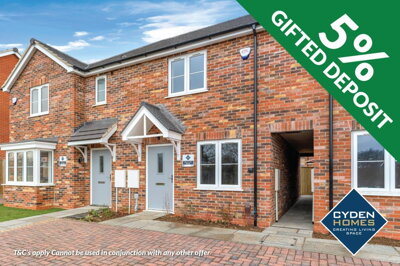
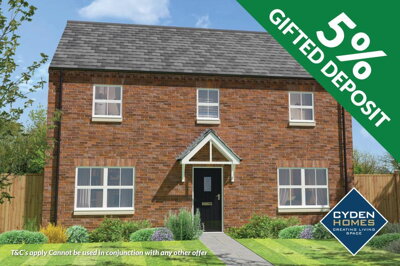
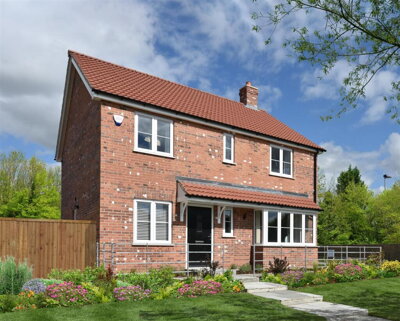
Browse 3 homes new builds in Ashby cum Fenby from local developer agents.
The Ashby Cum Fenby property market offers detached, semi-detached, and terraced houses spanning various price ranges and neighbourhoods. Each listing includes detailed property information, photographs, and direct contact with the marketing agent.
£359,000
Average Price
+1.7%
12-Month Change
13
Properties for Sale
66.7%
Detached Properties
The Ashby cum Fenby property market is characterised by its dominance of detached homes, which account for 66.7% of all dwellings in the village according to 2021 Census data. Semi-detached properties make up 20.0% of the housing stock, while bungalows represent 13.3% of homes. This distinctive composition reflects the rural nature of the area, where families and couples drawn to countryside living have shaped demand over decades. Notably, census records show no terraced houses or flats within the village, underscoring how Ashby cum Fenby has maintained its low-density character throughout modern development.
The average property price stands at £359,000 as of February 2026, with detached properties commanding around £431,000 and semi-detached homes averaging approximately £220,000. Recent market activity shows 13 property sales completed in the village over the past twelve months, indicating a healthy level of transactions for a community of just 60 households. This modest transaction volume is typical for small rural villages, where properties change hands less frequently than in urban areas but command strong interest when listed due to limited supply.
The 1.7% year-on-year price increase demonstrates sustained demand, with buyers continuing to recognise the value of village life within commuting distance of Grimsby and the wider Humber region. No active new-build developments exist within the DN37 postcode area, meaning prospective buyers are looking primarily at existing properties ranging from period cottages to purpose-built bungalows. The absence of new-build stock means buyers should budget for potential updates to heating systems, insulation, and electrical wiring when purchasing older properties that may predate modern standards.

The predominantly brick construction found throughout Ashby cum Fenby reflects traditional building methods used across Lincolnshire, with many properties featuring red brick facades and solid wall construction. Older properties in the village, including several Grade II listed structures, typically feature timber floor joists, pitched roofs with slate or tile coverings, and solid brick walls that were standard before cavity wall construction became prevalent in the 1970s and 1980s. Understanding these construction methods is essential when assessing properties, as solid walls generally offer less thermal efficiency than modern cavity construction, potentially resulting in higher heating costs.
Properties constructed before 1980 often require consideration of their electrical systems, as wiring installed during earlier periods may not meet current safety standards and could require partial or complete rewire before occupation. The village's selection of bungalows appeals to buyers seeking single-storey living, though these properties may have been built to different specifications than modern accessible housing standards. Many homes feature generous rear gardens and off-street parking, reflecting the rural character and the availability of land that distinguishes village properties from their urban counterparts.
The property age distribution in Ashby cum Fenby includes a mix of pre-1919 period properties alongside post-1980 constructions, with fewer properties from the mid-twentieth century development period. The presence of listed buildings including the Church of St Peter and other historic structures contributes to the architectural variety found within the village. Buyers should arrange a detailed survey for any property that may require modernisation, as older construction methods can present specific maintenance challenges that differ from recently built homes.
Life in Ashby cum Fenby revolves around the peaceful rhythms of Lincolnshire countryside, where agricultural heritage remains visible in the surrounding farmland and traditional building styles. The village population of 150 creates an intimate community atmosphere where neighbours know one another and local events foster genuine connection. The economy is primarily agricultural, with residents appreciating the scenic beauty of rolling fields and the quiet that comes from living away from major traffic routes. For those who choose to put down roots here, the village offers a lifestyle that prioritises space, privacy, and a strong sense of local identity.
Despite its small size, Ashby cum Fenby maintains essential connections to larger centres for everyday needs. The nearby town of Grimsby, approximately 8 miles distant, provides comprehensive shopping facilities including the Freshney Place shopping centre, healthcare services at Grimsby Hospital, and entertainment options ranging from cinemas to restaurants. Cleethorpes coastal resort offers leisure opportunities including beaches, the Pleasure Island theme park, and family attractions that draw visitors from across the region. The broader North East Lincolnshire area supports employment in sectors including port operations at Immingham, food processing, and the growing renewable energy industry centred on the Humber.
Residents enjoy the best of both worlds: rural seclusion during evenings and weekends, with urban amenities readily accessible for work and leisure. The village's setting within the DN37 postcode places it within easy reach of the A46 and A18 roads that connect North East Lincolnshire to Lincoln and beyond. Local amenities within reasonable driving distance include convenience stores in surrounding villages, pubs serving traditional Lincolnshire fare, and recreational facilities including golf courses and public footpaths traversing the surrounding countryside. Broadband services have expanded across the rural area, though speeds may vary depending on specific location within the village.
Families considering a move to Ashby cum Fenby will find primary education options available in nearby villages and towns, with several well-regarded schools within a reasonable driving distance. The village's small population means that primary school-aged children typically attend schools in surrounding communities such as Waltham, where the Waltham Leas Primary Academy serves families from the wider rural area, and Holton le Clay, which provides local primary education for surrounding villages. Laceby also offers primary schooling options for families in the western part of the catchment area. Parents should verify specific catchment boundaries with North East Lincolnshire Council, as these can affect which school children are allocated.
Secondary education options include established academies in Grimsby and the surrounding area, with bus services providing transport for village students to these institutions. The Meridian Community College in Louth serves some rural areas, while students may also access secondary schools in Cleethorpes or Immingham depending on catchment arrangements. For families prioritising academic excellence, selective grammar schools in the Grimsby area provide an alternative pathway for secondary education, with entry based on the 11-plus examination. The nearest further education provision is available in Grimsby, where Grimsby College offers A-level courses and vocational qualifications across a range of subject areas including construction, engineering, and business studies.
Given the village's rural character and the likelihood that many properties predate modern building regulations, some families may find that nearby towns with newer school facilities better suit their requirements. The proximity to the University of Hull and its campus in Scarborough offers higher education options within reasonable commuting distance for older students pursuing undergraduate or postgraduate degrees. Families moving to Ashby cum Fenby often include those with older children who have completed primary education, as well as couples planning for the future or retirees seeking to downsize while maintaining access to regional educational facilities.
Connectivity from Ashby cum Fenby centres on road travel, with the village positioned within the North East Lincolnshire road network that links rural communities to the area's principal towns. The A46 provides a key route north towards Grimsby and the coastal areas of Cleethorpes and Immingham, while the A18 offers connections eastward towards Lincoln. The village's position away from major trunk routes ensures a quiet living environment while maintaining reasonable access to regional transport infrastructure. For those travelling further afield, the M180 motorway is accessible via the A180, providing connections to Sheffield, Leeds, and the national motorway network that serves the north of England.
Public transport options reflect the village's small scale, with local bus services connecting Ashby cum Fenby to surrounding villages and towns on fixed schedules. The nearest bus routes connect to Grimsby and Louth, providing essential connectivity for residents without private vehicles, though service frequencies are limited compared to urban areas. Grimsby railway station provides access to the wider rail network, with services connecting to Sheffield, Manchester, and London via the TransPennine route and East Midlands Railway services. Journey times to London St Pancras from Grimsby typically take around three hours via Sheffield, making day trips to the capital feasible for commuters or visitors.
For commuters working in Grimsby or Cleethorpes, the typical journey time by car is approximately 20-30 minutes, making day-to-day commuting practical for those employed in the town centres. The Port of Immingham, one of the UK's largest ports handling cargo including renewables equipment and bulk goods, is within reasonable reach and employs significant numbers of local residents in logistics, engineering, and associated industries. The growing renewable energy sector centred on the Humber Estuary, including offshore wind projects, provides additional employment opportunities that attract workers to the region, many of whom reside in villages like Ashby cum Fenby that offer peaceful living environments within manageable commuting distance.
Contact a mortgage broker to discuss your borrowing capacity and obtain an agreement in principle before beginning your property search. Given the village's average price of £359,000, most buyers will require mortgage financing, and having this in place strengthens your position when making offers on properties. Mortgage brokers familiar with rural property markets can advise on the most suitable products for your circumstances and help navigate the application process efficiently.
Review current listings in Ashby cum Fenby and compare prices against recent sales data. Understanding the 66.7% detached property composition and typical pricing of £220,000-£431,000 helps set realistic expectations before viewings. Given the limited number of properties available at any one time, staying informed about new listings and understanding the competitive landscape will help you act quickly when suitable properties become available.
Schedule viewings of properties matching your requirements, paying attention to construction quality, garden sizes, and proximity to the village centre. The presence of boulder clay soils means you should assess foundations and drainage carefully during visits. Look for signs of movement such as cracking to walls, sticking doors, or uneven floors that may indicate subsidence related to soil conditions. The traditional brick construction of most properties should be inspected for weathering, mortar condition, and any signs of damp penetration.
Once your offer is accepted, instruct a qualified surveyor to conduct a Level 2 Survey. This is particularly important for older properties and any listed buildings, where defects like damp, roof condition, and timber issues are more likely. Our surveyors are experienced with Lincolnshire property construction and understand the specific challenges presented by boulder clay geology. A thorough survey typically costs between £450 and £700 depending on property size and complexity.
Appoint a solicitor to handle the legal aspects of your purchase, including local searches, contracts, and registration with the Land Registry. Our recommended conveyancers understand North East Lincolnshire properties and can advise on any specific concerns revealed through searches, including surface water flood risk and local planning matters. They will liaise with your mortgage provider and coordinate the transaction through to completion.
Once all enquiries are resolved and your mortgage offer is confirmed, you will exchange contracts and agree a completion date. On completion day, funds are transferred and you receive the keys to your new Ashby cum Fenby home. Our team can recommend removal firms familiar with the area and advise on the logistics of settling into rural village life.
Prospective buyers should be aware of the geological conditions affecting properties in Ashby cum Fenby, where the underlying boulder clay presents specific considerations for property condition and maintenance. The superficial till deposits that overlay the chalk bedrock in this area create shrink-swell risks when moisture levels fluctuate, potentially causing movement that manifests as cracks in walls, sticking doors, or uneven floors. Properties with mature trees nearby require particular attention during surveys, as tree roots can exacerbate shrink-swell behaviour and affect structures over time. Our surveyors pay close attention to foundation conditions and any signs of historic movement when inspecting properties in the village.
While river and coastal flood risk remains low for Ashby cum Fenby given its inland position, surface water flooding represents a consideration during periods of heavy rainfall. The combination of clay soils, which drain more slowly than sandy or gravelly substrates, and the flat topography of the surrounding countryside means that water can accumulate in low-lying areas after intense rainfall. Our surveyors assess drainage systems, gutters, and land levels around properties to identify potential surface water issues that may not be apparent during dry weather viewings. Checking the property's history of flooding and reviewing any relevant flood records forms part of our comprehensive survey process.
The village's character includes several listed buildings, with the Grade II* Church of St Peter anchoring the historical heritage of the area alongside other designated structures. If you are considering purchasing a listed property, be aware that any alterations or extensions will require Listed Building Consent from North East Lincolnshire Council, adding complexity and potential cost to renovations. Insurance premiums for listed buildings may also be higher due to the specialist materials and methods required for repairs. Properties in the wider area generally feature traditional brick construction with solid walls, meaning modern insulation standards may be less comprehensive than in newer builds, potentially affecting energy efficiency ratings and heating costs.
Common defects found in Ashby cum Fenby properties include damp issues in older buildings where damp-proof courses may have failed or been bridged by external ground levels, roof defects such as slipped tiles, failing leadwork, or degraded felt underlays, and timber defects like rot or woodworm in older roof timbers or floor joists. Our surveyors are experienced with traditional Lincolnshire construction and understand how to identify these issues before they become major problems. A thorough Level 2 Survey typically costs between £450 and £700 for a standard 3-bedroom detached property, providing essential before committing to purchase.
As of February 2026, the average house price in Ashby cum Fenby is £359,000, with detached properties averaging approximately £431,000 and semi-detached homes around £220,000. House prices have increased by 1.7% over the past twelve months, indicating stable demand in this rural North East Lincolnshire village. The market is dominated by detached houses and bungalows, with 13 property sales recorded in the past year across the village's 60 households. Given the limited supply of properties in this small village, buyers should expect competitive conditions when well-presented homes come to market.
Properties in Ashby cum Fenby fall under North East Lincolnshire Council's jurisdiction for council tax purposes. Bands will vary by property depending on valuation, though typical bandings for the area range from A to D for most residential properties based on the relatively modest property values in the village compared to nearby Grimsby and Cleethorpes. You should check specific properties with the local authority or use the council's online band finder for accurate information before purchasing. Council tax rates for North East Lincolnshire are set annually and can be confirmed through the local authority website.
Ashby cum Fenby does not have its own primary or secondary school due to its small population of 150 residents. Children typically attend primary schools in nearby villages such as Waltham, Holton le Clay, or Laceby, with the Waltham Leas Primary Academy serving families from the wider rural catchment area. Secondary students travel to institutions in Grimsby, with bus services providing transport to several local academies. The nearest further education college is located in Grimsby, offering A-levels and vocational courses across a range of subjects. Parents should verify current catchment areas with North East Lincolnshire Council before purchasing, as these can affect school placement.
Public transport options in Ashby cum Fenby are limited, reflecting its status as a small rural village with only 60 households. Local bus services operate on fixed schedules connecting the village to surrounding communities and Grimsby, though frequencies are lower than in urban areas. Grimsby railway station, approximately 8 miles away, provides access to regional and national rail services including connections to Sheffield, Manchester, and London. Most residents rely on private vehicles for daily transport, with the village positioned near the A46 and A18 roads that provide connections to North East Lincolnshire's principal towns and onward to the M180 motorway.
Ashby cum Fenby offers appeal for buyers prioritising lifestyle over rental yield, given its small population and limited rental market. The stable 1.7% annual price increase suggests sustained demand, while the village's proximity to employment centres in Grimsby and the renewable energy sector around the Humber makes it attractive for commuters seeking rural tranquility. However, investors should note that transaction volumes are low with only 13 sales annually across 60 households, which could affect liquidity if rapid resale becomes necessary. The absence of new-build development in the DN37 postcode also means limited opportunity for property development or renovation projects.
For properties priced at the village average of £359,000, a UK buyer would pay no stamp duty on the first £250,000 and 5% on the remaining £109,000, totalling approximately £5,450. First-time buyers benefit from relief on the first £425,000, reducing their liability to zero for properties priced up to that threshold. Above £625,000, first-time buyer relief does not apply. Second home buyers pay an additional 3% surcharge on all bands. Our conveyancing partners can provide a personalised calculation based on your specific circumstances and the property price you are considering.
Ashby cum Fenby generally has a low risk of flooding from rivers and the sea due to its inland position away from the Humber Estuary and coastal areas. However, surface water flooding represents a moderate to high risk during periods of heavy rainfall, particularly given the boulder clay soils that drain slowly and the flat topography of the surrounding countryside. Our surveyors assess drainage conditions, land levels, and any evidence of historic water ingress when inspecting properties. You should request information about flood risk from the Environment Agency and review local drainage records as part of your due diligence before purchasing.
Properties in Ashby cum Fenby predominantly feature traditional brick construction, with red brick facades common throughout the village reflecting Lincolnshire building traditions. Older properties typically have solid brick walls, timber floor joists, and pitched roofs with slate or tile coverings, while properties built from the 1980s onwards may incorporate cavity wall construction. Given the village's rural character and presence of listed buildings, many properties predate modern building regulations and may require updates to insulation, electrical systems, and heating infrastructure. Our Level 2 Survey identifies construction type and advises on any specific maintenance requirements or potential issues related to traditional building methods.
From £450
Expert survey for modern and older properties, identifying defects in brick-built homes
From £650
Comprehensive building survey for period properties and listed buildings
From £85
Energy performance certificate required for all property sales
From £499
Solicitors experienced with North East Lincolnshire property transactions
Understanding the full cost of purchasing property in Ashby cum Fenby extends beyond the headline property price of £359,000. The primary additional cost is Stamp Duty Land Tax (SDLT), which applies to all residential purchases above £250,000. For a typical village property at the average price, standard buyers would pay SDLT of approximately £5,450, calculated at 5% on the amount between £250,001 and £359,000. First-time buyers benefit from relief on the first £425,000, meaning they would pay no SDLT on properties priced up to that threshold, making Ashby cum Fenby particularly accessible for those entering the property market for the first time with budgets around the village average.
Beyond SDLT, buyers should budget for solicitor fees typically ranging from £500 to £1,500 for conveyancing, including local searches, title registration, and bankruptcy checks. Our recommended conveyancers understand North East Lincolnshire properties and can efficiently handle the legal aspects of your purchase while advising on any local considerations revealed through searches. A RICS Level 2 Survey for a detached property in the area typically costs between £450 and £700, with larger or older properties commanding higher fees. An Energy Performance Certificate is mandatory and costs from £85 depending on property size.
Mortgage arrangement fees vary by lender but often range from £500 to £2,000, though many deals offer cashback or fee-free options that may suit buyers with tighter budgets. Buildings insurance should be arranged from exchange of contracts, and premiums may be higher for listed buildings or older properties with non-standard construction. Removals costs will depend on distance and volume of belongings, with local removal firms serving the North East Lincolnshire area. Budgeting for a total of approximately 3-5% above the property price covers these ancillary costs for most buyers in Ashby cum Fenby, though older properties requiring significant modernisation should be budgeted separately for any works identified through survey.
Properties New Builds In London

Properties New Builds In Plymouth

Properties New Builds In Liverpool

Properties New Builds In Glasgow

Properties New Builds In Sheffield

Properties New Builds In Edinburgh

Properties New Builds In Coventry

Properties New Builds In Bradford

Properties New Builds In Manchester

Properties New Builds In Birmingham

Properties New Builds In Bristol

Properties New Builds In Oxford

Properties New Builds In Leicester

Properties New Builds In Newcastle

Properties New Builds In Leeds

Properties New Builds In Southampton

Properties New Builds In Cardiff

Properties New Builds In Nottingham

Properties New Builds In Norwich

Properties New Builds In Brighton

Properties New Builds In Derby

Properties New Builds In Portsmouth

Properties New Builds In Northampton

Properties New Builds In Milton Keynes

Properties New Builds In Bournemouth

Properties New Builds In Bolton

Properties New Builds In Swansea

Properties New Builds In Swindon

Properties New Builds In Peterborough

Properties New Builds In Wolverhampton

Enter your details to see if this property is within your budget.
Loans, cards, car finance
Estimated property budget
Borrowing + deposit
You could borrow between
Typical borrowing
Monthly repayment
Est. at 4.5%
Loan-to-value
This is an estimate only. Your actual budget may vary depending on interest rates, credit history, and personal circumstances. For an accurate affordability assessment, speak to one of our free mortgage advisors.
This calculator provides estimates for illustrative purposes only and does not constitute financial advice. Your home may be repossessed if you do not keep up repayments on your mortgage. Estimates based on 4.5% interest rate, repayment mortgage. Actual rates depend on your circumstances.
Homemove is a trading name of HM Haus Group Ltd (Company No. 13873779, registered in England & Wales). Homemove Mortgages Ltd (Company No. 15947693) is an Appointed Representative of TMG Direct Limited, trading as TMG Mortgage Network, which is authorised and regulated by the Financial Conduct Authority (FRN 786245). Homemove Mortgages Ltd is entered on the FCA Register as an Appointed Representative (FRN 1022429). You can check registrations at NewRegister or by calling 0800 111 6768.

We use cookies to show you personalised content and improve your experience of our website. Find out more in our Privacy policy and Cookie policy.