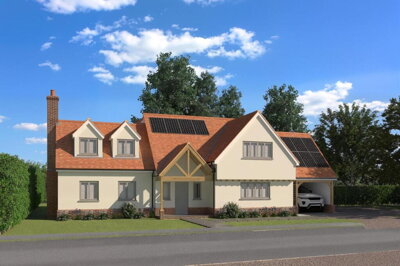
Browse 1 home new builds in Arkesden, Uttlesford from local developer agents.
£895k
5
0
92
Source: home.co.uk
Source: home.co.uk
Detached
3 listings
Avg £1.38M
End of Terrace
1 listings
Avg £425,000
Semi-Detached
1 listings
Avg £665,000
Source: home.co.uk
Source: home.co.uk
The Aldwincle property market reflects the character of this small Northamptonshire village, with detached properties commanding the highest prices at an average of £515,000. These spacious homes typically offer generous gardens, traditional stone construction, and views across the surrounding countryside, making them particularly attractive to families and buyers seeking space for home offices or hobby rooms. The village's setting within a designated Conservation Area means that many detached properties are either Listed Buildings or sit within the historic village core, adding character but also requiring careful consideration of planning restrictions and maintenance requirements.
Semi-detached properties in Aldwincle average around £310,000, representing a more accessible entry point to village life while still offering the benefits of traditional construction and decent-sized gardens. These properties often date from the interwar or post-war periods and typically feature two or three bedrooms, making them suitable for first-time buyers, couples, or smaller families looking to establish themselves in a village with strong community ties. Terraced properties, averaging approximately £250,000, are less common in Aldwincle but offer excellent value for money for buyers prioritising location and character over extensive floor space.
Property prices in Aldwincle have shown remarkable stability over the past 12 months, with an average change of just -0.5%. This modest adjustment reflects the resilient demand for rural village properties, particularly those with good transport connections and access to reputable schools. Unlike some larger towns that have experienced more significant price fluctuations, Aldwincle's market has remained steady, suggesting that now is a favourable time for buyers to enter a market where properties are priced realistically and competition, while present, does not reach the frenzied levels seen in more urban areas.
The housing stock in Aldwincle reflects its rural character, with detached properties making up a significant proportion, estimated at 40-50% of the total housing stock. Semi-detached homes account for a further 30-40%, while terraced properties represent a smaller segment at around 10-20%. Flats are exceptionally rare in the village, with the vast majority of properties being freehold houses. This predominantly freehold market means buyers can avoid the complications and ongoing costs associated with leasehold properties, though it is always worth confirming tenure before proceeding with any purchase.

Life in Aldwincle offers a quintessential English village experience, with a population of approximately 300 to 400 residents spread across roughly 150 to 200 households. The village maintains an intimate community atmosphere where neighbours know one another and local events bring people together throughout the year. The village's historic core, protected by its Conservation Area designation, features buildings dating back several centuries, with St Peter's Church (Grade I Listed) and Aldwincle House (Grade II* Listed) standing as architectural highlights that anchor the community's sense of heritage and place.
The character of Aldwincle is defined by its traditional Northamptonshire architecture, predominantly built using local limestone and ironstone that gives the village its distinctive warm, honey-coloured appearance. Many properties feature natural stone walls with slate or tile roofs, and the older homes within the Conservation Area often retain original features such as exposed beams, inglenook fireplaces, and flagstone floors. Newer developments in the village use red brick but generally respect the scale and massing of the historic buildings, ensuring that Aldwincle's architectural integrity remains intact despite the passage of time.
The village sits alongside the River Nene, which provides both scenic beauty and recreational opportunities for residents. Riverside walks are a popular pastime, and the proximity to water attracts wildlife to the area, creating a habitat for birds and other local fauna. The surrounding countryside consists of farmland and gentle rolling hills, offering extensive opportunities for walking, cycling, and exploring the wider Nene Valley. Despite its rural setting, Aldwincle is far from isolated, with larger villages and towns providing additional amenities while the village itself retains the peaceful character that makes it so appealing to those seeking an escape from urban life.
The underlying geology of Aldwincle primarily consists of Jurassic period limestones, sandstones, and clays, specifically the Blisworth Limestone and Rutland Formation. This geological composition has shaped not only the village's traditional building materials but also influences local ground conditions. Areas with clay-rich soils, particularly the Oxford Clay Formation present in the wider area, can indicate a moderate to high shrink-swell risk in certain locations, especially where clay sits close to the surface. Prospective buyers should be aware that some properties, particularly those with large trees nearby, may be susceptible to foundation movement during prolonged dry spells or periods of heavy rainfall.

Families considering a move to Aldwincle will find a selection of educational options within reasonable distance of the village. The village itself has historical connections to education, being the birthplace of John Clare, the famous poet and "the peasant poet of England," and this literary heritage continues to inspire local educational values. Primary education is available at nearby village schools, with several well-regarded primaries serving the surrounding area and providing children with a solid foundation in core subjects within a supportive, community-focused environment.
Secondary education options include schools in the nearby market towns of Oundle and Thrapston, both of which have established secondary schools with good academic records and broad curricula. Prince William School in Oundle serves secondary-aged students from the surrounding villages, while parents in the Thrapston direction may consider Sir John Gleed School. These schools are accessible via school bus services that operate from Aldwincle, reducing the logistical burden on families who do not wish to drive their children to school daily. Parents should research specific school catchments and admission arrangements, as these can affect which schools children are eligible to attend, and property purchases may need to be timed to align with school admission cycles.
For families with older children considering further education, the nearby towns of Kettering and Peterborough offer sixth form colleges and further education institutions with diverse course offerings. Peterborough, in particular, provides access to higher education facilities and a broader range of specialist training programmes. The presence of these educational options within reasonable commuting distance adds to Aldwincle's appeal as a location for families at various stages of their educational journey, from those with young children to those with teenagers preparing for university or vocational training. Families moving from larger cities often find that the quality of education available in the Oundle and Thrapston areas rivals that of more urban locations, with the added benefit of smaller class sizes and more individual attention.
Despite its rural village setting, Aldwincle benefits from good transport connections that make commuting to larger employment centres entirely practical. The village is situated within easy reach of the A605, which provides direct access to Peterborough to the north and Northampton to the south. This road corridor connects Aldwincle to major employers and business districts, making daily commuting feasible for those who work in these larger cities but wish to enjoy the quality of life that village living provides. The journey to Peterborough typically takes around 30 minutes by car, while Northampton is approximately 45 minutes away.
Public transport options include bus services connecting Aldwincle with nearby towns and villages, providing an alternative to car travel for those who prefer not to drive or who wish to reduce their environmental footprint. The nearest railway stations are located in Corby and Peterborough, both of which offer regular services to London, Birmingham, and other major destinations. Peterborough station is particularly well-connected, with fast trains to London King's Cross taking approximately 45 minutes, making it a viable option for commuters who work in the capital but live in the countryside. Corby station provides additional options for those travelling north or seeking connections to the East Midlands.
For cyclists, the Nene Valley provides scenic and relatively flat routes for cycling to work or for leisure. Dedicated cycle paths and quieter country lanes make cycling a pleasant option for shorter journeys to nearby villages or to access public transport links. The village's position in the valley means that cycling is generally comfortable and safe, with beautiful views across farmland and waterways to enjoy along the way. This combination of road, rail, and cycling options ensures that residents of Aldwincle can choose the travel mode that best suits their lifestyle and needs. For those working in Kettering or Corby, the A6116 and A43 provide direct routes, while the A14 trunk road is accessible for longer journeys across the region and beyond.
Before you begin viewing properties, spend time exploring Aldwincle at different times of day and week. Visit the local pub, walk the village streets, and speak with residents to understand what daily life is like here. Check flood risk maps for any specific streets that interest you, particularly those near the River Nene where Flood Zone 2 and Flood Zone 3 designations apply. Review the local planning authority's website for any proposed developments nearby, and familiarise yourself with the Conservation Area boundaries if you are considering properties in the historic village core.
Speak with a mortgage broker or approach lenders directly to obtain an Agreement in Principle before you start making offers. Having this in place demonstrates to sellers that you are a serious buyer with financing already arranged. With the average detached property in Aldwincle priced around £515,000, you will need to factor in deposit requirements, typically between 5% and 15% of the purchase price. For a first-time buyer purchasing a terraced property at around £250,000, a 10% deposit would be £25,000, with mortgage lending of £225,000 required.
Use Homemove to browse all available properties in Aldwincle and arrange viewings through the listed estate agents. Take someone experienced with you for a second opinion, and consider viewing properties at different times of day to assess noise levels, lighting, and neighbour activity. Pay particular attention to the condition of older properties, especially those within the Conservation Area or with Listed Building status, where maintenance obligations may be more extensive. Given that 60-70% of properties in Aldwincle are likely over 50 years old, wear and tear is to be expected and should be assessed carefully.
Once you have had an offer accepted, arrange a RICS Level 2 Survey to assess the property's condition. For a typical 3-bedroom detached home in Aldwincle, expect to pay between £500 and £800 for this comprehensive inspection. Given the village's predominantly older housing stock with solid-wall construction and traditional materials, this survey is particularly valuable for identifying issues such as damp, structural movement, timber defects, or stone deterioration before you commit to purchase. Properties with Listed Building status may benefit from the more detailed RICS Level 3 Building Survey.
Appoint a solicitor to handle the legal aspects of your purchase, including searches, contracts, and registration with the Land Registry. Your solicitor will liaise with the seller's representative, arrange local authority searches (including flood risk and planning history), and guide you through the process of exchange and completion. Given Aldwincle's location near the River Nene, ensure that flood risk searches are carefully reviewed and that you understand any historical flooding affecting the property or nearby properties.
Once all searches are satisfactory and finances are confirmed, you will exchange contracts and pay your deposit, typically 10% of the purchase price. Completion usually follows within a few weeks, after which you will receive the keys to your new Aldwincle home. At this stage, you will also pay any Stamp Duty Land Tax due and register ownership with the Land Registry. Budget an additional 1-2% of the purchase price for these costs, including legal fees, survey costs, and moving expenses.
Properties in Aldwincle present unique considerations that buyers should carefully evaluate before committing to a purchase. The village's proximity to the River Nene means that flood risk is a genuine concern in certain areas, particularly properties situated immediately adjacent to the river or in low-lying positions within the valley. Areas immediately adjacent to the river are designated as Flood Zone 2 (medium probability) and Flood Zone 3 (high probability) for river flooding. There are also areas with a medium to high risk of surface water flooding, particularly in low-lying areas or where drainage capacity may be exceeded during heavy rainfall. Prospective buyers should consult the Environment Agency's flood risk maps and discuss any flooding history with current owners or neighbours. Properties in higher-risk areas may face higher insurance premiums, and you should factor these ongoing costs into your budgeting.
The presence of a Conservation Area covering much of the historic village core brings both benefits and obligations for property owners. Properties within this designation are subject to stricter planning controls, meaning that alterations, extensions, or even external changes may require consent from the local planning authority. If you are considering purchasing a property in the Conservation Area, review the specific requirements carefully and factor any planning restrictions into your plans. Similarly, Listed Buildings require particular care, as any works that might affect the building's character or fabric require Listed Building Consent, and repairs must often use traditional materials and methods. The village contains numerous Listed Buildings including St Peter's Church (Grade I), Aldwincle House (Grade II*), and various residential properties and barns (Grade II).
The traditional construction methods used in Aldwincle's older properties demand careful inspection and ongoing maintenance. Solid-wall construction, common in properties built before 1919, offers excellent thermal mass but limited insulation compared to modern standards. Expect older stone properties to require ongoing investment in areas such as roof maintenance, rainwater goods, and damp proofing. Common defects in the local housing stock include damp (particularly rising damp due to inadequate damp-proof courses), roof deterioration with slipped or broken tiles, timber defects such as woodworm and wet rot, and stone erosion or spalling on exposed elevations. A thorough RICS Level 2 Survey can identify any existing issues and advise on appropriate remediation.
The local geology, with its Jurassic limestones, sandstones, and clay deposits, means that some properties may be susceptible to shrink-swell movement, particularly during dry spells or where large trees are present near foundations. Properties built before 1919 typically feature solid wall construction using local limestone or ironstone with lime mortar, timber floors, and slate or clay tile roofing. Properties from 1919-1945 often have brick cavity wall construction, while post-war properties from 1945-1980 typically feature brick cavity walls with concrete tiled roofs. Modern properties use contemporary cavity wall construction with trussed rafter roofs. When purchasing a property in Aldwincle, understanding its construction era can help you anticipate potential issues and maintenance requirements.
The overall average house price in Aldwincle stands at approximately £396,000 based on recent transactions. Detached properties average around £515,000, reflecting their larger size, generous gardens, and the traditional stone construction that characterises the village. Semi-detached homes average approximately £310,000, while terraced properties average around £250,000. Property prices have remained remarkably stable over the past 12 months, with an average change of just -0.5%, indicating a steady market that rewards buyers who approach their purchase with realistic expectations and thorough preparation.
Properties in Aldwincle fall under North Northamptonshire Council for council tax purposes. Specific bands vary depending on the property's valuation, but typical Victorian and Edwardian stone cottages often fall into bands C or D, while larger detached properties may be in bands E or F. You can check the specific band for any property by searching on the Valuation Office Agency website using the property address or council tax reference number. The village's predominantly older housing stock means that many properties will have been valued under the older council tax system and may carry relatively modest bands given their character and traditional construction.
While Aldwincle itself is a small village, it is served by several well-regarded schools in the surrounding area. Primary-aged children typically attend schools in nearby villages or the market town of Oundle, where Oundle Primary and St. Mary's Primary School serve the local community. Secondary education options include Prince William School in Oundle and Sir John Gleed School in Spalding, both of which have good academic records and broad curricula. School bus services operate from Aldwincle to these secondary schools, making daily travel practical for families without private transport. Parents should always verify current admission arrangements and catchments, as these can change and may influence school placement.
Aldwincle has bus services connecting the village to nearby towns including Oundle, Thrapston, and Kettering, providing options for those without cars or who prefer not to drive. The nearest railway stations are in Corby and Peterborough, with Peterborough offering direct services to London King's Cross in approximately 45 minutes and connections to Birmingham and the North. The village is also well-positioned for road travel, with the A605 providing access to the A14 and A1 trunk roads for journeys further afield. For commuters to London, Peterborough station's fast services make village life in Aldwincle a realistic option for those working in the capital but seeking a rural lifestyle.
Aldwincle offers several factors that make it attractive to property investors, including its desirable rural location, strong transport connections, and the rarity of available properties in this small village. The property market has shown price stability over the past year, suggesting resilience against market fluctuations. Properties within the Conservation Area or those with Listed Building status may hold their value well due to their irreplaceable character and restricted supply. However, investors should note that the small village market means limited rental demand, and any investment should be considered with a long-term perspective in mind. The predominantly freehold housing stock also means there is minimal leasehold premium to consider when evaluating potential returns.
Stamp Duty Land Tax rates for 2024-25 are 0% on the first £250,000 of residential property purchases, 5% on the portion from £250,001 to £925,000, 10% from £925,001 to £1.5 million, and 12% above £1.5 million. First-time buyers benefit from relief on the first £425,000 (0% rate) and 5% on the portion from £425,001 to £625,000, provided they have never owned property before. For a typical £396,000 Aldwincle property, a standard buyer would pay £7,300 in stamp duty, while a first-time buyer would pay £0. First-time buyers in Aldwincle benefit significantly from this relief, making the village more accessible despite its traditional stone properties and premium detached homes.
Aldwincle has areas of both river and surface water flood risk due to its proximity to the River Nene. Properties immediately adjacent to the river fall within Flood Zone 2 (medium probability) and Flood Zone 3 (high probability) for river flooding. There are also areas with medium to high surface water flood risk, particularly in low-lying positions or where drainage capacity may be limited. Buyers should consult the Environment Agency's online flood maps, review local authority flood risk assessments, and ask current owners or neighbours about any historical flooding events. Properties in higher flood risk areas may require specialist insurance and should be carefully evaluated for flood resilience measures such as raised electrics, flood-resistant materials, and proper drainage systems.
Purchasing a property in Aldwincle involves several costs beyond the purchase price, with stamp duty typically being the largest additional expense for most buyers. At the current 2024-25 rates, a property priced at the village average of £396,000 would attract Stamp Duty Land Tax of £7,300 for a standard buyer. This calculation applies 0% to the first £250,000 (resulting in no tax) and 5% to the remaining £146,000. First-time buyers purchasing properties up to £425,000 would pay no stamp duty at all, making Aldwincle's property market particularly accessible to those taking their first step onto the property ladder. For a terraced property at around £250,000, a first-time buyer would pay nothing, while a standard buyer would also pay £0 under the current thresholds.
For higher-value properties in Aldwincle, such as detached homes averaging £515,000, stamp duty costs increase accordingly. A standard buyer would pay £17,300 on a property of this price, with the calculation including the 5% rate on the portion between £250,001 and £515,000. Properties priced above £925,000 attract a 10% rate on the portion within that band, while those exceeding £1.5 million attract the highest rate of 12% on amounts above this threshold. These higher rates mean that buyers of premium properties should factor substantial stamp duty costs into their overall budget alongside legal fees, survey costs, and moving expenses. Given Aldwincle's predominantly older housing stock, premium-priced properties with Listed Building status or exceptional historic features may well exceed these thresholds.
Additional buying costs to budget for include solicitor fees, typically ranging from £500 to £2,000 depending on the complexity of the transaction, and disbursements such as local authority searches, land registry fees, and bankruptcy checks. A RICS Level 2 Survey for a typical Aldwincle property will cost between £500 and £800, while an Energy Performance Certificate is mandatory and costs from £80. Survey costs are particularly important given the age of Aldwincle's housing stock, where issues such as damp, structural movement, or timber defects may not be apparent from a casual viewing. Factor in removal costs, potential renovation expenses, and a contingency fund of at least 10% of the purchase price to cover unexpected issues that may arise in older properties, particularly those with solid-wall construction or within the Conservation Area where repair costs can be higher due to planning requirements for traditional materials.
From 3.89%
Compare mortgage rates and find the best deal for your Aldwincle property purchase
From £499
Expert solicitors to handle your property purchase in Aldwincle
From £500
Comprehensive condition survey for your new Aldwincle home
From £80
Energy performance certificate for your Aldwincle property
Properties New Builds In London

Properties New Builds In Plymouth

Properties New Builds In Liverpool

Properties New Builds In Glasgow

Properties New Builds In Sheffield

Properties New Builds In Edinburgh

Properties New Builds In Coventry

Properties New Builds In Bradford

Properties New Builds In Manchester

Properties New Builds In Birmingham

Properties New Builds In Bristol

Properties New Builds In Oxford

Properties New Builds In Leicester

Properties New Builds In Newcastle

Properties New Builds In Leeds

Properties New Builds In Southampton

Properties New Builds In Cardiff

Properties New Builds In Nottingham

Properties New Builds In Norwich

Properties New Builds In Brighton

Properties New Builds In Derby

Properties New Builds In Portsmouth

Properties New Builds In Northampton

Properties New Builds In Milton Keynes

Properties New Builds In Bournemouth

Properties New Builds In Bolton

Properties New Builds In Swansea

Properties New Builds In Swindon

Properties New Builds In Peterborough

Properties New Builds In Wolverhampton

Enter your details to see if this property is within your budget.
Loans, cards, car finance
Estimated property budget
Borrowing + deposit
You could borrow between
Typical borrowing
Monthly repayment
Est. at 4.5%
Loan-to-value
This is an estimate only. Your actual budget may vary depending on interest rates, credit history, and personal circumstances. For an accurate affordability assessment, speak to one of our free mortgage advisors.
This calculator provides estimates for illustrative purposes only and does not constitute financial advice. Your home may be repossessed if you do not keep up repayments on your mortgage. Estimates based on 4.5% interest rate, repayment mortgage. Actual rates depend on your circumstances.
Homemove is a trading name of HM Haus Group Ltd (Company No. 13873779, registered in England & Wales). Homemove Mortgages Ltd (Company No. 15947693) is an Appointed Representative of TMG Direct Limited, trading as TMG Mortgage Network, which is authorised and regulated by the Financial Conduct Authority (FRN 786245). Homemove Mortgages Ltd is entered on the FCA Register as an Appointed Representative (FRN 1022429). You can check registrations at NewRegister or by calling 0800 111 6768.

We use cookies to show you personalised content and improve your experience of our website. Find out more in our Privacy policy and Cookie policy.