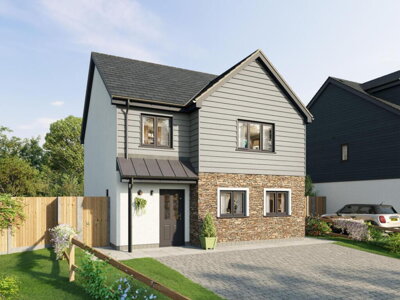
Browse 1 home new builds in Amroth, Pembrokeshire from local developer agents.
The Amroth property market offers detached, semi-detached, and terraced houses spanning various price ranges and neighbourhoods. Each listing includes detailed property information, photographs, and direct contact with the marketing agent.
£549k
9
0
274
Source: home.co.uk
Showing 9 results for Houses new builds in Amroth, Pembrokeshire. The median asking price is £549,000.
Source: home.co.uk
Detached
5 listings
Avg £770,000
Semi-Detached
3 listings
Avg £499,667
Terraced
1 listings
Avg £140,000
Source: home.co.uk
Source: home.co.uk
The property market in Llanfihangel Rhydieithon reflects the broader dynamics of rural mid Wales, where demand has strengthened considerably as more people seek properties offering space, natural beauty, and connectivity to remote working facilities. Detached properties command the highest prices in the area, averaging £317,429, which reflects the desirability of these homes with their generous gardens, outbuildings, and often stunning countryside views. Semi-detached properties, many of which were built to serve agricultural workers in decades past, average £212,370 and represent excellent value for families seeking a taste of rural living at a more accessible price point. Flats remain rare in this village setting, with what few exist averaging £92,694, though the limited supply means these properties rarely appear on the market.
New build development within Llanfihangel Rhydieithon itself has been limited to small-scale projects, including individual dwelling conversions and rural enterprise homes rather than large-scale housing estates. Recent planning applications within the broader community, which includes the neighbouring village of Dolau, have focused on converting historic agricultural buildings into residential use and constructing rural enterprise dwellings to support sustainable farming livelihoods. For example, planning permission has been granted for the conversion of an abandoned dwelling and adjoining barn at Llysin Dolau, with associated listed building consent for alterations, while a rural enterprise dwelling has been approved at Far Hall in Dolau to support local agricultural operations.
This pattern of organic, incremental development has helped preserve the village's character while allowing for measured growth that does not overwhelm the existing infrastructure. Properties of particular interest to buyers include the Grade II listed Lower House Farm, a 15th-century cruck-framed building that exemplifies the traditional Welsh building techniques of earlier centuries, and the former toll house now serving as the parish hall, dating from around 1800.

Llanfihangel Rhydieithon embodies the essence of rural Welsh village life, with a population of 207 residents according to the 2021 Census, growing to an estimated 246 by 2024, and a population density of just 10.16 persons per square kilometre. This extraordinarily low density reflects the scattered nature of the settlement, where farms and cottages are distributed across the rolling landscape rather than concentrated in a traditional village centre. The community forms part of the ancient geographic region of Radnorshire, now incorporated into Powys County, and retains many features that speak to its long agricultural history, including hedgerow-lined lanes, traditional stone walls, and fields divided by centuries-old boundaries. The absence of through-traffic contributes significantly to the peaceful atmosphere that residents cherish, making the village particularly suitable for families with young children and those seeking an escape from urban noise and congestion.
The neighbourhood supports a genuine sense of community through events at the parish hall, which was once a toll house serving travellers on the historic road network, and through shared activities centred on the parish church. Local produce is celebrated in this farming community, with several working farms in the surrounding area supplying meat, dairy products, and vegetables to both local residents and visitors. The nearby village of Dolau provides the nearest access to a village shop and post office, while the wider area offers artisan producers, farm shops, and regular farmers markets in the surrounding market towns. Weekend pursuits in the area include exploring the network of public footpaths that traverse the hills and valleys, fishing on the Rivers Aran and Ithon, and visiting the historic gardens and country houses that dot the Radnorshire landscape.

Families considering a move to Llanfihangel Rhydieithon will find educational facilities within reasonable driving distance, though the rural setting means schools are generally concentrated in nearby towns rather than the village itself. Primary education for village children is typically provided through schools in the surrounding villages and small towns, with the nearest primary schools serving communities across the rolling hills and valleys of this part of Radnorshire. Class sizes in these rural schools tend to be smaller than in urban areas, allowing for more individual attention and a strong sense of community among pupils and staff. Many families appreciate the nurturing environment that smaller schools provide, where children develop confidence and a genuine connection to their local community from an early age.
Secondary education is available at schools in the market towns of the region, with pupils typically travelling to schools in Llandrindod Wells, Knighton, or Builth Wells depending on their home location. These secondary schools offer a full curriculum including GCSE and A-level courses, with sixth form provision allowing students to continue their education locally without the need to travel further afield. For families prioritising educational choices, it is worth noting that Powys maintains a selective education system, and families should research catchment areas and admission arrangements carefully when considering properties in the Llanfihangel Rhydieithon area. Transport arrangements for secondary school pupils are generally provided by the local authority, with school bus services connecting the village to schools in the nearest towns.
Transport connections from Llanfihangel Rhydieithon reflect its rural character, with residents relying primarily on private vehicles for daily travel while public transport options serve the village on a limited but useful schedule. The nearest railway station is situated in the surrounding area, connecting passengers to the national rail network via stations in mid Wales that provide services to Birmingham, Manchester, and Cardiff. Journey times by rail to major cities typically require a change at one of the regional hubs, making the car an essential asset for most residents for the foreseeable future. The A488 trunk road passes through the broader area, providing connections to the A44 and A470 trunk roads that form the main arteries linking mid Wales to the rest of the country. Motorway access is available via the A483 running north-south through Wales, connecting to the M4 and M5 motorway networks further east.
Bus services operate in the area, connecting Llanfihangel Rhydieithon with neighbouring villages and the market towns of Llandrindod Wells, Knighton, and Presteigne on specific days of the week. These rural bus services are essential for those without access to private vehicles, including elderly residents and teenagers, providing access to supermarkets, medical appointments, and other essential services. The nearest hospital with a full Accident and Emergency department is located in the larger towns, with Llandrindod Wells and Bronglais Hospital in Aberystwyth serving the wider area. For those working remotely, superfast broadband coverage has improved significantly in recent years, making rural Powys an increasingly viable option for knowledge workers who no longer need to commute daily to offices in cities.
Before you begin viewing properties in Llanfihangel Rhydieithon, arrange a mortgage agreement in principle with a lender. This document confirms how much you can borrow and demonstrates to estate agents and sellers that you are a serious buyer with financing in place.
Explore property listings across all major portals and contact local estate agents active in the Llanfihangel Rhydieithon and Radnorshire areas. Understanding the local market will help you identify properties that meet your requirements and negotiate effectively on price.
Visit properties that interest you, paying particular attention to the condition of older properties, the rural setting, and proximity to the watercourses that flow through the village. Take notes and photographs to help you compare properties later and identify any concerns requiring further investigation.
Once your offer is accepted, commission a RICS Level 2 Survey to assess the condition of the property. Given the age of many properties in rural Wales and common issues such as damp, structural movement, and outdated services, this inspection is particularly valuable for protecting your investment. Survey costs for properties in the Llanfihangel Rhydieithon area typically range from £400 to £800 depending on the size and value of the home.
Appoint a solicitor experienced in rural Powys property transactions to handle the legal aspects of your purchase. They will conduct searches, handle Land Registry documentation, and ensure all planning permissions and rights affecting the property are in order.
Once all searches are satisfactory and financing is confirmed, your solicitor will exchange contracts and agree a completion date. On completion day, the remaining balance is transferred and you receive the keys to your new home in Llanfihangel Rhydieithon.
Purchasing a property in Llanfihangel Rhydieithon requires careful consideration of factors specific to rural Welsh properties, where the age of the housing stock and the local landscape present both opportunities and potential challenges. The village's proximity to the Maes Brook, River Aran, and River Ithon means that flood risk should be carefully assessed for any property located in or near the valley floor. Properties situated on higher ground or elevated positions within the village may offer better protection from flood risk while often providing wider views across the surrounding countryside. Reviewing any existing flood risk assessments and speaking with local residents about historical flooding events can provide valuable insight into the practical implications of living near watercourses in this area.
The presence of listed buildings throughout the village, including Grade II listed properties such as Lower House Farm with its 15th-century cruck-framed construction, means that many homes may be subject to listed building consent requirements for alterations or improvements. Prospective buyers should understand these obligations before purchasing, as they can significantly affect future renovation plans and costs. Similarly, properties that have been converted from agricultural buildings may have complex planning histories, and thorough searches should confirm that all necessary permissions were obtained.
Wales has the oldest housing stock in the United Kingdom, with 26% of homes built before 1919, and this is reflected in the character of Llanfihangel Rhydieithon where many properties date from the 18th and 19th centuries. The age of these homes brings character but also potential for hidden defects such as damp, timber decay, and outdated electrical and plumbing systems. Statistics show that nearly 1 in 5 homes in Wales contain a Category 1 hazard posing a risk to human health, rising to over 1 in 3 for homes built before 1919. These figures underscore the importance of a thorough RICS Level 2 Survey before commitment, particularly for period properties where problems may be hidden behind traditional finishes and solid walls.
The average house price in Llanfihangel Rhydieithon is currently £237,933 based on sales over the past 12 months. Detached properties average £317,429, semi-detached homes average £212,370, and flats average £92,694. Prices have risen 15% over the past year and are now 10% above the previous 2022 peak of £216,834, indicating a strengthening market for rural properties in this part of Powys. The relatively modest average price compared to many English rural locations reflects the area's remoteness and smaller property sizes, though demand has increased as buyers seek value and space away from urban centres.
Properties in Llanfihangel Rhydieithon fall under Powys County Council jurisdiction and are assigned council tax bands based on their value and characteristics. Rural properties in the village typically range from Band A to Band D, with the lower bands generally applying to modest cottages and the higher bands assigned to larger detached farmhouses and converted agricultural buildings. Exact bands can be confirmed through the Powys County Council website or by checking the specific property listing, and buyers should factor these ongoing costs into their budget when calculating the total cost of ownership.
Llanfihangel Rhydieithon itself does not have a school, with primary education provided through schools in the surrounding villages and small towns within reasonable driving distance. Secondary education is available at schools in nearby market towns such as Llandrindod Wells, Knighton, and Builth Wells, which serve as catchment areas for families in this part of Radnorshire. Parents should research individual school performance data and admission catchment boundaries when considering properties, as these can affect educational placement. Smaller class sizes in rural schools often provide individual attention, though families should consider transport arrangements carefully as school bus services are essential for secondary pupils.
Public transport options from Llanfihangel Rhydieithon are limited, reflecting its status as a small rural village. Bus services operate on specific days connecting the village to neighbouring communities and market towns, while the nearest railway station provides access to the national rail network via connections in the regional hub stations. Most residents rely on private vehicles for daily travel, and having at least one car is considered essential for comfortable living in this area. Those working remotely will find that superfast broadband coverage has improved significantly, making the rural location less restrictive for knowledge workers who can conduct much of their work from home.
Llanfihangel Rhydieithon offers potential for property investment, particularly given the 15% price growth recorded over the past year and the continued demand for rural properties in Powys. Properties suitable for holiday lets may generate additional income, especially given the area's appeal to visitors seeking countryside retreats. However, investors should be aware of the small population and limited rental demand, and should carefully calculate potential returns before committing to a purchase. The planning system in Powys is supportive of rural enterprise dwellings and agricultural conversions, which could offer opportunities for those willing to invest in renovation projects.
Stamp Duty Land Tax rates for standard buyers purchasing in Llanfihangel Rhydieithon are 0% on the first £250,000 of the purchase price, 5% on the portion between £250,001 and £925,000, 10% on the portion between £925,001 and £1.5 million, and 12% on any amount above £1.5 million. First-time buyers benefit from relief on the first £425,000, with 5% charged between £425,001 and £625,000. For properties priced at the local average of £237,933, most buyers would pay no stamp duty under current thresholds, making this an attractive feature of the local market for those purchasing at average price levels.
Understanding the full cost of purchasing property in Llanfihangel Rhydieithon extends beyond the purchase price to include various fees and taxes that buyers must budget for carefully. Stamp Duty Land Tax represents the most significant government levy, with rates that have been adjusted in recent years to reflect varying property values across different regions of the UK. For a property at the local average price of £237,933, a standard buyer would pay no stamp duty under current thresholds, as the first £250,000 of residential property purchases is exempt from the tax. First-time buyers purchasing at this price point would similarly pay no SDLT, benefiting from the higher threshold of £425,000 that applies to first-time purchasers of residential property.
Beyond stamp duty, buyers should budget for solicitor fees for conveyancing, which typically range from £500 to £1,500 depending on the complexity of the transaction and whether the property is freehold or leasehold. Search fees through the local authority and other bodies usually total between £200 and £400, while mortgage arrangement fees, if applicable, can add a further £500 to £2,000 to costs, though many lenders offer fee-free deals. A RICS Level 2 Survey, which we strongly recommend given the age of many properties in this rural Welsh village, typically costs between £350 and £600 depending on the size and value of the property. Removal costs, depending on the volume of belongings and distance moved, can range from £300 for a small flat to £2,000 or more for a full house move. Setting aside a contingency budget equivalent to around 5% of the purchase price is advisable to cover unexpected costs that frequently arise during property transactions, particularly with older properties that may reveal hidden defects once you take ownership.
Properties New Builds In London

Properties New Builds In Plymouth

Properties New Builds In Liverpool

Properties New Builds In Glasgow

Properties New Builds In Sheffield

Properties New Builds In Edinburgh

Properties New Builds In Coventry

Properties New Builds In Bradford

Properties New Builds In Manchester

Properties New Builds In Birmingham

Properties New Builds In Bristol

Properties New Builds In Oxford

Properties New Builds In Leicester

Properties New Builds In Newcastle

Properties New Builds In Leeds

Properties New Builds In Southampton

Properties New Builds In Cardiff

Properties New Builds In Nottingham

Properties New Builds In Norwich

Properties New Builds In Brighton

Properties New Builds In Derby

Properties New Builds In Portsmouth

Properties New Builds In Northampton

Properties New Builds In Milton Keynes

Properties New Builds In Bournemouth

Properties New Builds In Bolton

Properties New Builds In Swansea

Properties New Builds In Swindon

Properties New Builds In Peterborough

Properties New Builds In Wolverhampton

Enter your details to see if this property is within your budget.
Loans, cards, car finance
Estimated property budget
Borrowing + deposit
You could borrow between
Typical borrowing
Monthly repayment
Est. at 4.5%
Loan-to-value
This is an estimate only. Your actual budget may vary depending on interest rates, credit history, and personal circumstances. For an accurate affordability assessment, speak to one of our free mortgage advisors.
This calculator provides estimates for illustrative purposes only and does not constitute financial advice. Your home may be repossessed if you do not keep up repayments on your mortgage. Estimates based on 4.5% interest rate, repayment mortgage. Actual rates depend on your circumstances.
Homemove is a trading name of HM Haus Group Ltd (Company No. 13873779, registered in England & Wales). Homemove Mortgages Ltd (Company No. 15947693) is an Appointed Representative of TMG Direct Limited, trading as TMG Mortgage Network, which is authorised and regulated by the Financial Conduct Authority (FRN 786245). Homemove Mortgages Ltd is entered on the FCA Register as an Appointed Representative (FRN 1022429). You can check registrations at NewRegister or by calling 0800 111 6768.

We use cookies to show you personalised content and improve your experience of our website. Find out more in our Privacy policy and Cookie policy.