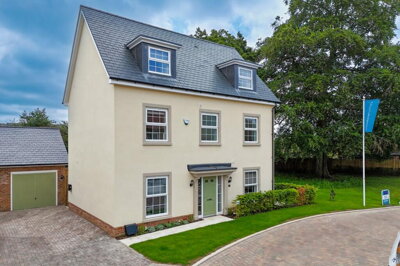
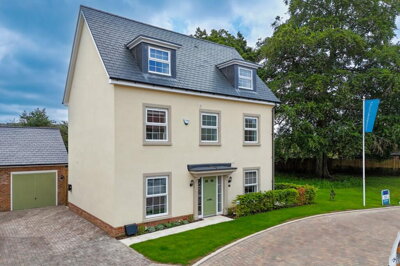
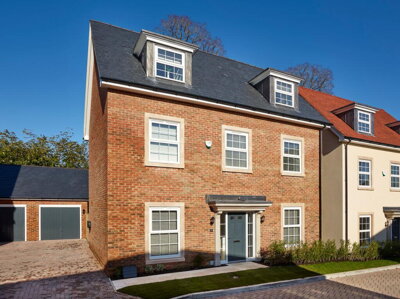
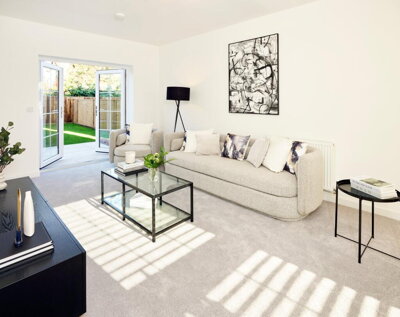
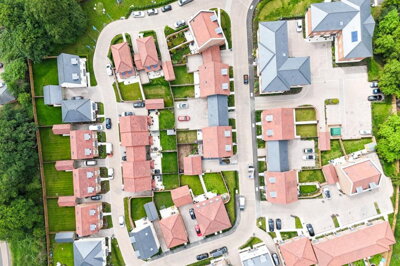
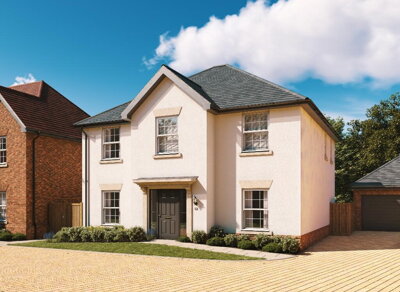
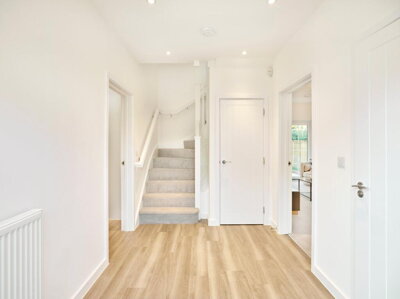
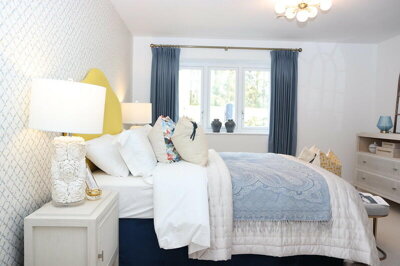
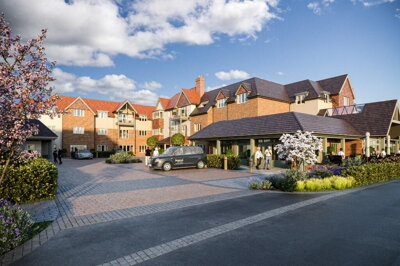
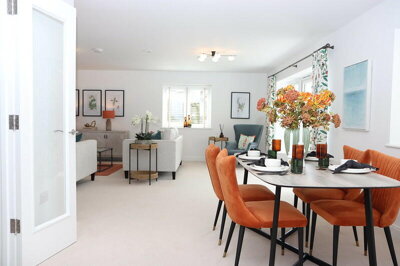
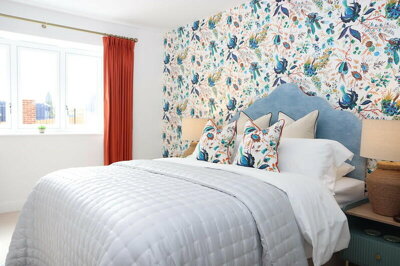
Browse 12 homes new builds in Ampfield, Test Valley from local developer agents.
The Ampfield property market offers detached, semi-detached, and terraced houses spanning various price ranges and neighbourhoods. Each listing includes detailed property information, photographs, and direct contact with the marketing agent.
£1.10M
13
1
109
Source: home.co.uk
Showing 13 results for Houses new builds in Ampfield, Test Valley. 1 new listing added this week. The median asking price is £1,100,000.
Source: home.co.uk
Detached
10 listings
Avg £1.21M
Semi-Detached
2 listings
Avg £587,500
Terraced
1 listings
Avg £360,000
Source: home.co.uk
Source: home.co.uk
Newmarket's property market offers impressive variety, with detached properties averaging £530,307 and semi-detached homes at £330,816, reflecting the premium placed on space and privacy in this prestigious Suffolk town. Terraced properties provide more accessible entry points at around £280,000, while flats average £188,400, making Newmarket achievable for first-time buyers seeking a foothold in this sought-after location. The market has experienced a modest correction over the past twelve months, with overall prices declining by 1.7%, creating potential buying opportunities for those with patience and preparation.
Looking at the housing stock breakdown, detached properties comprise 26.6% of homes in Newmarket, while semi-detached houses account for 29.8% of the housing stock. Terraced properties make up 24.6% of homes, with flats, maisonettes, and apartments representing 18.7% of the total housing supply. This balanced mix means buyers have genuine choice between property types, whether seeking the garden space and privacy of a detached home or the character and convenience of a terraced property in a central location.
Three significant new-build developments are currently active in Newmarket, offering modern homes for buyers who prefer move-in ready properties. The Paddocks by Taylor Wimpey, located in the CB8 0FA postcode area, and King's Warren by Barratt Homes on Fordham Road, CB8 7AA, both launch from £319,995 for two-bedroom houses. Newmarket Leys by David Wilson Homes, also in the CB8 7AA area, starts from £419,995 for three-bedroom properties. These developments provide buyers with choices across two, three, four, and five-bedroom configurations, catering to everyone from young couples to growing families seeking generous proportions and contemporary design.
Price trends over the past twelve months show different movements across property types, with detached properties experiencing a smaller 1.0% decline compared to semi-detached homes at 2.0%. Terraced properties saw the largest correction at 2.3%, while flats matched detached properties with a 1.0% decrease. These variations suggest that buyers seeking the best value might find terraced properties particularly attractive at present, while detached homes have proven more resilient in the current market conditions.

Newmarket's character is uniquely shaped by its position as the birthplace of British horse racing, a heritage evident throughout the town from the historic Palace House to the elegant training grounds that fringe the residential areas. The town centre features a mix of independent shops, traditional pubs, and quality restaurants, while the weekly market brings fresh local produce and a lively atmosphere to the High Street each Tuesday and Saturday. The local population of 16,527 residents across 7,088 households creates a close-knit community feel while maintaining sufficient scale for comprehensive amenities.
The town's housing stock reflects its long history, with 17.5% of properties built before 1919 and another 31.5% constructed between 1945 and 1980, giving many neighbourhoods a established, mature character. Around 36.5% of homes were built after 1980, including both new developments and more recent individual builds that add variety to the housing landscape. The predominant construction uses traditional brick methods, with older properties featuring solid walls built with red or gault brick, and newer homes employing cavity wall insulation for improved thermal performance.
Traditional construction in older Newmarket properties often involves solid brick walls, timber floors, and pitched roofs with slate or clay tiles. Properties from the Victorian and Edwardian periods feature characteristic bay windows, original fireplaces, and decorative plasterwork that remain highly sought after by buyers who appreciate period features. Newer properties typically use cavity wall construction with brick or render finishes, timber roof trusses, and concrete tiled roofs, offering different advantages in terms of energy efficiency and maintenance requirements.
Local geology presents some considerations for property buyers, as the chalk substrate combined with clay deposits in surrounding areas can create moderate to high shrink-swell risks in certain locations. The presence of clay soils in the region indicates a potential risk of shrink-swell related subsidence, particularly for properties with inadequate foundations or large trees nearby. However, it is worth noting that there is no significant history of coal or other deep mining operations in Newmarket that would typically cause subsidence concerns, which is reassuring for prospective buyers.
Education provision in Newmarket serves families well, with multiple primary schools serving different catchment areas throughout the town and surrounding villages. Primary schools in the area include several that have achieved good and outstanding Ofsted ratings, providing quality early years education close to home. Parents should research specific catchment boundaries and admission policies relevant to their chosen property location, as these can significantly impact school placement for children.
Secondary education is well-catered for, with several options available to families, including schools with strong academic reputations and excellent facilities for extracurricular activities including sports and arts. The local secondary schools serve the CB8 postcode area and surrounding villages, with good transport links making them accessible from most residential areas in Newmarket. Families moving to the area should verify which school their chosen property falls within, as admission policies can be competitive in popular catchment zones.
Sixth form provision allows older students to remain in Newmarket for their further education rather than commuting to nearby towns, though some families choose specialist institutions in Cambridge or Bury St Edmunds for particular courses or extracurricular opportunities. Sixth form students at Newmarket schools benefit from established relationships with local further education providers and can access a range of A-level and vocational courses without lengthy daily travel. For students pursuing particular subject specialisms or competitive university courses, the proximity to Cambridge schools with their broader offerings can be advantageous.
The presence of these educational institutions makes Newmarket particularly attractive to families with children of all ages, from Reception through to Sixth Form. Parents considering property purchases near school catchment boundaries should note that admission policies can change, and distances from schools can be a deciding factor in places with high demand. Property prices in sought-after school catchments typically command a premium, so understanding the local education landscape helps buyers make informed decisions about where to focus their search.
Newmarket benefits from excellent rail connections, with regular services running to Cambridge in approximately 30 minutes and onward connections to London King's Cross taking around 90 minutes from Cambridge station. The town's railway station also provides direct services to Bury St Edmunds, connecting residents to this larger market town for additional shopping, employment, and entertainment options. Commuters to Cambridge have increasingly chosen Newmarket as a base, benefiting from lower property prices compared to the university city while maintaining manageable daily travel times.
Road connections are equally strong, with the A14 passing nearby providing access to Cambridge to the north and Felixstowe port to the east, while the A11 links directly to Newmarket for travel toward Norwich. The A14 is a key arterial route for HGV traffic and commuters alike, connecting Newmarket to the wider strategic road network. Residents driving to London typically use the A11 southbound to join the M11, with journey times to central London taking approximately 90 minutes outside peak hours.
Local bus services connect Newmarket with surrounding villages and towns, though car ownership remains advantageous for residents without flexible working arrangements. Bus routes serve the town centre, residential areas, and key destinations including the hospital and industrial estates. The town provides adequate parking for residents, with various options including on-street parking zones and dedicated car parks serving the town centre and railway station, though peak times can see increased demand during race meetings.
During major race meetings at the Newmarket Racecourse, which hosts prestigious events throughout the flat racing season, parking demand increases significantly across the town. Visitors attending races should be aware that residential parking zones may experience higher occupancy, and some residents find race days an opportunity to generate income through private parking arrangements. For daily commuters, the railway station car park provides secure parking for those combining rail travel with driving.
Before viewing properties, obtain a mortgage agreement in principle to strengthen your position and understand exactly what you can afford. Consider Newmarket-specific factors like flood risk areas, conservation restrictions on certain streets, and proximity to the training grounds when evaluating properties. Given the mix of property ages in Newmarket, with 63.5% built before 1980, understanding maintenance requirements and potential renovation costs is essential for older properties.
Use Homemove to browse all available properties in Newmarket, setting up instant alerts for new listings that match your criteria. Book viewings promptly on promising homes, as well-presented properties in good locations still attract multiple buyers. In Newmarket's active market, having your viewing schedule organised ensures you can act quickly when the right property becomes available.
When you find your ideal home, submit an offer through the estate agent with your agreed terms. In Newmarket's market, having your finances confirmed and chain details ready can strengthen your negotiating position. Given the current modest price correction of 1.7% over the past twelve months, well-priced properties may still attract competition, particularly in popular areas near schools and the town centre.
Commission a RICS Level 2 Survey before completion, particularly important given that 63.5% of Newmarket homes were built before 1980. Local surveys typically cost between £400 and £700 depending on property size. For listed buildings or properties in conservation areas, a more detailed RICS Level 3 Building Survey may be advisable to fully assess construction and recommend appropriate repair methods for historic structures.
Your solicitor will handle searches, contracts, and legal requirements before you exchange contracts and pay your deposit. For Newmarket specifically, drainage and environmental searches will check for any local flooding history or land issues. Searches will also verify planning permissions and any conservation area restrictions that might affect the property.
Conduct a final walkthrough before completion day, verify all fixtures and fittings match your agreement, and collect your keys from the estate agent. Check that any items included in the sale, such as fitted appliances or garden equipment, are present and in working order. On completion day, your solicitor will transfer the remaining funds and you will receive the keys to your new Newmarket home.
Newmarket's conservation areas, covering the High Street, Palace House, and surrounding residential streets, impose specific planning restrictions on alterations and extensions that buyers should understand before purchasing. Properties within these designations may require listed building consent for certain works, and any renovation must respect the original character and materials. There is a significant concentration of listed buildings in Newmarket, reflecting the town's historical importance particularly related to horse racing, including Palace House, many properties along the High Street, and various historic stables and residences.
If you are considering a period property in these locations, factor the additional constraints into your renovation plans and budget to avoid unexpected complications. A RICS Level 2 Survey may highlight issues in listed buildings, but a more detailed RICS Level 3 Building Survey is often recommended for properties requiring extensive renovation, as it provides more in-depth analysis of construction and defects, and can advise on appropriate repair methods for historic structures. The additional cost of a Level 3 survey is justified for complex period properties where standard survey findings may be insufficient.
Given Newmarket's geological conditions, with chalk substrate and clay deposits creating moderate to high shrink-swell risks in some areas, a thorough survey is essential before purchase. Look carefully for signs of subsidence or structural movement, particularly in properties with large trees nearby or those built on expansive clay soils. The town's history means many properties have mature gardens and established trees, which add significant value but require appropriate maintenance and can affect foundations over time.
Surface water flooding affects certain low-lying areas of Newmarket, so check Flood Risk reports for any property you are seriously considering, especially if it is located near watercourses or in valley locations. While not coastal, some areas near watercourses may also be at risk of river flooding. Our inspectors can advise on drainage and any historical flooding issues revealed during your survey. Common defects in older properties include damp in solid-wall properties lacking modern damp-proof courses, timber issues such as rot or woodworm, roof problems with slipped tiles or deteriorating felt, and outdated electrics or plumbing that may not meet current safety standards.
The average house price in Newmarket, based on the CB8 postcode area, stands at £367,073. Detached properties average £530,307, semi-detached homes £330,816, terraced properties £280,000, and flats £188,400. The market has experienced a modest 1.7% decline over the past twelve months, which may present opportunities for buyers who act decisively on well-priced properties. Price corrections have been most pronounced in terraced properties at 2.3%, while detached properties and flats have shown greater resilience at 1.0%.
Council tax bands in Newmarket vary by property, ranging from Band A for lower-value flats through to Band H for the most expensive detached homes. Most semi-detached and terraced properties fall into Bands B to D, while larger family homes and executive properties typically occupy Bands E to G. You can check the specific band for any property through West Suffolk Council's online valuation service, which also provides details of current council tax rates for each band in the local authority area.
Newmarket offers good primary school options serving different catchment areas throughout the town, with several achieving positive Ofsted ratings. Secondary education is available through multiple local schools, and families should research specific catchment boundaries and admission policies relevant to their chosen property location. The town provides sixth form provision, though some students travel to Cambridge or Bury St Edmunds for specialist courses. Property prices in popular school catchments typically command premiums, so understanding the local education landscape helps buyers prioritise their property search effectively.
Newmarket railway station provides regular services to Cambridge in approximately 30 minutes, with onward connections to London King's Cross taking around 90 minutes from Cambridge. Direct trains to Bury St Edmunds are also available, connecting the town to broader rail networks. Local bus services operate throughout the town and to surrounding villages, though car ownership remains advantageous for full flexibility, particularly for accessing facilities outside peak hours. The A14 and A11 provide strong road connections for residents who drive.
Newmarket's property market benefits from the stability provided by the horse racing industry's major employers, creating consistent demand for housing from racing professionals, support staff, and associated businesses. The town's excellent transport links to Cambridge make it attractive to commuters seeking lower property prices than the university city while maintaining reasonable daily travel times. With 386 sales in the past year, the market shows healthy activity, though investors should consider the modest price correction and factor in potential renovation costs for older properties. The lack of mining activity in the area provides additional reassurance about long-term structural integrity.
For standard buyers, stamp duty applies at 0% on the first £250,000 of purchase price, 5% on the portion between £250,001 and £925,000, and 10% on the amount up to £1.5 million. First-time buyers qualify for relief on the first £425,000, paying 5% between £425,001 and £625,000, with no relief above £625,000. For a typical Newmarket property at the average price of £367,073, most buyers would pay no stamp duty as first-time buyers or £5,853 as standard purchasers, calculated as 5% of the portion above £250,000.
Given that 63.5% of Newmarket homes were built before 1980, common defects include damp in older solid-wall properties lacking modern damp-proof courses, timber issues such as rot or woodworm, and roof problems with slipped tiles or deteriorating felt. Properties on clay soils in certain areas may show signs of subsidence or heave movement, particularly those with large trees nearby. A RICS Level 2 Survey will identify these issues and provide detailed recommendations for any necessary repairs or remediation, with survey costs typically ranging from £400 to £700 depending on property size and complexity.
Newmarket has a significant concentration of listed buildings, reflecting the town's historical importance related to horse racing. These include Palace House, many properties along the High Street, and various historic stables and residences throughout the conservation areas. Properties within these designations may require listed building consent for certain works, and any renovation must respect the original character and materials. For listed buildings or properties requiring extensive renovation, a RICS Level 3 Building Survey provides more detailed analysis and specific advice on appropriate repair methods for historic structures.
Surface water flooding affects certain low-lying areas of Newmarket, particularly near watercourses and in valley locations. While not coastal and therefore not subject to tidal flooding, some areas near streams and drainage channels may be at risk during periods of heavy rainfall. We recommend checking Flood Risk reports for any property you are seriously considering, and our surveyors can advise on drainage conditions and any historical flooding issues identified during inspection.
From £400
RICS Level 2 Survey for Newmarket properties
From £600
Detailed building survey for period and complex properties
From £80
Energy Performance Certificate for Newmarket homes
From £499
Conveyancing solicitors for Newmarket property purchases
From 4.5%
Mortgage advice for Newmarket buyers
Understanding the full costs of buying in Newmarket extends beyond the property price to include stamp duty, solicitor fees, survey costs, and moving expenses. For a typical Newmarket property at the average price of £367,073, a standard buyer would pay stamp duty of £5,853, while first-time buyers would pay nothing on the first £425,000. These costs should be factored into your overall budget alongside the deposit and mortgage arrangement fees to avoid shortfalls at completion.
RICS Level 2 Surveys in Newmarket typically cost between £400 and £700 depending on property size, age, and complexity, with larger detached homes commanding higher fees due to increased inspection time. For older properties or those in conservation areas, a RICS Level 3 Building Survey may be advisable, with costs typically starting from £600 and increasing based on property size and complexity. The additional investment in a thorough survey can identify defects that might otherwise result in costly repairs after purchase.
Solicitors fees for conveyancing in Newmarket generally start from around £499 for standard transactions, though more complex purchases involving leasehold properties, new builds, or properties in conservation areas may incur additional charges. Search fees, Land Registry fees, and electronic transfer fees typically add several hundred pounds to the overall legal costs. Moving costs, furniture purchases, and any immediate renovation work should also be budgeted for, as these expenses can accumulate quickly after the property price itself.
Council tax costs should also be factored into your ongoing budget, with annual bills varying by property band. Most semi-detached and terraced properties in Newmarket fall into Bands B to D, while larger family homes and executive properties typically occupy Bands E to G. Understanding both the upfront purchase costs and ongoing running costs helps ensure your Newmarket property purchase remains affordable in the long term.
Properties New Builds In London

Properties New Builds In Plymouth

Properties New Builds In Liverpool

Properties New Builds In Glasgow

Properties New Builds In Sheffield

Properties New Builds In Edinburgh

Properties New Builds In Coventry

Properties New Builds In Bradford

Properties New Builds In Manchester

Properties New Builds In Birmingham

Properties New Builds In Bristol

Properties New Builds In Oxford

Properties New Builds In Leicester

Properties New Builds In Newcastle

Properties New Builds In Leeds

Properties New Builds In Southampton

Properties New Builds In Cardiff

Properties New Builds In Nottingham

Properties New Builds In Norwich

Properties New Builds In Brighton

Properties New Builds In Derby

Properties New Builds In Portsmouth

Properties New Builds In Northampton

Properties New Builds In Milton Keynes

Properties New Builds In Bournemouth

Properties New Builds In Bolton

Properties New Builds In Swansea

Properties New Builds In Swindon

Properties New Builds In Peterborough

Properties New Builds In Wolverhampton

Enter your details to see if this property is within your budget.
Loans, cards, car finance
Estimated property budget
Borrowing + deposit
You could borrow between
Typical borrowing
Monthly repayment
Est. at 4.5%
Loan-to-value
This is an estimate only. Your actual budget may vary depending on interest rates, credit history, and personal circumstances. For an accurate affordability assessment, speak to one of our free mortgage advisors.
This calculator provides estimates for illustrative purposes only and does not constitute financial advice. Your home may be repossessed if you do not keep up repayments on your mortgage. Estimates based on 4.5% interest rate, repayment mortgage. Actual rates depend on your circumstances.
Homemove is a trading name of HM Haus Group Ltd (Company No. 13873779, registered in England & Wales). Homemove Mortgages Ltd (Company No. 15947693) is an Appointed Representative of TMG Direct Limited, trading as TMG Mortgage Network, which is authorised and regulated by the Financial Conduct Authority (FRN 786245). Homemove Mortgages Ltd is entered on the FCA Register as an Appointed Representative (FRN 1022429). You can check registrations at NewRegister or by calling 0800 111 6768.

We use cookies to show you personalised content and improve your experience of our website. Find out more in our Privacy policy and Cookie policy.