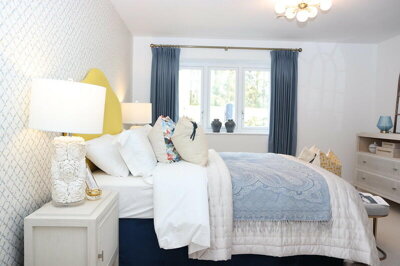
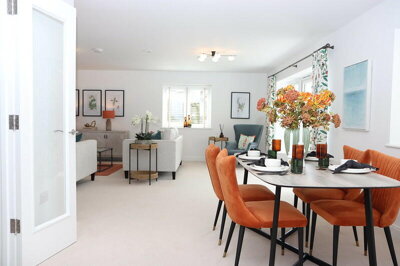
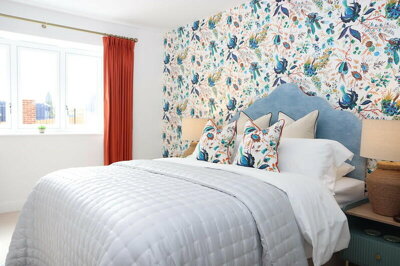
Browse 3 homes new builds in Ampfield, Test Valley from local developer agents.
The 2 bed house market features detached, semi-detached, and terraced properties with two separate bedrooms plus living spaces. Properties in Ampfield range across contemporary developments, with pricing varying across different neighbourhoods.
£0k
0
0
0
Source: home.co.uk
Showing 0 results for 2 Bedroom Houses new builds in Ampfield, Test Valley.
The Newmarket property market has shown remarkable resilience despite national economic pressures. Our data indicates property prices have decreased by just 1.7% over the past twelve months, suggesting a stabilising market rather than a correction. Semi-detached homes averaging £330,816 and terraced properties at £280,000 offer accessible entry points for first-time buyers seeking a foothold in this desirable Suffolk location. The market sees consistent activity across all property types, with 386 sales completing in the CB8 postcode area over the past year.
Three significant new-build developments are currently bringing fresh stock to Newmarket. The Paddocks by Taylor Wimpey on CB8 0FA and King's Warren by Barratt Homes on Fordham Road both offer 2-bedroom homes from £319,995, making them competitive options for young families and investors. For those seeking larger family homes, Newmarket Leys by David Wilson Homes provides 3, 4, and 5-bedroom properties from £419,995. These developments sit on the town's eastern edge, offering modern construction standards and energy efficiency alongside traditional charm.
Property type prices show varying degrees of correction across the market. Detached properties have experienced the smallest decline at 1.0%, reflecting sustained demand from families requiring additional space. Semi-detached homes have fallen 2.0%, while terraced properties saw the largest correction at 2.3%. Flats remained relatively stable with a 1.0% decrease, suggesting continued appetite for lower-priced entry points into the Newmarket market. These price movements create opportunities for buyers who were previously priced out of specific segments.

Newmarket's identity is inseparable from its status as the headquarters of British horse racing, a heritage that permeates every aspect of town life. Palace House, a magnificent Victorian mansion, serves as the National Horse Racing Museum and anchors the town's cultural offerings. The racing industry shapes the local economy profoundly, supporting training stables, stud farms, and specialist businesses throughout the area. This creates stable employment for thousands of residents while giving Newmarket an unmistakably sophisticated character found nowhere else in Suffolk.
The Census 2021 data reveals Newmarket's population at 16,527 across 7,088 households, creating a compact town where amenities feel immediately accessible. The housing stock reflects this balanced community: detached properties comprise 26.6% of homes, semi-detached houses make up 29.8%, terraced properties account for 24.6%, and flats represent 18.7%. This mix ensures options for every buyer, from young professionals seeking low-maintenance apartments to growing families requiring space for children and pets.
Beyond racing, Newmarket offers practical amenities including supermarkets, independent retailers, healthcare facilities, and recreational spaces. The town's conservation areas, particularly around the High Street and Palace House, preserve architectural character that newer developments complement rather than replace. Outdoor enthusiasts appreciate proximity to the Cambridgeshire countryside, while cultural visitors enjoy the gallery, theatre productions, and regular events that animate the town calendar throughout the year.

Education ranks among the top priorities for families relocating to Newmarket, and the town does not disappoint. Several primary schools serve the area, with Ofsted ratings available through the official regulator website. Parents should research current ratings and visit schools during open events to assess which institution best matches their children's needs and learning styles. Primary catchment areas are defined by the local authority, making property location crucial for school access.
Secondary education options include Newmarket Academy, which serves students from Year 7 through sixth form. The school offers A-Level qualifications and vocational pathways, enabling students to continue their education locally rather than travelling to nearby towns. For families prioritising grammar school education, the entrance process requires preparation and registration, with candidates sitting the Kent Test or equivalent assessments in neighbouring areas.
Newmarket's property age distribution, with 63.5% of homes built before 1980, means many families live in properties within excellent school catchments established over decades. Parents moving to the area should verify current school capacities and admission policies, as popular schools can receive applications exceeding places available. The presence of multiple educational options, including independent schools within reasonable driving distance, adds to Newmarket's appeal for families at all stages.
The pre-1919 housing stock at 17.5% of properties includes many homes in established residential areas with long-standing catchment arrangements. These period properties often sit within walking distance of well-regarded schools, making them particularly attractive to families prioritising educational access. However, older properties may require updating, and we always recommend a thorough survey before purchase to identify any maintenance issues that could affect your family's comfort or finances.
Transport connectivity defines Newmarket's appeal for commuters working in Cambridge, London, or the wider East Anglia region. The town sits on the Cambridge-Ipswich railway line, with direct train services connecting Newmarket to Cambridge in approximately 25 minutes. This makes the town viable for professionals who work in the university city but prefer suburban or rural living. London Liverpool Street is reachable via Cambridge in around 90 minutes, positioning Newmarket within acceptable commuting distance for occasional office attendance.
Road connections complement rail services, with the A14 running north of the town and providing access to Felixstowe port, Norwich, and the M11 motorway towards London. The A11 connects Newmarket to Cambridge and Norwich, creating straightforward routes for car commuters. Bus services operate throughout Newmarket and connect to neighbouring towns including Bury St Edmunds, though schedules may be less frequent than urban routes. Cycle commuting is feasible for shorter distances, with dedicated paths available in some areas.
Parking availability varies by location, with town centre parking offering short-stay options for shoppers and longer-stay provisions for commuters. Residential areas generally provide adequate off-street parking, though older properties with limited driveways may require street parking arrangements. Those working from home regularly will appreciate Newmarket's expanding fibre broadband coverage, which supports professional requirements without necessitating lengthy commutes.
London Stansted Airport is reachable within approximately 45 minutes by car, providing international travel connections for business and leisure travellers. This proximity adds to Newmarket's appeal for professionals who need to travel internationally as part of their work, with regular flights to European destinations and beyond. The combination of rail links to London, road access to major motorways, and air connectivity via Stansted positions Newmarket favourably within the regional transport network.
Spend time in Newmarket at different times of day and week to understand traffic patterns, noise levels, and community atmosphere. Visit local amenities including shops, pubs, and parks. Speak to existing residents about their experiences living in specific areas, particularly regarding schools, flooding history, and any planning proposals affecting the neighbourhood.
Obtain a mortgage agreement in principle before beginning property viewings. This demonstrates serious intent to sellers and estate agents while clarifying your realistic budget. Newmarket's average price of £367,073 means most buyers will require mortgage financing. Speak to multiple lenders or a mortgage broker to compare rates and find the most suitable product for your circumstances.
View multiple properties across different types and price ranges to understand what your budget delivers in Newmarket. Take notes during each viewing and photograph properties for later comparison. Consider attending viewings with a friend or family member who can offer objective perspective. Evening and weekend viewings allow assessment of the property's lighting and noise levels at different times.
For properties in Newmarket, a RICS Level 2 Survey is essential given the town's geological conditions. With approximately 63.5% of properties built before 1980 and clay soils present in some areas, professional surveys identify defects including damp, timber issues, and potential subsidence risks. Survey costs in Newmarket typically range from £400 to £700 depending on property size and age.
Choose a conveyancing solicitor with experience handling Suffolk property transactions. Your solicitor will conduct local authority searches, investigate title deeds, and manage the legal transfer process. Exchange of contracts typically occurs after all searches are satisfactory and both parties agree on completion terms. Average transaction times in Newmarket run between 8 and 12 weeks for standard purchases.
Upon exchange, your deposit becomes committed and both parties are legally bound to complete the transaction. Coordinate with your solicitor, mortgage lender, and estate agent to ensure all funds transfer correctly on completion day. Collect keys from the estate agent and arrange meter readings and utility transfers to your name immediately upon taking possession.
Purchasing property in Newmarket requires awareness of several area-specific factors that can affect your investment. The presence of clay soils in parts of the region creates a moderate to high shrink-swell risk, meaning foundations may be susceptible to movement, particularly for older properties with potentially shallow foundations or those with large trees nearby. A thorough RICS Level 2 Survey will identify any signs of subsidence or heave that might require remediation or negotiation on price.
Flood risk warrants investigation before committing to a purchase. Newmarket has areas susceptible to surface water flooding, especially in low-lying parts of the town and properties near watercourses. Request information from the Environment Agency and review local drainage records. While mainstream lenders will not refuse mortgages based on flood risk, they may require specialist insurance or impose conditions, adding to your ongoing costs.
Newmarket's conservation areas, covering the High Street, Palace House, and surrounding residential streets, impose planning restrictions on alterations and extensions. If you intend to modify a period property or add structures like extensions or outbuildings, contact West Suffolk Council planning department before proceeding. Listed buildings require listed building consent for any significant works, and inappropriate modifications can result in enforcement action. These properties often command premiums but offer unique character that modern homes cannot replicate.
Traditional construction in Newmarket's older properties often features solid brick walls with traditional timber floors and pitched roofs covered with slate or clay tiles. These construction methods served properties well for over a century but require understanding when assessing condition. Modern new builds at developments like The Paddocks and King's Warren use contemporary cavity wall construction and concrete tiles, offering different maintenance considerations. Our inspectors understand both construction traditions and can identify issues specific to each era.
With 63.5% of Newmarket properties built before 1980, the majority of homes in the town would significantly benefit from a professional RICS Level 2 Survey before purchase. These surveys provide detailed inspection of accessible areas including walls, floors, ceilings, roofs, and building services, identifying defects that might not be apparent during a standard viewing. For properties in Newmarket ranging from Victorian terraces near the High Street to post-war semi-detached houses in residential areas, our inspectors bring specific knowledge of local construction traditions and common defect patterns.
Our inspectors frequently identify damp issues in Newmarket's solid-wall properties, where original construction predates modern damp-proof courses. Rising damp and penetrating damp can affect walls without adequate protection, particularly in properties showing signs of sub-floor ventilation blockage or external ground level changes over time. Timber defects including wet rot, dry rot, and woodworm infestation are also encountered regularly, especially in properties with history of roof leaks or plumbing issues.
Roof condition represents another common area of concern in older Newmarket properties. Pitched roofs with traditional slate or clay tiles may show slipped or broken tiles, deteriorating mortar in verges and ridges, and felt degradation in the underlayer. Our inspectors assess roof structure from within the loft space where accessible, identifying timbers affected by water penetration or insect activity. Properties at King's Warren and Newmarket Leys newer developments typically present fewer of these concerns but remain within scope for the survey.
The typical cost for a RICS Level 2 Survey on a Newmarket property ranges from £400 to £700, with larger detached homes commanding higher fees due to increased inspection time and reporting complexity. Flats and smaller terraced properties fall towards the lower end of this range. We consider this investment essential given that survey issues discovered after purchase become the buyer's financial responsibility, whereas identifying problems before exchange allows price negotiation or, if issues prove unacceptable, withdrawal from the transaction.
The overall average house price in the CB8 postcode area is £367,073. Detached properties average £530,307, semi-detached homes cost around £330,816, terraced properties are priced at approximately £280,000, and flats average £188,400. Over the past twelve months, prices have decreased by 1.7%, indicating a stable market offering opportunities for buyers who were previously priced out of the area. Property type performance has varied, with terraced homes experiencing the largest correction at 2.3% while detached properties remained more resilient at a 1.0% decline.
Council tax in Newmarket is administered by West Suffolk Council. Property bands range from A through H, with the majority of homes falling in bands B through D depending on value and property type. You can verify the specific band for any property through the Valuation Office Agency website or by requesting the information from the selling estate agent. Bands affect your annual council tax liability and should factor into your budget calculations when assessing the true cost of ownership for any property you are considering.
Newmarket offers several primary schools serving different catchments, with Ofsted ratings accessible through the Ofsted website for comparison. Newmarket Academy provides secondary education through sixth form, offering both A-Level and vocational qualifications. Families should research current Ofsted ratings, visit schools during open events, and verify catchment area boundaries before purchasing, as popular schools can be oversubscribed. The age of many Newmarket properties means families can often secure homes in established catchment areas with decades of educational provision.
Newmarket railway station connects to Cambridge in approximately 25 minutes via direct train services, with onward connections to London Liverpool Street taking around 90 minutes. Bus services operate throughout the town and connect to Bury St Edmunds and surrounding villages. The A14 provides road access to Felixstowe, Norwich, and the M11 motorway. London Stansted Airport is reachable within 45 minutes by car, making international travel accessible for both business and leisure purposes.
Newmarket's property market benefits from several investment drivers including stable employment within the racing industry, strong school provision attracting family buyers, and proximity to Cambridge creating commuter demand. The town's limited new development means supply cannot fully meet demand, supporting long-term values. The recent price correction of 1.7% may present buying opportunities for investors seeking below-peak entry points. The racing industry provides particularly stable employment given its national and international significance, insulating local employment from broader economic fluctuations.
Standard SDLT rates for 2024-25 are 0% on the first £250,000, 5% on £250,001 to £925,000, 10% on £925,001 to £1.5 million, and 12% above £1.5 million. First-time buyers paying £625,000 or less qualify for relief: 0% on the first £425,000 and 5% on £425,001 to £625,000. No relief applies above £625,000. For the average Newmarket property at £367,073, a first-time buyer would pay no stamp duty, making Newmarket an attractive option for those entering the property market for the first time.
Given that 63.5% of Newmarket properties were built before 1980, issues including damp in solid-wall constructions lacking modern damp-proof courses, timber defects such as rot and woodworm, and roof deterioration are frequently encountered. Properties on clay soils may show signs of subsidence or heave. Newer builds typically have fewer defects but may have different issues related to modern construction methods. A RICS Level 2 Survey typically costs between £400 and £700 in Newmarket and identifies these problems before purchase, allowing buyers to make informed decisions or renegotiate terms.
Newmarket has multiple conservation areas including the High Street, Palace House, and surrounding residential neighbourhoods. The town contains a significant concentration of listed buildings reflecting its historical importance to British horse racing. Properties within conservation areas require planning permission for many alterations, while listed buildings need listed building consent for significant works. These restrictions preserve character but limit renovation options and can affect mortgageability for some lenders.
When viewing properties in Newmarket, pay particular attention to signs of damp in older solid-wall constructions, roof condition on properties with traditional coverings like slate or clay tiles, and any evidence of subsidence especially near large trees or in areas with clay soils. Check the condition of original windows and doors, as period features often require maintenance or updating. For properties in conservation areas, assess whether any alterations have been carried out without necessary consents, as this could create complications for future sales.
A RICS Level 2 Survey provides essential protection for Newmarket buyers given the age and construction types prevalent in the local housing stock. Without a professional inspection, you cannot know whether a property has damp issues, timber defects, roof problems, or structural movement. Our inspectors have extensive experience with Newmarket properties and understand the specific defect patterns associated with local construction traditions. The survey cost of £400-£700 represents a small fraction of the property price but can save thousands by identifying issues before you commit to purchase.
Beyond the property price, purchasing a home in Newmarket involves several additional costs that buyers must budget for carefully. Stamp Duty Land Tax applies to all purchases above £250,000 at standard rates, with the average Newmarket property at £367,073 placing most buyers in the 5% bracket for the amount above £250,000. This means a typical stamp duty bill of £5,854 for a home at the average price. First-time buyers purchasing properties up to £625,000 benefit from relief that increases the nil-rate band to £425,000, potentially eliminating stamp duty entirely.
Survey costs represent another significant expense, with RICS Level 2 Surveys in Newmarket ranging from £400 to £700 depending on property size and complexity. Properties over 50 years old, which comprise 63.5% of Newmarket's housing stock, particularly benefit from professional surveys given their higher likelihood of hidden defects. A mortgage valuation typically costs between £300 and £500 depending on property value, though this is often arranged and paid through the lender. Legal fees for conveyancing generally start from £499 for standard transactions, rising for leasehold properties or those with complications.
Additional costs include removal expenses, which vary significantly based on distance and volume of belongings, plus potential survey and mortgage arrangement fees. Buildings insurance must be in place from completion day, and you should budget for utility connection charges when moving into a new property. Setting aside approximately 10-15% of the property price for total purchase costs beyond the deposit is prudent, though some costs like stamp duty can be reduced through first-time buyer relief or by purchasing below the thresholds.
Properties New Builds In London

Properties New Builds In Plymouth

Properties New Builds In Liverpool

Properties New Builds In Glasgow

Properties New Builds In Sheffield

Properties New Builds In Edinburgh

Properties New Builds In Coventry

Properties New Builds In Bradford

Properties New Builds In Manchester

Properties New Builds In Birmingham

Properties New Builds In Bristol

Properties New Builds In Oxford

Properties New Builds In Leicester

Properties New Builds In Newcastle

Properties New Builds In Leeds

Properties New Builds In Southampton

Properties New Builds In Cardiff

Properties New Builds In Nottingham

Properties New Builds In Norwich

Properties New Builds In Brighton

Properties New Builds In Derby

Properties New Builds In Portsmouth

Properties New Builds In Northampton

Properties New Builds In Milton Keynes

Properties New Builds In Bournemouth

Properties New Builds In Bolton

Properties New Builds In Swansea

Properties New Builds In Swindon

Properties New Builds In Peterborough

Properties New Builds In Wolverhampton

Enter your details to see if this property is within your budget.
Loans, cards, car finance
Estimated property budget
Borrowing + deposit
You could borrow between
Typical borrowing
Monthly repayment
Est. at 4.5%
Loan-to-value
This is an estimate only. Your actual budget may vary depending on interest rates, credit history, and personal circumstances. For an accurate affordability assessment, speak to one of our free mortgage advisors.
This calculator provides estimates for illustrative purposes only and does not constitute financial advice. Your home may be repossessed if you do not keep up repayments on your mortgage. Estimates based on 4.5% interest rate, repayment mortgage. Actual rates depend on your circumstances.
Homemove is a trading name of HM Haus Group Ltd (Company No. 13873779, registered in England & Wales). Homemove Mortgages Ltd (Company No. 15947693) is an Appointed Representative of TMG Direct Limited, trading as TMG Mortgage Network, which is authorised and regulated by the Financial Conduct Authority (FRN 786245). Homemove Mortgages Ltd is entered on the FCA Register as an Appointed Representative (FRN 1022429). You can check registrations at NewRegister or by calling 0800 111 6768.

We use cookies to show you personalised content and improve your experience of our website. Find out more in our Privacy policy and Cookie policy.