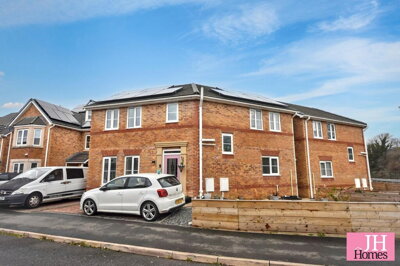
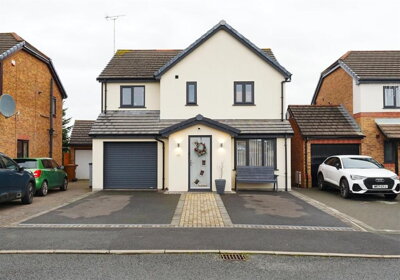
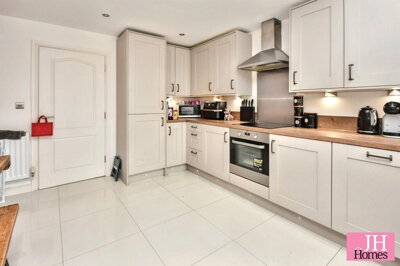
Browse 3 homes new builds in Aldingham, Westmorland and Furness from local developer agents.
£404k
16
1
303
Source: home.co.uk
Source: home.co.uk
Detached
4 listings
Avg £747,250
Cottage
3 listings
Avg £646,667
Barn Conversion
2 listings
Avg £140,000
Detached Bungalow
2 listings
Avg £312,500
House
2 listings
Avg £697,475
Lodge
1 listings
Avg £150,000
Semi-Detached
1 listings
Avg £360,000
semi-detached
1 listings
Avg £400,000
Source: home.co.uk
Source: home.co.uk
The Aldingham property market reflects the character of a small, heritage-rich village on Cumbria's coast. Average sold prices in the area stand at approximately £155,000 over the past year, with the median price recorded at £200,000. Property sales have ranged broadly from around £50,000 to £697,100 depending on size, condition, and historical significance, with the higher values reflecting the presence of period properties and manor houses within the parish. Transaction volumes remain low, consistent with the village's small population, which means buyers may find limited choice at any one time but can benefit from the personal attention of local estate agents who know each property intimately.
Detached homes in Aldingham have sold for a median of £200,000 based on recent data, while traditional stone-built properties command attention from buyers seeking authentic Cumbrian character. Semi-detached properties have historically traded around the £99,250 mark, and terraced cottages have achieved prices near £250,000. No recent flat sales data is available for the village, as apartments and maisonettes are rare in this predominantly houses and cottages market. New build activity is absent in the immediate Aldingham area, with buyers typically purchasing existing stock that often requires varying degrees of modernisation.
The low transaction volumes in Aldingham mean that each property sale can have a noticeable impact on recorded averages, making it important for buyers to understand that the market can move significantly with only a handful of sales. Properties here tend to stay on the market longer than in urban areas, giving serious buyers more time to assess options before committing. The absence of new build development means the housing stock consists almost entirely of period properties, with construction dating from medieval times through to the Victorian era represented in the parish.

Life in Aldingham offers a rare combination of coastal beauty, historical depth, and community spirit that appeals to those seeking an escape from urban living. The village sits directly facing Morecambe Bay, where vast tidal sands create ever-changing scenery and provide opportunities for coastal walks, birdwatching, and enjoying one of Britain's most significant natural landscapes. The parish boundaries extend into the sands themselves, and local folklore speaks of a larger medieval village that was gradually washed away by the tide, lending a poetic quality to the coastline that buyers often find deeply attractive.
The local economy has traditionally been rooted in agriculture, with lime-burning and minor industries including copper mining at nearby Birkrigg supplementing farm-based livelihoods. Today, Aldingham Hall operates as a residential care home, providing local employment, while tourism and the appeal of rural coastal living attract new residents to the area. The village retains a traditional feel, with buildings constructed from local limestone and sandstone reflecting the geological character of the South Cumbria iron ore field. The area's geology features gravelly soils over limestone, and the distinctive red sandstone and gritstone used in historic buildings adds warmth to the village streetscape.
The Furness Peninsula's geological heritage has shaped Aldingham's built environment in ways that buyers should appreciate. The village sits within the South Cumbria iron ore field, where hematite deposits occur in Carboniferous limestones, explaining the industrial heritage of the wider area. Traditional buildings use local limestone with quoins and dressings of red sandstone and gritstone, often externally covered with rough-cast render that gives the village its characteristic appearance. Understanding these construction methods helps when assessing property condition, as the materials used in Aldingham buildings have specific maintenance requirements.

Properties in Aldingham showcase the traditional building methods that have characterised Cumbrian construction for centuries. Local limestone serves as the primary structural material, with red sandstone and gritstone used for quoins, door surrounds, and window dressings that add visual interest to otherwise plain elevations. Rough-cast render, applied over solid stone walls, provides weather protection while contributing to the distinctive texture seen throughout the village. Buildings dating from the medieval period through to the Victorian era display these construction techniques, with later properties such as Aldingham Hall (built in 1846) introducing Gothic revival elements in larger-scale residential architecture.
The predominance of solid-wall construction in Aldingham properties means that insulation upgrades require careful consideration, as adding internal or external insulation affects the breathability of historic walls. Traditional lime-based mortars and renders allow moisture to evaporate from stone walls, while modern cement-based products can trap moisture and cause deterioration of the underlying fabric. Buyers should factor in the potential costs of sympathetic modernisation when assessing period properties, ensuring that any improvements preserve the character that makes Aldingham homes attractive in the first place.
The 28 listed buildings within Aldingham civil parish represent an extraordinary concentration of heritage property for a village of its size. Gleaston Castle stands as the sole Grade I listed building, a medieval fortification that dominates the local landscape with its imposing stone ruins. St Cuthbert's Church holds Grade II* status and dates from the mid-12th century, representing the ecclesiastical heritage that has shaped the village for nearly a thousand years. The remaining 26 Grade II listings include farmhouses, barns, follies, limekilns, and village halls, creating a built environment where historic preservation obligations affect a significant proportion of properties.

Families considering a move to Aldingham will find educational provision focused on the nearby town of Ulverston, which lies approximately 6 miles away on the Furness Peninsula. Ulverston offers a selection of primary schools serving the local community, with several rated Good by Ofsted, providing options for families who prefer shorter daily commutes. The town also hosts secondary education facilities serving the wider South Lakeland area, with schools that offer a range of GCSE and A-level subjects for older students preparing for further education or employment.
Primary schools in Ulverston include several options within reasonable driving distance of Aldingham, with some families choosing to use the school transport provided by Westmorland and Furness Council for eligible pupils. The journey time from Aldingham to Ulverston schools typically adds 15-20 minutes to the morning routine, which most families find manageable given the village's other advantages. Early registration with the local authority is advisable to secure places at preferred schools, as catchment area policies can affect admissions decisions for popular schools.
For those seeking grammar school provision, the nearby market town of Barrow-in-Furness and surrounding areas offer selective education options, though admission is based on catchment areas and entrance examination results. Parents should note that transport arrangements to schools outside Aldingham will be a consideration given the village's rural location, and early enquiry to the local authority regarding school transport eligibility is advisable. Sixth form provision is available in Ulverston and Barrow, offering good progression routes for students completing their secondary education in the area.

Transport connectivity from Aldingham reflects its position as a rural coastal village, with travel arrangements requiring some planning but offering rewarding destinations. The nearest railway station is in Ulverston, approximately 6 miles from Aldingham, which provides connections on the Furness Valley line running between Barrow-in-Furness and Lancaster. From Ulverston, passengers can access direct services to Manchester Piccadilly, making the village viable for occasional commuting with advance planning and a flexible working arrangement.
Road access from Aldingham connects to the A5087 coastal road running through the Furness Peninsula, linking the village to Ulverston and onward to the A590 trunk road providing access to the M6 motorway at Kendal. The journey time to Lancaster by car is approximately 45 minutes, while Manchester can be reached in around two hours under normal traffic conditions. Bus services operate on limited schedules, reinforcing the importance of car ownership for daily practicality in this part of Cumbria. Cyclists will appreciate the quieter rural lanes, though the coastal terrain includes some challenging gradients.
The A590 trunk road forms the main arterial route connecting the Furness Peninsula to the national motorway network, passing through Ulverston and providing access to the M6 at junction 36 near Kendal. From this junction, Birmingham is approximately two and a half hours drive away, while London can be reached in around four hours with good traffic conditions. Barrow-in-Furness, accessible via the A5087 and A595, offers additional rail connections and ferry services to the Isle of Man during the summer season, expanding travel options for Aldingham residents.

Flood risk represents a significant consideration for anyone purchasing property in Aldingham, given the village's position on Morecambe Bay and its history of coastal erosion. The parish boundaries extend into the tidal sands of the bay, and local folklore suggests that a larger medieval village once stood where the sea now reaches, gradually washed away over centuries of tidal action. The Environment Agency flood risk maps show varying levels of risk across the parish, with properties closer to the shoreline facing higher probability of tidal flooding during extreme weather events.
Buyers should review the specific flood risk classification for any property under consideration, as different areas of Aldingham face different levels of coastal flood threat. Properties in lower-lying areas near the shoreline may require additional insurance considerations, and some mortgage lenders apply specific conditions to properties in flood risk zones. Flood resilience measures, including raised electrical outlets, waterproof renders, and flood-resistant doors, have been implemented in some properties and can significantly reduce the impact of occasional flooding events.
Beyond tidal flood risk, the area's mining heritage warrants consideration when assessing environmental factors for property purchase. Aldingham sits within the South Cumbria iron ore field, with copper mining documented at nearby Birkrigg. While large-scale iron ore mining concentrated between Barrow and Ulverston, historical mining activity in the surrounding area means that ground condition surveys may be advisable for properties in certain locations. Local search results will reveal any mining records, subsidence notices, or ground instability concerns registered against a property.

Start by exploring current listings in Aldingham and surrounding Furness Peninsula villages. Understanding the local price range, which spans from around £50,000 to £697,100, helps set realistic expectations for what your budget can achieve in this coastal market. Given the limited stock available at any one time, regular monitoring of new listings pays dividends, and working with local estate agents who know the village intimately can reveal opportunities before they reach public marketing.
Before viewing properties, obtain a mortgage agreement in principle from a lender. This strengthens your position when making offers, particularly in a market with limited stock where competitive bids may occur. Given that many Aldingham properties are period homes requiring potential renovation, lenders may have specific requirements regarding property condition and valuation that affect mortgage availability. First-time buyers should explore Help to Buy ISA or Lifetime ISA options that provide government bonuses on savings put toward property purchase.
View properties in person to assess condition, character, and suitability. Many Aldingham homes are period properties requiring varying levels of modernisation, so consider whether the asking price reflects any necessary repairs or improvements. Pay particular attention to roof condition, wall structure, and evidence of damp or timber issues, which commonly affect solid-wall construction in older properties. The presence of listed building status affects what alterations may be permitted, so clarify any planned changes with the local planning authority before proceeding.
Given the age of many properties in Aldingham, a Level 2 Homebuyer Report is advisable to identify any structural concerns, damp issues, or defects common in older buildings. Our inspectors understand the construction methods typical of Cumbrian properties, including limestone walls, traditional lime mortars, and local stone types. The survey typically costs from £350 depending on property size and provides essential information about condition that cannot be assessed from visual inspection alone.
Appoint a conveyancing solicitor to handle the legal aspects of your purchase. They will conduct searches relevant to Cumbria, including flood risk and mining history searches given the area's coastal position and industrial heritage. Local knowledge of Westmorland and Furness Council planning history helps identify any historical permissions or enforcement notices that might affect a property. The solicitor will also check for any rights of way, easements, or covenants registered against the title.
Once surveys are satisfactory and legal searches are complete, your solicitor will exchange contracts and set a completion date. On completion day, you receive the keys and can move into your new Aldingham home. Given the village's rural location, we recommend arranging utilities transfer well in advance, as some services may require longer lead times than in urban areas.
Purchasing property in Aldingham requires attention to several area-specific factors that reflect the village's coastal location and heritage status. Flood risk is a primary consideration given Aldingham's position on Morecambe Bay, with historical accounts suggesting parts of the medieval village were lost to tidal waters. Buyers should review the Environment Agency flood risk maps for the specific property location and consider whether flood resilience measures are in place or would be required.
The high concentration of listed buildings throughout the parish, including 28 entries in the National Heritage List, means many properties may be listed buildings with varying grades of protection. Grade I listed buildings such as Gleaston Castle carry the highest level of protection, while Grade II and Grade II* properties require consent for alterations from the local planning authority. Buyers should factor in the additional responsibilities and potential costs associated with owning historic property, including requirements to maintain the building's character and fabric using appropriate materials and methods.
The construction materials used in Aldingham properties reflect the local geology and require specific maintenance approaches. Limestone walls with sandstone dressings need regular inspection for signs of weathering or mortar deterioration, while properties with rough-cast render may show cracking or separation over time. Understanding the property's construction helps prioritise maintenance and budget for future repairs that will be necessary to preserve the building's condition and character.
The average sold price for properties in Aldingham over the past year is approximately £155,000, with the median price recorded at £200,000. Property sales have ranged from £50,000 to £697,100 depending on property type, size, and historical significance. Detached homes have achieved median prices around £200,000, while terraced properties have sold for approximately £250,000 based on limited recent data. The small population and low transaction volumes mean that each sale has a significant impact on recorded averages, making the market less predictable than larger urban areas.
Properties in Aldingham fall under Westmorland and Furness Council, part of the new unitary authority established in 2023 replacing the former South Lakeland District Council. Council tax bands in the area range from Band A for lower-value properties up to Band H for the most valuable homes, with the exact band determined by the property's valuation. Prospective buyers can check the current council tax banding on the Valuation Office Agency website using the property address. The local authority provides details of current council tax rates on their website, including any applicable discounts for single occupants or properties undergoing renovation.
Aldingham itself has limited school provision, with primary and secondary education available in the nearby town of Ulverston approximately 6 miles away. Ulverston hosts several primary schools, some rated Good by Ofsted, and the town provides secondary school options serving the wider Furness Peninsula. Families should verify current school performance data and admission arrangements directly with the schools and Westmorland and Furness Council. School transport may be available for pupils attending schools within the catchment area, though eligibility criteria and route details should be confirmed with the local authority before purchasing property.
Public transport connectivity from Aldingham is limited, reflecting its rural village status. The nearest railway station is in Ulverston with services to Lancaster and Manchester Piccadilly, providing access to the wider rail network including connections to London Euston. Bus services operate on reduced schedules, making car ownership practically essential for daily life in Aldingham. Road access connects to the A5087 coastal road with onward links to the A590 and M6 motorway at Kendal, approximately 45 minutes drive away, providing access to the national motorway network.
Aldingham appeals to buyers seeking coastal character and heritage rather than strong rental yields. The village's small population of 1,287 residents and limited local employment opportunities mean it functions primarily as a residential rather than investment market. Properties with period features and listed building status may hold their value well due to their rarity, and demand from buyers seeking rural coastal living provides a stable underlying market. However, the low transaction volumes and absence of new build supply mean capital growth may be slower than in urban areas with higher activity levels.
Stamp duty rates for England apply to all Aldingham purchases. Standard rates start at 0% on the first £250,000 of purchase price, then 5% on the portion from £250,001 to £925,000, 10% on £925,001 to £1.5 million, and 12% above £1.5 million. Given that the median property price in Aldingham sits around £200,000, many buyers purchasing at or below this level will pay no stamp duty at all. First-time buyers enjoy enhanced relief with a 0% threshold extending to £425,000 and 5% applied to the £425,001 to £625,000 range, meaning a first-time buyer purchasing at the median price of £200,000 would pay zero stamp duty.
From 4.5%
Expert mortgage advice tailored to your Aldingham property purchase
From £499
Specialist property solicitors handling your Aldingham purchase
From £350
Thorough inspection of your Aldingham property by qualified surveyors
From £85
Energy performance certificate for your Aldingham home
Understanding the full costs of purchasing property in Aldingham helps buyers budget accurately for their Cumbrian move. Stamp Duty Land Tax applies to all purchases above £250,000 at standard rates, with the 0% threshold applying to the first £250,000, 5% on amounts between £250,001 and £925,000, 10% on £925,001 to £1.5 million, and 12% above £1.5 million. Given that the median property price in Aldingham sits around £200,000, many buyers purchasing at or below this level will pay no stamp duty at all, making the village particularly accessible for first-time buyers and those with modest budgets.
First-time buyers enjoy enhanced relief with a 0% threshold extending to £425,000 and 5% applied to the £425,001 to £625,000 range. This means first-time buyers purchasing a typical Aldingham property at the median price of £200,000 would pay zero stamp duty. Beyond stamp duty, buyers should budget for solicitor conveyancing costs typically starting from £499, a RICS Level 2 survey from £350 depending on property size, and an EPC assessment from £85. Removal costs, surveyor's fees, and any immediate renovation works should also be factored into the total budget for your Aldingham purchase.
Additional costs to consider when buying in Aldingham include searches for flooding, mining history, and local authority planning records, which together typically cost around £250-£400. Properties in flood risk areas may require specialist insurance that carries higher premiums than standard cover, and listed buildings require ongoing maintenance that must use appropriate materials and methods, adding to long-term ownership costs. Our team can provide guidance on the specific costs associated with your Aldingham purchase based on the property type and location within the parish.
Properties New Builds In London

Properties New Builds In Plymouth

Properties New Builds In Liverpool

Properties New Builds In Glasgow

Properties New Builds In Sheffield

Properties New Builds In Edinburgh

Properties New Builds In Coventry

Properties New Builds In Bradford

Properties New Builds In Manchester

Properties New Builds In Birmingham

Properties New Builds In Bristol

Properties New Builds In Oxford

Properties New Builds In Leicester

Properties New Builds In Newcastle

Properties New Builds In Leeds

Properties New Builds In Southampton

Properties New Builds In Cardiff

Properties New Builds In Nottingham

Properties New Builds In Norwich

Properties New Builds In Brighton

Properties New Builds In Derby

Properties New Builds In Portsmouth

Properties New Builds In Northampton

Properties New Builds In Milton Keynes

Properties New Builds In Bournemouth

Properties New Builds In Bolton

Properties New Builds In Swansea

Properties New Builds In Swindon

Properties New Builds In Peterborough

Properties New Builds In Wolverhampton

Enter your details to see if this property is within your budget.
Loans, cards, car finance
Estimated property budget
Borrowing + deposit
You could borrow between
Typical borrowing
Monthly repayment
Est. at 4.5%
Loan-to-value
This is an estimate only. Your actual budget may vary depending on interest rates, credit history, and personal circumstances. For an accurate affordability assessment, speak to one of our free mortgage advisors.
This calculator provides estimates for illustrative purposes only and does not constitute financial advice. Your home may be repossessed if you do not keep up repayments on your mortgage. Estimates based on 4.5% interest rate, repayment mortgage. Actual rates depend on your circumstances.
Homemove is a trading name of HM Haus Group Ltd (Company No. 13873779, registered in England & Wales). Homemove Mortgages Ltd (Company No. 15947693) is an Appointed Representative of TMG Direct Limited, trading as TMG Mortgage Network, which is authorised and regulated by the Financial Conduct Authority (FRN 786245). Homemove Mortgages Ltd is entered on the FCA Register as an Appointed Representative (FRN 1022429). You can check registrations at NewRegister or by calling 0800 111 6768.

We use cookies to show you personalised content and improve your experience of our website. Find out more in our Privacy policy and Cookie policy.