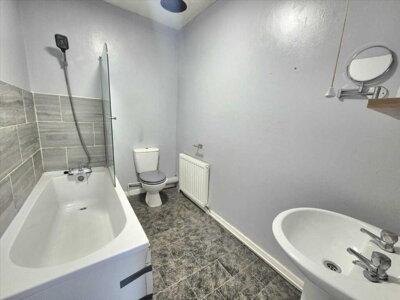
Browse 1 home for sale in Ystrad, Rhondda Cynon Taf from local estate agents.
The 2 bed flat sector typically includes two separate bedrooms, dedicated living areas, and bathroom facilities. Properties in Ystrad span purpose-built blocks, converted period houses, and modern apartment complexes on various floors.
£0k
0
0
0
Source: home.co.uk
Showing 0 results for 2 Bedroom Flats for sale in Ystrad, Rhondda Cynon Taf.
The Ystrad property market is dominated by the classic South Wales valley terraces that define the area's character. According to Census data, terraced housing makes up 47.35% of the local housing stock, with semi-detached properties comprising 27.79% and detached homes just 16.46%. Terraced properties command an average price of £122,021, offering buyers an affordable route onto the property ladder in this sought-after location. Semi-detached homes average £133,500, providing additional space for growing families, while detached properties reach approximately £298,167, reflecting their relative scarcity in the valley setting. The broader Rhondda Cynon Taf area saw average prices of £163,000 as of late 2025, with a 4.2% annual increase showing continued market confidence in the region.
Market activity in Ystrad remains steady, with 62 property sales recorded in the Rhondda Cynon Taf 009 postcode sector over the past twelve months. Over a longer three-year horizon, Ystrad has seen 212 property transactions, indicating healthy turnover in the local market. While prices dipped 5% from the 2023 peak, the underlying trend shows strong appreciation, with the current market offering opportunities for both first-time buyers seeking value and families looking for spacious period properties. The prevalence of pre-1970s terraced housing means buyers can often find properties with original features and generous room sizes compared to modern equivalents.
Property prices across the Rhondda Cynon Taf area continue to demonstrate resilience, with semi-detached properties showing particular strength with a 4.8% annual increase. Flats in the county have remained stable over the same period, providing consistent options for those seeking lower-maintenance accommodation. The area's housing stock, predominantly built before the 1970s, represents traditional construction using local Pennant Sandstone, brick, and slate roofing materials that have proven durable over more than a century of Welsh weather conditions.

Ystrad embodies the authentic character of the South Welsh valleys, where generations of families have put down roots in communities forged by the coal mining industry. The village centre features local shops, pubs, and essential services, while the surrounding hillside offers extensive walking routes and breathtaking views across the Rhondda Fawr valley. The strong sense of community here manifests through local events, football clubs, and chapel traditions that continue to shape village life. Housing in Ystrad predominantly consists of classic valley terraces built from local Pennant Sandstone and brick, often featuring slate roofs that have weathered over a century of Welsh weather.
The village's heritage is reflected in the architectural character of its streets, with many properties dating from the late nineteenth and early twentieth centuries when the coal industry shaped every aspect of valley life. Rhondda Cynon Taf contains almost 360 Listed Buildings, including three Grade I structures and 36 Grade II* properties, testament to the historical significance of the built environment in this part of Wales. While specific listed buildings in Ystrad itself require verification with the local planning authority, the general character of the area reflects this tradition of quality stone and brick construction that has endured for generations.
The wider Rhondda Cynon Taf area has experienced steady population growth of 1.4% since 2011, reaching 237,700 residents according to the most recent Census. This growth reflects renewed interest in valley communities as buyers seek more affordable alternatives to larger cities while maintaining access to employment and amenities. The local council actively supports town centres and local businesses through grants for growth and improvements, helping to maintain the services that residents depend on. For those considering a move to Ystrad, the combination of community spirit, affordable housing, and improving local facilities makes it an attractive proposition for families and individuals alike.

Families considering a move to Ystrad will find a selection of primary and secondary education options within the local area. The village falls within the catchment area for several primary schools serving the Rhondda Valleys community, with many institutions reflecting the strong educational traditions of South Wales. Secondary education is available at nearby schools in Treorchy, Tonypandy, and the surrounding towns, with several establishments offering sixth form provision for students continuing their education beyond GCSE level. The Rhondda Cynon Taf local education authority works to maintain standards across its school network, supporting students through various academic and vocational pathways.
The housing stock in Ystrad, predominantly built before the 1970s, means that families purchasing period properties may wish to consider the condition of insulation, damp prevention, and structural elements when evaluating homes near schools. Older properties often lack the thermal efficiency of newer builds, which can affect comfort and energy costs during the school year. Parents are advised to research specific school catchment areas and admissions criteria directly with Rhondda Cynon Taf County Borough Council, as these can influence property values and availability in particular streets. The council's website provides detailed information about school performance data, admissions arrangements, and catchment boundaries for all maintained schools in the area.
For those seeking alternative educational options, the wider area includes faith schools and Welsh-medium primary schools that serve local communities. Welsh-medium education provides opportunities for children to become bilingual, a valuable skill in contemporary Wales. Transport arrangements for secondary school pupils typically involve local bus services connecting valley communities to schools in nearby towns, and families should factor these journey times into their relocation planning. The availability of school transport is determined by distance criteria set by the local education authority, which families should confirm before committing to a property purchase.
Transport connectivity from Ystrad centres on the Rhondda Valley railway line, which provides regular services connecting communities along the valley floor. The nearby Ystrad Rhondda railway station offers connections to Treorchy, Pontypridd, and Cardiff, making daily commuting feasible for those working in the capital or surrounding towns. Journey times to Cardiff Central typically take around one hour by train, while access to Pontypridd provides connections to the broader rail network. Bus services supplement rail options, with routes serving local villages and connecting residents to larger town centres for shopping and services.
Road access from Ystrad involves the valley road network that winds through the Rhondda Fawr, connecting to the A470 trunk road that runs through the South Wales valleys towards Cardiff and the M4 motorway. The A465 Heads of the Valleys road provides additional routes to Merthyr Tydfil and beyond, opening up employment opportunities in the northern parts of the region. For those who drive, parking availability within the village varies by location, with some terraced streets offering limited off-street parking, a common feature of traditional valley housing layouts. Cyclists will find the valley terrain challenging but rewarding, with scenic routes along the river and hillside paths for recreational cycling. The local topography means that residents should consider their commute requirements carefully when choosing where to live within the village, as properties at different elevations will have varying access to transport links and amenities.
Begin your property search by reviewing current listings in Ystrad and understanding price trends. With terraced properties averaging £122,021 and semi-detached homes at £133,500, compare similar properties to establish realistic budgets. Consider flood risk areas such as Penrhys Road and factor in potential remediation costs. Register with local estate agents and set up property alerts to stay informed about new listings as they come to market, as desirable properties in Ystrad can attract multiple interested buyers.
Contact local estate agents to arrange viewings of properties that match your requirements. Take time to assess the condition of older terraced properties, checking for signs of damp, roof condition, and the standard of electrical and plumbing systems. Properties in this area often require modernisation work, particularly those that have not been updated since the original construction. During viewings, ask vendors about the age of key systems including the boiler, wiring, and any renovations undertaken.
Before making offers, obtain a mortgage agreement in principle from a lender. This strengthens your position when negotiating with sellers and demonstrates your seriousness as a buyer. Local brokers familiar with the Rhondda Cynon Taf area can advise on suitable products, including those tailored to older properties which may require specialist valuation considerations. Given that average prices in Ystrad sit around £159,353, many buyers will find they can access favourable mortgage terms given the relatively modest property values compared to other parts of Wales and the UK.
Given the prevalence of pre-1970s terraced properties in Ystrad, a RICS Level 2 Survey is highly recommended. This assessment identifies defects common to older valley properties, including damp, structural movement, and outdated electrics. The cost typically ranges from £400-600 depending on property value, though this investment can save significant money by highlighting issues before purchase. With the prevalence of clay-rich till in parts of the wider Rhondda Cynon Taf area, a survey can also assess potential shrink-swell ground movement concerns.
Choose a conveyancing solicitor to handle the legal aspects of your purchase. They will conduct searches including mining records, which are essential given the historical coal mining in the Rhondda Valleys. A coal mining search is particularly important for properties in Ystrad, as historical mine workings can occasionally affect ground stability. Local solicitors familiar with Rhondda Cynon Taf properties can smooth the process and advise on any specific local concerns revealed by the searches.
Once searches are satisfactory and finances are arranged, your solicitor will exchange contracts and set a completion date. On completion day, you will receive the keys to your new Ystrad home and can begin settling into your new community. Remember that you will need to arrange buildings insurance from the point of exchange, and it is sensible to set up utility accounts in advance of moving day so that services are available when you arrive at your new property.
Buyers considering properties in Ystrad should be aware of several area-specific factors that can affect purchasing decisions and long-term ownership costs. Flood risk is a particular consideration, with Ystrad ranked as the 63rd most at-risk community in Wales for surface water and ordinary watercourse flooding. The Penrhys Road area has experienced significant flooding, including internal flooding to multiple properties during Storm Dennis in February 2020, when 14 residential properties and 1 business suffered internal flooding. Rhondda Cynon Taf County Borough Council has completed drainage improvement schemes in Ystrad specifically off Penrhys Road to enhance flood resilience. Prospective buyers should ask vendors about previous flooding, check property flood history, and consider the cost of flood resilience measures when budgeting for a purchase.
The mining heritage of the Rhondda Valleys means that purchasing a property in Ystrad should include a coal mining search as part of the conveyancing process. Historical mine workings can occasionally cause ground instability, though specific current issues for Ystrad require professional assessment. The clay-rich soils present in parts of the wider Rhondda Cynon Taf area, indicated by the prevalence of glacial till, suggest potential for shrink-swell ground movement which can affect foundations over time. This makes structural surveys particularly valuable for the local housing stock, as our inspectors can assess whether any movement has occurred and whether the property foundations are suitable for the ground conditions.
The predominant terraced housing stock, while solidly constructed using traditional methods with local stone and brick, may show signs of age-related wear including render deterioration, roof wear, and damp penetration. Older properties often lack modern insulation standards, which can result in higher heating costs and potential condensation issues, particularly during the damp Welsh winters. Buyers should budget for potential renovation work, particularly regarding insulation, damp proofing, electrical systems, and roofing. Properties that have been well-maintained and updated will command premiums over those requiring work, so factoring renovation costs into your offer is essential for accurate budgeting. An EPC assessment, which is legally required before a property can be marketed, can provide useful information about the energy efficiency of any property you are considering.
The average house price in Ystrad currently stands at approximately £159,353 according to recent market data from Rightmove, though other sources suggest slightly lower averages in the £123,000-£128,000 range depending on the specific data source and time period. Property prices vary significantly by type, with terraced properties averaging £122,021, semi-detached homes at £133,500, and detached properties reaching around £298,167. The market has seen strong growth of 21% over the past year, though prices remain 5% below the 2023 peak, offering opportunities for buyers seeking value in the South Wales valleys compared to the wider Rhondda Cynon Taf average of £163,000.
Properties in Ystrad fall under Rhondda Cynon Taf County Borough Council's council tax banding system. The specific band depends on the property's valuation and type, with terraced properties typically falling into bands A through C given their relatively modest market values. Larger semi-detached and detached homes may be in higher bands D or E. Prospective buyers can check specific bands on the Valuation Office Agency website using the property address, or request this information during the conveyancing process as part of the local search results. Council tax bands affect ongoing running costs and should be factored into the overall cost of ownership when comparing properties.
Ystrad is served by several primary schools within the local area, with secondary options available in nearby towns including Treorchy Comprehensive School and secondary schools in Tonypandy. The local education authority is Rhondda Cynon Taf County Borough Council, which manages school admissions and catchment areas for all maintained schools in the county. Parents should research specific school performance data through Estyn reports and league tables, visit potential schools directly, and confirm catchment boundaries before purchasing, as these can influence which schools your children can attend. The catchment area system means that living on one side of a particular road versus another can determine school placement, making this particularly important for families with school-age children.
Ystrad benefits from regular train services via the Rhondda Valley railway line, with connections to Treorchy, Pontypridd, and Cardiff via the Ystrad Rhondda station. Journey times to Cardiff Central take approximately one hour by train, making daily commuting feasible for those working in the capital or surrounding towns. Bus services supplement rail options, connecting residents to local towns and villages throughout the valley, though service frequency may be reduced on evenings and weekends. For commuters working in Cardiff or surrounding areas, public transport provides a viable alternative to driving, particularly given the cost of parking in larger towns and cities.
Ystrad and the wider Rhondda Cynon Taf area have shown consistent property price growth, with 21% appreciation over the past year and broader regional increases of 4.2% annually. The relative affordability compared to Cardiff and surrounding areas makes Ystrad attractive to first-time buyers and investors seeking lower entry costs. Rental demand in the South Wales valleys remains steady, supported by local employment and commuting connections to larger centres. However, buyers should consider factors including flood risk in certain areas, particularly along Penrhys Road, and the potential for renovation costs in older properties when calculating true investment returns.
In Wales, stamp duty is replaced by Land Transaction Tax, which operates under Welsh rates rather than those applying in England. For standard purchases, you pay nothing on properties up to £250,000, then 5% on the portion between £250,000 and £925,000. First-time buyers in Wales benefit from relief on the first £225,000 of their purchase, with 5% due on amounts between £225,000 and £625,000, and 10% above that threshold. Given the average property price in Ystrad of around £159,353, many buyers purchasing terraced and semi-detached properties will pay no Land Transaction Tax at all, making this an exceptionally affordable location for first-time purchasers entering the property market.
The primary risks to consider when purchasing in Ystrad include flooding susceptibility in certain areas, with Ystrad ranked 63rd most at-risk in Wales for surface water flooding. The historical coal mining in the Rhondda Valleys necessitates a mining search to check for potential ground stability issues from historical mine workings. Older terraced properties may require modernisation investment, particularly for insulation, damp proofing, electrical systems, roofing, and plumbing. With approximately one in five properties in Rhondda Cynon Taf at risk of flooding, higher than the Welsh average of one in eight, this factor deserves particular attention. Prospective buyers should commission thorough surveys including a RICS Level 2 assessment and factor potential renovation costs into their budget before committing to a purchase.
While Rhondda Cynon Taf has almost 360 Listed Buildings across the county, including three Grade I structures and 36 Grade II* buildings, specific listed buildings within Ystrad itself were not identified in available records. Any property that is listed will require specialist consideration during purchase, as Listed Building Consent is required for alterations from the local planning authority. If you are considering a listed property, our team can advise on the survey requirements and the additional responsibilities that come with owning heritage property in Wales.
One of the most attractive aspects of buying property in Ystrad is the minimal Land Transaction Tax burden facing most purchasers. With the average property price sitting around £159,353, buyers purchasing terraced homes and semi-detached properties will fall entirely below the £250,000 threshold at which LTT becomes payable. This represents a significant saving compared to purchasing in more expensive areas of the UK, effectively reducing your total purchase costs by thousands of pounds. First-time buyers benefit from even more favourable treatment under Welsh LTT rules, with relief available on the first £225,000 of qualifying purchases. For a first-time buyer purchasing an average Ystrad property, no LTT would be due at all.
Beyond LTT, buyers should budget for additional costs including solicitor conveyancing fees, which typically start from around £499 for a standard transaction. Conveyancing costs will increase if the transaction is complex, such as with leasehold properties or those with unusual tenure arrangements. A RICS Level 2 Survey is strongly recommended given Ystrad's older housing stock, with costs generally ranging between £400 and £600 depending on property value and type. For properties over £500,000, survey costs may be higher, averaging around £586 nationally. An Energy Performance Certificate is legally required before a property can be marketed, though this cost is typically borne by the seller rather than the buyer. Factor in mortgage arrangement fees, which can be 0-2% of the loan amount depending on the lender, and removal expenses when planning your total budget for moving to your new Ystrad home.
Properties for Sale In London

Properties for Sale In Plymouth

Properties for Sale In Liverpool

Properties for Sale In Glasgow

Properties for Sale In Sheffield

Properties for Sale In Edinburgh

Properties for Sale In Coventry

Properties for Sale In Bradford

Properties for Sale In Manchester

Properties for Sale In Birmingham

Properties for Sale In Bristol

Properties for Sale In Oxford

Properties for Sale In Leicester

Properties for Sale In Newcastle

Properties for Sale In Leeds

Properties for Sale In Southampton

Properties for Sale In Cardiff

Properties for Sale In Nottingham

Properties for Sale In Norwich

Properties for Sale In Brighton

Properties for Sale In Derby

Properties for Sale In Portsmouth

Properties for Sale In Northampton

Properties for Sale In Milton Keynes

Properties for Sale In Bournemouth

Properties for Sale In Bolton

Properties for Sale In Swansea

Properties for Sale In Swindon

Properties for Sale In Peterborough

Properties for Sale In Wolverhampton

Enter your details to see if this property is within your budget.
Loans, cards, car finance
Estimated property budget
Borrowing + deposit
You could borrow between
Typical borrowing
Monthly repayment
Est. at 4.5%
Loan-to-value
This is an estimate only. Your actual budget may vary depending on interest rates, credit history, and personal circumstances. For an accurate affordability assessment, speak to one of our free mortgage advisors.
This calculator provides estimates for illustrative purposes only and does not constitute financial advice. Your home may be repossessed if you do not keep up repayments on your mortgage. Estimates based on 4.5% interest rate, repayment mortgage. Actual rates depend on your circumstances.
Homemove is a trading name of HM Haus Group Ltd (Company No. 13873779, registered in England & Wales). Homemove Mortgages Ltd (Company No. 15947693) is an Appointed Representative of TMG Direct Limited, trading as TMG Mortgage Network, which is authorised and regulated by the Financial Conduct Authority (FRN 786245). Homemove Mortgages Ltd is entered on the FCA Register as an Appointed Representative (FRN 1022429). You can check registrations at NewRegister or by calling 0800 111 6768.

We use cookies to show you personalised content and improve your experience of our website. Find out more in our Privacy policy and Cookie policy.