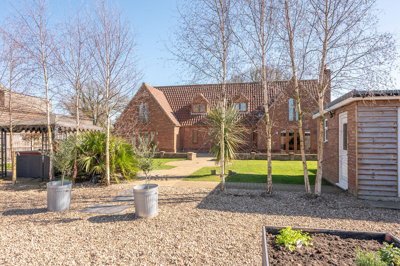
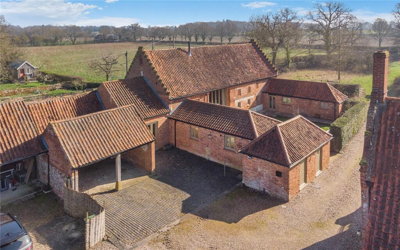
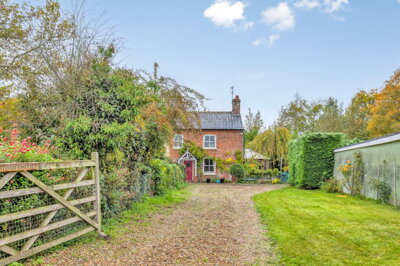
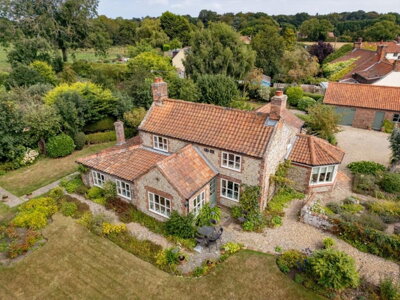
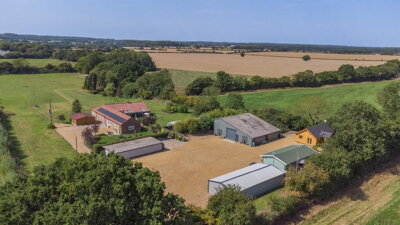
Browse 5 homes for sale in Wood Norton from local estate agents.
The larger property sector typically features multiple bathrooms, substantial reception space, and private gardens or off-street parking. Four bedroom houses in Wood Norton span detached, semi-detached, and occasionally terraced configurations, with styles ranging from period properties to modern executive homes.
The Wood Norton property market has experienced remarkable growth, with OnTheMarket recording a 20% rise in sold prices over the past twelve months. This surge reflects broader trends in North Norfolk, where buyers from London and the Home Counties have discovered the appeal of village life within commuting distance of the capital. The average sold price in the village currently stands between £495,000 and £527,000 depending on the source, positioning Wood Norton firmly within the premium rural property sector. With 43 property sales recorded by Rightmove in the last year, activity levels remain healthy despite broader national market uncertainty.
Detached properties dominate the local market, reflecting the rural nature of the village and the generous plot sizes that characterise Norfolk's agricultural settlements. The average detached home in Wood Norton commands approximately £563,750, with larger period properties and converted farm buildings achieving significantly higher figures. Semi-detached properties offer a more accessible entry point at around £315,000, though these remain relatively scarce in this predominantly rural setting. The North Norfolk market overall shows detached properties selling for an average of £402,000, semi-detached at £268,000, terraced homes at £225,000, and flats at £153,000.
The composition of property types in Wood Norton reflects the predominantly detached and semi-detached nature of Norfolk's rural housing stock. Census data shows that across Norfolk county, 39.9% of recent sales were detached properties, 26% semi-detached, 25% terraced, and 9% flats. This distribution means that buyers seeking character homes with land will find Wood Norton well-suited to their requirements, while those seeking more affordable options may need to look at terraced cottages or consider nearby market towns for greater choice.

Wood Norton sits within the Breckland district of Norfolk, a county renowned for its diverse landscape of heathland, farmland, coastline, and medieval market towns. The village itself exudes traditional English rural character, with properties built using the characteristic Norfolk materials of flint, brick, and render that have defined the area for centuries. The local landscape features gentle rolling countryside, productive agricultural land, and pockets of woodland that provide habitat for diverse wildlife. The Norfolk Broads lie to the southeast, while the stunning North Norfolk coastline with its beaches and coastal villages is within easy reach.
The wider North Norfolk area has attracted significant investment in recent years, with new artisans, business owners, and remote workers choosing to relocate from urban centres. This demographic shift has supported local services including farm shops, craft outlets, gastro pubs, and specialist food producers. The village community remains tight-knit, with events throughout the year bringing residents together. Nearby market towns provide access to supermarkets, medical facilities, and other essential services that complement the peaceful village setting. The slower pace of life, clean air, and access to open countryside make Wood Norton particularly appealing to families and retirees seeking an improved quality of life.
Norfolk's geology varies across the county, with chalk deposits underlying much of the region alongside clay and sand formations. While specific geological data for Wood Norton is not available, these varying substrates can affect foundation conditions in older properties. Our team frequently encounters properties built on clay soils that may be susceptible to shrink-swell movement during periods of drought or saturation. Understanding the local ground conditions is particularly important when purchasing period properties, as many older homes in the village may have foundations designed for different ground conditions than would be required today.

Families considering a move to Wood Norton will find a selection of educational options within reasonable driving distance. The surrounding Norfolk countryside contains several primary schools serving village communities, with the nearest typically located in nearby market towns. Schools in the wider North Norfolk area generally serve mixed rural and town catchments, providing children with education rooted in traditional values alongside modern curriculum requirements. Parents should research specific catchment areas and admissions policies, as these can influence school allocations significantly.
Primary schools in the Wood Norton area include those in surrounding villages and market towns such as Aylsham, where several schools serve the local community. Primary education in Norfolk villages often involves school transport arrangements, and parents should factor these logistics into their house-hunting criteria. Many rural primary schools maintain strong community ties and smaller class sizes compared to urban counterparts, which parents often cite as advantages when choosing village locations. The nearest primary school to Wood Norton typically requires a short drive, and parents should verify current catchment arrangements with Norfolk County Council's admissions team.
For secondary education, students often travel to schools in nearby towns, with several secondary schools and academies serving the broader district. Norfolk hosts several well-regarded grammar schools, with entrance typically determined by the eleven-plus examination. Schools in Fakenham and Aylsham serve portions of the North Norfolk area, while Dereham provides additional options for secondary education. The nearest grammar schools may require passing the eleven-plus assessment, and parents should research current pass rates and admission criteria when evaluating educational provision in the area.
Beyond secondary education, Norfolk offers sixth form provision and further education colleges in larger towns, providing clear pathways for students continuing their education beyond GCSE level. The city of Norwich provides additional sixth form options and further education colleges for older students. School performance data, Ofsted ratings, and individual school websites provide valuable information for parents evaluating educational options in the area. Transport arrangements for secondary and post-16 education typically require car travel or school bus services, which parents should investigate when considering properties in the village.
Wood Norton enjoys strategic positioning within North Norfolk, providing reasonable access to major road networks while maintaining its rural character. The village lies within reasonable distance of the A47, which runs through Norfolk connecting Norwich to King's Lynn and providing access to the wider national road network. The A1066 provides additional local connectivity, while the proximity to the coast road opens up the beautiful North Norfolk coastline for leisure and tourism. For those working in Norwich, the journey takes approximately 30-40 minutes by car, making occasional office attendance manageable for commuters.
Public transport options in rural Norfolk require planning but remain functional for essential journeys. Bus services connect villages to nearby market towns, though frequencies may be limited compared to urban routes. The hourly or two-hourly bus services to towns like Aylsham and Dereham enable some dependence on public transport for shopping and appointments, though daily commuting typically requires private vehicle use. Rail connections are available from Norwich, which offers direct services to London Liverpool Street with journey times of approximately two hours. Cambridge and King's Lynn provide additional rail options, expanding the network of accessible destinations.
For international travel, Norwich Airport offers domestic and European flights, while London Stansted and London Luton airports are within reasonable driving distance for global travel. Norwich Airport provides connections to destinations including Amsterdam, which offers onward global connections. Many Wood Norton residents find that Norwich Airport meets most travel requirements, while Stansted provides a useful backup for destinations not served by regional flights. The journey to Stansted takes approximately 90 minutes by car, making early morning flights feasible with careful planning.
Start by exploring current listings in Wood Norton and the wider North Norfolk area. Understand the average prices for different property types, and consider whether you need detached family homes, period cottages, or converted agricultural buildings. Review local sales data and understand the 18-20% price growth experienced in recent years. Our team can provide guidance on current market conditions and help you identify suitable properties matching your criteria and budget.
Before viewing any properties, obtain a mortgage agreement in principle from a lender. This demonstrates your seriousness to sellers and estate agents while helping you understand your true budget. Factor in additional costs including stamp duty, legal fees, survey costs, and moving expenses when calculating your overall budget. For properties at Wood Norton's average price of around £514,000, additional costs including SDLT, legal fees, and survey costs can amount to approximately £15,000-£20,000 depending on your buyer status.
Work with local estate agents who understand the Wood Norton market and can guide you toward suitable properties. View multiple properties to compare condition, character, and value. Pay attention to the age of properties, potential maintenance requirements, and any signs of structural issues common in older rural housing stock. Many properties in Wood Norton date from the 18th and 19th centuries, requiring different assessment criteria compared to modern construction.
Once you have agreed a purchase, instruct a qualified surveyor to conduct a Level 2 Homebuyer Report. This survey checks for defects that may not be visible during viewings, including issues common in period properties such as damp, roof condition, and structural movement. Given the older housing stock typical of Norfolk villages, this step provides valuable protection. Our survey team understands the specific challenges of Norfolk period properties and can identify issues that generic surveys might miss.
Appoint a conveyancing solicitor to handle the legal aspects of your purchase. Your solicitor will conduct searches, review contracts, and manage the transfer of funds. Ensure they have experience with rural properties and any local issues such as rights of way or agricultural covenants that may affect the title. Rural Norfolk properties often involve septic tanks, private drainage systems, and rights of way that require careful investigation.
Once all searches are satisfactory and finances are confirmed, you will exchange contracts and pay your deposit. Completion typically follows within weeks, at which point you will receive the keys to your new Wood Norton home. Register your ownership with the Land Registry and update your address with relevant organisations. We recommend arranging buildings insurance before completion and scheduling a thorough inspection of your new property's condition.
Properties in Wood Norton typically include period features that reflect the village's agricultural heritage. Many homes will have original windows, fireplaces, and structural elements that require ongoing maintenance. When viewing properties, assess the condition of thatched roofs, which are traditional in Norfolk villages but carry higher insurance and maintenance costs. Flint and brick construction is common, and understanding the maintenance requirements of these traditional building methods will help you budget appropriately for your purchase. A RICS Level 2 survey can identify defects in these traditional features that may not be apparent during viewings.
Flood risk should be considered when evaluating any property in Norfolk. While Wood Norton itself does not have specific flood risk data available, the county's proximity to rivers and the Broads means that surface water flooding and river flooding can occur in some areas. Commission a thorough survey and review any available environmental reports before committing to a purchase. Similarly, check whether the property lies within any conservation area or is a listed building, as these designations carry planning restrictions and additional maintenance obligations. The Environment Agency provides flood risk data that should form part of your pre-purchase research.
Rural properties often come with larger plots and outbuildings that require maintenance throughout the year. Consider the ongoing costs of gardening, land management, and any outbuildings included in the sale. Septic tanks and private drainage systems are common in village properties and will require periodic emptying and maintenance. Access rights, agricultural covenants, and shared responsibilities for lanes and ditches should be investigated during the conveyancing process to ensure you understand your obligations as a new owner. Properties with agricultural land may involve Environment Agency regulations and stewardship requirements.
The age of properties in Wood Norton means that electrical and plumbing systems may require updating to meet current standards. Rewiring a period property can cost £3,000-£8,000 depending on property size, while plumbing upgrades and heating system replacements represent additional investment requirements. When evaluating older properties, ask about recent renovations and upgrades to these essential systems. A thorough RICS Level 2 survey will identify outdated electrics, plumbing condition, and any remedial work required to bring systems up to current specifications.
Purchasing a property in Wood Norton involves several costs beyond the purchase price itself. Stamp duty land tax (SDLT) is the most significant additional cost and varies depending on your buyer status. First-time buyers purchasing properties up to £625,000 pay no stamp duty on the first £425,000 and 5% on amounts between £425,000 and £625,000. For a typical Wood Norton property at £514,000, this would result in a first-time buyer SDLT liability of approximately £4,450. Those who have previously owned property pay 5% on amounts between £250,000 and £925,000, meaning a similar £514,000 property would attract SDLT of approximately £13,200.
Beyond stamp duty, budget for legal fees typically ranging from £500 to £2,000 depending on complexity and whether the property is freehold or leasehold. Rural properties with complex titles, rights of way, or agricultural covenants require more extensive legal work, pushing costs toward the upper end of this range. A RICS Level 2 Homebuyer Report costs approximately £350-£600 depending on property size and location, while an Energy Performance Certificate costs around £60-£120. Survey costs for rural properties with character features may be higher due to the additional inspection requirements.
Moving costs vary based on distance and volume, while mortgage arrangement fees typically range from 0-2% of the loan amount. Many lenders offer fee-free mortgages, though these may carry slightly higher interest rates. Buildings insurance should be in place from the point of completion, and you should factor in immediate post-purchase costs such as utility connections, council tax registration, and any immediate maintenance requirements. Properties in Wood Norton may require connection to utilities if previously unoccupied, adding to initial costs.
The average house price in Wood Norton stands at approximately £514,000 according to Rightmove data, with OnTheMarket recording an average sold price of £527,000 over the past twelve months. Detached properties average £563,750, while semi-detached homes command around £315,000. Prices have risen by approximately 18-20% over the past year, indicating strong buyer demand for property in this rural North Norfolk village. The broader North Norfolk area shows an overall average price of £402,000 for detached properties, making Wood Norton a premium location within the district. Zoopla reports slightly lower average sold prices of £495,000, reflecting the variation in data sources that buyers should consider when evaluating specific properties.
Properties in Wood Norton fall under North Norfolk District Council, with most residential properties assigned bands A through E. Specific bands depend on the property's assessed value, with typical village homes often falling in bands B through D. You can check the exact council tax band for any specific property through the Valuation Office Agency website or by contacting North Norfolk District Council directly. Annual council tax charges vary accordingly, with band D properties typically paying around £1,800-£2,000 per year. Properties in higher bands will pay proportionately more, while band A properties pay the lowest rates.
The Wood Norton area is served by several primary schools in nearby villages and market towns, with primary schools in Aylsham and surrounding villages providing education for younger children. Secondary education options include schools in surrounding towns, with Norfolk's grammar schools providing an academic pathway for students who pass the eleven-plus examination. The nearest primary schools typically serve village catchments, while secondary students may travel to schools in Aylsham, Dereham, or Fakenham. Parents should research specific school catchments, Ofsted ratings, and admissions policies, as these directly affect school allocations for prospective residents. School transport arrangements should be verified with Norfolk County Council before committing to a property purchase.
Public transport in rural Wood Norton requires some planning but remains functional for essential journeys. Local bus services connect the village to nearby market towns, though service frequencies may be limited compared to urban areas. The nearest railway stations are located in Norwich, offering direct services to London Liverpool Street with journey times of approximately two hours. Norwich also provides national rail connections and coach services. For daily commuting, a car remains the most practical option for most residents, though the village's position provides reasonable access to the A47 for those working in Norwich or travelling further afield.
The Wood Norton property market has demonstrated strong performance with prices rising approximately 20% over the past twelve months. The combination of rural appeal, proximity to the North Norfolk coastline, and increasing demand from London buyers seeking countryside relocation supports continued interest in the village. Detached properties and character homes in particular command premium prices in this sought-after location. However, as with any property investment, prospective buyers should consider their long-term plans, potential rental demand, and any changes to local amenities or transport links that might affect future values. The limited supply of properties in this small village tends to support prices, though national economic conditions will always influence market performance.
For properties purchased at the current average price of around £514,000, standard stamp duty rates apply. As a first-time buyer, you would pay 0% on the first £425,000 and 5% on the amount between £425,000 and £625,000, resulting in a tax liability of approximately £4,450. For those who have previously owned property, you would pay 0% on the first £250,000, 5% on £250,000 to £925,000 (amounting to £13,200), and the remainder at standard rates. First-time buyer relief does not apply to purchases above £625,000. Additional costs including legal fees, survey costs, and moving expenses should be budgeted separately from your mortgage and deposit.
Older properties in Wood Norton often feature traditional Norfolk construction including flint, brick, and render, along with period details such as original fireplaces, sash windows, and exposed beams. Common issues in period rural properties include damp, roof condition, and the maintenance requirements of traditional building materials. A RICS Level 2 Homebuyer Report is essential for identifying hidden defects. You should also check whether the property is listed, review any conservation area restrictions, and investigate the condition of private drainage systems and septic tanks common in rural settings. Electrical and heating systems in older properties frequently require updating, and this should be factored into your renovation budget alongside the purchase price.
Wood Norton contains period properties that may include listed buildings, given the village's traditional Norfolk character and agricultural heritage. Properties built in the 18th and 19th centuries often fall under listed building protection, which imposes restrictions on alterations and renovations. If you are considering a listed property, you should engage a specialist surveyor familiar with historic buildings and discuss any planned works with North Norfolk District Council's planning department before committing to purchase. Listed building consent is required for many alterations that would not need permission on unlisted properties, and this should factor into your decision-making process alongside the property's condition and maintenance requirements.
Competitive mortgage rates for Wood Norton property purchases
From 4.5%
Expert legal services for property purchases in North Norfolk
From £499
Professional survey for your Wood Norton property
From £350
Energy performance certificate for your new home
From £60
Properties for Sale In London

Properties for Sale In Plymouth

Properties for Sale In Liverpool

Properties for Sale In Glasgow

Properties for Sale In Sheffield

Properties for Sale In Edinburgh

Properties for Sale In Coventry

Properties for Sale In Bradford

Properties for Sale In Manchester

Properties for Sale In Birmingham

Properties for Sale In Bristol

Properties for Sale In Oxford

Properties for Sale In Leicester

Properties for Sale In Newcastle

Properties for Sale In Leeds

Properties for Sale In Southampton

Properties for Sale In Cardiff

Properties for Sale In Nottingham

Properties for Sale In Norwich

Properties for Sale In Brighton

Properties for Sale In Derby

Properties for Sale In Portsmouth

Properties for Sale In Northampton

Properties for Sale In Milton Keynes

Properties for Sale In Bournemouth

Properties for Sale In Bolton

Properties for Sale In Swansea

Properties for Sale In Swindon

Properties for Sale In Peterborough

Properties for Sale In Wolverhampton

Enter your details to see if this property is within your budget.
Loans, cards, car finance
Estimated property budget
Borrowing + deposit
You could borrow between
Typical borrowing
Monthly repayment
Est. at 4.5%
Loan-to-value
This is an estimate only. Your actual budget may vary depending on interest rates, credit history, and personal circumstances. For an accurate affordability assessment, speak to one of our free mortgage advisors.
This calculator provides estimates for illustrative purposes only and does not constitute financial advice. Your home may be repossessed if you do not keep up repayments on your mortgage. Estimates based on 4.5% interest rate, repayment mortgage. Actual rates depend on your circumstances.
Homemove is a trading name of HM Haus Group Ltd (Company No. 13873779, registered in England & Wales). Homemove Mortgages Ltd (Company No. 15947693) is an Appointed Representative of TMG Direct Limited, trading as TMG Mortgage Network, which is authorised and regulated by the Financial Conduct Authority (FRN 786245). Homemove Mortgages Ltd is entered on the FCA Register as an Appointed Representative (FRN 1022429). You can check registrations at NewRegister or by calling 0800 111 6768.

We use cookies to show you personalised content and improve your experience of our website. Find out more in our Privacy policy and Cookie policy.