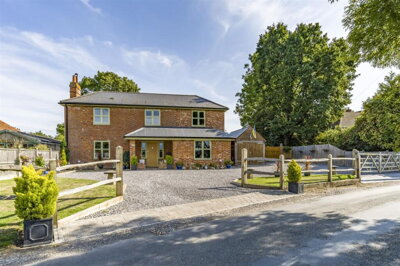
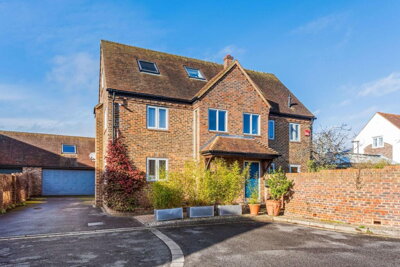
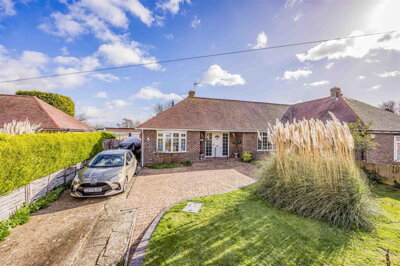
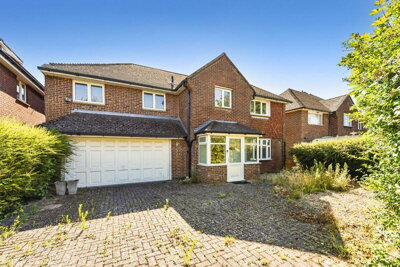
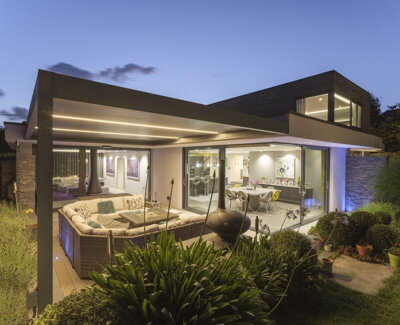
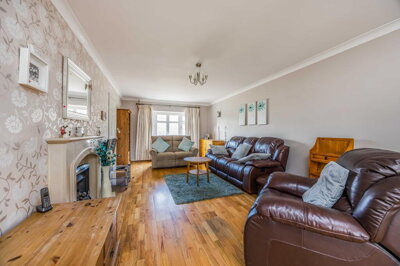
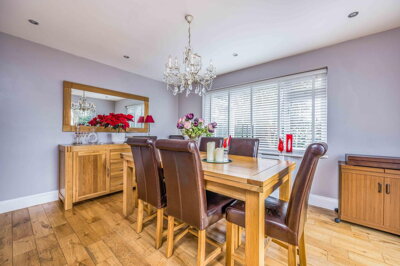
Browse 7 homes for sale in West Thorney from local estate agents.
The larger property sector typically features multiple bathrooms, substantial reception space, and private gardens or off-street parking. Four bedroom houses in West Thorney span detached, semi-detached, and occasionally terraced configurations, with styles ranging from period properties to modern executive homes.
£421,327
Average Property Price
-4%
12-Month Price Change
-9%
Below 2021 Peak
£624,075
Detached Average
£388,967
Semi-Detached Average
£367,887
Terraced Average
The West Thorney property market has demonstrated resilience despite broader national fluctuations, with semi-detached homes forming the backbone of recent transactions in the village. The average property price of £421,327 reflects a 4% decrease over the past twelve months, bringing prices approximately 9% below the 2021 peak of £460,476. This correction offers prospective buyers a more accessible entry point compared to the height of the market, particularly for those with larger deposits who may find negotiating power on their side in current conditions.
When examining property types available in West Thorney, detached homes command the highest prices at an average of £624,075, offering generous space and gardens that appeal to families requiring room to grow. Semi-detached properties average £388,967, representing the most common transaction type in the village and providing an excellent balance of living space and affordability. Terraced homes average £367,887, making them the most budget-friendly option for buyers seeking village character without the premium associated with detached accommodation. The village's housing stock includes traditional properties that reflect its West Sussex heritage, with the wider Westbourne area featuring listed buildings including charming Grade II listed cottages that demonstrate the architectural quality present in this part of Chichester District.
The village attracts a diverse range of buyers to the West Thorney property market, from first-time purchasers seeking an affordable route onto the property ladder to families looking for space and a supportive community environment. Commuters value the village's position with easy access to employment centres in Chichester and Portsmouth, while retirees are drawn to the peaceful village atmosphere and good local amenities. The combination of village character, reasonable property prices, and excellent transport connections makes West Thorney an increasingly popular choice for those looking to escape higher prices in nearby coastal towns while still enjoying all the benefits of Chichester District.

West Thorney embodies the essence of traditional English village life while maintaining close ties to the cultural and commercial hubs of West Sussex. The village developed as a farming community serving the surrounding agricultural land, and today it retains much of that intimate, community-focused character that makes village living so appealing to families and retirees alike. The village falls within Chichester District, one of the most desirable local authority areas in England, known for its high quality of life, excellent schools, and stunning natural environment including the nearby South Downs National Park and Chichester Harbour Areas of Outstanding Natural Beauty.
Residents of West Thorney benefit from the village's position between the historic city of Chichester to the east and the coastal town of Emsworth to the west, providing easy access to weekly markets, independent shops, restaurants, and cultural venues in both directions. The village itself offers essential amenities including a parish church and community facilities, while the surrounding countryside provides extensive opportunities for walking, cycling, and enjoying the natural beauty of the coastal plain. The proximity to Chichester Harbour makes West Thorney particularly attractive to watersports enthusiasts, with sailing, kayaking, and birdwatching popular activities among residents who appreciate the maritime heritage of this part of West Sussex.
Families considering West Thorney appreciate the village's strong sense of community, where local events and village traditions create lasting connections for children growing up in the area. The parish church serves as a focal point for community activities, while the village hall hosts regular events that bring residents together throughout the year. This community spirit, combined with the practical advantages of good schools and transport links, makes West Thorney an ideal location for families seeking a balanced lifestyle in a supportive village environment.

Families considering a move to West Thorney will find a range of educational options available within easy reach of the village, reflecting Chichester District's strong reputation for academic excellence. Primary education is available at nearby schools in the surrounding villages and towns, with many parents travelling short distances to access schools with excellent Ofsted ratings. The village falls within the catchment area for several well-regarded primary schools in the Chichester area, where class sizes tend to be smaller than in urban settings and pupils benefit from the supportive, community-oriented approach that village schools often provide.
Secondary education in the area is centred on the historic city of Chichester, home to several secondary schools including the respected Chichester High School and specialist academies offering a broad curriculum across arts, sciences, and technology. For families seeking grammar school provision, the nearby cities of Portsmouth and Southampton offer selective education options accessible via the excellent transport connections serving West Thorney. Sixth form provision is available at colleges in Chichester, where students can pursue A-levels and vocational qualifications in subjects ranging from sciences and humanities to creative arts and business studies.
The combination of good primary schools within easy reach, respected secondary schools in Chichester, and access to grammar school options in Portsmouth makes West Thorney particularly attractive to families with children of all ages. Parents moving to the village from urban areas often comment on the improvement in quality of life that comes from shorter school runs, smaller class sizes, and the community atmosphere that village schools provide.
West Thorney benefits from its strategic position between Chichester and the coast, offering residents multiple transport options for commuting and leisure travel. The village sits within easy reach of the A3(M) which connects Portsmouth to London, providing direct access to the capital in approximately 90 minutes by car. For rail travel, the mainline station at Chichester offers regular services to London Victoria with journey times of around 90 minutes, while coastal stations at Emsworth and Havant provide additional options for accessing the rail network heading towards Brighton, Portsmouth, and Southampton.
Local bus services connect West Thorney with surrounding villages and towns, enabling residents without cars to access shopping, healthcare, and employment opportunities in the wider area. The proximity to Chichester makes the city centre easily accessible for shopping and cultural visits, while the journey to Portsmouth takes approximately 30 minutes by car for those working in the naval city or using its extensive shopping and entertainment facilities. Cycling is popular in this part of West Sussex, with quiet country lanes and designated routes making bike commuting feasible for those working locally, particularly at the business parks and commercial centres that have developed along the A3(M) corridor.
The flat terrain of the coastal plain surrounding West Thorney makes cycling particularly practical, with many residents choosing to commute by bike to employment in nearby towns. The National Cycle Network provides routes connecting the village to Chichester and the coast, while quieter country lanes offer scenic alternatives for recreational cycling at weekends. This combination of transport options means that residents can enjoy the benefits of village living without being dependent on a car for everyday travel.
Begin by exploring West Thorney thoroughly, visiting at different times of day and speaking to residents about village life. Use Homemove to browse current listings and establish a realistic budget, remembering that average prices in the village are around £421,327 but vary significantly by property type. Factor in additional costs including stamp duty, solicitor fees, and moving expenses when determining your maximum offer. Consider which parts of the village suit your lifestyle needs, whether proximity to the school, village shop, or open countryside matters most to you.
Before arranging viewings in West Thorney, contact a mortgage broker to obtain an Agreement in Principle. This document demonstrates to sellers that you are a serious buyer with financing secured, giving you a competitive edge when making offers. Current mortgage rates vary, so comparing options through Homemove's mortgage comparison service helps ensure you secure the best deal available. Having your financing arranged before making offers strengthens your negotiating position in what can be a competitive village market.
Use Homemove to view properties matching your criteria in West Thorney and the surrounding area. When visiting, assess not only the property condition but also noise levels, neighbour relationships, and the general atmosphere of the neighbourhood. Take photographs and notes to help compare properties later, and do not hesitate to return for second viewings before making any decision. Pay particular attention to how the property sits within the village, including proximity to roads, agricultural land, or the parish church that might affect daily life.
Once your offer is accepted, arrange a RICS Level 2 Survey (Homebuyer Report) before proceeding with your purchase. This inspection identifies any structural issues, maintenance concerns, or potential problems that might affect the property's value or require remediation. Given that many properties in West Thorney may be older construction dating from the Victorian and Edwardian periods, a professional survey provides essential protection and negotiation leverage. The survey cost represents a small fraction of the purchase price but can reveal issues that save you thousands in unexpected repairs.
Choose a solicitor specialising in residential property to handle the legal aspects of your West Thorney purchase. Your solicitor will conduct searches with Chichester District Council, handle contract negotiations, and manage the transfer of funds on completion. Using Homemove's conveyancing service connects you with experienced property solicitors who understand the local market. The conveyancing process for village properties may include additional checks on planning history, listed building status, and any rights of way affecting the property.
After all searches return satisfactory results and financing is confirmed, your solicitor will arrange contract exchange with the seller's representative. A deposit, typically 10% of the purchase price, becomes payable at this stage. Completion usually follows within 2-4 weeks, at which point the remaining balance is transferred and you receive the keys to your new West Thorney home. Your solicitor will coordinate the final arrangements and ensure all documentation is properly registered with the Land Registry.
Purchasing a property in West Thorney requires careful attention to several factors specific to this part of West Sussex, where traditional construction methods and village locations influence property condition and value. Properties in the village and surrounding area may include older construction dating from the Victorian and Edwardian periods, with traditional brick and stone buildings occasionally featuring listed status that restricts permitted alterations. Before purchasing any property, verify its listing status with Chichester District Council and understand the implications for future renovations or extensions you may wish to undertake.
Many properties in West Thorney and the surrounding Westbourne area were built using traditional construction methods that differ significantly from modern building standards. Solid walls, lime mortar pointing, and original timber frames are common features that require specific maintenance approaches. Unlike modern cavity wall construction, solid wall properties need to breathe to prevent moisture accumulation, and inappropriate modern treatments can cause serious structural problems over time. Your RICS Level 2 Survey should identify construction type and flag any concerns about the condition of traditional building elements.
Flood risk should form part of your due diligence when considering properties in West Thorney, particularly those in low-lying areas near watercourses or the coastal plain. While specific flood risk data for West Thorney was not identified in available research, properties in the wider coastal plain of West Sussex may be subject to varying degrees of flood risk depending on their exact position relative to water features and drainage patterns. Your RICS Level 2 Survey should assess surface water risk and any visible signs of previous water ingress, while local knowledge from neighbours can provide valuable insights into historical flooding issues. Your solicitor will also conduct drainage and water authority searches that flag any flood plain designations affecting the property.
The age of properties in West Thorney means that electrical wiring, plumbing, and heating systems may require updating to meet modern standards. Victorian and Edwardian properties often have original wiring that has been partially updated over the decades, creating a mixture of old and new that needs careful assessment. A thorough survey should check the condition of all services, and you should budget for potential upgrades when calculating the true cost of purchasing an older village property. Buildings insurance for older properties may also require specialist providers familiar with traditional construction methods.
The West Thorney property market offers a variety of property types reflecting the village's development history and the preferences of different buyer groups. Semi-detached homes form the largest segment of the market, providing the family accommodation and garden space that attracts buyers seeking village living without the premium associated with detached properties. These properties typically offer three bedrooms, a separate dining room, and a generous rear garden that appeals to families with children or those who enjoy outdoor space.
Terraced properties in West Thorney offer an affordable entry point to the village market, with many dating from the Victorian or Edwardian periods and featuring the characterful details that period properties provide. Original fireplaces, high ceilings, and sash windows are common features that add charm to these homes, though they may require maintenance and updating as systems age. The compact nature of terraced properties makes them practical for first-time buyers, couples, or retirees seeking a manageable home without extensive garden responsibilities.
Detached properties in West Thorney command the highest prices due to their generous proportions and private gardens. These homes typically offer four or more bedrooms, multiple reception rooms, and ample off-road parking that appeals to families requiring space for multiple vehicles or those who work from home. The premium for detached accommodation reflects the limited supply of this property type in the village, where planning restrictions and the established nature of the settlement limit opportunities for new development.
The village's location on the coastal plain of West Sussex has influenced its development pattern, with properties generally siting on level ground that is convenient for walking and cycling but may require consideration regarding drainage and damp penetration. Properties near the village centre tend to be older, while more recent development has occurred at the village edges over the years. Understanding the age and type of property that suits your needs will help narrow your search within the West Thorney market.
The average house price in West Thorney over the past twelve months was £421,327 according to available market data. Property prices vary considerably by type, with detached homes averaging £624,075, semi-detached properties at £388,967, and terraced homes around £367,887. Prices have decreased approximately 4% over the last year and sit around 9% below the 2021 peak of £460,476, making this an opportune time for buyers seeking value in the West Sussex village market. The current market conditions favour buyers with larger deposits who may find vendors more willing to negotiate on price than was the case during the peak activity of recent years.
Properties in West Thorney fall within Chichester District Council's jurisdiction, with council tax bands ranging from A through to H depending on property value and size. Most village properties typically fall within bands B through E, with the exact band determined by the Valuation Office Agency based on the property's assessed value. Prospective buyers can verify the specific council tax band for any listed property through the Land Registry or by requesting this information during the conveyancing process. Council tax payments in Chichester District fund local services including waste collection, road maintenance, and community facilities that residents of West Thorney benefit from daily.
West Thorney offers access to several well-regarded primary schools in the surrounding villages and towns, with many receiving Good or Outstanding Ofsted ratings. Secondary education is provided by schools in Chichester, including Chichester High School and specialist academies serving the wider area. For sixth form education, students typically attend colleges in Chichester where they can pursue A-levels across a wide range of subjects. The area's grammar schools in Portsmouth provide selective education options for secondary-aged children who pass the entrance examinations.
West Thorney benefits from good connectivity to the surrounding area through bus services linking the village with nearby towns and railway stations. The mainline station at Chichester provides regular services to London Victoria with journey times of approximately 90 minutes, while stations at Havant and Emsworth offer additional options for accessing rail services along the south coast. The A3(M) is easily accessible for car travel, providing direct routes to Portsmouth and connecting to the wider motorway network for journeys to London and beyond. Local bus routes make it practical for residents without cars to access employment and amenities in Chichester, Emsworth, and Havant.
West Thorney presents several characteristics that make it attractive for property investment, including its position within desirable Chichester District, proximity to the South Downs National Park and coastal attractions, and more accessible average prices compared to nearby towns. The village benefits from good transport connections enabling commuter travel to larger employment centres, while the ongoing demand for village properties from families and retirees supports long-term rental prospects. However, as with any property investment, prospective buyers should conduct thorough research into rental yields, void periods, and local demand before committing to purchase. The village's relative affordability compared to nearby coastal towns may offer better growth potential as demand for village living continues to increase.
Stamp Duty Land Tax (SDLT) rates for standard purchases in England start at 0% on the first £250,000 of property value, rising to 5% on the portion between £250,001 and £925,000. For properties above £925,000, rates increase to 10% up to £1.5 million and 12% on any value exceeding that threshold. First-time buyers benefit from increased thresholds, paying 0% on the first £425,000 and 5% between £425,001 and £625,000, though this relief does not apply to properties valued above £625,000. Your solicitor will calculate and submit the correct SDLT liability following completion of your West Thorney purchase.
When viewing properties in West Thorney, pay particular attention to the property's construction age and type, as many village homes may date from the Victorian or Edwardian periods with traditional building methods. Check for signs of damp, particularly in older properties or those with solid walls, and assess the condition of roofing, windows, and plumbing systems. Verify the tenure status, as some properties may be leasehold with ground rent and service charge implications. Finally, consider the property's position within the village and proximity to any potential sources of noise such as roads or agricultural land.
West Thorney is governed by Chichester District Council for most local services, with the village falling under Westbourne Parish Council for local matters such as community facilities and village improvements. Chichester District Council handles planning applications, council tax collection, waste management, and local planning policy that affects development in the village. Any planning applications for West Thorney would be submitted to and determined by Chichester District Council, which has established planning policies for development within the area. The local parish council may also provide consultation on planning matters that affect the village.
West Thorney benefits from good broadband connectivity, with ultrafast fibre available in many parts of the village and superfast broadband covering the majority of the settlement. Virgin Media services are available in some areas, while Openreach provides standard and fibre connections throughout most of the village. Rural broadband improvements continue across West Sussex, with some properties at the village edges potentially requiring upgraded connections. Prospective buyers should verify the specific broadband speed available at any property they are considering, as this can significantly affect working from home arrangements.
The West Thorney property market attracts a diverse range of buyers, including first-time purchasers seeking an affordable entry point to the West Sussex property market, families looking for space and a supportive village community, commuters working in Chichester, Portsmouth, or Southampton who want to escape higher property prices in those areas, and retirees seeking a peaceful village environment. The village's combination of good schools, transport links, and attractive countryside setting appeals to buyers at various life stages. Many buyers are drawn from nearby towns and cities where property prices are significantly higher, finding that West Thorney offers better value without sacrificing accessibility to employment and amenities.
From 4.5% APR
Compare mortgage deals from leading lenders to find the right finance for your West Thorney home.
From £499
Expert property solicitors handling your legal work from offer to completion.
From £350
Professional survey identifying issues before you commit to your West Thorney purchase.
From £80
Energy performance certificate required for all property sales in England.
Understanding the full costs of purchasing property in West Thorney is essential for budgeting effectively and avoiding surprises during the transaction process. Beyond the property purchase price, buyers must account for Stamp Duty Land Tax, which for a typical West Thorney property priced around the village average of £421,327 would amount to £8,566 for a standard buyer purchasing with a mortgage. First-time buyers may benefit from reduced SDLT liabilities, potentially paying nothing on the first £425,000 of value, though this threshold means many village properties would still attract some stamp duty charge.
Legal costs for conveyancing typically range from £499 to £1,500 depending on the complexity of the transaction and whether the property is freehold or leasehold. Survey costs, including a RICS Level 2 Homebuyer Report, generally start from £350 for properties in the West Thorney price range, with more comprehensive surveys available for higher-value homes or those requiring specialist inspection. Additional costs include Land Registry fees for registering the title transfer, search fees from Chichester District Council and relevant drainage authorities, and removal expenses.
Mortgage arrangement fees, which can add £1,000 or more to borrowing costs, should also be factored into your overall budget when comparing mortgage products. Some lenders offer fee-free mortgages in exchange for higher interest rates, which may suit buyers planning to repay quickly. Your mortgage broker can help you compare the true cost of different mortgage products, including any arrangement fees, valuation fees, and incentives offered by different lenders. Building insurance should also be arranged before completion, with specialist providers available for older properties or those with non-standard construction that may require tailored coverage.
Properties for Sale In London

Properties for Sale In Plymouth

Properties for Sale In Liverpool

Properties for Sale In Glasgow

Properties for Sale In Sheffield

Properties for Sale In Edinburgh

Properties for Sale In Coventry

Properties for Sale In Bradford

Properties for Sale In Manchester

Properties for Sale In Birmingham

Properties for Sale In Bristol

Properties for Sale In Oxford

Properties for Sale In Leicester

Properties for Sale In Newcastle

Properties for Sale In Leeds

Properties for Sale In Southampton

Properties for Sale In Cardiff

Properties for Sale In Nottingham

Properties for Sale In Norwich

Properties for Sale In Brighton

Properties for Sale In Derby

Properties for Sale In Portsmouth

Properties for Sale In Northampton

Properties for Sale In Milton Keynes

Properties for Sale In Bournemouth

Properties for Sale In Bolton

Properties for Sale In Swansea

Properties for Sale In Swindon

Properties for Sale In Peterborough

Properties for Sale In Wolverhampton

Enter your details to see if this property is within your budget.
Loans, cards, car finance
Estimated property budget
Borrowing + deposit
You could borrow between
Typical borrowing
Monthly repayment
Est. at 4.5%
Loan-to-value
This is an estimate only. Your actual budget may vary depending on interest rates, credit history, and personal circumstances. For an accurate affordability assessment, speak to one of our free mortgage advisors.
This calculator provides estimates for illustrative purposes only and does not constitute financial advice. Your home may be repossessed if you do not keep up repayments on your mortgage. Estimates based on 4.5% interest rate, repayment mortgage. Actual rates depend on your circumstances.
Homemove is a trading name of HM Haus Group Ltd (Company No. 13873779, registered in England & Wales). Homemove Mortgages Ltd (Company No. 15947693) is an Appointed Representative of TMG Direct Limited, trading as TMG Mortgage Network, which is authorised and regulated by the Financial Conduct Authority (FRN 786245). Homemove Mortgages Ltd is entered on the FCA Register as an Appointed Representative (FRN 1022429). You can check registrations at NewRegister or by calling 0800 111 6768.

We use cookies to show you personalised content and improve your experience of our website. Find out more in our Privacy policy and Cookie policy.