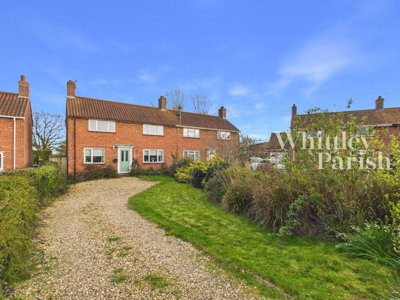
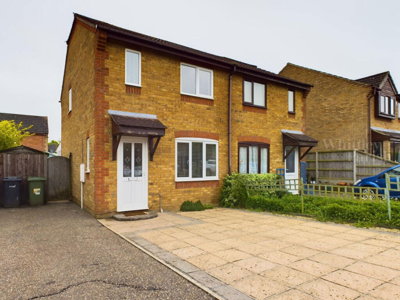
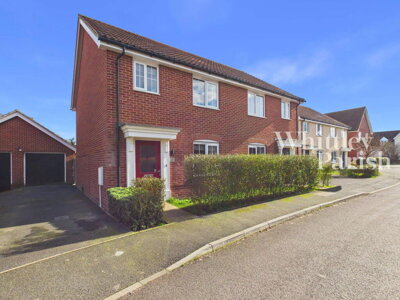
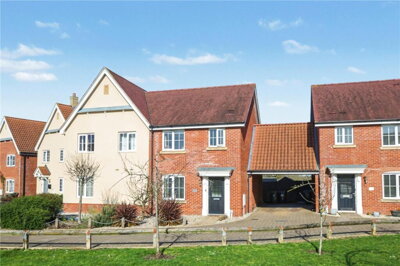
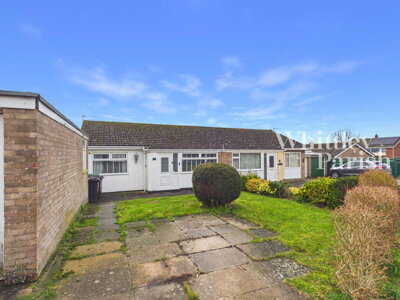
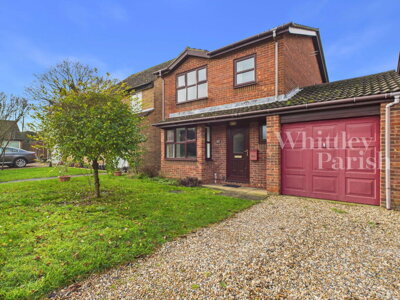
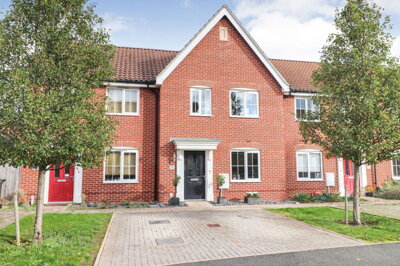
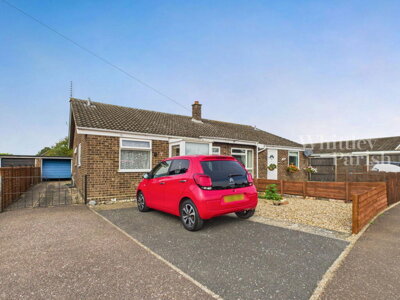
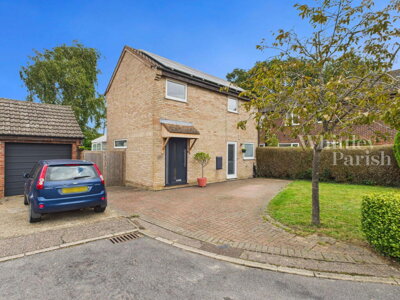
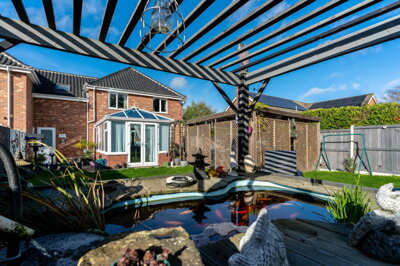
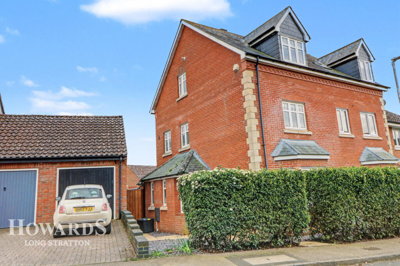
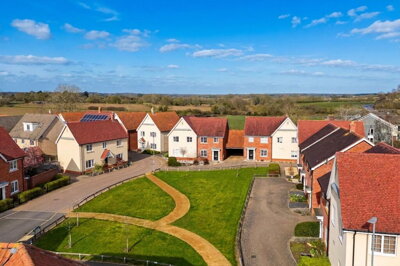
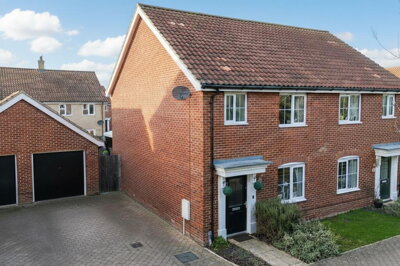
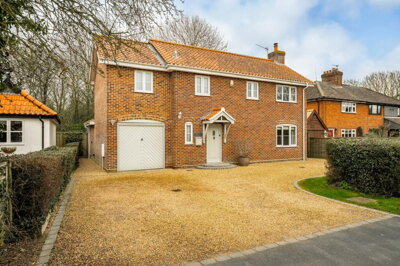
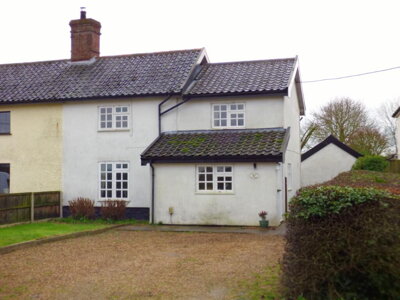
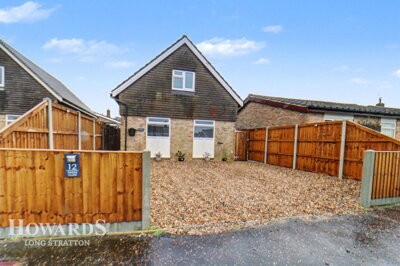
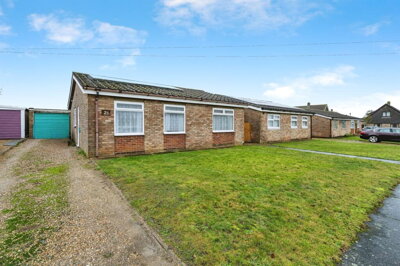
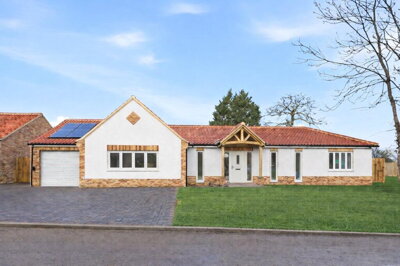
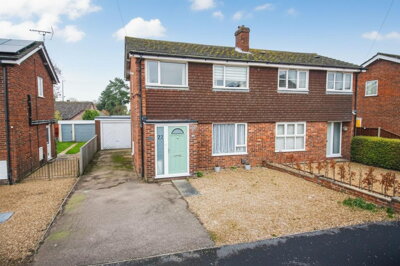
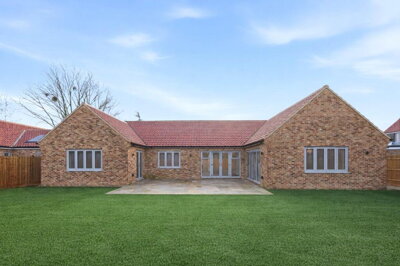
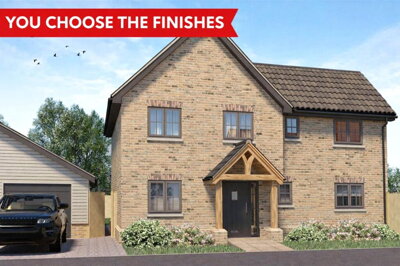
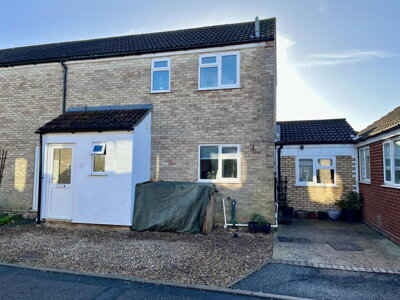
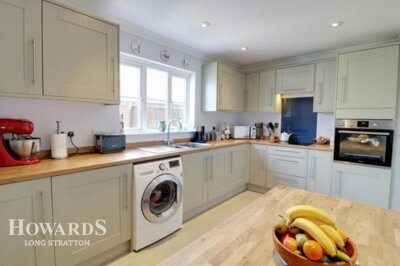
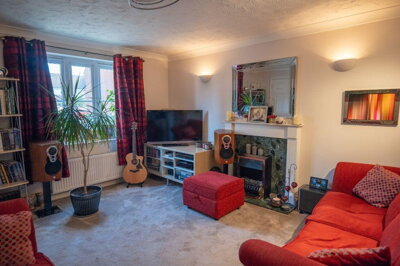
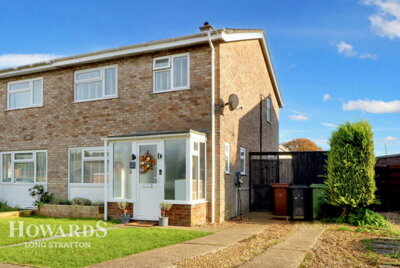
Browse 39 homes for sale in Wacton from local estate agents.
Three bedroom properties represent a significant portion of the Wacton housing market, offering space for families with multiple reception rooms and gardens in many cases. Browse detached, semi-detached, and terraced options ranging from period character homes to contemporary developments.
The Wacton property market offers a distinctive range of homes reflecting the village's rich architectural heritage. Detached properties dominate the local market, accounting for approximately 52% of transactions in the surrounding NR15 2UH postcode area, with these family homes averaging around £407,500. The village features an impressive variety of period properties, including 16th-century timber-framed houses, thatched cottages, and historic farmhouses that give Wacton its unmistakable character. Terraced properties in the area have sold for an average of £250,000, offering more accessible entry points into this desirable village location.
Recent market data shows that house prices in Wacton have fallen by 16.6% over the past twelve months, with transactions recorded at 34% below the previous year and 39% below the 2023 peak of £582,500. This price correction brings values more closely aligned with the broader South Norfolk district average of £313,000 as of December 2025. The South Norfolk market as a whole has shown resilience with a 2.8% increase from December 2024 to December 2025, suggesting that this rural corner of Norfolk continues to attract buyers seeking village life.
For the broader South Norfolk district, property type averages in December 2025 showed detached properties at £429,000, semi-detached at £278,000, terraced at £232,000, and flats at £135,000. These figures provide useful context when evaluating Wacton-specific prices, as the village's premium reflects its heritage status, Conservation Area designation, and the quality of its period housing stock. Whether you are looking for a spacious family home with land or a charming period cottage, Wacton presents opportunities across various price points within the current market conditions.

Wacton embodies the essence of rural Norfolk village life, offering residents a tranquil setting surrounded by gently undulating farmland and countryside. The village forms part of the ancient landscape of South Norfolk, where agricultural traditions have shaped the community for centuries. The estimated 93% owner-occupancy rate reflects the desirability of living in a community where residents stay for the long term, drawn by the quality of life, characterful housing stock, and proximity to larger employment centres. Despite its small size, Wacton punches above its weight in terms of heritage, with 21 listed buildings including the remarkable Grade II* listed Wacton Hall.
The village is home to several exceptional historic properties that showcase traditional Norfolk building techniques. Wacton Hall, a 16th-century manor house featuring rendered timber frame construction and distinctive black glazed pantile roofing, stands as one of the village's architectural centrepieces. The village also contains the Grade I listed Church of All Saints, a rare round-tower church dating from the 14th century, which serves as a focal point for the community and Wacton's long history. Properties such as Stuart House, Thatcher's Pride, White Cottage, and Grange Farmhouse showcase the village's vernacular architecture with their timber-framed construction and thatched roofs, while red brick Victorian additions like Crossways demonstrate how the village evolved through different periods.
The local community spirit in Wacton is evident through its traditional pub, parish events, and the shared pride residents take in maintaining the village's Conservation Area. The predominant use of traditional building materials, including clay pantiles in red and black glazed finishes, thatch, timber framing with plastered walls, and Norfolk flint, creates a cohesive visual identity that has been carefully preserved. The village lies approximately one mile from Long Stratton, which provides everyday amenities including shops, a pharmacy, and regular bus services connecting residents to Norwich and surrounding villages. This strategic position offers the best of both worlds: the peace and character of rural village life with practical access to modern services and employment centres.
Families considering a move to Wacton will find educational provision within easy reach of the village, with primary schooling available in nearby communities. The surrounding South Norfolk area offers a mix of primary schools serving village communities, many of which are rated Good or Outstanding by Ofsted. For families seeking faith-based education, the wider Norfolk region provides several options, while the village's small population means that primary age children typically attend schools in neighbouring villages such as Long Stratton, approximately one mile away. Long Stratton offers convenience for daily school runs while maintaining the benefits of village living.
Secondary education in the area centres on schools in market towns like Long Stratton and the broader South Norfolk district, with bus services connecting village residents to these facilities. For families prioritising academic excellence, the grammar school system in Norfolk provides selective education options accessible from Wacton, with schools in Norwich and surrounding towns consistently performing well in national rankings. Our inspectors regularly survey properties in the Long Stratton area and can advise on the local school catchments during your property search.
Sixth form and further education provision is available in Norwich, approximately 13 miles away, offering comprehensive A-level and vocational courses for older students. The University of East Anglia and Norwich University of the Arts provide higher education opportunities in the city. Parents are advised to check current catchment areas and school admission policies, as these can change and may influence property choices within and around Wacton. Transport arrangements should also be considered, as school runs to secondary schools or grammar schools may involve longer journeys than primary provision.
Wacton benefits from its strategic position within South Norfolk, offering reasonable connectivity to larger towns while maintaining its rural character. The village lies approximately one mile from Long Stratton, which provides everyday amenities including shops, a pharmacy, and regular bus services connecting residents to Norwich and surrounding villages. Norwich, located approximately 13 miles southwest of Wacton, offers comprehensive rail services with direct trains to London Liverpool Street, Cambridge, and the East Anglian coast, making it practical for commuters who need to travel further afield for work.
For those who drive, the A140 provides north-south connectivity through the area, linking Wacton to Norwich and the Norfolk coast, while the broader road network gives access to the A11 and A47 for travel across Norfolk and into Cambridgeshire. Bus services operated by Lynton's and other local providers offer connections to Norwich, with journey times of around 30-40 minutes depending on traffic conditions. The village's position between Long Stratton and the A140 makes it accessible for commuters while retaining its peaceful village atmosphere.
Cycling is popular in this part of Norfolk, with country lanes and designated routes making it possible to commute to nearby villages, though most residents who work in Norwich or other major centres will find a car essential for daily travel. Parking in the village itself is generally straightforward given the low density of traffic, making it comfortable for families and those seeking a quieter pace of life. The nearest train station is in Norwich, approximately 13 miles away, and residents typically drive or take the bus to reach rail services for longer journeys.
Start by exploring current listings in Wacton on Homemove to understand available properties, price ranges, and market conditions. With average prices around £355,000 and recent price adjustments of 16.6% over the past twelve months, the current market may offer opportunities for buyers who have taken time to monitor listings and understand local trends. Consider the variety of property types available, from period cottages to family homes, and identify what matches your requirements.
Once you have identified properties of interest, arrange viewings through the estate agents listed on Homemove. Before attending viewings, it is advisable to obtain a mortgage agreement in principle from a lender, which strengthens your position when making an offer and demonstrates to sellers that you are a serious buyer with financing in place. Given the prevalence of historic and period properties in Wacton, having your finances confirmed early is particularly important.
When you find your ideal home in Wacton, submit a formal offer through the selling estate agent. Given the village's character and the prevalence of period properties, be prepared for negotiations that may include conditions related to survey findings or the specific characteristics of older homes. The average detached property price of £407,500 provides a useful benchmark for larger family homes in the area, while terraced properties averaging £250,000 offer more accessible entry points.
Before completing your purchase, arrange a RICS Level 2 Survey to assess the condition of the property. Given Wacton's high proportion of historic, timber-framed, and thatched properties, this survey will identify any defects specific to these construction types, including potential issues with damp, timber defects, roof condition, and outdated electrics or plumbing that are common in older properties. Our surveyors have extensive experience inspecting period properties in South Norfolk and understand the specific construction methods used locally.
Choose a conveyancing solicitor to handle the legal aspects of your purchase, including searches, contracts, and registration with the Land Registry. Your solicitor will manage the transfer of ownership and ensure all necessary checks are completed, including flood risk assessments given the village's history of surface water and groundwater flooding. Properties in Conservation Areas or listed buildings may require additional searches related to planning conditions and heritage designations.
Once all searches are satisfactory and your mortgage is approved, you will exchange contracts and agree on a completion date. On completion day, your solicitor will transfer the remaining funds to the seller's solicitor, and you will receive the keys to your new Wacton home. Register your ownership with the Land Registry and update your address with relevant parties. At this stage, you should also notify South Norfolk Council of your change of address and arrange buildings insurance for your new property.
Properties in Wacton require careful consideration given the village's wealth of historic and listed buildings. If you are purchasing a property within the Conservation Area or a listed building, be aware that there are additional regulations governing alterations, extensions, and even external paint colours. Planning permission from South Norfolk Council may be required for works that would affect the character of the building or the Conservation Area. These requirements exist to preserve the village's heritage but mean that renovation projects may be more complex and costly than in non-designated areas.
The predominant building materials in Wacton present specific considerations for buyers. Thatch roofs, while undeniably attractive, require specialist maintenance and may need re-ridging every few decades, with costs that can be significant compared to conventional tiled roofs. Properties with black or red glazed clay pantiles represent a traditional Norfolk style that also requires periodic maintenance to prevent water ingress. Timber-framed properties with plastered walls, such as Pigeon's Farmhouse and Wilderness Cottage, can be susceptible to damp if not properly maintained, and a thorough survey should check for any signs of structural movement or timber decay. Wacton Hall, a Grade II* listed 16th-century property, underwent significant renovation work including damp proof course installation, demonstrating that even prestigious historic properties require ongoing maintenance.
Given the local geology with clay soils in parts of South Norfolk, potential buyers should also consider the risk of subsidence or heave, particularly for older properties with shallow foundations. Our surveyors have identified ground movement issues in similar properties across the region, and a RICS Level 2 Survey will assess the condition of foundations and any signs of structural concern. Flood risk warrants investigation before purchasing in Wacton, as the village has experienced increased sewer flooding incidents due to surface water and groundwater during wet winters, including the period from October 2023 to March 2024.
While the village is inland and not at risk from coastal flooding, potential buyers should review the Environment Agency's Flood Map for Planning and consider the implications for insurance and property resilience. The South Norfolk District Surface Water Management Plan identifies areas with the highest risk from surface water flooding, and understanding this context can inform your property choice within the village. Properties with soakaways or septic systems may require specific maintenance, and understanding the local Surface Water Management Plan can provide useful context about historical flooding in specific areas. Our team can recommend local specialists for drainage surveys if concerns are identified during the inspection.

The average house price in Wacton over the past year was £355,000, according to recent property sales data. Detached properties have averaged around £407,500, while terraced properties have sold for approximately £250,000. The market has experienced a notable correction, with prices falling 16.6% over the last twelve months and sitting 39% below the 2023 peak of £582,500. This price adjustment brings the local market closer to alignment with the broader South Norfolk district average of £313,000, potentially creating opportunities for buyers who have been monitoring the market.
Properties in Wacton fall under South Norfolk Council for council tax purposes. The specific band depends on the property valuation, and bands range from A through to H, with smaller properties and those in rural villages often falling in the lower to middle bands. Prospective buyers can check the current council tax band for any specific property through the Valuation Office Agency website or by requesting this information during the conveyancing process. South Norfolk Council sets the annual council tax rates, and discounts may be available for single occupancy or certain categories of residents. You can also contact South Norfolk Council directly for current bandings and any applicable local charges.
Wacton itself is a small village, so families typically access primary schooling in neighbouring villages such as Long Stratton, approximately one mile away, where schools serve the surrounding rural communities. Secondary education is available in market towns within reasonable distance, with options including schools in Long Stratton and the broader South Norfolk area. For grammar school provision, Norfolk operates a selective system with schools accessible from Wacton, including options in Norwich and surrounding towns that consistently perform well in national rankings. The closest further education colleges are located in Norwich, approximately 13 miles away, offering A-levels and vocational courses. Parents should verify current admission arrangements and consider transport arrangements when choosing a property in this rural village.
Wacton is served by local bus services that connect to Long Stratton and Norwich, with journey times to Norwich city centre typically taking 30-40 minutes depending on traffic and specific routes. Long Stratton provides the nearest access to everyday amenities and regular bus connections, including shops and a pharmacy within approximately one mile of Wacton. For rail travel, Norwich station offers direct services to London Liverpool Street, Cambridge, and East Anglia coastal towns, making it practical for commuters who need to travel further afield. The village is not on a direct rail line, so commuting by train requires travel to Norwich first. For those with mobility needs or without access to a car, the limited public transport options mean that planning ahead is advisable for appointments and shopping trips beyond local facilities.
Wacton offers several factors that may appeal to property investors, including its rural character, heritage properties, and proximity to Norwich and larger employment centres. The village's high owner-occupancy rate of approximately 93% reflects its desirability as a place to live rather than purely as an investment, and the presence of period properties may appeal to buyers seeking character homes. However, the recent 16.6% price correction and the village's small population of 343 suggest that rental demand may be limited compared to urban areas. Any investment should consider the potential costs of maintaining historic or listed properties, including thatch roofing, timber-framed structures, and compliance with Conservation Area requirements. Research local rental demand and consult with local estate agents before committing to a purchase.
Stamp Duty Land Tax (SDLT) rates from April 2025 are 0% on the first £250,000 of property value, 5% on the portion from £250,001 to £925,000, 10% on the portion from £925,001 to £1,500,000, and 12% on any amount above £1,500,000. First-time buyers benefit from increased thresholds, paying 0% on the first £425,000 and 5% between £425,001 and £625,000, though no relief applies above £625,000. For the average Wacton property priced at £355,000, a standard buyer would pay no stamp duty on the first £250,000 and 5% on the remaining £105,000, totalling £5,250. First-time buyers would pay £0 on the same property under current relief thresholds. Always verify your SDLT liability with a solicitor or use HMRC's online calculator, as thresholds and rules may change.
Wacton's abundance of historic properties means buyers should pay particular attention to construction type and condition. Thatch roofs require specialist maintenance and may need complete re-thatching every 30-40 years at considerable cost, while timber-framed properties with plastered walls can be susceptible to damp if not properly maintained. Our inspectors frequently identify issues with outdated electrics and plumbing in period properties, as many older homes in South Norfolk have not been fully updated. Black glazed pantile roofs, a distinctive feature of properties like Wacton Hall, also require periodic maintenance to prevent water ingress. Always commission a thorough survey before purchasing any period property in Wacton.
There are no verified new-build developments located directly within the Wacton parish area, as the village consists primarily of historic properties within its Conservation Area. However, neighbouring villages in South Norfolk offer new build options, including developments in Brooke, Tivetshall St. Margaret, and Tibenham. For buyers specifically seeking a new property, exploring these nearby villages may provide opportunities while still benefiting from proximity to Wacton and the broader South Norfolk area. Our platform includes listings from across the region, allowing you to compare new build and period properties across different locations.
From 4.5%
Finding the right mortgage for your Wacton purchase
From £499
Legal services for your property purchase
From £350
Professional property survey for Wacton homes
From £80
Energy performance certificate for your property
Understanding the full cost of purchasing property in Wacton extends beyond the sale price to include Stamp Duty Land Tax, solicitor fees, survey costs, and other associated expenses. For a typical Wacton property at the current average price of £355,000, a standard buyer would pay SDLT of £5,250, calculated at 5% on the amount above £250,000. First-time buyers purchasing properties up to £425,000 would pay no SDLT under current thresholds, making Wacton an accessible option for those taking their first step onto the property ladder. It is worth noting that relief restrictions apply above £625,000, so buyers considering higher-value period properties or larger family homes should budget accordingly.
Solicitors in Wacton or the surrounding South Norfolk area typically charge between £499 and £1,500 for conveyancing on a residential purchase, depending on complexity and whether the property is freehold or leasehold. A RICS Level 2 Survey for a property priced around £355,000 would likely cost between £380 and £500, though older or larger properties may attract higher fees. Given Wacton's prevalence of historic properties, investing in a thorough survey is particularly valuable to identify potential issues with thatch roofing, timber-framed construction, or damp that are common in period homes.
Additional costs to budget for include land registry fees, mortgage arrangement fees, and removal costs, bringing the total purchase costs to approximately 3-5% of the property price. For a £355,000 property, this translates to approximately £10,650-£17,750 in additional costs beyond the purchase price. Our team can provide guidance on typical costs for properties in the Wacton area and recommend local surveyors and conveyancers who understand the specific considerations of historic village properties. Always obtain quotes from multiple providers to ensure competitive rates for your Wacton purchase.
Properties for Sale In London

Properties for Sale In Plymouth

Properties for Sale In Liverpool

Properties for Sale In Glasgow

Properties for Sale In Sheffield

Properties for Sale In Edinburgh

Properties for Sale In Coventry

Properties for Sale In Bradford

Properties for Sale In Manchester

Properties for Sale In Birmingham

Properties for Sale In Bristol

Properties for Sale In Oxford

Properties for Sale In Leicester

Properties for Sale In Newcastle

Properties for Sale In Leeds

Properties for Sale In Southampton

Properties for Sale In Cardiff

Properties for Sale In Nottingham

Properties for Sale In Norwich

Properties for Sale In Brighton

Properties for Sale In Derby

Properties for Sale In Portsmouth

Properties for Sale In Northampton

Properties for Sale In Milton Keynes

Properties for Sale In Bournemouth

Properties for Sale In Bolton

Properties for Sale In Swansea

Properties for Sale In Swindon

Properties for Sale In Peterborough

Properties for Sale In Wolverhampton

Enter your details to see if this property is within your budget.
Loans, cards, car finance
Estimated property budget
Borrowing + deposit
You could borrow between
Typical borrowing
Monthly repayment
Est. at 4.5%
Loan-to-value
This is an estimate only. Your actual budget may vary depending on interest rates, credit history, and personal circumstances. For an accurate affordability assessment, speak to one of our free mortgage advisors.
This calculator provides estimates for illustrative purposes only and does not constitute financial advice. Your home may be repossessed if you do not keep up repayments on your mortgage. Estimates based on 4.5% interest rate, repayment mortgage. Actual rates depend on your circumstances.
Homemove is a trading name of HM Haus Group Ltd (Company No. 13873779, registered in England & Wales). Homemove Mortgages Ltd (Company No. 15947693) is an Appointed Representative of TMG Direct Limited, trading as TMG Mortgage Network, which is authorised and regulated by the Financial Conduct Authority (FRN 786245). Homemove Mortgages Ltd is entered on the FCA Register as an Appointed Representative (FRN 1022429). You can check registrations at NewRegister or by calling 0800 111 6768.

We use cookies to show you personalised content and improve your experience of our website. Find out more in our Privacy policy and Cookie policy.