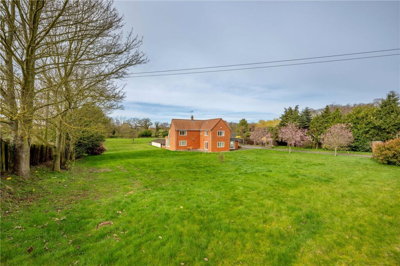
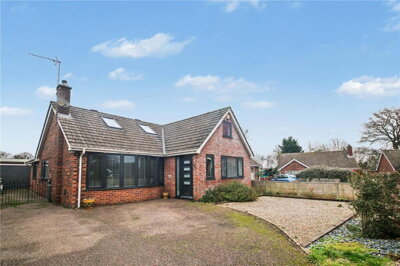
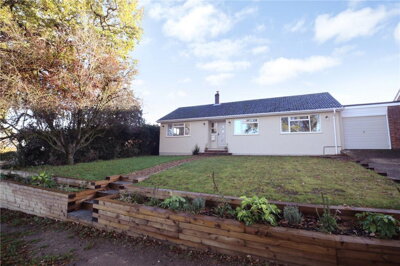
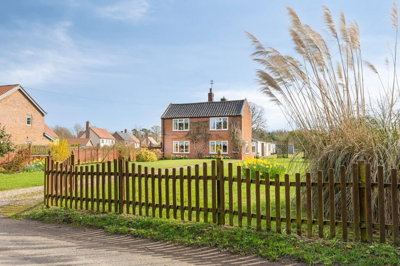
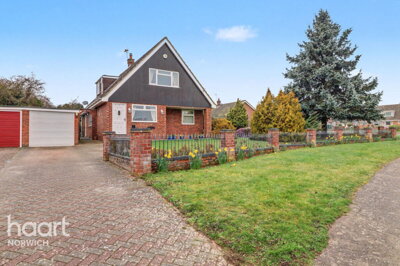
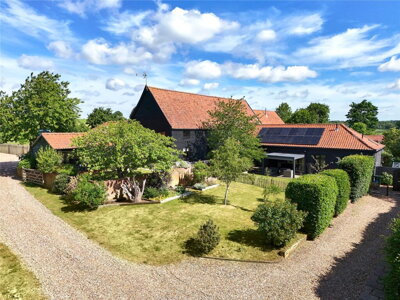
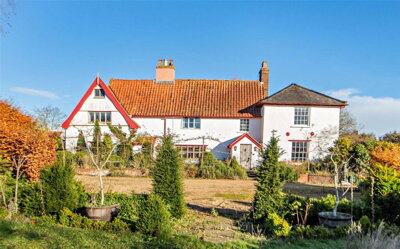
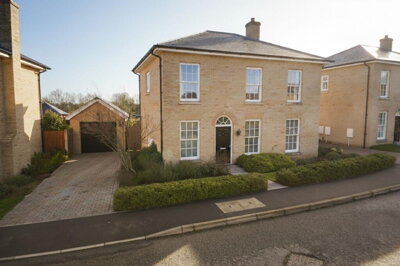
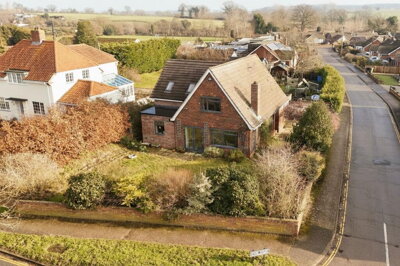
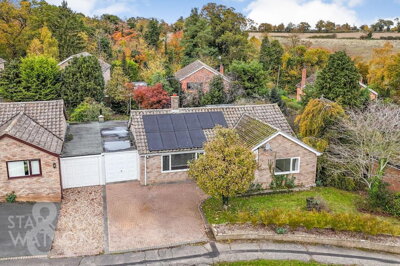
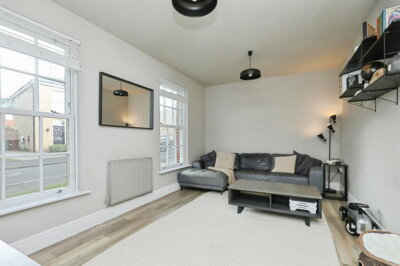
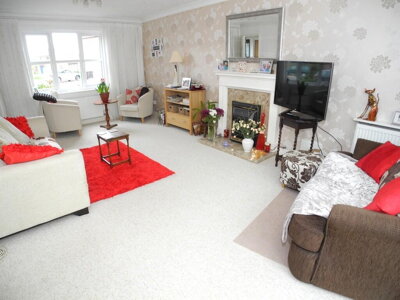
Browse 13 homes for sale in Thurton, South Norfolk from local estate agents.
The larger property sector typically features multiple bathrooms, substantial reception space, and private gardens or off-street parking. Four bedroom houses in Thurton span detached, semi-detached, and occasionally terraced configurations, with styles ranging from period properties to modern executive homes.
£450k
1
0
363
Source: home.co.uk
Showing 1 results for 4 Bedroom Houses for sale in Thurton, South Norfolk. The median asking price is £450,000.
Source: home.co.uk
Detached
1 listings
Avg £450,000
Source: home.co.uk
Source: home.co.uk
The Thurton property market has demonstrated steady and consistent growth over the past twelve months, with overall prices increasing by 2.7 percent. Detached properties, which comprise approximately 60-65 percent of the village's housing stock, have seen the strongest growth at 3.1 percent, with the average detached home now valued at approximately £430,000. Semi-detached properties have followed a similar trajectory with 2.5 percent growth, reaching an average of £310,000, while terraced homes have increased by 2.0 percent to around £280,000. This stable appreciation reflects sustained demand from buyers seeking the village's unique combination of space, character, and accessibility.
Housing in Thurton spans several distinct periods of development, offering buyers a diverse range of property types to suit different tastes and budgets. Approximately 15-20 percent of properties date from the pre-1919 era, comprising historic farmhouses and traditional Norfolk cottages with characteristic features such as original fireplaces, exposed beams, and thick walls constructed from traditional red brick or flint. A further 10-15 percent of homes were built between 1919 and 1945, while the post-war period from 1945 to 1980 accounts for 30-35 percent of the housing stock, representing properties built during the village's expansion years using cavity wall construction techniques common to that era. The remaining 30-35 percent comprises more modern homes constructed since 1980, including contemporary detached houses and recent infill developments that have sensitively integrated with the existing village fabric.
The majority of properties in Thurton are constructed from traditional red brick, often with pitched roofs covered in concrete tiles or slate depending on the property age and style. Older properties may feature flint or rendered finishes, adding to the architectural variety that makes the village so visually appealing. Cavity wall construction became standard for properties built after the 1930s, while solid wall construction is typical of the older period properties that date from before the First World War. This variation in construction methods means that prospective buyers should understand the implications for insulation, damp resistance, and structural maintenance when considering properties from different eras.

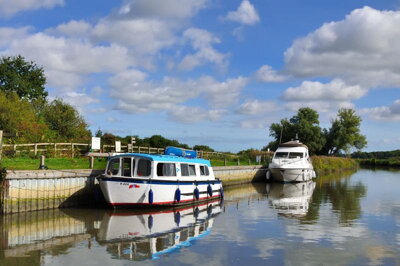
Life in Thurton offers residents a genuine sense of community within a picturesque Norfolk village setting. The village sits within easy reach of the River Chet to the south-east, providing attractive riverside walks and opportunities for angling and wildlife observation along the waterway that winds through the Norfolk countryside. The surrounding landscape offers an extensive network of public footpaths, bridal paths, and quiet lanes perfect for cycling and horse riding, allowing residents to explore the gently undulating terrain with its characteristic hedgerows, farmland, and scattered woodland that define this part of South Norfolk. The village itself maintains essential amenities including a popular local pub serving food and drinks, village hall activities, and community events that bring residents together throughout the year.
The local economy centres on agriculture, small local businesses, and services, with many residents choosing to commute the nine miles to Norwich for work in sectors including finance, healthcare, technology, and retail. Norwich city provides comprehensive cultural, recreational, and employment opportunities that complement the village lifestyle, with residents enjoying easy access to major supermarkets, shopping centres, hospitals, and entertainment venues when desired. The combination of competitive property prices compared to Norwich itself, excellent primary school provision, and strong community networks makes Thurton an increasingly popular choice for families looking to relocate from the city while maintaining their professional connections and lifestyle expectations.
Thurton has no designated conservation area, but several Grade II listed buildings exist within the village, including Thurton Hall and St Peter's Church, which contribute to the historic character of the settlement. These heritage assets require specialist consideration during the purchase process, as properties within their curtilage or directly impacted by listing designations may face restrictions on alterations, extensions, or demolition works that require Listed Building Consent from South Norfolk Council. The village's lack of a conservation area does mean that some permitted development rights remain intact for appropriate extensions and alterations, though buyers should always verify with the local planning authority before committing to any significant works.

Education provision in Thurton serves families well, with Thurton Primary School providing a strong foundation for children's learning from Reception through to Year 6. The school has built a solid reputation within the local community, offering a nurturing environment with class sizes that allow individual attention and personalized learning support. The school benefits from attractive grounds and facilities that support both academic study and physical education, with regular use of the surrounding countryside for outdoor learning activities that bring the curriculum to life for young pupils. Parents considering properties in Thurton should verify current catchment arrangements with Norfolk County Council, as these can change annually based on demand and capacity.
Secondary education for Thurton residents typically involves travel to nearby towns, with several well-regarded schools within reasonable commuting distance. Students frequently attend schools in Loddon, which offers comprehensive secondary education, or travel to Norwich where they can access a wider selection of secondary schools and sixth form colleges. Several schools in Norwich and the surrounding area have achieved Good or Outstanding Ofsted ratings, providing parents with confidence in the quality of education available within reasonable travelling distance. Grammar school provision exists in Norwich and surrounding areas for academically selective students, with schools such as Norwich High School for Girls and Langley School offering both day and boarding options for families seeking independent education.
School transport arrangements are an important consideration for families purchasing in Thurton, as many secondary school pupils will require transport to schools in Norwich or Loddon. Norfolk County Council manages school admissions and catchment area arrangements, and prospective buyers with school-age children should consult the current admission policies to understand which schools serve their specific address and any applicable distance criteria for oversubscribed schools. Families should also factor in the costs and logistics of school transport when budgeting for a move to the village, as daily travel requirements can significantly impact household routines and expenses.
Thurton benefits from excellent road connections that make commuting to Norwich straightforward and convenient. The village lies in close proximity to the A146, a major route linking Norwich to Lowestoft that passes through nearby towns including Loddon and Beccles. This road provides reliable access to Norwich city centre, typically taking around 20-30 minutes by car depending on traffic conditions, making it practical for daily commuters who work in the city. The A47 bypass to the north offers additional connectivity to the Norfolk Broads area and onward routes to Peterborough and the Midlands, while the broader trunk road network enables day trips and business travel throughout East Anglia and beyond.
Public transport options from Thurton include bus services connecting the village to Norwich and surrounding market towns, though frequencies may be limited on certain routes, making car ownership advisable for residents without flexible working arrangements. The nearest railway station is Norwich, from where National Express and Greater Anglia services operate direct routes to London Liverpool Street in approximately 90 minutes, making day commuting to the capital feasible for those working in finance, government, or professional services. Stansted Airport can be reached in around 90 minutes by car, providing international travel connections for business and leisure travellers who need to access global destinations regularly.
Cycling is a popular alternative for commuters able to work from home for part of the week, with the relatively flat Norfolk terrain and quiet country lanes offering pleasant cycling conditions. The network of bridleways and byways surrounding Thurton provides additional options for recreational cycling and horse riding, allowing residents to explore the countryside without relying on major roads. Many residents find that the combination of flexible working arrangements and the village's road connections makes Thurton an practical base for professionals who need to access Norwich or beyond while enjoying the benefits of rural village living.
Contact a mortgage broker to obtain an agreement in principle before viewing properties. This demonstrates your financial credibility to estate agents and sellers, strengthens your negotiating position, and helps you understand your realistic budget given the average property price of £385,000 in Thurton. Lenders offering mortgages in the area include high street banks and specialist rural mortgage providers who understand the local property market dynamics.
Spend time exploring Thurton at different times of day and week to understand traffic patterns, noise levels, and community atmosphere. Visit local amenities including the village pub and village hall, speak with residents about their experiences, and research local planning policies with South Norfolk Council to ensure the area meets your long-term needs and expectations. Pay particular attention to flood risk areas, especially if considering properties near the River Chet or in low-lying parts of the village.
Contact local estate agents to arrange viewings of properties matching your criteria. Our platform connects you with agents active in the Thurton market who can arrange access and provide detailed information about each property, including vendor circumstances, recent improvements, and any issues affecting the sale. Given the village has only 20-25 property sales annually, properties can move quickly when priced correctly, so readiness to proceed is important.
Given that 60-70 percent of properties in Thurton are over 50 years old, a thorough RICS Level 2 Survey is essential for most purchases. Our inspectors frequently identify damp issues, roof condition problems, timber defects, and signs of subsidence related to the local clay geology during surveys of local properties. Survey costs typically range from £450-700 for a three-bedroom detached property, and we always recommend choosing a surveyor with specific experience in Norfolk property construction.
Choose a conveyancing solicitor to handle the legal aspects of your purchase. Your solicitor will conduct local authority searches with South Norfolk Council, investigate title deeds, review property information forms, and manage the exchange of contracts process to ensure your purchase proceeds smoothly. For properties near the River Chet or in identified flood risk areas, additional drainage and environmental searches may be advisable.
Once surveys and searches are satisfactory, your solicitor will negotiate any required repairs or price reductions before proceeding to exchange of contracts and completion. On completion day, you will receive the keys to your new home in Thurton and can begin settling into your new village community. We recommend arranging buildings insurance from the point of exchange of contracts to protect your investment.
Prospective buyers in Thurton should pay particular attention to the signs of damp that commonly affect older properties throughout the village. Properties constructed before the 1980s frequently lack modern damp-proof courses, and rising damp, penetrating damp, or condensation issues can develop if adequate ventilation is not maintained. During viewings, examine walls at ground floor level for discolouration, peeling wallpaper, or skirting boards showing signs of moisture damage. Ask vendors about any previous damp treatment works and ensure these have been properly addressed by qualified contractors using current standards and guarantees.
The local geology presents important considerations for property condition and structural integrity. Thurton sits on superficial deposits of glacial till (boulder clay) over chalk bedrock, with the clay content indicating moderate to high shrink-swell potential that can affect building foundations, particularly during periods of extreme weather. Properties with shallow foundations or those situated near large trees may be susceptible to subsidence or heave movement, and our inspectors regularly assess walls for diagonal cracks, sticking doors or windows, and uneven floors that might indicate foundation issues. A thorough RICS Level 2 Survey will assess these risks and recommend further investigation or underpinning works if necessary.
Flood risk awareness is important when purchasing in Thurton, where areas of medium flood risk exist alongside low-risk zones. Surface water flooding can occur in low-lying areas during heavy rainfall, while properties near the River Chet and its tributaries face potential fluvial flood risk during periods of sustained wet weather. Prospective buyers should ask vendors about any previous flooding incidents, check the government flood risk website for property-specific assessments, and verify whether properties have implemented any flood resilience measures such as property-level barriers, flood doors, or non-return valves on drainage systems. Properties in higher flood risk zones may face higher insurance premiums, so this should be factored into your budgeting.
The predominantly rural setting of Thurton means that properties may face issues with outdated electrical systems and plumbing that do not meet current standards. Properties built before the 1980s often have electrical systems rated for lower loads than modern households require, and fuse boards may need upgrading to meet current regulations. Similarly, plumbing may be in copper or galvanised steel rather than modern materials, potentially leading to reduced water pressure or quality issues. A RICS Level 2 Survey will identify these issues and our inspectors always recommend budgeting for essential upgrades when purchasing older properties.
The average house price in Thurton stands at approximately £385,000 based on recent market data, reflecting the village's popularity with families seeking spacious detached properties in a rural setting with good access to Norwich just nine miles away. Detached properties average £430,000, semi-detached homes around £310,000, and terraced properties approximately £280,000. The market has shown consistent growth with overall prices increasing by 2.7 percent over the past twelve months, indicating sustained demand from buyers recognizing the village's value proposition compared to nearby Norwich where average prices are significantly higher.
Properties in Thurton fall under South Norfolk Council's jurisdiction for council tax purposes. Bands range from A through H depending on property value, with the majority of family homes in the village typically falling within bands B to D. Terraced properties and smaller semis often fall into band B or C, while larger detached family homes commonly attract bands D or E. Prospective buyers should verify the specific band for any property through the Valuation Office Agency website or by requesting this information during the conveyancing process, as council tax forms part of the ongoing cost of homeownership.
Thurton Primary School serves the village and surrounding areas, providing education from Reception through Year 6 with a strong local reputation for nurturing individual pupil development. Secondary education options for Thurton residents include schools in nearby Loddon and Norwich, with several achieving Good or Outstanding Ofsted ratings. Grammar school options exist in Norwich for academically selective students, including both selective state and independent schools. School catchment areas can change annually, so parents should verify current arrangements directly with Norfolk County Council admissions before committing to a purchase.
Thurton has limited public transport provision, with bus services connecting the village to Norwich and surrounding towns but at frequencies that make daily commuting challenging without a car. The village is best suited to residents with access to private transport, though the A146 provides straightforward road access to Norwich city centre in approximately 20-30 minutes. The nearest railway station is Norwich, offering direct services to London Liverpool Street in around 90 minutes and regional connections across East Anglia. Stansted Airport is accessible within 90 minutes by car for international travel needs.
Thurton offers solid investment potential for buyers seeking steady capital growth and rental income in a desirable rural village location. The proximity to Norwich, combined with strong demand from families seeking larger detached properties in village settings, supports both rental yields and long-term capital appreciation. The village's consistent 2.7 percent annual price growth reflects sustained demand, while the limited supply of properties and predominantly detached housing stock provides some protection against market fluctuations. Investors should note that the village market is relatively illiquid with only 20-25 sales per year, which may affect how quickly properties can be sold if needed, and rental demand is driven primarily by families and professionals who value the village lifestyle.
For a typical property purchased at the village average of £385,000, stamp duty under standard rates would be £6,750, calculated as zero percent on the first £250,000 plus five percent on the remaining £135,000. First-time buyers purchasing residential property up to £425,000 may qualify for first-time buyer relief, which removes stamp duty on the first £425,000 of the purchase price. Properties above £625,000 do not qualify for any first-time buyer relief, and higher value properties attract additional rates of 10 percent on the portion between £925,001 and £1.5 million, and 12 percent above £1.5 million. Given the average price of £430,000 for detached properties in Thurton, many purchases will exceed the first-time buyer threshold.
The main risks when buying in Thurton relate to property age and local geology. Approximately 60-70 percent of properties are over 50 years old, making issues such as damp, outdated electrics, and roof condition common concerns that require thorough investigation before purchase. The clay geology underlying the village creates moderate to high shrink-swell risk for foundations, particularly during extreme weather periods, and our inspectors regularly assess for signs of subsidence or heave movement in older properties. Flood risk near the River Chet affects certain properties, and buyers should check government flood risk data for specific addresses and consider the implications for insurance costs.
No active large-scale new-build developments are currently marketed within the immediate Thurton postcode area (NR14 6XX). Any new housing in the village tends to be smaller infill developments or individual self-build projects rather than major housing schemes. This limited new-build supply helps maintain the character of the village and supports values for existing properties, though buyers seeking brand new homes may need to consider nearby villages or Norwich itself. When new properties do become available, they typically command premium prices reflecting their modern construction, energy efficiency, and the rarity of such opportunities in the village.
Understanding the full costs of purchasing property in Thurton is essential for budgeting effectively and avoiding surprises during the transaction process. Beyond the purchase price and stamp duty, buyers should budget for solicitor fees typically ranging from £800 to £1,500 for conveyancing services including title investigation, local authority searches with South Norfolk Council, and contract preparation. Survey costs for a RICS Level 2 Survey range from £450 to £700 depending on property size and complexity, while a more detailed RICS Level 3 Building Survey for period or listed properties may cost from £750 upwards.
Additional costs to factor into your budget include mortgage arrangement fees ranging from zero to £2,000 depending on the lender and product chosen, valuation fees typically between £200 and £500, and Land Registry fees for registering the transfer of ownership at approximately £150-200. Buildings insurance should be arranged from the point of exchange of contracts, and removals costs will vary depending on distance and volume of belongings. For a typical three-bedroom detached home in Thurton, buyers should budget an additional 3-5 percent of the purchase price to cover these associated costs, meaning a £430,000 property would require approximately £12,900 to £21,500 above the purchase price for buying costs.
First-time buyers purchasing in Thurton may benefit from the government first-time buyer relief, which removes stamp duty on properties up to £425,000. For the average terraced property at £280,000 or semi-detached at £310,000, first-time buyers would pay no stamp duty at all. However, for detached properties averaging £430,000, the first-time buyer relief would not apply in full, leaving approximately £6,750 in stamp duty costs under standard rates. Our team can provide more detailed calculations based on your specific circumstances and property type.
From 3.5% APR
Expert mortgage advice for Thurton buyers
From £499
Local conveyancing solicitors for Thurton purchases
From £450
Recommended for most Thurton properties
From £750
For period and listed properties
Properties for Sale In London

Properties for Sale In Plymouth

Properties for Sale In Liverpool

Properties for Sale In Glasgow

Properties for Sale In Sheffield

Properties for Sale In Edinburgh

Properties for Sale In Coventry

Properties for Sale In Bradford

Properties for Sale In Manchester

Properties for Sale In Birmingham

Properties for Sale In Bristol

Properties for Sale In Oxford

Properties for Sale In Leicester

Properties for Sale In Newcastle

Properties for Sale In Leeds

Properties for Sale In Southampton

Properties for Sale In Cardiff

Properties for Sale In Nottingham

Properties for Sale In Norwich

Properties for Sale In Brighton

Properties for Sale In Derby

Properties for Sale In Portsmouth

Properties for Sale In Northampton

Properties for Sale In Milton Keynes

Properties for Sale In Bournemouth

Properties for Sale In Bolton

Properties for Sale In Swansea

Properties for Sale In Swindon

Properties for Sale In Peterborough

Properties for Sale In Wolverhampton

Enter your details to see if this property is within your budget.
Loans, cards, car finance
Estimated property budget
Borrowing + deposit
You could borrow between
Typical borrowing
Monthly repayment
Est. at 4.5%
Loan-to-value
This is an estimate only. Your actual budget may vary depending on interest rates, credit history, and personal circumstances. For an accurate affordability assessment, speak to one of our free mortgage advisors.
This calculator provides estimates for illustrative purposes only and does not constitute financial advice. Your home may be repossessed if you do not keep up repayments on your mortgage. Estimates based on 4.5% interest rate, repayment mortgage. Actual rates depend on your circumstances.
Homemove is a trading name of HM Haus Group Ltd (Company No. 13873779, registered in England & Wales). Homemove Mortgages Ltd (Company No. 15947693) is an Appointed Representative of TMG Direct Limited, trading as TMG Mortgage Network, which is authorised and regulated by the Financial Conduct Authority (FRN 786245). Homemove Mortgages Ltd is entered on the FCA Register as an Appointed Representative (FRN 1022429). You can check registrations at NewRegister or by calling 0800 111 6768.

We use cookies to show you personalised content and improve your experience of our website. Find out more in our Privacy policy and Cookie policy.