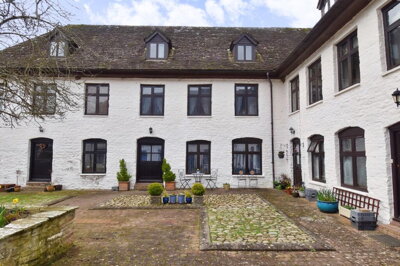
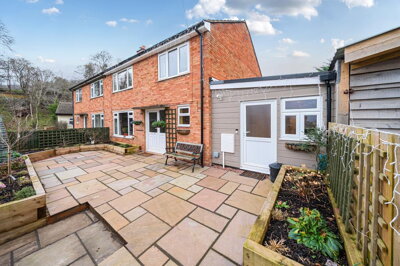
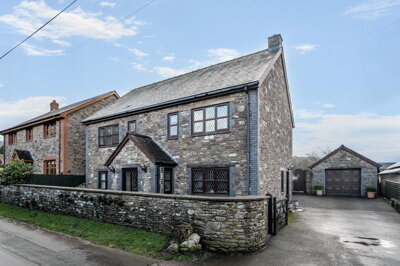
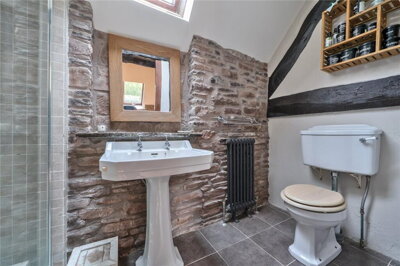
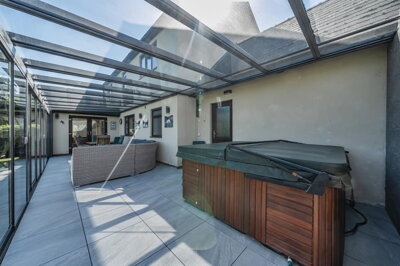
Browse 5 homes for sale in Talgarth, Powys from local estate agents.
The larger property sector typically features multiple bathrooms, substantial reception space, and private gardens or off-street parking. Four bedroom houses in Talgarth span detached, semi-detached, and occasionally terraced configurations, with styles ranging from period properties to modern executive homes.
£0k
0
0
0
Source: home.co.uk
Showing 0 results for 4 Bedroom Houses for sale in Talgarth, Powys.
The Talgarth property market presents a diverse range of opportunities across different property types, with prices reflecting the historic character and desirable location of this Brecon Beacons market town. Detached properties command the highest values, averaging £304,333, offering generous space and often featuring substantial gardens that take advantage of the surrounding countryside. Semi-detached homes provide excellent value at around £200,000 on average, whilst terraced properties, many dating from the Georgian or Victorian periods, typically fetch approximately £175,000. This pricing structure makes Talgarth attractive to buyers seeking period properties with character at a fraction of the cost seen in more metropolitan areas of Wales or England.
Market activity in Talgarth has remained stable over the past twelve months, with prices showing a modest adjustment of approximately 1.0% downward movement. This relative stability suggests a market that has not experienced the dramatic fluctuations seen in some urban areas, presenting opportunities for both first-time buyers and those seeking a lifestyle change. The absence of large-scale new build developments within the immediate Talgarth postcode area means that buyers are primarily looking at the existing housing stock, which largely comprises character properties constructed from local stone with slate roofing. Properties in this price range often come with features that reflect their age, including original fireplaces, exposed beam ceilings, and thick walls that provide natural insulation.

Talgarth is a market town steeped in history, with its roots dating back centuries as a centre for agricultural trade and commerce serving the surrounding Breconshire countryside. The town's conservation area encompasses much of its historic centre, preserving the architectural character that makes Talgarth so distinctive. Properties here were traditionally constructed from locally quarried limestone and sandstone, materials that give the town its warm, earthy appearance and connect it visually to the underlying geology of the area. The Old Red Sandstone geology that dominates the region has shaped not only the built environment but also the agricultural character of the surrounding landscape, with farmland extending across the upper Wye Valley and towards the Black Mountains.
The community spirit in Talgarth is notably strong, anchored by facilities including a primary school, local shops, and the unique Talgarth Mill, a community-run working flour mill and bakery that draws visitors from across the region. The town serves as a local service centre for surrounding rural communities, providing essential amenities including a medical practice and village hall. The population of 1,724 residents across 737 households creates an intimate community where newcomers are readily welcomed. Cultural life is enriched by Talgarth's proximity to Hay-on-Wye, world-renowned for its literary festival, whilst the Brecon Beacons National Park offers immediate access to stunning mountain landscapes, ancient Scheduled Monuments, and extensive public rights of way for walking and cycling.
The local economy around Talgarth is driven primarily by agriculture, tourism linked to the national park, and public services including healthcare and education. Many residents also commute to larger towns such as Brecon for work, taking advantage of the relatively straightforward road connections whilst enjoying the lower property prices that Talgarth offers compared to more expensive market towns in the region. This economic mix provides a stable foundation for the housing market, with demand consistently supported by those seeking to relocate from more expensive urban areas whilst maintaining access to regional employment centres.

Education provision in Talgarth centres on Talgarth Primary School, which serves the immediate community and surrounding rural catchment area. This community school provides primary education from Reception through to Year 6, offering young families the convenience of local schooling whilst benefiting from class sizes that allow for individual attention. For secondary education, pupils typically travel to schools in nearby towns such as Brecon, which hosts a range of secondary options including comprehensive schools with sixth form provision. Parents considering property purchase in Talgarth should research current catchment area arrangements and school transport provision, as these can significantly impact daily family routines.
The wider Powys area hosts several well-regarded secondary schools and further education colleges, with Brecon being the principal educational hub for the southern part of the county. Families moving to Talgarth from urban areas may find the educational landscape somewhat different, with greater reliance on school transport and fewer specialist provision options than available in larger towns. However, for families seeking a rural upbringing with strong community values, this trade-off is often considered worthwhile. The Brecon Beacons National Park Authority works closely with local schools to provide outdoor learning opportunities that take advantage of the stunning natural environment, offering educational experiences that urban schools simply cannot replicate.
Transport connectivity from Talgarth reflects its position as a rural market town within the Brecon Beacons National Park. The town sits at a crossroads of B-roads connecting communities throughout the Upper Wye Valley and towards the English border. The A438 provides the main arterial route, running east-west through the town and connecting towards Brecon to the west and towards the market town of Hereford in England to the east. Journey times to Brecon typically take around 25 minutes, whilst Hereford is approximately 45 minutes away by car. The scenic nature of these routes, passing through rolling countryside and picturesque villages, makes daily commuting more pleasant than motorway journeys, though drivers should anticipate variable journey times during peak seasons when tourist traffic increases.
Public transport options are limited compared to urban areas, reflecting the reality of rural bus services throughout Powys. The community-run Talgarth Hub provides information on local bus services connecting to Brecon, Hay-on-Wye, and surrounding villages, though frequencies are geared towards essential connectivity rather than commuter convenience. Rail access requires travel to major stations in the region, with Hereford and Abergavenny providing connections to the national rail network towards Cardiff, Birmingham, and London. Residents in employment centres such as Hay-on-Wye or Brecon may find cycling a viable option for shorter distances, with the relatively gentle terrain of the valley floors contrasting with the mountainous terrain of the national park boundaries.
Given the limited public transport provision, car ownership remains essential for most Talgarth residents, particularly those who need to commute to work or access services not available locally. The surrounding road network provides reasonable connectivity for those willing to drive, with the A438 offering direct access to Brecon and the wider trunk road network. For buyers considering Talgarth as a base for remote work, the peaceful environment and reliable internet connections available in most properties make it a viable option for those who do not need to commute daily.
Begin by exploring our comprehensive listings for Talgarth homes for sale, familiarising yourself with the average price of £235,970 and understanding the difference between property types, from terraced cottages at around £175,000 to detached homes averaging over £300,000. Consider engaging with local estate agents who have in-depth knowledge of the conservation area and can advise on properties with listed building status. Understanding the housing stock composition is important, as Talgarth has a significant proportion of pre-1919 properties in its historic core, alongside inter-war, post-war, and some post-1980 developments on the periphery.
Before viewing properties, obtain a mortgage agreement in principle from a lender. This strengthens your position when making offers and demonstrates to sellers that you have secured financing. Given the relatively stable nature of the Talgarth market, sellers value buyers who can move quickly once offers are accepted. Speak to a mortgage broker familiar with rural properties if you encounter any complexities, such as non-standard construction or properties with land, as some lenders have specific criteria for these types of purchase.
Visit multiple properties across different price ranges and locations within the Talgarth area. Pay attention to the age of properties, as many will have traditional stone construction that may require specialist maintenance. Properties near the River Ennig should be checked for flood history and mitigation measures. When viewing period properties, look beyond cosmetic decoration to assess the condition of key elements including the roof covering, timber floors, and the state of any original features that may require ongoing maintenance.
Given the age of much of Talgarth's housing stock, we strongly recommend a RICS Level 2 Survey (HomeBuyer Report) before purchase. This will identify common issues including damp, roof condition, timber defects, and outdated electrics that affect period properties. For listed buildings, consider a more comprehensive RICS Level 3 Building Survey. Our team has experience surveying properties across Talgarth and understands the specific construction methods used locally, including solid wall construction with lime mortar and traditional timber-framed elements.
Appoint a solicitor experienced in rural property transactions, particularly for properties within the conservation area or those with listed building status. They will handle searches, property checks, and the legal transfer of ownership through to completion. Specialist knowledge of Powys County Council planning requirements is valuable for transactions involving listed buildings or properties where you plan to make alterations.
Once all surveys, searches, and legal work are satisfactory, you will exchange contracts and pay your deposit. Completion typically follows within weeks, after which you will receive your keys and take ownership of your new Talgarth home. Our team can recommend local services including tradespeople and removal companies who know the area well.
Purchasing property in Talgarth requires careful consideration of several area-specific factors that do not apply in more conventional urban settings. The first and most significant concern is flood risk, as Talgarth sits on the River Ennig which flows into the River Llynfi, with properties in lower-lying areas particularly vulnerable to river flooding and surface water accumulation during periods of heavy rainfall. Prospective buyers should request flood history information, check the Environment Agency's flood risk maps, and seriously consider properties that have implemented flood resilience measures. Buildings insurance costs can be higher for properties with significant flood exposure, and this ongoing cost should factor into your budget calculations.
The conservation area status covering much of Talgarth's historic centre brings both benefits and obligations. Properties within the conservation area are subject to restrictions on alterations, extensions, and even external paint colours, requiring planning permission from Powys County Council for works that might otherwise be permitted development. Similarly, the numerous listed buildings in Talgarth, including the Grade I listed St Gwendoline's Church and many Grade II listed properties, carry legal obligations regarding maintenance and alteration. Buyers should satisfy themselves that they understand these constraints and are comfortable with the additional approvals process before committing to purchase.
The geological conditions around Talgarth also merit attention during the property purchasing process. The underlying Old Red Sandstone and Carboniferous Limestone geology creates a low to moderate shrink-swell clay risk that can affect properties with shallow foundations, particularly where there are trees or changes in soil moisture. Modern construction standards have addressed these issues, but older properties may show signs of movement or have foundations that would benefit from professional assessment. Additionally, parts of the Brecon Beacons region have elevated radon levels, and testing should be considered for any property purchase, particularly older properties with limited ventilation. Our surveyors are experienced in identifying these area-specific issues and will flag any concerns in your RICS Level 2 or Level 3 survey report.
The current average house price in Talgarth stands at £235,970 according to recent market data. Detached properties average £304,333, semi-detached homes around £200,000, and terraced properties approximately £175,000. The market has shown modest stability with a 1.0% price adjustment over the past twelve months, suggesting balanced conditions for both buyers and sellers in this Brecon Beacons market town.
Properties in Talgarth fall under Powys County Council jurisdiction. Council tax bands range from A through to H, with most period properties in the town centre likely falling within bands A to D given their moderate market values. You can check specific bandings via the Valuation Office Agency website using the property address.
Talgarth Primary School serves the immediate community for Reception through Year 6 education. For secondary education, pupils typically attend schools in Brecon, which offers comprehensive options with sixth form provision. Parents should verify current catchment areas and transport arrangements with Powys County Council before purchasing property, as these can change and directly affect daily family routines.
Public transport connectivity in Talgarth reflects its rural location, with bus services providing essential links to nearby towns including Brecon and Hay-on-Wye. The nearest railway stations are in Hereford and Abergavenny, both requiring onward travel by bus or car. Residents working locally often find car ownership essential, whilst cyclists benefit from the scenic valley routes connecting surrounding communities.
Talgarth offers solid fundamentals for property investment, with its position within the Brecon Beacons National Park ensuring continued demand from buyers seeking rural lifestyles. The stable market conditions, with approximately 10 property sales in the past twelve months, indicate consistent transaction volumes. Properties with lettable potential, particularly those with additional outbuildings or annexe possibilities, may appeal to investors seeking income alongside capital growth.
As a Welsh property, Stamp Duty Land Tax does not apply in Talgarth; instead, you will pay Land Transaction Tax (LTT). The Welsh Government's LTT rates start at 0% on the first £225,000 of residential property, rising to 6% on the portion between £225,001 and £400,000, with higher rates for more expensive properties. First-time buyers may qualify for relief on the first £300,000 of properties up to £500,000. Always verify current rates with HMRC or a conveyancing solicitor, as thresholds can change.
Properties in lower-lying areas of Talgarth, particularly those near the River Ennig and River Llynfi, carry a measurable flood risk from both river flooding and surface water during heavy rainfall. Before purchasing any property in the town, you should review Environment Agency flood maps, request the property's flood history, and check whether previous owners have implemented any flood resilience measures. Insurance costs can be significantly higher for properties with flood exposure.
Understanding the full costs of purchasing property in Talgarth extends beyond the property price itself. In Wales, buyers pay Land Transaction Tax rather than Stamp Duty Land Tax, with a different threshold structure that currently exempts the first £225,000 from any charge. For a typical Talgarth property at the average price of £235,970, buyers would pay LTT only on the amount exceeding £225,000, which at current rates amounts to a relatively modest sum. Properties priced above £400,000 enter higher rate bands, whilst those at the top end of the Talgarth market, such as larger detached homes exceeding £300,000, will fall into more significant tax brackets.
First-time buyers purchasing property in Talgarth may benefit from enhanced LTT relief, which raises the zero-rate threshold to £300,000 for properties up to £500,000. This relief applies to all buyers who have never previously owned property anywhere in the world, and given the pricing structure in Talgarth, many first-time buyers will pay no Land Transaction Tax at all on their purchase. Beyond the tax implications, buyers should budget for solicitor fees, which typically start from around £499 for conveyancing, plus search fees, registration costs, and potential mortgage arrangement fees. If you are purchasing a period property in Talgarth, we strongly recommend commissioning a RICS Level 2 Survey from around £400 to identify any defects in the building fabric before you commit to purchase.
Properties for Sale In London

Properties for Sale In Plymouth

Properties for Sale In Liverpool

Properties for Sale In Glasgow

Properties for Sale In Sheffield

Properties for Sale In Edinburgh

Properties for Sale In Coventry

Properties for Sale In Bradford

Properties for Sale In Manchester

Properties for Sale In Birmingham

Properties for Sale In Bristol

Properties for Sale In Oxford

Properties for Sale In Leicester

Properties for Sale In Newcastle

Properties for Sale In Leeds

Properties for Sale In Southampton

Properties for Sale In Cardiff

Properties for Sale In Nottingham

Properties for Sale In Norwich

Properties for Sale In Brighton

Properties for Sale In Derby

Properties for Sale In Portsmouth

Properties for Sale In Northampton

Properties for Sale In Milton Keynes

Properties for Sale In Bournemouth

Properties for Sale In Bolton

Properties for Sale In Swansea

Properties for Sale In Swindon

Properties for Sale In Peterborough

Properties for Sale In Wolverhampton

Enter your details to see if this property is within your budget.
Loans, cards, car finance
Estimated property budget
Borrowing + deposit
You could borrow between
Typical borrowing
Monthly repayment
Est. at 4.5%
Loan-to-value
This is an estimate only. Your actual budget may vary depending on interest rates, credit history, and personal circumstances. For an accurate affordability assessment, speak to one of our free mortgage advisors.
This calculator provides estimates for illustrative purposes only and does not constitute financial advice. Your home may be repossessed if you do not keep up repayments on your mortgage. Estimates based on 4.5% interest rate, repayment mortgage. Actual rates depend on your circumstances.
Homemove is a trading name of HM Haus Group Ltd (Company No. 13873779, registered in England & Wales). Homemove Mortgages Ltd (Company No. 15947693) is an Appointed Representative of TMG Direct Limited, trading as TMG Mortgage Network, which is authorised and regulated by the Financial Conduct Authority (FRN 786245). Homemove Mortgages Ltd is entered on the FCA Register as an Appointed Representative (FRN 1022429). You can check registrations at NewRegister or by calling 0800 111 6768.

We use cookies to show you personalised content and improve your experience of our website. Find out more in our Privacy policy and Cookie policy.