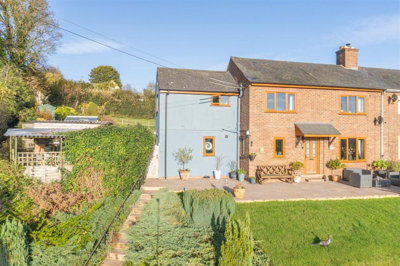
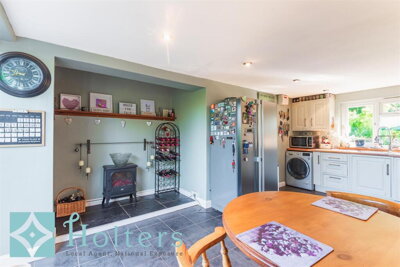
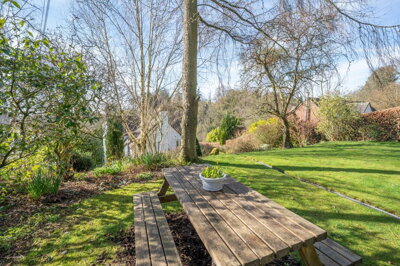
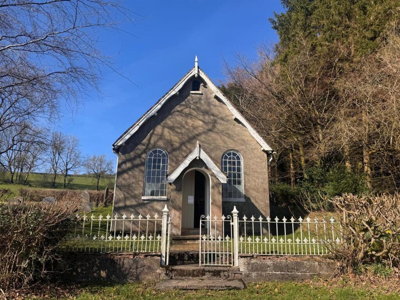
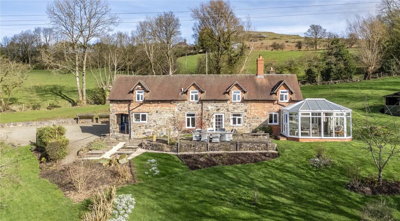
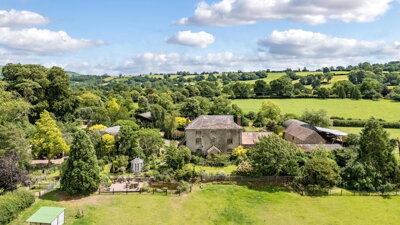
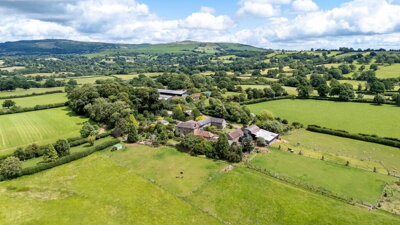
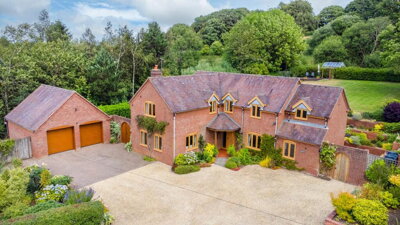
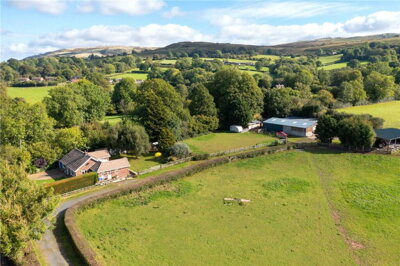
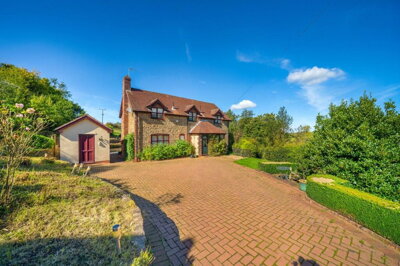
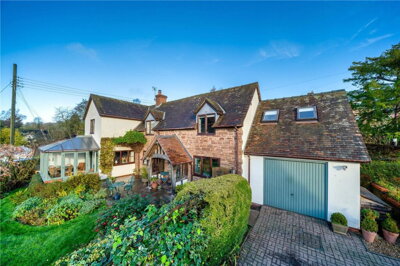
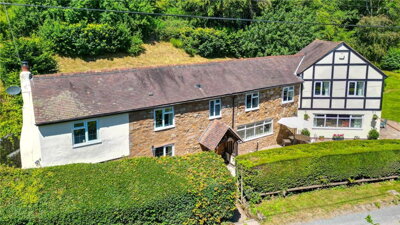
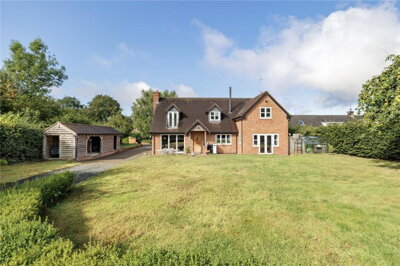
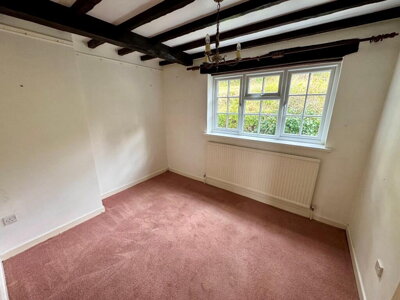
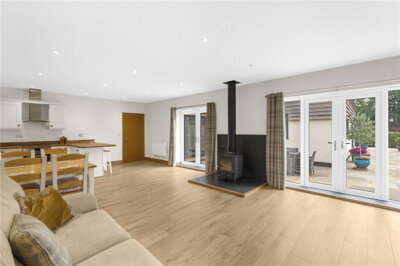
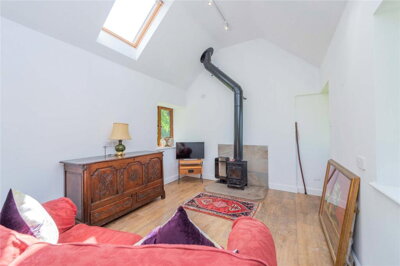
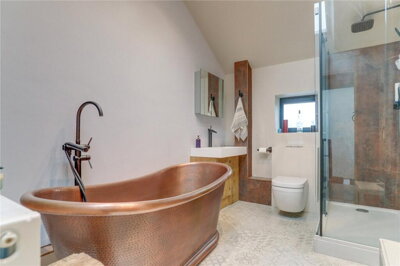
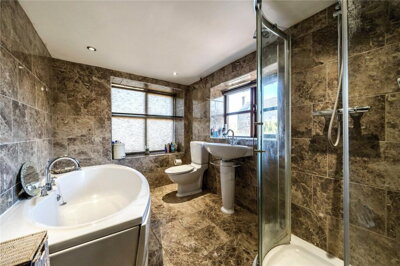
Browse 18 homes for sale in Stoke St. Milborough from local estate agents.
Milborough from local agents. The Stoke St. Milborough property market offers detached, semi-detached, and terraced houses spanning various price ranges and neighbourhoods. Each listing includes detailed property information, photographs, and direct contact with the marketing agent.
The Stoke St. Milborough property market reflects its status as a premium rural location within the Shropshire Hills. Zoopla records show that average sold prices in the area reached £475,000 over the past twelve months, with individual properties selling for between £199,182 for smaller leasehold units and up to £1,834,678 for substantial five-bedroom freehold houses. This broad price range demonstrates the diversity of housing stock available, from compact period dwellings to expansive farmhouses with land. Our data shows prices on Stoke St. Milborough street specifically have experienced a modest correction, down an average of 1.4% since September 2024, presenting potential buyers with a window of opportunity in what is typically a stable market.
Property types in the village are predominantly period houses constructed between 1800 and 1911, with older houses in the village centre typically built of rubble and timber-framed properties found throughout the parish. The dominant character is that of a classic English rural village, with farmhouses, farm buildings, and historic houses creating an unspoilt streetscape. Notable properties currently or recently on the market include a three-bedroom detached cottage valued at £475,000 and the bespoke new build at Hidden Hedges, which achieved £685,000 when sold in April 2023. The market attracts buyers from across the UK seeking escape to the countryside, with the area particularly popular among commuters working in regional centres and retirees drawn to the quality of life offered by rural Shropshire.
For those seeking newer construction, bespoke developments like Hidden Hedges offer contemporary design and energy efficiency, though these represent a small portion of available stock. Buyers should verify tenure arrangements for any converted agricultural buildings, as some may include shared ownership or maintenance obligations for surrounding land. The village's position within the Shropshire Hills AONB means that planning regulations are strictly enforced to preserve rural character, which can affect what renovations or extensions are possible on period properties.

£475,000
Average Sold Price
£199,182 - £1,834,678
Price Range
427
Population (2021)
20
Listed Buildings
Life in Stoke St. Milborough centres around the rhythms of rural Shropshire, where the economy historically and presently revolves around agriculture, particularly livestock farming with sheep and cattle. The village has maintained its agricultural character despite gradual changes in the wider economy, with the population seeing an influx of commuters and retirees who appreciate the peace and natural beauty of the area. The village boasts a rich past with many historical buildings still standing, creating an atmosphere that feels timeless rather than frozen. Community life is intimate but active, with residents drawn together by shared appreciation for the landscape and heritage that defines this corner of south Shropshire.
The parish geography is characterised by the rising slopes of Brown Clee Hill, which reaches up to 500 metres in the eastern half of the parish, and Titterstone Clee Hill at around 400 metres. These hills form part of the Shropshire Hills Area of Outstanding Natural Beauty, offering extensive walking and outdoor pursuits directly from the village. The parish is drained by streams flowing into the Ledwyche and Dogditch brooks, contributing to the lush green landscape that defines the area. Historical quarrying for both limestone and sandstone has shaped the local built environment, with many older properties constructed from these locally sourced materials. The village contains 20 listed buildings, including the Grade II* Church of St Milburga, which stands as the spiritual and architectural centrepiece of the community. Notable listed buildings include Bockleton Court, East Farmhouse, Moor Farmhouse, and Stoke Court, many featuring the traditional timber framing with brick infill or painted brick construction typical of the region.
Daily life in Stoke St. Milborough means enjoying access to excellent walking routes directly from the village, with footpaths crossing farmland and climbing onto Brown Clee Hill and Titterstone Clee Hill. The nearby market town of Ludlow, approximately 10 miles away, provides access to supermarkets, independent shops, restaurants, and a minor injuries unit at Ludlow Hospital. For cultural enrichment, the town offers regular markets, literary festivals, and historic architecture that draws visitors from across the region. The village itself has a quiet atmosphere where neighbours know each other by name and community events bring residents together throughout the year.

Understanding the construction methods used in Stoke St. Milborough properties helps buyers appreciate both the character and potential maintenance requirements of homes in this area. The village and surrounding parish showcase traditional building techniques that have been employed for centuries, reflecting the local geology and available materials. These construction methods have evolved to suit the Shropshire climate and landscape, resulting in buildings that have proven durable over generations when properly maintained.
Older houses in the village centre were predominantly built of rubble, which refers to stone laid in irregular courses using local sandstone and limestone quarried from the surrounding hillsides. This construction method creates thick walls with excellent thermal mass, though rubble-built properties may be more susceptible to moisture penetration if pointing deteriorates over time. Elsewhere in the parish, timber-framed properties become more prevalent, with the characteristic black and white appearance created by timber framing with brick or plaster infill panels. These historic timber frames were often constructed using oak from local woodlands and have supported the village structure for centuries.
Listed buildings in the parish often feature timber framing with brick infill, though some farmhouses combine multiple materials including painted brick, stone, and tile roofs. The Grade II* Church of St Milburga, the architectural centrepiece of the village, is constructed from sandstone with traditional tile roofing. Our inspectors have extensive experience surveying these traditional construction methods and understand the specific maintenance requirements and potential defect patterns associated with each building type. When considering a property in Stoke St. Milborough, we recommend discussing the construction type with our team to ensure the most appropriate survey is commissioned for the property style.
Properties in Stoke St. Milborough, with their predominantly period construction dating from the Georgian and Victorian eras, exhibit characteristic defects that our inspectors regularly identify during surveys. Understanding these common issues helps buyers prioritise their property inspections and budget for potential remediation costs. The traditional building methods used throughout the village have produced durable homes, but age-related deterioration affects all period properties regardless of how well they have been maintained over the decades.
Roof conditions frequently require attention in older properties, with original or early replacement coverings showing signs of wear including slipped tiles, deteriorated pointing, and moss accumulation that can trap moisture against the roof structure. Our inspectors carefully examine roof voids where accessible, checking for signs of timber decay, insect activity, and inadequate ventilation that could lead to condensation problems. The steep pitches common to period properties in this area were designed for slate or clay tile coverings, and any changes to roofing materials should be assessed for structural suitability.
Damp presents one of the most prevalent issues in Stoke St. Milborough properties, affecting both rubble-built and timber-framed structures. Rising damp can occur where original bitumen felt or physical damp-proof courses have failed or were never installed. Penetrating damp often affects rubble walls where mortar joints have deteriorated, allowing water ingress during prolonged wet periods. Our inspectors use moisture meters and thermal imaging equipment to identify damp pathways and assess the extent of any moisture-related damage to timbers and plasterwork.
Historical mining activity in the far north of the parish, where coal and ironstone were extracted until the mid-20th century, means that some properties may be located in areas requiring ground stability assessment. Disused coal shafts were recorded in the parish as early as 1883, and while active subsidence risk is not explicitly documented, thorough surveys investigate these historical factors. Flood risk from streams flowing into the Ledwyche and Dogditch brooks should also be considered when assessing properties, particularly those situated in lower-lying positions within the parish.
Families considering a move to Stoke St. Milborough will find educational provision available within reasonable driving distance in the surrounding towns. The village falls within Shropshire's educational framework, with primary schooling typically available in nearby villages and market towns. The nearest primary schools serve the surrounding parishes, with Shropshire Council maintaining standards across its rural school network. For secondary education, pupils generally travel to schools in Ludlow, which offers a range of educational options including the well-regarded Ludlow College for sixth form and further education studies. Parents should verify current catchment areas and admission arrangements with Shropshire Council, as these can vary and change annually based on demand and capacity.
The presence of the historic Old School, a Victorian school building constructed in 1856 and now converted for residential use, speaks to the longstanding value placed on education within the community. The nearby market town of Ludlow provides additional educational enrichment through its cultural offerings, libraries, and community facilities that complement formal schooling. For families prioritising academic excellence, Shropshire hosts several highly performing schools that regularly achieve above-average results in both primary and secondary phases. Given the rural nature of the area, many families choose to combine school commutes with the lifestyle benefits of village living, with bus services operating between the village and local towns for school transport.
Transport connectivity from Stoke St. Milborough reflects its rural character, with the village relying primarily on road networks for access to wider facilities. The A49 provides the main north-south route through the region, connecting Ludlow to Hereford and Shrewsbury, while the A4113 and local roads serve the immediate area. For commuters, the market town of Ludlow is the nearest significant town, approximately 10 miles away, offering rail connections on the Welsh Marches Line. Ludlow railway station provides regular services to major destinations including Hereford, Cardiff, Birmingham, and Manchester, making day commuting feasible for those working in regional centres. The village's position within the Shropshire Hills means that journey times to larger cities such as Birmingham typically range from 60 to 90 minutes by car.
Bus services operate on limited routes connecting Stoke St. Milborough with nearby villages and towns, though residents generally find private vehicle ownership essential for daily convenience. The rural road network is generally well-maintained though can be narrow in places, reflecting the historic nature of the parish roads. For air travel, Birmingham Airport is the nearest major airport, approximately 75 minutes drive away, offering domestic and international flights. The area attracts walkers and cyclists who appreciate the extensive public footpaths and bridleways crossing the parish and connecting to the wider Shropshire Hills network. Many residents enjoy the slower pace of rural transport, where village distances are measured in minutes rather than miles.
Our team often speaks with buyers who are transitioning from urban areas and wonder about daily transport practicality in Stoke St. Milborough. For those accustomed to frequent public transport, the rural reality requires adjustment, but most residents adapt quickly and appreciate the reduced traffic and peaceful surroundings. Local taxi services operate from nearby Ludlow, though advance booking is essential, and village pub quizzes and events provide regular social opportunities without requiring any driving at all.
Start by exploring our current listings in Stoke St. Milborough and understanding the price range in this rural Shropshire village. With average prices around £475,000 and a mix of period properties and new builds, knowing what to expect helps you budget accurately. Contact local estate agents in the Ludlow area who cover the village for off-market opportunities that may not appear in our listings.
Schedule viewings for properties that match your criteria, paying attention to the age and construction of the property. Most homes in Stoke St. Milborough were built before 1911, so understanding their construction materials, including rubble walls and timber framing, is essential for assessing condition and potential maintenance needs. Take notes during viewings and ask about the history of any works undertaken.
Before making an offer, secure a mortgage agreement in principle from a lender. Given the varied property values in the area, from terraced cottages to substantial farmhouses, having your financing confirmed strengthens your position when negotiating on rural properties that may attract multiple buyers seeking the village lifestyle.
For period properties and older homes, which dominate the Stoke St. Milborough market, a RICS Level 2 Survey is essential. This survey identifies common issues in older buildings such as damp, roof condition, and structural concerns, providing you with a detailed assessment before committing to your purchase. Given the prevalence of rubble construction and timber-framed properties in the village, specialist assessment of these traditional building methods is particularly valuable.
Choose a conveyancing specialist familiar with rural property transactions in Shropshire. They will handle searches, checks on listed building status, and coordinate with your mortgage lender to ensure a smooth progression through the legal process. For properties with historical mining activity in the parish, additional searches may be required to investigate potential ground stability issues.
Once all surveys, searches, and legal checks are satisfactory, you will exchange contracts and pay your deposit. Completion typically follows within weeks, and you will receive the keys to your new home in Stoke St. Milborough.
Purchasing a property in Stoke St. Milborough requires awareness of the specific characteristics associated with historic rural housing stock. The parish contains 20 listed buildings, and if you are considering one of these properties, understanding the implications for future alterations and maintenance is essential. Listed building consent is required for most external and structural changes, which can affect renovation budgets and future flexibility. Our team recommends requesting a RICS Level 3 Building Survey for listed properties, as standard surveys may not fully capture the construction methods and potential issues specific to historic timber-framed and rubble-built structures.
The historical mining activity in the far north of the parish, where coal and ironstone were extracted until the mid-20th century, means that some properties may be situated in areas where ground stability assessments are advisable. Disused coal shafts were recorded in the parish as early as 1883, and while active subsidence risk is not explicitly documented, a thorough survey will investigate these historical factors. Flood risk should also be considered given that the parish is drained by streams feeding into the Ledwyche and Dogditch brooks. When viewing properties, examine the condition of roofs, check for signs of damp in older properties built of rubble or timber framing, and verify the condition of historic features such as original windows and fireplaces that contribute to the character of these homes.
For buyers considering new build properties in the area, such as bespoke homes on the edge of the village, standard considerations around energy efficiency and modern construction standards will apply. However, even newer properties in rural locations may have higher maintenance costs due to the nature of access roads and distances to services. Always check the tenure of properties carefully, as freehold houses are the norm in this village setting, but some converted properties may carry unusual arrangements or share maintenance responsibilities for communal areas.
According to recent data from Zoopla, the average sold price for properties in Stoke St. Milborough over the past twelve months is £475,000. Individual property prices range significantly, from around £199,182 for smaller leasehold units to over £1.8 million for substantial five-bedroom detached houses. The village attracts buyers seeking character properties, with period houses built between 1800 and 1911 forming the dominant housing stock. The new build property Hidden Hedges sold for £685,000 in April 2023, demonstrating the premium achievable for modern construction in this desirable rural location.
Properties in Stoke St. Milborough fall under Shropshire Council's jurisdiction for council tax purposes. Specific bandings depend on the property valuation, but rural village properties in Shropshire typically range from Band A for smaller properties through to Band H for the most valuable homes and farmhouses. You can verify the exact council tax band for any specific property through the Valuation Office Agency website or by contacting Shropshire Council directly. Properties with significant land or historic status may attract higher valuations.
Stoke St. Milborough is a small rural village, so primary education is accessed through schools in nearby villages and towns within Shropshire. The nearest primary schools serve the surrounding parishes and are typically within a short drive. For secondary education, pupils commonly attend schools in Ludlow, which also hosts Ludlow College for sixth form and further education. Shropshire maintains a network of schools across its rural areas, with several primary schools in nearby market towns achieving good or outstanding Ofsted ratings. Parents should check current admission arrangements and consider transport arrangements when selecting a property.
Public transport options from Stoke St. Milborough are limited, reflecting its rural village status. Bus services operate on routes connecting the village to nearby towns, though frequencies are reduced compared to urban areas. The nearest railway station is in Ludlow, approximately 10 miles away, offering services on the Welsh Marches Line to major cities including Hereford, Cardiff, Birmingham, and Manchester. Most residents rely on private vehicles for daily transport, with Birmingham accessible by car in around 60 to 90 minutes depending on traffic conditions.
Stoke St. Milborough offers several factors that make it attractive for property investment. The village's position within the Shropshire Hills Area of Outstanding Natural Beauty ensures continued demand from buyers seeking rural lifestyles. Properties are predominantly period homes built before 1911, which tend to hold their value well due to character and limited supply. The presence of 20 listed buildings indicates strong heritage protection that maintains the village's appeal. However, the small population of 427 and limited local employment mean that rental demand may be concentrated among those seeking holiday lets or second homes rather than permanent tenants. Price trends show a modest 1.4% decrease since September 2024, suggesting a stable rather than rapidly appreciating market.
Stamp Duty Land Tax (SDLT) applies to all property purchases in England, including those in Stoke St. Milborough. The current thresholds for 2024-25 are 0% on the first £250,000, 5% on the portion from £250,001 to £925,000, 10% from £925,001 to £1.5 million, and 12% above £1.5 million. With the average property price around £475,000, a typical buyer would pay £11,250 in SDLT. First-time buyers receive relief on the first £425,000, resulting in SDLT of £2,500 on an average-priced property. Properties valued above £625,000 do not qualify for first-time buyer relief, while those exceeding £925,000 move into the 10% SDLT band.
When purchasing property in Stoke St. Milborough, a solicitor will conduct several essential searches including a local authority search with Shropshire Council to check planning permissions, building regulations, and any environmental factors affecting the property. Given the historical mining activity in the far north of the parish, where coal and ironstone were extracted until the mid-20th century, a mining search is particularly important for properties in certain areas of the parish. Additional environmental searches will investigate flood risk from the streams flowing into the Ledwyche and Dogditch brooks. For listed buildings, additional checks on heritage status and any conditions attached to listing will be required. These searches typically add several weeks to the purchase timeline and cost between £200 and £500 depending on the property location and search scope.
When viewing properties in Stoke St. Milborough, pay particular attention to the age and construction type of the property, as most homes were built before 1911 using traditional methods such as rubble stone or timber framing. Examine the condition of roofs carefully, as period properties often have original or early replacement coverings that may require maintenance. Check for signs of damp in older properties, particularly in rubble-built houses where moisture penetration can be an issue. Verify the condition of original windows, doors, and fireplaces, as these historic features contribute significantly to the character and value of period homes in the village. For properties near streams, investigate any history of flooding or water damage, and consider the proximity to the Ledwyche and Dogditch brooks when assessing flood risk.
Understanding the full cost of purchasing property in Stoke St. Milborough requires careful budgeting beyond the purchase price itself. The current SDLT thresholds for England in 2024-25 set the zero-rate band at £250,000, meaning that a property priced at the village average of £475,000 would incur SDLT of £11,250. This calculation works by applying 0% to the first £250,000 and 5% to the remaining £225,000. For first-time buyers, the relief extends the zero-rate threshold to £425,000, reducing SDLT to just £2,500 on an equivalent purchase. Properties valued above £625,000 do not qualify for first-time buyer relief, while those exceeding £925,000 move into the 10% SDLT band.
Additional buying costs include solicitor fees for conveyancing, which typically range from £499 to £1,500 depending on complexity and whether the property is freehold or leasehold. Given that Stoke St. Milborough properties often involve historic buildings, additional searches related to listed building status and historical mining in the parish may be required, potentially increasing legal costs. Survey costs are essential for this area, with a RICS Level 2 Survey costing between £380 and £629 depending on property size and value. For larger homes priced above £500,000, expect to pay around £586 on average for a comprehensive survey. An Energy Performance Certificate costs from £85 and is legally required before marketing can complete. Mortgage arrangement fees, if applicable, typically range from zero to £2,000 depending on the lender and product chosen. Budgeting for removals, potential repairs or renovations, and establishing utilities completes the financial picture for your move to this rural Shropshire village.
Properties for Sale In London

Properties for Sale In Plymouth

Properties for Sale In Liverpool

Properties for Sale In Glasgow

Properties for Sale In Sheffield

Properties for Sale In Edinburgh

Properties for Sale In Coventry

Properties for Sale In Bradford

Properties for Sale In Manchester

Properties for Sale In Birmingham

Properties for Sale In Bristol

Properties for Sale In Oxford

Properties for Sale In Leicester

Properties for Sale In Newcastle

Properties for Sale In Leeds

Properties for Sale In Southampton

Properties for Sale In Cardiff

Properties for Sale In Nottingham

Properties for Sale In Norwich

Properties for Sale In Brighton

Properties for Sale In Derby

Properties for Sale In Portsmouth

Properties for Sale In Northampton

Properties for Sale In Milton Keynes

Properties for Sale In Bournemouth

Properties for Sale In Bolton

Properties for Sale In Swansea

Properties for Sale In Swindon

Properties for Sale In Peterborough

Properties for Sale In Wolverhampton

Enter your details to see if this property is within your budget.
Loans, cards, car finance
Estimated property budget
Borrowing + deposit
You could borrow between
Typical borrowing
Monthly repayment
Est. at 4.5%
Loan-to-value
This is an estimate only. Your actual budget may vary depending on interest rates, credit history, and personal circumstances. For an accurate affordability assessment, speak to one of our free mortgage advisors.
This calculator provides estimates for illustrative purposes only and does not constitute financial advice. Your home may be repossessed if you do not keep up repayments on your mortgage. Estimates based on 4.5% interest rate, repayment mortgage. Actual rates depend on your circumstances.
Homemove is a trading name of HM Haus Group Ltd (Company No. 13873779, registered in England & Wales). Homemove Mortgages Ltd (Company No. 15947693) is an Appointed Representative of TMG Direct Limited, trading as TMG Mortgage Network, which is authorised and regulated by the Financial Conduct Authority (FRN 786245). Homemove Mortgages Ltd is entered on the FCA Register as an Appointed Representative (FRN 1022429). You can check registrations at NewRegister or by calling 0800 111 6768.

We use cookies to show you personalised content and improve your experience of our website. Find out more in our Privacy policy and Cookie policy.