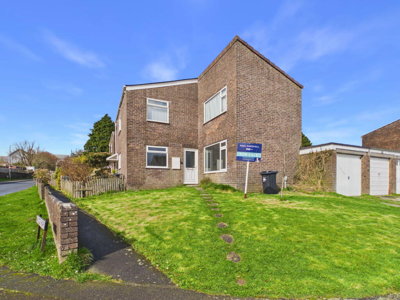
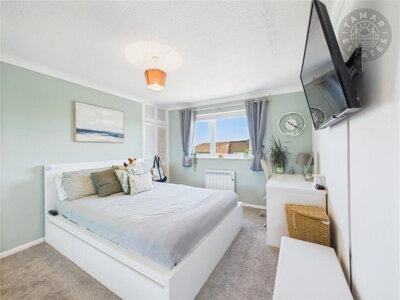
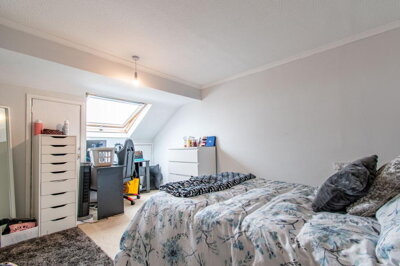
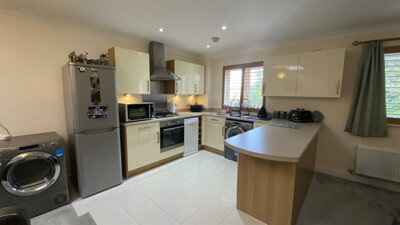
Browse 4 homes for sale in St. Cleer from local estate agents.
Cleer from local agents. The 2 bed flat sector typically includes two separate bedrooms, dedicated living areas, and bathroom facilities. Properties in St. Cleer span purpose-built blocks, converted period houses, and modern apartment complexes on various floors.
The Disley property market offers a diverse range of housing types to suit different budgets and lifestyle preferences. Detached properties command the highest prices, with averages around £600,000, reflecting the desirability of these spacious homes which often feature large gardens and panoramic countryside views. Semi-detached homes, averaging £350,000, represent excellent value for families seeking generous living space without the premium associated with detached properties. These homes typically date from the post-war period through to the 1980s, offering solid construction and adaptable layouts that appeal to both growing families and those seeking room to work from home.
Terraced properties in Disley average £275,000 and remain popular among first-time buyers and investors due to their relative affordability and low maintenance requirements. Many of these terraces feature the characteristic gritstone construction found throughout the village, with original fireplaces, exposed beams, and other period details that add considerable charm. Flats average around £175,000, offering an entry point to the Disley market for those seeking a lower-cost option or a convenient base near village amenities. The market has shown resilience with prices increasing across all property types over the past year, ranging from 1.4% for semi-detached homes to 2.9% for flats, indicating healthy demand across the board.
New build activity within the Disley postcode area (SK12) remains limited, with most recent development occurring in neighbouring areas such as Poynton and High Lane. This scarcity of new homes has helped maintain property values and underscores the village's commitment to preserving its character through the Conservation Area designation. For buyers seeking modern specifications, the surrounding region offers additional options, but those prioritising Disley's unique village atmosphere and established community will find the existing housing stock provides ample opportunity.

Disley is home to approximately 4,800 residents across roughly 2,000 households, creating a close-knit community atmosphere that many find impossible to replicate in larger towns or cities. The village has evolved from its historical origins as a centre for textile production and milling to become a desirable residential location that successfully balances rural charm with practical conveniences. The local economy today is characterised by small businesses, retail establishments, hospitality venues, and the significant contribution of Lyme Park, a major National Trust estate that attracts visitors from across the region and supports tourism-related employment in the area.
The village architecture reflects its rich history, with approximately 25-30% of properties pre-dating 1919 and constructed from the distinctive local gritstone that defines much of the Peak District building tradition. Red brick Victorian and Edwardian properties also feature prominently, particularly along the main thoroughfares, while post-war expansion added semi-detached and terraced housing to accommodate Disley's growing population. The Conservation Area, centred around the historic village core and extending along Buxton Road, protects the architectural heritage of these older buildings and ensures new development respects the established character of the village.
Residents enjoy access to a range of local amenities including convenience stores, a pharmacy, dental practice, and several traditional pubs serving food and local ales. The village hosts community events throughout the year, from summer fetes to Christmas celebrations, fostering the strong sense of belonging that characterises life in Disley. For recreation, the surrounding countryside offers an extensive network of footpaths and trails, with the Peak District boundary literally beginning at the village edge. The River Goyt flows nearby, providing additional scenic walks and habitat for local wildlife, though buyers should be aware of potential surface water flooding in certain areas during periods of heavy rainfall.

Education provision in Disley serves families with children of all ages, with several well-regarded schools located within the village itself and the surrounding area. Primary education is available through Disley Primary School, a community school that serves families from the village and surrounding countryside. The school benefits from a supportive local intake and smaller class sizes compared to urban alternatives, allowing for more individual attention and strong pastoral care. Parents should research current Ofsted ratings and admission catchment areas when considering properties, as these can influence schooling options and the availability of places.
Secondary education options for Disley residents include several schools in nearby towns, with students commonly travelling to schools in Stockport, Macclesfield, or surrounding areas. Grammar schools in the wider region, including Altrincham Grammar School for Boys and Altrincham Grammar School for Girls, attract ambitious students from across Greater Manchester and Cheshire, with Disley's strong transport connections making these options accessible for families willing to support the application process. Parents should factor travel times and transport arrangements into their decision-making when evaluating properties at different distances from school options.
For families requiring childcare or early years education, Disley offers several nursery providers and preschool facilities. Sixth form and further education students typically travel to colleges in Stockport, Macclesfield, or Manchester, with excellent rail and bus services supporting these journeys. The presence of quality educational options, combined with the village's safe environment and strong community spirit, makes Disley particularly attractive to families with children of all ages.
Transport connectivity is one of Disley's strongest attributes, with rail services providing swift access to major employment centres throughout Greater Manchester and beyond. Disley railway station offers direct trains to Manchester Piccadilly with journey times of approximately 30 minutes, making the village particularly attractive to commuters working in the city centre. Trains continue north to destinations including Sheffield and Leeds, while southbound services connect to Chester and Birmingham. The station benefits from reasonable parking facilities and step-free access, accommodating those who drive to the station before continuing by train.
Bus services connect Disley with surrounding towns and villages, providing essential links for those without access to a car. Routes operate to Stockport, Macclesfield, and Buxton, enabling residents to access broader amenities without reliance on private vehicles. For car users, the A6 corridor provides direct routes to Stockport and Buxton, while connections to the M60 ring road and wider motorway network are easily accessible. The strategic location of Disley, sitting between the Peak District and Greater Manchester urban area, gives residents the flexibility to choose between countryside recreation and city employment.
Cyclists benefit from various off-road routes and quieter country lanes that connect Disley to surrounding villages and the Peak District National Park. For those commuting to Manchester by bicycle, the journey is achievable for confident cyclists, while e-bikes have expanded the practical range for those seeking greener commuting alternatives. Manchester Airport is accessible within approximately 30 minutes by car, serving international destinations for business and leisure travellers. This comprehensive transport network underpins Disley's appeal as a location where residents can balance rural quality of life with professional opportunities across the region.
Explore online listings to understand property types, price ranges, and availability in Disley and surrounding SK12 area. Consider factors such as proximity to the station, conservation area restrictions, and flood risk zones when narrowing your search. The ONS Census data shows Disley's housing stock is predominantly detached (38.5%) and semi-detached (30.2%), so buyers seeking terraced or flat properties may find more limited options within the village itself.
Contact lenders or use Homemove's mortgage comparison tool to secure an agreement in principle before viewing properties. This strengthens your position when making offers and demonstrates to sellers that you are a serious buyer with verified financing. Given Disley's average property price of £391,332, most buyers will require mortgage financing, and having this arranged before bidding gives you a competitive edge in a market with steady demand.
Visit a selection of properties in different price ranges to refine your understanding of what Disley homes offer. Pay attention to construction materials, maintenance requirements, and any signs of damp or structural issues common in older properties. Many homes in Disley feature traditional solid-wall construction with gritstone or brick, and our inspectors frequently identify issues related to the age of these properties during survey appointments.
Commission a Level 2 Homebuyer Report for most properties, or a Level 3 Building Survey for older, listed, or unusual properties. Local surveys typically cost £450-700 for a standard 3-bedroom semi-detached home, £550-800+ for larger detached properties, and £350-550 for flats. Given that approximately 80-85% of Disley's housing stock pre-dates 1980, a professional survey is particularly valuable for identifying defects common to older construction.
Choose a solicitor experienced in Cheshire property transactions to handle the legal process. They will conduct searches including local authority checks, mining reports, and flood risk assessments specific to Disley properties. A Con29M mining search is particularly important for Disley given the area's historical coal mining activity, where potential ground instability from old mine workings can exist in localised areas.
Once all searches are satisfactory and financing is confirmed, you will exchange contracts and pay your deposit. Completion typically follows within 2-4 weeks, when you will receive your keys and take ownership of your new Disley home. We recommend arranging building insurance from the point of contract exchange to protect your investment during the final stages of the transaction.
Buying property in Disley requires attention to several area-specific factors that may not apply in other locations. The local geology presents particular considerations, as Disley sits on soils containing significant clay deposits including glacial till (boulder clay). These shrink-swell soils can cause foundation movement, particularly during periods of drought or when large trees are present near properties. Our inspectors carefully assess signs of previous subsidence or heave, and we recommend checking whether properties have been subject to any underpinning or structural repair before proceeding with your purchase.
Flood risk assessment is essential for properties near the River Goyt or in areas identified as susceptible to surface water flooding. While Disley itself is not coastal, the topography and drainage characteristics mean certain locations face elevated risk during heavy rainfall. The Environment Agency provides detailed flood maps that can inform purchasing decisions, and we advise considering whether properties have appropriate flood resilience measures in place. Insurance costs may be higher for properties with significant flood history.
The Conservation Area designation affects properties throughout the historic village core, imposing restrictions on external alterations, extensions, and certain types of development. Those purchasing listed buildings face additional requirements for planning consent and building regulations approval, with specialist surveys recommended to assess the condition of historic materials and identify any outstanding works. Understanding these constraints before purchasing ensures buyers can plan any future improvements realistically. Service charges and leasehold arrangements should be verified for flats, while freehold properties should be checked for any restrictive covenants that may limit use or development.
Disley falls within an area with historical coal mining activity, and ground stability from old mine workings can be a consideration in certain localised areas. A mining report (Con29M search) is often recommended during the conveyancing process to identify any potential risks. Our surveyors are experienced in identifying signs of mining-related subsidence, including characteristic crack patterns and uneven floors that may indicate historical ground movement. Properties with a history of mining-related issues may require specialist structural engineering assessment before your purchase proceeds.
The predominant building materials in Disley include gritstone for older properties, reflecting the area's proximity to the Peak District, and red brick for Victorian and Edwardian properties. Traditional solid-wall construction with stone or brick is common in older homes, while cavity wall construction became standard from the 1920s onwards. Our surveys thoroughly assess these materials, identifying common defects such as rising damp in properties lacking modern damp-proof courses, deteriorating slate or tile roofs, timber defects, and outdated electrical systems. Given that approximately 80-85% of Disley's housing stock pre-dates 1980, a RICS Level 2 or Level 3 survey is particularly valuable for most purchases in this village.
The average house price in Disley is currently £391,332 according to recent market data. Detached properties average around £600,000, semi-detached homes approximately £350,000, terraced properties £275,000, and flats around £175,000. Prices have increased by 1.9% over the past twelve months, indicating steady demand in this Cheshire village. First-time buyers may find terraced properties or flats most accessible, while families seeking larger homes will discover good options across the semi-detached and detached segments.
Properties in Disley fall within Cheshire East Council's jurisdiction, with council tax bands ranging from A through to H depending on property value and type. Most standard 3-bedroom semi-detached homes in Disley fall into band C or D, while larger detached properties may be band E or above. You can verify the specific band for any property through the HM Government valuation office website or the property listing details. Council tax contributions fund local services including education, waste collection, and local authority amenities throughout the village.
Disley Primary School serves families in the village for early years and Key Stage 1 education, with several primary options available in surrounding villages for families seeking alternatives. Secondary school options in the wider area include high-performing schools in Stockport and Macclesfield, with grammar schools in Altrincham accessible for motivated students. Parents should research current Ofsted ratings and admission policies, as catchment areas and oversubscription criteria can affect school placement availability.
Disley benefits from excellent rail connections via Disley railway station, with direct services to Manchester Piccadilly taking approximately 30 minutes. Trains run throughout the day with good frequency during peak commuting hours. Bus services connect the village to Stockport, Macclesfield, and Buxton, providing essential links for those without car access. The A6 road corridor offers straightforward driving routes to surrounding towns and connections to the motorway network.
Disley offers several factors that make it attractive for property investment, including strong commuter demand, limited new build supply, and the village's desirable location on the edge of the Peak District. Rental yields may be moderate compared to city centres, but tenant demand remains steady from professionals working in Manchester or seeking family accommodation. The Conservation Area designation helps protect property values by maintaining the village's character, while steady price growth of around 2% annually indicates a stable market rather than speculative appreciation. The limited new build activity within SK12 helps maintain the scarcity premium associated with established village locations.
For standard purchases, stamp duty land tax is charged at 0% on the first £250,000 of property value, 5% on the portion between £250,001 and £925,000, and 10% on the portion between £925,001 and £1.5 million. First-time buyers benefit from relief on the first £425,000, with 5% charged between £425,001 and £625,000. Properties above £625,000 do not qualify for first-time buyer relief. Given Disley's average price of £391,332, most standard purchases would attract minimal amounts for non-first-time buyers or nothing for those eligible for first-time buyer relief.
Understanding the full costs of purchasing property in Disley helps buyers budget accurately and avoid surprises during the transaction process. In addition to the property purchase price, buyers should account for stamp duty land tax, which varies based on property value and buyer status. For a typical Disley property priced around the £391,332 average, a non-first-time buyer would pay approximately £7,067 in stamp duty. First-time buyers would pay nothing on properties up to £425,000, making Disley accessible for many entering the property market for the first time.
Survey costs represent an important investment in property due diligence, particularly given the age profile of Disley's housing stock. RICS Level 2 surveys for a standard 3-bedroom property typically cost between £450 and £700 depending on property size and value, while older stone properties or those with complex construction may require the more detailed Level 3 Building Survey at higher cost. Flats typically range from £350-550, terraced houses from £400-650, and larger detached properties from £550-800 or more. Legal fees for conveyancing usually start from around £499 for standard transactions, though leasehold sales or properties with complexities may incur additional charges.
Additional costs to budget include mortgage arrangement fees, which vary by lender but often range from £0 to £2,000, search fees administered by your solicitor including local authority, drainage, and environmental searches, and moving costs. We recommend obtaining an Agreement in Principle before viewing properties to demonstrate serious intent and budget capability. Careful financial planning ensures a smooth path to completion and helps buyers avoid the disappointment of failed transactions due to funding shortfalls.
Properties for Sale In London

Properties for Sale In Plymouth

Properties for Sale In Liverpool

Properties for Sale In Glasgow

Properties for Sale In Sheffield

Properties for Sale In Edinburgh

Properties for Sale In Coventry

Properties for Sale In Bradford

Properties for Sale In Manchester

Properties for Sale In Birmingham

Properties for Sale In Bristol

Properties for Sale In Oxford

Properties for Sale In Leicester

Properties for Sale In Newcastle

Properties for Sale In Leeds

Properties for Sale In Southampton

Properties for Sale In Cardiff

Properties for Sale In Nottingham

Properties for Sale In Norwich

Properties for Sale In Brighton

Properties for Sale In Derby

Properties for Sale In Portsmouth

Properties for Sale In Northampton

Properties for Sale In Milton Keynes

Properties for Sale In Bournemouth

Properties for Sale In Bolton

Properties for Sale In Swansea

Properties for Sale In Swindon

Properties for Sale In Peterborough

Properties for Sale In Wolverhampton

Enter your details to see if this property is within your budget.
Loans, cards, car finance
Estimated property budget
Borrowing + deposit
You could borrow between
Typical borrowing
Monthly repayment
Est. at 4.5%
Loan-to-value
This is an estimate only. Your actual budget may vary depending on interest rates, credit history, and personal circumstances. For an accurate affordability assessment, speak to one of our free mortgage advisors.
This calculator provides estimates for illustrative purposes only and does not constitute financial advice. Your home may be repossessed if you do not keep up repayments on your mortgage. Estimates based on 4.5% interest rate, repayment mortgage. Actual rates depend on your circumstances.
Homemove is a trading name of HM Haus Group Ltd (Company No. 13873779, registered in England & Wales). Homemove Mortgages Ltd (Company No. 15947693) is an Appointed Representative of TMG Direct Limited, trading as TMG Mortgage Network, which is authorised and regulated by the Financial Conduct Authority (FRN 786245). Homemove Mortgages Ltd is entered on the FCA Register as an Appointed Representative (FRN 1022429). You can check registrations at NewRegister or by calling 0800 111 6768.

We use cookies to show you personalised content and improve your experience of our website. Find out more in our Privacy policy and Cookie policy.