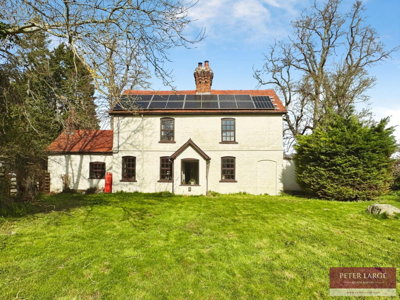
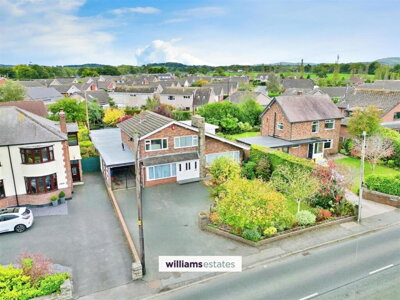
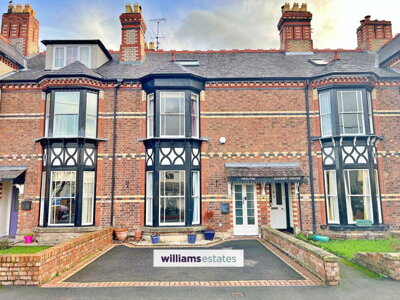
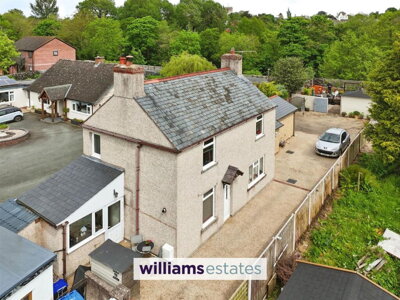
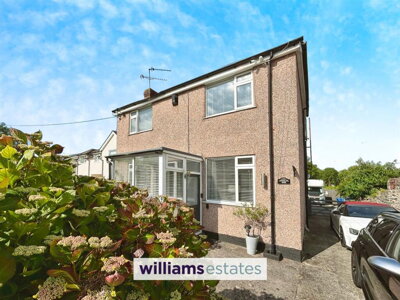
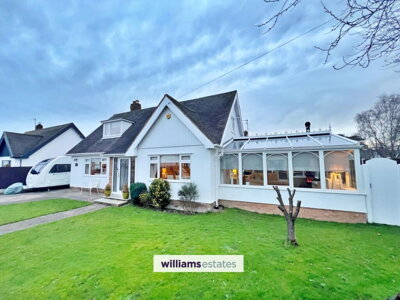
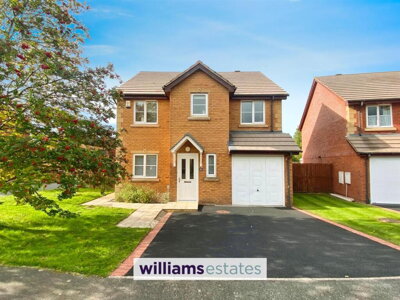
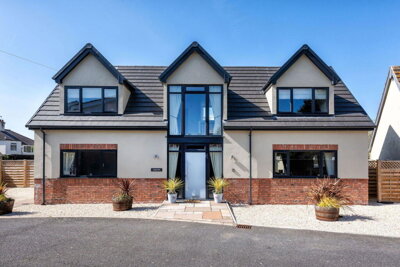
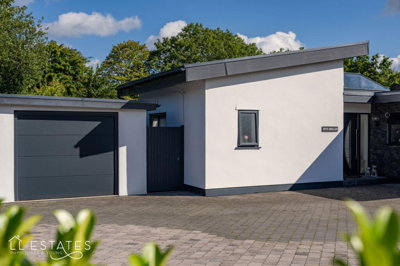
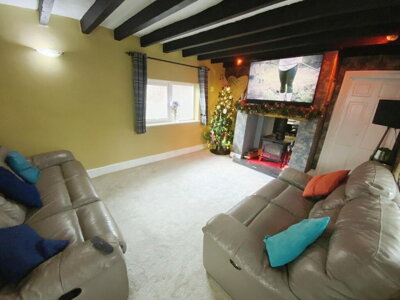
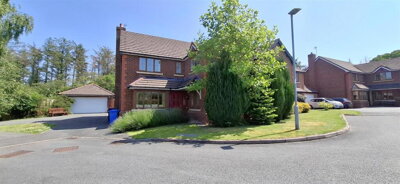
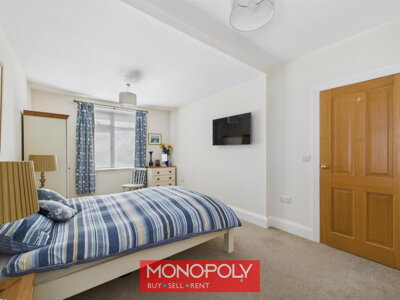
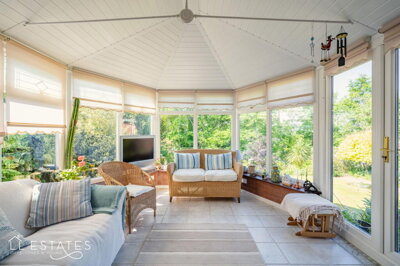
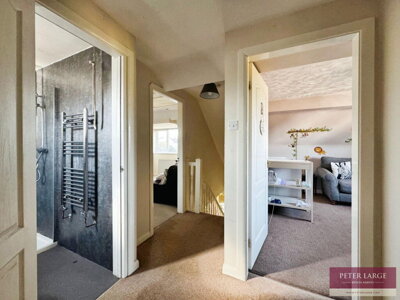
Browse 14 homes for sale in St. Asaph from local estate agents.
Asaph from local agents. The larger property sector typically features multiple bathrooms, substantial reception space, and private gardens or off-street parking. Four bedroom houses in St. Asaph span detached, semi-detached, and occasionally terraced configurations, with styles ranging from period properties to modern executive homes.
The St. Asaph property market has shown modest correction over the past twelve months, with overall prices decreasing by approximately 2%. This softening follows national trends and presents opportunities for buyers who may have been priced out in previous years. Detached properties, which comprise 37.1% of the local housing stock, currently average £336,654, while semi-detached homes average £206,750. The terraced segment averages £165,000, and flats remain the most accessible entry point at around £107,500. These figures represent a welcome reset for local buyers seeking value in North Wales.
Price movements across different property types have varied slightly in their trajectory over the past year. Detached properties saw a 2% decrease, mirroring the overall market trend, while semi-detached homes experienced a slightly sharper correction of 3%. Terraced properties proved more resilient with only a 1% decrease, and flats showed the most significant adjustment at 4%. These variations reflect different demand patterns across the market segments, with more affordable property types seeing greater price pressure as buyer budgets remain constrained.
Three active new-build developments are currently underway in St. Asaph, offering modern homes for buyers seeking new construction. The Pastures, developed by Anwyl Homes off Glascoed Road, provides 3 and 4 bedroom homes from £269,995. Castle Green Homes has launched Lon Celyn off Chester Street with similar specifications and pricing. Macbryde Homes contributes Glan Llyn, also situated off Glascoed Road, offering competitive 3 and 4 bedroom options from £259,995. These developments provide alternatives to the older housing stock for those prioritising energy efficiency and low maintenance living.
The housing stock in St. Asaph spans several distinct eras of construction, each presenting different characteristics for buyers to consider. Properties within the city centre and older neighbourhoods often pre-date 1919, featuring solid wall construction using local limestone or brick with lime mortar and traditional slate roofing. Post-war development from 1945 to 1980 brought cavity wall construction and concrete tiles, while modern properties from the 1980s onwards typically feature contemporary insulation standards and uPVC windows. Understanding these construction methods helps buyers assess maintenance requirements and potential issues when viewing properties.

St. Asaph holds the unique distinction of being Britain's smallest city, a title that reflects its historic significance rather than its population size. The city centres around St Asaph Cathedral, a Grade I listed building that has drawn visitors for centuries and remains the heart of the community. The Conservation Area encompasses the historic core, preserving the Georgian and Victorian architecture that gives the city its distinctive character. Local limestone and brick feature prominently in older properties, while slate roofing reflects the region's quarrying heritage. The Cathedral Close and High Street areas offer the most concentrated period properties, perfect for buyers seeking character homes with historical pedigree.
The local economy draws from diverse sources including healthcare, education, tourism, and agriculture. Ysbyty Glan Clwyd in nearby Bodelwyddan provides significant employment opportunities for local residents, while St Asaph Cathedral School serves families within the city. The cathedral itself attracts visitors throughout the year, supporting local businesses and hospitality venues. The surrounding Vale of Clwyd supports agricultural enterprises, while the A55 Expressway enables commuting to larger employment centres along the North Wales coast. Small businesses and local shops form the backbone of the city centre, providing everyday amenities within walking distance for most residents.
The surrounding Vale of Clwyd offers exceptional countryside for residents to enjoy, with rolling farmland, footpaths, and bridleways providing opportunities for walking and cycling. The relatively flat terrain of the valley makes cycling a viable option for local journeys, whether commuting to work or exploring the surrounding area. The River Elwy flows through the city, contributing to the landscape but also requiring consideration from buyers regarding flood risk in lower-lying areas. The proximity to the North Wales coast means that beaches at Rhyl and Prestatyn are within easy reach, while Snowdonia National Park offers more adventurous day trips for outdoor enthusiasts.

Education provision in St. Asaph serves families at all stages of their children's development. St Asaph Cathedral School provides primary education within the city itself, offering convenient access for younger children. For secondary education, local students typically attend schools in nearby towns, with good transport links connecting St. Asaph to secondary schools across Denbighshire. The presence of a cathedral school often indicates strong community ties and values-based education, factors that appeal to families seeking a nurturing environment for their children.
Denbighshire County Council manages education provision across the region, with catchment areas determining which schools serve specific addresses. Families considering property purchase in St. Asaph should verify current catchment boundaries and admission policies with the local education authority, as these can change and may influence school placement. Transport arrangements for secondary school students are managed through the council, with bus services connecting St. Asaph to schools in surrounding towns. The council's website provides detailed information about school performance data, admission arrangements, and catchment area maps.
Further education opportunities in the region include colleges in Rhyl, Colwyn Bay, and Wrexham, accessible via the excellent road network. The University of Bangor and University of Chester are both within reasonable commuting distance for students pursuing higher education, while the A55 provides connections to universities in Liverpool and Manchester for those willing to travel further. Parents considering property purchase in St. Asaph should verify current catchment areas and admission policies with Denbighshire County Council, as these can change and may influence which schools serve specific neighbourhoods within the city.
St. Asaph benefits from exceptionally good transport connections for a city of its size, primarily due to its proximity to the A55 North Wales Expressway. This major trunk road runs along the North Wales coast, providing swift access to Chester (approximately 40 minutes), Liverpool (around 75 minutes), and the M56 motorway network beyond. For commuters working in larger cities but seeking a more affordable and peaceful place to live, St. Asaph presents an attractive proposition. The journey to Rhyl takes roughly 15 minutes, while Bangor and the Isle of Anglesey are accessible within 30 minutes.
Rail connections are available at Rhyl and Chester stations, with direct services to London Euston from Chester taking approximately two hours. Rhyl station provides connections along the North Wales coast and direct services to Birmingham and the West Midlands. For international travel, Manchester Airport is accessible within approximately 90 minutes via the M56, offering flights to destinations worldwide. Liverpool John Lennon Airport is similarly convenient, reached via the M56 and M6 in around 75 minutes.
Local bus services connect St. Asaph with surrounding villages and towns, though frequencies may be limited on less popular routes. The relatively flat terrain of the Vale of Clwyd makes cycling viable for local journeys, though the A55 is not suitable for cyclists and alternative routes must be used for longer distances. Parking within the city centre is generally straightforward compared to larger urban areas, with on-street and public car parking available. For daily commuters, car pooling schemes operate in the region, providing an environmentally friendly and cost-effective option for those travelling to larger employment centres.
Spend time exploring St. Asaph before committing to a purchase. Visit at different times of day and week, speak to local residents, and understand the specific neighbourhood where you hope to buy. Consider factors such as flood risk from the River Elwy, proximity to the Conservation Area, and how different areas relate to local amenities and transport links. The Cathedral Close and High Street areas offer period properties with historic character, while newer developments like The Pastures and Glan Llyn on Glascoed Road provide modern alternatives with different lifestyle considerations.
Before viewing properties, obtain a mortgage agreement in principle from a lender. This strengthens your position when making offers and demonstrates to sellers that you are a serious buyer with financing in place. In St. Asaph's market where detached properties average £336,654 and entry-level flats start around £107,500, understanding your budget helps focus your search on appropriate property types and locations. Several mortgage brokers operate across Denbighshire with experience in the local market.
Work with local estate agents who know the St. Asaph market intimately. View a range of properties across different price points and property types. Pay attention to construction materials, signs of damp in older properties, roof condition on slate-roofed homes, and any indications of past flooding from the River Elwy. In older properties within the Conservation Area, check for listed building status and any restrictions on alterations. Properties built before 1980 may require updates to electrical wiring, plumbing, and insulation.
Before completing your purchase, arrange a RICS Level 2 Survey (Homebuyer Report) for the property. In St. Asaph, where significant housing stock pre-dates 1980, this survey can identify issues such as damp, roof deterioration, timber defects, and potential subsidence related to clay soils. A typical 3-bedroom semi-detached house in St. Asaph would cost between £450 and £550 for a Level 2 survey, while larger detached properties may reach £700 or more. For listed buildings or complex period properties, a RICS Level 3 Survey may be more appropriate.
Choose a conveyancing solicitor with experience in Welsh property transactions. They will handle searches, contracts, and registration with HM Land Registry. Ensure they understand local considerations such as Conservation Area restrictions, listed building implications, and any area-specific planning constraints. Your solicitor will also conduct environmental searches including flood risk assessment from the River Elwy and check for any historical mining activity in the wider region that might affect the property.
Once all searches are satisfactory and financing is confirmed, your solicitor will exchange contracts and agree a completion date. On completion day, the remaining balance is transferred, and you receive the keys to your new St. Asaph home. Buildings insurance must be in place from exchange of contracts, so ensure this is arranged before that date. Congratulations on your new home in Britain's smallest city.
Properties in St. Asaph present unique considerations that buyers should evaluate carefully before committing to a purchase. The city's location in the Vale of Clwyd means that some areas are susceptible to flooding from the River Elwy, which experienced significant flooding in 2012. Buyers should investigate flood risk for specific properties, particularly those on lower ground or near the river. Surface water flooding can also occur during heavy rainfall due to local topography and drainage capacity. A thorough survey can identify visible signs of past flooding and assess a property's vulnerability.
The Conservation Area designation affects properties in the city centre, imposing restrictions on alterations, extensions, and external appearance changes. Buyers considering period properties should understand that listed building consent may be required for certain works, and that permitted development rights may be more limited than in non-designated areas. St Asaph Cathedral and numerous surrounding properties hold Grade I or Grade II listed status, meaning any works affecting their character or structure require consent from the local planning authority. These designations protect the city's heritage but impose additional responsibilities on owners.
Older properties throughout St. Asaph often feature solid wall construction, traditional lime mortar, and original slate roofing that requires different maintenance approaches compared to modern cavity wall construction. Solid wall properties lack the insulation of modern cavity walls, potentially resulting in higher heating costs and condensation issues. Lime mortar is softer than modern cement mortar and allows walls to breathe, so repointing with cement can trap moisture and cause deterioration. Original slate roofs on period properties require regular inspection and may need specialist repair using reclaimed Welsh slate to match existing materials.
Geological conditions in parts of St. Asaph include clay-rich glacial till deposits that create potential shrink-swell risk, particularly for properties with mature trees or those built with shallower foundations. The underlying Carboniferous Limestone and superficial deposits in the Vale of Clwyd mean that ground conditions can vary across short distances. Properties in areas with active ground conditions may show signs of cracking or movement, and a survey should assess foundation condition and any evidence of subsidence or heave. Electrical wiring and plumbing in properties built before the 1980s may require upgrading to meet current standards, and asbestos-containing materials could be present in pre-2000 construction, particularly in textured coatings and pipe insulation.
The current average house price in St. Asaph stands at £246,819 based on recent market data. Detached properties average £336,654, semi-detached homes average £206,750, terraced properties average £165,000, and flats average £107,500. Prices have decreased by approximately 2% over the past twelve months, presenting opportunities for buyers in a market that has seen modest correction following previous growth. The market correction has been most pronounced in the flat segment, which saw a 4% decrease, while terraced properties proved more resilient with only a 1% reduction.
Council tax bands in St. Asaph are set by Denbighshire County Council and vary according to property value and type. Band A properties typically represent the lowest values, while Band H contains the most valuable homes in the area. You can check the specific band for any property through the Welsh Government website or by contacting Denbighshire County Council directly. Council tax payments fund local authority services including education, highways, refuse collection, and local policing across Denbighshire.
St Asaph Cathedral School provides primary education within the city itself, serving families with children of primary school age. For secondary education, students typically attend schools in surrounding towns, with transport links connecting St. Asaph to secondary schools across Denbighshire. Families should verify current catchment areas with the local education authority, as admission policies can affect which schools serve specific addresses. Denbighshire County Council's website provides school performance data and admission details for all schools in the region.
St. Asaph benefits from proximity to the A55 North Wales Expressway, which provides excellent road connections to Chester, Liverpool, and the wider motorway network. Rail services are accessible at Rhyl and Chester stations, with direct trains to London from Chester taking approximately two hours. Local bus services connect St. Asaph with surrounding communities, though frequencies may be limited on less frequently served routes. For air travel, Manchester Airport is approximately 90 minutes away via the M56.
St. Asaph offers several factors that may appeal to property investors. The city's status as Britain's smallest city and the presence of the cathedral attract tourism interest throughout the year. The relatively affordable average house price of £246,819 compared to larger UK cities provides an accessible entry point for buy-to-let investments. New build developments such as The Pastures, Lon Celyn, and Glan Llyn indicate ongoing demand in the area. However, investors should consider factors such as flood risk in certain areas near the River Elwy, the proportion of older properties requiring maintenance, and local rental demand before committing to purchase.
In England and Northern Ireland, Stamp Duty Land Tax rates for residential properties start at 0% on the first £250,000 of purchase price, then 5% on the portion from £250,001 to £925,000. However, because St. Asaph is in Wales, Land Transaction Tax (LTT) applies instead. The Welsh LTT standard rate starts at 0% on the first £225,000, with 6% applying between £225,001 and £400,000, and higher rates above that threshold. First-time buyers in Wales receive enhanced relief on purchases up to £500,000. You should verify current thresholds with the Welsh Revenue Authority as these can change in Budget statements.
Properties in St. Asaph face flood risk from the River Elwy, which flows through the city. Significant flooding occurred in 2012, affecting properties in the river's floodplain and demonstrating the potential impact on homes in lower-lying areas. Surface water flooding can also occur during heavy rainfall due to local topography and drainage limitations in parts of the city. Buyers should request flood risk searches from their solicitor and consider this risk when evaluating properties, particularly those on lower ground near the river or in areas with a history of surface water pooling. The Environment Agency and Natural Resources Wales provide flood maps that can help assess risk for specific locations.
Period properties in St. Asaph, particularly those within the Conservation Area around the cathedral, often feature traditional construction methods that differ significantly from modern standards. Look for signs of damp in solid wall properties, which may show as tide marks on walls or peeling wallpaper at low levels. Check the condition of slate roofing, as original slates can slip or crack with age, and examine leadwork around chimneys and valleys for deterioration. In Georgian and Victorian properties, original timber sash windows may require restoration rather than replacement if listed building consent would be required for changes. Electrical wiring in older properties frequently requires updating, and inspection chambers should be accessible to check the condition of drainage runs.
We strongly recommend commissioning a RICS Level 2 Survey (Homebuyer Report) for any property purchase in St. Asaph. Given the significant proportion of homes built before 1980, often with solid walls and traditional construction, professional surveys can identify defects that may not be apparent during a standard mortgage valuation. Typical defects found in St. Asaph properties include rising damp in solid wall construction, deterioration of slate roofing, timber defects including wet and dry rot, and potential subsidence related to clay soils in certain locations. For listed buildings or complex period properties, a more comprehensive RICS Level 3 Survey may be more appropriate to assess the full condition and maintenance requirements.
Understanding the full costs of buying property in St. Asaph helps you budget accurately and avoid surprises during the transaction. Because St. Asaph is located in Wales, Land Transaction Tax (LTT) applies rather than Stamp Duty Land Tax. The standard LTT rates start at 0% on the first £225,000 of purchase price, then 6% on the portion between £225,001 and £400,000. Properties between £400,001 and £750,000 incur 7.5%, while those between £750,001 and £1.5 million pay 10%, and anything above £1.5 million incurs 12%. These thresholds can change during Budget statements, so verifying current rates with the Welsh Revenue Authority before completing your purchase is essential.
First-time buyers purchasing residential property in Wales benefit from enhanced LTT relief. The Welsh Government offers zero rate on the first £225,000 for first-time buyers purchasing residential property up to £500,000, compared to the standard threshold of £225,000. This relief can save first-time buyers several thousand pounds compared to the standard rates. Properties priced above £500,000 do not receive first-time buyer relief, so standard rates apply from the first pound. To qualify for first-time buyer relief, all buyers must be first-time purchasers and the property must be your main residence.
Beyond Land Transaction Tax, buyers should budget for solicitor fees (typically £500 to £1,500 for conveyancing in the St. Asaph area), survey costs (RICS Level 2 surveys in St. Asaph range from £400 to £700 depending on property size and complexity), and search fees (approximately £250 to £400 for local and environmental searches). Your solicitor will conduct searches including drainage and water searches, local authority searches, environmental searches to identify contamination risks, and flood risk searches specific to the River Elwy. Removal costs vary according to distance and volume of belongings, while mortgage arrangement fees range from zero to £2,000 or more depending on the lender and product chosen. Buildings insurance must be in place from exchange of contracts, so factor this into your timeline.
Get a mortgage quote to understand your budget before searching for homes for sale in St. Asaph.
From 4.5%
Professional solicitors to handle your St. Asaph property purchase, including local searches and Land Transaction Tax returns.
From £499
Professional survey to identify defects in St. Asaph properties before you commit to purchase.
From £400
Energy performance certificate required for selling your St. Asaph property.
From £60
Properties for Sale In London

Properties for Sale In Plymouth

Properties for Sale In Liverpool

Properties for Sale In Glasgow

Properties for Sale In Sheffield

Properties for Sale In Edinburgh

Properties for Sale In Coventry

Properties for Sale In Bradford

Properties for Sale In Manchester

Properties for Sale In Birmingham

Properties for Sale In Bristol

Properties for Sale In Oxford

Properties for Sale In Leicester

Properties for Sale In Newcastle

Properties for Sale In Leeds

Properties for Sale In Southampton

Properties for Sale In Cardiff

Properties for Sale In Nottingham

Properties for Sale In Norwich

Properties for Sale In Brighton

Properties for Sale In Derby

Properties for Sale In Portsmouth

Properties for Sale In Northampton

Properties for Sale In Milton Keynes

Properties for Sale In Bournemouth

Properties for Sale In Bolton

Properties for Sale In Swansea

Properties for Sale In Swindon

Properties for Sale In Peterborough

Properties for Sale In Wolverhampton

Enter your details to see if this property is within your budget.
Loans, cards, car finance
Estimated property budget
Borrowing + deposit
You could borrow between
Typical borrowing
Monthly repayment
Est. at 4.5%
Loan-to-value
This is an estimate only. Your actual budget may vary depending on interest rates, credit history, and personal circumstances. For an accurate affordability assessment, speak to one of our free mortgage advisors.
This calculator provides estimates for illustrative purposes only and does not constitute financial advice. Your home may be repossessed if you do not keep up repayments on your mortgage. Estimates based on 4.5% interest rate, repayment mortgage. Actual rates depend on your circumstances.
Homemove is a trading name of HM Haus Group Ltd (Company No. 13873779, registered in England & Wales). Homemove Mortgages Ltd (Company No. 15947693) is an Appointed Representative of TMG Direct Limited, trading as TMG Mortgage Network, which is authorised and regulated by the Financial Conduct Authority (FRN 786245). Homemove Mortgages Ltd is entered on the FCA Register as an Appointed Representative (FRN 1022429). You can check registrations at NewRegister or by calling 0800 111 6768.

We use cookies to show you personalised content and improve your experience of our website. Find out more in our Privacy policy and Cookie policy.