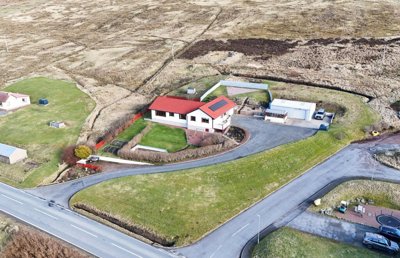
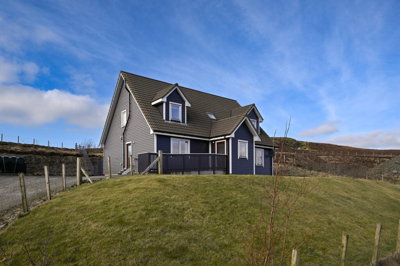
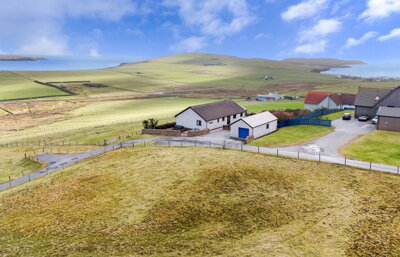
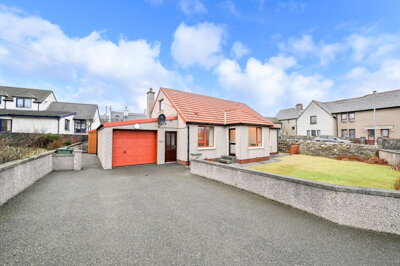
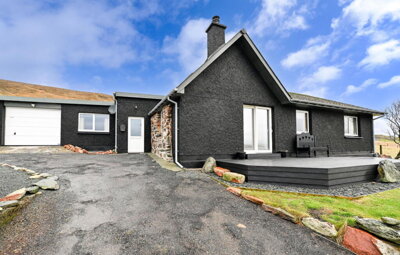
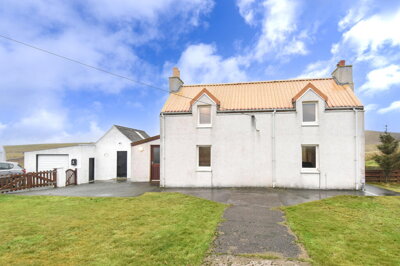
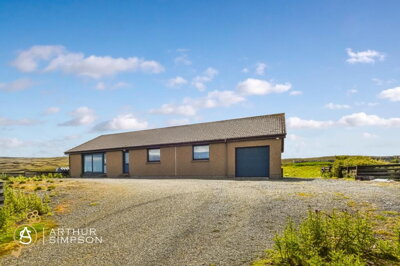
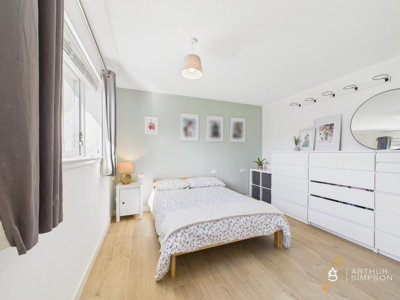
Browse 8 homes for sale in Shetland Islands from local estate agents.
The larger property sector typically features multiple bathrooms, substantial reception space, and private gardens or off-street parking. Four bedroom houses in Shetland Islands span detached, semi-detached, and occasionally terraced configurations, with styles ranging from period properties to modern executive homes.
The Shetland Islands property market has demonstrated remarkable resilience and growth, with the average house price reaching £202,000 in December 2025. This represents a significant 9.9% increase compared to the previous year, outpacing the national Scottish average growth rate of 4.9% during the same period. Despite this appreciation, Shetland property prices remain accessible compared to many mainland UK regions, offering exceptional value for those seeking spacious island living. The market has seen particular strength in certain property types, with detached properties commanding premium prices while terraced houses and flats provide more entry-level opportunities for buyers.
Property prices across Shetland vary considerably by type and location. Detached properties average around £275,000, reflecting the desirability of standalone homes with land and panoramic views that the islands abundantly provide. Semi-detached properties typically sell for approximately £193,000, making them popular choices for families seeking generous living spaces without the higher costs associated with fully detached homes. Terraced properties average £136,000, while flats and maisonettes start from around £100,000, offering affordable routes onto the property ladder in this desirable location. Recent data from property portals indicates slightly varying figures, with Zoopla reporting an average sold price of £207,325 over the past twelve months, demonstrating consistent strength across multiple measurement methodologies.
The volume of transactions in Shetland naturally reflects its smaller population, with around 2,567 properties having changed hands over the past decade according to available records. This lower transaction volume can lead to greater price volatility compared to larger markets, meaning individual sales can have more noticeable effects on average figures. Prospective buyers should be aware that properties in the islands may take longer to sell than in urban mainland areas, yet demand from those seeking the Shetland lifestyle continues to support the market. New build activity remains limited, with most housing stock comprising traditional properties or individual custom builds rather than large-scale developments.

The Shetland Islands offer a quality of life that is increasingly rare in modern Britain, characterised by unspoiled natural beauty, strong community bonds, and a pace of life that allows residents to truly connect with their surroundings. With a population of approximately 23,060 people across the archipelago, the islands manage to combine the benefits of a close community with access to comprehensive local services and modern amenities. Lerwick, the capital and main settlement, provides the commercial and administrative hub with shops, restaurants, healthcare facilities, and cultural attractions including the acclaimed Shetland Museum and Archives. Beyond the main town, smaller settlements like Scalloway, Walls, and Baltasound each offer their own distinctive character and tight-knit communities.
The housing stock in Shetland reflects its unique character and heritage, with approximately 48% of properties being detached houses, a remarkably high proportion compared to most UK areas. This reflects both the rural nature of island living and the traditional crofthouses that have been part of the landscape for centuries. Only 16% of properties are semi-detached, with terraced houses comprising just 4% of the housing mix, while the remaining 32% includes flats and other property types. Many homes throughout the islands retain traditional construction methods, including drystone walls and timber elements, giving properties a character and authenticity that is increasingly hard to find elsewhere. The remaining 32% of housing consists of flats, cottages, and other property types that cater to various budgets and lifestyle preferences.
The local economy provides diverse employment opportunities that help sustain the housing market and community. The oil and gas industry has historically been a cornerstone of the Shetland economy, centred on the Sullom Voe Terminal that remains one of Europe's largest oil terminals. However, the islands have been proactive in diversifying their economic base, with fishing and aquaculture continuing as traditional strengths while renewable energy, particularly wind power, represents an increasingly important sector for future growth. The public sector, including Shetland Islands Council, health services, and education, provides stable employment for many residents. Tourism plays an growing role, with visitors drawn by the stunning landscapes, unique wildlife including puffins and orcas, the famous Up Helly Aa fire festival, and the distinctive Shetland dialect and cultural traditions that blend Scandinavian and Scottish heritage.

Education provision across the Shetland Islands has been carefully developed to serve communities spread across a vast geographical area, from the main island of Mainland to the remote Outermost Isles including Foula, Papa Strel, and Fair Isle. Shetland Islands Council maintains a network of primary schools throughout the archipelago, ensuring that children in even the most remote settlements have access to early years and primary education within their local communities. Anderson High School in Lerwick serves as the main secondary school for the central area, while other secondary provision exists in Scalloway and smaller centres, with boarding options available for families in the most remote locations. The education system reflects the islands' commitment to maintaining population and services across all communities, understanding that good schools are essential for families considering a move to the islands.
Further and higher education opportunities are centred in Lerwick, where Shetland College provides vocational and higher education courses including degree programmes delivered in partnership with mainland universities. The college has developed strong links with industries crucial to the local economy, offering courses in maritime studies, renewable energy, computing, and business that prepare students for careers in sectors with strong local demand. For families seeking private education, options are more limited than in urban areas, though the quality of state provision is generally regarded highly, with the close community bonds often translating into supportive learning environments with lower student-to-teacher ratios than many mainland schools.
Families moving to Shetland should consider the practical implications of education in a remote island setting, including transport arrangements for secondary pupils who may need to travel between communities. The Outermost Isles present particular considerations, with some families choosing to access secondary education through boarding facilities or relocation to Lerwick during the teenage years. However, many parents view these challenges as worthwhile trade-offs for raising children in an environment of outstanding natural beauty, strong community values, and the unique opportunities that island life provides for outdoor activities, wildlife encounters, and developing independence in a safe setting.

Transport in the Shetland Islands requires a different mindset compared to mainland travel, with ferry services and air connections forming the essential links between the archipelago and the outside world. Lerwick is served by a ferry terminal offering regular crossings to Aberdeen, a journey of approximately 12 hours that operates year-round with additional summer services. Northlink Ferries operates the main route between Lerwick and Aberdeen, with the MV Hjaltland and MV Hrossey vessels providing comfortable passenger and freight services. For those travelling to Orkney, inter-island ferries connect various Shetland communities, with some routes serving the remote Outermost Isles that maintain vital lifeline services for their small populations.
Air travel provides the fastest connection to mainland Scotland, with Loganair operating flights from Tingwall Airport near Lerwick to Aberdeen, Edinburgh, and Glasgow. These flights typically take around 1-2 hours and are essential for business travellers and those needing rapid access to mainland services including specialist healthcare and airports with international connections. The flights operate throughout the year, though weather conditions can occasionally cause disruption, particularly during winter months when fog or high winds may affect schedules. For residents, building flexibility into travel plans and maintaining awareness of weather conditions becomes a natural part of island life, with most finding that the occasional disruption is easily managed.
Within the islands themselves, a private vehicle is virtually essential for most residents given the distances between communities and the limited public transport options. The main island of Mainland is served by a network of roads ranging from single-track lanes to the more substantial routes connecting Lerwick with other major settlements. Bus services operated by the council provide connections between key towns and villages, though frequency is limited outside the main routes. Cycling is popular for shorter journeys and recreational purposes, though the hilly terrain, unpredictable weather, and single-track roads with passing places require careful consideration. Most residents consider the absence of traffic congestion and the ability to park easily as significant advantages of island motoring, with fuel costs and ferry transport for vehicles to Outermost Isles being ongoing expenses to factor into household budgets.

Start by exploring our listings to understand what properties are available in different areas of Shetland, from Lerwick apartments to traditional crofthouses in remote settlements. Consider visiting the islands if possible to experience the communities firsthand and get a feel for different locations before committing to a purchase.
Arrange a mortgage agreement in principle before viewing properties, as this strengthens your position when making offers. Given the unique nature of island property transactions, speaking with a lender familiar with Shetland mortgages can be beneficial, and our mortgage comparison tool helps you find the best rates.
Work with our partner estate agents to arrange viewings of properties that match your criteria. Remember that some properties may be located in areas requiring ferry travel or single-track road driving, so plan your viewing itinerary efficiently to make the most of your time on the islands.
We strongly recommend a RICS Level 2 survey for any property, particularly given the traditional construction methods and harsh weather exposure common in Shetland. This will identify any issues with damp, roofing, or structural concerns that are particularly relevant to the island climate.
Choose a conveyancing solicitor with experience in Scottish property transactions, as the legal process differs from England and Wales. Your solicitor will handle searches, title checks, and the completion process, ensuring all is in order for your purchase of your new island home.
Once all checks are satisfactory and your solicitor confirms readiness, you will exchange contracts and complete your purchase. Plan for the practical aspects of moving to an island location, including arranging ferry transport for belongings and coordinating with local service providers for utilities and council tax registration.
The average house price in Shetland Islands was £202,000 as of December 2025, according to the most recent data available. This represents a 9.9% increase from December 2024, demonstrating strong growth that has outpaced the wider Scottish market. Property prices vary considerably by type, with detached properties averaging around £275,000, semi-detached properties at approximately £193,000, terraced properties at £136,000, and flats starting from around £100,000. These prices reflect the unique value proposition of island living in one of Britain's most scenic and desirable locations, where the combination of stunning landscapes, strong communities, and relative affordability continues to attract buyers from the mainland.
Properties in the Shetland Islands fall under Shetland Islands Council's jurisdiction, and council tax bands are assigned based on the valuation of the property. Band A properties typically cover lower-valued homes with values up to £27,000, Band B covers properties from £27,001 to £35,000, Band C covers £35,001 to £45,000, Band D covers £45,001 to £58,000, Band E covers £58,001 to £80,000, Band F covers £80,001 to £106,000, Band G covers £106,001 to £212,000, and Band H covers properties valued over £212,000. You can check the specific band for any property through the Scottish Assessors Association website or by contacting Shetland Islands Council directly.
Education in Shetland Islands is provided through a network of primary schools across the archipelago and secondary schools centred in Lerwick and Scalloway. Anderson High School in Lerwick serves as the main secondary institution, offering comprehensive education with strong links to further education and employment pathways. Primary schools in Lerwick include Bells Brae Primary and Sound Primary, while other settlements maintain their own primary provision. The Outermost Isles have smaller schools serving very small pupil numbers, with secondary education typically requiring relocation to the main island or use of boarding facilities. Shetland College provides higher education opportunities within the islands, with degree programmes delivered in partnership with mainland universities.
Public transport connections from Shetland Islands to the mainland include ferry services from Lerwick to Aberdeen, operated by Northlink Ferries with approximately 12-hour crossing times and multiple sailings per week. Air services from Tingwall Airport near Lerwick connect to Aberdeen, Edinburgh, and Glasgow, with flights taking around 1-2 hours. Within the islands, bus services operated by the council provide connections between major settlements, though frequency is limited outside peak routes. Given the dispersed nature of communities across the archipelago and the distances involved, most residents rely on private vehicles for daily transport, with inter-island ferry services connecting Outermost Isles. The practical realities of island transport should be carefully considered when deciding where to live within the islands.
The Shetland Islands property market offers several attractive features for investors, including relatively affordable purchase prices compared to many UK regions, strong rental demand from workers in the oil, gas, and public sectors, and consistent capital growth with prices rising 9.9% in the past year. The limited supply of rental properties in a small market with ongoing demand from professionals moving to the islands for work creates opportunities for landlords. However, investors should be aware of factors including the potential for voids during winter months when access can be affected by weather, the higher costs associated with property maintenance in the coastal climate, and the importance of local knowledge in identifying the best investment opportunities. Properties near Lerwick with good transport links tend to offer the most liquid market for both sales and rentals.
Stamp Duty Land Tax (SDLT) applies to property purchases in Shetland Islands as it does across Scotland, though Scotland's Land and Buildings Transaction Tax (LBTT) is the relevant tax rather than SDLT for Scottish properties. The LBTT residential rates start at 0% on the first £145,000 of the purchase price, then 2% on the portion from £145,001 to £250,000, 5% from £250,001 to £325,000, 10% from £325,001 to £750,000, and 12% on any amount above £750,000. First-time buyers in Scotland receive relief on the first £175,000 of their purchase, paying 0% on that portion. Given the average property price of around £202,000 in Shetland, most purchases would attract LBTT only on the portion above £145,000, making the tax liability relatively modest for typical island homes.
Properties in the Shetland Islands present unique considerations that buyers should carefully evaluate before committing to a purchase. The traditional construction methods used in many properties, including drystone walls, render finishes, and slate or corrugated iron roofs, require careful inspection to ensure they have been well maintained against the harsh coastal weather. Driving rain and salt spray can cause penetrating damp in older properties, while roof coverings may show accelerated wear compared to mainland homes. A thorough RICS Level 2 survey is money exceptionally well spent in this environment, identifying defects that might not be apparent during a casual viewing and giving you negotiating room on the purchase price if significant issues are discovered.
Coastal erosion and flood risk require specific attention when evaluating properties in Shetland, given the islands' exposed Atlantic position and the ongoing natural processes affecting coastlines throughout the archipelago. Properties located close to the shoreline, particularly in low-lying areas, may face increased risk from storm surges and coastal flooding during severe weather events. The geology of the Shetland Islands is dominated by metamorphic and igneous rocks, which means there is no significant shrink-swell clay risk that affects properties in other parts of the UK. However, localized ground movement can occur in older properties or those on exposed sites, so your surveyor will assess foundation conditions carefully. While specific flood risk maps for the entire Shetland Islands may not be as readily available as for mainland areas, local knowledge and inspection of the property's position relative to the coastline and any historical flooding records should form part of your due diligence.
Listed buildings and conservation area properties, particularly those in historic Lerwick around areas such as Commercial Street, offer wonderful architectural character but require careful consideration before purchase. These properties often have restrictions on alterations and renovations that may limit your ability to make changes or may require Listed Building Consent from Shetland Islands Council. The additional costs and requirements associated with maintaining listed status should be factored into your decision-making, though many owners find the privilege of living in such historic properties outweighs these considerations. Energy efficiency can also be a challenge in older traditional properties, though grants and schemes may be available to help with improvements, and newer builds or recently renovated properties may offer better thermal performance.

Properties for Sale In London

Properties for Sale In Plymouth

Properties for Sale In Liverpool

Properties for Sale In Glasgow

Properties for Sale In Sheffield

Properties for Sale In Edinburgh

Properties for Sale In Coventry

Properties for Sale In Bradford

Properties for Sale In Manchester

Properties for Sale In Birmingham

Properties for Sale In Bristol

Properties for Sale In Oxford

Properties for Sale In Leicester

Properties for Sale In Newcastle

Properties for Sale In Leeds

Properties for Sale In Southampton

Properties for Sale In Cardiff

Properties for Sale In Nottingham

Properties for Sale In Norwich

Properties for Sale In Brighton

Properties for Sale In Derby

Properties for Sale In Portsmouth

Properties for Sale In Northampton

Properties for Sale In Milton Keynes

Properties for Sale In Bournemouth

Properties for Sale In Bolton

Properties for Sale In Swansea

Properties for Sale In Swindon

Properties for Sale In Peterborough

Properties for Sale In Wolverhampton

Enter your details to see if this property is within your budget.
Loans, cards, car finance
Estimated property budget
Borrowing + deposit
You could borrow between
Typical borrowing
Monthly repayment
Est. at 4.5%
Loan-to-value
This is an estimate only. Your actual budget may vary depending on interest rates, credit history, and personal circumstances. For an accurate affordability assessment, speak to one of our free mortgage advisors.
This calculator provides estimates for illustrative purposes only and does not constitute financial advice. Your home may be repossessed if you do not keep up repayments on your mortgage. Estimates based on 4.5% interest rate, repayment mortgage. Actual rates depend on your circumstances.
Homemove is a trading name of HM Haus Group Ltd (Company No. 13873779, registered in England & Wales). Homemove Mortgages Ltd (Company No. 15947693) is an Appointed Representative of TMG Direct Limited, trading as TMG Mortgage Network, which is authorised and regulated by the Financial Conduct Authority (FRN 786245). Homemove Mortgages Ltd is entered on the FCA Register as an Appointed Representative (FRN 1022429). You can check registrations at NewRegister or by calling 0800 111 6768.

We use cookies to show you personalised content and improve your experience of our website. Find out more in our Privacy policy and Cookie policy.