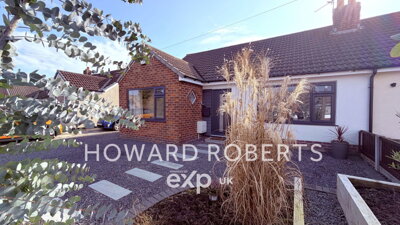
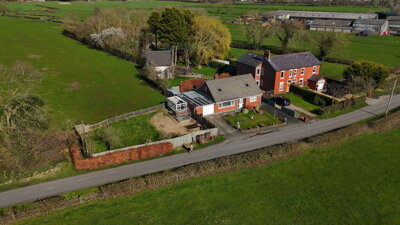
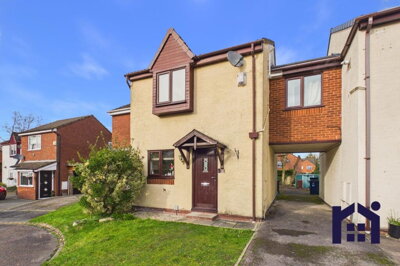
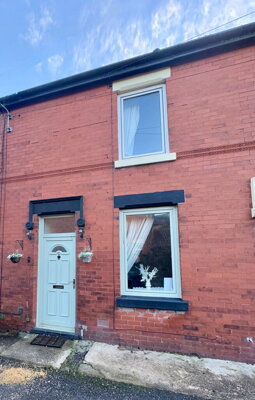
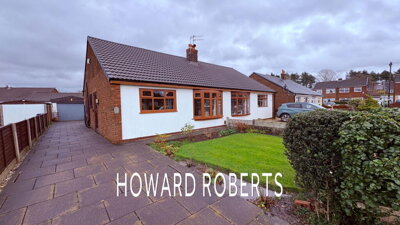
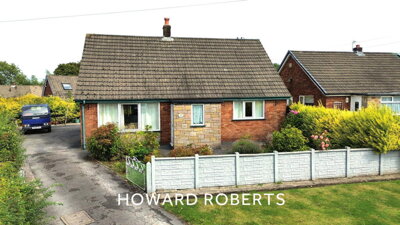
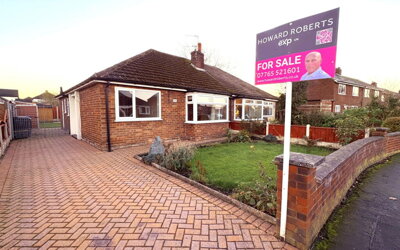
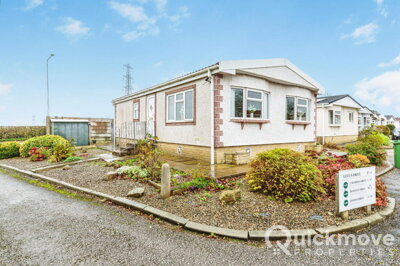
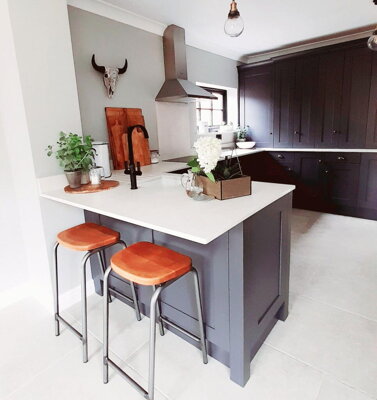
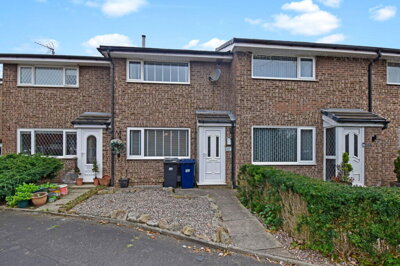
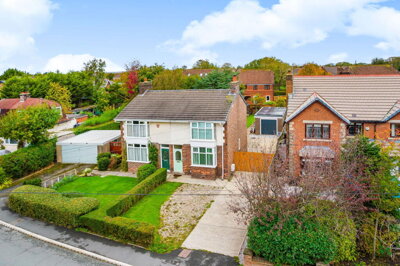
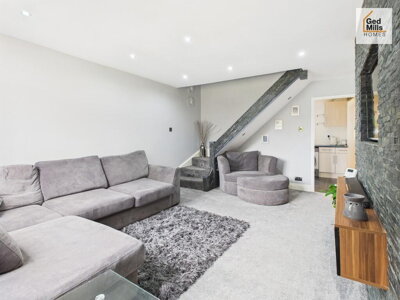
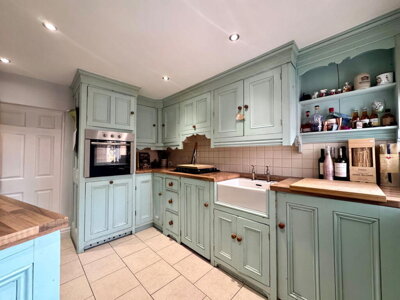
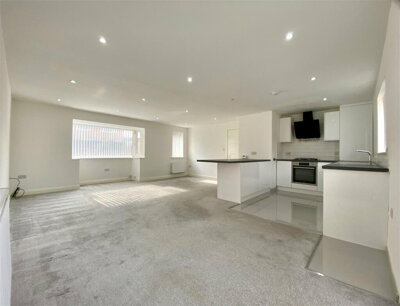
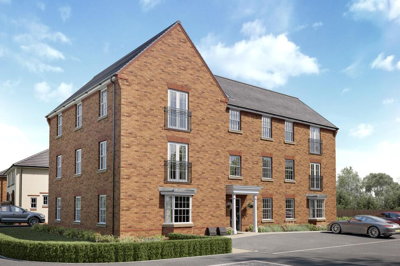
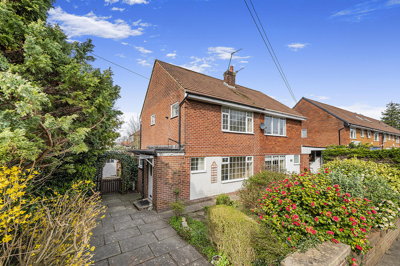
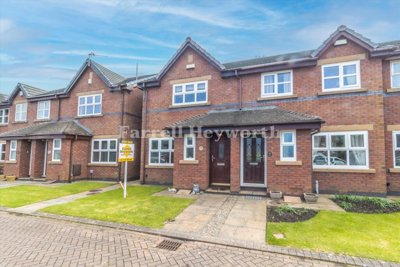
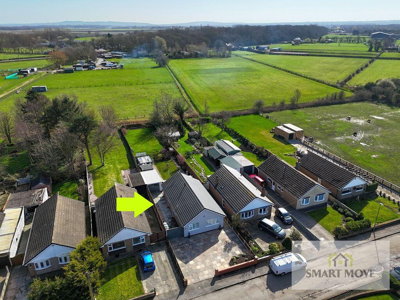
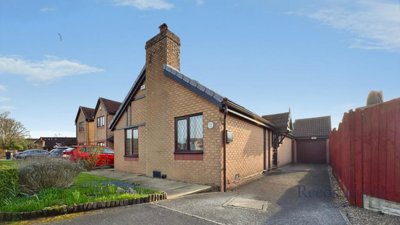
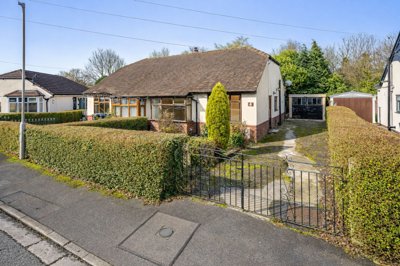
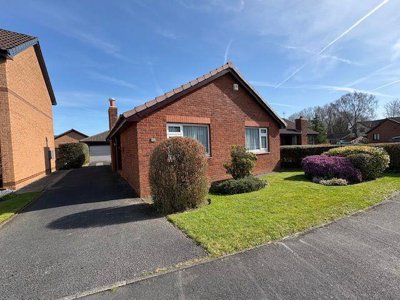
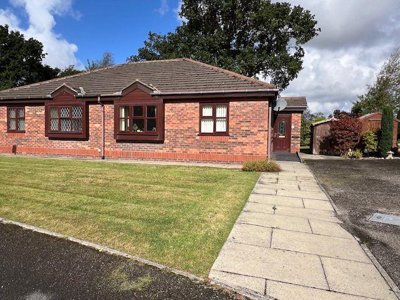
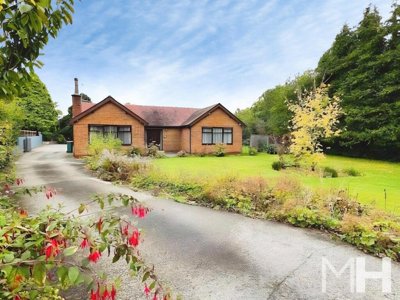
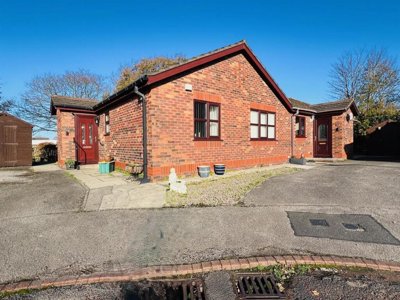
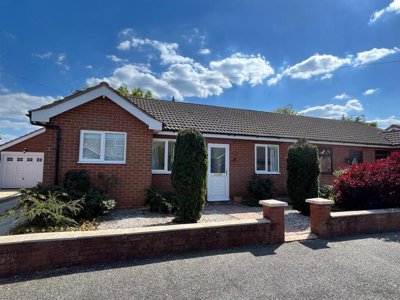
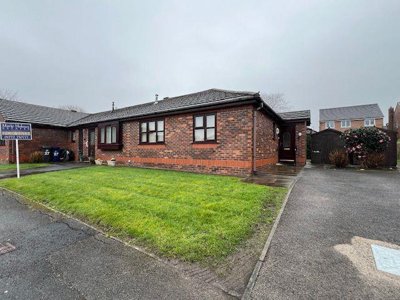
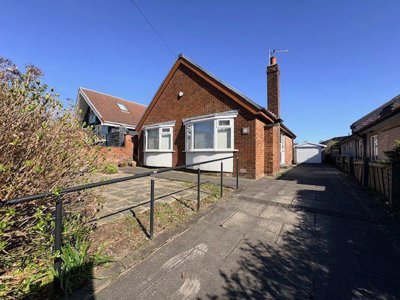
Browse 325 homes for sale in PR4 from local estate agents.
The 2 bed house market features detached, semi-detached, and terraced properties with two separate bedrooms plus living spaces. Properties in PR4 range from Victorian and Edwardian period homes to modern new builds, with pricing varying across different neighbourhoods.
£180k
27
3
66
Source: home.co.uk
Showing 27 results for 2 Bedroom Houses for sale in PR4. 3 new listings added this week. The median asking price is £179,999.
Source: home.co.uk
Terraced
15 listings
Avg £153,620
Semi-Detached
10 listings
Avg £208,190
Detached
2 listings
Avg £180,000
Source: home.co.uk
Source: home.co.uk
The PR4 postcode area presents a diverse property market with prices ranging significantly based on property type, location within the postcode, and proximity to local amenities. Detached family homes command the highest prices, averaging between £377,000 and £394,000 across the wider PR4 area, with the PR4 4 sub-district (encompassing areas like Longton and Hutton) showing average prices around £409,000. This premium reflects the desirability of larger detached properties in this semi-rural corridor, many of which sit on generous plots with access to excellent local schools and countryside walks. The PR4 1 area offers more accessible entry points with averages around £231,000, making it attractive for first-time buyers and investors seeking value in a well-connected location.
Semi-detached properties across PR4 average between £223,000 and £228,000, representing strong value for families needing extra bedroom space and garden areas. These properties often date from the mid-twentieth century, built during the post-war expansion that characterised much of South Ribble's development. Terraced properties provide the most affordable entry point to the PR4 market, with typical prices between £164,000 and £172,000, ideal for first-time buyers looking to step onto the property ladder in a sought-after postcode. Flats in the PR4 area average around £194,000, though stock remains relatively limited as the area's housing stock predominantly consists of houses rather than apartments.
The market has shown interesting sub-postcode variations, with the PR4 3 area averaging around £268,710 while PR4 4 commands significantly higher values. Recent transaction data suggests overall prices are 2% down on the previous year but remain 2% above the 2023 peak of £287,527, indicating a market that has found its equilibrium after recent adjustments. Some smaller postcode sectors have outperformed dramatically, with PR4 0EX rising 36% year-on-year and PR4 4GN increasing 20%, reflecting concentrated demand in specific localities.

Life in the PR4 postcode area combines the best of Lancashire's rural heritage with the practical advantages of proximity to Preston and the M6 motorway. The area encompasses a necklace of villages and small towns that have grown together over decades while retaining distinct characters and community identities. Longton serves as a local centre with shops, pubs, and essential services, while New Longton and Much Hoole offer quieter village atmospheres with active community associations and regular local events. The surrounding countryside includes productive farmland, country lanes popular with cyclists and walkers, and the nearby Ribble Estuary providing wildlife habitats and outdoor recreation opportunities.
Residents of PR4 enjoy access to a range of local amenities including independent shops, family-run restaurants, and traditional Lancashire pubs serving real ale and home-cooked food. The area has seen investment in local services over recent years, with new retail development around Preston giving easy access to major supermarkets, high street retailers, and leisure facilities. Cultural life draws from both Lancashire traditions and proximity to Preston, with easy access to theatres, museums, and entertainment venues in the city. Community facilities include village halls, sports clubs, and churches serving the various settlements within the postcode, fostering a strong sense of local identity despite the area's proximity to urban Preston.
The semi-rural character of PR4 villages means that community life often revolves around local events, farmers' markets, and seasonal celebrations that draw residents together. Much Hoole Church Town retains particular historical charm with its distinctive church and village green, while Longton has developed as a minor commercial hub serving the surrounding agricultural community. The area's proximity to the Ribble Estuary also provides opportunities for birdwatching, walking, and outdoor activities, with the landscape changing dramatically through the seasons and offering residents genuine connection to Lancashire's natural heritage.

Education provision in the PR4 area serves families well with a mix of primary schools, secondary schools, and further education facilities within easy reach. The local primary schools serving PR4 communities include institutions in Longton, New Longton, and the surrounding villages, many of which have built strong reputations for academic achievement and pastoral care. Secondary education is provided by schools in the surrounding towns, with students travelling to facilities in Preston, South Shore, and other nearby areas. The presence of good schools significantly influences property values and buyer interest in the PR4 postcode, with parents frequently prioritising catchment areas when searching for family homes.
For families considering further education options, the area benefits from proximity to Preston College, Cardinal Newman College, and the University of Central Lancashire in Preston itself. These institutions provide comprehensive further and higher education pathways without requiring long commutes from the PR4 residential areas. Many parents specifically target the PR4 postcode for its combination of educational opportunity and residential character, driving consistent demand for family-sized properties near local schools. When buying property in PR4, prospective residents should verify current catchment areas and school admission policies as these can change and directly impact property values in specific streets or neighbourhoods.
The competition for places at popular schools within the PR4 catchment can be intense, particularly for primary schools in villages like Longton and New Longton where demand from growing families consistently outstrips supply. Property values on streets within the desired catchment areas typically command premiums compared to similar properties just outside school boundaries, making school proximity a significant factor in both purchase price and investment value. Families moving to the area should register interest with schools early and understand that admission policies use complex criteria including distance, sibling connections, and faith criteria where applicable.
The PR4 postcode area enjoys excellent transport connectivity despite its semi-rural character, making it popular with commuters and those needing regular access to major centres. The M6 motorway runs to the east of the PR4 area, providing direct access to Preston (junctions 28-32), Lancaster, and the wider motorway network beyond. For rail travel, Preston mainline station offers regular services to major destinations including Manchester, Liverpool, London Euston, Birmingham, and Edinburgh, with journey times to Manchester typically around 45 minutes. Local bus services connect PR4 villages to Preston and surrounding towns, though car ownership remains common given the area's rural nature.
Local road infrastructure has been improved over recent years to accommodate growth in the area, with the A59 Liverpool Road and other major routes providing good connectivity within PR4 and to neighbouring areas. Cycling infrastructure is developing, with some dedicated routes connecting villages to Preston and popular country lanes for recreational cycling. For air travel, Liverpool John Lennon Airport and Manchester Airport are both accessible via the motorway network, typically within 45-60 minutes' drive from most PR4 locations. The combination of rural character with reliable transport options explains much of the PR4 postcode's popularity among buyers seeking to balance quality of life with practical commuting requirements.
Commuters working in Preston benefit particularly from the short journey times, with many PR4 villages offering 15-25 minute drives to Preston city centre depending on exact location and traffic conditions. For those working further afield, the M6 provides straightforward access to the M55 and M65 motorways, opening up employment opportunities across the North West region. The accessibility of Preston railway station also makes day-to-day commuting to Manchester or Liverpool feasible for those willing to manage the train schedules, with off-peak services offering significantly reduced journey times compared to peak-hour trains.
The PR4 postcode has seen selective new development activity, with modern housing schemes offering contemporary alternatives to the area's traditional housing stock. Trinity Meadow on Drumacre Lane East in Longton represents one newer development offering four-bedroom detached houses extending to approximately 275 square metres, appealing to families seeking generous room sizes and modern construction methods. Pennington Gardens in the PR4 0FP area has delivered detached properties with recent sales indicating values of around £550,000 for premium positions, reflecting strong demand for modern homes in established village locations.
New-build properties in the PR4 area typically command price premiums over equivalent older properties, justified by the enhanced energy efficiency, warranty protection, and modern layouts they offer. However, buyers should consider whether the premium pricing aligns with their priorities, as older properties in the area often feature larger plots, established gardens, and mature neighbourhood character that newer developments may not replicate. The warranty periods provided with new homes (typically 10 years under NHBC or similar schemes) provide protection against major structural defects, though standard building finishes and dependent neighbour management can still generate issues in the early years of ownership.
We recommend arranging a RICS Level 2 Homebuyer Report on any new-build property before completion or shortly after, to document the condition of finishes and identify any defects requiring developer attention under snagging procedures. Our inspectors regularly examine newly constructed properties across the PR4 area and commonly identify issues such as incomplete landscaping, minor cracks in plasterwork, and ventilation deficiencies that developers should address before final handover. Documenting these matters through an independent survey protects your interests and provides authoritative evidence when negotiating resolution with builders or developers.
The PR4 postcode area features a varied mix of property types reflecting the organic growth of its constituent villages over many decades. Victorian and Edwardian terraces remain prominent in the older village centres, particularly in areas like Longton where historical development concentrated around the railway station and local industry. These older properties often feature period details such as original fireplaces, sash windows, and decorative plasterwork that appeals to buyers seeking character and authenticity, though they typically require ongoing maintenance investment to preserve their fabric and character.
Mid-twentieth century housing dominates much of PR4's residential character, with semi-detached houses built during the 1930s to 1960s forming the backbone of village expansion. These properties typically offer practical family layouts with three bedrooms, decent gardens, and off-street parking potential, though they often require updating of electrical systems, heating installations, and insulation to meet modern standards. Inter-war semis in particular represent excellent value in the PR4 market, offering more floor area and plot size than many modern equivalents at accessible price points. Our surveyors frequently examine properties of this age in the PR4 area, identifying common issues including original timber windows requiring replacement, solid walls needing insulation consideration, and outdated consumer units needing upgrading.
Larger detached properties in PR4 range from substantial 1930s family homes on established roads to contemporary executive houses in modern developments. These premium properties typically feature generous room proportions, double garages, and mature gardens, though they also carry higher maintenance costs proportionate to their size and specification. When purchasing any property in the PR4 area, understanding the construction type and approximate age helps anticipate potential issues and budget appropriately for both immediate works and medium-term maintenance requirements.
Property buyers considering the PR4 postcode should pay attention to several location-specific factors that can affect their purchase and future resale value. Flood risk, while not prominently documented for most of PR4, warrants investigation for properties near watercourses or in low-lying areas adjacent to the River Ribble. The semi-rural nature of some PR4 locations means that planning applications for agricultural buildings, commercial development, or new housing can occur nearby, and checking local planning registers before purchase provides valuable foresight. Conservation considerations may apply to properties in older village centres, particularly those of historical character in Longton, Much Hoole, and surrounding settlements.
The age and construction of properties in PR4 varies considerably, with significant stock from the inter-war and post-war periods alongside older properties in established village centres and more recent new-build developments. Older properties may have original features requiring maintenance or updating, including roofs, windows, and systems like electrics and plumbing. When purchasing a property of any age, obtaining a thorough survey helps identify potential issues before completion. For leasehold properties, understanding ground rent obligations and service charges prevents surprises, though freehold houses predominate in most PR4 residential areas. Newer developments like Trinity Meadow near Longton and Pennington Gardens offer modern construction with contemporary layouts, typically commanding premium prices but offering lower maintenance requirements.
Properties in PR4 villages may be affected by historical mining or ground conditions that require investigation during the conveyancing process. Local authority searches should reveal any relevant records, though buyers with particular concerns might consider specialist ground condition surveys. Drainage arrangements also merit attention, as some rural properties rely on private septic systems or shared drainage arrangements that carry ongoing maintenance responsibilities and potential upgrade requirements. Your solicitor will raise appropriate pre-contract enquiries based on the property location and available information, but being aware of these potential issues helps you understand the questions being asked and interpret the responses received.
Before viewing any properties in the PR4 postcode, obtain a mortgage agreement in principle from a lender to understand your borrowing capacity and demonstrate your seriousness to estate agents. The average property price of around £287,000 in PR4 means most buyers require significant mortgage finance, and securing favourable terms early strengthens your negotiating position when competing for properties in this sought-after area.
Explore the PR4 postcode thoroughly, understanding how prices vary between different villages and property types. The PR4 4 sub-district around Longton and Hutton commands premium values averaging around £409,000, while PR4 1 offers more accessible entry points around £231,000. Consider your priorities regarding schools, commuting times, and local amenities before narrowing your search area to specific villages.
Once you have identified suitable properties, arrange viewings through Homemove or directly with local estate agents. Take notes, ask questions about the property's history including any previous extensions, renovations, or known issues, and consider visiting at different times of day to understand noise levels and the atmosphere of each neighbourhood. Our platform connects you with listings across all PR4 villages, allowing comparison of options before committing to viewings.
When you find your ideal home, make an offer through the estate agent. Upon acceptance, instruct a conveyancing solicitor immediately to begin the legal process. Our conveyancing partners offer competitive fixed fees for purchases across the PR4 area, including rural properties with potential complexities such as septic tanks, rights of way, or agricultural connections.
Arrange a RICS Level 2 Homebuyer Report to assess the property's condition and identify any issues that might affect your decision or negotiated price. Your solicitor will also conduct local authority searches to check for planning issues, environmental concerns, or historical land uses that might affect the property. Given the variety of property ages and types in PR4, from Victorian terraces to modern detached houses, a thorough survey provides essential protection for your investment.
Once all searches are satisfactory and your mortgage offer is confirmed, you will exchange contracts and pay your deposit. Completion typically follows within weeks, when you will receive the keys and take ownership of your new PR4 home. Our team can recommend local services including utility connections, home insurance, and tradespeople to help you settle into your new property quickly and smoothly.
The average house price in PR4 sits between £287,000 and £293,000 depending on the data source, with significant variation between sub-postcodes. Detached properties average around £377,000 to £394,000, semi-detached homes around £223,000 to £228,000, and terraced properties between £164,000 and £172,000. The PR4 4 sub-district (including Longton and Hutton) tends toward higher prices averaging around £409,000, while PR4 1 offers more accessible entry points around £231,000. Flats average around £194,000 though availability remains limited in this predominantly house-focused market.
Council tax bands in PR4 are set by South Ribble Borough Council and Preston City Council depending on the specific location. Most properties fall within bands A through D, with older terraced properties typically in bands A or B, semi-detached homes in bands B to C, and larger detached properties in bands D to E. Prospective buyers should verify the council tax band for any specific property as bands are assessed individually and can be challenged if believed to be incorrect. Current annual charges for a band D property in South Ribble are around £1,900-2,000 per year, with Preston City Council setting similar rates for properties in their jurisdiction.
The PR4 postcode serves several well-regarded primary schools in the local villages, with specific ratings varying by school and recent Ofsted inspection outcomes. Longton and New Longton primary schools serve families in the southern part of the postcode, while surrounding villages have their own local schools with varying capacities and catchment areas. Secondary school options include facilities in Preston and surrounding towns accessible by school transport, with many PR4 postcodes falling within catchment for popular schools that fill quickly. The area's proximity to Preston also provides access to highly performing grammar schools and specialist colleges for which students can sit entrance examinations. Parents should check current admission policies and catchment areas, as these directly determine school placement eligibility for local addresses.
PR4 benefits from regular bus services connecting villages to Preston town centre, including routes serving Longton, New Longton, and the surrounding settlements. However, private transport remains important for many residents given the semi-rural nature of the area and limited evening and weekend service frequencies. Preston railway station provides excellent national rail connections with regular services to Manchester, Liverpool, London, and other major cities, accessible via the short drive or bus journey from most PR4 locations. The M6 motorway provides quick access to the broader motorway network, with junctions 28 and 29 serving the southern Preston area effectively. Local transport links continue to improve as the area grows, though buyers should consider their specific commuting requirements when choosing a location within PR4.
The PR4 postcode has shown relative stability in property values with prices holding firm despite national market fluctuations. Some sub-areas have demonstrated strong price growth with year-on-year increases ranging from 20-50% in specific postcodes, reflecting ongoing demand for family housing in well-connected semi-rural locations. The PR4 4LB postcode sector has seen particularly impressive growth at 73% year-on-year, while PR4 0BY and PR4 0EX have shown increases of 11% and 36% respectively. Rental demand exists from young families, commuters, and those seeking more space than urban Preston provides. Property investors should consider specific micro-markets within PR4, as prices and rental yields vary significantly between different villages and property types. Semi-detached and terraced properties near good schools tend to generate the most consistent rental demand from family tenants.
Stamp Duty Land Tax applies to purchases above £250,000 at the standard rate of 5% on the portion between £250,001 and £925,000. At the PR4 average price of around £287,000, a non-first-time buyer would incur SDLT of approximately £1,850. First-time buyers purchasing at this price point would pay no SDLT due to relief on the first £425,000. For higher-value detached properties common in PR4's premium areas like Longton and Hutton, where prices average around £409,000, SDLT liability increases to approximately £7,950 for non-first-time buyers. Properties priced above £925,000 attract rates of 10% on the next portion and 12% on amounts exceeding £1.5 million. Your solicitor will calculate the exact SDLT liability based on your circumstances and property price.
We strongly recommend arranging a RICS Level 2 Homebuyer Report for any property purchase in the PR4 area, regardless of property age or apparent condition. The diverse housing stock ranging from Victorian terraces to modern detached houses contains potential defects that may not be apparent during viewings. Our inspectors examine visible and accessible areas of the property, assessing the condition of walls, roofs, plumbing, electrics, and other key elements. For older properties or those with unusual construction, a RICS Level 3 Building Survey provides more comprehensive assessment. The cost of a survey represents a small fraction of the purchase price and provides essential protection against discovering significant defects after completion. For new-build properties, a Level 2 survey helps identify snagging issues requiring developer attention before the warranty period begins.
New-build activity in PR4 has been relatively limited compared to some other areas, with selective development occurring at sites like Trinity Meadow in Longton offering four-bedroom detached houses of approximately 275 square metres. Pennington Gardens in the PR4 0FP area has delivered detached properties with recent sales indicating values approaching £550,000 for premium positions. These developments typically attract buyers seeking modern construction, energy efficiency, and warranty protection, though they command significant premiums over comparable older properties. The limited supply of new-build options in PR4 means that buyers seeking modern homes may need to consider properties in the surrounding Preston area or accept the premium pricing for available new developments within the postcode.
From 4.5% APR
Competitive mortgage rates tailored to your circumstances
From £499
Fixed-fee conveyancing for PR4 purchases
From £350
Expert inspection by qualified surveyors
From £80
Energy performance certificate for your property
Understanding the full costs of buying property in the PR4 postcode helps buyers budget accurately and avoid surprises during the transaction process. The primary government tax is Stamp Duty Land Tax, which for properties purchased at the current median price of around £287,000 would incur SDLT at the standard rate of 5% on the portion above £250,000, resulting in liability of approximately £1,850 for non-first-time buyers. First-time buyers purchasing at this price point would pay no SDLT due to relief on the first £425,000. For higher-value properties common in PR4's detached housing market, SDLT can become a significant five-figure sum requiring inclusion in financial planning.
Beyond SDLT, buyers should budget for solicitor conveyancing fees typically ranging from £500 to £1,500 depending on complexity and property value, survey costs between £350 and £800 for a RICS Level 2 Homebuyer Report, and mortgage arrangement fees of 0-1.5% of the loan amount. Searches and Land Registry fees add several hundred pounds, while removals and furnishing costs vary widely based on individual circumstances. It is prudent to maintain a contingency fund of at least 5% of the purchase price to cover unexpected issues identified during survey or complications arising during the transaction. Homemove's partners offer transparent fixed pricing for conveyancing and surveys in the PR4 area, helping buyers understand their total costs upfront.
Additional costs specific to properties in PR4 may include rural-specific items such as septic tank emptying or maintenance contracts, agricultural drainage arrangements, or shared lane upkeep contributions for properties accessed via private roads. Properties in or near conservation areas may attract additional maintenance obligations or require planning consent for certain works. Factor these potential costs into your budget calculations when comparing properties of different types and locations within the PR4 postcode. Our conveyancing partners understand the local property market and can advise on any unusual costs or obligations associated with specific properties or locations.
Properties for Sale In London

Properties for Sale In Plymouth

Properties for Sale In Liverpool

Properties for Sale In Glasgow

Properties for Sale In Sheffield

Properties for Sale In Edinburgh

Properties for Sale In Coventry

Properties for Sale In Bradford

Properties for Sale In Manchester

Properties for Sale In Birmingham

Properties for Sale In Bristol

Properties for Sale In Oxford

Properties for Sale In Leicester

Properties for Sale In Newcastle

Properties for Sale In Leeds

Properties for Sale In Southampton

Properties for Sale In Cardiff

Properties for Sale In Nottingham

Properties for Sale In Norwich

Properties for Sale In Brighton

Properties for Sale In Derby

Properties for Sale In Portsmouth

Properties for Sale In Northampton

Properties for Sale In Milton Keynes

Properties for Sale In Bournemouth

Properties for Sale In Bolton

Properties for Sale In Swansea

Properties for Sale In Swindon

Properties for Sale In Peterborough

Properties for Sale In Wolverhampton

Enter your details to see if this property is within your budget.
Loans, cards, car finance
Estimated property budget
Borrowing + deposit
You could borrow between
Typical borrowing
Monthly repayment
Est. at 4.5%
Loan-to-value
This is an estimate only. Your actual budget may vary depending on interest rates, credit history, and personal circumstances. For an accurate affordability assessment, speak to one of our free mortgage advisors.
This calculator provides estimates for illustrative purposes only and does not constitute financial advice. Your home may be repossessed if you do not keep up repayments on your mortgage. Estimates based on 4.5% interest rate, repayment mortgage. Actual rates depend on your circumstances.
Homemove is a trading name of HM Haus Group Ltd (Company No. 13873779, registered in England & Wales). Homemove Mortgages Ltd (Company No. 15947693) is an Appointed Representative of TMG Direct Limited, trading as TMG Mortgage Network, which is authorised and regulated by the Financial Conduct Authority (FRN 786245). Homemove Mortgages Ltd is entered on the FCA Register as an Appointed Representative (FRN 1022429). You can check registrations at NewRegister or by calling 0800 111 6768.

We use cookies to show you personalised content and improve your experience of our website. Find out more in our Privacy policy and Cookie policy.