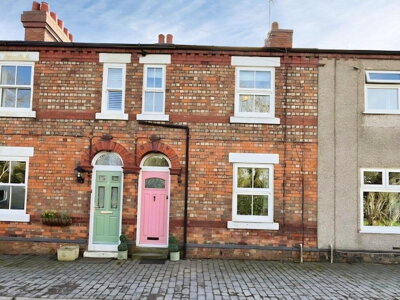
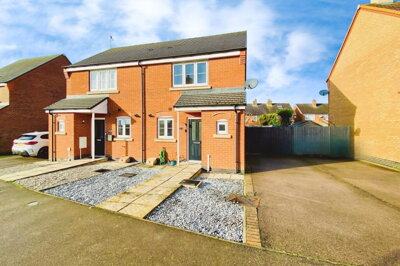
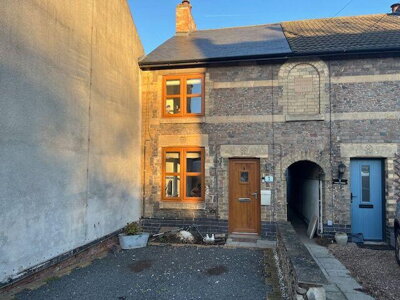
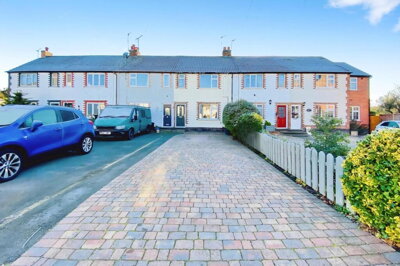
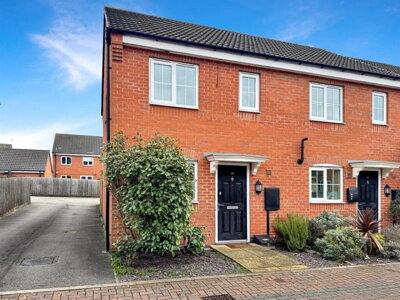
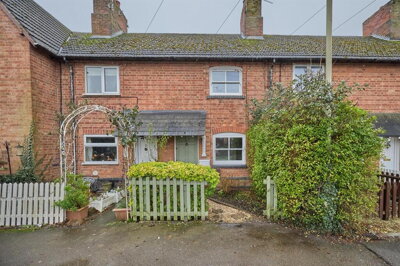
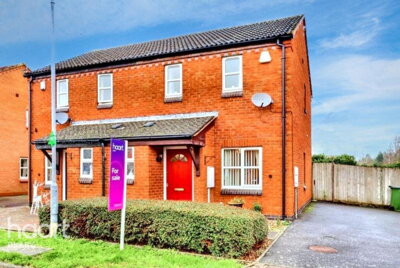
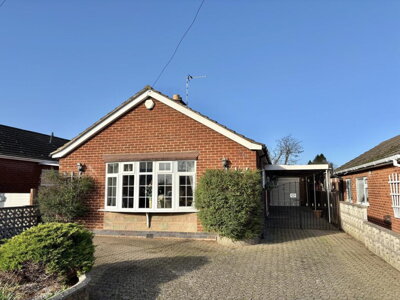
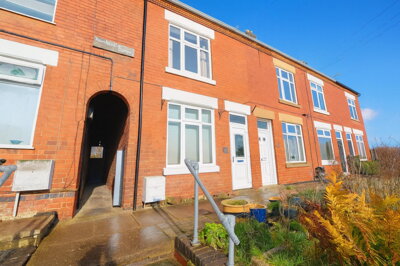
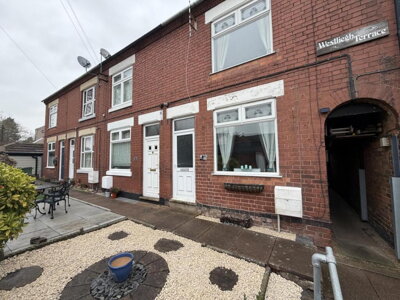
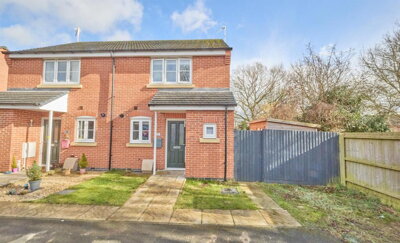
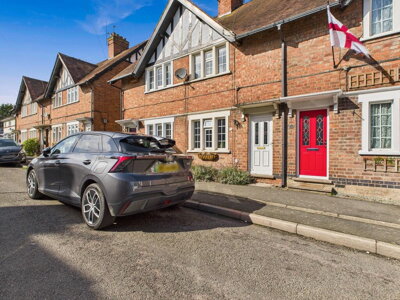
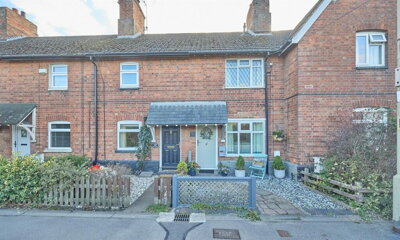
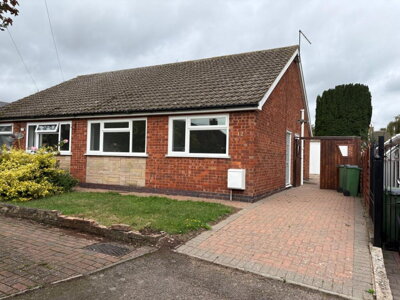
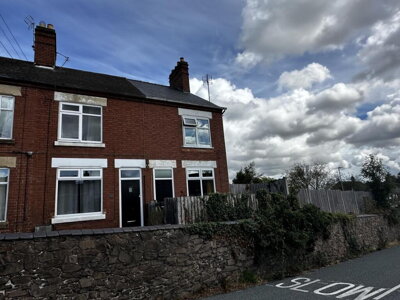
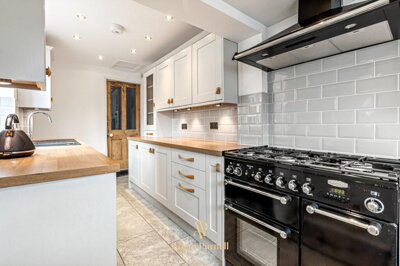
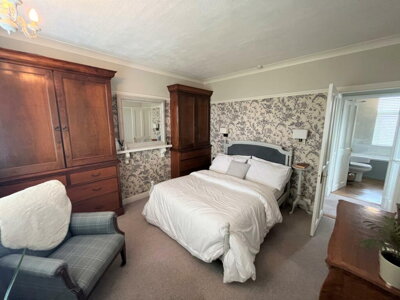
Browse 26 homes for sale in Potters Marston from local estate agents.
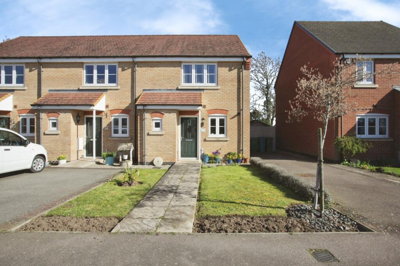
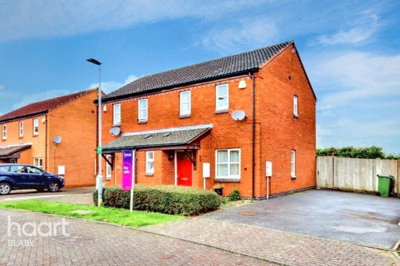
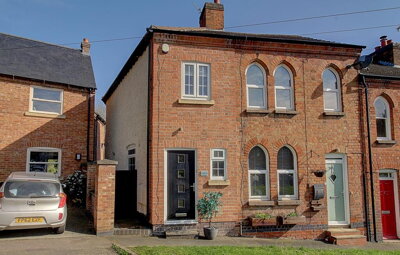
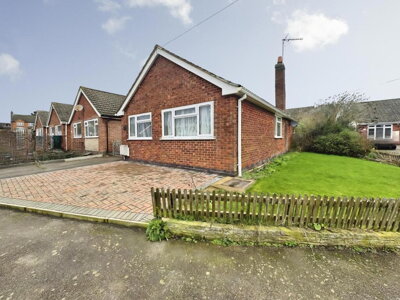
The 2 bed house market features detached, semi-detached, and terraced properties with two separate bedrooms plus living spaces. Properties in Potters Marston range from Victorian and Edwardian period homes to modern new builds, with pricing varying across different neighbourhoods.
The Potters Marston property market operates as a niche segment within the wider Leicestershire housing landscape, with limited property availability reflecting the village's small size and desirable location between Leicester and Hinckley. Our listings feature a range of property types including traditional detached homes, charming semi-detached cottages, and converted barns that showcase the area's architectural heritage. The village falls within the LE9 3JR postcode area, where recent transactions have demonstrated strong values for character properties with generous plot sizes. Property availability in Potters Marston tends to be limited, with homes rarely coming to market, making early engagement with Homemove's property alerts essential for serious buyers.
Historical transaction data for the village provides valuable context for understanding current market conditions, with semi-detached properties in the area achieving prices around the £294,700 to £340,000 mark based on 2018 sales records. Specific sales within the LE9 3JR postcode illustrate the range of values, with 4 Glen Roy on Stanton Lane selling for £294,700 in October 2018 and 3 Stanton Lane achieving £340,000 in August 2018. Detached homes with substantial gardens and rural views have commanded significantly higher prices, with individual properties such as Potters Kiln on Stanton Lane selling for £1,065,000 in August 2019 and Potters Barns on the same road achieving £699,950 in December 2019. The overall average price for the parish stood at approximately £317,350 in 2018, though this figure is likely higher for current market conditions given broader trends in the Leicestershire property market.
For buyers seeking new build properties, no active development sites exist within the village itself, though surrounding areas in Blaby District and Hinckley offer newer alternatives for those requiring modern specifications. The village's planning constraints and historic character mean that significant new development is unlikely, preserving the established village atmosphere that attracts buyers to the area. Commercial activity in Potters Marston centres around Dovecote Court at Potters Marston Hall, where converted 17th-century barns provide rural office space for local businesses. This commercial element adds to the village's self-sufficiency while maintaining its historic agricultural character through careful conversion of traditional buildings.

Life in Potters Marston offers residents the quintessential English village experience, with a close-knit community atmosphere that welcomes newcomers while preserving its historic character. The village takes its name from the traditional craft of pottery, reflecting its long agricultural history that shaped the settlement over centuries. Potters Marston Hall dominates the local landscape, with its converted barns now housing Dovecote Court Business Park, providing local employment opportunities while maintaining the site's historic integrity. The village sits within the Blaby District, providing access to district-wide community events, local services, and administrative support while retaining its distinct parish identity.
Residents of Potters Marston benefit from proximity to nearby Stoney Stanton, which together with Potters Marston itself provides comprehensive village facilities including convenience shopping, primary schools, and recreational amenities. Stoney Stanton offers a range of local services including a convenience store, primary school, and village pubs, all within a short drive of Potters Marston's residential areas. The surrounding Leicestershire countryside offers extensive walking routes, bridleways, and public footpaths that showcase the area's agricultural heritage and natural beauty. The village's location between Leicester and Hinckley means that cultural attractions, major shopping centres, and employment hubs are within easy reach while returning home to a peaceful rural environment each evening.
Community life in Potters Marston centres around traditional village events, local pubs, and church activities that foster connections among residents of all ages. The village's small scale creates an intimate community atmosphere where neighbours often know each other and newcomers are readily welcomed into local social circles. Employment opportunities in the village itself are limited, primarily centred around Dovecote Court business park and local agricultural operations, though the proximity to Leicester and Hinckley opens up a wide range of employment possibilities across various sectors. The M69 and M1 motorways provide easy access to major employment centres, making Potters Marston particularly attractive to professionals who value rural tranquility during evenings and weekends while maintaining active careers in the city.

Families considering a move to Potters Marston will find a selection of educational establishments within convenient distance of the village. Stoney Stanton Primary School serves the local community, providing Key Stage 1 and Key Stage 2 education for primary-aged children in the surrounding villages. This primary school draws pupils from across the local area including Potters Marston and has established a reputation within the Blaby District for providing solid foundational education. For secondary education, pupils typically travel to nearby Hinckley or Leicester, where a wider choice of secondary schools including grammar schools and academy options are available. Parents should research specific catchment areas and admission policies, as these can vary between schools and change over time based on local authority decisions and student numbers.
The nearby town of Hinckley offers several secondary school options including Hinckley School and other academy providers that serve the wider Blaby and Hinckley areas. These secondary schools offer diverse curricula and extracurricular programmes, with some specialising in particular subject areas or teaching approaches to suit different learning styles. For families seeking grammar school education, careful planning is advised as grammar school admission is based on the 11-plus examination and can be competitive. Leicestershire County Council administers the local grammar school selection process, and parents should familiarise themselves with test dates, registration deadlines, and the specific grammar schools operating within reasonable travel distance of Potters Marston.
Further education opportunities are readily accessible at Leicester College and De Montfort University in Leicester, as well as Loughborough College and Loughborough University for those willing to travel further. Higher education options in the region are well-served, with major universities offering undergraduate and postgraduate programmes across a wide range of disciplines. Early enquiry with Leicestershire County Council's education department is recommended to confirm current school placements, catchment boundaries, and any planned changes to school provision in the area. School transport arrangements should also be considered, as secondary and further education may require daily travel by bus or car from Potters Marston.
Potters Marston enjoys an exceptionally well-connected position for a rural village, with major transport routes providing easy access throughout the region and beyond. The M69 motorway runs nearby, offering direct connections to Leicester to the northeast and Coventry to the southwest, making this village particularly attractive to commuters working in either city. The M1 motorway is also readily accessible, providing north-south connectivity to Nottingham, Derby, and the wider East Midlands motorway network. This strategic location has made Potters Marston increasingly popular among professionals seeking rural tranquility without sacrificing commute convenience. Journey times to Leicester city centre are typically around 20 minutes by car, while Coventry can be reached in approximately 30 minutes under normal traffic conditions.
Public transport options include bus services connecting Potters Marston with nearby towns, though frequencies may be limited given the rural nature of the village. Prospective residents without private vehicles should carefully consider bus timetables and route options before committing to a purchase in the village. Rail services are available from Leicester and Hinckley stations, with Leicester providing direct services to London St Pancras International with journey times of approximately one hour. The East Midlands Railway and other operators provide regular services from Leicester station, connecting the village to destinations across the national rail network. Birmingham East Midlands Airport is accessible via the M42, offering domestic and international flights for business and leisure travel. Cyclists will find country lanes suitable for recreational cycling, though longer commuting routes by bike may require careful planning and appropriate equipment for safety.
The village's position between two motorways creates excellent connectivity for car owners, with the M1 providing access to the wider East Midlands and beyond while the M69 offers a direct route to the West Midlands. Commuters working in Leicester city centre benefit from the proximity to the M1, which provides a straightforward route into the city without navigating rural roads. Those working in Coventry or the West Midlands can use the M69 for a direct connection, avoiding the need to travel north to join the M1. Parking provision at the village is generally good given its rural character, with properties typically offering off-street parking and garaging. The village's excellent road connections are a significant factor in its appeal to buyers seeking rural property with urban accessibility.
Begin by exploring the Potters Marston property market through Homemove's comprehensive listings, understanding the types of properties available, current price ranges, and what makes this village special. Given limited property availability in small villages, early preparation and market knowledge will give you an advantage when suitable homes become available. The village's LE9 3JR postcode encompasses a range of property types from traditional cottages to converted barns, and understanding these distinctions will help you identify properties that match your requirements. We recommend setting up property alerts with Homemove to receive immediate notification when new listings appear in Potters Marston, as homes in this village rarely remain on the market for long.
Before viewing properties in Potters Marston, secure a mortgage agreement in principle from a lender. This demonstrates your buying capacity to estate agents and sellers, strengthening your position in negotiations. Given that properties in this village often exceed £600,000, understanding your borrowing capacity is essential before beginning property viewings. Homemove offers access to mortgage brokers who can guide you through the process and help find competitive rates suitable for properties in this price range. Having your finances arranged before viewing properties means you can move quickly when the right home becomes available, which is crucial in a market with limited supply.
Contact local estate agents handling Potters Marston properties to arrange viewings of homes that match your requirements. Take time to assess not just the property condition but also the neighbourhood, nearby amenities, and your daily commute needs. Consider visiting at different times of day to gauge noise levels and community atmosphere, as the village's quiet character is one of its primary attractions. The proximity to Stoney Stanton for local services should be evaluated alongside the property itself, as village living requires understanding what facilities are available locally.
Given the age of many properties in Potters Marston, including 17th-century barn conversions and traditional rural homes, we strongly recommend booking a RICS Level 2 Survey before proceeding. This thorough inspection identifies structural issues, potential defects, and maintenance concerns that may not be visible during viewings, protecting your investment in older properties. Our surveyors check properties throughout the LE9 postcode area and understand the common issues affecting historic buildings in this part of Leicestershire. The survey will assess the property's condition, identify any areas requiring attention, and provide a detailed report that informs your purchase decision.
Choose a conveyancing solicitor to handle the legal aspects of your purchase. They will conduct searches, review contracts, and manage the transfer of ownership. Homemove provides access to experienced conveyancing services familiar with properties in Leicestershire and the Blaby District. Your solicitor will conduct local authority searches with Blaby District Council, which will reveal any planning permissions, conservation area designations, or other factors affecting the property. Given the village's historic character, searches may reveal information relevant to listed building status or planning constraints that affect the property.
Once all searches are satisfactory and your mortgage is finalised, you will exchange contracts and pay your deposit. Completion typically follows within weeks, when the remaining funds are transferred and you receive the keys to your new Potters Marston home. At this point, you become the official owner of your property and can begin planning any renovations or improvements you wish to undertake. We recommend documenting the property's condition at this stage and beginning to plan any immediate maintenance requirements identified during your survey.
Properties in Potters Marston often include historic buildings with unique construction methods and materials that require careful consideration during the buying process. The presence of 17th-century barn conversions and traditional stone buildings means that damp-proofing systems may be absent or inadequate by modern standards, requiring assessment during survey. Roof conditions on older properties warrant particular attention, as original roofing materials and structures can deteriorate over time despite apparent good maintenance. Electrical systems in period properties may require updating to meet current regulations and accommodate modern household demands. Our surveyors frequently identify these issues in properties of this age, and we always recommend budgeting for potential upgrades when purchasing historic village property.
Potential buyers should investigate whether properties fall within any conservation area designations, as this affects permitted development rights and renovation options. Potters Marston Hall and surrounding historic buildings suggest that conservation considerations are relevant to the village, and planning permission requirements may differ from those in non-designated areas. We recommend checking with Blaby District Council's planning department to confirm any conservation area status before purchasing. The underlying geology of Leicestershire, which may include Mercia Mudstone formations, means that shrink-swell risk should be assessed, particularly for properties with trees or vegetation close to foundations. Clay soil conditions can cause foundation movement in older properties with shallow foundations, making professional assessment essential for properties on larger plots with mature vegetation.
Flood risk should be verified through the Environment Agency's flood maps for the specific postcode and surrounding land, as surface water flooding can affect even elevated rural properties. While Potters Marston does not sit within a designated high-risk flood zone, surface water flooding can occur during periods of heavy rainfall, particularly in low-lying areas adjacent to watercourses. We recommend requesting a specific flood risk assessment as part of your property survey to understand any potential flooding concerns for the specific property you are considering. Freehold versus leasehold tenure is generally less of a concern in village settings where most properties are freehold, but prospective buyers should confirm tenure status for any property. Service charges and maintenance obligations for shared facilities or private roads should be clearly understood before purchase.
Ground conditions, including potential agricultural contamination from former land uses, warrant investigation through appropriate searches given the village's farming heritage. These considerations are particularly relevant for converted agricultural buildings and properties on former farm sites. Properties in Potters Marston may have been constructed on land with historical agricultural use, and environmental searches will identify any potential contamination issues that could affect property value or mortgageability. Our team recommends requesting a full environmental search as part of your conveyancing process, particularly for properties with outbuildings or land exceeding the property's immediate curtilage. Properties at Potters Marston Hall or other converted agricultural sites should be subject to thorough investigation of their planning history and any historical uses that might have left contamination or structural issues.
Specific current average price data for Potters Marston is not published due to the village's small size and limited transaction volumes. Historical sales from 2018 show an average price of approximately £317,350 for the parish, though this figure is likely higher today. Recent sales of semi-detached properties in the LE9 3JR postcode area have achieved between £294,700 and £340,000, while larger detached homes with substantial gardens have sold for £699,950 to over £1 million. Specific examples from LE9 3JR include Potters Barns on Stanton Lane, which sold for £699,950 in December 2019, and Potters Kiln, also on Stanton Lane, which achieved £1,065,000 in August 2019. Contact Homemove for current listings to understand the specific price range for properties available in the village today.
Properties in Potters Marston fall under Blaby District Council for local services and Leicestershire County Council for county services. Council tax bands range from A to H based on property value, and specific bands can be checked through the Valuation Office Agency website using the property postcode LE9 3JR. Historic and period properties in Potters Marston, including converted barns and older cottages, may have varying valuations that affect their council tax banding. Prospective buyers should verify the specific band for any property they are considering, as this forms part of the ongoing costs of home ownership in the village. Council tax payments in this part of Leicestershire fund local police, fire services, and county council provision, with Blaby District Council managing refuse collection, recycling, and local planning services.
Potters Marston does not have its own school, so children typically attend Stoney Stanton Primary School, which serves the surrounding villages and provides Key Stage 1 and Key Stage 2 education. For secondary education, families commonly look to Hinckley or Leicester for school options, with Hinckley School and other academy providers serving the wider Blaby and Hinckley areas. Parents should research current Ofsted ratings, admission criteria, and catchment areas through Leicestershire County Council's education department, as school provision and boundaries can change and directly affect property desirability in the village. Grammar school options are available for those who pass the 11-plus examination, though competition for places can be significant. Further education opportunities are accessible at Leicester College, De Montfort University, Loughborough College, and Loughborough University for older students pursuing higher education.
Potters Marston has limited public transport services due to its rural location, with bus routes connecting the village to nearby towns but with less frequent services than urban areas. The village is not directly served by a railway station, so residents requiring rail travel need to travel to Leicester or Hinckley stations, both of which offer connections to major cities including direct trains to London from Leicester. For commuters, the M69 provides quick access to Leicester and Coventry, while the M1 offers routes to Nottingham and Birmingham. Residents without cars should factor transport considerations carefully when choosing to live in Potters Marston, as daily travel will likely require a vehicle or careful planning around limited bus services. The village's position between two major motorways makes car travel particularly convenient for those who can drive, with Leicester city centre accessible in approximately 20 minutes and Coventry reachable in around 30 minutes.
Potters Marston offers several attractive features for property investment, including its desirable rural location, historic character, and proximity to major employment centres in Leicester and Coventry. The limited supply of properties in this small village, combined with consistent demand from buyers seeking village lifestyles, tends to support property values over time. Families are drawn to the village for its peaceful environment and reasonable access to schools, while commuters appreciate the motorway connections to major employment hubs. However, the small scale of the village means that rental demand may be more limited than in larger towns, so prospective investors should carefully consider their target market and any plans for property management before purchasing. Properties in the LE9 3JR postcode have historically demonstrated strong values, with detached homes on Stanton Lane achieving prices in excess of £1 million in recent years.
Stamp duty Land Tax rates for residential properties in England are currently set at 0% for the first £250,000 of property value, 5% on the portion from £250,001 to £925,000, 10% from £925,001 to £1.5 million, and 12% on any value above £1.5 million. First-time buyers benefit from increased thresholds, paying 0% on the first £425,000, 5% between £425,001 and £625,000, with no relief available above £625,000. Given that Potters Marston properties often exceed £600,000, most purchases will incur some stamp duty liability. For a typical detached home in the village priced at £700,000, a standard buyer would pay £22,500 in stamp duty, while a first-time buyer would pay £13,750. Calculate your specific SDLT obligation using current thresholds or consult with a financial adviser for properties in higher value brackets.
Potters Marston contains historic buildings including Potters Marston Hall and its associated barns, which have been converted to commercial use at Dovecote Court Business Park. The presence of 17th-century barn conversions suggests that the village may have conservation area status or contain listed buildings, which would affect permitted development rights and renovation options. We recommend checking with Blaby District Council's planning department to confirm the specific status of any property you are considering, as conservation designations can vary within small villages. Listed building status may apply to properties constructed before 1840, and such properties require listed building consent for alterations that might otherwise be permitted under planning regulations. Properties in conservation areas may face additional requirements for exterior alterations, windows, and other visible elements of the property.
Understanding the full cost of purchasing property in Potters Marston extends beyond the advertised price to include various taxes and fees that buyers must budget for carefully. Stamp duty Land Tax represents a significant additional cost, with standard residential rates applying from the first £250,000 above the zero-rate threshold. For a typical Potters Marston property priced at £500,000, a first-time buyer would pay no stamp duty on the first £425,000 and 5% on the remaining £75,000, totalling £3,750. Repeat buyers or investors would pay 5% on the portion between £250,001 and £500,000, which amounts to £12,500 for the same property. Properties at the higher end of the Potters Marston market, such as detached homes on Stanton Lane that have sold for £699,950 to over £1 million, will incur substantially higher stamp duty costs.
Additional purchase costs include solicitor fees for conveyancing, which typically range from £500 to £1,500 depending on complexity and whether the property is freehold or leasehold. Survey costs should be budgeted at £400 to £900 for a RICS Level 2 Survey, with specialist surveys for listed buildings or historic properties potentially costing more. Given the age of many properties in Potters Marston, including converted barns dating from the 17th century, we recommend considering whether a more comprehensive survey might be appropriate. Search fees through the local authority typically amount to £250 to £400, covering environmental searches, drainage checks, and local authority records for the Blaby District.
Removal costs, mortgage arrangement fees, and potential valuation fees from your lender should also be factored into your overall budget when planning your Potters Marston purchase. Survey costs represent an important investment given the age and character of many village properties, with our RICS Level 2 Survey starting from £400 for properties in the LE9 postcode area. The survey will identify any structural issues, defects, or maintenance concerns that may not be apparent during viewings, providing valuable information for negotiating the purchase price or requiring sellers to address issues before completion. Budgeting for these additional costs, which typically total £3,000 to £5,000 on top of the purchase price, ensures you can complete your purchase without financial surprises.
Properties for Sale In London

Properties for Sale In Plymouth

Properties for Sale In Liverpool

Properties for Sale In Glasgow

Properties for Sale In Sheffield

Properties for Sale In Edinburgh

Properties for Sale In Coventry

Properties for Sale In Bradford

Properties for Sale In Manchester

Properties for Sale In Birmingham

Properties for Sale In Bristol

Properties for Sale In Oxford

Properties for Sale In Leicester

Properties for Sale In Newcastle

Properties for Sale In Leeds

Properties for Sale In Southampton

Properties for Sale In Cardiff

Properties for Sale In Nottingham

Properties for Sale In Norwich

Properties for Sale In Brighton

Properties for Sale In Derby

Properties for Sale In Portsmouth

Properties for Sale In Northampton

Properties for Sale In Milton Keynes

Properties for Sale In Bournemouth

Properties for Sale In Bolton

Properties for Sale In Swansea

Properties for Sale In Swindon

Properties for Sale In Peterborough

Properties for Sale In Wolverhampton

Enter your details to see if this property is within your budget.
Loans, cards, car finance
Estimated property budget
Borrowing + deposit
You could borrow between
Typical borrowing
Monthly repayment
Est. at 4.5%
Loan-to-value
This is an estimate only. Your actual budget may vary depending on interest rates, credit history, and personal circumstances. For an accurate affordability assessment, speak to one of our free mortgage advisors.
This calculator provides estimates for illustrative purposes only and does not constitute financial advice. Your home may be repossessed if you do not keep up repayments on your mortgage. Estimates based on 4.5% interest rate, repayment mortgage. Actual rates depend on your circumstances.
Homemove is a trading name of HM Haus Group Ltd (Company No. 13873779, registered in England & Wales). Homemove Mortgages Ltd (Company No. 15947693) is an Appointed Representative of TMG Direct Limited, trading as TMG Mortgage Network, which is authorised and regulated by the Financial Conduct Authority (FRN 786245). Homemove Mortgages Ltd is entered on the FCA Register as an Appointed Representative (FRN 1022429). You can check registrations at NewRegister or by calling 0800 111 6768.

We use cookies to show you personalised content and improve your experience of our website. Find out more in our Privacy policy and Cookie policy.