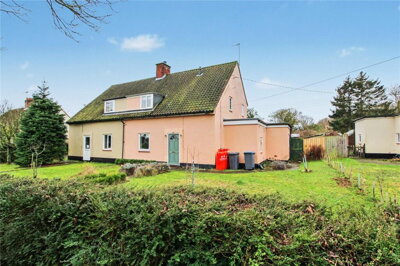
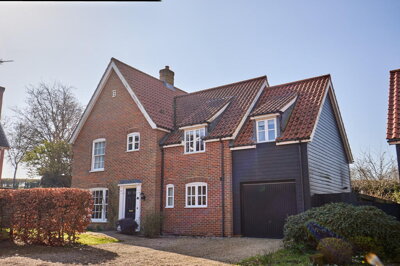
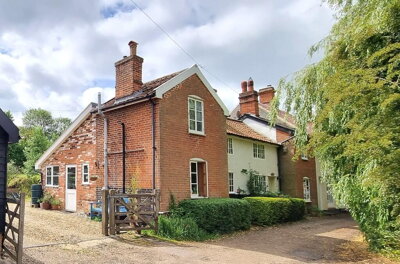
Browse 5 homes for sale in Peasenhall, East Suffolk from local estate agents.
The larger property sector typically features multiple bathrooms, substantial reception space, and private gardens or off-street parking. Four bedroom houses in Peasenhall span detached, semi-detached, and occasionally terraced configurations, with styles ranging from period properties to modern executive homes.
£438k
4
0
47
Source: home.co.uk
Showing 4 results for 4 Bedroom Houses for sale in Peasenhall, East Suffolk. The median asking price is £437,500.
Source: home.co.uk
Detached
2 listings
Avg £572,500
Semi-Detached
2 listings
Avg £302,500
Source: home.co.uk
Source: home.co.uk
The Peasenhall property market reflects the broader trends affecting rural Suffolk, offering a mix of property types to suit different budgets and lifestyles. Recent data indicates an average sold price of approximately £426,667 over the past twelve months according to Zoopla, with Rightmove reporting a figure of £367,500. Property prices in Peasenhall have experienced some fluctuation, with Rightmove recording an 8% decrease year-on-year and an 18% decline from the 2022 peak of £445,938. However, more recent transactions show signs of recovery, with OnTheMarket reporting a 32.6% rise in sold prices over the twelve months leading to February 2026. This mixed picture suggests a market that has normalised following pandemic-era price surges, creating opportunities for both buyers and sellers.
When examining property types in Peasenhall, the market reveals distinct pricing across different categories. Detached properties command the highest prices, averaging around £725,000, reflecting the premium placed on space, privacy, and countryside views that such homes typically offer. Semi-detached properties present more accessible entry points at approximately £230,000, making them popular among first-time buyers and growing families. Terraced properties, which form a significant portion of the village's older housing stock, average around £340,000, offering character and charm in properties that often date back centuries. Analysis of historical sales since 2018 shows 23 detached properties, 20 semi-detached properties, 14 terraced properties, and 3 flats changing hands, indicating consistent activity across all property types.
Street-level price variations within Peasenhall reveal significant local differences that buyers should understand when evaluating property value. Properties on The Street, the village's main thoroughfare, averaged £445,250 over the past twelve months, reflecting the premium associated with central village locations. Mill Road properties commanded higher prices still, averaging £595,000, likely due to larger plot sizes and proximity to countryside access. However, Hackney Road has shown different trends, with prices 45% down on the 2023 peak of £475,000, demonstrating how even nearby streets can follow distinct market trajectories. Recent sales data shows 6 recorded transactions in 2025 with an average price of £433,333, compared to 4 sales in 2024 averaging £341,375, suggesting an upward trend in transaction values.

Peasenhall embodies the quintessential English village atmosphere, with a rich history dating back several centuries that is evident in its architecture and community spirit. The village centre features a conservation-quality environment where historic buildings stand alongside more recent additions, creating a streetscape that tells the story of the community's evolution through the ages. The majority of properties in Peasenhall are pre-1919 construction, featuring traditional building methods common to Suffolk such as timber framing, red brick, and rendered exteriors. These older properties exude character with original features including exposed beams, inglenook fireplaces, and period details that modern construction simply cannot replicate. Living in such a property offers a tangible connection to the village's agricultural past, when farms and craft workshops defined daily life.
The local economy of Peasenhall and surrounding rural East Suffolk draws from agriculture, local services, and an emerging tourism sector. The village and its surrounding farmland produce high-quality crops and livestock, with farm shops and markets providing direct connections between producers and consumers. Residents benefit from a thriving community spirit demonstrated through village events, church activities, and social groups that bring together long-established families and newcomers alike. The nearby market town of Saxmundham serves as the main commercial hub for the surrounding villages, offering supermarkets, independent retailers, banks, and professional services. For leisure and recreation, the area provides access to golf courses, equestrian facilities, fishing lakes, and extensive public footpaths crossing farmland and through ancient woodlands.
The geology of this part of Suffolk presents specific considerations for property owners and buyers. The region sits on soils that can include clay deposits, which are prone to shrink-swell behaviour during periods of drought and heavy rainfall. This means that foundations of older properties may show signs of movement over time, and potential buyers should look for evidence of subsidence or structural cracking when viewing properties. While major structural issues are not prevalent, the natural ground conditions make it advisable to commission a thorough survey before purchase, particularly for older properties that may have experienced decades of ground movement. Surface water drainage can also be a consideration in lower-lying areas of the village, and prospective buyers should check property history for any instances of damp or water ingress.

Families considering a move to Peasenhall will find educational options available at both primary and secondary levels, serving the rural communities of East Suffolk. For younger children, the village is served by primary schools in the surrounding area, with several good and outstanding-rated institutions within a reasonable driving distance. Primary education in this part of Suffolk typically features small class sizes that allow for individual attention and strong pastoral care, reflecting the community-focused nature of rural schools. Many primary schools serve multiple villages, creating friendship groups that span the local area and fostering a sense of community among families living across the surrounding countryside.
Secondary education for Peasenhall residents is typically accessed through schools in nearby Saxmundham and the wider East Suffolk area, with students travelling daily to attend their chosen institution. Several secondary schools in the region have earned good or outstanding Ofsted ratings, offering academic curricula alongside vocational subjects and extensive extracurricular programmes. For families seeking grammar school education, the selective system in Suffolk allows academically able students to attend schools in nearby towns, with entrance testing taking place during the final year of primary education. Sixth form provision is available at secondary schools and colleges in Saxmundham, providing pathways to higher education or vocational training. Parents are encouraged to research specific school admissions policies and catchment areas, as these can vary and may influence which properties represent the best investment for their family's educational needs.
Beyond traditional schooling, families in Peasenhall benefit from access to various extracurricular activities and community-based learning opportunities. Local sports clubs, music groups, and youth organisations provide additional developmental outlets for children outside of formal education. The village hall and church facilities often host educational workshops, craft groups, and interest classes that contribute to a well-rounded upbringing for children in the community. With Saxmundham providing additional facilities including sports centres and libraries, families have access to resources that complement the village's intimate educational environment.
Transport connections from Peasenhall reflect its rural village character, with residents typically relying on private vehicles for daily commuting while benefiting from occasional public transport options. The village sits approximately 5 miles from Saxmundham, where the East Suffolk Line provides rail connections to Ipswich (approximately 45 minutes) and Lowestoft (approximately 35 minutes). From Ipswich, travellers can access mainline services to London Liverpool Street (journey time approximately 1 hour 20 minutes), making day commuting feasible for those working in the capital. Saxmundham railway station has undergone improvements in recent years, with better facilities and increased service frequency making rail travel more accessible for surrounding villages.
Bus services operate between Peasenhall and nearby towns, providing essential connections for those without private vehicles, though frequencies may be limited compared to urban areas. The A1120 road provides east-west connectivity through the village, linking Saxmundham to the A14 trunk road that runs through Suffolk connecting Felixstowe port to the Midlands. For air travel, Norwich International Airport is approximately 45 miles north, offering domestic and European flights, while London Stansted is approximately 90 miles southwest. Cyclists benefit from quiet country lanes that make cycling pleasant for short local journeys, though the undulating Suffolk countryside can present challenges for less experienced riders. Many residents accept that car ownership is essential for full participation in rural life, balancing the need for personal transport against the village's many quality-of-life advantages.
The strategic position of Peasenhall relative to major employment centres makes it viable for commuters who work in Ipswich, Norwich, or the surrounding market towns. The A14 provides direct access to Felixstowe, Britain's busiest container port, and connects to the wider motorway network heading north toward Cambridge and the Midlands. For those working remotely or in professional services, the village's peaceful environment offers an attractive base that combines rural charm with practical connectivity. The improved digital infrastructure in recent years has also supported the growth of home working, making rural locations like Peasenhall increasingly attractive to professionals who do not need to commute daily.
Before arranging viewings in Peasenhall, thoroughly research the local property market, understand current price trends, and secure a mortgage agreement in principle from a lender. This preparation demonstrates your seriousness to estate agents and gives you a clear budget to work within. Use online property portals to set up alerts for new listings, and consider engaging a local estate agent who can provide insight into properties before they appear on major websites.
Contact local estate agents to arrange viewings of properties that match your requirements. When visiting Peasenhall properties, pay attention to the property's condition, potential maintenance requirements, and whether it suits your lifestyle needs. Consider visiting at different times of day to assess traffic, noise levels, and community activity. Take measurements and photos to help remember details, and do not hesitate to request a second viewing before making any decisions.
Once you have found your ideal property and had an offer accepted, arrange a RICS Level 2 Survey (Homebuyer Report) for standard properties or a RICS Level 3 Building Survey for older or character properties. Given Peasenhall's predominantly older housing stock, a thorough survey is essential to identify any structural issues, damp, or timber defects common in period properties. The survey cost represents a small fraction of the purchase price but can reveal issues that justify renegotiation or withdrawal.
Choose a solicitor experienced in Suffolk property transactions to handle the legal aspects of your purchase. They will conduct searches, check property boundaries, verify ownership, and manage the transfer of funds. For properties in any conservation areas or listed buildings, additional checks may be required that can extend timelines. Ensure your solicitor orders local authority searches, drainage searches, and any environmental searches relevant to the specific location.
After satisfactory survey results and searches, your solicitor will arrange the final document signing and transfer of funds. On completion day, you will receive the keys to your new Peasenhall home, marking the exciting conclusion to your property search. Budget for the possibility of slight delays, as rural property transactions sometimes encounter complications with searches or leasehold documentation that require additional time to resolve.
Properties in Peasenhall present unique considerations that buyers should carefully evaluate before committing to a purchase. Given the village's historic character and predominantly older housing stock, purchasing a period property often means accepting that maintenance and renovation will be ongoing commitments. Traditional construction methods used in Suffolk properties, including timber framing and solid brick walls, require different maintenance approaches compared to modern cavity wall construction. Potential buyers should budget for essential updates to electrical systems, plumbing, and heating that may be necessary in older properties, particularly those that have not been modernised in recent years.
Flood risk should be considered when purchasing any property in East Anglia, though specific flood risk data for Peasenhall should be obtained from the Environment Agency and local authority planning records during the conveyancing process. Conservation area restrictions may apply to certain properties in Peasenhall, potentially limiting permitted development rights and requiring planning permission for alterations that would otherwise be allowed. Listed buildings, which are likely present in the village, carry specific obligations regarding maintenance and alterations that must preserve their historic character. Buyers should verify the council tax band applicable to any property, as this varies based on valuation and property characteristics. Understanding these factors ensures you make an informed decision and avoid unexpected costs or complications after purchase.
When viewing properties in Peasenhall, pay particular attention to signs of damp in solid-wall constructions, which can be more prevalent than in modern properties with cavity wall insulation. Check the condition of roofs, as aging coverings and flashings are common issues in older properties throughout Suffolk. Look for any signs of structural movement such as cracking to walls or doors that stick, which may indicate foundation issues related to clay soil conditions. Electrical systems in older properties frequently require updating to meet current safety standards, and original fuse boards should be replaced. Requesting sight of any previous survey reports, building regulation approvals for previous works, and planning permissions for extensions or alterations will help build a complete picture of the property's condition and history.
The average house price in Peasenhall currently ranges between £367,500 and £426,667 depending on the data source consulted. Zoopla reports an average of £426,667 for the past twelve months, while Rightmove indicates £367,500. Property types command significantly different prices, with detached homes averaging approximately £725,000, terraced properties around £340,000, and semi-detached homes at roughly £230,000. The market has shown some fluctuation, with prices down 8% year-on-year according to Rightmove data, though recent sales indicate renewed price growth in the village. Street-level variations are notable, with Mill Road averaging £595,000 and The Street averaging £445,250 over recent sales periods.
Properties in Peasenhall fall under East Suffolk Council's jurisdiction and are assigned council tax bands based on their valuation as of April 1991. Bands range from A (the lowest values, typically up to £40,000) through to H (the highest values, typically above £320,000). Most terraced and semi-detached properties in Peasenhall fall into bands A through C, while larger detached homes may be categorised in bands D through F. The specific band for any property can be verified through East Suffolk Council's online council tax checker or by requesting this information from the seller or their estate agent during the conveyancing process. Current East Suffolk Council tax rates for band D properties are available on the council website and provide a useful benchmark for comparing properties across different bands.
Peasenhall is served by primary schools in nearby villages and towns, with several good and outstanding-rated institutions within easy driving distance. Parents should research specific school catchments and admission criteria, as these can affect which properties represent the best choice for families with school-age children. Grammar school options are available for academically able students through the Suffolk selective admissions system, with testing taking place during Year 5 for entry to Year 7. The closest secondary schools are typically in Saxmundham, with additional options in Halesworth, Leiston, and Woodbridge serving the wider East Suffolk area. School transport arrangements should be confirmed with Suffolk County Council, as catchment areas and bus routes can significantly affect the practicality of school choices for your family.
Peasenhall has limited public transport options typical of a rural Suffolk village. Bus services operate between the village and nearby towns, though frequencies are reduced compared to urban areas and may not be suitable for daily commuting to work. Saxmundham railway station, approximately 5 miles away, provides rail connections to Ipswich and Lowestoft, with onward services to London from Ipswich taking approximately 1 hour 20 minutes to Liverpool Street. Residents generally consider car ownership essential for full convenience, though the village's peaceful location and good road connections make driving straightforward. The A1120 provides east-west connectivity, and the A14 trunk road is accessible for journeys further afield to Cambridge, Felixstowe, and the Midlands.
Peasenhall offers several factors that may appeal to property investors, including relatively affordable prices compared to coastal Suffolk hotspots and a consistent demand for rural properties with character. The village's location near the Suffolk coast and Areas of Outstanding Natural Beauty attracts holiday let interest, though buyers should verify planning permission requirements for short-term rentals with East Suffolk Council. Long-term rental demand exists from commuters and those seeking rural lifestyles, though the limited local employment may restrict tenant pool size. Average rental yields in rural Suffolk typically range from 4% to 6% depending on property type and condition, with terraced properties often commanding stronger rental returns relative to purchase price. As with any property investment, thorough research into rental yields, void periods, and local market conditions is recommended before committing to a purchase.
Stamp duty land tax rates for residential properties purchased in England are structured in bands: zero rate on the first £250,000 of purchase price, 5% on the portion from £250,001 to £925,000, 10% on the portion from £925,001 to £1.5 million, and 12% on any amount exceeding £1.5 million. First-time buyers may qualify for relief on the first £425,000, with 5% applying between £425,001 and £625,000, providing significant savings for eligible purchasers. Given Peasenhall's average property prices falling primarily within the lower bands, most buyers would only encounter the 5% rate on the amount exceeding £250,000. For a typical terraced property at £340,000, this would result in SDLT of £4,500, while the average detached home at £725,000 would attract SDLT of approximately £23,750.
Older properties in Peasenhall, which form the majority of the housing stock, may exhibit issues common to period construction throughout Suffolk. These include damp (both rising and penetrating damp in solid wall properties), timber defects such as rot and woodworm in structural and decorative timbers, and roof problems including slipped tiles, poor flashing, and aging roof coverings. Electrical systems in older properties may require updating to meet current safety standards, and plumbing systems may feature outdated materials such as lead pipes or early copper installations. The clay soil prevalent in parts of Suffolk can cause foundation movement over time, so look for signs of subsidence such as cracking, warped door frames, or uneven floors. Properties with original single-glazed windows and solid walls without insulation will have higher heating costs, which should factor into your budget calculations. A thorough RICS Level 2 or Level 3 survey before purchase will identify any such issues and allow you to factor necessary repairs into your offer.
First-time buyer and remortgage options available
From 3.5% APR
Expert property solicitors for your Peasenhall purchase
From £499
Essential for standard properties in Peasenhall
From £350
Recommended for older and period properties
From £600
Understanding the full costs of purchasing property in Peasenhall helps you budget accurately and avoid surprises during your transaction. Beyond the property purchase price, buyers must account for stamp duty land tax (SDLT), which applies to all residential property purchases above £250,000 at standard rates. For a typical Peasenhall property priced around £340,000 (the average for terraced homes), stamp duty would apply at 5% on the £90,000 portion exceeding the £250,000 threshold, resulting in a SDLT liability of £4,500. Properties priced at the higher end, such as the average detached home of £725,000, would incur significantly higher SDLT, making it essential to calculate these costs before committing to a purchase.
Additional buying costs include solicitor fees for conveyancing, which typically start from around £499 for standard transactions but may increase for leasehold properties, those in conservation areas, or listed buildings where additional checks are required. Survey costs should be budgeted at £350 or more for a RICS Level 2 Survey, rising to £600 or beyond for a comprehensive RICS Level 3 Building Survey on larger or older properties. Mortgage arrangement fees, if applicable, can add several hundred to over a thousand pounds depending on the lender and product chosen. Land registry fees, local authority search fees, and Electronic Money Transfer charges complete the typical cost breakdown. Buyers purchasing with a mortgage will also need to factor in valuation fees, and those using a mortgage broker should clarify whether advisory fees apply. Planning for these costs from the outset ensures a smoother transaction and prevents last-minute financial pressures.
Budgeting for ongoing costs after purchase is equally important when calculating the true cost of owning property in Peasenhall. Annual council tax charges vary by band, with Band A properties paying considerably less than Band D or higher properties. Buildings insurance is essential for mortgage holders and typically costs more for older properties with higher rebuild values. Service charges may apply if purchasing a leasehold property, while freehold homes incur maintenance costs that should be budgeted throughout ownership. Energy performance certificates (EPCs) are required for all sales, and properties with poor ratings may require investment to meet minimum standards before rental or future sale.
Properties for Sale In London

Properties for Sale In Plymouth

Properties for Sale In Liverpool

Properties for Sale In Glasgow

Properties for Sale In Sheffield

Properties for Sale In Edinburgh

Properties for Sale In Coventry

Properties for Sale In Bradford

Properties for Sale In Manchester

Properties for Sale In Birmingham

Properties for Sale In Bristol

Properties for Sale In Oxford

Properties for Sale In Leicester

Properties for Sale In Newcastle

Properties for Sale In Leeds

Properties for Sale In Southampton

Properties for Sale In Cardiff

Properties for Sale In Nottingham

Properties for Sale In Norwich

Properties for Sale In Brighton

Properties for Sale In Derby

Properties for Sale In Portsmouth

Properties for Sale In Northampton

Properties for Sale In Milton Keynes

Properties for Sale In Bournemouth

Properties for Sale In Bolton

Properties for Sale In Swansea

Properties for Sale In Swindon

Properties for Sale In Peterborough

Properties for Sale In Wolverhampton

Enter your details to see if this property is within your budget.
Loans, cards, car finance
Estimated property budget
Borrowing + deposit
You could borrow between
Typical borrowing
Monthly repayment
Est. at 4.5%
Loan-to-value
This is an estimate only. Your actual budget may vary depending on interest rates, credit history, and personal circumstances. For an accurate affordability assessment, speak to one of our free mortgage advisors.
This calculator provides estimates for illustrative purposes only and does not constitute financial advice. Your home may be repossessed if you do not keep up repayments on your mortgage. Estimates based on 4.5% interest rate, repayment mortgage. Actual rates depend on your circumstances.
Homemove is a trading name of HM Haus Group Ltd (Company No. 13873779, registered in England & Wales). Homemove Mortgages Ltd (Company No. 15947693) is an Appointed Representative of TMG Direct Limited, trading as TMG Mortgage Network, which is authorised and regulated by the Financial Conduct Authority (FRN 786245). Homemove Mortgages Ltd is entered on the FCA Register as an Appointed Representative (FRN 1022429). You can check registrations at NewRegister or by calling 0800 111 6768.

We use cookies to show you personalised content and improve your experience of our website. Find out more in our Privacy policy and Cookie policy.