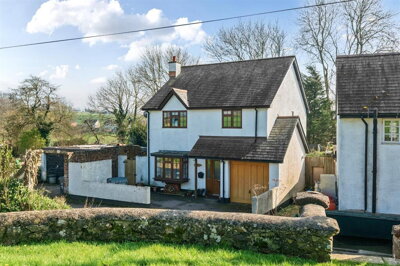
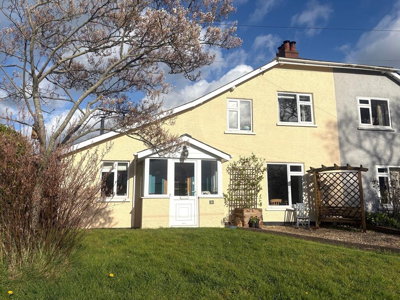
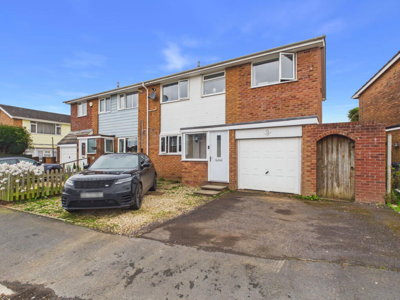
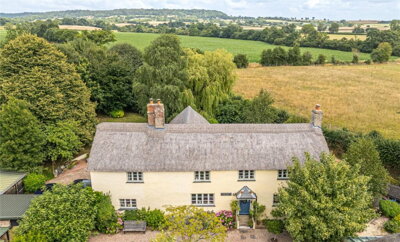
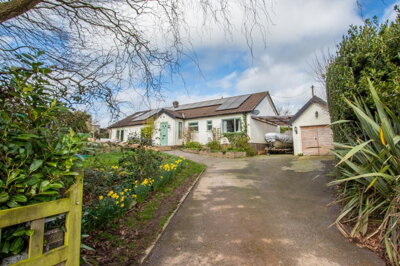
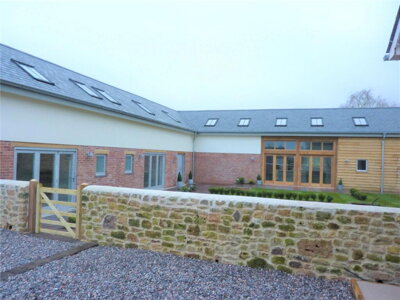
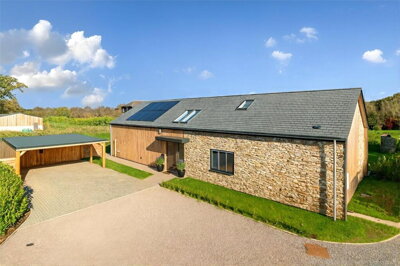
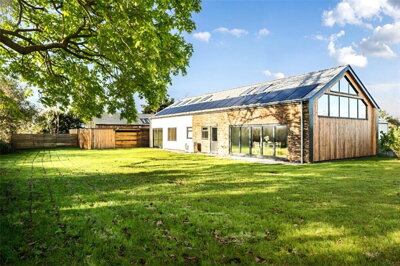
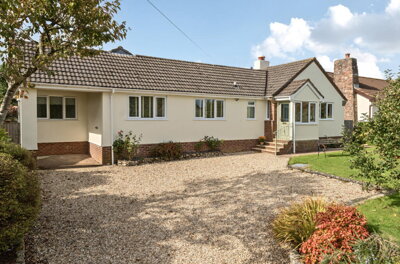
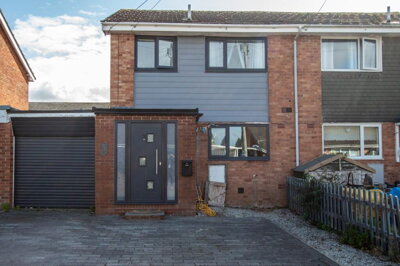
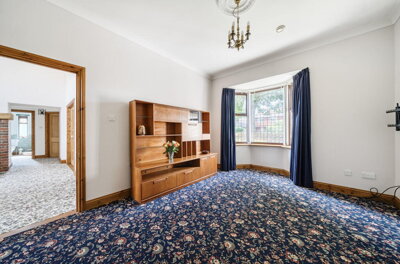
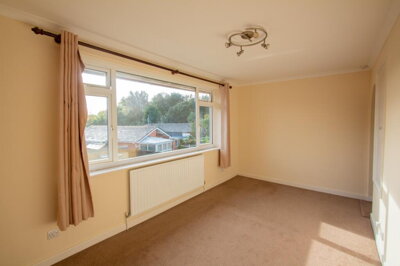
Browse 13 homes for sale in Payhembury, East Devon from local estate agents.
The larger property sector typically features multiple bathrooms, substantial reception space, and private gardens or off-street parking. Four bedroom houses in Payhembury span detached, semi-detached, and occasionally terraced configurations, with styles ranging from period properties to modern executive homes.
£250k
1
0
41
Source: home.co.uk
Showing 1 results for 4 Bedroom Houses for sale in Payhembury, East Devon. The median asking price is £250,000.
Source: home.co.uk
Detached
1 listings
Avg £250,000
Source: home.co.uk
Source: home.co.uk
The Payhembury property market has experienced notable shifts over the past year, with Rightmove recording overall sold prices approximately 15% down on the previous year and 26% below the 2023 peak of £627,389. Despite this correction, the village continues to attract buyers seeking character properties in a sought-after rural location. Zoopla reports an average sold price of £534,750 for the most recent twelve-month period, suggesting that well-positioned properties continue to achieve strong prices in this desirable East Devon village. The variation between sources reflects different methodologies and the relatively small number of transactions within the village itself, making it worthwhile for buyers to examine individual property details rather than relying solely on headline averages.
Detached properties dominate the Payhembury market, with recent sales ranging from £380,000 for older cottages to £920,000 for substantial detached homes with generous grounds. Specific recent transactions include a detached property sold for £920,000 in January 2025, with other notable sales of £750,000 in May 2025 and £724,000 in October 2025, demonstrating continued appetite for quality family homes in the village. These figures illustrate that while the market has seen a correction from peak levels, premium properties in established positions continue to command strong prices reflecting the enduring appeal of the Payhembury location.
Semi-detached properties have sold between £293,500 and £395,000, offering more accessible entry points for first-time buyers or those seeking a village lifestyle without the premium associated with larger detached homes. Recent sales data shows a semi-detached property achieving £293,500 in January 2025 and another at £395,000 in November 2024, representing the current range for this property type. Terraced cottages, while less common in the immediate village, provide authentic period accommodation typically priced around the £290,000 to £320,000 mark. Flats remain extremely rare within Payhembury itself, with most apartment options found in nearby towns such as Ottery St Mary.

Payhembury is a traditional East Devon village whose character is defined by its winding lanes, hedgerow-lined footpaths, and buildings that speak to centuries of agricultural history. The village sits on the northern edge of the East Devon Area of Outstanding Natural Beauty, placing residents within easy reach of some of the county's most spectacular countryside. The housing stock reflects this heritage, with many properties described as period homes, early 19th-century cottages, and barn conversions featuring characteristic thatched roofs, local stone walls, and mature gardens that provide both privacy and a sense of established permanence. Walking through the village, visitors pass traditional Devon cottages with their distinctive whitewashed renders, converted agricultural buildings, and occasional imposing farmhouses that speak to the area's farming heritage.
The local economy centres on agriculture, smallholding ventures, and services that serve the village's resident population. A traditional village pub provides a focal point for community life, while the primary school ensures young families have access to local education without lengthy commutes. The village hosts various community events throughout the year, strengthening the bonds between residents and contributing to the strong sense of local identity that characterises Payhembury. Many residents appreciate the slower pace of life while maintaining active roles in village organisations, from the local cricket club to parish council activities.
Many Payhembury residents work in the surrounding market towns of Honiton, Ottery St Mary, and Cullompton, with Exeter also accessible for those requiring the wider employment opportunities and amenities of a major city. The village attracts a mix of long-term residents, newcomers seeking rural tranquility, and retired couples looking to downsize from larger properties while remaining in an area they know and love. The proximity to the A30 dual carriageway provides convenient access to the M5 motorway network, making destinations such as Taunton and Bristol achievable for those commuting further afield or seeking retail and cultural amenities beyond what a small village can offer.
Families considering a move to Payhembury will find a village primary school serving the immediate community, providing education for children from reception through to Year 6. The presence of a local primary school is a significant advantage for village residents, eliminating the need for daily travel to larger settlements for younger children. Payhembury Primary School has built a reputation for providing quality education within a supportive village setting, with class sizes often smaller than those found in larger towns. The school benefits from strong parental engagement and community involvement, contributing to a nurturing environment for children at their early educational stages.
For secondary education, pupils typically travel to schools in surrounding towns, with options including Honiton Community College and schools in Cullompton and Tiverton, all of which serve the village's catchment area and offer a range of GCSE and A-level qualifications. Honiton Community College is a popular choice for Payhembury families, offering comprehensive secondary education with strong academic and vocational pathways. The college's catchment area encompasses the surrounding villages, and transport arrangements are typically coordinated through Devon County Council for eligible pupils.
Parents should verify current catchment boundaries and admissions criteria with Devon County Council, as these can influence which schools pupils are eligible to attend based on residence addresses. For families seeking independent education, several options exist within reasonable driving distance across East Devon, including schools in Exeter and the wider Devon area. The village's rural setting means that school transport arrangements are often necessary for secondary-aged children, and prospective buyers should factor these logistics into their property search, particularly if considering properties at the village's outer edges where journey times to schools may be longer.

Payhembury benefits from its position within East Devon, offering access to the road network while maintaining a sense of rural seclusion. The village lies near the A373, providing direct routes to Honiton approximately 8 miles to the east, where the A30 dual carriageway connects to Exeter to the west and the M5 motorway to the north. This connectivity makes Payhembury viable for commuters who work in Honiton, Exeter, or the surrounding areas, though the lack of a direct motorway link means journey times require careful planning for those with city-based employment. The journey to Exeter typically takes around 35-40 minutes by car under normal traffic conditions, while Honiton is approximately 20 minutes away.
Honiton railway station offers connections to Exeter St David's and London Waterloo, with services typically taking around 30 minutes to Exeter and approximately two and a half hours to the capital. The station is served by Great Western Railway services, providing regular connections that support both daily commuting and leisure travel. For international travel, Exeter Airport provides flights to UK destinations and some European locations, while Bristol Airport offers a wider range of international routes within approximately 90 minutes' drive. Devon County Council operates local bus services connecting Payhembury to nearby towns, though frequencies are limited compared to urban routes, typically running several times daily on weekdays with reduced weekend services.
Most residents rely on car ownership for daily activities, and the village is situated near the A373 with good road access to the A30 and M5 motorway network. Cyclists will find the rolling Devon countryside offers both challenging routes for experienced riders and gentler lanes suitable for leisure cycling through the Area of Outstanding Natural Beauty. The network of public footpaths and bridleways surrounding Payhembury provides excellent opportunities for walking and horse riding, with routes crossing farmland and through woodland that showcase the best of East Devon's landscapes. For those working from home, the availability of superfast broadband varies across the village, with some properties benefiting from recent upgrades while others may still rely on slower connections.
Before you view properties, understand what Payhembury offers as a place to live. Study the local property market using our platform, familiarise yourself with the average prices for different property types, and consider factors like commute times to your workplace, school catchment areas, and the practical realities of rural living in East Devon. Payhembury properties range from terraced cottages around £290,000 to substantial detached homes exceeding £900,000, so defining your budget and priorities early will streamline your search considerably.
Speak to a mortgage broker or lender to obtain an Agreement in Principle before viewing properties. This demonstrates to sellers that you are a serious buyer with financing in place. Our mortgage partners can help you find competitive rates and understand borrowing limits based on your individual circumstances, including guidance on Rural Mortgage products that may be available for properties in this area.
Once you have identified properties that match your requirements, arrange viewings through our platform. Payhembury's village properties often attract multiple interested buyers, so acting promptly and viewing as soon as possible after listing is advisable. Take notes during viewings and revisit properties if needed before making an offer. Given the prevalence of period properties in the village, viewings provide an opportunity to assess the character and condition of properties that may not be fully captured in photographs.
Before completing your purchase, arrange a RICS Level 2 Survey to assess the condition of the property. Given Payhembury's prevalence of older, period properties, this survey can identify issues such as damp, structural movement, or roof condition that may not be visible during a standard viewing. Our survey partners can arrange this for you, with local surveyors familiar with the construction methods and common defect patterns found in East Devon period properties.
Appoint a solicitor or licensed conveyancer to handle the legal aspects of your purchase. They will conduct searches, review contracts, and manage the transfer of ownership. Using a solicitor with experience in rural Devon properties can help navigate any specific considerations such as listed building regulations, rights of way across agricultural land, or shared septic tank arrangements common in village properties.
Once all searches are satisfactory and contracts are signed, your solicitor will coordinate the exchange of contracts and set a completion date. On completion day, the remaining funds are transferred and you receive the keys to your new Payhembury home. Our team can connect you with removal firms and other services to make your move as smooth as possible.
Properties in Payhembury frequently feature traditional construction methods that differ significantly from modern buildings, and understanding these characteristics is essential for any buyer. Many cottages and period homes were built using local materials such as cob, brick, and stone with lime mortar pointing, meaning solid walls rather than cavity insulation, single glazing, and potential absence of a damp-proof course. Roofs are commonly finished with natural slate, clay tile, or thatch, each requiring specific maintenance approaches and carrying different implications for longevity and insurance costs. These features do not necessarily indicate problems but do influence maintenance requirements, heating costs, and renovation possibilities. A thorough survey is particularly valuable for these older properties, as hidden defects such as timber rot, outdated electrics, or historic structural movement may not be apparent during viewings.
Grade II listed buildings require careful consideration before purchase, as Listed Building Consent is required for virtually any external or structural alterations. The additional regulations apply to both interior and exterior work, which can limit renovation options and increase costs for future improvements. If Payhembury has a conservation area, certain permitted development rights may be restricted, requiring planning permission for extensions or modifications that would normally be permitted elsewhere. Prospective buyers should verify the listing status of any property they are considering and factor the associated responsibilities into their decision. Our survey partners can advise on the specific implications of listing and conservation area status for properties in the village.
The geology of East Devon includes areas with Mercia Mudstone deposits that can present shrink-swell clay risk, which can affect properties with deeper foundations or those located near watercourses. Surface water flooding can occur in rural areas during periods of heavy rainfall, and while Payhembury itself is inland, local watercourses and drainage patterns should be considered when assessing individual properties. We recommend consulting the Environment Agency flood risk maps and commissioning appropriate surveys for properties where ground conditions are a concern. Service charges and maintenance arrangements for shared facilities should be clarified for any converted properties, particularly barn conversions where communal areas or septic tank systems may be shared with neighbouring homes.
Electrical and plumbing systems in period properties often require updating to meet modern standards, and buyers should factor potential rewire costs into their budget when assessing older cottages and farmhouses. Many Payhembury properties retain their original cast iron gutters, lead flashing, and stone flag floors, which contribute to character but may require ongoing maintenance. Energy efficiency improvements are a common consideration for period properties, with options ranging from secondary glazing to internal wall insulation systems that can be installed without compromising the building's historic character. Our survey partners can provide detailed assessments of properties in the village, identifying both immediate concerns and longer-term maintenance requirements.
Rightmove reports an overall average house price of approximately £463,000 for Payhembury over the past year, while Zoopla indicates an average sold price of £534,750. Detached properties have sold between £380,000 and £920,000, with specific recent sales including £920,000 in January 2025, £750,000 in May 2025, and £724,000 in October 2025. Semi-detached homes typically range from £293,500 to £395,000, based on recent transactions. The market has seen a correction of around 15% compared to the previous year, with prices approximately 26% below the 2023 peak of £627,389, creating opportunities for buyers in this sought-after village location.
Properties in Payhembury fall under East Devon District Council. Council tax bands range from A to H depending on the property's assessed value. Most period cottages and smaller properties typically fall into bands A to C, while larger detached homes and converted barns may be in higher bands D through F. You can check the specific band for any property through the Valuation Office Agency website using the property address. Banding affects not only council tax payable but can also influence mortgage lender valuations, so understanding this factor is useful when comparing properties.
Payhembury has a village primary school serving children from reception through Year 6, providing local education for families living within the village boundaries. For secondary education, pupils typically attend schools in surrounding towns such as Honiton Community College, which offers comprehensive secondary education with strong academic and vocational programmes. Parents should verify current catchment boundaries with Devon County Council, as these can affect which schools pupils are eligible to attend. Several independent school options are available within reasonable driving distance across East Devon, including establishments in Exeter and the surrounding area.
Public transport options in Payhembury are limited, reflecting its rural village location. Devon County Council operates local bus services connecting to nearby towns including Honiton, though frequencies are lower than in urban areas with typically several services per weekday and reduced weekend provision. Honiton railway station provides train services to Exeter and London Waterloo, with journey times of approximately 30 minutes to Exeter and two and a half hours to the capital. Most residents rely on car ownership for daily activities, and the village is situated near the A373 with good road access to the A30 and M5 motorway network for travel further afield.
Payhembury offers stable long-term prospects due to its desirable rural location within the East Devon Area of Outstanding Natural Beauty, limited supply of village properties, and consistent demand from buyers seeking quality village living. The village attracts families, commuters working in nearby towns including Honiton and Exeter, and retirees looking to downsize while remaining in an area they know and love. While the market has experienced a recent correction of approximately 15% from previous levels, the fundamental appeal of the village and its relative affordability compared to coastal locations or larger towns suggests sound fundamentals for long-term investment.
New build activity directly within Payhembury village itself is limited, as the character of this historic settlement is protected through its existing housing stock and planning policies. However, the broader EX14 postcode area does offer new build options, including developments at Cheriton Farm in nearby Honiton, which features properties from around £295,000 for those seeking brand new accommodation in the wider area. For buyers specifically seeking new build properties within the village itself, options are extremely rare, and most purchases will involve period properties requiring careful inspection and potentially some renovation work to bring them up to modern standards.
Stamp Duty Land Tax rates from April 2024 are 0% on the first £250,000 of residential property, 5% on £250,001 to £925,000, 10% on £925,001 to £1.5 million, and 12% on amounts above £1.5 million. First-time buyers benefit from relief on the first £425,000, with 5% applied between £425,001 and £625,000. Given the average property price in Payhembury of around £463,000, a standard buyer purchasing at this price point would pay approximately £10,650 in stamp duty. First-time buyers at the same price point would benefit from the higher threshold and pay no stamp duty on the first £425,000, with 5% on the remaining £38,000, totalling £1,900.
From 4.5% APRC
Competitive mortgage rates from trusted lenders for your Payhembury home purchase
From £499
Expert legal services for your property purchase in East Devon
From £350
Professional property surveys for Payhembury homes
From £80
Energy Performance Certificate for your property
Beyond the property price, buyers should budget for additional costs that can add several thousand pounds to the total purchase expense. Stamp Duty Land Tax is the most significant additional cost, calculated on the purchase price using threshold rates that apply to residential properties in England. For a typical Payhembury property at the current average price of around £463,000, a standard buyer would pay stamp duty of approximately £10,650. First-time buyers purchasing properties up to £425,000 would pay no stamp duty under current relief provisions, making this threshold particularly significant for those entering the market in this price range.
Survey costs are essential for any property purchase, and for the period properties common in Payhembury, a RICS Level 2 Survey is particularly advisable. These typically range from £350 to £800 depending on the property size and value, with larger detached homes at the higher end of this range. For Grade II listed properties or those with unusual construction such as thatched roofs or cob walls, a RICS Level 3 Building Survey provides more comprehensive analysis and is recommended over the standard Level 2. An Energy Performance Certificate is legally required and typically costs between £80 and £150, with the rating providing useful information about the property's energy efficiency.
Conveyancing fees for a standard purchase typically range from £500 to £1,500, covering solicitor fees, local authority searches, and land registry fees. Additional costs may include electronic money transfer fees, bankruptcy searches, and registration fees. For properties in rural locations like Payhembury, additional searches for environmental matters, flooding risk, and planning history are advisable given the prevalence of period properties and proximity to agricultural land. Buyers should also factor in removal costs, which vary based on distance and volume of belongings, and potentially interim financing costs if there is a gap between selling and buying. Building insurance must be in place from exchange of contracts, and mortgage arrangement fees, valuation fees, and broker charges should be accounted for where applicable.
Properties for Sale In London

Properties for Sale In Plymouth

Properties for Sale In Liverpool

Properties for Sale In Glasgow

Properties for Sale In Sheffield

Properties for Sale In Edinburgh

Properties for Sale In Coventry

Properties for Sale In Bradford

Properties for Sale In Manchester

Properties for Sale In Birmingham

Properties for Sale In Bristol

Properties for Sale In Oxford

Properties for Sale In Leicester

Properties for Sale In Newcastle

Properties for Sale In Leeds

Properties for Sale In Southampton

Properties for Sale In Cardiff

Properties for Sale In Nottingham

Properties for Sale In Norwich

Properties for Sale In Brighton

Properties for Sale In Derby

Properties for Sale In Portsmouth

Properties for Sale In Northampton

Properties for Sale In Milton Keynes

Properties for Sale In Bournemouth

Properties for Sale In Bolton

Properties for Sale In Swansea

Properties for Sale In Swindon

Properties for Sale In Peterborough

Properties for Sale In Wolverhampton

Enter your details to see if this property is within your budget.
Loans, cards, car finance
Estimated property budget
Borrowing + deposit
You could borrow between
Typical borrowing
Monthly repayment
Est. at 4.5%
Loan-to-value
This is an estimate only. Your actual budget may vary depending on interest rates, credit history, and personal circumstances. For an accurate affordability assessment, speak to one of our free mortgage advisors.
This calculator provides estimates for illustrative purposes only and does not constitute financial advice. Your home may be repossessed if you do not keep up repayments on your mortgage. Estimates based on 4.5% interest rate, repayment mortgage. Actual rates depend on your circumstances.
Homemove is a trading name of HM Haus Group Ltd (Company No. 13873779, registered in England & Wales). Homemove Mortgages Ltd (Company No. 15947693) is an Appointed Representative of TMG Direct Limited, trading as TMG Mortgage Network, which is authorised and regulated by the Financial Conduct Authority (FRN 786245). Homemove Mortgages Ltd is entered on the FCA Register as an Appointed Representative (FRN 1022429). You can check registrations at NewRegister or by calling 0800 111 6768.

We use cookies to show you personalised content and improve your experience of our website. Find out more in our Privacy policy and Cookie policy.