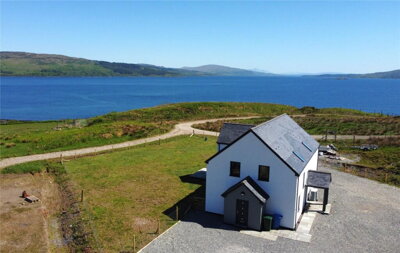
Browse 1 home for sale in PA72 from local estate agents.
The larger property sector typically features multiple bathrooms, substantial reception space, and private gardens or off-street parking. Four bedroom houses in PA72 span detached, semi-detached, and occasionally terraced configurations, with styles ranging from period properties to modern executive homes.
£540k
1
0
36
Source: home.co.uk
Showing 1 results for 4 Bedroom Houses for sale in PA72. The median asking price is £540,000.
Source: home.co.uk
Detached
1 listings
Avg £540,000
Source: home.co.uk
Source: home.co.uk
The PA72 property market presents a unique opportunity for buyers seeking remote Scottish island living at competitive prices. At £280,000, the average property price in this postcode sits considerably higher than the Scotland-wide average of £191,000, reflecting the desirability of island locations with strong character. Property prices across Scotland have shown resilience, with the national market experiencing a 4.9% increase in the 12 months to December 2025 according to Registers of Scotland data.
The property types available on Jura reflect its traditional Highland character. Across Scotland, terraced properties have shown the strongest annual growth at 7.5%, reaching an average of £178,000, while flats and maisonettes have increased by 3.0% to £133,000. On Jura, buyers typically find traditional stone cottages, whitewashed terraced houses dating from the 19th century fishing and farming era, and occasional detached homes with stunning coastal or hill views. New build activity in the immediate PA72 area remains limited, with planning restrictions in this scenic part of Argyll and Bute helping to preserve the island's traditional appearance.
Recent sales activity recorded by Zoopla shows transactions completing throughout the year, with notable sales in June 2025 and December 2023. The market here moves at its own pace, with properties sometimes taking longer to sell due to the specialised nature of island buyers, but transactions do complete regularly for those committed to island life. First-time buyers should note that Scottish government support schemes may apply, and the lower price point compared to Edinburgh or Glasgow makes mortgage applications more accessible for rural properties.

The Isle of Jura offers an extraordinary lifestyle that attracts people from across the UK seeking escape from urban pressures. The island's population, though small, maintains a strong and welcoming community spirit. Residents describe a place where neighbours know each other by name, where the post office doubles as a social hub, and where the pace of life is governed by the ferry timetable rather than the clock. The landscape is dominated by the three Paps of Jura, conical hills that rise dramatically from the surrounding moors and are considered among the finest hills in Scotland to climb.
Daily life on Jura revolves around essential services concentrated in the main settlement areas. The island has a well-stocked local shop serving everyday needs, while the Jura Distillery provides both local employment and a touch of commercial sophistication, producing its renowned single malt whisky that has attracted visitors for generations. The island's wildlife is exceptional, with red deer abundant on the hills, eagles frequently spotted soaring overhead, and seals often visible along the rugged coastline. George Orwell famously chose Jura as his writing retreat, completing Nineteen Eighty-Four here, and his former cottage remains a point of interest for visitors and residents alike.
The community organises regular events throughout the year, from the Jura Music Festival to informal ceilidhs and gatherings at the island's hotels and community hall. For families, the close-knit community provides a supportive environment where children can roam more freely than in urban settings, and where the sense of belonging develops quickly for newcomers who embrace local traditions. The island's economy historically relied on fishing, farming, and distilling, and these sectors continue to provide employment alongside the growing importance of tourism and remote working opportunities that better connectivity has enabled.

Education on the Isle of Jura is provided through Jura Primary School, a small community school serving the island's children from early years through to primary seven. The school maintains an excellent teacher-to-pupil ratio thanks to its small rolls, meaning each child receives individual attention that would be difficult to achieve in larger urban schools. Parents considering a move to Jura should contact Argyll and Bute Council directly for current enrolment procedures and any catchment area arrangements that may apply.
For secondary education, children typically travel daily by ferry to the mainland to attend schools in areas such as Oban or Campbeltown, or some families choose to arrange board during the school week. This arrangement requires commitment and planning, but many island families successfully navigate this aspect of rural Scottish education. The council provides transport support for these journeys, though parents should factor ferry schedules into their daily routines. Sixth form and further education opportunities are accessed similarly, with students travelling to mainland colleges or progressing to universities in Scottish cities.
The small scale of Jura's educational provision is offset by the rich learning environment that island life provides. Children gain practical skills, environmental awareness, and confidence from their unique upbringing. The school's connections with the wider community mean that lessons often incorporate local knowledge, from marine biology inspired by the surrounding seas to geography shaped by the dramatic landscape. Parents moving from urban areas often report surprise at how quickly their children adapt and thrive in this distinctive educational setting, developing independence and resilience alongside their academic progress.
Understanding transport connections is essential when considering a property purchase in PA72, as the Isle of Jura is a remote island community. The primary access is via ferry services operated by Caledonian MacBrayne from Tayvallich on the mainland to Jura's main settlement. These ferries operate on a regular but limited timetable, and residents quickly learn to plan journeys around the sailing times. Alternative access is available via the Kennacraig to Islay route with a connecting inter-island ferry, though this involves a longer journey.
For those considering Jura as a commuter base, daily travel to mainland workplaces is not practical given the ferry schedules and crossing times. However, the rise of remote working has transformed possibilities for many professionals. Fast broadband, while requiring installation in some properties, enables many residents to run businesses and maintain employment from the island without daily commuting. The key is to establish your working arrangements before committing to a purchase, ensuring your employer and internet service provider can support island-based work.
Day-to-day transport on Jura itself relies primarily on private vehicles, as public bus services are extremely limited. Most residents own cars, and the single-track roads that crisscross the island are generally quieter than mainland routes, though care is needed on passing places. The island's small size means that even locations at the far ends of Jura are reachable within a reasonable drive, though the rugged terrain means journey times can be longer than distances might suggest. Visitors often comment on how the driving feels unhurried compared to urban roads, with time to appreciate the scenery passing by.
Before viewing properties, spend time on Jura to understand what living there truly involves. Visit in different seasons, experience the ferry crossings, and speak with current residents about daily realities including internet access, shopping arrangements, and healthcare provision. The commute to mainland services means planning ahead becomes essential for everyday tasks.
Contact a mortgage broker to discuss your borrowing options for a Scottish island property. Having an agreement in principle before making offers demonstrates serious intent to sellers and their agents. Given the specialised nature of island properties, some lenders may have specific requirements, so seek advice from brokers experienced with rural Scottish transactions.
Instruct a solicitor familiar with Argyll and Bute property transactions. They will understand any specific considerations for Jura properties including access rights, crofting arrangements, and any conservation area restrictions that may affect the property. Legal work can proceed more smoothly when your solicitor knows the local context.
Plan your viewing trips to maximise time on the island. Book viewings to coincide with available ferry sailings, and factor in overnight stays where multiple properties are being viewed. Take time during visits to assess the property's condition, access roads, and proximity to local amenities including the ferry terminal.
Once your offer is accepted, arrange a RICS Level 2 Survey to assess the property's condition. Traditional island properties often have older construction methods, and a thorough survey will identify any issues requiring attention. Factor in the cost of travelling tradespeople if significant works are identified.
In Scotland, property purchases proceed through a structured process with formal offers and a minimum 6-week settlement period. Your solicitor will handle conveyancing, and the Land Register will record your new ownership. Plan your move around ferry schedules and book removal services with island experience.
Buying property on a remote Scottish island requires careful consideration of factors that differ from mainland purchases. Properties on Jura often have private water supplies from springs or boreholes rather than mains water, and buyers should verify the quality, reliability, and any regulatory compliance of these systems. Similarly, drainage arrangements typically use private septic tanks or treatment systems, and a survey should assess their condition and capacity. These infrastructure elements can involve significant maintenance costs that buyers must budget for.
The age and construction of island properties deserves close attention during viewings and surveys. Many homes on Jura date from the 19th century or earlier, built using traditional methods appropriate for the local climate and available materials. Stone walls, slate or metal roofs, and solid construction are typical, but these age characteristics bring potential issues including damp penetration, roof condition, and the need for ongoing maintenance. Older properties may also have outdated electrical systems requiring rewiring, and heating arrangements that rely on oil, LPG, or solid fuel rather than mains gas.
Access arrangements require careful verification before purchasing any PA72 property. Some properties may have rights of way across neighbouring land, and understanding these arrangements is important for daily life. Road conditions to your property should be assessed, particularly for properties in more remote locations that may require travel along unmade tracks. Insurance considerations also differ for island properties, with some insurers applying specific terms for properties in remote locations or requiring proof of security measures.
The average sold house price in PA72 is £280,000 according to recent transaction data. This is higher than the Scotland-wide average of £191,000, reflecting the premium attached to island living in this scenic Argyll location. Property prices on Jura vary considerably depending on property type, condition, and location, with traditional stone cottages and properties with sea views typically commanding the highest prices. The market here moves steadily, with ESPC recording 122 property sales in the area, though the specialized nature of island buyers means properties may take longer to sell than in urban areas.
Properties in PA72 fall under Argyll and Bute Council's jurisdiction. Council tax bands in this area are set based on property valuations, and specific bands vary by individual property. Prospective buyers should check the current council tax band for any specific property through the Scottish Assessors Association website or by contacting Argyll and Bute Council directly. As a rural authority covering many island communities, Argyll and Bute maintains competitive council tax rates while providing essential services across a large geographic area.
Education on Jura is provided through Jura Primary School, a small community school serving children from early years through primary seven. The school benefits from small class sizes and strong community involvement, providing excellent individual attention for pupils. For secondary education, children typically travel daily by ferry to mainland schools, with the council providing transport support. Parents considering moves with school-age children should contact Argyll and Bute Council's education department for current arrangements and any specific requirements.
Public transport connections from PA72 are limited, reflecting the island's remote location. The primary connection is via Caledonian MacBrayne ferries from Tayvallich on the mainland, operating to a regular but finite timetable that residents must plan around. There is no railway station on Jura, and daily commuting to mainland workplaces is not practical. However, the island's increasing connectivity through improved broadband has enabled many residents to work remotely, transforming the practical possibilities for those whose employers support flexible working arrangements.
Property investment in PA72 should be considered primarily from a lifestyle perspective rather than expectation of rapid capital growth. The island's appeal lies in its exceptional natural environment, strong community, and distinctive character rather than high rental yields or quick resale potential. However, demand for island properties among those seeking lifestyle changes means that well-presented homes in good locations do sell. Any investment should account for the costs of island living including transport, specialist maintenance, and insurance, as well as the time required to manage a remote property.
Stamp Duty Land Tax (SDLT) in Scotland operates under Scottish Parliament jurisdiction with its own thresholds and rates. For purchases from April 2025, there is no SDLT on properties up to £250,000, with 5% charged on the portion from £250,001 to £925,000. First-time buyers in Scotland receive relief on properties up to £425,000, paying no SDLT on the first £175,000 then 5% on the remainder up to that threshold. Your solicitor will calculate the exact SDLT due on your purchase and include this in the overall cost calculation.
Insuring property on Jura requires careful research as some mainland insurers decline to cover remote island properties or apply premium loading. Specialist insurers familiar with Scottish island properties can provide appropriate coverage, and your mortgage lender will require buildings insurance from completion. Factors affecting insurance terms include the property's construction, distance from emergency services, security measures, and history of weather-related claims. Budget for potentially higher insurance costs than mainland properties and shop around for the best terms.
From 4.5%
Compare mortgage deals for your PA72 purchase
From £499
Scottish solicitors for your property purchase
From £350
Professional survey for your Jura property
From £60
Energy performance certificate for PA72
When purchasing property in PA72, buyers must budget for Stamp Duty Land Tax using Scotland's distinct fiscal regime. For properties purchased from April 2025, the SDLT thresholds are: zero rate on the first £250,000 of purchase price, then 5% on the portion between £250,001 and £925,000. At the PA72 average price of £280,000, a buyer completing today would pay SDLT of £1,500 (5% of the £30,000 portion above £250,000). These thresholds mean that many island properties fall entirely within the zero-rate band or attract only modest SDLT charges.
First-time buyers purchasing residential property in Scotland receive valuable relief that extends to properties up to £425,000. Under this relief, no SDLT is payable on the first £175,000 of purchase price, with 5% charged on the remainder between £175,001 and £425,000. At the average PA72 price of £280,000, a first-time buyer would pay SDLT of £5,250 (5% of £105,000). This relief makes island property significantly more accessible for those entering the housing market, though it does not apply to second homes or buy-to-let purchases where the standard rates apply.
Beyond SDLT, purchasing a property on Jura involves additional costs that buyers should factor into their budgets. Solicitors' fees for conveyancing typically start from around £500 to £1,000 for standard transactions, though island property transactions involving more complex titles or access arrangements may cost more. Survey costs for a RICS Level 2 Homebuyer Report typically start from £350 depending on property size and value. Removal costs to the island can be higher than mainland moves due to ferry transport requirements, and buildings insurance should be in place from the date of legal completion. Land and Buildings Transaction Tax (LBTT) is the Scottish equivalent of stamp duty and replaces SDLT for Scottish property transactions.
Properties for Sale In London

Properties for Sale In Plymouth

Properties for Sale In Liverpool

Properties for Sale In Glasgow

Properties for Sale In Sheffield

Properties for Sale In Edinburgh

Properties for Sale In Coventry

Properties for Sale In Bradford

Properties for Sale In Manchester

Properties for Sale In Birmingham

Properties for Sale In Bristol

Properties for Sale In Oxford

Properties for Sale In Leicester

Properties for Sale In Newcastle

Properties for Sale In Leeds

Properties for Sale In Southampton

Properties for Sale In Cardiff

Properties for Sale In Nottingham

Properties for Sale In Norwich

Properties for Sale In Brighton

Properties for Sale In Derby

Properties for Sale In Portsmouth

Properties for Sale In Northampton

Properties for Sale In Milton Keynes

Properties for Sale In Bournemouth

Properties for Sale In Bolton

Properties for Sale In Swansea

Properties for Sale In Swindon

Properties for Sale In Peterborough

Properties for Sale In Wolverhampton

Enter your details to see if this property is within your budget.
Loans, cards, car finance
Estimated property budget
Borrowing + deposit
You could borrow between
Typical borrowing
Monthly repayment
Est. at 4.5%
Loan-to-value
This is an estimate only. Your actual budget may vary depending on interest rates, credit history, and personal circumstances. For an accurate affordability assessment, speak to one of our free mortgage advisors.
This calculator provides estimates for illustrative purposes only and does not constitute financial advice. Your home may be repossessed if you do not keep up repayments on your mortgage. Estimates based on 4.5% interest rate, repayment mortgage. Actual rates depend on your circumstances.
Homemove is a trading name of HM Haus Group Ltd (Company No. 13873779, registered in England & Wales). Homemove Mortgages Ltd (Company No. 15947693) is an Appointed Representative of TMG Direct Limited, trading as TMG Mortgage Network, which is authorised and regulated by the Financial Conduct Authority (FRN 786245). Homemove Mortgages Ltd is entered on the FCA Register as an Appointed Representative (FRN 1022429). You can check registrations at NewRegister or by calling 0800 111 6768.

We use cookies to show you personalised content and improve your experience of our website. Find out more in our Privacy policy and Cookie policy.