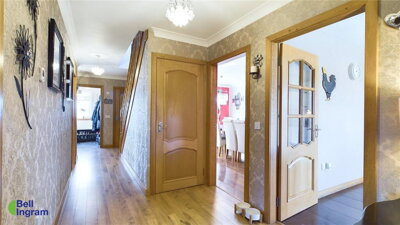
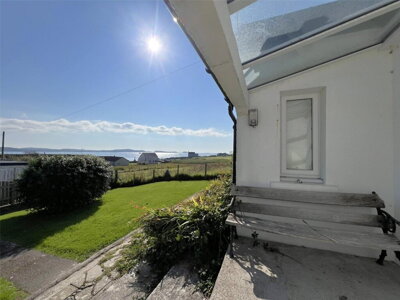
Browse 2 homes for sale in PA66 from local estate agents.
£0k
0
0
0
Source: home.co.uk
The property market in PA66 operates quite differently from mainland Scotland, reflecting the island's unique position as a small, tightly knit community with limited housing stock. Average prices in the area stand at £272,500 according to recent data, representing a 10% decrease from the previous year and a 29% reduction from the 2022 peak of £385,617. Despite this price adjustment, demand for island properties remains steady, driven by buyers seeking lifestyle changes, remote working opportunities, and the psychological appeal of living on a well-connected Scottish island with strong community bonds. The relatively thin market, with only a handful of transactions each year, means that price movements can appear more dramatic than in urban areas with higher transaction volumes.
The Isle of Gigha Heritage Trust dominates the local housing landscape, having owned approximately 72% of the island's 76 dwellings since the 2002 community buy-out. This means privately available properties are relatively scarce, making each listing significant for prospective buyers. The Trust's tenure arrangements include various models, with most residents renting from the Trust while a smaller number hold properties privately. This unusual housing structure has implications for buyers, who should clarify whether any property they are considering is freehold, leasehold, or subject to community ownership provisions before proceeding.
New development activity has been limited, with the Trust progressing plans for five new affordable homes adjacent to the Craft Units in Ardminish, comprising three two-bedroom wheelchair-accessible units and two one-bedroom homes designed for younger residents. These affordable housing additions will increase the island's residential capacity while maintaining the community-focused ethos that defines Gigha living. Planning permission has also been granted for a single dwellinghouse on land north of 1 Ardminish, with the Trust supporting that application. Together, these developments represent the first new private housing construction on the island in many years, though they will do little to address the scarcity of properties available for open market purchase.
Prospective buyers should understand that the island's property market operates on a different rhythm from mainland markets. Properties may come to market infrequently, and the decision-making process often involves direct conversations with sellers rather than the competitive bidding wars common in urban areas. Building relationships with the local community before purchasing is not unusual, and many successful island purchases have followed periods of extended engagement with island life. Our search tool allows you to monitor new listings as they appear, helping you act quickly when a suitable property becomes available.
Life on the Isle of Gigha revolves around community, nature, and a pace of life that feels world away from urban pressures. The island spans just three miles in length, yet contains remarkable diversity in its landscape, from the rocky central spine formed by ancient basalt intrusions to the softer raised marine deposits along the eastern coastline. The underlying amphibolite bedrock speaks to Gigha's geological heritage, while the island's position in the Firth of Clyde provides breathtaking views across to the Kintyre peninsula and beyond. Residents enjoy direct access to pristine beaches, coastal walks, and the famous Achamore Gardens, a Victorian-era horticultural treasure maintained by the community.
The economy of Gigha rests on three pillars: livestock farming, tourism, and aquaculture, particularly the local fish farm operation. The Isle of Gigha Heritage Trust serves as the island's largest employer, supporting 10 full-time and 5 part-time staff across various community enterprises. Following the 2002 buy-out, the island has experienced a population renaissance, growing from a low of just 98 residents at the beginning of the 21st century to the current community of approximately 170 people. This growth has been accompanied by new commercial ventures, including Gigha Renewable Energy which operates wind turbines, demonstrating the community's commitment to sustainable development and local energy independence.
Daily life on Gigha requires adaptation to island rhythms. The village shop provides essential groceries and supplies, though residents accustomed to mainland shopping often combine island living with periodic trips to Campbeltown for bulk buying or specialist items. Healthcare needs are met through the local surgery with visits from mainland practitioners, with hospital services requiring travel to the mainland. The sense of community is tangible, with residents gathering for events at the Gigha Hall and participating in the various activities organised by the Trust. For those seeking genuine connection with neighbours and landscape, Gigha offers an unmatched quality of life.

Families considering a move to Isle of Gigha will find a dedicated primary school serving the island's younger residents, with approximately 19 children currently enrolled in school or nursery education. The Gigha Primary School provides early years and primary education within the community, ensuring children can receive their foundational education without needing to leave the island. The school benefits from small class sizes that allow teachers to provide individual attention, and parents report high satisfaction with the quality of education and the sense of community involvement in school life. School events, concerts, and activities regularly draw participation from across the island, reinforcing the close-knit nature of Gigha society.
For secondary education, students typically travel via the ferry service to schools on the Kintyre peninsula, with families coordinating transport arrangements that take advantage of the regular crossing schedule between Gigha and Tayinloan on the mainland. The nearest secondary schools are located in Campbeltown, accessible within approximately 45 minutes including the ferry crossing. Some families choose boarding arrangements for secondary-aged children, while others embrace the daily commute routine during term time. Argyll and Bute Council provides transport support for secondary students, and families should confirm current arrangements with the council before purchasing property.
The presence of a local school on Gigha reflects the council's commitment to maintaining rural education services, an important factor for families weighing the practicalities of island living. Education on Gigha benefits from strong community involvement, with parents and residents actively participating in school activities and events. For families requiring additional educational support or specialist services, the mainland schools in Campbeltown and the surrounding Kintyre area offer broader facilities, accessible through the established ferry commute pattern that island residents manage as part of daily life. Families considering Gigha should factor school transport arrangements into their overall assessment of island living logistics.
The Isle of Gigha connects to the Scottish mainland via a regular ferry service operating between Gigha pier and Tayinloan on the Mull of Kintyre. This crossing takes approximately 20 minutes, placing the island within easy reach of the mainland road network and the town of Campbeltown, which provides comprehensive retail, healthcare, and administrative services. From Campbeltown, residents can access further connections including flights from Campbeltown Airport to Glasgow, making international travel manageable despite the island's remote location. The ferry service operates to a published timetable that accommodates both day trips and longer stays, with foot passengers, vehicles, and goods all transported on the crossing.
For those commuting for work, the island's position requires careful planning but remains feasible for those with flexible arrangements or remote working capabilities. The journey from Gigha to Glasgow by public transport involves the ferry crossing, followed by bus or car travel through Kintyre to the ferry port at Kennacraig, then a longer crossing to Islay with connections onwards. Most residents consider this journey impractical for daily commuting and instead work remotely or for island-based employers including the Heritage Trust, local tourism businesses, and the fish farm operation. The rise of remote working has made island living accessible to a broader range of professionals who can conduct their work from home while maintaining regular, if not daily, contact with mainland colleagues.
Most households on Gigha maintain at least one vehicle, with the island's small size making car travel efficient for local journeys. Vehicle transport on the ferry requires advance booking during peak periods, and residents become accustomed to planning their mainland trips around the sailing schedule. The cost of ferry transport, including vehicle crossing fees, should be factored into the budget for island living. For those considering Gigha without a car, the island is walkable and cycling-friendly, though practical necessities like grocery shopping are more easily managed with vehicle access.
Before committing to a property purchase on Gigha, spend time experiencing what daily life entails. Visit the island, speak with current residents, and understand the practical realities including ferry schedules, supply chains for groceries and building materials, and healthcare access. The island community is welcoming to newcomers, and prospective buyers often find residents happy to share their experiences of island living. Consider attending island events, volunteering for a day, or renting temporarily to assess whether the lifestyle suits your expectations.
Arrange a mortgage agreement in principle before beginning property viewings, particularly important given the unique financing considerations for island properties. Some lenders have specific policies regarding island mortgages, and having your finances confirmed strengthens your position when making offers on properties where competition may exist. Scottish conveyancing has its own requirements, and your mortgage broker should be familiar with the process for properties in rural and island locations. Factor in the additional costs of island purchasing, including ferry transport for belongings and potential surveyor travel fees.
View properties in person to assess their condition, orientation, and how they connect to the community. Given the prevalence of traditional stone-built properties and the potential for renovation projects, consider bringing a professional surveyor to evaluate structural condition, damp risks, and any required maintenance work. Viewings may need to be scheduled around ferry timetables and weather conditions, so allow flexibility in your plans. Take the opportunity to meet neighbours and learn about the specific property's history and any ongoing community matters affecting it.
A comprehensive RICS Level 2 survey is essential for properties on Gigha, where traditional construction methods and the age of many properties mean defects may not be immediately apparent. The survey will assess walls, roofs, foundations, and potential issues related to coastal exposure, providing you with a detailed condition report before committing to purchase. Given the island's position, surveyor availability may be limited, so book well in advance. Survey costs may be higher than mainland equivalents due to travel requirements, typically ranging from £350 to £850 depending on property size.
Scottish property law requires a solicitor to handle the legal transfer of ownership. Choose a solicitor experienced with rural and island transactions who can manage the particular requirements of purchasing property in a community-owned context, particularly if the property involves any Heritage Trust involvement or community right of first refusal. Conveyancing costs typically start from £499 for straightforward transactions, rising for more complex situations. Your solicitor will conduct searches including those related to flooding and planning history specific to the island location.
Complete your purchase through the Scottish missives process, ensuring all conditions are satisfied and funds are transferred through your solicitor. Arrange buildings insurance from exchange onwards, and prepare for your move by coordinating ferry transport for your belongings and yourself on the available sailing schedule. Upon completion, you will receive the keys and can begin your island life on Gigha, joining a community that has demonstrated remarkable resilience and commitment to sustainable living.
Properties on Isle of Gigha present unique considerations that differ from typical mainland homes, requiring buyers to approach their purchase with awareness of island-specific factors. Many homes on Gigha are traditional stone-built structures, some dating back many decades or even centuries, featuring thick walls and permeable lime mortar construction designed to allow the building to breathe. These construction methods require different maintenance approaches compared to modern properties, with inappropriate modern materials sometimes causing or exacerbating defects such as damp penetration or stonework deterioration. A RICS Level 2 survey will identify issues specific to traditional Scottish construction, including the condition of lime mortar pointing, which may have deteriorated over decades of exposure to coastal weather.
Coastal exposure is a significant consideration for all Gigha properties, with the island's position exposing homes to salt-laden winds, sea spray, and the progressive coastal erosion and flooding risks identified in Scotland's marine assessments. Common defects in coastal properties include timber decay from wet rot, erosion of stonework pointing, and corrosion of metal fixings and fittings. Prospective buyers should investigate the flood risk for specific property locations using SEPA flood maps, particularly for properties near the softer coastlines on the island's eastern side where raised marine deposits create more vulnerable terrain. Building insurance availability and costs may vary depending on flood exposure, and this should be factored into the overall cost of ownership.
Stonework condition, roof integrity, window frames, and external joinery all warrant careful inspection given the challenging maritime environment. The underlying amphibolite bedrock and the basalt intrusions in the island's central spine have influenced the materials available locally, with many properties constructed using stone quarried from the island itself. Look for signs of stone delamination, where layers separate due to weathering, and check that lime mortar remains in good condition rather than having been replaced with cement, which can trap moisture and cause structural problems. Electrical systems in older island properties may be outdated and require upgrading to meet current standards, a common finding in properties pre-dating modern building regulations.
The housing tenure landscape on Gigha is unusual, with the majority of properties owned by the Isle of Gigha Heritage Trust under various tenure arrangements. Potential buyers should clarify the exact tenure of any property, whether freehold, leasehold, or subject to community ownership provisions. Achamore House, the island's Victorian mansion built in 1884 and now a Category B listed building, demonstrates the additional considerations required for historic properties, including listed building consent for alterations and specialist maintenance requirements. Properties of this age may also lack modern damp-proof courses, have outdated electrical and plumbing systems, and require significant investment to bring up to contemporary standards while respecting their historic character.
The average house price in PA66 is currently £272,500 according to recent market data. This represents a 10% decrease from the previous year and a 29% reduction from the 2022 peak of £385,617. The island's property market is characterised by limited stock, with the majority of homes owned by the Isle of Gigha Heritage Trust rather than being privately held. Properties available on the private market include traditional stone cottages, potential renovation projects, and occasionally more substantial family homes. The relatively small number of annual transactions means price data should be treated as indicative rather than definitive, and specific properties may vary significantly from the average based on condition, location, and tenure arrangements.
Properties in PA66 fall under Argyll and Bute Council's jurisdiction, with council tax bands assigned based on property valuation by the Scottish Assessors. Given the range of property types on Gigha, from traditional stone cottages to Victorian structures, council tax bands will vary between properties depending on their assessed value. The council has historically shown commitment to maintaining rural services, and island properties may qualify for rural exemptions or reductions under certain circumstances. Prospective buyers should confirm the specific band and associated costs directly with Argyll and Bute Council, who maintain detailed records accessible through their website or by telephone enquiry.
Isle of Gigha has a primary school serving the local community, with approximately 19 children currently enrolled in school and nursery education. The Gigha Primary School provides early years and primary education within the community, benefiting from intimate class sizes and strong community involvement. For secondary education, children typically travel to schools on the Kintyre peninsula via the regular ferry service, with families coordinating the practical aspects of the crossing as part of the school routine. The nearest secondary schools are located in Campbeltown, accessible within approximately 45 minutes including the ferry crossing, and Argyll and Bute Council provides transport support for eligible secondary students.
Isle of Gigha connects to the mainland via a 20-minute ferry crossing from Gigha pier to Tayinloan on the Mull of Kintyre. The ferry operates to a published timetable and carries both passengers and vehicles, providing the essential link to the mainland road network. From Tayinloan, bus services operate along the peninsula, with connections to Campbeltown where further transport options including flights to Glasgow are available. While daily commuting by public transport is impractical for most occupations, the ferry service enables island residents to access mainland services regularly for shopping, medical appointments, and occasional travel needs.
Property investment on Isle of Gigha should be considered in the context of lifestyle rather than purely financial returns, as the island's small population and limited economic diversification mean capital growth may be more modest than in urban areas. The recent 29% decline from the 2022 peak illustrates market volatility in thin markets, though it also presents entry opportunities for those focused on quality of life. Demand for island living continues to grow, the community remains active following the successful 2002 buy-out, and tourism provides supplementary income potential for those with suitable properties. The Isle of Gigha Heritage Trust's ongoing investment in affordable housing demonstrates confidence in the island's future, while the renewable energy enterprise provides a model for sustainable community development.
Stamp Duty Land Tax does not apply in Scotland; instead, residential property purchases are subject to Land and Buildings Transaction Tax (LBTT). For 2024-25, the residential LBTT rates are: 0% on the first £145,000, 2% on £145,001 to £250,000, 5% on £250,001 to £325,000, 10% on £325,001 to £750,000, and 12% on anything above £750,000. First-time buyers in Scotland receive enhanced thresholds with 0% applying up to £175,000. On a typical £272,500 Gigha property, a first-time buyer would pay approximately £4,875 in LBTT, while a subsequent buyer would pay around £6,375. Verify current rates with Revenue Scotland as thresholds are subject to annual adjustment.
Understanding the full costs of purchasing property in Isle of Gigha requires consideration of several factors beyond the purchase price itself. Scottish Land and Buildings Transaction Tax applies to all residential purchases in PA66, with rates determined by the purchase price and buyer circumstances. For a property priced at the area average of £272,500, a standard buyer would incur approximately £6,375 in LBTT, while first-time buyers benefiting from the enhanced thresholds would pay around £4,875. These costs are payable upon conclusion of the transaction and must be accounted for in your overall budget alongside deposit, mortgage fees, and valuation charges.
Survey costs deserve particular attention for Gigha purchases, where traditional construction and the age of many properties mean professional assessments are money well spent. A RICS Level 2 survey in Scotland typically ranges from £350 to £850 depending on property size and complexity, with island locations potentially commanding higher fees due to surveyor travel requirements and the additional time needed to access remote properties. Given the prevalence of traditional stone construction, potential damp issues, and coastal weathering effects on older properties, investing in a thorough survey before purchase can reveal defects that might otherwise result in significant unexpected expenditure after completion.
Legal costs for conveyancing in Scotland typically start from £499 for straightforward transactions, rising for more complex situations such as properties with unusual tenure arrangements or those involving listed buildings. Given the Isle of Gigha's unique housing landscape, with the Heritage Trust's significant ownership stake and potential community provisions, choosing a solicitor experienced with rural Scottish transactions is advisable. Additional costs to budget include mortgage arrangement fees, buildings insurance from the point of exchange, and the practical costs of moving to an island location, including ferry charges for transporting belongings and vehicles. Our team can recommend solicitors familiar with island transactions who can guide you through the process efficiently.
Properties for Sale In London

Properties for Sale In Plymouth

Properties for Sale In Liverpool

Properties for Sale In Glasgow

Properties for Sale In Sheffield

Properties for Sale In Edinburgh

Properties for Sale In Coventry

Properties for Sale In Bradford

Properties for Sale In Manchester

Properties for Sale In Birmingham

Properties for Sale In Bristol

Properties for Sale In Oxford

Properties for Sale In Leicester

Properties for Sale In Newcastle

Properties for Sale In Leeds

Properties for Sale In Southampton

Properties for Sale In Cardiff

Properties for Sale In Nottingham

Properties for Sale In Norwich

Properties for Sale In Brighton

Properties for Sale In Derby

Properties for Sale In Portsmouth

Properties for Sale In Northampton

Properties for Sale In Milton Keynes

Properties for Sale In Bournemouth

Properties for Sale In Bolton

Properties for Sale In Swansea

Properties for Sale In Swindon

Properties for Sale In Peterborough

Properties for Sale In Wolverhampton

Enter your details to see if this property is within your budget.
Loans, cards, car finance
Estimated property budget
Borrowing + deposit
You could borrow between
Typical borrowing
Monthly repayment
Est. at 4.5%
Loan-to-value
This is an estimate only. Your actual budget may vary depending on interest rates, credit history, and personal circumstances. For an accurate affordability assessment, speak to one of our free mortgage advisors.
This calculator provides estimates for illustrative purposes only and does not constitute financial advice. Your home may be repossessed if you do not keep up repayments on your mortgage. Estimates based on 4.5% interest rate, repayment mortgage. Actual rates depend on your circumstances.
Homemove is a trading name of HM Haus Group Ltd (Company No. 13873779, registered in England & Wales). Homemove Mortgages Ltd (Company No. 15947693) is an Appointed Representative of TMG Direct Limited, trading as TMG Mortgage Network, which is authorised and regulated by the Financial Conduct Authority (FRN 786245). Homemove Mortgages Ltd is entered on the FCA Register as an Appointed Representative (FRN 1022429). You can check registrations at NewRegister or by calling 0800 111 6768.

We use cookies to show you personalised content and improve your experience of our website. Find out more in our Privacy policy and Cookie policy.