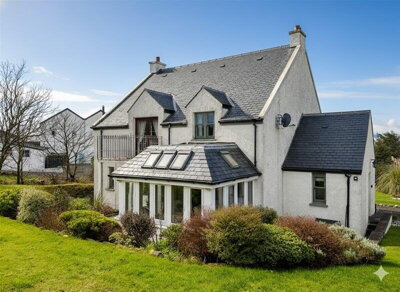
Browse 1 home for sale in PA49 from local estate agents.
The larger property sector typically features multiple bathrooms, substantial reception space, and private gardens or off-street parking. Four bedroom houses in PA49 span detached, semi-detached, and occasionally terraced configurations, with styles ranging from period properties to modern executive homes.
£0k
0
0
0
Source: home.co.uk
Showing 0 results for 4 Bedroom Houses for sale in PA49.
The property market in PA49 operates differently from mainland Scotland, shaped by the island's remote location, conservation area status, and the limited supply of available homes. Property availability fluctuates throughout the year, with homes rarely coming to market more than a handful of times annually. This scarcity means that prospective buyers need to move decisively when a suitable property becomes available, while also understanding that the island's unique characteristics require specific considerations during the purchasing process. The housing stock consists primarily of traditional cottages, converted croft houses, and occasional period properties, with modern new-build developments virtually non-existent due to strict planning controls. Our team regularly monitors the market and maintains relationships with local agents who handle Iona properties, ensuring we can alert you quickly when opportunities arise.
Given the age of many properties on Iona - with croft houses dating from 1802 and buildings connected to the medieval nunnery ruins - buyers should anticipate that most homes will require varying degrees of modernisation or ongoing maintenance. The predominant building material is local stone, reflecting both the island's geology and its centuries-old building traditions. Iona sits atop ancient Lewisian Gneiss, some of the oldest rock in Britain at over 2000 million years old, which has shaped both the landscape and the character of traditional island homes. The Abbey itself is constructed from rubble, a traditional technique using rough stone pieces that showcases the durability of local materials when properly maintained. We recommend arranging a thorough RICS Level 2 Survey before completing any purchase, as the age and construction type of many properties may reveal issues not immediately apparent during viewings.
The geological complexity of Iona extends beyond the Lewisian Gneiss foundation to include altered sedimentary rocks of the "Iona Group" dating back approximately 1000 million years, along with bands of rare serpentinised marble that originally formed as algal limestone. The marble quarry on the island, with remains of the quarry machinery still visible, served local building needs for centuries and demonstrates the island's self-sufficient traditions. Glacial erratic boulders of Ross of Mull granite were carried across during ice ages and now lie scattered across Iona's fields, creating distinctive landscape features that also provided building materials for walls and foundations. Understanding these local materials helps buyers appreciate why traditional properties display particular characteristics and why specialist knowledge is valuable when assessing property condition.

Life on the Isle of Iona offers an experience that defies comparison with mainland living. The island's population of around 178 permanent residents swells during summer months when seasonal staff arrive to help manage the influx of pilgrims and tourists visiting Iona Abbey. This tiny community operates with remarkable self-sufficiency, supporting a primary school, health centre, post office, general stores, craft shops, hotels, and cafes. The sense of community is tangible, with residents gathering for island events, the famous Iona Community, and the everyday rhythms of crofting life that have sustained islanders for centuries. For those seeking a life connected to nature, history, and a supportive community, Iona provides an unmatched environment.
The island's natural environment is characterised by the contrast between its rugged eastern coastline and the sheltered machair grasslands of the west. Shell sand, deposited by Atlantic storms, creates the distinctive machair habitat that supports rare wildflowers and wading birds - a habitat so precious that the machair lands are protected and managed carefully by local crofters. The wind-blown sand creates the famous pristine beaches on Iona's western shore, though environmental reports indicate that coastal erosion is gradually removing sand from some areas at a rate exceeding natural replenishment. Glacial erratic boulders, carried from the Ross of Mull and scattered across Iona's fields, serve as reminders of the island's geological journey through ice ages and continue to shape agricultural practices on the island.
The landscape has inspired artists, writers, and spiritual seekers for generations, with the light over the Sound of Iona celebrated for its ever-changing quality. Evening skies produce the famous Iona sunsets, while the relative absence of light pollution offers occasional views of the Northern Lights for those patient enough to wait. The Sound of Iona itself is classified as a Medium to High Risk area for coastal flooding in the 2021 environmental scoping report for the Iona Breakwater project, with an annual probability greater than 0.5 percent - approximately a 1 in 200 year event. While significant, this risk is managed through the island's emergency planning and the community's resilience built over centuries of island living. Properties on the sheltered western side benefit from the machair's natural protection, while those on the more exposed eastern coastline may require additional consideration regarding coastal weathering.

Education on the Isle of Iona is centred on Iona Primary School, a small rural school serving the island's children with classes often conducted in combined age groups. The school maintains close ties with the local community, with pupils regularly participating in events at Iona Abbey and learning about the island's extraordinary heritage. For secondary education, children travel by ferry to Oban or attend schools on Mull, with boarding arrangements typically made for families living furthest from the ferry terminal. The travel aspect of secondary education requires planning, but many families find that the benefits of island life outweigh the logistical considerations, with teenagers often developing independence and resilience through the experience.
The island also hosts educational visits from the University of the Highlands and Islands, with the Iona Community offering residential programmes that bring students and researchers to study medieval history, theology, and environmental science. Adult learners can access further education through distance learning programmes, supported by the excellent digital connectivity that has improved significantly in recent years. Key employers in education include UHI North, West and Hebrides, which provides higher education opportunities accessible to island residents. The island's health centre provides NHS services, with GPs making regular visits from Mull, ensuring that families have access to essential healthcare without necessarily requiring mainland trips.
For families considering relocation, the combination of outdoor learning opportunities, community involvement, and the unique cultural environment makes Iona an exceptional place to raise children. The island's historical significance - from the arrival of Columba in 563 AD through to the present-day Iona Community - provides an unparalleled living classroom. Children growing up on Iona develop a strong sense of place and belonging, surrounded by stories of saints, kings, and the countless pilgrims who have visited across the centuries. The close-knit nature of the community means that children are known and valued by all residents, creating a safe and supportive environment that many families find impossible to replicate on the mainland.
Access to the Isle of Iona is exclusively by sea, with the CalMac ferry service providing the vital link between Fionnphort on Mull and Iona's harbour at Baile Mòr. David MacBrayne Ltd operates the ferry service, connecting Iona to the wider network that includes routes from Oban to Craignure on Mull. The crossing takes approximately 5 minutes, with ferries running multiple times daily throughout the year, though schedules vary seasonally and can be affected by weather conditions. From Oban, visitors and residents travel by ferry to Craignure on Mull (approximately 45 minutes), then drive or take a bus to Fionnphort (approximately 1 hour 20 minutes), making the total journey from mainland Scotland around 3-4 hours. This journey time means that practical planning is essential, particularly when transporting heavy goods, vehicles, or large household items to the island.
Most residents on Iona maintain vehicles, with the island's single road network connecting the main settlement to the Abbey, the north coast, and the machair lands. The road is narrow in places but well-maintained, and the absence of traffic creates a driving experience far removed from mainland roads. Cycling is popular, with the flat terrain of the machair making for easy cycling, while the eastern hills offer more challenging routes for experienced riders. Walking remains the preferred mode of transport for many residents, with the compact nature of the island meaning that most destinations are reachable on foot within 20 minutes. The Sound of Iona can experience challenging sea conditions, and passengers should be prepared for occasional service disruptions during winter storms.
When moving to Iona, factor in the costs of shipping personal belongings via CalMac's vehicle and freight services. Specialist removal firms experienced with island relocations understand how to coordinate with ferry schedules and can advise on practical matters such as how to transport larger items efficiently. Many residents find that the move provides an opportunity to declutter and start fresh, focusing on essentials rather than accumulating mainland-size households. Vehicle transport via ferry incurs costs that islanders quickly factor into their planning, while emergency situations requiring travel to mainland services involve both time and money that should be budgeted for in advance.
Consider what living on a remote Scottish island truly involves. Visit Iona at different seasons, speak with residents, and understand the logistics of island living including ferry access, supply chains, and the seasonal variation in visitor numbers. The 130,000 annual visitors create a very different atmosphere during summer months compared to the quiet winter period when many seasonal businesses close and the community settles into its smaller permanent population.
Arrange a mortgage agreement in principle before viewing properties. Given the unique nature of island property, some lenders may have specific requirements. Factor in the costs of shipping materials to the island and potential delays in accessing services. Specialist island mortgage advisors understand the additional considerations that lenders may have regarding properties without mains gas, those relying on oil or LPG heating systems, and the implications of conservation area status on future value.
Register with local estate agents who handle Iona properties. Viewings may require coordinating ferry schedules and weather conditions. Take time to explore the island thoroughly during each visit, paying particular attention to the eastern and western sides of the island which offer distinctly different living environments. Properties near the Abbey or St Ronan's Church may face additional restrictions due to their Scheduled Ancient Monument status.
Given the age of many island properties, a thorough RICS Level 2 Survey is essential. The survey will assess the condition of stone walls, thatched or traditional roofs, and any signs of coastal weathering or flooding risk. Budget for travel costs if surveyors need to visit from the mainland. For listed buildings or properties with non-standard construction, specialist surveys may be required, adding to the overall cost but providing crucial information about heritage elements.
Instruct a solicitor experienced with Scottish property transactions and island properties specifically. The legal process follows Scottish conveyancing rules and may require additional due diligence regarding rights of access, shared facilities, and the terms of any croft land arrangements. The conservation area designation means your solicitor should also investigate any planning restrictions that might affect your intended use of the property.
Factor in ferry transport for moving belongings. Consider storage requirements for island deliveries and plan your household supply arrangements. Welcome to your new life on Iona. Many residents find that the reduced temptation for retail spending and the abundance of free outdoor activities offset the additional costs of island logistics, resulting in a lifestyle that is both fulfilling and financially sustainable.
Purchasing property on the Isle of Iona requires careful consideration of factors that differ significantly from mainland home buying. The coastal location means that properties should be assessed for exposure to salt spray, which can accelerate weathering of external surfaces and fittings. Traditional stone construction, while durable, may show signs of water penetration or structural movement that requires specialist assessment. The 2021 environmental scoping reports for the Iona Breakwater project identified the Sound of Iona as a medium to high risk area for coastal flooding, making it prudent to investigate the flood history and elevation of any property under consideration. Properties near the western machair may face different challenges from those on the more sheltered eastern side.
The conservation area designation covering the Isle of Iona means that any significant alterations, extensions, or renovations may require planning permission from Argyll and Bute Council, with particular attention paid to preserving the historic character of the island. Iona Abbey and St Ronan's Church are both Scheduled Ancient Monuments, and properties in their vicinity may face additional restrictions. The Augustinian nunnery ruins, considered one of the best-preserved medieval nunneries in Britain, are also a Scheduled Ancient Monument, and properties nearby may be affected by heritage considerations. Many island properties are listed buildings, which protects their historic features but also imposes obligations on owners to maintain particular elements in accordance with heritage guidelines.
Before purchasing, investigate the specific listing status of any property, understand the terms of any shared croft land, and clarify arrangements for water supply, drainage, and waste disposal, as these may differ substantially from mainland systems. Properties may rely on private water supplies, septic tanks, or shared facilities that require ongoing maintenance agreements with neighbours. The age of properties means that electrical and plumbing systems may require updating to meet current standards, while the presence of rubble construction in older buildings requires specialist understanding of traditional building techniques. Our inspectors understand these local construction methods and can identify potential issues that generic surveys might miss.
Specific average house price data for PA49 is not published in national databases due to the extremely low number of property transactions on the island each year. Property values on Iona reflect the rarity of availability, the unique lifestyle opportunity, and the historical significance of the location rather than following mainstream market trends. The island's conservation status and limited development potential also influence pricing in ways that differ from typical property markets. Prospective buyers should contact local estate agents for current pricing information, as each property sale is essentially unique and price expectations vary considerably based on condition, size, location within the island, and historic status.
Properties on the Isle of Iona fall under Argyll and Bute Council's jurisdiction. Council tax bands are assessed individually based on property value as determined by the Scottish Assessors. Given the variety of property types on Iona, from traditional croft houses built in 1802 to period cottages potentially connected with medieval structures, bands can range across the full spectrum. Contact Argyll and Bute Council directly or consult the Scottish Assessors' portal for specific band information on any property you are considering purchasing.
Iona Primary School serves the island's younger children with small class sizes and a community-focused curriculum that integrates the island's heritage into daily learning. For secondary education, children typically travel to schools on Mull, with Oban Grammar School available for families willing to manage the longer journey involving the ferry crossing. The island's size means that primary education is necessarily limited in scope, but the close teacher-to-pupil ratio and unique learning environment are considered significant advantages by many island families who value outdoor education and community involvement.
The Isle of Iona is connected to the mainland via CalMac ferry from Fionnphort on Mull, with the crossing taking approximately 5 minutes to the harbour at Baile Mòr. From Mull, further ferries connect to Oban, providing access to Scotland's national rail network, with trains to Glasgow and beyond. Bus services operate on Mull connecting the ferry ports, while Glasgow and Oban are served by regular train services. The island itself has minimal internal public transport, with most residents relying on private vehicles, cycling, or walking for daily travel within the compact 1.5 by 3.5 mile island.
Property investment on Iona requires a different calculus than mainstream buy-to-let scenarios. The tiny resident population of approximately 178 people means that traditional rental demand is limited, though the tourism sector creates opportunities for holiday lets, particularly during the summer months when visitor numbers peak at 130,000 annually. Conservation restrictions may limit development potential, while the historic significance of many properties adds both value and responsibility. For buyers seeking a lifestyle investment or a base for creative work, the island offers irreplaceable qualities that no financial return calculation can fully capture.
Stamp Duty Land Tax (SDLT) applies to property purchases in Scotland, with rates set by the Scottish Government. For properties up to £250,000, the SDLT rate is 0 percent. Between £250,001 and £925,000, the rate rises to 5 percent, with higher rates applying above this threshold. First-time buyers in Scotland benefit from relief on properties up to £175,000. Given the typically modest values of island properties and the limited availability, most transactions fall within the lower SDLT brackets. Our team can provide guidance on how SDLT applies to your specific situation.
The vast majority of properties on Iona are old, with many dating from the early 1800s when the current croft houses were established, and some structures potentially linked to medieval buildings including elements of the nunnery ruins. Traditional construction uses local stone and rubble building techniques, with roofs typically of traditional design that may include slate or thatch materials. Given the coastal environment and the age of properties, salt weathering, water penetration, and structural movement are common issues that a thorough survey should address before purchase.
From 4.5%
Specialist island mortgage advice for remote Scottish properties
From £499
Scottish conveyancing solicitors with island property experience
From £350
Thorough property survey essential for traditional island construction
From £85
Energy performance certificate for PA49 properties
Understanding the full costs of purchasing property on the Isle of Iona requires factoring in several elements beyond the purchase price and SDLT. Survey costs for island properties may be higher than mainland equivalents due to the logistics of surveyor travel, with RICS Level 2 surveys typically ranging from £400 to £600 depending on property size and accessibility. For listed buildings or properties with non-standard construction, specialist surveys may be required, adding to the overall cost. Solicitors with experience of Scottish island conveyancing are essential, with fees typically ranging from £500 to £1500 depending on transaction complexity. Factor in the cost of shipping personal belongings to the island, which may require specialist removal firms experienced with CalMac's vehicle and freight services.
When budgeting for your island purchase, consider the ongoing costs of island living. Household supplies that cannot be sourced locally will need to be ordered and shipped, adding to grocery and household budgets. Properties on Iona typically rely on oil, LPG, or renewable energy sources rather than mains gas, so understanding the energy profile of any property and budgeting for fuel deliveries is an important part of your financial planning. Vehicle transport via ferry incurs costs that islanders quickly factor into their planning, while emergency situations requiring travel to mainland services involve both time and money. Many residents find that the reduced temptation for retail spending and the abundance of free outdoor activities offset these additional costs, resulting in a lifestyle that is both fulfilling and financially sustainable.
Properties for Sale In London

Properties for Sale In Plymouth

Properties for Sale In Liverpool

Properties for Sale In Glasgow

Properties for Sale In Sheffield

Properties for Sale In Edinburgh

Properties for Sale In Coventry

Properties for Sale In Bradford

Properties for Sale In Manchester

Properties for Sale In Birmingham

Properties for Sale In Bristol

Properties for Sale In Oxford

Properties for Sale In Leicester

Properties for Sale In Newcastle

Properties for Sale In Leeds

Properties for Sale In Southampton

Properties for Sale In Cardiff

Properties for Sale In Nottingham

Properties for Sale In Norwich

Properties for Sale In Brighton

Properties for Sale In Derby

Properties for Sale In Portsmouth

Properties for Sale In Northampton

Properties for Sale In Milton Keynes

Properties for Sale In Bournemouth

Properties for Sale In Bolton

Properties for Sale In Swansea

Properties for Sale In Swindon

Properties for Sale In Peterborough

Properties for Sale In Wolverhampton

Enter your details to see if this property is within your budget.
Loans, cards, car finance
Estimated property budget
Borrowing + deposit
You could borrow between
Typical borrowing
Monthly repayment
Est. at 4.5%
Loan-to-value
This is an estimate only. Your actual budget may vary depending on interest rates, credit history, and personal circumstances. For an accurate affordability assessment, speak to one of our free mortgage advisors.
This calculator provides estimates for illustrative purposes only and does not constitute financial advice. Your home may be repossessed if you do not keep up repayments on your mortgage. Estimates based on 4.5% interest rate, repayment mortgage. Actual rates depend on your circumstances.
Homemove is a trading name of HM Haus Group Ltd (Company No. 13873779, registered in England & Wales). Homemove Mortgages Ltd (Company No. 15947693) is an Appointed Representative of TMG Direct Limited, trading as TMG Mortgage Network, which is authorised and regulated by the Financial Conduct Authority (FRN 786245). Homemove Mortgages Ltd is entered on the FCA Register as an Appointed Representative (FRN 1022429). You can check registrations at NewRegister or by calling 0800 111 6768.

We use cookies to show you personalised content and improve your experience of our website. Find out more in our Privacy policy and Cookie policy.