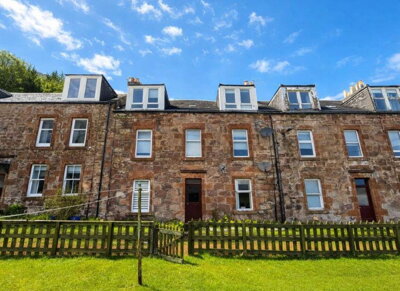
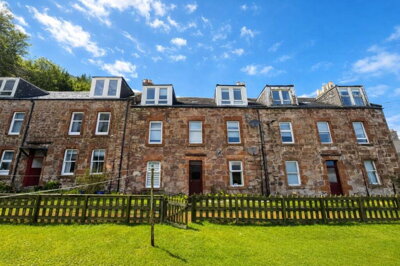
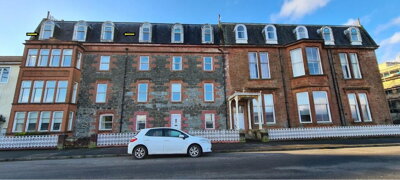
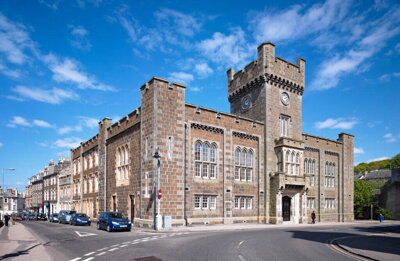
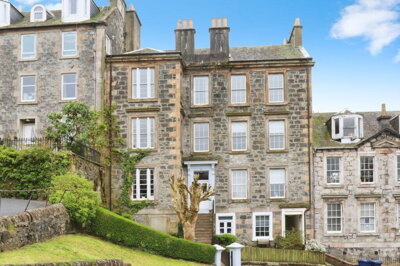
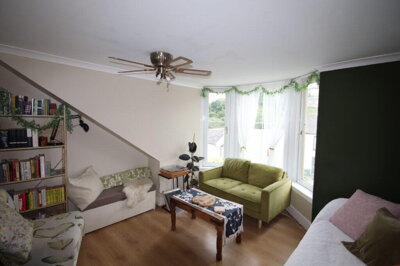
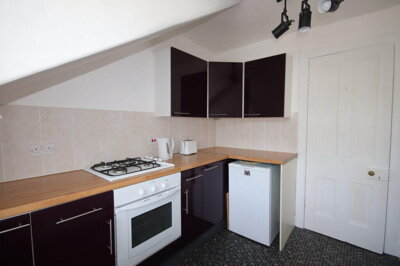
Browse 7 homes for sale in PA20 from local estate agents.
One bed apartments provide a separate bedroom alongside distinct living space, bathroom, and kitchen areas. Properties in PA20 are available in various building types including mansion blocks, contemporary developments, and house conversions.
£40k
6
1
41
Source: home.co.uk
Showing 6 results for 1 Bedroom Flats for sale in PA20. 1 new listing added this week. The median asking price is £40,000.
Source: home.co.uk
Flat
6 listings
Avg £48,667
Source: home.co.uk
Source: home.co.uk
The PA20 property market presents compelling opportunities for buyers seeking affordable Scottish island living with strong long-term potential. Current data shows average property prices of £131,411 across all property types, though significant variation exists between categories. Flats typically sell for around £96,626, making them an accessible entry point for first-time buyers or those seeking a holiday let investment, while terraced properties average £140,232 and detached properties command premium prices averaging £262,631. This price range ensures that diverse buyer requirements can be accommodated within this postcode sector.
Property prices in PA20 have demonstrated resilience and modest growth, with a 5% increase over the past twelve months following a period of correction from the 2022 peak of £150,661. This price trajectory suggests a stabilising market where buyers can secure property at more reasonable valuations than during the peak period while benefiting from gradual appreciation. The mix of property types available, from traditional tenement flats to substantial detached family homes, ensures that diverse buyer requirements can be accommodated within this postcode sector.
Recent sales data indicates that flats represent the most commonly transacted property type in PA20, reflecting both their affordability and popularity among buyers entering the market. Semi-detached properties, averaging around £187,275 according to Zoopla sold prices, offer a middle ground between flat and detached options. For buyers seeking larger family homes or premium locations, detached properties in the £278,901-£288,026 range provide substantial living space and garden grounds that are characteristic of traditional Scottish island homes. The variety of price points means that buyers across all budget levels can find suitable options within the island's housing stock.

The Isle of Bute supports a welcoming community of approximately 6,498 residents who enjoy an exceptional quality of life amid stunning natural scenery. The island's character blends traditional Scottish heritage with modern coastal living, with Rothesay serving as the vibrant hub of community life. Architectural heritage defines much of the built environment, with traditional sandstone buildings and charming red sandstone structures adding warmth and authenticity to the town's streetscape. The presence of Category C and B listed buildings throughout the area reflects the island's rich historical legacy.
Port Bannatyne, situated along the northern shore, offers a distinct maritime character centred around its popular yachting marina, attracting sailing enthusiasts and those who appreciate waterfront living. The village provides essential local amenities while maintaining a peaceful, village atmosphere ideal for families and retirees. Properties in Port Bannatyne command interest from buyers seeking marine-related lifestyle opportunities, with the marina serving as a focal point for community activities throughout the sailing season from spring through autumn.
Throughout PA20, residents benefit from access to beautiful beaches, coastal walks, and the island's famous Mount Stuart estate with its remarkable gardens and Georgian architecture. The estate, located near the village of Kilchattan Bay, adds significant cultural and heritage value to the southern part of the island. The local economy benefits from tourism, marine activities, and traditional sectors, creating a balanced community that maintains its Scottish island identity while connecting to mainland economic opportunities. The island's local economy also supports a range of independent shops, cafes, and pubs in Rothesay town centre, ensuring that residents have access to everyday amenities without requiring mainland travel.
Education provision on the Isle of Bute serves families with a range of primary and secondary options within the PA20 postcode area. Primary schools across the island provide early years education in community-focused settings, with class sizes that often allow for more individualised attention than urban schools can offer. The island's smaller schools foster close relationships between teachers, pupils, and families, creating supportive educational environments where children can develop academically and personally.
Secondary education is centred in Rothesay, where the island's main high school provides comprehensive curriculum coverage including National qualifications through to Highers for those pursuing further education pathways. Parents considering relocation to PA20 should research specific school catchments and admissions criteria, as these can influence property selection in particular neighbourhoods. Education Scotland provides inspection reports for all island schools, allowing prospective parents to review educational performance data before making relocation decisions.
The presence of traditional stone-built school buildings in the area reflects the historical development of education provision on the island, with modern facilities also available to support contemporary learning requirements. School transport links connect outlying communities to Rothesay's educational facilities, though journey times and routes should be verified when considering properties in more remote areas such as Kingarth or the southern reaches of Kilchattan Bay. For families prioritising education in their property search, viewing school prospectuses and contacting Argyll and Bute Council's education department provides the most current information on curriculum offerings and extracurricular activities available to island pupils.
Reaching the Isle of Bute requires crossing the Firth of Clyde, with regular ferry services connecting the island to the mainland at Rothesay and Colintraive. The ferry crossing from Colintraive to Rhubodach takes approximately 5-10 minutes and operates frequently throughout the day, providing convenient access for those commuting to work or accessing services on the mainland. This short crossing is particularly valuable for residents who need to travel to the Cowal peninsula for work or services, as the Rhubodach terminal connects directly to the A886 road leading to Dunoon and the wider Argyll road network.
A longer crossing from Wemyss Bay (near Greenock) to Rothesay takes approximately 33 minutes and accommodates vehicles, enabling residents to maintain mainland employment or visit urban centres for shopping and entertainment. Caledonian MacBrayne ferries operate this route regularly, with timetables designed to connect with rail services from Glasgow Central. The Wemyss Bay terminal is well-served by train services from Glasgow, making the total journey time from Glasgow city centre to Rothesay approximately 1.5 to 2 hours by public transport.
Once on the island, local bus services connect major settlements including Rothesay, Port Bannatyne, Ascog, and Kilchattan Bay, providing essential transport for residents without private vehicles. The Bute roads network, while more limited than mainland infrastructure, adequately serves daily requirements for most residents. For commuters considering PA20 as a base, journey times to Glasgow city centre total approximately 1.5 to 2 hours including ferry crossings, positioning the island as a viable option for remote workers or those with flexible working arrangements. Cycling and walking are popular local transport methods given the island's compact geography and scenic routes, with several designated paths and coastal routes available for recreational and practical use throughout the year.
Explore listings on Homemove to understand current property prices, available types, and neighbourhood characteristics. Consider visiting the island to experience daily life, check ferry timetables, and assess whether the pace of island living matches your expectations. The average property price of £131,411 provides useful context for budgeting, though properties at the lower end of the market in PA20 can be found for significantly less, particularly older flats in Rothesay that may require renovation investment.
Contact lenders or use Homemove's mortgage comparison tools to obtain an Agreement in Principle before viewing properties. Having your financing arranged strengthens your position when making offers, particularly in competitive situations. First-time buyers should also verify eligibility for government schemes and SDLT relief where applicable. For island properties, some mortgage lenders may require additional documentation regarding property condition given the age of much of the housing stock, so discussing your mortgage arrangements early with a broker experienced in Scottish island transactions proves beneficial.
Schedule viewings through Homemove's portal to visit properties matching your criteria. For island properties, consider viewing multiple homes in a single visit to maximise your time given ferry scheduling constraints. Pay attention to property condition, potential maintenance requirements, and any signs of damp or structural issues common in older buildings. When viewing traditional stone properties in Rothesay or Port Bannatyne, ask about recent renovation work, the condition of shared roof areas on tenement properties, and any factoring arrangements that may affect service charge liabilities.
Before purchasing, arrange a RICS Level 2 Homebuyer Report to assess the property condition thoroughly. Given PA20's traditional stone-built housing stock, professional surveys identify defects such as damp, roof condition issues, or outdated electrics that may not be apparent during viewings. For listed buildings or properties in conservation areas, a RICS Level 3 Building Survey may prove more appropriate, as this provides more detailed assessment of traditional construction methods and specialist repair requirements. Budget approximately £400-600 for a standard Level 2 survey, with costs varying based on property size and inspection complexity.
Appoint a conveyancing solicitor experienced with Scottish property transactions to handle legal work including title checks, searches, and registration. Your solicitor will guide you through the concludes process until you receive keys to your new island home. Homemove can connect you with conveyancing specialists who understand the specific requirements of purchasing property on Scottish islands, including any unique title conditions or communal area responsibilities that may apply to your chosen property.
Properties on the Isle of Bute frequently feature traditional construction methods that require specific understanding during the purchase process. Traditional sandstone buildings, while offering excellent character and thermal mass, may show signs of damp in older properties where original ventilation systems have been compromised by modern improvements. Prospective buyers should carefully inspect walls, window frames, and lower levels for evidence of moisture penetration and discuss any concerns with a surveyor during the RICS Level 2 inspection. The red sandstone construction common throughout Rothesay and Port Bannatyne is generally durable but requires regular maintenance of mortar joints and pointing to prevent water penetration.
The coastal location of PA20 introduces specific considerations for property purchasers regarding flood risk and maintenance requirements. Properties near the shoreline or in low-lying areas adjacent to the Irish Sea may face elevated coastal flood risk during severe weather events, and insurance arrangements should be confirmed before purchase. SEPA flood maps provide specific risk assessments for individual properties, and we recommend consulting these resources alongside the survey report when evaluating coastal properties. Conservation areas and listed buildings, which are present throughout Rothesay and Port Bannatyne, impose planning restrictions that affect permissible alterations and maintenance approaches. Listed buildings require Listed Building Consent for certain works that would not require planning permission on unlisted properties, adding complexity to renovation projects.
Tenement flats, common throughout the housing stock, typically involve shared ownership of common areas and collective responsibility for maintenance costs through factoring arrangements. Understanding the condition of shared roofs, external walls, and communal spaces helps anticipate future service charge liabilities. Many Rothesay tenements are managed through formal factor arrangements, with residents contributing to a communal fund for roof repairs, external painting, and stairwell maintenance. These arrangements should be investigated before purchase, as neglected factoring can result in unexpected bills for essential maintenance work.
Freehold properties, while offering greater autonomy, may still involve maintenance responsibilities for private gardens, driveways, or shared boundaries with neighbours. Properties with private gardens are highly sought after in PA20, and understanding the full extent of grounds and any maintenance requirements proves important for budgeting purposes. Some properties may also have historic rights of way or access arrangements that affect how outdoor spaces can be used, and these should be confirmed during the conveyancing process.
The average house price in PA20 currently stands at £131,411 according to recent Rightmove data. Property prices vary significantly by type, with flats averaging £96,626, terraced properties around £140,232, and detached properties reaching approximately £262,631. Prices have increased by 5% over the past twelve months following a period of correction from the 2022 peak of £150,661, indicating a stabilising market offering reasonable entry points for buyers. Zoopla's sold price data shows slightly higher averages, with detached properties at around £288,026 and semi-detached properties at approximately £187,275, suggesting that actual sale prices can vary depending on property condition and location.
Properties in PA20 fall under Argyll and Bute Council jurisdiction, with council tax bands ranging from A to H based on property valuation. Band A properties (the lowest valuation band in Scotland) pay approximately £1,000-1,100 annually, while higher band properties attract proportionally greater charges. Prospective buyers should obtain the specific council tax band for any property they are considering and factor this ongoing cost into their budgeting calculations. Council tax bills in PA20 are generally comparable to other rural Scottish councils, though the lower property values in the area mean that many properties fall into lower bands than equivalent mainland properties.
Education on the Isle of Bute includes primary schools serving local communities throughout PA20 and a secondary school in Rothesay providing comprehensive secondary education. Specific school performance data, including recent Ofsted-equivalent inspection results from Education Scotland, should be consulted when evaluating educational provision. The island's smaller class sizes often provide individualised attention that complements academic achievement, and many parents report strong community support within island schools. For secondary education, Rothesay Joint Campus provides secondary schooling with facilities including a swimming pool and sports pitches, serving students from across the island.
The Isle of Bute is connected to the mainland via regular ferry services from Rothesay to Wemyss Bay (33-minute crossing) and from Colintraive to Rhubodach (5-10 minute crossing). On the island, local bus services link Rothesay with Port Bannatyne, Ascog, Kilchattan Bay, and other settlements. Journey time to Glasgow city centre by public transport totals approximately 1.5 to 2 hours including ferry crossings, making the island suitable for remote workers or those with flexible commuting arrangements. The Wemyss Bay ferry terminal connects directly to rail services running from Glasgow Central, providing seamless travel options for commuters who work in the city but live on the island.
The Isle of Bute property market offers particular appeal for investors considering holiday lets, retirement homes, or long-term rental opportunities. Average prices significantly below Scottish urban centres provide accessible entry points, while steady price growth of 5% annually suggests healthy market activity. Tourism demand supports holiday let potential, particularly for properties near the marina at Port Bannatyne or coastal locations with scenic views. The island's ongoing community sustainability also supports long-term residential rental demand, with properties in Rothesay town centre attracting tenants seeking the island lifestyle without the commitment of purchase.
Stamp Duty Land Tax (SDLT) rates for residential properties purchased in Scotland differ from England and operate under the Land and Buildings Transaction Tax (LBTT) system. First-time buyers pay 0% on the first £175,000, 2% on £175,000-£250,000, 5% on £250,000-£400,000, and 10% on £400,000-£500,000, with no relief available above £500,000. Standard rates for non-first-time buyers start at 0% up to £145,000, then 2% up to £250,000, 5% up to £325,000, 10% up to £750,000, and 12% above that. For most PA20 properties averaging £131,411, SDLT liability would be minimal or nil for qualifying buyers.
Properties in PA20 face potential coastal flood risk given the Isle of Bute's location adjacent to the Irish Sea. SEPA (Scottish Environment Protection Agency) flood maps should be consulted for specific properties to assess river, coastal, and surface water flood risk. Properties in elevated positions away from the shoreline generally face lower flood risk, while those in low-lying coastal areas require more careful evaluation. Buildings insurance availability and cost implications should be confirmed before completing any purchase, as some insurers apply loadings or exclusions for properties in designated flood risk zones along the Bute coastline.
Given the prevalence of traditional stone-built properties and tenement buildings in PA20, common maintenance concerns include damp penetration (particularly in older buildings with compromised ventilation), roof condition requiring regular inspection, and potentially outdated electrical systems in properties that have not been recently rewired. Traditional red sandstone construction, while durable, may require repointing and regular maintenance of mortar joints to prevent water ingress. Properties with flat roofs or complex rooflines common on tenement buildings often require more frequent maintenance than simple pitched roofs. Prospective buyers should commission thorough surveys and budget for potential maintenance requirements when purchasing older properties, with survey costs typically ranging from £400-600 for a RICS Level 2 inspection.
The Isle of Bute contains numerous listed buildings, including Category B and Category C Listed structures throughout Rothesay and Port Bannatyne. The Grand Marine building and various Victorian and Edwardian terraces in Rothesay town centre feature listed status, reflecting the island's architectural heritage. Purchasing a listed building introduces additional considerations including the requirement for Listed Building Consent for certain alterations and the responsibility to maintain the property's historic character. Specialist surveys may be recommended for listed properties to assess the condition of traditional construction methods and identify any historic fabric requiring specialist repair techniques.
From 3.9%
Expert mortgage advice and competitive rates for your PA20 purchase
From £499
Scottish conveyancing specialists for your island property purchase
From £400
Essential property inspection for traditional stone-built homes on Bute
From £500
Comprehensive building survey recommended for listed properties
Understanding the full costs of purchasing property in PA20 requires careful consideration of LBTT (Land and Buildings Transaction Tax), solicitor fees, survey costs, and ongoing commitments. The Scottish system provides different thresholds to England, with residential rates applying from nil rate starting at £145,000 for non-first-time buyers and £175,000 for first-time purchasers claiming relief. For a typical PA20 property priced at the current average of £131,411, most buyers would benefit from nil LBTT liability on the property purchase itself.
First-time buyers purchasing property in PA20 should verify their eligibility for LBTT relief, which provides substantial savings on properties between £175,000 and £500,000. At the PA20 average price of £131,411, qualifying first-time buyers would typically pay no LBTT, making island property acquisition particularly accessible for those entering the housing market. Non-first-time buyers purchasing at average prices would also generally incur minimal LBTT given the lower price points prevailing in this postcode sector compared to Scottish cities.
Beyond the purchase price, buyers should budget for solicitor conveyancing fees (typically £500-£1,200 for Scottish transactions), a RICS Level 2 survey (approximately £400-£600 depending on property value), and land registry registration fees. Buildings insurance should be arranged from completion date, while mortgage arrangement fees (if applicable) vary by lender. Survey costs prove particularly valuable for traditional stone properties in PA20, where professional inspection can identify defects not visible during viewings and potentially justify price negotiations before concludes. For listed buildings, additional specialist survey costs may apply to assess heritage construction methods and fabric condition.
Properties for Sale In London

Properties for Sale In Plymouth

Properties for Sale In Liverpool

Properties for Sale In Glasgow

Properties for Sale In Sheffield

Properties for Sale In Edinburgh

Properties for Sale In Coventry

Properties for Sale In Bradford

Properties for Sale In Manchester

Properties for Sale In Birmingham

Properties for Sale In Bristol

Properties for Sale In Oxford

Properties for Sale In Leicester

Properties for Sale In Newcastle

Properties for Sale In Leeds

Properties for Sale In Southampton

Properties for Sale In Cardiff

Properties for Sale In Nottingham

Properties for Sale In Norwich

Properties for Sale In Brighton

Properties for Sale In Derby

Properties for Sale In Portsmouth

Properties for Sale In Northampton

Properties for Sale In Milton Keynes

Properties for Sale In Bournemouth

Properties for Sale In Bolton

Properties for Sale In Swansea

Properties for Sale In Swindon

Properties for Sale In Peterborough

Properties for Sale In Wolverhampton

Enter your details to see if this property is within your budget.
Loans, cards, car finance
Estimated property budget
Borrowing + deposit
You could borrow between
Typical borrowing
Monthly repayment
Est. at 4.5%
Loan-to-value
This is an estimate only. Your actual budget may vary depending on interest rates, credit history, and personal circumstances. For an accurate affordability assessment, speak to one of our free mortgage advisors.
This calculator provides estimates for illustrative purposes only and does not constitute financial advice. Your home may be repossessed if you do not keep up repayments on your mortgage. Estimates based on 4.5% interest rate, repayment mortgage. Actual rates depend on your circumstances.
Homemove is a trading name of HM Haus Group Ltd (Company No. 13873779, registered in England & Wales). Homemove Mortgages Ltd (Company No. 15947693) is an Appointed Representative of TMG Direct Limited, trading as TMG Mortgage Network, which is authorised and regulated by the Financial Conduct Authority (FRN 786245). Homemove Mortgages Ltd is entered on the FCA Register as an Appointed Representative (FRN 1022429). You can check registrations at NewRegister or by calling 0800 111 6768.

We use cookies to show you personalised content and improve your experience of our website. Find out more in our Privacy policy and Cookie policy.