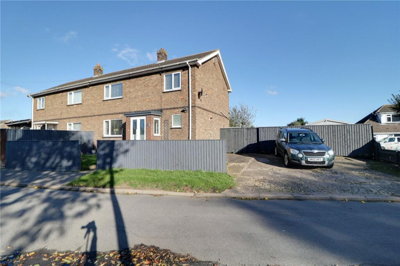
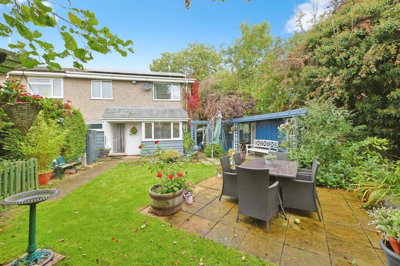
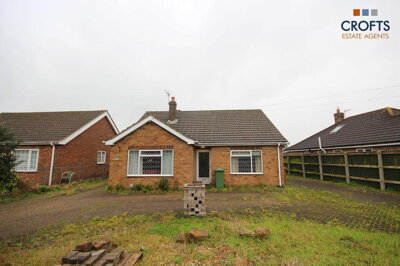
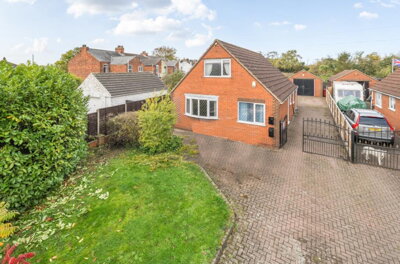
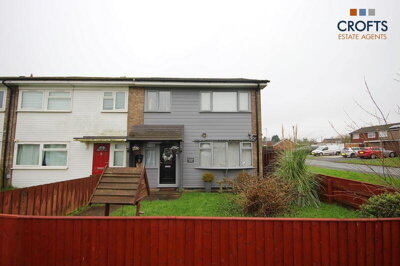
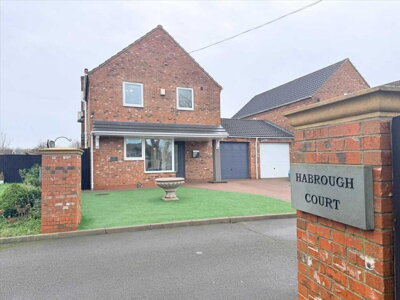
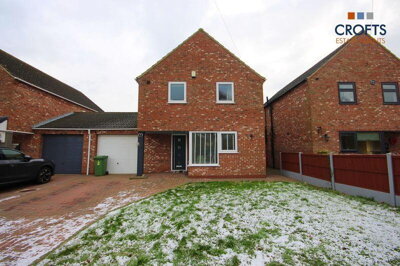
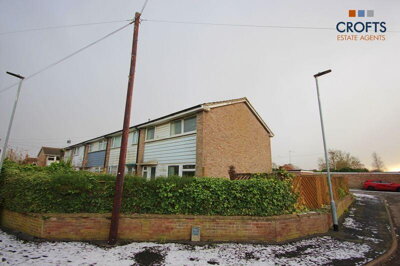
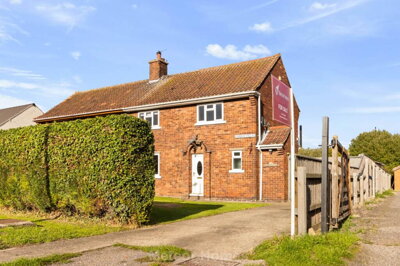
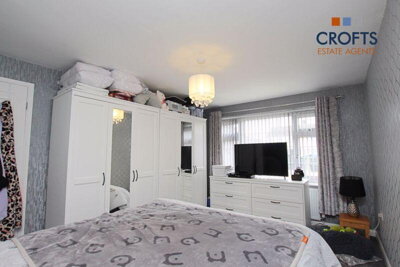
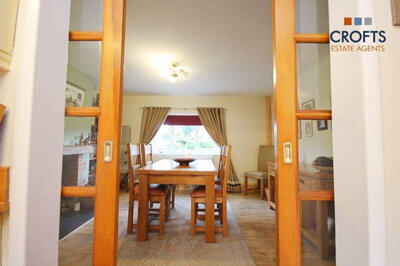
Browse 11 homes for sale in North Killingholme from local estate agents.
Three bedroom properties represent a significant portion of the North Killingholme housing market, offering space for families with multiple reception rooms and gardens in many cases. Browse detached, semi-detached, and terraced options ranging from period character homes to contemporary developments.
The North Killingholme housing market reflects its position as a working village within the broader South Humber industrial zone. Our data shows the current overall average property price sits at £189,000, representing a modest 5% decline over the past twelve months that mirrors wider regional cooling in secondary markets. Detached properties command the highest values at approximately £230,000, appealing to families and those seeking generous internal space alongside off-street parking and private gardens that the village characteristically provides.
Semi-detached homes represent the backbone of the local market, typically priced around £150,000 and offering excellent value for buyers prioritising space and practicality over urban amenities. These properties often feature the traditional brick construction prevalent throughout North Killingholme, with cavity wall insulation and pitched tiled roofs that have served residents well for decades. Terraced properties, available from approximately £120,000, provide the most accessible entry point for first-time buyers and investors seeking rental income in an area where demand from industrial sector workers remains consistent.
New build activity within the DN40 3 postcode area has been limited in recent years, with no major developments specifically identified within North Killingholme itself. This scarcity of new supply has helped maintain values for existing stock, particularly for well-maintained properties that meet the expectations of buyers relocating from larger towns. The village housing stock shows considerable variety, with significant proportions built post-1945 alongside older properties predating the First World War, meaning buyers should expect diversity in construction standards and maintenance requirements across different properties.

Life in North Killingholme centres on its identity as a working village where the rhythm of daily life connects to the industrial heartbeat of the South Humber Bank. The village itself maintains essential amenities including a public house, local shop, and community facilities that serve day-to-day needs, while the nearby towns of Immingham and Grimsby provide access to wider retail, healthcare, and leisure services within a short drive. The landscape character combines flat agricultural farmland with the imposing industrial infrastructure of the Humber Refinery complex, creating a distinctive backdrop that local residents grow to appreciate as part of the area's unique personality.
The village population of approximately 1,100 people includes a balanced mix of age groups, with families drawn by affordable housing and workers employed in the petrochemical and logistics sectors forming the core demographic. Community spirit runs strong in North Killingholme, with events and gatherings providing regular opportunities for residents to connect and maintain the village atmosphere that distinguishes it from larger, more anonymous settlements. The proximity to the Humber Estuary brings both economic opportunity and environmental character, with the tidal waters visible from elevated points and migratory bird populations providing seasonal interest for nature enthusiasts.
Housing in North Killingholme predominantly takes the form of detached properties, estimated at 50-60% of the total stock, with semi-detached homes comprising a further 30-40% of dwellings. This distribution reflects the village's history as a place where families required space, whether for home working, keeping animals, or simply enjoying the rural setting that larger properties in affordable locations can provide. The predominance of brick construction with tiled roofs has created a coherent architectural character, though age variation across the stock means buyers should carefully assess individual properties during the viewing process.

Understanding the construction methods used in North Killingholme properties helps buyers appreciate what to expect from the local housing stock. The majority of properties built after the 1920s feature traditional brick cavity wall construction, where two brick skins with a gap between them provide improved thermal performance and weather resistance compared to older solid wall methods. This cavity wall construction typically incorporates some form of insulation, though properties from earlier decades may have uninsulated cavities that could be upgraded to improve energy efficiency and reduce heating costs.
Roof construction across most North Killingholme homes uses pitched roofs covered with either clay or concrete tiles, with the concrete products particularly common in properties built during the 1960s to 1980s boom period. The flat landscape surrounding the village means roofs are often visible from considerable distances, and their condition can significantly affect both the property value and the cost of any necessary repairs. Flat roof sections on extensions or garages, where present, typically require more frequent maintenance and eventual replacement compared to pitched alternatives.
Properties predating the First World War in North Killingholme, though relatively few, may feature solid brick walls constructed without cavities, render finishes, or traditional timber frame elements that require specialist knowledge to assess properly. These older properties can offer character and solid construction but often demand more ongoing maintenance investment. The village does contain some heritage properties, including the Church of St Denys, a listed building that represents the historical roots of the community. Any buyer considering a period property should factor in the possibility of more complex maintenance requirements and potentially higher insurance costs.
Families considering a move to North Killingholme will find primary education available through schools in the surrounding area, with local primary schools serving the village community and feeding into secondary schools in nearby towns. The education landscape in North Lincolnshire has undergone significant development in recent years, with schools working to improve standards and expand facilities to meet the needs of both traditional village communities and the expanding industrial workforce. Parents should research specific school performance data and catchment areas, as these can influence property values and the availability of school places in popular areas.
Secondary education options for North Killingholme residents typically include schools in Immingham, Grimsby, and Cleethorpes, with bus services connecting the village to these larger settlements for students requiring secondary level education. Grammar schools in the Grimsby area attract students from across North East Lincolnshire and North Lincolnshire, providing academic pathways for families prioritising selective education. Post-16 options include sixth forms at local secondary schools and further education colleges in Grimsby, offering vocational and academic courses to suit different career aspirations and learning styles.
Early years childcare and preschool facilities serve younger families in the village and surrounding area, providing essential support for working parents and giving children a foundation in socialisation and basic learning skills. The relatively compact nature of the North Killingholme community means that schools often maintain close relationships with families, creating an environment where teachers know their students well and can provide targeted support. Families moving to the area should contact North Lincolnshire Council education department for the most current information on school admissions, catchment boundaries, and available places.
Transport connectivity defines much of North Killingholme's character as a location where residents commonly travel to work in the industrial facilities that line the South Humber Bank. The village sits close to major employment destinations including the Phillips 66 Humber Refinery and Lindsey Oil Refinery, where thousands of workers are employed in well-paid process engineering, maintenance, and logistics roles. For those working in these facilities, the short commute from North Killingholme represents a significant quality of life advantage, allowing workers to avoid the longer journeys that characterise employment in the energy sector.
Road access from North Killingholme connects to the A160 and subsequently the A180, providing routes to Grimsby and Cleethorpes to the east and connecting to the national motorway network via the M180 to the south. The proximity of the Humber Bridge to the south-west opens routes towards Hull and the wider Yorkshire region, while the A15 provides connections north towards Lincoln and beyond. For commuters to Sheffield, Leeds, or other northern cities, the journey involves either a significant drive or a combination of road and rail using stations in Barnsley, Doncaster, or Sheffield.
Public transport options serving North Killingholme include bus routes connecting the village to Immingham, Grimsby, and other nearby towns, though frequency may be limited compared to urban services. Rail connections are accessed via stations in Barnetby or Habrough, offering services to destinations including Grimsby, Sheffield, Manchester, and Bristol. For residents employed in the local industrial sector, car ownership remains effectively essential given shift patterns and the dispersed nature of employment sites across the South Humber Bank. Cycling can be viable for shorter local journeys, though the flat but often exposed landscape requires consideration of weather conditions.
Start by exploring the North Killingholme property market through Homemove, reviewing currently available listings and recent sale prices to understand the value landscape. Given the village's small size and limited transaction volumes, building a clear picture of what properties sell for will help you identify genuinely good value when it arises.
Before viewing properties, approach a lender to secure an agreement in principle that confirms your borrowing capacity. Having this documentation demonstrates your seriousness to estate agents and sellers, particularly important in a village market where vendors may receive multiple enquiries. Compare rates across different lenders to ensure you secure the most competitive deal available.
View properties that match your requirements, taking time to assess the condition of the building, garden, and surrounding neighbourhood. Given the age variation in North Killingholme housing stock, pay particular attention to signs of damp, roof condition, and the state of electrical and plumbing systems in older properties.
Once your offer is accepted, instruct a RICS Level 2 Survey to assess the property condition comprehensively. For a typical three-bedroom home in North Killingholme, expect survey costs between £450 and £700. Given the clay geology underlying the area and prevalence of older properties, this survey provides essential protection against hidden defects including potential subsidence, damp ingress, and structural movement.
Appoint a solicitor to handle the legal aspects of your purchase, conducting searches with North Lincolnshire Council, investigating title deeds, and managing the exchange and completion process. Your solicitor will also handle Stamp Duty Land Tax calculations and submission on your behalf.
Once all enquiries are resolved and your mortgage offer is confirmed, you can proceed to exchange contracts with your solicitor placing the deposit and agreeing a completion date. On completion day, the remaining funds are transferred, and you receive the keys to your new North Killingholme home.
Property buyers considering North Killingholme should pay particular attention to flood risk, as the village's proximity to the Humber Estuary and flat topography create areas susceptible to surface water flooding during periods of heavy rainfall. The Environment Agency provides detailed flood risk maps that can help identify which properties sit within higher risk zones, and any buyer proceeding with a purchase in these areas should ensure appropriate insurance cover is obtainable and factored into overall costs. While major flooding events are relatively infrequent, the consequences can be severe, making this assessment an essential part of the buying decision.
The underlying clay geology of North Lincolnshire creates potential for shrink-swell ground movement that can affect property foundations, particularly where mature trees are present or where ground conditions vary across a plot. The boulder clay deposits that characterise much of the superficial geology can contract during dry spells and expand when moisture levels rise, putting stress on foundations that were not designed to accommodate such movement. Buyers should look for signs of subsidence or heave damage including cracking to walls, sticking doors or windows, and uneven floors. Properties with older foundations or those showing previous repair work should be investigated carefully, and a RICS Level 2 Survey will assess whether these issues have been properly addressed or may require further attention.
Given that a significant proportion of North Killingholme's housing stock exceeds 50 years of age, the condition of roofs, electrical systems, and plumbing warrants careful scrutiny during viewings and surveys. Look for evidence of damp patches on walls and ceilings, check whether light switches and sockets appear dated, and assess the boiler and heating system age and condition. Properties that have been well maintained by previous owners may command premium prices but could save significant sums compared to homes requiring immediate investment in essential repairs and upgrades. Older properties may also contain asbestos in areas such as pipe insulation, artex coatings, or floor tiles, which would require specialist assessment before any renovation work.
The flat topography of North Killingholme and its position adjacent to the Humber Estuary create specific environmental considerations that prospective property buyers should understand before committing to a purchase. Surface water flooding represents the most common flood risk in the area, occurring when heavy rainfall overwhelms local drainage systems and water accumulates in low-lying areas. The clay-dominated soils that characterise much of the local geology drain relatively slowly, exacerbating surface water issues during periods of intense precipitation.
River and tidal flood risk from the Humber Estuary is managed through the infrastructure of flood defences maintained by the Environment Agency, though no flood defence system can eliminate risk entirely. Properties situated at lower elevations or those with direct views across the estuary towards the east may face different risk profiles compared to properties on slightly higher ground within the village. Our team recommends consulting the Environment Agency flood maps for any specific property under consideration, as these provide detailed risk assessments based on the latest modelling data.
Unlike many parts of England, North Killingholme is not located within a former coal mining area, meaning buyers do not need to consider the subsidence risks associated with underground coal extraction. Similarly, coastal erosion does not present a significant concern for the village itself, as North Killingholme is sufficiently set back from the estuary edge. The primary environmental consideration for most buyers will remain the combination of surface water flood risk and the potential for ground movement related to the underlying clay geology.
The current average house price in North Killingholme stands at approximately £189,000 based on transactions over the past twelve months. Detached properties average around £230,000, semi-detached homes around £150,000, and terraced properties from approximately £120,000. Property prices have shown a modest 5% decline over the past year, reflecting broader market conditions across North Lincolnshire rather than any specific weakness in the North Killingholme market. The village's position within the South Humber industrial corridor continues to underpin demand from workers seeking short commutes to major employers.
Properties in North Killingholme fall within North Lincolnshire Council's jurisdiction, with most residential properties assigned bands A through D depending on their value and character. Band A properties typically attract annual charges around £1,400-1,500, while higher band properties incur proportionally greater amounts depending on the assessed value of the dwelling. Exact banding should be confirmed through the Land Registry records for any specific property or through North Lincolnshire Council's online portal, where residents can also set up direct debit payments and access information about council services.
North Killingholme is served by primary schools in the surrounding villages and towns, with families typically accessing schools in Immingham, Habrough, or nearby settlements for early years and primary education. Secondary education is available at schools in Grimsby and Immingham, with grammar school options for academically capable students including some selective schools accessible through the 11-plus examination. Ofsted inspection reports for all local schools should be consulted before committing to a property purchase to ensure education provision meets your family's requirements, as catchment boundaries can change and popular schools may have waiting lists.
Bus services connecting North Killingholme to Immingham and Grimsby operate at limited frequencies, making car ownership effectively essential for most residents. The nearest railway stations are at Barnetby and Habrough, offering services to Grimsby, Sheffield, Manchester Piccadilly, and destinations further afield including Bristol. For commuters to major cities, journey planning typically requires combining road travel to a station or driving direct to employment sites on the South Humber Bank, and those working irregular shift patterns may find public transport impractical for their needs.
North Killingholme offers potential for property investment given affordable purchase prices and steady demand from workers in the local industrial sector who prefer to live locally rather than commute long distances. Rental yields in the village may outperform those in more expensive nearby towns, particularly for properties suitable for key workers and process operators employed at the Humber Refinery and Lindsey Oil Refinery. Capital growth prospects are more modest given limited development and the specialised nature of local employment, though the relative affordability compared to regional centres may appeal to buyers taking a longer-term view of the market.
Standard Stamp Duty Land Tax rates apply to purchases in North Killingholme, with no duty payable on purchases up to £250,000. For properties priced between £250,000 and £925,000, the rate is 5% on the portion above £250,000. First-time buyers purchasing properties up to £425,000 pay no duty on the first £425,000, with 5% applying between £425,000 and £625,000. Above £625,000, first-time buyer relief does not apply. Your solicitor will calculate and submit the SDLT return on your behalf, and given that most North Killingholme properties fall below the standard nil-rate threshold, many buyers will pay no duty whatsoever.
Employment in North Killingholme and the surrounding South Humber Bank area centres on the petrochemical industry, with major facilities including the Phillips 66 Humber Refinery and Lindsey Oil Refinery providing skilled process operator, engineering, and maintenance positions at competitive wages. Port and logistics operations at the Port of Immingham, one of the largest ports in the UK by tonnage, offer additional employment across cargo handling, transport, and warehouse operations. Renewable energy sector growth, particularly in offshore wind development, is creating new opportunities in installation, maintenance, and supporting services across the region.
Parts of North Killingholme face surface water flood risk during periods of heavy rainfall due to the flat local topography, slow-draining clay soils, and proximity to the Humber Estuary. The Environment Agency flood maps should be consulted before purchasing to understand the specific risk level for any property under consideration, as risk can vary significantly even between neighbouring properties. Properties in higher flood risk zones may face higher insurance premiums, and mortgage lenders will require confirmation that appropriate insurance is available before completing a purchase. North Killingholme is not located in a coastal erosion risk area, and the managed flood defences along the Humber provide protection against tidal events, though residual risk remains.
From 4.5%
Compare competitive mortgage rates for North Killingholme properties
From £499
Expert property solicitors handling your North Killingholme purchase
From £450
Professional condition survey for North Killingholme homes
From £80
Energy performance certificate for your new home
Understanding the full cost of purchasing property in North Killingholme requires accounting for Stamp Duty Land Tax alongside legal fees, survey costs, and moving expenses. For a typical semi-detached property priced at the village average of £150,000, no SDLT would be payable under current thresholds, leaving buyers to budget for solicitor fees typically ranging from £800 to £1,500 depending on complexity, plus land registry fees and search costs that together might total £300-400. This favourable tax position represents meaningful savings compared to purchasing in higher value areas.
First-time buyers in North Killingholme benefit from enhanced SDLT relief that raises the nil-rate threshold to £425,000, meaning all properties at or below this price point attract no duty for qualifying purchasers. This relief extends the tax-free purchasing capacity significantly, enabling many first-time buyers to acquire properties without any SDLT liability whatsoever. The relief does taper between £425,000 and £625,000, with 5% applying to the portion above £425,000, and does not extend to purchases above £625,000.
Beyond the purchase price and taxes, buyers should budget for a RICS Level 2 Survey costing between £450 and £700 for a standard family home, mortgage arrangement fees that some lenders charge at 0.5-1% of the loan amount, and buildings insurance that must be in place from completion day. For properties in North Killingholme, the relatively low purchase prices compared to neighbouring towns mean that these additional costs, while real, represent a smaller proportion of total expenditure than in more expensive markets, making the village an accessible option for buyers mindful of upfront costs.
Properties for Sale In London

Properties for Sale In Plymouth

Properties for Sale In Liverpool

Properties for Sale In Glasgow

Properties for Sale In Sheffield

Properties for Sale In Edinburgh

Properties for Sale In Coventry

Properties for Sale In Bradford

Properties for Sale In Manchester

Properties for Sale In Birmingham

Properties for Sale In Bristol

Properties for Sale In Oxford

Properties for Sale In Leicester

Properties for Sale In Newcastle

Properties for Sale In Leeds

Properties for Sale In Southampton

Properties for Sale In Cardiff

Properties for Sale In Nottingham

Properties for Sale In Norwich

Properties for Sale In Brighton

Properties for Sale In Derby

Properties for Sale In Portsmouth

Properties for Sale In Northampton

Properties for Sale In Milton Keynes

Properties for Sale In Bournemouth

Properties for Sale In Bolton

Properties for Sale In Swansea

Properties for Sale In Swindon

Properties for Sale In Peterborough

Properties for Sale In Wolverhampton

Enter your details to see if this property is within your budget.
Loans, cards, car finance
Estimated property budget
Borrowing + deposit
You could borrow between
Typical borrowing
Monthly repayment
Est. at 4.5%
Loan-to-value
This is an estimate only. Your actual budget may vary depending on interest rates, credit history, and personal circumstances. For an accurate affordability assessment, speak to one of our free mortgage advisors.
This calculator provides estimates for illustrative purposes only and does not constitute financial advice. Your home may be repossessed if you do not keep up repayments on your mortgage. Estimates based on 4.5% interest rate, repayment mortgage. Actual rates depend on your circumstances.
Homemove is a trading name of HM Haus Group Ltd (Company No. 13873779, registered in England & Wales). Homemove Mortgages Ltd (Company No. 15947693) is an Appointed Representative of TMG Direct Limited, trading as TMG Mortgage Network, which is authorised and regulated by the Financial Conduct Authority (FRN 786245). Homemove Mortgages Ltd is entered on the FCA Register as an Appointed Representative (FRN 1022429). You can check registrations at NewRegister or by calling 0800 111 6768.

We use cookies to show you personalised content and improve your experience of our website. Find out more in our Privacy policy and Cookie policy.