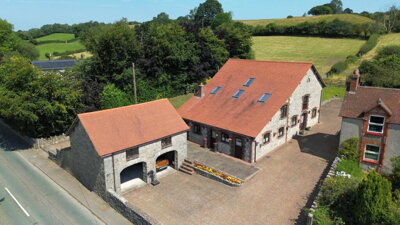
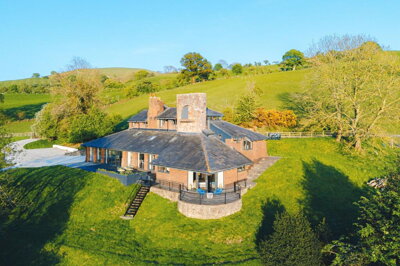
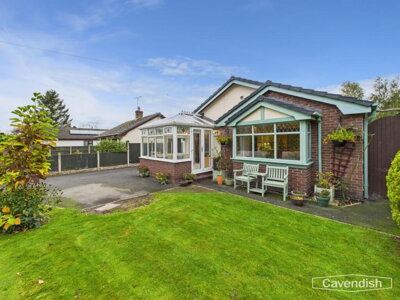
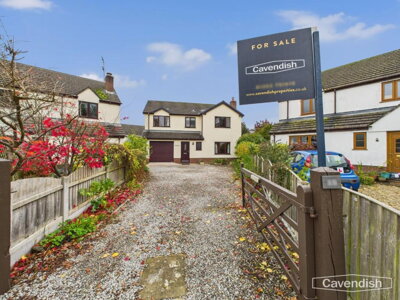
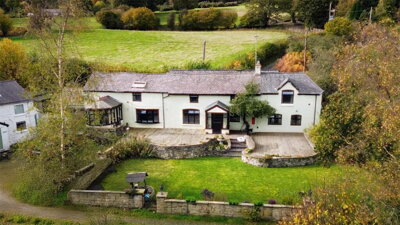
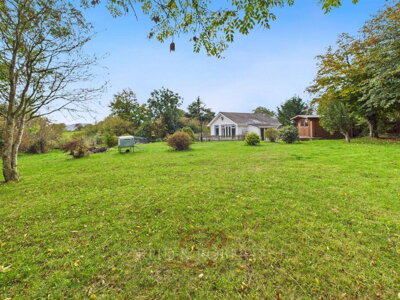
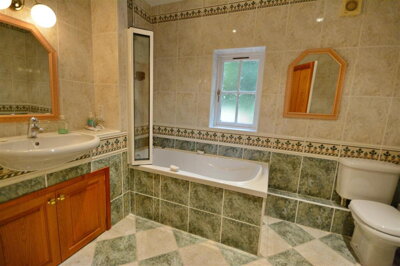
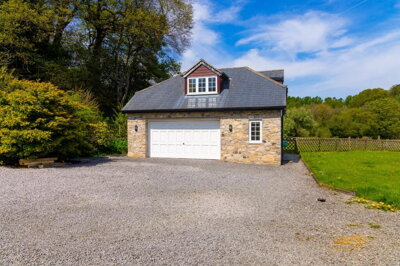
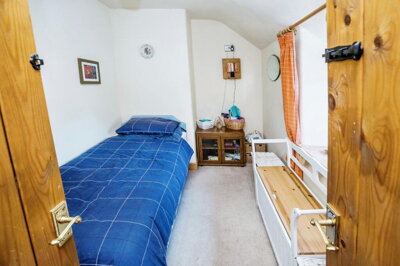
Browse 9 homes for sale in Nannerch, Flintshire from local estate agents.
The larger property sector typically features multiple bathrooms, substantial reception space, and private gardens or off-street parking. Four bedroom houses in Nannerch span detached, semi-detached, and occasionally terraced configurations, with styles ranging from period properties to modern executive homes.
£525k
3
0
166
Source: home.co.uk
Showing 3 results for 4 Bedroom Houses for sale in Nannerch, Flintshire. The median asking price is £525,000.
Source: home.co.uk
Detached
3 listings
Avg £561,667
Source: home.co.uk
Source: home.co.uk
£473,000
Average Property Price
£502,500
Detached Properties
£355,000
Terraced Properties
+49%
Annual Price Growth
462
Population
The Nannerch property market has experienced significant growth over the past twelve months, with the average sold price climbing to approximately £535,000 according to OnTheMarket data, or £590,000 according to Zoopla figures. Detached properties dominate the local market, commanding an average price of £502,500, while terraced properties offer more accessible entry points at around £355,000. The market shows remarkable resilience, with prices rising 20% above the 2023 peak of £395,000, indicating sustained demand for properties in this desirable village location. Specific streets have performed exceptionally well, with Village Road properties increasing 39% year-on-year and 56% above the 2021 peak of £377,500.
Bryn Celyn represents another strong-performing street in the village, with prices rising 35% over the past year and an impressive 64% above the 2021 peak of £258,750. This comparative data demonstrates that different parts of the Nannerch market offer varying value propositions, with established village centre locations commanding premium valuations while peripheral streets may offer more accessible entry points. Savvy buyers researching specific streets within the village can identify where their budget achieves the best value while still benefiting from the same village atmosphere and connectivity advantages.
The housing stock in Nannerch predominantly consists of detached family homes, reflecting the village's family-oriented character and generous plot sizes. Many properties have been constructed using local limestone, a defining feature of the area's architectural heritage that gives the village its distinctive appearance. The market includes a mix of traditional cottages dating from the early 19th century and later 20th-century developments that expanded the village over the past five decades. Despite this expansion, Nannerch has maintained its historic core, with properties clustered around the Church of St Michael and All Angels, a Grade II* listed building that serves as the village's spiritual and architectural centrepiece. New build activity within the CH7 5 postcode area remains limited, meaning buyers seeking modern homes may need to consider nearby areas or accept that character properties represent the majority of available stock.
For those purchasing in the higher price brackets, it is worth noting that approximately 44% of residential stamp duty applies to properties exceeding £1.5 million, making budgeting for premium village properties a more complex calculation. Properties priced above £625,000 also do not qualify for first-time buyer relief, which has increased thresholds to £425,000 for the lowest band. Your solicitor will calculate exact liabilities based on your circumstances and the property purchase price.

Nannerch is a small but vibrant community with a population of approximately 462 residents, offering an intimate village atmosphere that many buyers find increasingly rare fast-paced world. The village's history dates back to prehistoric times, with the community centred around the Church of St Michael and All Angels, a Grade II* listed building that serves as both a spiritual and architectural landmark. The village expanded considerably during the latter half of the 20th century as improved road connections made commuting to larger cities viable, attracting professionals who appreciated the balance between rural tranquility and urban accessibility. Despite this growth, Nannerch has retained its close-knit character, with local events and community facilities fostering strong social bonds among residents.
The local economy of Nannerch historically centred on iron and lead mining, limestone quarrying, and agriculture, industries that shaped the village's development and architecture. The Penbedw Estate families played a significant role in village life, funding important institutions including the church, school, and village hall while providing employment opportunities. This heritage is still visible today in the estate buildings and agricultural structures that dot the surrounding countryside, many of which have been converted into desirable residential properties. Visitors exploring the village will notice the distinctive rubble stone construction typical of these historic estate buildings, often featuring slate roofs and original brick stacks.
Today, the area's economy benefits from its strategic position within the Clwydian Range Area of Outstanding Natural Beauty, supporting tourism, outdoor recreation, and related service industries. Residents enjoy access to scenic walking routes, the stunning Dee Valley, and the broader North Wales coastline, all within easy reach. The village hall remains a hub of community activity, hosting events and gatherings that contribute to the strong sense of belonging experienced by Nannerch residents. For those seeking an active lifestyle in a beautiful natural setting, the village provides an ideal base from which to explore the outstanding countryside of Northeast Wales.

Families considering a move to Nannerch will find educational establishments within reasonable travelling distance, though the village itself has limited schooling facilities. For primary education, several rated schools serve the surrounding Flintshire area, with parents advised to research current Ofsted ratings and catchment area boundaries to identify the most suitable options for their children. The closest primary schools are typically located in nearby villages, with more choices available in the market town of Mold, approximately five miles from Nannerch. School transport arrangements should be verified before committing to a property purchase, as bus routes and timings can vary depending on where you are located within the village.
Secondary education is available at schools in nearby Mold, the county town of Flintshire, which offers a range of comprehensive schools and specialist academies serving students from across the region. Mold has emerged as the educational hub for eastern Flintshire, with secondary schools providing GCSE and A-Level programmes across a variety of subjects. For families prioritising academic excellence, grammar schools in nearby areas may be worth considering, alongside independent schools that serve the wider North East Wales region. The journey time from Nannerch to Mold secondary schools typically ranges from 15 to 25 minutes by car, depending on traffic conditions and the specific school selected.
Beyond secondary education, the broader Flintshire and Denbighshire areas provide additional opportunities including sixth form colleges and further education facilities in towns such as Flint and Rhyl. These institutions offer vocational courses, apprenticeships, and academic programmes that serve school-leavers and adult learners alike. The nearest further education college is located in Rhyl, approximately 20 miles from Nannerch, offering courses across business, technology, health, and creative subjects. Parents with older children should factor these educational pathways into their property search, ensuring that the village location continues to meet family needs as children progress through their academic careers.
Nannerch's position within designated conservation areas means that any family relocating to the village can expect to benefit from a protected living environment that preserves the character and heritage valued by the community. The village's historic core, centred on the Church of St Michael and All Angels, has been shaped by generations of residents who have maintained its distinctive limestone architecture and village green spaces. Prospective buyers with school-age children should conduct detailed research into current admission policies, catchment boundaries, and transportation arrangements before committing to a property purchase in this rural location.
Transport connectivity from Nannerch has improved significantly since the mid-20th century, transforming the village from a relatively isolated rural community into a viable location for commuters working in major cities. The village is situated on the western side of the Wheeler Valley, with streams flowing through steep-sided valleys that contribute to the area's scenic beauty but also necessitate careful route planning for drivers. The A494 road provides an important arterial route, connecting Nannerch to Mold and offering onward access to the A55 North Wales Expressway, which links Chester, Liverpool, and Manchester. These improved road connections have been instrumental in the village's expansion over the past 50 years, making daily commuting a practical reality for many residents.
The journey time to Chester by car typically takes around 40 minutes, making it feasible for those working in the historic city with its growing professional services sector. Liverpool is approximately an hour's drive from Nannerch, with the route passing through the picturesque Clwydian Range before reaching the motorway network. Manchester is further afield, with typical journey times of 90 minutes to two hours depending on traffic conditions on the M6 and M56 motorways. For commuters to these major cities, the flexibility of working from home for part of the week has made village living increasingly practical, reducing the need for daily long-distance travel.
Public transport options in rural Nannerch are more limited than in urban areas, with bus services providing the primary alternative to private vehicles. Services operate with reduced frequencies compared to larger towns, making private vehicle ownership essential for most residents. The village connects to Mold via the A494 road, where additional bus routes serve the county town and connections can be made to wider transport networks. For rail travel, stations in larger towns including Chester and Wrexham provide access to the national rail network, with direct services to London Euston, Birmingham, and Edinburgh available from major Welsh and English stations.
Cyclists appreciate the rural lanes and designated routes that connect Nannerch to surrounding villages and beauty spots, though the hilly terrain requires a reasonable level of fitness. The Clwydian Range provides challenging but rewarding cycling territory, with scenic routes through the designated Area of Outstanding Natural Beauty attracting enthusiasts from across the region. For those working locally, cycling to Mold or other nearby towns is feasible for most of the year, though the Welsh weather means that wet-weather cycling gear is essential kit for regular commuters on two wheels.
Properties in Nannerch require careful inspection due to the prevalence of historic buildings constructed from local limestone and traditional methods. The village sits on a bedrock of carboniferous limestone overlain by glacial boulder clay with glacial hollows, a geological combination that raises potential concerns about shrink-swell ground movement affecting properties with shallower foundations common to older construction. Our inspectors frequently identify issues in this area related to the local geology, including signs of structural movement that may indicate foundation problems requiring professional assessment. When viewing properties, look for cracks in walls, tilting chimney stacks, or gaps between walls and floors, all of which warrant closer investigation before proceeding with a purchase.
The presence of glacial boulder clay is particularly significant for buyers, as clay soils are susceptible to shrink-swell movement in response to moisture changes. This can cause foundations to heave or settle unevenly, leading to structural damage that may not be immediately apparent during a casual viewing. Properties constructed before modern building regulations came into effect may have relatively shallow foundations that are more vulnerable to these ground movements. We always recommend commissioning a RICS Level 2 Home Survey for any property in Nannerch, particularly those over 50 years old, to assess structural condition and identify any remedial works required.
Nannerch benefits from two designated conservation areas, and the village contains numerous listed buildings spanning Grade II and Grade II* status. The concentration of heritage buildings includes Nannerch Hall, Tai Cochion, Barn with attached cow house at Penbedw Uchaf, The Old Rectory, and numerous other historic structures that reflect the village's long history. Purchasing a property within a conservation area imposes restrictions on alterations, extensions, and exterior changes that require planning permission consideration. Listed buildings carry additional obligations, potentially requiring listed building consent for works that might otherwise be permitted development, and owners must use appropriate traditional materials for any repairs or alterations.
Our team has experience surveying many of the distinctive property types found in Nannerch, including early 19th-century labourers' cottages such as Pen-yr-erw, which features whitened rubble stone construction with slate roofs and stone stacks heightened in brick. We understand the construction methods typical of these historic properties and can identify defects common to traditional building techniques. Before purchasing, investigate any planning history, check for Tree Preservation Orders, and understand the implications of conservation area status on your ability to modify the property. Properties in poor condition or requiring modernisation may represent opportunities, but buyers should budget accordingly for works using traditional materials and methods appropriate to historic buildings.
Start your property search by exploring current listings in Nannerch and understanding price trends. With average prices around £473,000-£590,000 depending on the data source, knowing what your budget can achieve in this village market is essential. Review comparable properties sold recently on Village Road, Bryn Celyn, and surrounding streets to gauge value accurately. Understanding which streets have performed strongest relative to others can help you identify where your money goes furthest in this competitive market.
Before viewing properties, obtain a mortgage agreement in principle from a lender. This demonstrates your financial credibility to sellers and estate agents, strengthening your position in a competitive market where properties can sell quickly given strong demand. For properties in the £473,000+ price range, lenders will conduct thorough affordability assessments, so having your financial documentation prepared in advance streamlines the process considerably. First-time buyers should be aware that different rules apply for properties above £625,000, which do not qualify for enhanced stamp duty thresholds.
Schedule viewings of properties matching your criteria, paying attention to construction materials, condition, and any signs of structural issues common in older limestone properties. The village's historic housing stock means many properties will exhibit characteristic features such as thick walls, original windows, and traditional damp-proof courses that differ from modern construction standards. Consider requesting a RICS Level 2 survey as a standard part of your purchase process, particularly for properties over 50 years old that may have hidden defects.
For any property you seriously consider purchasing, book a RICS Level 2 Home Survey before proceeding. Given Nannerch's historic housing stock and local geology featuring glacial boulder clay, this report can identify defects such as damp, roof condition issues, or potential subsidence concerns. For listed buildings or properties with complex structural histories, a more detailed RICS Level 3 Building Survey may be appropriate to fully understand the property's condition and any future maintenance obligations.
Once your offer is accepted, instruct a solicitor experienced in Flintshire property transactions to handle the legal work. They will conduct searches including local authority checks through Flintshire County Council, drainage and water authority enquiries, and environmental searches that may reveal issues relevant to the local geology and mining history. The legal process for purchasing in a conservation area with listed buildings requires additional due diligence regarding planning permissions and listed building consents that may affect the property.
Your solicitor will arrange for contracts to be signed and deposits paid at the exchange stage, typically 10% of the purchase price. Completion typically follows within weeks, when the remaining funds are transferred and you receive the keys to your new Nannerch home. On completion day, ensure your buildings insurance is in place from first ownership, utility accounts are transferred to your name, and you have confirmed your moving arrangements. The village's narrow country lanes can make large removal vehicles challenging, so advance planning of access routes is advisable.
Average house prices in Nannerch currently range from approximately £473,000 to £590,000 depending on the data source consulted. Detached properties command around £502,500 on average, while terraced properties offer more accessible entry points at approximately £355,000. The local market has shown strong growth, with prices rising 49% over the past year and 20% above the 2023 peak. Village Road properties have increased 56% since their 2021 peak of £377,500, while Bryn Celyn has seen 35% growth year-on-year and 64% appreciation since 2021, demonstrating sustained demand for village properties across different street locations.
Properties in Nannerch fall under Flintshire County Council jurisdiction, with council tax bands ranging from A to H depending on the property's assessed value. Flintshire operates standard council tax bands, with Band A properties paying the lowest rates and Band H properties paying the highest. Given the village's mix of historic cottages and larger detached family homes, council tax bands in Nannerch typically fall across the middle to upper range. Specific band information for individual properties can be verified through the Valuation Office Agency website or your solicitor during conveyancing searches. Buyers should factor ongoing council tax costs into their budget alongside mortgage payments and utility bills.
Nannerch itself has limited schooling facilities, with families typically relying on primary schools in nearby villages and secondary schools in Mold, the county town approximately five miles away. The surrounding Flintshire area offers several primary schools with positive Ofsted ratings, while Mold provides secondary education options including comprehensive schools and academies serving students from across the region. For sixth form and further education, facilities are available in larger towns including Flint and Rhyl. Parents should research current admission policies, consider catchment area boundaries, and verify transportation arrangements before purchasing property in Nannerch, as school bus routes and timings can influence daily family logistics considerably.
Public transport options in Nannerch are limited, reflecting the village's rural character, with private vehicle ownership effectively essential for most residents. Bus services operate in the area but with reduced frequencies compared to urban locations, with the village connecting to Mold via the A494 road where additional routes serve the county town. For rail travel, stations in Chester and Wrexham provide access to the national network, with direct services to major UK cities available. Commuters considering Nannerch should factor the need for a car into their decision, though those working flexibly or from home will find the village's connectivity perfectly adequate for a rural lifestyle.
The Nannerch property market has demonstrated strong performance, with prices rising 49% year-on-year and sustained demand from buyers seeking rural village living within commuting distance of Chester, Liverpool, and Manchester. The limited supply of properties for sale, combined with the area's conservation status and absence of significant new build development in the CH7 5 postcode, suggests potential for continued capital appreciation. The village's position within the Clwydian Range Area of Outstanding Natural Beauty enhances its long-term appeal, while the shortage of available properties relative to buyer demand supports pricing resilience. Rental demand may be more limited given the village's small population and rural nature, making Nannerch more suitable for owner-occupiers and long-term investors rather than buy-to-let landlords seeking high rental yields.
Stamp Duty Land Tax rates from April 2025 are 0% on the first £250,000 of residential property purchases, 5% on amounts between £250,001 and £925,000, 10% on amounts between £925,001 and £1.5 million, and 12% on amounts exceeding £1.5 million. First-time buyers benefit from increased thresholds, paying 0% up to £425,000 and 5% between £425,001 and £625,000. For the average Nannerch property priced around £473,000, a standard buyer would pay approximately £11,150 in SDLT, while a first-time buyer would pay nothing on the first £425,000 and 5% on the remaining £48,000, totalling £2,400. Properties priced above £625,000 do not qualify for first-time buyer relief, so those purchasing higher-value village homes should budget accordingly.
Historically, inhabitants of Nannerch were engaged in iron and lead mining alongside limestone quarrying, industries that shaped the village's development over centuries. The presence of glacial boulder clay in the local geology raises potential concerns about shrink-swell ground movement that can affect foundations, particularly in older properties constructed before modern building regulations. While specific ground stability reports for individual properties should be obtained during the conveyancing process, buyers should be aware that older properties may require more detailed structural assessment. Our surveyors are experienced in identifying signs of movement and can recommend appropriate investigations where necessary, providing before you commit to a purchase in this historic village.
The Nannerch property market predominantly features detached family homes, with the village's historic core containing limestone-built cottages dating from the early 19th century and later 20th-century developments that expanded housing stock over the past five decades. Listed buildings include Nannerch Hall, a late Georgian two-storey rubble stone house with slate roof and brick stacks, alongside numerous agricultural buildings converted to residential use. Properties range from traditional labourers' cottages such as Pen-yr-erw, built of whitened rubble stone with stone stacks heightened in brick, to substantial family homes on Village Road and Bryn Celyn. The limited new build activity in the CH7 5 postcode means character properties dominate available stock, offering buyers distinctive homes with genuine heritage appeal rather than modern new-build specifications.
From £400
A detailed inspection of the property condition, ideal for standard construction homes
From £650
Comprehensive structural survey for older or complex properties
From 4.5% APR
Expert mortgage advice and competitive rates
From £499
Complete legal services for your property purchase
Understanding the full costs of purchasing property in Nannerch extends beyond the advertised asking price to encompass stamp duty, solicitor fees, survey costs, and ongoing expenses. For a typical Nannerch property valued at approximately £473,000, standard buyers can expect to pay around £11,150 in Stamp Duty Land Tax under current thresholds. First-time buyers may qualify for relief on the first £425,000, reducing their SDLT liability significantly to approximately £2,400. Properties priced above £625,000 do not qualify for first-time buyer relief, so those purchasing higher-value homes should budget accordingly. Your solicitor will calculate the exact SDLT liability based on your circumstances and property purchase price.
Additional buying costs include solicitor conveyancing fees, which typically range from £500 to £1,500 depending on complexity and whether the property involves additional factors such as listed building status or conservation area constraints. Local searches through Flintshire County Council and drainage authority checks usually cost between £250 and £400, providing important information about the property's planning history, highways, and environmental factors relevant to the local geology. Environmental searches should include mining records given the village's historical involvement in iron and lead extraction, which may affect ground stability considerations for older properties.
A RICS Level 2 Home Survey costs between £400 and £600 for properties in the Nannerch price range, with costs varying based on property size, value, and complexity. Older or more complex properties, particularly listed buildings with non-standard construction, may require the more detailed RICS Level 3 Building Survey at higher cost. Land Registry fees, bankruptcy checks, and money transfer costs add further minor expenses to the transaction. On completion, buyers should budget for moving costs, buildings insurance from day one of ownership, and immediate utility account setup. Setting aside approximately 3-5% of the purchase price for these additional costs ensures a smooth transaction without unexpected financial pressures.
Properties for Sale In London

Properties for Sale In Plymouth

Properties for Sale In Liverpool

Properties for Sale In Glasgow

Properties for Sale In Sheffield

Properties for Sale In Edinburgh

Properties for Sale In Coventry

Properties for Sale In Bradford

Properties for Sale In Manchester

Properties for Sale In Birmingham

Properties for Sale In Bristol

Properties for Sale In Oxford

Properties for Sale In Leicester

Properties for Sale In Newcastle

Properties for Sale In Leeds

Properties for Sale In Southampton

Properties for Sale In Cardiff

Properties for Sale In Nottingham

Properties for Sale In Norwich

Properties for Sale In Brighton

Properties for Sale In Derby

Properties for Sale In Portsmouth

Properties for Sale In Northampton

Properties for Sale In Milton Keynes

Properties for Sale In Bournemouth

Properties for Sale In Bolton

Properties for Sale In Swansea

Properties for Sale In Swindon

Properties for Sale In Peterborough

Properties for Sale In Wolverhampton

Enter your details to see if this property is within your budget.
Loans, cards, car finance
Estimated property budget
Borrowing + deposit
You could borrow between
Typical borrowing
Monthly repayment
Est. at 4.5%
Loan-to-value
This is an estimate only. Your actual budget may vary depending on interest rates, credit history, and personal circumstances. For an accurate affordability assessment, speak to one of our free mortgage advisors.
This calculator provides estimates for illustrative purposes only and does not constitute financial advice. Your home may be repossessed if you do not keep up repayments on your mortgage. Estimates based on 4.5% interest rate, repayment mortgage. Actual rates depend on your circumstances.
Homemove is a trading name of HM Haus Group Ltd (Company No. 13873779, registered in England & Wales). Homemove Mortgages Ltd (Company No. 15947693) is an Appointed Representative of TMG Direct Limited, trading as TMG Mortgage Network, which is authorised and regulated by the Financial Conduct Authority (FRN 786245). Homemove Mortgages Ltd is entered on the FCA Register as an Appointed Representative (FRN 1022429). You can check registrations at NewRegister or by calling 0800 111 6768.

We use cookies to show you personalised content and improve your experience of our website. Find out more in our Privacy policy and Cookie policy.