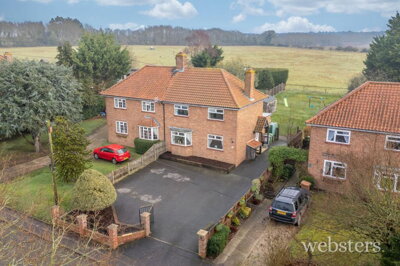
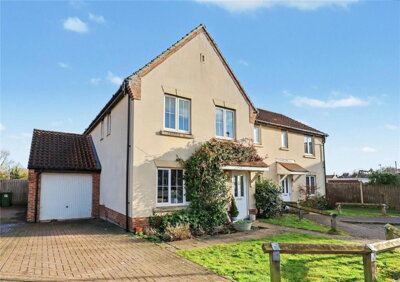
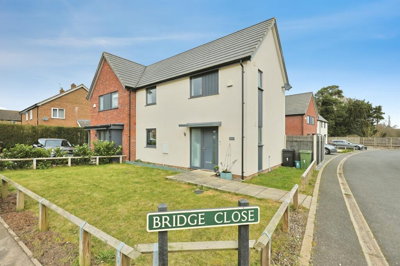
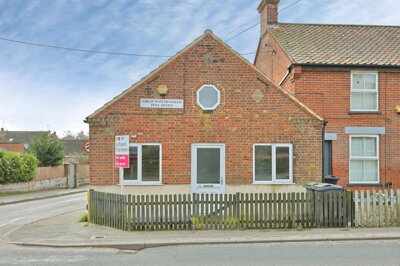
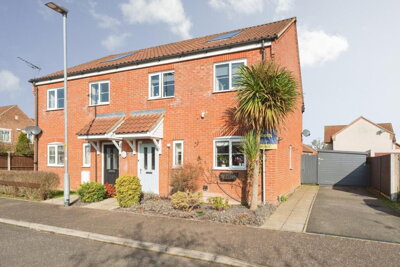
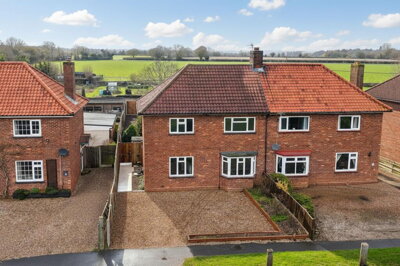
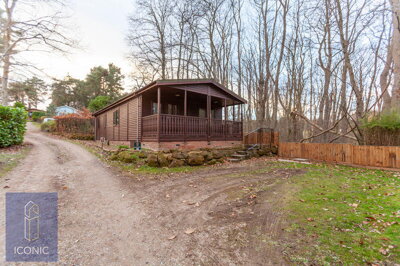
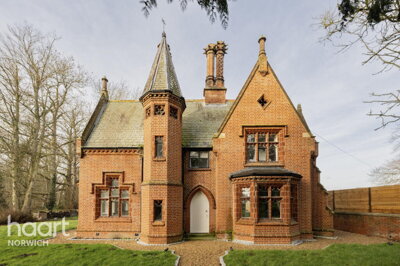
Browse 9 homes for sale in Morton on the Hill from local estate agents.
Three bedroom properties represent a significant portion of the Morton On The Hill housing market, offering space for families with multiple reception rooms and gardens in many cases. Browse detached, semi-detached, and terraced options ranging from period character homes to contemporary developments.
The property market in Morton on the Hill reflects the broader appeal of this desirable Norfolk village, with an overall average house price of £495,012 based on transactions over the last twelve months. Detached properties command the highest values in the area, with recent sales averaging £640,024, representing the premium segment of the local market and appealing to families seeking generous living space and private gardens. Semi-detached properties provide more accessible entry points at approximately £350,000, making them suitable for first-time buyers or those looking to downsize without leaving the village community. The limited supply of available properties means that well-presented homes in the village tend to attract competitive interest from buyers recognising the area's enduring appeal.
Historical data reveals interesting price dynamics in the local market, with overall prices standing 17% below the 2017 peak of £600,000, suggesting potential value opportunities for long-term buyers. Properties along Fakenham Road have experienced more significant correction, with prices 32% down on their 2019 peak of £515,000, which may reflect specific local factors affecting that thoroughfare. The market has seen 17 property sales in the past year, indicating reasonable activity levels for a village of this size and demonstrating continued buyer interest in the Morton on the Hill area despite broader market conditions. This level of transaction activity compares favourably with similar-sized villages in the Broadland district, where lower volumes can sometimes indicate reduced market confidence or limited buyer demand.
The predominance of detached properties in recent sales reflects buyer preferences for space and privacy that characterise the Norfolk rural property market. Families drawn to Morton on the Hill appreciate the generous plot sizes and mature gardens that accompany many properties along the village's lanes and approaches. The village lacks significant new-build development, meaning buyers typically purchase existing period properties that offer character and established surroundings rather than modern specifications. This supply characteristic contributes to the village's enduring appeal while also presenting renovation opportunities for those seeking to personalise their new home.

Morton on the Hill occupies a distinctive position in the Norfolk landscape, situated in the Wensum river valley in an area that locals describe as almost marsh-like in character, lending the surrounding countryside its lush, verdant appearance. The village sits approximately seven miles northwest of Norwich city centre, providing residents with easy access to comprehensive urban amenities while enjoying the tranquility of rural village life. The area benefits from the characteristic Norfolk geology, with chalk bedrock underlying deposits of sand, gravel, and clay that shape the local topography and contribute to the fertility of surrounding farmland. This geological composition also influences building foundations and property conditions throughout the area, factors that prudent buyers should consider during property assessment.
The village's heritage is evident throughout its streetscape, with numerous listed buildings creating an architectural character that reflects centuries of local history. St Margaret's Church holds Grade II* listed status, representing a significant heritage designation, while Morton Hall and various estate buildings add to the area's historic character. The presence of the Old Butcher's Shop abattoir building and associated garden walls demonstrates the village's agricultural traditions, which continue to influence community identity today. Residents enjoy an active village community with access to nearby countryside walks, local pubs, and the strong sense of belonging that characterises Norfolk's smaller settlements. The village's proximity to the A1067 makes exploring neighbouring communities straightforward, whether visiting the market town of Aylsham or the cathedral city of Norwich.
The Wensum valley setting provides exceptional access to Norfolk's celebrated countryside, with public footpaths crossing farmland and following watercourses through scenic landscapes. Cyclists appreciate the relatively flat terrain that makes exploring the wider area achievable for most fitness levels, with routes to nearby villages offering pub lunches and heritage sites. The River Wensum itself supports local wildlife and provides angling opportunities, while the surrounding farmland hosts diverse birdlife that attracts nature enthusiasts throughout the year. This environmental richness enhances daily life in Morton on the Hill, providing recreational opportunities that urban dwellers often seek when relocating to rural Norfolk.

Families considering a move to Morton on the Hill will find a selection of educational options within reasonable driving distance, with the village's rural position meaning that school transport arrangements are often part of daily life for local families. Primary education is available at village schools in neighbouring communities, with several good and outstanding Ofsted-rated primaries serving the surrounding area and accessible via school bus services that operate throughout the parish. Parents should research specific catchment areas, as admission policies in Norfolk can be competitive, particularly for popular rural schools that draw from multiple villages. Schools in nearby towns such as Aylsham and Hellesdon serve the wider catchment area and are reachable via the village's road connections.
Secondary education options include schools in the nearby market towns, with selective grammar schools available in Norwich for academically inclined students, subject to passing the 11-plus examination. The surrounding Broadland district offers a mix of academy secondary schools and community schools, providing various educational approaches to suit different learning styles. For sixth form and further education, students typically travel to Norwich or the surrounding market towns, where colleges offer comprehensive A-level and vocational programmes. When purchasing property in Morton on the Hill, prospective buyers with school-age children should verify current catchments and travel arrangements as part of their property search, as school transport services may operate on specific schedules that influence family logistics.
Norfolk's rural school landscape means that many families factor travel time into their daily routines, with secondary school journeys to Norwich or Aylsham typically taking between twenty and forty minutes by car. School bus services operate on designated routes, and parents should confirm service availability and timing when viewing properties in the village. Private schooling options in Norfolk include King's School in Canterbury and Norwich High School for Girls, though these require more significant travel commitments. The availability of grammar school places in Norwich provides an academically focused pathway for students in the area, with regular bus services from surrounding villages supporting attendance.
Transport connectivity from Morton on the Hill balances rural tranquility with practical accessibility, with the village positioned to offer reasonable commuting options for those working in Norwich or further afield. The nearest major rail services are available in Norwich, with the city's station providing regular connections to London Liverpool Street, with journey times of approximately one hour fifty minutes to two hours, making day commuting to the capital feasible for many workers. Local bus services connect Morton on the Hill to surrounding villages and Norwich, though frequencies may be limited compared to urban routes, making car ownership advisable for most residents. The village's position relative to major road networks influences both commuting practicality and the appeal of the location for remote workers seeking a countryside base.
Road connectivity is strong, with the village situated near the A1067 and with easy access to the A47 Norwich northern bypass, providing routes to Great Yarmouth, King's Lynn, and Cambridge beyond. The proximity to Norwich's orbital road network allows residents to reach employment hubs, retail parks, and the University of East Anglia without significant congestion delays during off-peak hours. For air travel, Norwich International Airport offers domestic flights and connections to European destinations, accessible within thirty minutes' drive from the village. Cyclists benefit from Norfolk's improving network of rural lanes, though the flat landscape also accommodates less experienced riders seeking scenic routes through the surrounding countryside.
The A47 Norwich northern bypass serves as the primary arterial route connecting the city to destinations east and west, with the A1067 providing more direct access to the village and the surrounding rural communities. Traffic conditions on these routes are generally manageable outside peak hours, though the Norwich ring road can experience congestion during the morning and evening rush periods. For commuters to London, Norwich station's direct services eliminate the need for station parking, with frequent trains throughout the day supporting flexible working arrangements. The village's position therefore suits both those working locally in Norfolk and professionals commuting periodically to London or other major centres.
Begin by exploring the 17 currently listed properties in Morton on the Hill, understanding price trends including the 17% correction from the 2017 peak and current average prices of £495,012 for all properties and £640,024 for detached homes. Use Homemove's search filters to narrow results by property type, bedrooms, and price range to identify suitable options. Understanding the distinction between village average prices and road-specific corrections, such as the 32% reduction on Fakenham Road, will help you identify genuinely well-priced properties in the current market.
Before arranging viewings, obtain a mortgage agreement in principle from a lender to confirm your borrowing capacity. This strengthens your position when making offers and demonstrates to sellers that you are a serious buyer with verified financial capability. Given the property values in Morton on the Hill, which typically exceed £350,000 for semi-detached homes and reach £640,000 for detached properties, securing appropriate mortgage financing is essential for most buyers.
Visit shortlisted properties in person, paying attention to construction quality, garden boundaries, and the condition of period features in older properties. Consider commissioning a RICS Level 2 Survey to assess the property's condition before committing to purchase, particularly given the prevalence of older construction in the village and the potential implications of local geology on property foundations.
Once you find your ideal home, submit an offer through the estate agent, referencing comparable sales in the village and current market conditions. Given the price corrections in certain road areas, there may be room for negotiation on properties that have been on the market for some time. Properties affected by the 32% correction on Fakenham Road may present particular negotiation opportunities where sellers have adjusted expectations.
Appoint a conveyancing solicitor to handle the legal aspects of your purchase, including local searches, title checks, and coordination with your mortgage lender. Conveyancing in rural Norfolk villages may involve additional searches related to agricultural land use and rights of way, with properties near the Wensum potentially requiring specific flood risk assessments and environmental searches.
Finalise your mortgage, receive search results, and proceed to exchange contracts when all conditions are satisfied. On completion day, your solicitor transfers the remaining funds and you receive the keys to your new Morton on the Hill home. Ensure all property condition matters identified during survey are resolved or reflected in final negotiations before completing your purchase.
Purchasing property in Morton on the Hill requires attention to specific local factors that may not be apparent during initial viewings. The village's position in the Wensum river valley raises potential flood risk considerations, particularly for properties situated in lower-lying areas or those with gardens extending toward watercourses. Prospective buyers should request flood risk reports and check whether any previous flooding incidents have been recorded, factor this into insurance costs, and consider the long-term implications for properties in vulnerable locations. Properties along Fakenham Road and those at lower elevations within the valley require particular scrutiny regarding drainage and flood history.
The concentration of listed buildings in the village means that many properties may be subject to planning restrictions, consent requirements, or conditions that affect renovation and improvement works. Grade II and Grade II* listed status provides important heritage protection but can limit permitted development rights, potentially affecting plans for extensions, outbuildings, or significant alterations. Buyers should obtain Listed Building Consent documentation and understand any conditions attached to the property before committing to purchase, particularly if they have plans for modernisation or structural changes. Properties in the Morton Hall Estate area and those near St Margaret's Church warrant careful investigation of their listed status and any associated conditions.
Given the Norfolk geology featuring clay deposits, a thorough survey is advisable for all properties, particularly older constructions that may show signs of subsidence or movement. The shrink-swell properties of clay soils can affect foundations over time, especially during periods of drought or when vegetation with high water demand is present near structures. A RICS Level 2 Survey will assess these risks and provide guidance on any necessary remedial works, offering reassurance for buyers investing in this attractive village location. Properties with mature trees close to buildings require particular attention, as root systems can interact with clay soils in ways that affect foundation stability over time.
The construction materials common to Norfolk period properties, including traditional brickwork and lime-based mortars, require different maintenance approaches compared to modern construction. Properties built with Norfolk white brick or traditional red brick may show different weathering patterns than those familiar with London stock brick, and repair specifications should account for matching original materials. Understanding these local construction characteristics helps buyers appreciate the maintenance requirements of character properties in the village and plan appropriately for ongoing upkeep.
The average house price in Morton on the Hill over the last twelve months was £495,012 based on 17 recorded sales. Detached properties average £640,024, while semi-detached homes average approximately £350,000. Current prices represent a 17% reduction from the 2017 market peak of £600,000, suggesting potential value opportunities for buyers with medium to long-term investment horizons. Properties along Fakenham Road have experienced more significant corrections of 32% from their 2019 peak, which may present negotiation opportunities for patient buyers.
Properties in Morton on the Hill fall under Broadland District Council and Norfolk County Council for council tax purposes. Bands vary by property based on valuation, with typical village homes ranging from Band C to Band F depending on the property's size, age, and character. Prospective buyers should check specific bands with the local authority or on property listing details, as band costs affect ongoing ownership expenses. The historic and listed properties in the village may have unusual banding arrangements compared to standard modern homes.
Morton on the Hill is served by primary schools in surrounding villages, with several achieving good or outstanding Ofsted ratings within reasonable travelling distance. Secondary options include schools in Norwich and nearby market towns, with selective grammar schools available for students who pass the 11-plus examination. Parents should verify current catchment areas as admission policies can be competitive for popular rural schools, and families should factor school transport arrangements into their property decision-making process when considering the village as a home location.
Public transport options from Morton on the Hill include local bus services connecting to Norwich and surrounding villages, though frequencies are limited compared to urban areas. The nearest railway station is in Norwich, offering services to London Liverpool Street in approximately two hours. Most residents rely on car ownership for daily commuting and essential travel, with the village well-positioned for road access to the A47 and A1067. Norwich International Airport is accessible within thirty minutes' drive, offering domestic flights and European connections for those who travel frequently by air.
Morton on the Hill offers several investment considerations, with prices having corrected from 2017 peaks, potentially creating buying opportunities for patient investors. The village's heritage character, concentration of listed buildings, and position in the Wensum valley contribute to its enduring appeal. However, buyers should factor in potential flood risk, planning restrictions affecting listed properties, and limited local amenities when evaluating long-term investment prospects. The village's proximity to Norwich and strong road connections support its continued desirability for buyers seeking rural lifestyles within commuting distance of the city.
Stamp duty rates for 2024-25 are 0% on properties up to £250,000, 5% on the portion from £250,001 to £925,000, 10% from £925,001 to £1.5 million, and 12% above £1.5 million. First-time buyers pay 0% up to £425,000 and 5% between £425,001 and £625,000. Given the average price of £495,012, a standard buyer purchasing an average-priced property would pay approximately £12,250 in stamp duty, while first-time buyers might pay £3,500 assuming they meet all relief criteria. Properties at the higher end of the market, such as those averaging £640,024 for detached homes, would incur stamp duty of approximately £19,500 for standard buyers.
Properties in Morton on the Hill require careful flood risk assessment given the village's position in the Wensum river valley, which locals describe as having an almost marsh-like character. Properties in lower-lying areas, particularly those with gardens extending toward watercourses or drainage channels, warrant thorough investigation before purchase. Buyers should obtain a detailed flood risk report that examines both river flooding and surface water flood risk, and should investigate whether properties have experienced previous flooding incidents. Insurance costs can be significantly higher for properties in flood risk areas, and this ongoing expense should factor into the overall affordability assessment when purchasing in the valley location.
The high concentration of listed buildings in Morton on the Hill means that many properties are subject to Listed Building Consent requirements for alterations, extensions, and significant repairs. Grade II listed properties form the majority of protected buildings in the village, while St Margaret's Church holds the higher Grade II* designation. These restrictions can affect plans for modernisation, energy efficiency improvements, and structural alterations. Buyers should obtain full documentation of any existing consents and conditions before committing to purchase, and should budget for potentially longer planning timescales when consent is required for renovation works.
From £350
A detailed inspection of the property condition, ideal for most homes including older properties and listed buildings in Morton on the Hill
From £550
A comprehensive survey for larger or older properties, covering construction, defects, and detailed advice on repairs
From £80
Energy Performance Certificate required for all property sales
From £499
Legal services for your property purchase including local searches
From 4.5%
Compare mortgage rates from leading lenders
Understanding the full cost of purchasing property in Morton on the Hill extends beyond the listed price, with stamp duty land tax representing a significant expense for most buyers. The current SDLT thresholds for 2024-25 set the zero-rate band at £250,000 for standard buyers, rising to £425,000 for first-time purchasers, which provides meaningful savings for those qualifying. Given the village's average property price of £495,012, most buyers purchasing at or near the average price point would incur SDLT of approximately £12,250 as a standard buyer, while first-time buyers might pay £3,500 assuming they meet all relief criteria and purchase within the relevant threshold.
Additional buying costs include survey fees, with a RICS Level 2 Survey typically starting from £350 depending on property value and complexity. Given the age of many properties in Morton on the Hill and the presence of listed buildings, a thorough survey is particularly valuable and can identify issues requiring negotiation or remediation before completion. Legal costs for conveyancing typically range from £500 to £1,500 plus disbursements, covering local searches, title registration, and transaction management. Mortgage arrangement fees vary by lender, commonly between 0% and 1% of the loan amount, and should be factored into the overall cost comparison when selecting a mortgage product.
Local search fees for properties in Norfolk typically include drainage and water searches, environmental searches, and potentially flood risk assessments given the village's valley location. Properties near agricultural land may require additional enquiries regarding farming operations, rights of way, and any registered easements affecting the property. These searches add to the overall purchase costs but provide important information about the property and surrounding area that affects value and future enjoyment of the home. Buyers should budget approximately £300 to £500 for comprehensive local searches when purchasing in the Morton on the Hill area.
Properties for Sale In London

Properties for Sale In Plymouth

Properties for Sale In Liverpool

Properties for Sale In Glasgow

Properties for Sale In Sheffield

Properties for Sale In Edinburgh

Properties for Sale In Coventry

Properties for Sale In Bradford

Properties for Sale In Manchester

Properties for Sale In Birmingham

Properties for Sale In Bristol

Properties for Sale In Oxford

Properties for Sale In Leicester

Properties for Sale In Newcastle

Properties for Sale In Leeds

Properties for Sale In Southampton

Properties for Sale In Cardiff

Properties for Sale In Nottingham

Properties for Sale In Norwich

Properties for Sale In Brighton

Properties for Sale In Derby

Properties for Sale In Portsmouth

Properties for Sale In Northampton

Properties for Sale In Milton Keynes

Properties for Sale In Bournemouth

Properties for Sale In Bolton

Properties for Sale In Swansea

Properties for Sale In Swindon

Properties for Sale In Peterborough

Properties for Sale In Wolverhampton

Enter your details to see if this property is within your budget.
Loans, cards, car finance
Estimated property budget
Borrowing + deposit
You could borrow between
Typical borrowing
Monthly repayment
Est. at 4.5%
Loan-to-value
This is an estimate only. Your actual budget may vary depending on interest rates, credit history, and personal circumstances. For an accurate affordability assessment, speak to one of our free mortgage advisors.
This calculator provides estimates for illustrative purposes only and does not constitute financial advice. Your home may be repossessed if you do not keep up repayments on your mortgage. Estimates based on 4.5% interest rate, repayment mortgage. Actual rates depend on your circumstances.
Homemove is a trading name of HM Haus Group Ltd (Company No. 13873779, registered in England & Wales). Homemove Mortgages Ltd (Company No. 15947693) is an Appointed Representative of TMG Direct Limited, trading as TMG Mortgage Network, which is authorised and regulated by the Financial Conduct Authority (FRN 786245). Homemove Mortgages Ltd is entered on the FCA Register as an Appointed Representative (FRN 1022429). You can check registrations at NewRegister or by calling 0800 111 6768.

We use cookies to show you personalised content and improve your experience of our website. Find out more in our Privacy policy and Cookie policy.