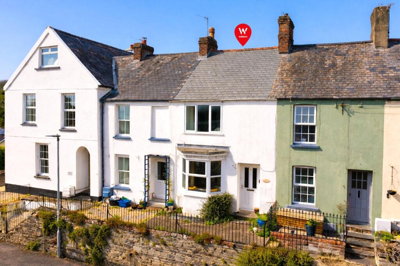
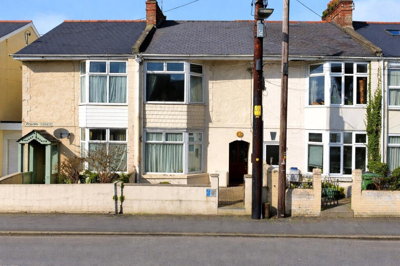
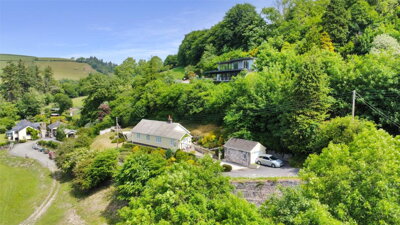
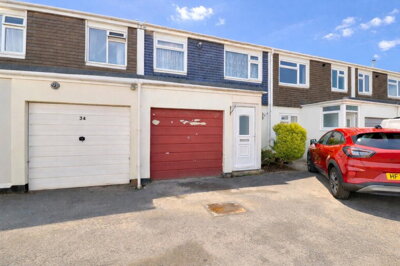
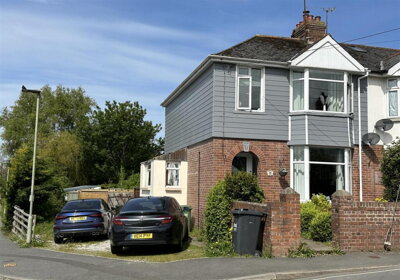
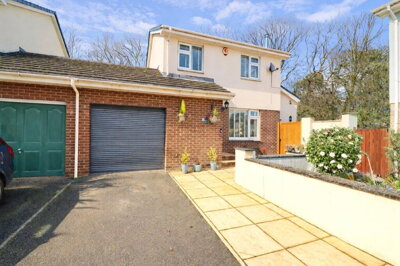
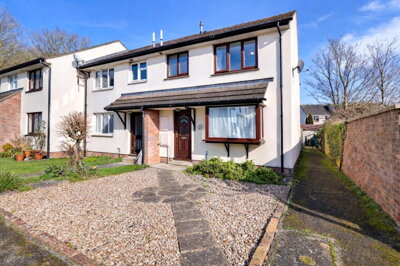
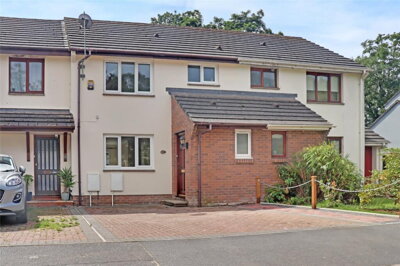
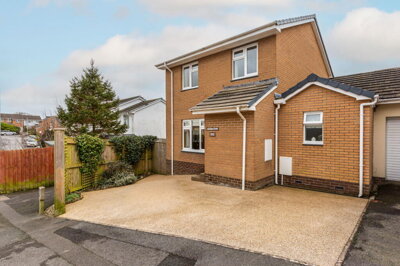
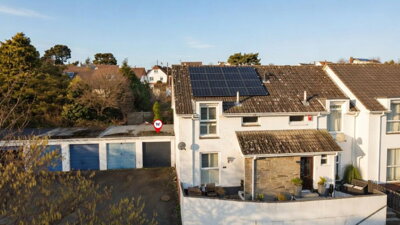
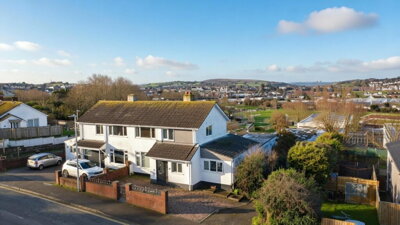
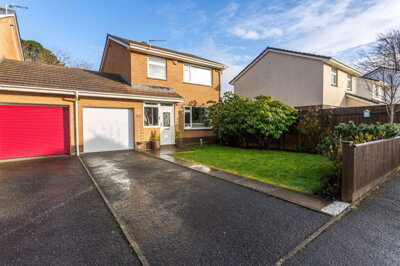
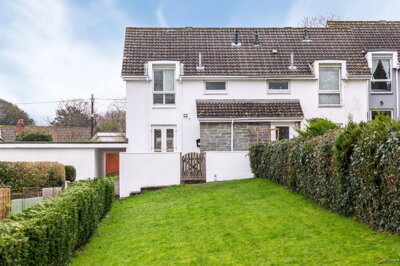
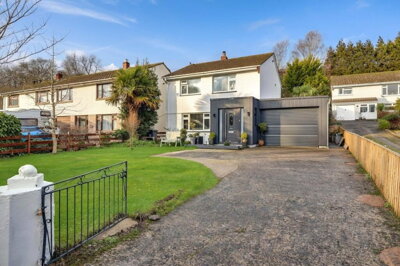
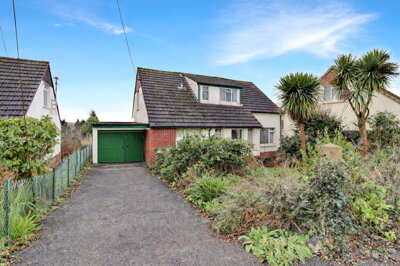
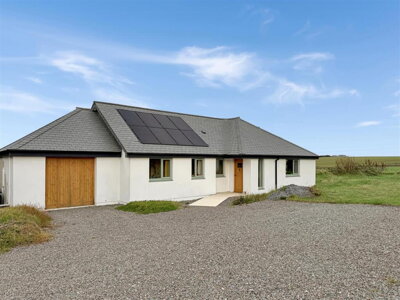
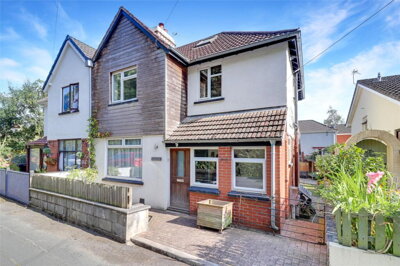
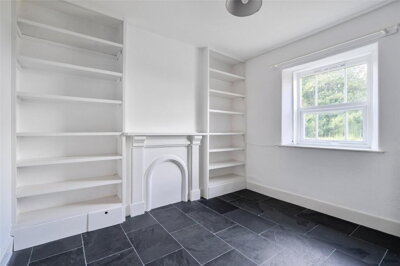
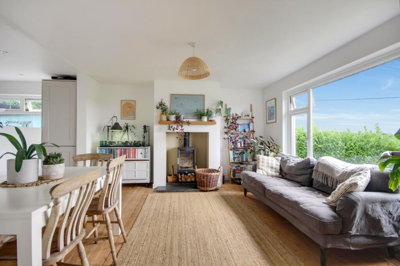
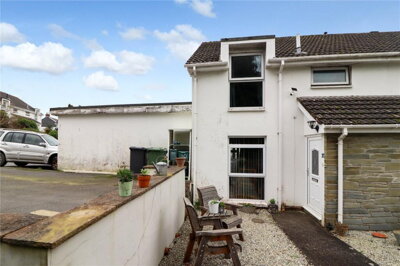
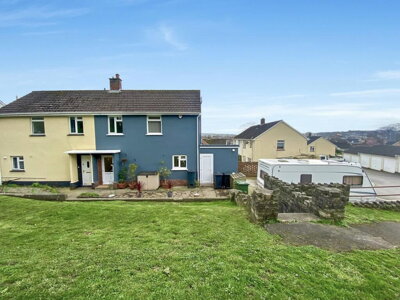
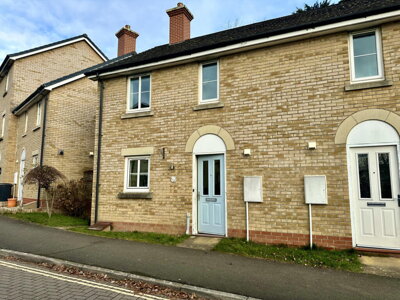
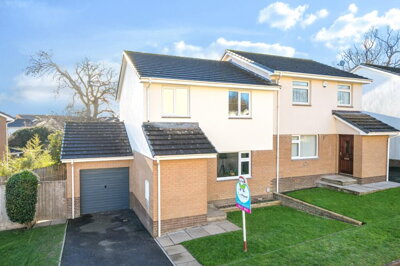
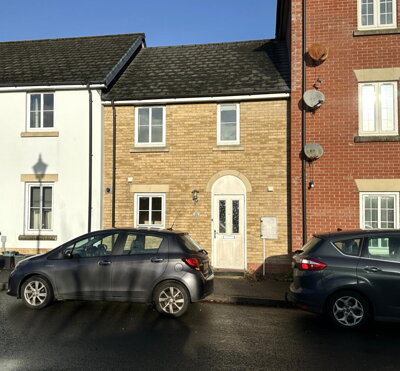
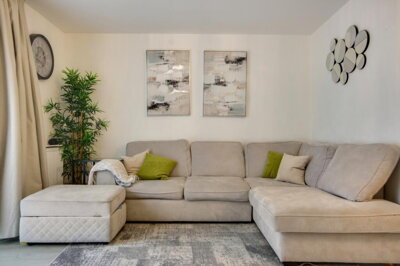
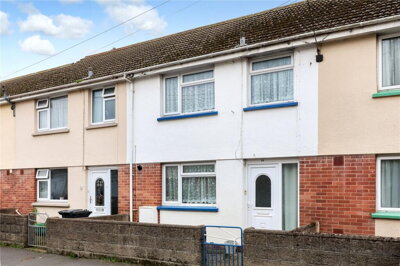
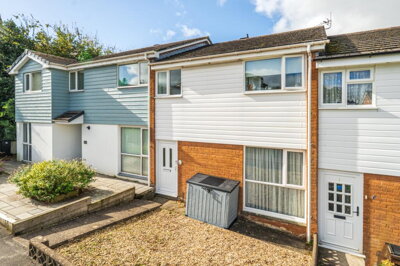
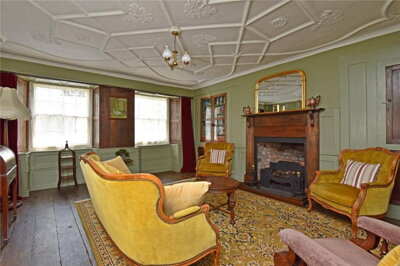
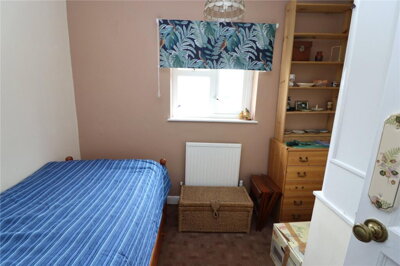
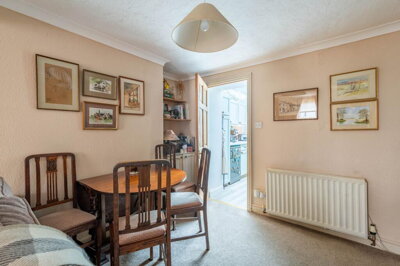
Browse 33 homes for sale in Marwood from local estate agents.
Three bedroom properties represent a significant portion of the Marwood housing market, offering space for families with multiple reception rooms and gardens in many cases. Browse detached, semi-detached, and terraced options ranging from period character homes to contemporary developments.
The Marwood property market reflects the broader trends in North Devon while maintaining its own distinctive character. Average sold prices in the village stand at approximately £519,000, with the median price sitting at £455,000. These figures, derived from analysis of 140 recent property transactions in the area, demonstrate that Marwood commands a premium over some neighbouring areas, likely due to the quality of period properties and the village's desirable setting. The broader North Devon market showed remarkable stability over the past year, with average prices rising by just 0.3% to reach £287,000 in December 2025, suggesting a mature market that rewards careful, long-term investment.
Property types available in the Marwood area span the full range of the North Devon market. Detached properties in the wider region average around £433,000, while semi-detached homes fetch approximately £290,000. Terraced properties, which constitute a significant portion of older village housing stock, average £230,000, and flats in the broader area start from around £140,000. The village itself is characterised by period houses built predominantly between 1800 and 1911, meaning much of the housing stock is over 100 years old. For buyers seeking character properties with original features, exposed beams, and traditional Devon construction methods, Marwood offers genuine period homes that are increasingly rare market.
Recent price trends show that Marwood, Barnstaple, EX31 has seen prices decline by an average of 2.5% since January 2025, though this follows several years of steady growth as the village gained popularity among buyers seeking rural lifestyles. Semi-detached properties across North Devon have shown the strongest recent performance, rising by 1.9% in the year to December 2025, while flats have decreased by 3.2%, reflecting broader national trends in smaller property types. For buyers, this creates opportunities in the flat market while detached and semi-detached properties continue to hold their value well in this desirable location.

Marwood sits as a traditional Devon village approximately three miles north of Barnstaple, the principal town of North Devon. The village forms part of a tight-knit rural community where local amenities include a parish church, village hall, and welcoming pub where residents gather for social events and village functions. The surrounding countryside comprises rolling farmland, woodland, and the kind of idyllic Devon lanes that make country living so appealing. With the River Taw flowing nearby and the beginnings of Exmoor visible on the horizon, Marwood occupies a privileged position in one of England's most unspoiled counties.
The demographics of Marwood reflect typical rural North Devon patterns, with a population that includes working-age families, retirees drawn by the quality of life, and professionals who commute to Barnstaple or beyond for employment. The village attracts people seeking an alternative to urban living, offering space, air quality, and community spirit that larger towns cannot match. Local residents enjoy easy access to some of the best walking routes in the South West, with footpaths crossing farmland and through woodland, while the North Devon coast at Saunton, Croyde, and Woolacombe is within a reasonable driving distance for day trips or weekend excursions.
Barnstaple, the regional centre, provides all necessary services including supermarkets, healthcare facilities, secondary schools, and a weekly market. The town preserves its historic character with the 13th-century Butchers Row and the renowned Pannier Market drawing visitors from across the region. For cultural activities, Barnstaple hosts regular events and exhibitions at the Museum of Barnstaple and North Devon, while the Queen's Theatre provides entertainment throughout the year. This combination of village tranquility and access to town amenities makes Marwood particularly attractive to buyers who want the best of both worlds.

Families considering a move to Marwood will find educational options available at primary level within reasonable distance, with several primary schools serving the villages north of Barnstaple. The closest primary schools include those in the surrounding villages, many of which are small, community-focused schools that offer excellent pupil-to-teacher ratios and strong ties to local life. Parents should verify current catchment areas and admission arrangements with Devon County Council, as school places can be competitive in popular rural areas. The village setting provides children with safe routes to school through the countryside, away from heavy traffic and busy roads.
Secondary education in North Devon centres on the greater Barnstaple area, where several secondary schools serve students from across the region. These schools offer a range of GCSE and A-Level programmes, with some specialising in particular subject areas or vocational pathways. For families with older children requiring sixth form education, the post-16 options include schools with sixth forms and Barnstaple's North Devon College, which provides further education courses and vocational training. The South West's strong tradition of academic achievement is reflected in local schools, many of which perform well against national benchmarks for student progress and attainment.
The broader Devon area also offers access to independent schools for families seeking alternative educational approaches. These range from preparatory schools for younger children to senior schools offering boarding options for students from Year 7 upwards. While specific school performance data and Ofsted ratings require direct consultation with current inspection reports, families relocating to North Devon generally report satisfaction with educational provision across all age groups. The rural setting offers additional benefits for children's development, including outdoor learning opportunities and connection to natural environments that urban schools simply cannot match.
Marwood's position north of Barnstaple places it within a network of transport connections that serve North Devon while maintaining the village's peaceful character. The A361 corridor, known as the North Devon Link Road, provides the primary route connecting the region to the M5 motorway at Tiverton, giving access to Bristol, Birmingham, and the national motorway network. For air travel, Exeter Airport offers domestic and European flights within approximately one hour's drive, while Bristol Airport is accessible via the M5 and provides a broader range of international destinations.
Rail connections to Marwood operate through Barnstaple station, which sits on the Tarka Line running between Exeter and Barnstaple. Services connect to Exeter St David's, where onward connections to London Paddington are available via the faster intercity services. The journey time from Exeter to London Paddington is approximately two hours, making Marwood viable for occasional commuting or business travel while maintaining a rural lifestyle. For daily commuting needs, many residents work locally in Barnstaple or the surrounding villages, taking advantage of the shorter journey times that rural village living offers compared to urban commutedom.
Local bus services operated by Stagecoach and other providers connect Marwood with Barnstaple and the surrounding villages, providing essential access for those without private vehicles. The village location means that a car is generally considered essential for full enjoyment of the area and access to the wider North Devon coastline and moorland attractions. Parking in the village is generally straightforward compared to urban areas, and the proximity of the countryside encourages active travel for short journeys. Cyclists also benefit from quiet country lanes and the developing cycling infrastructure in North Devon, with routes available for both leisure and utility cycling purposes.
Begin by exploring current listings in Marwood and the surrounding North Devon area. Understand price ranges for different property types, from traditional cottages to larger detached homes. Review local property transaction data to gauge market conditions and identify properties that match your requirements and budget.
Before viewing properties, obtain a mortgage agreement in principle from a lender or broker. This demonstrates your financial credibility to sellers and estate agents, strengthening your position when making an offer. Include Marwood and North Devon property values in your calculations, as prices here differ from urban markets.
Visit properties that meet your criteria, taking time to assess the property condition, neighbourhood, and proximity to local amenities. For period properties in Marwood, pay particular attention to the age of the property, potential maintenance requirements, and any signs of damp or structural issues common to older construction.
Given the significant proportion of period properties in Marwood, a RICS Level 2 HomeBuyer Report is strongly recommended before proceeding. This survey will identify defects common to older properties, including roof condition, damp issues, timber defects, and electrical safety concerns, allowing you to negotiate repairs or price adjustments before completing.
Appoint a solicitor with experience in North Devon property transactions to handle the legal aspects of your purchase. They will conduct searches, review the title, and manage the exchange of contracts. For listed buildings or properties in conservation areas, ensure your solicitor is familiar with any additional requirements.
Once all searches are satisfactory and finances are confirmed, your solicitor will exchange contracts and agree a completion date with the seller. On completion day, the remaining funds are transferred and you receive the keys to your new Marwood home. Register your ownership with HM Land Registry and update your address with relevant utilities and services.
Purchasing a property in Marwood requires careful consideration of factors specific to rural North Devon and the village's period housing stock. The predominant property age, with many homes built between 1800 and 1911, means that traditional construction methods and materials dominate the village. Prospective buyers should understand that older properties may require more maintenance than newer builds, with potential issues including outdated electrical wiring, plumbing that may not meet current standards, and heating systems that could benefit from upgrading. A thorough RICS Level 2 survey will identify these concerns before you commit to the purchase, potentially saving thousands in unexpected repair costs.
The geology of North Devon includes Devonian-era formations of slate, sandstone, and limestone, which underpin much of the region including the Marwood area. While specific shrink-swell risk data for Marwood was not identified in research, buyers should be aware of potential ground movement issues in areas with clay soils. Properties on sloping sites or near established trees may be more susceptible to subsidence or ground heave, particularly where roots penetrate clay subsoils. Your survey should include assessment of the property's foundations and any signs of movement or cracking in walls or floors.
The traditional construction of Marwood's period properties typically features solid walls rather than cavity construction, local stone or brickwork, and slate roofing sourced from local quarries. These materials have proved durable over more than a century, but they do require understanding of their characteristics. Solid walls are more susceptible to penetrating damp than modern cavity constructions, and breathability is essential when considering insulation or internal finishes. Original lime mortar pointing should be maintained rather than replaced with cement, as this allows the walls to breathe and prevents moisture retention that can cause deterioration.
Buyers should also investigate whether any properties in Marwood are listed buildings, as these carry additional responsibilities and restrictions on alterations. English Heritage or the local planning authority can confirm listing status. For properties that are leasehold, review the terms carefully, including ground rent obligations and any service charges. Freehold properties are more common in rural villages like Marwood, but confirmation of tenure should always be obtained during conveyancing. Planning restrictions may apply in certain areas, particularly if the village has an Article 4 direction limiting permitted development rights.
The average sold house price in Marwood is approximately £519,000, with a median price of £455,000 based on analysis of 140 recent property transactions. Rightmove reports an overall average of £260,000 for properties in the village over the past year, though this figure may include a broader range of property types and ages. For context, the wider North Devon area has an average price of £287,000, with detached properties averaging £433,000 and terraced homes around £230,000. The village's premium pricing reflects the quality of period properties and desirable rural location within the EX31 postcode area.
Properties in Marwood fall under North Devon Council (Devon County Council for the precept). Council tax bands range from A to H and are determined by the Valuation Office Agency based on property value as of April 1991. Rural properties with land or larger gardens may attract higher valuations. Prospective buyers should check specific band assignments with North Devon Council or on the Valuation Office Agency website. Average council tax in Devon is generally competitive compared to urban areas, though rates vary by band and property type. Given Marwood's mix of period cottages and larger family homes, bands typically range from C to F for most residential properties.
The Marwood area is served by several primary schools in surrounding villages, with the closest institutions typically within a few miles in the villages north of Barnstaple. Secondary education is provided by schools in the Barnstaple area, including establishments offering GCSE and A-Level programmes. For specific school performance data, current Ofsted ratings, and catchment area information, parents should consult the Ofsted website and Devon County Council's school admissions pages. North Devon College in Barnstaple provides further education options for post-16 students. The village location means that school transport arrangements should be confirmed with the local authority before committing to a purchase.
Marwood has limited public transport options typical of a rural North Devon village, with local bus services connecting to Barnstaple where mainline rail services are available. Barnstaple station sits on the Tarka Line with connections to Exeter and onward to London Paddington. The A361 North Devon Link Road provides the main road route to the M5 motorway at Tiverton, approximately 45 minutes drive. Most residents rely on private vehicles for daily travel, though the peaceful village setting means car dependency is less pronounced than in busier areas. Those working from home or in Barnstaple will find the village particularly accessible.
Marwood and the broader North Devon market showed 0.3% price growth over the past year, demonstrating relative stability compared to national volatility. The region attracted buyers from metropolitan areas seeking rural lifestyles, supporting demand for village properties. While transaction volumes in Devon dropped by 15.6% county-wide, North Devon performed better than the national average. For long-term investment, period properties in desirable villages like Marwood tend to maintain value well, particularly those with good access to Barnstaple and the coast. The village's position within the EX31 postcode and proximity to Exmoor add to its appeal as a stable investment destination.
Stamp Duty Land Tax for 2024-25 applies at 0% on the first £250,000 of residential property value, 5% on the portion from £250,001 to £925,000, 10% from £925,001 to £1.5 million, and 12% above £1.5 million. First-time buyers receive relief on the first £425,000 at 0%, with 5% applied between £425,001 and £625,000. Given Marwood's median price of £455,000, a standard buyer purchasing at this level would pay £10,250 in stamp duty on the amount above £250,000. First-time buyers at this price point would pay £1,500.
Understanding the full costs of purchasing property in Marwood, North Devon, is essential for budgeting effectively. Beyond the purchase price, buyers must account for Stamp Duty Land Tax, which for 2024-25 applies at zero percent on the first £250,000 of residential property value. This threshold has been a significant help to buyers in the Marwood market, where many properties fall within or just above this band. For a typical Marwood property priced at the median of £455,000, the stamp duty calculation yields £10,250 for a standard buyer purchasing with an existing property.
First-time buyers benefit from increased thresholds, paying zero percent on the first £425,000 of property value and five percent on amounts between £425,001 and £625,000. This means a first-time buyer purchasing at the Marwood median price of £455,000 would pay £1,500 in stamp duty, representing a significant saving compared to previous thresholds. Properties above £625,000 do not qualify for first-time buyer relief, so investors and those who have previously owned property should budget for the full standard rates. The relief applies only to purchasers who have never owned a residential property anywhere in the world.
Additional purchase costs include solicitor fees, which typically range from £499 to £1,500 depending on the complexity of the transaction and property value. Your solicitor will conduct local authority searches with North Devon Council, which typically cost between £200 and £400, plus drainage and water searches. Survey costs for a RICS Level 2 HomeBuyer Report start from around £350 for standard properties, though larger or older properties may cost more. For period properties in Marwood, budget around £450 to £600 for a comprehensive survey that will identify defects common to properties built before 1911. Land Registry fees for registering your ownership are typically £200 to £500, and you should also factor in removal costs, which vary widely based on distance and volume of belongings.
Properties for Sale In London

Properties for Sale In Plymouth

Properties for Sale In Liverpool

Properties for Sale In Glasgow

Properties for Sale In Sheffield

Properties for Sale In Edinburgh

Properties for Sale In Coventry

Properties for Sale In Bradford

Properties for Sale In Manchester

Properties for Sale In Birmingham

Properties for Sale In Bristol

Properties for Sale In Oxford

Properties for Sale In Leicester

Properties for Sale In Newcastle

Properties for Sale In Leeds

Properties for Sale In Southampton

Properties for Sale In Cardiff

Properties for Sale In Nottingham

Properties for Sale In Norwich

Properties for Sale In Brighton

Properties for Sale In Derby

Properties for Sale In Portsmouth

Properties for Sale In Northampton

Properties for Sale In Milton Keynes

Properties for Sale In Bournemouth

Properties for Sale In Bolton

Properties for Sale In Swansea

Properties for Sale In Swindon

Properties for Sale In Peterborough

Properties for Sale In Wolverhampton

Enter your details to see if this property is within your budget.
Loans, cards, car finance
Estimated property budget
Borrowing + deposit
You could borrow between
Typical borrowing
Monthly repayment
Est. at 4.5%
Loan-to-value
This is an estimate only. Your actual budget may vary depending on interest rates, credit history, and personal circumstances. For an accurate affordability assessment, speak to one of our free mortgage advisors.
This calculator provides estimates for illustrative purposes only and does not constitute financial advice. Your home may be repossessed if you do not keep up repayments on your mortgage. Estimates based on 4.5% interest rate, repayment mortgage. Actual rates depend on your circumstances.
Homemove is a trading name of HM Haus Group Ltd (Company No. 13873779, registered in England & Wales). Homemove Mortgages Ltd (Company No. 15947693) is an Appointed Representative of TMG Direct Limited, trading as TMG Mortgage Network, which is authorised and regulated by the Financial Conduct Authority (FRN 786245). Homemove Mortgages Ltd is entered on the FCA Register as an Appointed Representative (FRN 1022429). You can check registrations at NewRegister or by calling 0800 111 6768.

We use cookies to show you personalised content and improve your experience of our website. Find out more in our Privacy policy and Cookie policy.