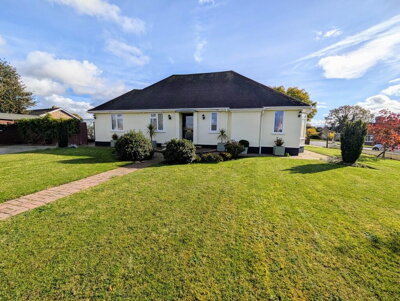
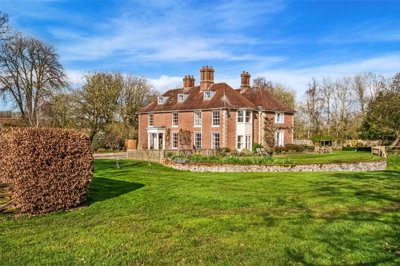
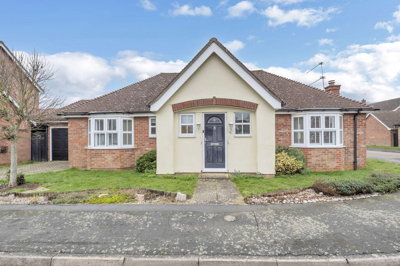
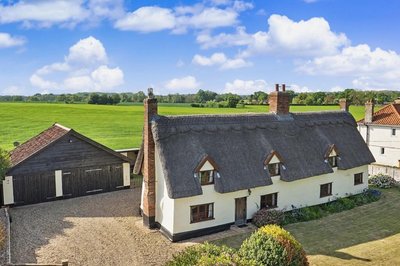
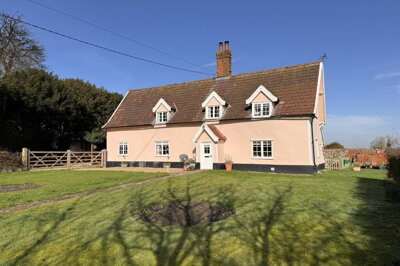
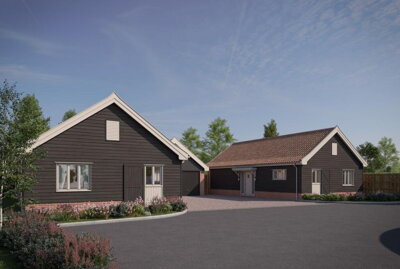
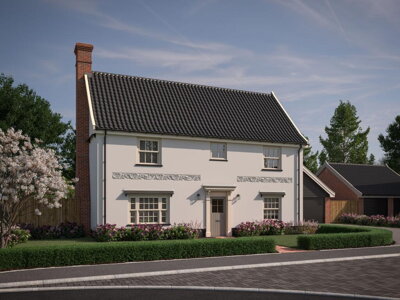
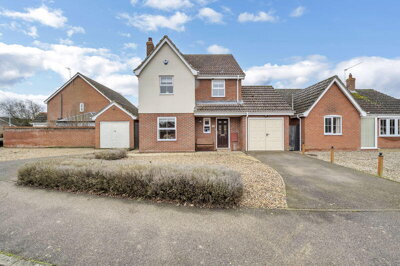
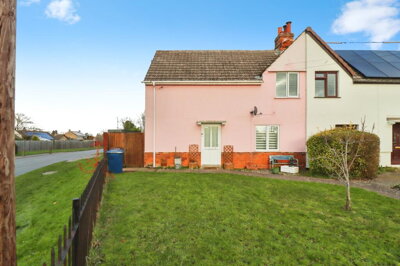
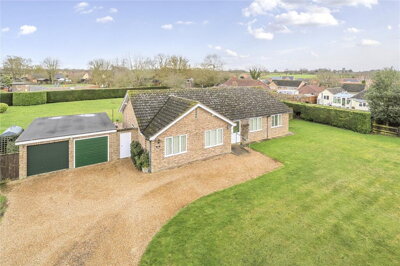
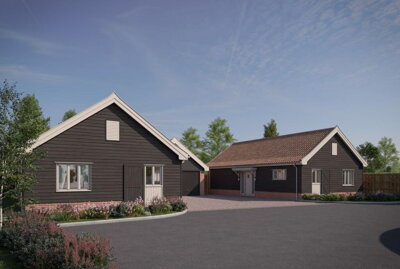
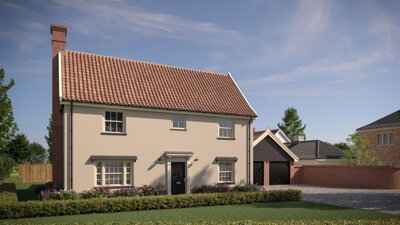
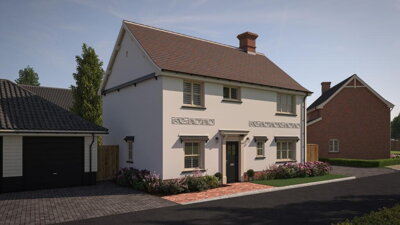
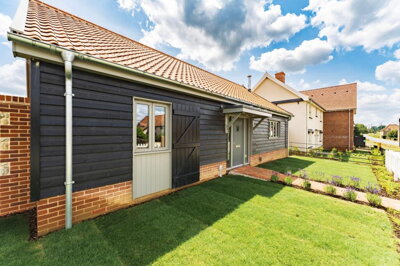
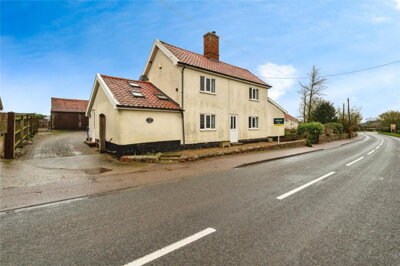
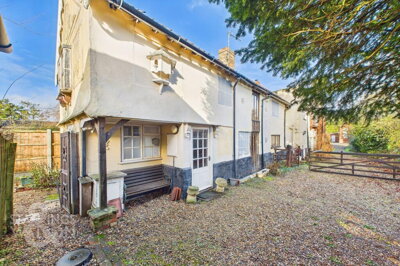
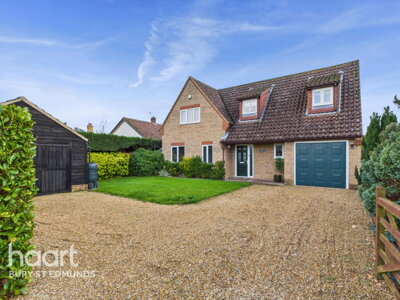
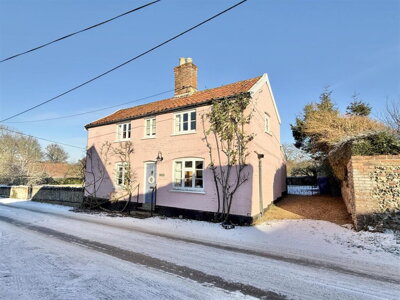
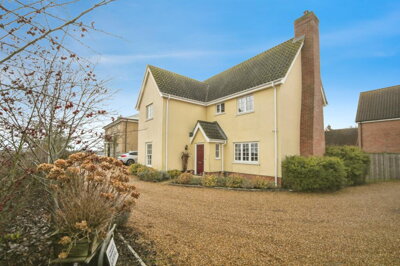
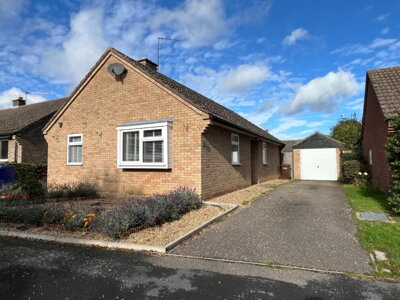
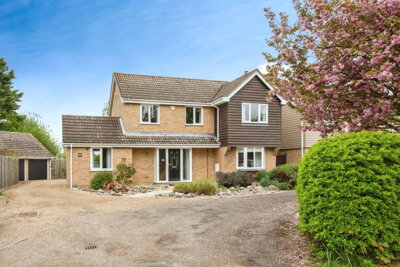
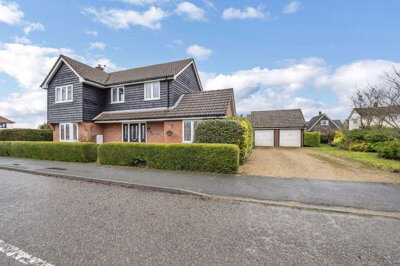
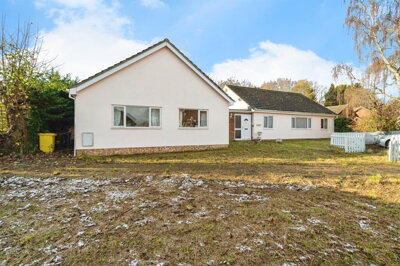
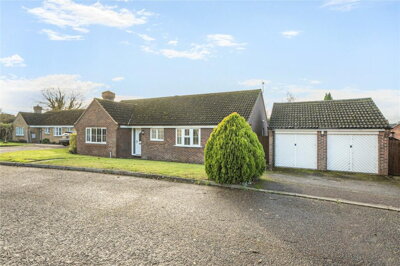
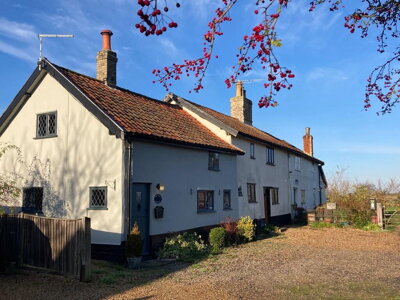
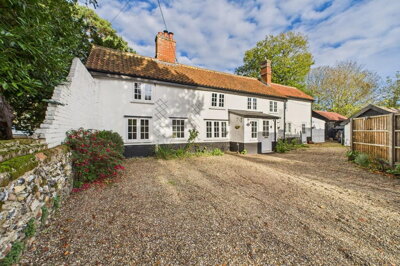
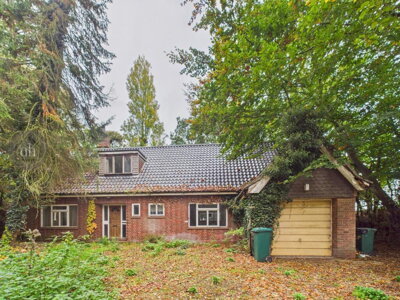
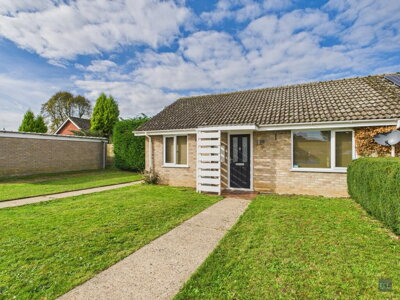
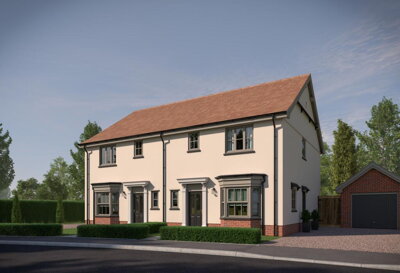
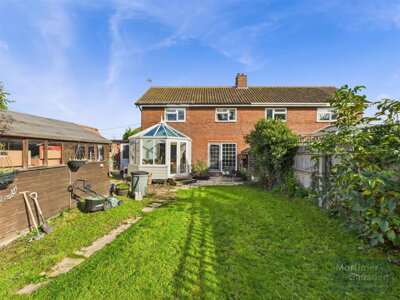
Browse 41 homes for sale in Market Weston from local estate agents.
The Twinstead housing market operates quite differently from urban property searches, with transaction volumes naturally lower due to the village's small size and the desirability of its location. Our platform lists detached houses, traditional cottages, and conversion opportunities across the village, with current asking prices reflecting the premium associated with rural Essex living. The CO10 postcode area has experienced some price correction recently, with Rightmove data indicating sold prices were 77% below the 2020 peak of £2,250,000 over the past year, though this figure should be treated with caution given the limited number of transactions in any given period.
Zoopla reports an average sold price of £906,667 for Twinstead properties, a figure heavily influenced by the large detached family homes that dominate the local housing stock. Detached properties represent the overwhelming majority of homes in the village, with semi-detached houses and terraced cottages forming a smaller but equally desirable segment of the market. The presence of early 17th century farmhouses and historic cottages means buyers frequently encounter properties with significant heritage value, often featuring timber frames, exposed beams, and original brickwork that require careful consideration during the purchase process.
For buyers interested in newer accommodation, the surrounding CO10 area offers occasional new build opportunities, with developments in nearby areas like Sudbury Fields featuring properties such as The Park House and The Sorrells. However, truly new build homes within Twinstead itself remain exceptionally rare, making any such listings particularly competitive when they do appear on the market.

Twinstead embodies the classic English village experience, offering residents a peaceful rural lifestyle while remaining accessible to the amenities of larger towns. As a civil parish in the Braintree district of Essex, the village sits just a short drive from the Suffolk border, giving residents the advantage of being able to access facilities in both counties. The village's setting amidst the rolling Essex countryside provides stunning views across farmland and woodland, creating an environment that feels a world away from urban life yet remains connected to essential services.
The character of housing in Twinstead reflects its historic origins, with properties predominantly dating from the 17th and 18th centuries when the village was an agricultural community serving the wider region. An early 17th century Grade II listed farmhouse stands as testament to this heritage, while numerous cottages throughout the village offer period features such as exposed beams, original fireplaces, and traditional construction using local materials including timber frames and handmade bricks. The village's conservation area status, while not formally verified, is strongly suggested by the concentration of listed buildings and the traditional appearance of its built environment.
Daily amenities in Twinstead itself are limited by its village status, but residents benefit from the proximity of Sudbury in Suffolk, which offers comprehensive shopping facilities, restaurants, healthcare services, and recreational opportunities including leisure centres and cultural venues. The surrounding Essex countryside provides excellent walking and cycling opportunities, with public rights of way crossing farmland and leading to neighbouring villages, while local pubs and community facilities ensure a strong sense of village identity and social connection for residents.
Families considering a move to Twinstead will find a reasonable selection of educational options within reasonable travelling distance, though the rural location means careful consideration of school catchment areas is essential. Primary education is available at several village and small town schools in the surrounding area, with parents able to choose from schools in both Essex and Suffolk given Twinstead's border position. These primary schools typically serve small cohorts, allowing for individual attention and strong community connections that many families find appealing in rural settings.
Secondary education options in the region include several well-regarded schools in nearby towns, with Sudbury particularly well-served for secondary provision. Parents should research specific school admissions policies and catchment boundaries, as these can extend across significant distances in rural areas. The availability of grammar school options varies, and Essex operates a selective testing system for those wishing to pursue grammar school education, with schools in towns such as Colchester and Chelmsford potentially accessible for older children with appropriate transport arrangements.
For families with older children requiring sixth form or further education provision, the further education colleges in Colchester and Chelmsford offer comprehensive A-level and vocational programmes, accessible via the good road connections from Twinstead. Many families find that the village's peaceful environment and strong community atmosphere more than compensate for the transport arrangements required for secondary and post-16 education, with children benefiting from the outdoor lifestyle and close-knit community that village living provides.
Transport connectivity from Twinstead reflects its rural village character, with residents typically relying on private vehicles for daily commuting while benefiting from reasonable access to major routes. The village sits within easy reach of the A134, which provides direct connections to Sudbury to the north and onward to Bury St Edmunds in Suffolk, while also offering routes towards Colchester to the southeast via the A12. This positioning gives residents flexible options for accessing employment centres, shopping destinations, and transport hubs across the region.
Sudbury serves as the nearest railway station for many Twinstead residents, offering connections to London Liverpool Street via the Sudbury branch line and onward connections at Marks Tey. More comprehensive rail services are available from Colchester, which provides direct trains to London Liverpool Street with journey times of around 50 minutes, making it practical for regular commuters who need excellent rail connectivity. For those working in Cambridge or the wider East Anglia region, the road network provides reasonable access though journey times will naturally be longer than from more centrally located towns.
Local bus services connect Twinstead to surrounding villages and market towns, though frequencies are limited compared to urban areas, making private vehicle ownership essential for most residents. Cycling is popular for shorter local journeys, with the Essex countryside offering pleasant routes between villages, while the village's position away from major trunk roads means that noise and air quality are excellent, contributing to the peaceful atmosphere that makes Twinstead such an attractive place to live.
Spend time exploring property listings across platforms, understanding price ranges for different property types in Twinstead and the surrounding CO10 area. Given the limited supply, consider registering with multiple estate agents who operate in the village and surrounding area for early notification of new listings. Set up property alerts so you are notified immediately when suitable homes come to market.
Before viewing properties, obtain a mortgage agreement in principle from a lender to confirm your borrowing capacity and demonstrate to sellers that you are a serious buyer. This step is particularly important in competitive rural markets where properties may attract multiple interested parties. Having your mortgage finance arranged in principle can significantly strengthen your position when making an offer.
Schedule viewings of suitable properties, paying particular attention to the condition of period features, the cost implications of owning historic properties, and any planning restrictions that may apply to listed buildings or properties in conservation areas. Consider whether properties meet your practical requirements as well as your aesthetic preferences before proceeding.
Once you have found a property you wish to purchase, instruct a RICS Level 2 home survey to assess the condition of the property and identify any defects that may require attention or negotiation. For period properties like those common in Twinstead, this survey will help you understand the implications of owning a historic building and budget appropriately for any necessary repairs.
Choose a solicitor experienced in rural property transactions to handle the legal aspects of your purchase, including searches related to local planning, environmental factors, and any rights of way or covenants that may affect the property. Their expertise with listed buildings and rural transactions will be invaluable throughout the process.
Once all enquiries are resolved and your mortgage offer is confirmed, your solicitor will exchange contracts and set a completion date. On completion day, the remaining balance is transferred and you receive the keys to your new Twinstead home.
Purchasing a property in Twinstead requires careful attention to several factors that are particularly relevant to the village's historic housing stock and rural location. The prevalence of Grade II listed buildings in the village means that prospective buyers should understand the implications of listing status, including restrictions on alterations, the requirement for listed building consent for certain works, and the potential additional costs associated with maintaining heritage features. A thorough survey will help identify any existing issues with historic construction that may require attention.
Conservation area considerations are also important for any buyer, as properties in designated conservation areas may face additional planning controls affecting exterior alterations, extensions, and even certain works to trees. While specific conservation area status for Twinstead is not formally confirmed in available records, the village's character and listed building concentration suggests that sensitive treatment of property improvements will be expected by both planning authorities and the local community. Your solicitor should conduct thorough local searches to identify any applicable restrictions.
For properties with gardens or grounds, the rural setting means that buyers should consider factors such as boundary maintenance responsibilities, the presence of trees that may affect foundations, and any agricultural land or rights of way that border the property. The geology of Essex, which includes areas of London Clay with associated shrink-swell risk, means that properties with significant vegetation should be assessed for potential ground movement issues, particularly in older buildings where foundations may be less deep than modern standards require. We always recommend instructing a full RICS survey before committing to purchase.
The Twinstead housing stock presents characteristic construction challenges that prospective buyers should understand before purchasing. Most properties in the village date from the 17th or 18th centuries, constructed using traditional methods that differ significantly from modern building standards. Timber-framed construction is prevalent, with early farmhouses and cottages featuring exposed beams, panel infill, and traditional mortise and tenon joints. These construction methods were designed for natural ventilation and temperate conditions, which means that modern heating and insulation requirements may need careful consideration to avoid causing damage to historic fabric.
Damp represents one of the most common issues affecting period properties in Twinstead. Rising damp occurs where original damp-proof courses have failed or were never installed, while penetrating damp can result from deteriorated brickwork, failed pointing, or damaged roof coverings. Our inspectors frequently identify these issues in historic Essex properties, particularly where maintenance has been deferred or where modern building materials have been incorrectly applied to traditional structures. Specialist damp surveys may be recommended where significant damp is identified, as effective treatment requires understanding the specific cause and appropriate remedial measures.
Timber defects are another significant consideration for Twinstead properties. Wet rot and dry rot can affect structural timbers and joinery where moisture levels are elevated, while woodworm infestation may be present in older timbers that have not been treated. The timber frame construction common to the village means that any signs of timber deterioration warrant careful investigation by a qualified professional to assess the structural implications. Regular treatment and maintenance can prevent these issues from developing, but buyers should budget for potential remediation costs identified during survey.
Roof conditions in period properties frequently require attention, with our inspectors commonly finding slipped or missing tiles, deteriorated pointing to ridge tiles, and flashing issues around chimney stacks and valleys. The original clay tile or slate coverings on Twinstead cottages may have been replaced over time with modern alternatives, and the condition of the supporting structure should be assessed as part of any property survey. Chimney stacks are particularly vulnerable in properties where fires are no longer used, as lack of heating can lead to moisture penetration and frost damage.
Electrical and plumbing systems in historic Twinstead properties often require updating to meet modern standards and safety requirements. Original wiring may not have the capacity for contemporary household loads, while lead pipes or galvanised steel plumbing may still be present in the oldest properties. Our RICS Level 2 survey will identify these issues and assess their implications, allowing buyers to budget appropriately for necessary upgrades following completion.
Average house prices in Twinstead show variation between data sources due to the village's small size and the limited number of annual transactions. Rightmove reports an overall average of £510,000 for the CO10 postcode area, while Zoopla indicates £906,667 based on sales data. Premium addresses such as The Green command significantly higher prices averaging around £1,430,000. Given this variation, prospective buyers should discuss specific property values with local estate agents who have direct knowledge of recent transactions and current market conditions in this small village market.
Properties in Twinstead fall under Braintree District Council for council tax purposes, as the village is located in the Braintree district of Essex. Specific banding depends on the property valuation, but rural village properties with historic features typically fall across bands C through F. Buyers should check the specific banding for any property they are considering, as this will affect annual running costs alongside other expenses such as maintenance and utilities that may be higher for period properties requiring specialist care.
The Twinstead area offers primary education through several village and small town schools serving the rural community, with the nearest primary schools located in surrounding villages and the market town of Sudbury. Secondary education options include schools in Sudbury and the wider area, with Essex grammar schools in Colchester potentially accessible for older children. Families should research specific catchment areas and admissions policies, as these can extend considerable distances in rural locations and may change from year to year, so early enquiry is advisable.
Public transport connectivity from Twinstead reflects its rural village status, with limited bus services connecting the village to surrounding communities and towns. The nearest railway station is Sudbury, offering branch line connections with onward links to London Liverpool Street at Marks Tey. More comprehensive rail services are available from Colchester, which provides direct access to London with journey times of around 50 minutes. Most residents rely on private vehicles for daily commuting and errands, though cycling is popular for shorter local journeys through the Essex countryside between villages.
Twinstead offers several characteristics that make it attractive to property investors, including its rural location close to the Suffolk border, the rarity of properties coming to market, and the presence of historic properties that tend to hold their value well. The Essex property market showed 2.4% growth in the past year, and village properties with good access to transport links and amenities are likely to remain desirable. However, investors should consider the limited rental market in such a small village and the potential costs of maintaining period properties, which may require specialist care and consent for alterations.
Stamp Duty Land Tax applies to all property purchases in England, with no SDLT on properties up to £250,000, then 5% on the portion from £250,001 to £925,000. For properties above £925,000, rates increase to 10% up to £1.5 million and 12% above that. First-time buyers benefit from relief on properties up to £625,000, paying 0% up to £425,000 and 5% between £425,001 and £625,000. Given the prices in Twinstead, most purchases will fall into higher SDLT bands, making this a significant cost to budget for alongside the purchase price.
Understanding the full costs of purchasing property in Twinstead is essential for budgeting effectively, with Stamp Duty Land Tax representing a significant element for most buyers. Given the village's average property prices, with the majority of detached homes and period properties exceeding £500,000, most purchases will attract SDLT at the higher rates. A buyer purchasing a typical Twinstead property at £600,000 would pay £17,500 in SDLT, while a £900,000 property would attract £33,750 in stamp duty, making this a substantial addition to the purchase price that must be accounted for from the outset.
First-time buyers purchasing in Twinstead should be aware that the SDLT relief available to first-time purchasers applies only to properties up to £625,000, with no relief available above this threshold. Given the village's property price profile, many suitable family homes will fall outside this limit, meaning that first-time buyers may wish to explore shared ownership schemes or consider slightly smaller properties if they wish to benefit from the relief. Your conveyancing solicitor can provide specific calculations based on your individual circumstances and the property you are purchasing.
Beyond SDLT, buyers should budget for solicitor fees, survey costs, mortgage arrangement fees, and moving expenses. For period properties like those common in Twinstead, additional costs may arise from the survey process, where issues with historic construction, timber defects, or outdated services may be identified. Buildings insurance should be arranged before completion, and for listed buildings, specialist insurance may be required at higher premiums. Planning these costs carefully ensures that buyers are not caught out by expenses that could otherwise delay or complicate their purchase.
From 4.5% APR
Competitive mortgage deals available for Twinstead purchases, from leading UK lenders
From £499
Specialist conveyancing solicitors for Twinstead property purchases, including rural and listed property expertise
From £350
A detailed survey suitable for any Twinstead property, from character cottages to substantial family homes. Includes market valuation and condition assessment
From £80
Required for mortgage applications and useful for understanding the energy efficiency of any Twinstead property
Properties for Sale In London

Properties for Sale In Plymouth

Properties for Sale In Liverpool

Properties for Sale In Glasgow

Properties for Sale In Sheffield

Properties for Sale In Edinburgh

Properties for Sale In Coventry

Properties for Sale In Bradford

Properties for Sale In Manchester

Properties for Sale In Birmingham

Properties for Sale In Bristol

Properties for Sale In Oxford

Properties for Sale In Leicester

Properties for Sale In Newcastle

Properties for Sale In Leeds

Properties for Sale In Southampton

Properties for Sale In Cardiff

Properties for Sale In Nottingham

Properties for Sale In Norwich

Properties for Sale In Brighton

Properties for Sale In Derby

Properties for Sale In Portsmouth

Properties for Sale In Northampton

Properties for Sale In Milton Keynes

Properties for Sale In Bournemouth

Properties for Sale In Bolton

Properties for Sale In Swansea

Properties for Sale In Swindon

Properties for Sale In Peterborough

Properties for Sale In Wolverhampton

Enter your details to see if this property is within your budget.
Loans, cards, car finance
Estimated property budget
Borrowing + deposit
You could borrow between
Typical borrowing
Monthly repayment
Est. at 4.5%
Loan-to-value
This is an estimate only. Your actual budget may vary depending on interest rates, credit history, and personal circumstances. For an accurate affordability assessment, speak to one of our free mortgage advisors.
This calculator provides estimates for illustrative purposes only and does not constitute financial advice. Your home may be repossessed if you do not keep up repayments on your mortgage. Estimates based on 4.5% interest rate, repayment mortgage. Actual rates depend on your circumstances.
Homemove is a trading name of HM Haus Group Ltd (Company No. 13873779, registered in England & Wales). Homemove Mortgages Ltd (Company No. 15947693) is an Appointed Representative of TMG Direct Limited, trading as TMG Mortgage Network, which is authorised and regulated by the Financial Conduct Authority (FRN 786245). Homemove Mortgages Ltd is entered on the FCA Register as an Appointed Representative (FRN 1022429). You can check registrations at NewRegister or by calling 0800 111 6768.

We use cookies to show you personalised content and improve your experience of our website. Find out more in our Privacy policy and Cookie policy.