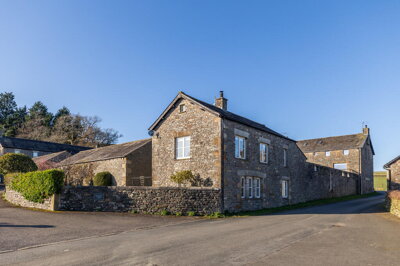
Browse 1 home for sale in Mansergh, Westmorland and Furness from local estate agents.
Studio apartments feature open-plan living spaces without separate bedrooms, incorporating sleeping, living, kitchen, and bathroom facilities. The Mansergh studio market includes properties in modern apartment complexes, converted Victorian and Georgian buildings, and purpose-built developments.
£0k
0
0
0
Source: home.co.uk
Showing 0 results for Studio Flats for sale in Mansergh, Westmorland and Furness.
The Mansergh property market reflects the broader trends of rural Cumbria, where demand consistently outstrips supply due to the area's exceptional natural beauty and limited new development. The LA6 postcode area, which encompasses Mansergh and neighbouring villages, has recorded approximately 50 property sales in the past twelve months, with prices showing steady appreciation of around 2.0% year-on-year. This modest but consistent growth indicates a stable market that rewards long-term investment while remaining accessible to buyers seeking genuine value compared to similar properties in more metropolitan locations.
Property type pricing across the area reveals clear market segmentation that helps buyers narrow their search effectively. Detached properties, which comprise the majority of the housing stock in this rural parish, average £500,000 and represent the premium segment of the market. Semi-detached homes offer more accessible entry points at approximately £285,000, while terraced properties typically start from £250,000. Flats remain rare in Mansergh given the predominantly agricultural character of the settlement, with any available units averaging around £175,000. New build activity within the civil parish itself remains minimal, with any contemporary development concentrated in nearby larger towns such as Kirkby Lonsdale or Kendal.
The twelve-month price trajectory shows encouraging resilience across all property categories. Detached properties have experienced the strongest growth at 3.0%, reflecting buyer preference for space and privacy that the pandemic era has cemented into the rural housing market. Semi-detached homes increased by 1.5%, terraced by 1.0%, and flats by 0.5%, suggesting that while larger properties attract the most competitive bidding, every segment of the market is maintaining or growing its value. For buyers considering a move to Mansergh, this data indicates that purchasing now rather than waiting offers both the benefit of current favourable pricing and the security of demonstrated price stability.
The limited supply of available properties in Mansergh means that serious buyers should be prepared to act promptly when suitable homes come to market. Properties here rarely remain listed for extended periods, particularly those priced attractively relative to the local market average. Working with local estate agents who understand the nuances of the Lune Valley market can provide early access to listings before they appear on broader property portals, giving buyers a crucial advantage in this competitive market segment.

Life in Mansergh centres around the rhythms of the British countryside, where agricultural traditions remain woven into the fabric of daily existence. The civil parish encompasses rolling farmland, historic farmsteads, and pockets of seminatural woodland that characterize the limestone landscape of the southern Lake District fringe. With a population of just 174 residents, Mansergh retains the intimate scale of a traditional English village while offering proximity to larger settlements that provide essential services and employment opportunities. The sense of community here is tangible, with residents gathered around St Peter's Church, the village's spiritual and geographical heart, and the network of public footpaths that crisscross the parish offering daily opportunities for social interaction.
The local economy of Mansergh and the surrounding Lune Valley depends primarily on agriculture, with sheep farming and beef production forming the backbone of rural livelihoods. However, tourism plays an increasingly significant role in the local economic ecosystem, with visitors drawn to the area's outstanding natural beauty and excellent walking country. The proximity to both the Yorkshire Dales and Lake District National Parks means residents benefit from the commercial activity generated by millions of annual visitors while retaining the peace and quiet of living slightly apart from the main tourist hubs. Many residents supplement farm incomes or employment in larger nearby towns by operating holiday cottages, bed and breakfasts, or rural craft businesses that serve the visitor economy.
The architectural heritage of Mansergh contributes significantly to its character and charm. Several properties hold Grade II listing, including Mansergh Hall, elements of St Peter's Church, and various historic farmhouses and barns that dot the surrounding countryside. The predominant construction materials reflect the local geology, with properties built using the limestone and sandstone quarried from the surrounding hills and capped with traditional slate roofs. This consistent palette of natural materials creates visual harmony across the settlement and ensures that new development, where it does occur, can be sensitively integrated into the existing streetscape. Properties built before 1919 dominate the housing stock, representing the traditional farmhouses and agricultural workers' cottages that formed the original settlement pattern.
Daily life in Mansergh is shaped by its rural setting and the practical realities this entails. The nearest convenience shopping, post office services, and primary school are located in neighbouring villages within the Lune Valley, requiring most residents to travel by car for regular errands. However, the compensation comes in the form of immediate access to open countryside, traffic-free lanes for cycling, and the profound quiet that only genuine rural living can provide. For families with children, the village offers an upbringing increasingly rare in modern Britain, where outdoor play and connection with nature form part of everyday experience rather than scheduled weekend activities.
Education provision in this rural area reflects the Cumbrian pattern of small village primary schools feeding into larger secondary establishments in nearby market towns. Families considering a move to Mansergh will find that primary education is available at nearby rural schools serving the Lune Valley communities, with class sizes typically smaller than those found in urban settings and teaching approaches that often make the most of the outdoor learning opportunities afforded by the surrounding countryside. These smaller schools frequently achieve strong results relative to their resources, with dedicated teachers who know each pupil individually and can tailor support accordingly.
Secondary education options for Mansergh residents typically include the schools available in Kirkby Lonsdale and Kendal, both of which are accessible via local bus services or by car along the A65 trunk road. Parents should research specific catchment areas and admission policies for their chosen secondary school, as geographic proximity does not always guarantee a place at the most popular establishments. For families requiring sixth form provision, the larger secondary schools in Kendal and Lancaster offer broader curriculum choices including A-level courses and vocational qualifications, with many students commuting daily or weekly from the Mansergh area to access these opportunities.
Beyond state education, the area offers various alternatives including independent schools that serve wider Cumbria and north Lancashire. The presence of the University of Lancaster, situated approximately twenty miles from Mansergh, also means that families planning for the longer term can consider educational pathways that extend from early years through to higher education without requiring relocation to a major city. For buyers at any stage of family formation, understanding the educational landscape, including any grammar school provision if applicable and the travel implications of school choices, should form an integral part of property search planning.
School transport arrangements merit particular attention for families relocating from urban areas. The availability and reliability of school bus services can significantly impact daily routines, and parents should clarify these arrangements before committing to a purchase. Many families find that driving children to school becomes part of their routine, particularly during secondary education years when catchment schools may be situated in nearby market towns. The distance and travel time should be factored into lifestyle expectations, especially for families accustomed to walkable school commutes.
Transport connectivity from Mansergh reflects its status as a small rural settlement, with residents relying primarily on private vehicle travel supplemented by limited public transport options. The A65 road, which runs through the nearby market town of Kirkby Lonsdale, provides the main arterial route connecting the area to Kendal to the north and the M6 motorway at junction 36 to the east. This connection enables straightforward access to the national motorway network, with Manchester accessible in approximately ninety minutes by car and Liverpool reachable within two hours. The journey to Lancaster typically takes around forty minutes, making that city a realistic commuting destination for those whose employers offer hybrid working arrangements.
Public transport options from Mansergh include local bus services that operate along the Lune Valley route, connecting villages to Kirkby Lonsdale and Kendal. However, these services typically operate at frequencies suited to occasional trips rather than daily commuting, with reduced services on evenings and weekends. The nearest mainline railway stations are located in Lancaster and Oxenholme (Kendal), with the latter offering direct Virgin Trains services to London Euston with journey times of approximately two hours forty minutes. For residents prepared to drive to the station, the parking facilities at Oxenholme make this a practical option for regular commuters who split their working week between home and office.
For those who prefer not to drive, cycling represents a viable option for shorter local journeys, with the relatively flat terrain of the Lune Valley lending itself to bicycle travel. The national cycle network and numerous local routes provide opportunities for recreational cycling and practical travel to nearby villages for shopping or social activities. Walking, too, plays a significant role in local transport, with the network of public footpaths and quiet country lanes enabling residents to travel on foot for daily needs where proximity allows. Understanding the transport realities of rural Cumbrian life is essential for buyers, particularly those considering a relocation from urban areas where public transport provision may be more comprehensive.
Car ownership is effectively essential for residents of Mansergh, and this should be factored into both the financial calculation of moving here and the lifestyle adjustment from urban living. Insurance costs for rural postcodes may differ from urban equivalents, and parking arrangements at properties should be verified during the viewing process, as some traditional cottages and farmsteads have limited off-road parking. Despite these considerations, the compensations of rural living, combined with the relatively modest commuting distances to larger employment centres, make Mansergh accessible to those willing to adapt their transport expectations.
Before committing to a purchase in Mansergh, spend time exploring the local area and understanding property values. Visit at different times of day and week, speak with residents about their experiences, and review recent sales data for comparable properties to establish what you should expect to pay for your ideal home. Understanding the rhythm of the local market, including how quickly properties sell and typical negotiating dynamics, will help you approach your purchase with realistic expectations and a clear strategy.
Property in rural Cumbria attracts strong interest, so having your financing arranged before viewing homes gives you a competitive edge. Approach lenders for an agreement in principle based on your current financial circumstances, and consider consulting a mortgage broker who understands the rural property market and can identify specialist products suited to older or non-standard construction properties. Properties in Mansergh often involve non-standard construction including solid stone walls and traditional materials that may affect mortgage availability, making broker expertise particularly valuable.
Contact local estate agents to arrange viewings of properties that match your criteria. In a market with limited stock, be prepared to move quickly when suitable properties become available. Take notes during viewings and photograph properties to help with later comparison and decision-making. Consider attending multiple viewings of promising properties, as the character of historic homes can vary significantly depending on maintenance history and recent improvements.
Given the age of properties in Mansergh, a thorough survey is essential before purchase. For most properties, a RICS Level 2 Survey (Homebuyer Report) priced between £450 and £750 for properties in the LA6 area will identify defects including damp, roof condition issues, timber defects, and outdated electrics common in older stone-built homes. Our inspectors frequently find issues related to traditional construction methods, including penetrating damp in solid stone walls, slipped slate tiles, and timber deterioration that buyers should understand before completing their purchase.
Choose a solicitor experienced in rural property transactions to handle the legal aspects of your purchase. They will conduct searches, manage the contract exchange process, and liaise with your mortgage lender to ensure a smooth completion. For listed buildings, additional considerations regarding permitted development rights and alterations will require specialist attention. The local searches for Westmorland and Furness Council will reveal planning history, conservation area status, and any environmental constraints affecting the property.
Once all searches are satisfactory and your mortgage offer is confirmed, you will exchange contracts with the seller and pay your deposit. Completion typically follows within days or weeks, at which point you will receive the keys and take ownership of your new Mansergh home. Our team can recommend local contacts for utility connections, broadband installation, and tradespeople should you require immediate maintenance or renovation services following your purchase.
Properties in Mansergh present specific considerations that buyers should evaluate carefully before committing to a purchase. The geology of the area, primarily Carboniferous Limestone with areas of glacial till and alluvial deposits, generally presents low risk of shrink-swell subsidence. However, localised clay content in superficial deposits could pose modest risks during extreme weather, and buyers should review any geological survey data available for their specific location. Properties situated close to the River Lune or its tributaries face potential fluvial flood risk, and the Environment Agency flood maps should be consulted for any property in a low-lying position.
The traditional construction methods employed in local properties, while contributing to their character and appeal, bring particular maintenance considerations that differ from modern buildings. Stone walls, whether solid wall construction or traditional cavity wall equivalents in older properties, typically lack the insulation values of contemporary builds, resulting in higher heating costs and potential condensation issues. Lime mortar pointing, common on historic properties, requires different maintenance approaches than cement-based alternatives, and buyers should factor potential repointing costs into their budgeting. Roof structures, often incorporating traditional timber principals and slate coverings, may show their age through slipped slates, perished felt underlays, or deteriorating leadwork around chimneys and valleys.
For buyers considering listed properties in Mansergh, additional due diligence is essential. Grade II listing imposes restrictions on alterations, extensions, and even significant repairs, requiring Listed Building Consent from Westmorland and Furness Council for many works that would be straightforward on unlisted properties. The maintenance obligations associated with listed status can be substantial, though various grants may be available for qualifying works. Survey requirements for listed buildings typically demand the more comprehensive RICS Level 3 Building Survey rather than a standard Level 2 report, given the complexity of traditional construction and the potential for hidden defects that a less detailed inspection might miss.
Electrical and plumbing systems in older Mansergh properties frequently require updating to meet current standards. Properties constructed before the 1970s may still contain cloth-covered wiring or lead pipes that would need replacement as part of any renovation programme. Our surveyors often identify outdated consumer units, insufficient socket numbers, and inadequate earthing in traditional properties, all of which represent safety concerns and potential negotiation points on purchase price. Budgeting for a full rewire or significant electrical upgrade should form part of any renovation cost calculation for older properties in the area.
Properties in the LA6 postcode area, which encompasses Mansergh, have an average price of approximately £408,000 according to recent Land Registry data. Detached properties command around £500,000, semi-detached homes average £285,000, terraced properties start from £250,000, and flats average £175,000. The market has shown steady growth with a twelve-month increase of approximately 2.0%, making Mansergh a stable investment for buyers seeking rural Cumbrian property. The premium for detached homes reflects the high demand for space and privacy in this desirable countryside location.
Properties in Mansergh fall under Westmorland and Furness Council's jurisdiction, and council tax bands are assigned based on property value as assessed in 1991. The rural nature of the area and the age of many properties means that bands vary considerably depending on the specific property, with traditional stone farmhouses often in higher bands due to their historical value. Buyers should request the current council tax band from the seller or verify through the Westmorland and Furness Council website before purchase, as this annual charge forms part of the ongoing cost of homeownership in the area. The band can significantly affect monthly outgoings, so including it in the total cost calculation is essential for accurate budgeting.
Primary education in the Lune Valley is served by small rural schools serving surrounding villages, with good reputations for individual attention and outdoor learning opportunities. Secondary options include schools in Kirkby Lonsdale and Kendal, both accessible via local transport or car along the A65 trunk road. Families should research specific catchment areas and admission criteria, as well as considering independent school options available in the wider Cumbria area, including provision in Lancaster for families seeking broader curriculum choices at secondary and sixth form level. The travel implications of school transport should be factored into property search criteria, particularly for families with younger children who will require daily transportation to secondary school.
Public transport from Mansergh is limited, reflecting its status as a small rural parish. Local bus services connect the village to nearby towns but operate at frequencies suited to occasional rather than daily use, with reduced evening and weekend services that may inconvenience those accustomed to urban public transport provision. The nearest mainline railway stations at Lancaster and Oxenholme (Kendal) offer rail connections including direct services to London, though reaching these stations requires private vehicle travel or careful planning around bus timetables. The A65 road provides the main route to surrounding centres, and car ownership is effectively essential for residents requiring regular access to services in larger towns.
The Mansergh property market benefits from structural factors that support long-term value. The limited supply of properties in this small parish, combined with persistent demand from buyers seeking rural Cumbrian living, creates inherent scarcity value. The proximity to two national parks and the broader appeal of the Lake District fringe location ensure ongoing interest from buyers at various life stages. Price growth of approximately 2.0% annually indicates steady appreciation without the volatility seen in some metropolitan markets, suggesting that property in Mansergh represents a sound investment for those planning to hold their purchase over multiple years. Rental yields in the area are modest given the high property values, making capital growth the primary investment consideration rather than rental income.
Stamp duty Land Tax rates for 2024-25 apply zero percent duty on the first £250,000 of property value, five percent on the portion between £250,001 and £925,000, ten percent between £925,001 and £1.5 million, and twelve percent above £1.5 million. First-time buyers receive relief on the first £425,000, with five percent applying between £425,001 and £625,000. For a typical £408,000 property in Mansergh, a first-time buyer would pay £3,750 in stamp duty after relief, while a subsequent buyer would pay £7,900. These costs should be accounted for in the overall purchase budget alongside survey fees, legal costs, and any renovation contingencies.
The primary risks when purchasing in Mansergh relate to the age and construction type of properties common in the area. Properties built before 1919 may contain asbestos in older insulation or floor coverings, and many will have electrical and plumbing systems that require updating to meet modern standards. Flood risk exists for properties near the River Lune and its tributaries, and buyers should consult Environment Agency flood maps for any specific property location. Traditional solid wall construction often lacks effective damp proof courses, and penetrating damp in stone walls is a common issue that requires ongoing maintenance using appropriate lime-based products rather than cement-based renders.
From 4.5%
Expert mortgage advice for rural properties including specialist lending for older homes and non-standard construction
From £499
Specialist solicitors handling rural Cumbrian property transactions including listed building considerations
From £450
Detailed inspection of traditional stone properties identifying defects common to Mansergh housing stock
From £750
Comprehensive survey recommended for listed buildings and historic farmhouses in the Lune Valley
Understanding the full financial implications of purchasing property in Mansergh requires careful budgeting beyond the headline purchase price. Stamp duty Land Tax represents a significant upfront cost that varies according to your buyer status and the property purchase price. For a typical property valued around the LA6 area average of £408,000, a buyer who already owns property would pay £7,900 in stamp duty, while a first-time buyer would benefit from relief, reducing this to £3,750. These figures underline the value of selling any existing property before completing on your Mansergh purchase to access first-time buyer rates where eligible.
Survey costs warrant particular attention given the age and construction type of properties common in Mansergh. A RICS Level 2 Survey for properties in the LA6 postcode area typically ranges from £450 to £750 depending on size and complexity. This investment identifies defects that might not be apparent during a viewing, including damp in traditional stone walls, roof condition issues, timber defects such as woodworm or rot, and outdated electrical installations. For listed buildings, a more comprehensive RICS Level 3 Building Survey may be necessary despite its higher cost, as the additional detail proves essential for understanding the condition of complex historic structures.
Conveyancing fees for property transactions in Westmorland and Furness typically start from £499 for standard purchases, though additional costs arise for search packages, Land Registry fees, and any leasehold or listed property considerations. Our recommended solicitors have experience with traditional Cumbrian properties and understand the specific issues that can arise in rural transactions, including rights of way across farmland, access arrangements, and agricultural tie conditions that may affect some properties. Maintaining a contingency fund equivalent to approximately three percent of the purchase price above your mortgage limit ensures that unexpected costs do not jeopardise your completion date, particularly in transactions involving older properties where survey findings may necessitate renegotiation or additional specialist reports.
Properties for Sale In London

Properties for Sale In Plymouth

Properties for Sale In Liverpool

Properties for Sale In Glasgow

Properties for Sale In Sheffield

Properties for Sale In Edinburgh

Properties for Sale In Coventry

Properties for Sale In Bradford

Properties for Sale In Manchester

Properties for Sale In Birmingham

Properties for Sale In Bristol

Properties for Sale In Oxford

Properties for Sale In Leicester

Properties for Sale In Newcastle

Properties for Sale In Leeds

Properties for Sale In Southampton

Properties for Sale In Cardiff

Properties for Sale In Nottingham

Properties for Sale In Norwich

Properties for Sale In Brighton

Properties for Sale In Derby

Properties for Sale In Portsmouth

Properties for Sale In Northampton

Properties for Sale In Milton Keynes

Properties for Sale In Bournemouth

Properties for Sale In Bolton

Properties for Sale In Swansea

Properties for Sale In Swindon

Properties for Sale In Peterborough

Properties for Sale In Wolverhampton

Enter your details to see if this property is within your budget.
Loans, cards, car finance
Estimated property budget
Borrowing + deposit
You could borrow between
Typical borrowing
Monthly repayment
Est. at 4.5%
Loan-to-value
This is an estimate only. Your actual budget may vary depending on interest rates, credit history, and personal circumstances. For an accurate affordability assessment, speak to one of our free mortgage advisors.
This calculator provides estimates for illustrative purposes only and does not constitute financial advice. Your home may be repossessed if you do not keep up repayments on your mortgage. Estimates based on 4.5% interest rate, repayment mortgage. Actual rates depend on your circumstances.
Homemove is a trading name of HM Haus Group Ltd (Company No. 13873779, registered in England & Wales). Homemove Mortgages Ltd (Company No. 15947693) is an Appointed Representative of TMG Direct Limited, trading as TMG Mortgage Network, which is authorised and regulated by the Financial Conduct Authority (FRN 786245). Homemove Mortgages Ltd is entered on the FCA Register as an Appointed Representative (FRN 1022429). You can check registrations at NewRegister or by calling 0800 111 6768.

We use cookies to show you personalised content and improve your experience of our website. Find out more in our Privacy policy and Cookie policy.