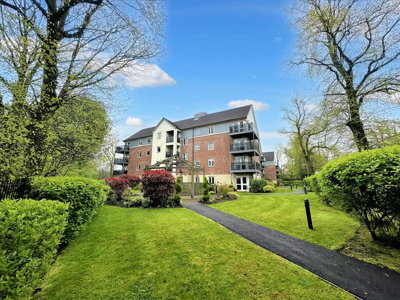
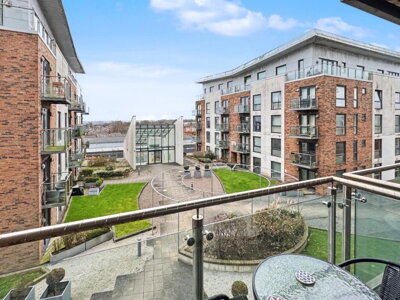
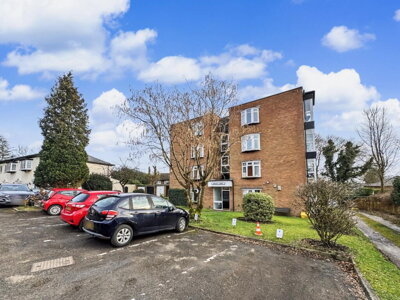
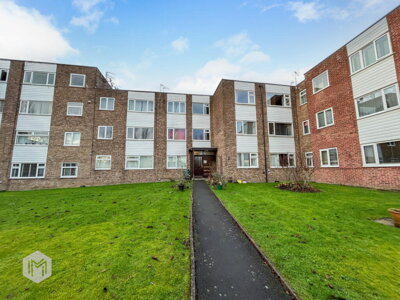
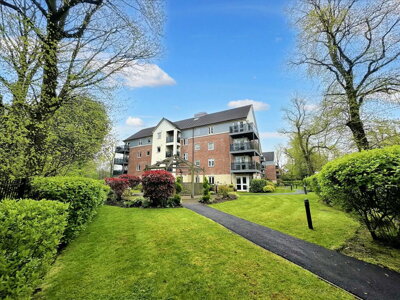
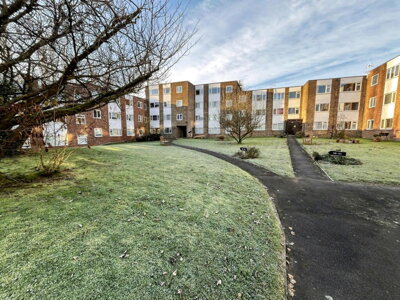
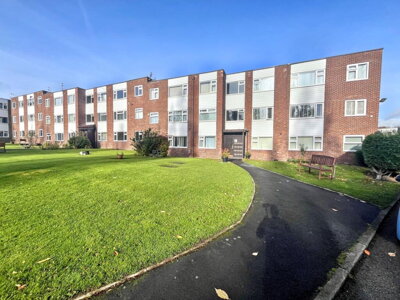
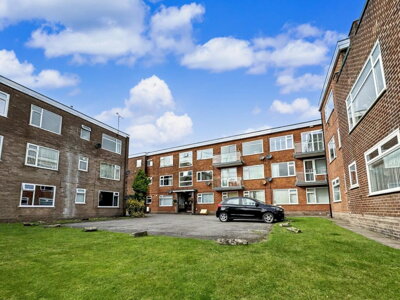
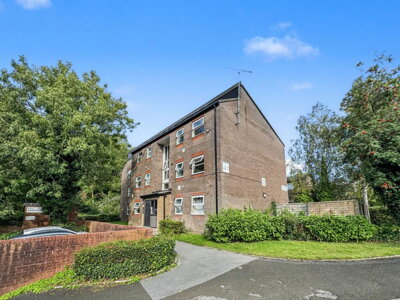
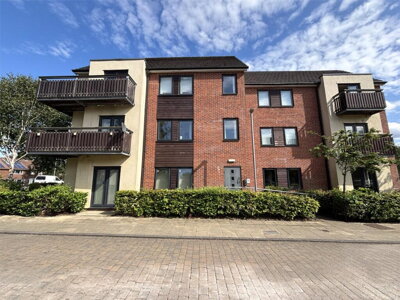
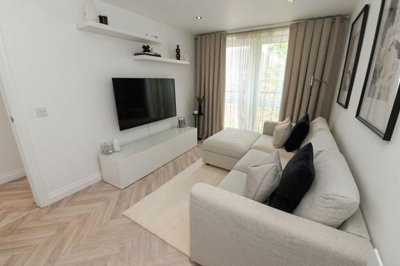
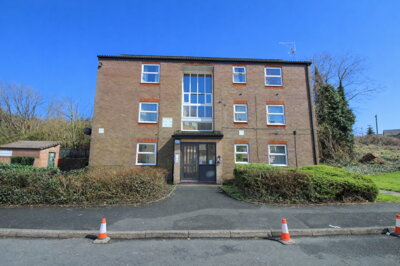
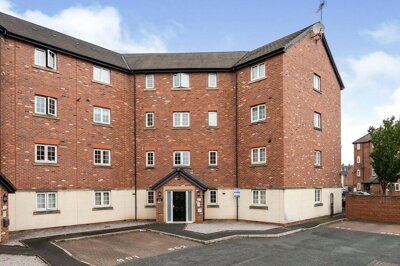
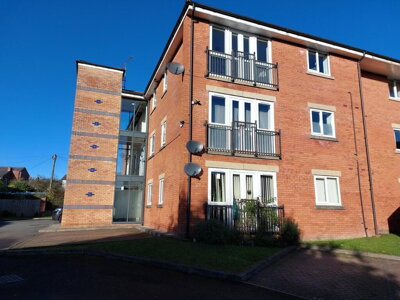
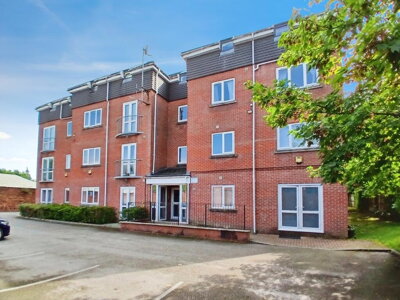
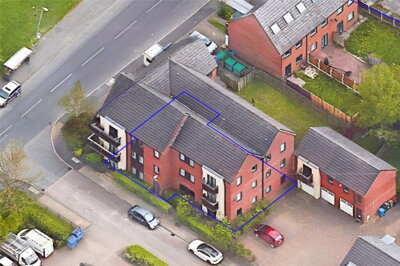
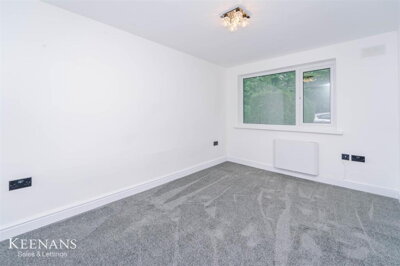
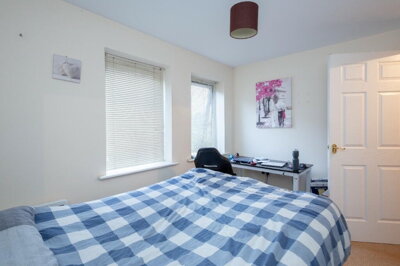
Browse 22 homes for sale in M45 from local estate agents.
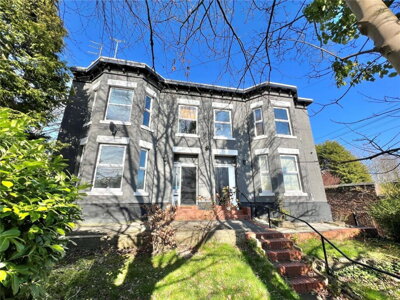
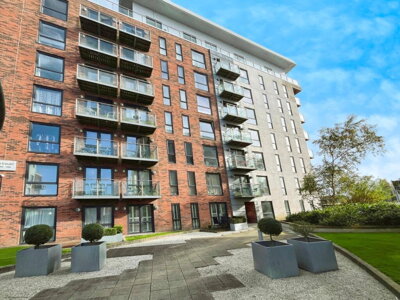
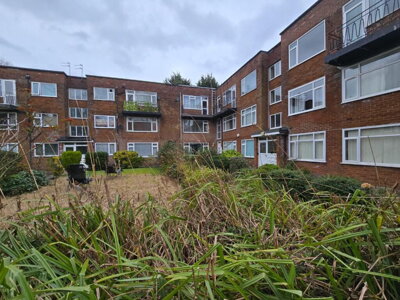
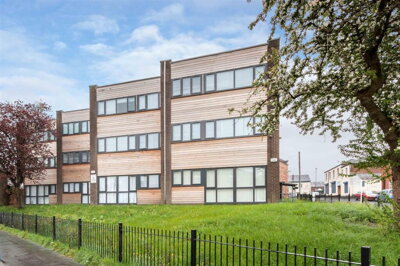
One bed apartments provide a separate bedroom alongside distinct living space, bathroom, and kitchen areas. Properties in M45 are available in various building types including mansion blocks, contemporary developments, and house conversions.
£110k
2
0
96
Source: home.co.uk
Showing 2 results for 1 Bedroom Flats for sale in M45. The median asking price is £110,000.
Source: home.co.uk
Flat
2 listings
Avg £110,000
Source: home.co.uk
Source: home.co.uk
The M11 property market presents a compelling mix of property types suited to different buyer requirements. Our current listings data shows terraced properties dominate recent sales, accounting for the majority of transactions in the past year alongside a notable presence of semi-detached homes. Detached properties in M11 command higher prices, with averages around £302,500 reflecting the additional space and privacy they offer. First-time buyers often gravitate toward flats, which average approximately £129,500, providing an accessible route onto the property ladder in a location that continues to attract investment and regeneration interest from developers and local authorities alike.
Market activity in M11 has seen 85 residential sales completed over the last twelve months, representing a decrease of 42.35% compared to the previous year when transaction volumes were higher. This reduction reflects broader national trends in transaction volumes, yet the area has maintained price stability with the current average of £186,924 sitting close to the 2023 peak of £187,290. Semi-detached homes typically sell for around £233,950, while terraced properties average approximately £186,704. For buyers seeking immediate opportunities, these price points position M11 as competitive within the Manchester metropolitan area, particularly given proximity to the city centre and key employment hubs.
The postcode benefits from ongoing regeneration interest that continues to shape the local property landscape. The area around Sportcity has seen continued development activity, with modern apartment blocks near the National Cycling Centre offering contemporary living options for buyers prioritising location over period character. Meanwhile, traditional Victorian and Edwardian terraces on streets off Ashton Old Road provide spacious family homes at price points that remain competitive compared to neighbouring postcodes closer to Manchester city centre.

The M11 postcode encompasses several distinctive neighbourhoods that together create a varied living landscape. Housing stock consists predominantly of terraced properties at 57%, with semi-detached homes comprising 38% of the residential mix. This Victorian and Edwardian inheritance gives many streets their characteristic red brick facades and bay-fronted living rooms that define working-class Manchester architecture. The area developed substantially during the industrial revolution when workers sought homes near the canals and railways that connected them to manufacturing employment. Today, descendants of those original residents share streets with young professionals drawn by affordable prices and convenient city access.
East Manchester has undergone significant transformation over recent decades, with Sportcity standing as the most visible symbol of this renewal. The National Cycling Centre, home to British Cycling and venue for Olympic training, brings national and international events to the doorstep of M11 residents. The nearby Co-op Live arena has further cemented the area's position as a leisure destination, creating employment and economic activity that benefits the surrounding community. Meanwhile, the Ashton Canal offers peaceful walking and cycling routes away from busy roads, providing residents with accessible green space and waterways that connect northward toward Ashton-under-Lyne and beyond.
The demographic character of M11 reflects Manchester's broader diversity, with established communities existing alongside newer arrivals attracted by employment opportunities at the Manchester Royal Infirmary, the Manchester Metropolitan University campus, and the growing business parks in the surrounding area. Local shops, supermarkets, and independent traders serve daily needs without requiring journeys into the city centre, while pubs, cafes, and community centres maintain neighbourhood cohesion. The presence of 15 listed buildings within the postcode, including churches designed by notable architects and structures along the Ashton Canal, provides architectural heritage that adds character and interest to the residential streetscape.
Community life in M11 centres on several key locations including the shopping parades along Ashton Old Road and the facilities around Sportcity. Residents benefit from regular bus connections to Manchester city centre while enjoying lower property prices than postcodes closer to the centre. The mix of long-term residents and newer arrivals creates a neighbourhood identity that balances tradition with the progressive outlook that characterises Manchester more broadly.

Families considering a move to M11 will find a range of educational options across all Key Stages. The postcode falls within Manchester City Council's education framework, with primary schools serving local catchment areas and secondary schools drawing from broader neighbourhoods. Parents should research individual school admissions criteria and catchment boundaries, as these determine which schools children can access based on home address. Many primary schools in the surrounding area have received positive inspection outcomes, reflecting Manchester's ongoing investment in educational provision across its diverse communities.
Secondary education in East Manchester includes several options accessible to M11 residents, with schools offering GCSE and A-Level programmes alongside vocational pathways. For families prioritising academic selection, grammar school options exist within reasonable travelling distance, though competition for places can be intense and admission based on examination performance. Further education colleges in Manchester city centre expand options for older students, providing courses from trades and vocational qualifications through to academic programmes equivalent to university first degrees. The proximity of Manchester Metropolitan University and the University of Manchester to M11 also positions the postcode advantageously for families with older children considering higher education without relocating far from their family home.
Early years provision in the area includes nursery schools and preschool settings operating throughout M11 and surrounding postcodes. Childcare costs and availability vary, and prospective parents are advised to register interest with preferred settings well in advance of any move, as popular nurseries can maintain waiting lists. Schools consistently report that the quality of local education improves outcomes for children across academic and social measures, making the availability of good schools a significant factor in M11's appeal to families weighing different areas of Manchester for their next home.
When evaluating schools for children in M11, parents should consult the most recent Ofsted inspection reports available on the official Ofsted website, as inspection outcomes change over time and individual school performance varies between cycles. Primary school performance at Key Stage 2, secondary school GCSE results, and sixth form provision all provide useful comparative data when assessing which neighbourhoods within M11 offer the strongest educational opportunities for your family circumstances.
Connectivity ranks among M11's strongest attributes for commuters and those who value easy access to Manchester city centre. The postcode sits near several major road routes, including the A57 and the approach roads toward the M60 orbital motorway that encircles Greater Manchester. The M60 provides connections to the M62 for Leeds and Liverpool, the M6 for Birmingham and the South, and the M1 for London via the connections around Warrington. Daily commuters by car should factor in typical peak-time congestion on key routes, particularly around junction 23 of the M60 near the retail parks where traffic volumes create delays during rush hours.
Public transport options serving M11 include bus routes operated by Manchester's Metroshuttle and commercial operators connecting the area to Piccadilly Gardens, Victoria Station, and the wider Metrolink tram network. The tram network provides reliable rail alternatives with stops accessible from various points within M11, offering connections to Manchester Airport, Bury, Altrincham, and the city centre stations. Manchester Airport sits approximately nine miles south of M11, accessible via the M56 motorway, making the postcode attractive to frequent travellers and those whose employment involves aviation connectivity. Journey times by car to Manchester city centre typically fall between 15 and 30 minutes depending on traffic conditions and exact starting point within the postcode.
Cycling infrastructure has expanded significantly in East Manchester, with the National Cycling Centre providing evidence of the city's commitment to pedal power. Protected cycle lanes now connect many residential areas to employment zones and the city centre, while the canal towpaths offer traffic-free routes for recreational and commuting cyclists alike. Secure cycle parking at major destinations and the growing availability of bike-share schemes add to the options available for residents seeking alternatives to car ownership. For those working from home or maintaining flexible working patterns, the excellent digital connectivity across Manchester supports remote working requirements without dependence on daily commuting logistics.
Begin by exploring current listings in the M11 postcode through Homemove, comparing prices across property types from flats around £130,000 to detached homes exceeding £300,000. Understanding what your budget purchases in this specific area helps narrow searches and sets realistic expectations before engaging estate agents.
Contact lenders or mortgage brokers to obtain an Agreement in Principle before viewing properties. Having finance confirmed strengthens your position when making offers in competitive situations and demonstrates to sellers that you are a serious buyer with funding capabilities.
Schedule viewings of properties matching your criteria, noting factors such as leasehold terms, service charges, and any signs of maintenance issues. The terraced and semi-detached properties predominant in M11 often have specific characteristics related to their age and construction that merit careful inspection.
Once your offer is accepted, arrange a HomeBuyer Report survey to assess the property condition thoroughly. Surveyors identify defects including damp, structural concerns, and issues with windows, roofing, and electrics that may not be visible during viewings. For older properties or those with listed status, a more detailed Level 3 survey may prove more appropriate.
Your solicitor handles legal work including searches, contract review, and registration with HM Land Registry. Local knowledge of Manchester and East Manchester specifically helps anticipate issues that commonly arise in transactions involving properties in this area.
Final preparations include confirming your mortgage offer, conducting final inspections, and arranging building insurance. On completion day, keys transfer and ownership formally passes, marking the moment you become a homeowner in M11.
Purchasing property in M11 requires attention to several area-specific considerations that can affect your investment and daily life. The postcode contains 15 listed buildings, and if your target property has listed status, specialist surveys and consent requirements for alterations add complexity to ownership. Even unlisted properties in this part of Manchester often predate modern building regulations, meaning that electrical wiring, plumbing, and insulation may require updating. A thorough survey from a qualified RICS member identifies these issues before you commit, allowing renegotiation or withdrawal if problems prove too significant.
The predominant terraced housing stock in M11 shares characteristics with similar properties across Manchester, including potential issues with damp penetration through solid walls, roof condition on shared terrace boundaries, and the condition of original timber windows. Flats within the postcode may carry service charges and ground rent that impact affordability beyond the purchase price, particularly for leasehold properties where lease terms affect mortgageability and future saleability. Understanding these ongoing costs before completing helps ensure your new home remains affordable throughout ownership rather than presenting unexpected surprises after moving day.
Flood risk assessment forms part of responsible property due diligence, and while the M11 area does not show high flood risk on public maps, climate change has increased the importance of checking surface water drainage and proximity to waterways. The Ashton Canal runs through the area, adding charm to nearby neighbourhoods while requiring awareness of maintenance responsibilities for properties adjacent to the waterway. Conservation area status may apply to portions of M11, restricting permitted development rights and requiring planning consent for extensions or alterations that would otherwise proceed without approval.
Ground conditions in parts of Manchester can present challenges that buyers should investigate before purchasing. The local geology includes clay soils that may be susceptible to shrink-swell movement, particularly where mature trees draw moisture from the subsoil during dry periods. Properties with large gardens containing established trees warrant particular attention, as root systems can affect foundation stability over time. A professional survey will assess these factors and provide guidance on any remedial works that may be needed now or in the future.
The average house price in M11 stands at approximately £186,924 according to recent Rightmove data, with other sources citing figures between £154,000 and £209,920 depending on methodology and sample period. Detached properties average around £302,500, semi-detached homes approximately £233,950, terraced properties near £186,704, and flats around £129,500. Prices have increased by 2.91% over the past twelve months, showing modest but consistent growth that suggests continued buyer demand for properties in this postcode. The sub-area of M11 1 has shown stronger growth at 6.1% over the same period, indicating varying market conditions across different parts of the postcode.
Properties in M11 fall within Manchester City Council's jurisdiction and are assigned council tax bands A through H depending on property value and characteristics. The majority of terraced properties and smaller flats typically occupy bands A or B, which currently represent around 58% of properties across Manchester. Band A properties in Manchester pay approximately £1,400 to £1,500 per year, while Band B homes attract charges of around £1,600 to £1,750 annually. Larger semi-detached homes and some period properties may fall into bands C or D, with charges ranging from £1,900 to £2,300 per year. You can check the specific band for any property through the Valuation Office Agency website using the address or postcode.
Several primary schools within and near M11 have received positive Ofsted ratings, with individual school performance varying across different inspection cycles. Parents should verify current school performance data on the Ofsted website and compare Key Stage 2 results for primary schools and GCSE outcomes for secondary schools when making decisions about where to purchase property. Secondary schools in the wider East Manchester area serve the postcode, and visiting schools directly while speaking with existing parents provides valuable insight beyond official statistics. Grammar school options exist within Manchester for academically selective education, though these require passing the entrance examination and competition for places remains strong. Researching catchment boundaries carefully matters because school admissions depend on proximity, and properties near school boundaries can face uncertainty about placements.
M11 enjoys good public transport connections including bus services to Manchester city centre and Metrolink tram stops providing rail-substitute travel across Greater Manchester. The area sits within easy reach of the M60 orbital motorway for car journeys, while the M56 provides direct access to Manchester Airport. Cycling infrastructure has improved substantially, with the National Cycling Centre and canal towpaths offering viable alternatives to motorised transport. Journey times to Manchester Piccadilly by public transport typically range from 25 to 40 minutes depending on the specific starting point within the postcode and connections available. The Metrolink tram network serves the area with stops providing direct access to Manchester city centre, Salford, and other destinations across Greater Manchester without requiring interchange.
M11 presents several factors attractive to property investors, including relatively accessible purchase prices compared to central Manchester, proximity to major employment sites, and ongoing regeneration in East Manchester. Rental demand exists from young professionals, students attending nearby universities, and workers employed in the healthcare and retail sectors. Capital growth has been modest but positive, with the 2.91% annual increase suggesting stable rather than dramatic appreciation. However, all property investment carries risk, and local conditions can change based on economic factors, planning decisions, and broader housing market movements. Properties in the M11 area typically achieve rental yields that reflect local rental demand, with flats and smaller terraced houses often commanding the strongest rental returns relative to purchase price.
Stamp Duty Land Tax applies to purchases above £250,000 at 5% on the portion between £250,001 and £925,000. First-time buyers benefit from relief on properties up to £425,000, paying 0% on the first £425,000 and 5% on amounts between £425,001 and £625,000. No relief applies above £625,000. For example, a first-time buyer purchasing a typical M11 terraced property at £186,704 would pay no stamp duty, while a £300,000 purchase would incur SDLT of £2,500 on the amount exceeding £250,000 at standard rates. Properties priced below the standard threshold of £250,000 escape SDLT entirely, making the M11 average price particularly attractive for buyers who might otherwise face substantial tax bills in more expensive postcodes.
The M11 postcode contains 15 listed buildings recorded in the National Heritage List for England, including two Grade II* designations and 13 at Grade II. Many relate to the Ashton Canal, including locks, bridges, and a lock keeper's cottage that reflect Manchester's industrial heritage and the importance of waterway transport to the region's economy. Notable buildings include churches designed by William Butterfield in Gothic Revival style, built in red brick with blue brick and sandstone bands. A former manor house and associated structures also carry listed status, representing the area's earlier history before industrial development. Listed status protects these buildings from unauthorised alteration and may require specialist surveys before purchase or renovation, potentially adding costs and complexity to transactions involving protected properties.
The M11 postcode includes some modern developments from the 2000s, particularly around the Sportcity area where contemporary apartment buildings offer properties dating from approximately 2006 to 2007. These modern units provide an alternative to the predominant Victorian and Edwardian housing stock and may suit buyers prioritising newer construction with modern insulation standards and contemporary layouts. However, the area does not currently feature large-scale active new build developments with multiple phases under construction. Most property transactions in M11 involve existing homes rather than new build stock, meaning buyers typically purchase from the established housing stock where inspection of previous maintenance and existing conditions is possible.
From 4.5%
Find competitive mortgage rates for your M11 purchase
From £499
Expert solicitors handling your M11 property transaction
From £400
Professional home survey for properties in M11
From £600
Detailed building survey for older or complex properties
Budgeting accurately for property purchase in M11 requires understanding all costs beyond the advertised asking price. Stamp Duty Land Tax represents a significant outlay for many buyers, with the standard threshold of £250,000 determining whether you pay anything on your purchase. A buyer purchasing at the M11 average of £186,924 would incur no SDLT as the price falls below the threshold, making this an attractive entry point for first-time buyers who can maximise their savings by acting promptly on a suitable property. Higher-value purchases attract progressively higher rates, with the portion between £250,001 and £925,000 taxed at 5%, rising to 10% up to £1.5 million and 12% above that.
First-time buyers purchasing residential property in M11 benefit from relief that raises the zero-rate threshold to £425,000, with 5% applying between £425,001 and £625,000. This relief applies to all residential purchases where the buyer owns no other property and has never previously owned property anywhere in the world. For a first-time buyer purchasing a typical M11 flat at around £129,500, the saving represents the entire purchase price escaping stamp duty. Investors and those purchasing second homes should note that a 3% surcharge applies on top of standard SDLT rates, increasing the cost of buy-to-let investments or holiday home purchases significantly compared to owner-occupier transactions.
Beyond stamp duty, buying costs include solicitor fees for conveyancing averaging £500 to £1,500 depending on complexity and property value, survey costs from £400 for a standard RICS Level 2 HomeBuyer Report up to £900 or more for larger or older properties requiring detailed inspection. Mortgage arrangement fees typically range from 0.5% to 1.5% of the loan amount, though some lenders offer fee-free deals that offset higher interest rates. Removal costs for moving day, search fees, land registry registration charges, and telegraphic transfer fees add further modest amounts. Budgeting approximately £3,000 to £5,000 for these ancillary costs on a typical M11 purchase ensures you have adequate funds available when completing your transaction and taking ownership of your new home.
Properties for Sale In London

Properties for Sale In Plymouth

Properties for Sale In Liverpool

Properties for Sale In Glasgow

Properties for Sale In Sheffield

Properties for Sale In Edinburgh

Properties for Sale In Coventry

Properties for Sale In Bradford

Properties for Sale In Manchester

Properties for Sale In Birmingham

Properties for Sale In Bristol

Properties for Sale In Oxford

Properties for Sale In Leicester

Properties for Sale In Newcastle

Properties for Sale In Leeds

Properties for Sale In Southampton

Properties for Sale In Cardiff

Properties for Sale In Nottingham

Properties for Sale In Norwich

Properties for Sale In Brighton

Properties for Sale In Derby

Properties for Sale In Portsmouth

Properties for Sale In Northampton

Properties for Sale In Milton Keynes

Properties for Sale In Bournemouth

Properties for Sale In Bolton

Properties for Sale In Swansea

Properties for Sale In Swindon

Properties for Sale In Peterborough

Properties for Sale In Wolverhampton

Enter your details to see if this property is within your budget.
Loans, cards, car finance
Estimated property budget
Borrowing + deposit
You could borrow between
Typical borrowing
Monthly repayment
Est. at 4.5%
Loan-to-value
This is an estimate only. Your actual budget may vary depending on interest rates, credit history, and personal circumstances. For an accurate affordability assessment, speak to one of our free mortgage advisors.
This calculator provides estimates for illustrative purposes only and does not constitute financial advice. Your home may be repossessed if you do not keep up repayments on your mortgage. Estimates based on 4.5% interest rate, repayment mortgage. Actual rates depend on your circumstances.
Homemove is a trading name of HM Haus Group Ltd (Company No. 13873779, registered in England & Wales). Homemove Mortgages Ltd (Company No. 15947693) is an Appointed Representative of TMG Direct Limited, trading as TMG Mortgage Network, which is authorised and regulated by the Financial Conduct Authority (FRN 786245). Homemove Mortgages Ltd is entered on the FCA Register as an Appointed Representative (FRN 1022429). You can check registrations at NewRegister or by calling 0800 111 6768.

We use cookies to show you personalised content and improve your experience of our website. Find out more in our Privacy policy and Cookie policy.