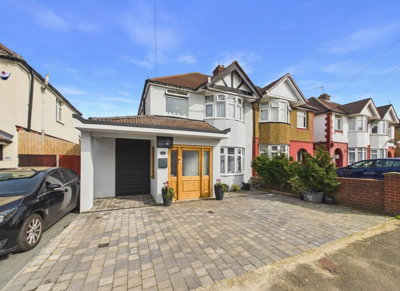
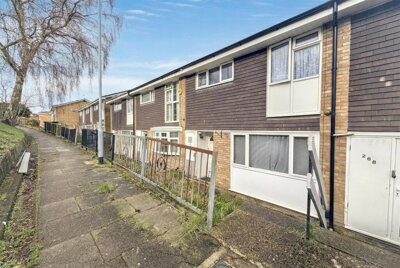
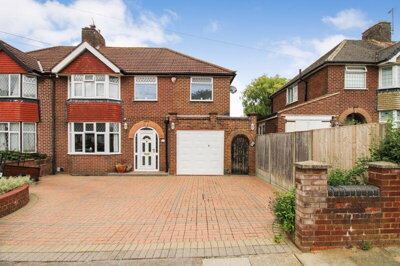
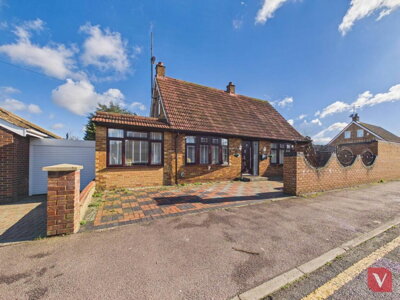
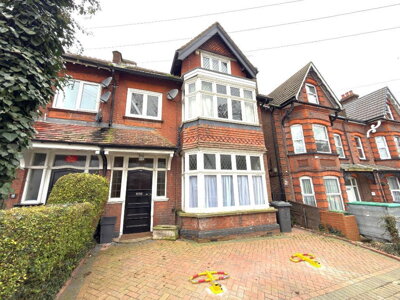
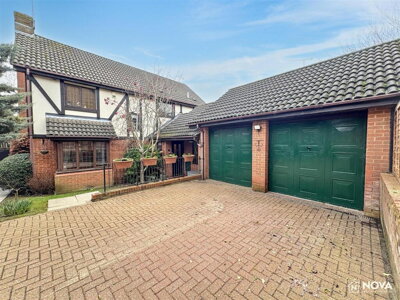
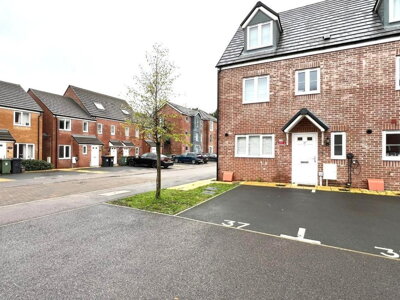
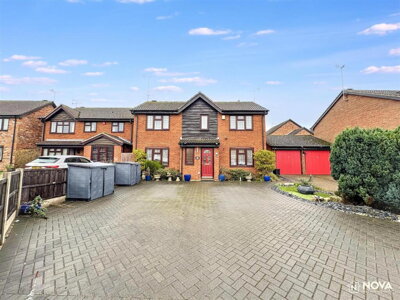
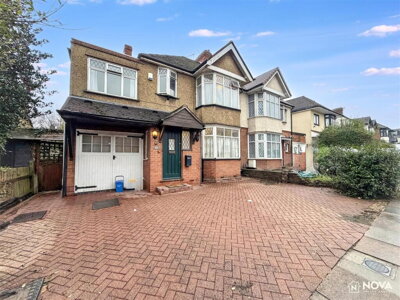
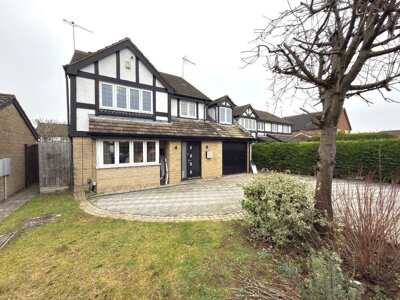
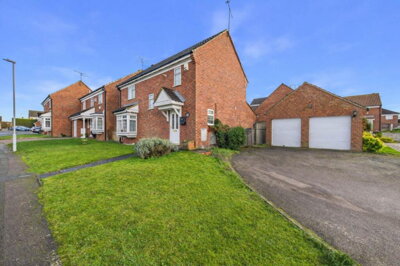
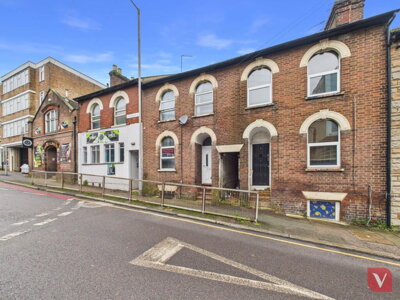
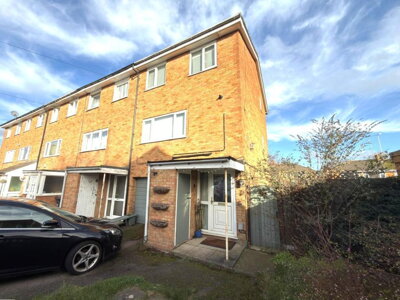
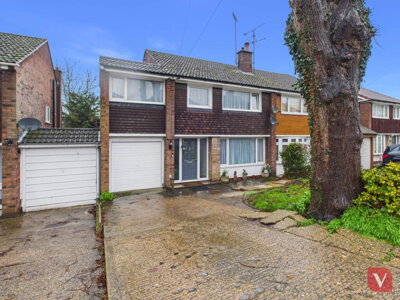
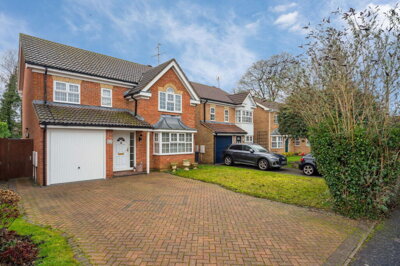
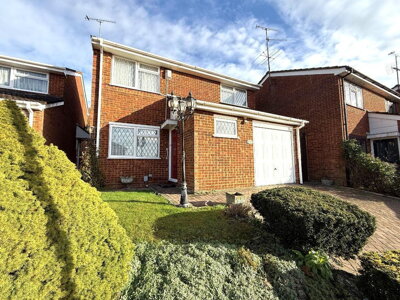
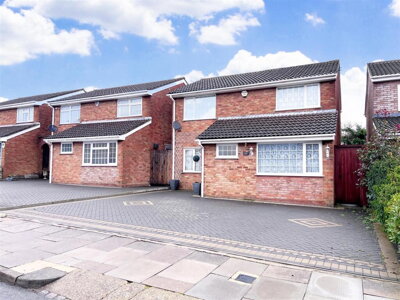
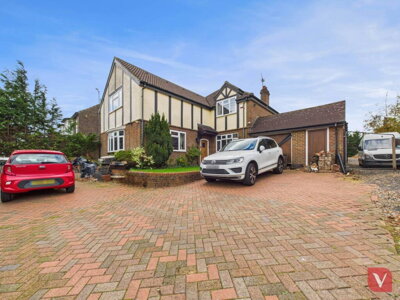
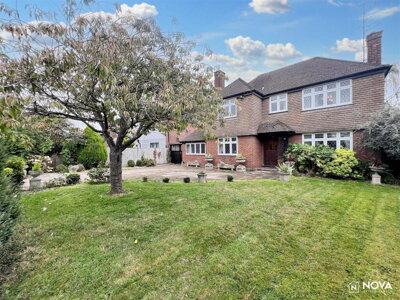
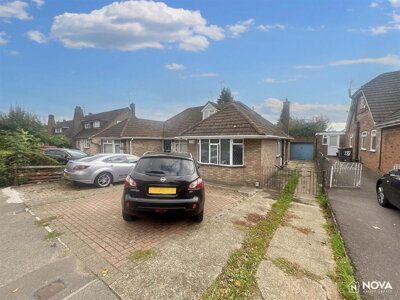
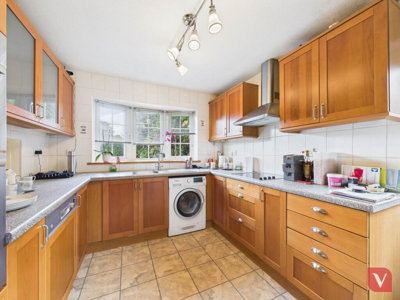
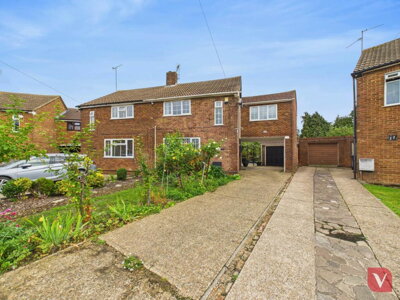
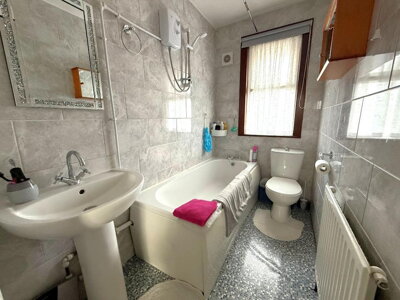
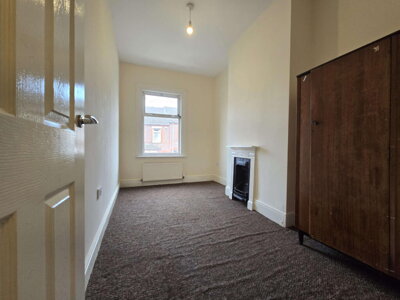
Browse 339 homes for sale in Luton, England from local estate agents.
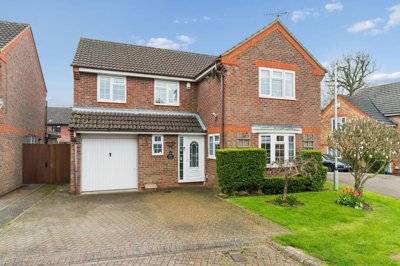
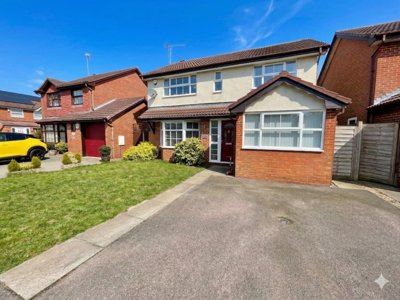
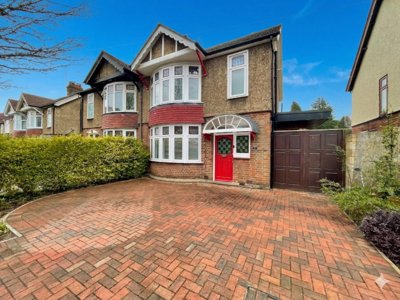
The larger property sector typically features multiple bathrooms, substantial reception space, and private gardens or off-street parking. Four bedroom houses in Luton span detached, semi-detached, and occasionally terraced configurations, with styles ranging from period properties to modern executive homes.
£450k
134
14
125
Source: home.co.uk
Showing 134 results for 4 Bedroom Houses for sale in Luton, England. 14 new listings added this week. The median asking price is £450,000.
Source: home.co.uk
Detached
67 listings
Avg £542,626
Semi-Detached
56 listings
Avg £454,723
Terraced
11 listings
Avg £305,455
Source: home.co.uk
Source: home.co.uk
The Luton property market has demonstrated resilience and steady growth, with Rightmove reporting a 2% increase in average property values over the past year and a 3% rise compared to the 2022 peak. The current average property price sits at approximately £316,940, placing Luton competitively within the broader South East England housing market. Sales volumes remain healthy with 3,745 transactions recorded in the last twelve months, indicating strong buyer demand and a functioning market where properties are changing hands regularly. Property Market Intel data shows prices averaging £340,129 across the postcode area, reflecting variation between different neighbourhoods.
Property types in Luton are distributed across semi-detached houses comprising 36.9% of sales, terraced properties at 28.9%, detached homes at 17.8%, and flats accounting for 16.4% of transactions. This mix provides options across all buyer categories, from investors seeking buy-to-let opportunities in the flat market to families looking for the space and gardens offered by semi-detached and detached properties. The semi-detached market has shown particular strength with prices rising 1.3% year-on-year, while the flat market has experienced modest correction of 3.2% over the same period. Price variations by property type are significant, with detached properties averaging £458,000 to £469,000, semi-detached homes commanding approximately £338,000 to £342,000, terraced properties selling for roughly £280,000 to £296,000, and flats typically ranging from £160,000 to £196,000.
New build activity continues to refresh the housing stock with several major developments actively selling homes across Luton. Barratt Homes offers one and two-bedroom apartments at The Bricks in LU2 7BF starting from £209,995 and reaching up to £284,995 for larger units, alongside three and four-bedroom family homes at Wigmore Park in LU2 8DA priced from £439,995 to £599,995. Crest Nicholson's The Printworks in LU1 3LU provides contemporary city living options from £200,000 to £280,000, while Taylor Wimpey's Kingsland Fields development offers larger three, four, and five-bedroom homes from £430,000 to £600,000. Persimmon Homes' Lewsey Green development completes the new build offering with two, three, and four-bedroom properties ranging from £320,000 to £450,000. These developments represent approximately 5.7% of all sales, adding fresh stock to a market where older properties dominate.

Luton is a town of remarkable diversity and character, shaped by its position at the northern edge of the London Basin and its long history as an industrial and commercial centre. The town centre features the recently regenerated shopping district, while residential areas radiate outwards through neighbourhoods each with their own distinct personality. The High Town conservation area showcases Victorian architecture and independent cafes, whereas areas like Round Green and Stopsley offer more suburban family living with parks and local schools. The LU1 postcode centres on the town centre with its mix of apartments and period properties, while LU2 encompasses the more residential southern areas including Wigmore and Bushmead.
The LU3 and LU4 postcodes cover the northern and western reaches of Luton respectively, offering broader availability of semi-detached and detached family homes at relatively competitive prices. Lewsey Park and Lewsey Green represent significant residential developments in LU4, while Sundon Park and Marsh Farm provide more established communities with good local amenities. The Biscot area in LU2 has seen significant regeneration in recent years, with new housing complementing the traditional terraced stock that characterises this diverse neighbourhood. Wardown Park provides a green heart for the town, with its 143 acres of parkland, formal gardens, and lake drawing visitors from across the region.
The town's economy is anchored by London Luton Airport, one of the UK's major airports handling millions of passengers annually and providing significant employment across aviation, retail, and hospitality sectors. The University of Bedfordshire adds academic prestige and contributes to a youthful, diverse population with approximately 15,000 students. Historical employers including the automotive industry have left their mark on the town's housing stock and infrastructure, with former factory sites now transformed into residential developments. Green spaces are plentiful throughout Luton, with Stockwood Park offering countryside walks and open spaces in the northern reaches, while numerous smaller parks and open spaces serve local communities throughout the residential areas.

Luton offers a comprehensive range of educational options from nursery through to further education, making it an excellent choice for families with children of all ages. Primary education is well-served across the town with numerous Ofsted-rated good and outstanding schools including Icknield Primary School, which serves the High Town area, and Denbigh Primary Academy, which serves the Biscot area. South Ash Primary School and Wenlock CofE Junior School also serve their respective neighbourhoods with strong reputations, while Surrey Street Primary School provides another popular option near the town centre. Parents should research individual school catchments when property hunting, as admission is typically based on proximity and demand frequently exceeds supply in popular areas.
Secondary education in Luton includes several notable schools with strong academic records and excellent facilities. The Luton Sixth Form College provides A-Level education for students from across the town, achieving consistently strong results across a wide range of subjects. Cardinal Newman Catholic School offers faith-based education with excellent facilities and strong community links, while Putteridge High School and Stopsley High School serve their respective neighbourhoods with varying academic specialisms and extracurricular programmes. Other options including Lea Green Academy and The Shared Learning Trust provide alternative educational approaches across different areas of the town. The quality of secondary education varies between schools, making thorough research essential for families prioritising academic outcomes.
Higher education is represented by the University of Bedfordshire, which has its main campus in Luton and offers undergraduate and postgraduate degrees across business, humanities, social sciences, and applied sciences. The university contributes significantly to the local economy and creates demand for student accommodation across the private rental sector, with HMO properties in areas like High Town offering attractive yields for investors. Further education is also available at Barnfield College, providing vocational qualifications and apprenticeships alongside A-Levels for school leavers seeking practical career pathways. This educational infrastructure supports property values in the rental sector while ensuring Luton maintains a skilled local workforce.
Luton's transport connections make it exceptionally well-suited for commuters working in London or other major employment centres, with the M1 motorway running north-south through the eastern edge of the town providing direct access to the capital (approximately 35 miles) and Northampton to the north. The town is particularly well-served by rail, with Thameslink services running from Luton Airport Parkway station to London St Pancras International in approximately 25 minutes, providing direct access to the capital's financial district, tech hub, and extensive Underground network. This fast service makes daily commuting genuinely practical, with many Luton residents working in the City, Canary Wharf, or along the Thameslink corridor in locations like Farringdon, Blackfriars, and Brighton.
Multiple railway stations serve the area, with Luton Airport Parkway providing the fastest connections alongside Luton main station offering additional services through East Midlands Railway to destinations including Bedford, Nottingham, and Sheffield. The bus network operated by Arriva and other providers connects residential areas with the town centre, railway stations, and major employment sites including London Luton Airport. Stagecoach services provide routes throughout the town and to surrounding destinations including Dunstable, Houghton Regis, and Stevenage. The A505 trunk road runs east-west connecting Luton with Dunstable and the M1 at Toddington, while the A6 provides an alternative route south towards Bedford.
London Luton Airport is a major international gateway offering flights to destinations across Europe and beyond, with significant expansion plans underway that will increase passenger capacity in coming years. The airport has undergone significant growth and continues to develop as a hub for low-cost carriers, benefiting local residents who can reach international destinations easily while supporting employment in aviation, logistics, and hospitality sectors. This connectivity adds a measurable premium to property prices in nearby areas, particularly those with good rail connections to the terminal. Areas like LU2 7 benefiting from proximity to the airport while maintaining reasonable commute times represent attractive options for frequent travellers seeking more affordable accommodation than central London.
Contact a mortgage broker to obtain an agreement in principle before viewing properties. This document demonstrates your borrowing capacity to estate agents and sellers, strengthening your offer when competing with other buyers in Luton's active market. Multiple lenders and brokers operate in the area, with high street banks and specialist mortgage advisors available to help you find competitive rates suited to your financial situation and employment status.
Browse current listings on Homemove, attend open viewings, and build your knowledge of different neighbourhoods from High Town to Wigmore, Biscot to Stopsley. Understanding price ranges for property types across different postcodes helps you identify genuine value and avoid overpaying. Research local amenities, school catchments, and transport options to narrow your search to areas that genuinely match your lifestyle requirements.
Once you find your ideal home, arrange a full viewing and, subject to your survey recommendations, submit a formal offer through the estate agent. Be prepared to negotiate on price and terms based on market conditions and property condition. In Luton's varied market, some properties may accept offers below asking price while others in high-demand areas like Wigmore Park may attract competing bids.
Before committing to purchase, book a RICS Level 2 Survey (HomeBuyer Report) with a qualified surveyor. In Luton, these typically cost between £400 and £700 depending on property size and value. The survey identifies defects including damp, structural movement, and any issues related to the local clay geology that affects many properties in the area. Our inspectors know Luton's housing stock intimately and understand the common defect patterns in properties ranging from Victorian terraces to 1970s semis.
Your solicitor handles all legal work including searches, contracts, and land registry documentation. They will check local planning history, flood risk assessments for properties near the River Lea, and any conservation area restrictions that may affect properties in areas like High Town, Old Bedford Road, or Wardown Park. Solicitors in Luton typically charge between £499 and £1,500 for conveyancing depending on transaction complexity.
Once all searches are satisfactory and your mortgage is approved, you exchange contracts and pay your deposit. Completion typically follows within 2-4 weeks, when you receive your keys and take ownership of your new Luton home. Your solicitor will coordinate with the estate agent to arrange the final handover and ensure all documentation is properly completed.
Understanding the construction methods common in Luton's housing stock helps buyers appreciate potential property issues and maintenance requirements. The predominant building material throughout Luton is brick, with traditional red brick construction visible across Victorian terraces in High Town through to 1970s housing estates in Lewsey and Sundon Park. Properties built from the early 20th century onwards typically feature cavity wall construction, where two brick leaves with a gap between provide improved insulation and moisture resistance compared to the solid walls of earlier properties. Our inspectors regularly examine Luton properties and are familiar with how these construction methods perform in local conditions.
The underlying geology of Luton plays a significant role in property conditions across the town. Situated on the northern edge of the London Basin, the area features chalk bedrock often overlain by deposits of London Clay and other tertiary sediments. Clay soils are prone to shrink-swell behaviour during periods of extreme wet or dry weather, which can cause subsidence or heave affecting properties with shallow foundations or large trees nearby. This geological setting means our inspectors pay particular attention to foundation conditions, crack patterns, and signs of ground movement when surveying properties throughout Luton, from period homes in conservation areas to newer developments.
Timber roofs with slate or tile coverings are common throughout Luton's housing stock, with older properties featuring traditional timber roof structures that may show signs of deterioration, woodworm, or rot if maintenance has been neglected. Many Luton properties also feature traditional timber sash or casement windows, particularly in Victorian and Edwardian properties in areas like High Town and Wardown Park. These features add character but require regular maintenance including painting and draft-proofing. Our team understands these construction characteristics and will identify any defects or maintenance concerns during your survey.
Property buyers in Luton should be aware of several local factors that can affect their purchase, with the local geology presenting particular considerations that differ from many other areas. Luton sits on chalk bedrock overlaid with London Clay deposits that are prone to shrink-swell behaviour during extreme weather conditions. This can cause subsidence or heave affecting properties with shallow foundations or large trees nearby, particularly in areas where clay soils dominate. A thorough survey is essential, particularly for older properties where foundation depth may be less than modern standards require, and our inspectors have extensive experience identifying these issues across Luton's diverse housing stock.
Flood risk varies across different areas of Luton and requires specific investigation before purchase. Properties near the River Lea and its tributaries face river flooding potential, especially in areas downstream of the town centre where the river corridor passes through urbanised zones. Urbanised areas with constrained drainage can experience surface water flooding during heavy rainfall, a risk that has increased in recent years due to climate change and increased development intensity. The Environment Agency provides flood risk maps that should be consulted, and buyers should review any flood history for the specific property and surrounding streets. Properties in the LU3 and LU4 postcodes may face different flood risk profiles depending on proximity to watercourses and local topography.
Conservation areas in Luton include Old Bedford Road, Wardown Park, High Town, and the town centre, each with their own planning restrictions designed to preserve architectural character and neighbourhood quality. Properties in these areas may face stricter rules on extensions, alterations, and exterior changes, affecting both renovation plans and maintenance costs. Listed buildings including Luton Hoo Mansion House require specialist surveys and may have additional maintenance obligations that standard surveys may not fully address. The High Town conservation area in particular features many Victorian properties with original features that buyers should carefully assess for condition and maintenance requirements.
The average house price in Luton currently sits at approximately £316,940 according to Rightmove data for the district, though figures vary by source with Property Market Intel reporting £340,129 for the postcode area and Plumplot showing £306,000 for the city centre specifically. Detached properties average around £458,000 to £469,000 depending on location and specification, semi-detached homes command approximately £338,000 to £342,000, terraced properties sell for roughly £280,000 to £296,000, and flats typically range from £160,000 to £196,000. Prices have shown 2% growth over the past year according to Rightmove, with the market showing particular strength in semi-detached properties which rose 1.3%, while flats experienced a modest 3.2% correction.
Properties in Luton fall within Luton Borough Council's jurisdiction and are assigned council tax bands A through H depending on property value at the time of valuation. Band A properties (the lowest value homes) pay around £1,200 to £1,400 annually, while Band H properties (the highest value homes) pay approximately £2,400 to £2,600 per year. Exact figures should be confirmed with Luton Borough Council when considering a specific property, as renovations or extensions can affect banding and previous band histories may indicate changes to the property that warrant investigation. Properties in different postcodes from LU1 to LU4 will be distributed across these bands based on their assessed values.
Luton offers several highly-regarded schools including Icknield Primary School, Denbigh Primary Academy, and South Ash Primary School at primary level, all serving different neighbourhoods across the town. Secondary options include Cardinal Newman Catholic School which offers faith-based education, Luton Sixth Form College for A-Levels, and Putteridge High School serving families in the LU2 postcode area. The quality of secondary education varies between schools and changes over time, so parents should consult current Ofsted ratings and admission catchment boundaries when considering properties for families with children, as these catchments can significantly affect which schools your child will qualify for.
Luton benefits from excellent transport connections including Thameslink rail services from Luton Airport Parkway to London St Pancras in approximately 25 minutes, with direct access to the City, Canary Wharf, and Thameslink corridor destinations. The town is served by multiple bus routes including Arriva services connecting residential areas with the town centre, railway stations, and London Luton Airport. The M1 motorway provides road access to London and the north, while the A505 and A6 connect Luton with surrounding towns. These connections make Luton particularly attractive to commuters seeking more affordable housing than central London while maintaining practical access to major employment centres.
Luton offers several investment considerations including relatively affordable entry prices compared to Greater London and surrounding areas in the South East, strong rental demand driven by commuters, airport workers, and the University of Bedfordshire student population. Steady price growth of around 2-3% annually has been recorded, with the rental market showing consistent demand across all property types. The university creates consistent demand for student accommodation in areas like High Town and near the campus, where HMO properties can achieve attractive yields. However, investors should research specific neighbourhoods carefully, as rental yields and tenant demand vary significantly between postcodes and property types, with newer developments potentially offering different investment profiles to traditional terraced stock.
Stamp Duty Land Tax rates for standard buyers start at 0% on properties up to £250,000, then 5% on the portion from £250,001 to £925,000, meaning a typical Luton property at £316,940 would attract approximately £3,347 in stamp duty after the nil-rate threshold. Properties priced between £925,001 and £1.5 million pay 10% above that threshold, with 12% applying to values exceeding £1.5 million. First-time buyers purchasing properties up to £425,000 qualify for relief on that amount, meaning no stamp duty is payable on purchases up to £425,000, with 5% applying between £425,001 and £625,000. At the average Luton price of £316,940, most first-time buyers would pay no stamp duty whatsoever, making Luton particularly attractive for those entering the property market.
Different areas of Luton offer distinct advantages depending on your priorities and budget. The LU1 postcode around the town centre offers apartments and period properties with good transport links and amenities, while LU2 including Wigmore and Bushmead provides family housing and newer developments with good schools nearby. LU3 covers the northern areas around Stopsley and Wigmore with semi-detached family homes and good green spaces, while LU4 in the west includes Lewsey Green and Sundon Park offering more affordable options for families. High Town conservation area provides character properties with Victorian architecture, while newer developments like The Printworks offer contemporary city living. Researching specific postcodes and neighbourhoods against your priorities for schools, transport, and amenities will help identify the best area for your circumstances.
From 4.5% APR
Compare mortgage rates from leading lenders
From £499
Expert solicitors to handle your property purchase
From £400
Professional survey identifying defects before purchase
From £80
Energy performance certificate for your new home
Understanding the full costs of buying a property in Luton helps you budget accurately and avoid surprises during the transaction. Beyond the property price, buyers should budget for Stamp Duty Land Tax, solicitor fees, survey costs, and moving expenses. For a typical Luton property at the current average price of approximately £316,940, a standard buyer without first-time buyer status would pay stamp duty on the amount above £250,000, which calculates to approximately £3,347. This represents a significant cost that should be factored into your overall budget alongside deposit and mortgage arrangement fees.
First-time buyers purchasing properties up to £425,000 qualify for relief on that amount, meaning no stamp duty is payable on the first £425,000 of a purchase. For properties above £425,000, first-time buyer relief applies to the first £425,000 only, with 5% stamp duty due on the portion between £425,001 and £625,000. Properties priced above £625,000 do not qualify for any first-time buyer relief. At the average Luton price of £316,940, most first-time buyers would pay no stamp duty whatsoever, representing meaningful savings that can contribute to moving costs or furniture budgets.
Solicitors in Luton typically charge between £499 and £1,500 for conveyancing depending on the complexity of the transaction, property value, and whether the property is freehold or leasehold. Additional costs include local authority searches (approximately £250 to £400), bankruptcy checks (£20 to £50), and land registry fees. Survey costs for a RICS Level 2 HomeBuyer Report in Luton range from £400 to £700 depending on property size, with larger or more complex properties attracting higher fees. Moving costs vary based on distance and volume of belongings but typically range from £500 to £2,000 for local moves within the Luton area.
Properties for Sale In London

Properties for Sale In Plymouth

Properties for Sale In Liverpool

Properties for Sale In Glasgow

Properties for Sale In Sheffield

Properties for Sale In Edinburgh

Properties for Sale In Coventry

Properties for Sale In Bradford

Properties for Sale In Manchester

Properties for Sale In Birmingham

Properties for Sale In Bristol

Properties for Sale In Oxford

Properties for Sale In Leicester

Properties for Sale In Newcastle

Properties for Sale In Leeds

Properties for Sale In Southampton

Properties for Sale In Cardiff

Properties for Sale In Nottingham

Properties for Sale In Norwich

Properties for Sale In Brighton

Properties for Sale In Derby

Properties for Sale In Portsmouth

Properties for Sale In Northampton

Properties for Sale In Milton Keynes

Properties for Sale In Bournemouth

Properties for Sale In Bolton

Properties for Sale In Swansea

Properties for Sale In Swindon

Properties for Sale In Peterborough

Properties for Sale In Wolverhampton

Enter your details to see if this property is within your budget.
Loans, cards, car finance
Estimated property budget
Borrowing + deposit
You could borrow between
Typical borrowing
Monthly repayment
Est. at 4.5%
Loan-to-value
This is an estimate only. Your actual budget may vary depending on interest rates, credit history, and personal circumstances. For an accurate affordability assessment, speak to one of our free mortgage advisors.
This calculator provides estimates for illustrative purposes only and does not constitute financial advice. Your home may be repossessed if you do not keep up repayments on your mortgage. Estimates based on 4.5% interest rate, repayment mortgage. Actual rates depend on your circumstances.
Homemove is a trading name of HM Haus Group Ltd (Company No. 13873779, registered in England & Wales). Homemove Mortgages Ltd (Company No. 15947693) is an Appointed Representative of TMG Direct Limited, trading as TMG Mortgage Network, which is authorised and regulated by the Financial Conduct Authority (FRN 786245). Homemove Mortgages Ltd is entered on the FCA Register as an Appointed Representative (FRN 1022429). You can check registrations at NewRegister or by calling 0800 111 6768.

We use cookies to show you personalised content and improve your experience of our website. Find out more in our Privacy policy and Cookie policy.