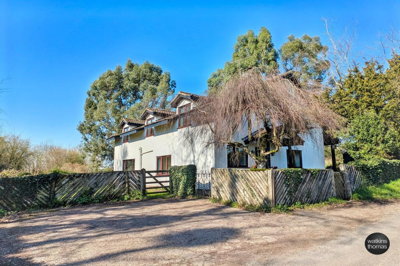
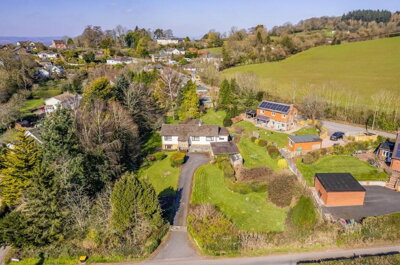
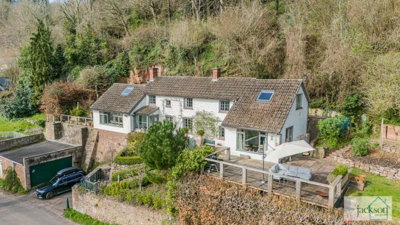
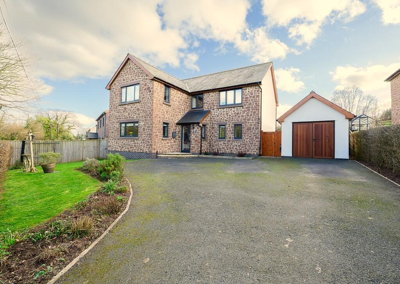
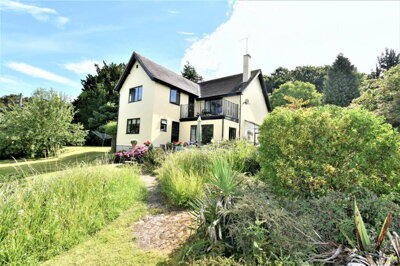
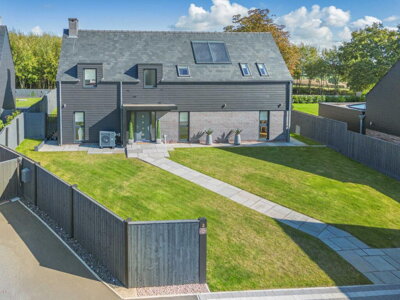
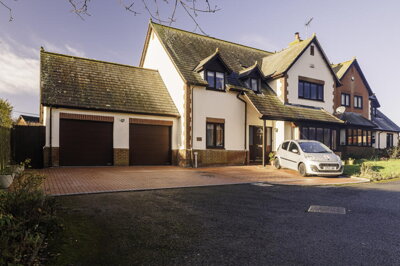
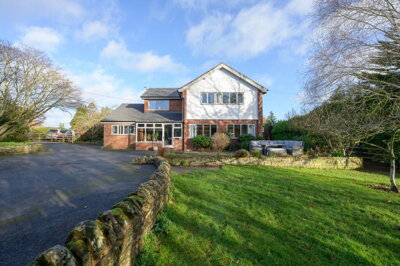
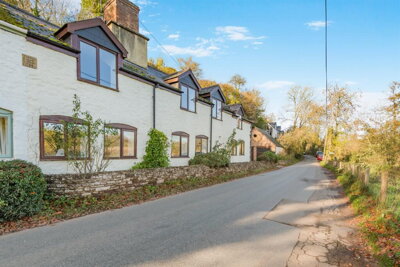
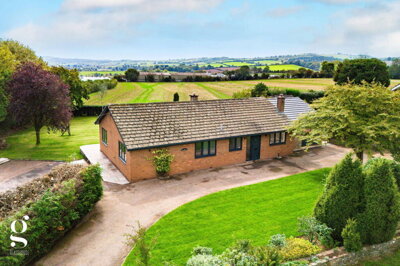
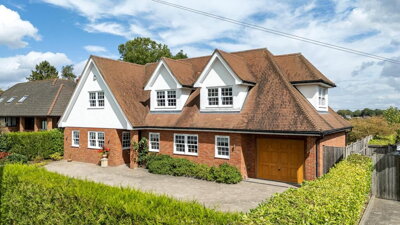
Browse 11 homes for sale in Little Birch from local estate agents.
The larger property sector typically features multiple bathrooms, substantial reception space, and private gardens or off-street parking. Four bedroom houses in Little Birch span detached, semi-detached, and occasionally terraced configurations, with styles ranging from period properties to modern executive homes.
The Little Birch property market is characterised by its predominance of detached family homes, which account for approximately 55% of the local housing stock. Detached properties command an average price of £550,000, with premium examples featuring generous plots, traditional stone or brick construction, and period features such as exposed beams and original fireplaces. The strong demand for detached homes reflects buyer preferences for space and privacy, particularly among families seeking room to grow and home workers requiring dedicated office space.
Semi-detached properties in Little Birch average £320,000, representing a more accessible entry point to the local market while still offering the benefits of this sought-after rural parish. These homes typically feature two to three bedrooms, making them suitable for first-time buyers, couples, or smaller families. Terraced properties average £250,000, with flats available from around £180,000. The market has shown consistent growth, with detached homes increasing by 4.2% year-on-year and semi-detached properties rising by 2.8%, indicating sustained confidence in the Little Birch area.
The property age distribution in the HR2 8 postcode area reveals that approximately 30% of homes were built before 1919, featuring solid wall construction with lime mortar and timber floors. A further 15% date from the inter-war period 1919-1945, while 30% were constructed between 1945 and 1980, often incorporating cavity wall construction. Properties built during these earlier periods frequently require different maintenance approaches compared to modern buildings, and prospective buyers should factor potential renovation costs into their budget when considering older stock.

Traditional properties in Little Birch reflect the local geology and available building materials, with older farmhouses and cottages typically constructed from local sandstone or limestone brought from nearby quarries. These pre-1919 properties feature solid walls without cavity insulation, timber floor joists, and slate or clay tile roofs that require regular maintenance and occasional replacement. The use of lime mortar in these buildings allows the structure to breathe, and modern cement-based pointing can actually cause damage by trapping moisture within the walls. Understanding these construction methods is essential for any buyer considering a period property in the parish.
Properties built between 1945 and 1980 brought different construction techniques to the area, with cavity wall construction becoming standard for new housing. These mid-century homes typically feature brick or block with a brick outer leaf, concrete ground floors, and timber roof structures. Electrical and plumbing systems in properties from this era often require updating to meet current standards, as wiring installed in the 1960s and 1970s may not be suitable for modern demands. The clay-rich soils underlying much of the parish create a moderate to high shrink-swell risk, meaning that foundations on properties built before modern standards may show signs of movement over time.
Several properties in the parish carry Grade II listing, including The Old Rectory and elements of Little Birch Court, which impose restrictions on alterations and require sympathetic maintenance approaches. Listed building ownership brings additional considerations, including the need for planning permission for certain works and the requirement to use appropriate materials and techniques for any repairs or modifications. Buildings insurance for listed properties typically costs more than standard cover, and specialist contractors may be required for works affecting historic fabric.

Life in Little Birch revolves around the rhythms of rural Herefordshire, where agricultural traditions remain woven into the fabric of daily existence. The parish has a population of approximately 350 residents spread across about 150 households, creating an intimate community where neighbours often know one another by name. The proximity to Hereford, just six miles away, ensures that rural serenity does not come at the cost of urban convenience, with residents able to access the full range of city amenities while returning to a peaceful home environment.
The surrounding landscape consists of gentle hills and valleys formed on Old Red Sandstone bedrock, with clay-rich soils supporting productive farmland and mature hedgerows that provide important habitats for local wildlife. The parish contains several Grade II listed buildings, including The Old Rectory and elements of Little Birch Court, which lend historical character to the area. A network of public footpaths and bridleways crisscrosses the parish, offering residents excellent opportunities for walking, cycling, and enjoying the natural beauty of Herefordshire countryside. The Herefordshire Trail, a long-distance walking route, passes through the region, providing access to the broader countryside beyond the immediate parish boundaries.
The county city of Hereford itself offers extensive amenities including a comprehensive hospital, multiple secondary schools, shopping centres, restaurants, and cultural attractions such as Hereford Cathedral and the famous Mappa Mundi. For residents of Little Birch, these facilities are within a comfortable 20-minute drive, making regular visits entirely practical. The city also hosts regular farmers markets and cultural events that draw visitors from across the region, contributing to a vibrant local economy that complements the rural character of surrounding parishes.
Families considering a move to Little Birch will find a range of educational options available within easy driving distance. The parish falls within the catchment area for several well-regarded primary schools in the surrounding villages and towns, with many small rural schools providing excellent small-class teaching environments. The emphasis on community education in this part of Herefordshire means that local primary schools often benefit from strong parental involvement and above-average inspection outcomes. Parents should verify current catchment boundaries and admission arrangements with Herefordshire Council, as these can influence school allocations.
Secondary education options in the area include comprehensive schools in Hereford and the surrounding market towns, with some families choosing independent schooling options available in the county city. The Hereford Cathedral School and King Edward VI School both provide established secondary and sixth form provision within Hereford itself. For families prioritising educational opportunities, the presence of quality schools within reasonable travelling distance represents a significant factor in the area's appeal to buyers with children.
The small population of Little Birch means that the parish does not support its own primary school, though this is typical of rural parishes in Herefordshire where village schools serve multiple communities. Transport arrangements for schoolchildren are coordinated through Herefordshire Council, with bus services operating between outlying villages and schools in the wider area. Parents considering properties in Little Birch should investigate current school allocations and transport arrangements before committing to a purchase, particularly if they have children of school age.
Transport connections from Little Birch centre primarily on road travel, with the A49 providing the main arterial route connecting Hereford to the wider road network. The A49 runs north-south through Hereford, linking the city to Shrewsbury to the north and Worcester and the M5 motorway to the east. The A465 Heads of the Valleys road provides connections to South Wales to the west via Brecon and Abergavenny. For residents commuting to Hereford, the journey takes approximately 15-20 minutes by car, making day-to-day travel highly manageable despite the rural setting.
Public transport options are more limited, reflecting the parish's rural nature. Bus services connect Little Birch to Hereford, though frequencies are reduced compared to urban routes. The nearest bus stops are located within the parish itself, with services running to Hereford's bus station where connections to other destinations can be made. Hereford railway station provides connections to major cities, with direct trains to Birmingham, Cardiff, and London Paddington via the West Coast Main Line. Journey times to London Paddington typically take around three hours, making occasional business trips or leisure visits entirely feasible.
For those working in Hereford, the car remains the most practical option for daily commuting, though many residents appreciate the opportunity to work from home where their employment permits. The rise of remote working has been particularly beneficial for rural areas like Little Birch, allowing residents to enjoy the quality of life benefits of countryside living without sacrificing career opportunities. Cycle commuting to Hereford is feasible for the more energetic, with scenic routes available along quieter country lanes and the dedicated cycle paths that have been developed on some of the busier roads.
Explore current listings on Homemove to understand available properties, price ranges, and market trends in Little Birch. Given the limited stock typical of rural parishes, staying informed about new listings and acting promptly when suitable properties appear is advisable. The 28 homes currently listed represents a typical level of stock for this area, so being prepared to move quickly when the right property becomes available can make the difference between success and disappointment.
Once you have identified properties of interest, arrange viewings through the estate agents listed on Homemove. For older properties, pay particular attention to construction type, roof condition, and any signs of damp or structural movement that may indicate underlying issues. Given that approximately 75% of properties in Little Birch were built before 1980, most homes you view will fall into the older category requiring careful inspection.
Contact a mortgage broker to obtain an agreement in principle before making an offer. This strengthens your position as a buyer and demonstrates to sellers that you have financing in place. With average property prices around £420,000, most buyers will require a mortgage, and having your financial position clearly established can help streamline the purchase process considerably.
Given that approximately 75% of properties in Little Birch were built before 1980, a Level 2 Survey is essential for identifying defects common to older properties. Local survey costs range from £500-£900 depending on property size and type, with typical 3-bedroom semi-detached homes costing £500-£700 and larger 4-bedroom detached properties ranging from £650-£900.
Appoint a conveyancing solicitor to handle the legal aspects of your purchase. They will conduct searches with Herefordshire Council, handle contracts, and coordinate with the Land Registry to transfer ownership. Local searches typically include drainage and environmental searches relevant to the specific location within Herefordshire.
Once all searches are satisfactory and contracts are signed, your solicitor will coordinate the exchange of contracts and set a completion date. On completion day, you will receive the keys to your new home in Little Birch. The final steps of the conveyancing process typically take 2-4 weeks from agreed terms to completion, though this can vary depending on chain dynamics and any complications that arise.
Properties in Little Birch present several considerations specific to the local area that buyers should investigate carefully before committing to a purchase. The presence of clay-rich soils underlying much of the parish creates a moderate to high shrink-swell risk, meaning that properties with large trees nearby or those built on expansive clay may show signs of subsidence or heave. A thorough survey should assess foundation condition and look for cracks, sticking doors, or other indicators of ground movement. This is particularly important for older properties built before modern foundation standards were established.
Surface water flooding represents a localised risk in parts of Little Birch, especially during periods of heavy rainfall when drainage infrastructure may be overwhelmed. The superficial deposits in the area include glacial till, river terrace deposits, and alluvium near watercourses, which can affect drainage patterns. Prospective buyers should check the Environment Agency flood risk maps and consider the specific topography of any property under consideration, particularly those in lower-lying positions or near smaller watercourses that run through the parish.
The majority of the housing stock is traditional construction, with pre-1919 properties featuring solid walls, lime mortar, and timber floors that require different maintenance approaches compared to modern buildings. Electrical and plumbing systems in older properties may require updating to meet current standards, so budget accordingly for potential renovation costs. Common defects identified in local surveys include damp issues due to age or lack of modern damp-proof courses, roof wear with slipped tiles or failing leadwork, timber defects such as woodworm and wet or dry rot, and outdated electrical systems that may not cope with modern demands.
Several properties in the parish carry Grade II listing, which imposes restrictions on alterations and requires sympathetic maintenance approaches. If you are considering a listed property, factor in the additional costs and planning considerations associated with historic building ownership. Buildings insurance for listed properties can also be more expensive, and specialist contractors may be required for certain works. Standard mortgage valuations may not adequately address the condition of older or listed properties, making a comprehensive survey essential.
The average house price in Little Birch stands at £420,000 based on sales data for the HR2 8 postcode area over the past twelve months. Detached properties average £550,000, semi-detached homes command around £320,000, and terraced properties typically sell for approximately £250,000. Property values have shown consistent growth, with the overall market increasing by 3.5% year-on-year and detached properties rising by 4.2%, indicating sustained buyer confidence in the Little Birch area.
Properties in Little Birch fall under Herefordshire Council administration, with council tax bands ranging from A to H depending on property value as assessed by the Valuation Office Agency. Most family homes in the parish, including traditional three-bedroom houses and smaller period properties, fall within bands C to E. Prospective buyers should check the specific band for any property they are considering, as this affects annual council tax payments. Herefordshire Council maintains up-to-date records accessible through their website or the Valuation Office Agency online portal.
Little Birch falls within the Herefordshire local education authority, with several well-regarded primary schools available in surrounding villages such as Woolhope and Mordiford. The rural primary schools in this area often achieve good inspection results from Ofsted, with small class sizes providing individual attention for students. Secondary education is available at schools in Hereford including the Hereford Cathedral School and King Edward VI School, with sixth form options for older students. Parents should verify current admission policies, catchment areas, and consider visiting schools directly when choosing an area for their family.
Public transport options in Little Birch are limited, reflecting its rural character and the fact that the parish has a population of approximately 350 residents. Bus services connect the parish to Hereford, though frequencies are lower than in urban areas with services typically running every couple of hours on weekdays. Hereford railway station provides mainline connections to Birmingham, Cardiff, and London Paddington, with regular services throughout the day and journey times to London of around three hours. Most residents rely on car travel for daily commuting and shopping, though the short distance to Hereford (approximately six miles) makes occasional trips to the city straightforward.
Little Birch offers several factors that appeal to property investors and buyers seeking long-term value, including proximity to Hereford and strong connections to surrounding areas via the A49. The area's rural character and quality schools help maintain demand for local properties, while the consistent price growth of 3.5-4.2% annually demonstrates sustained market confidence. However, the small size of the parish and limited property turnover means that investment decisions should consider factors beyond capital appreciation, such as rental demand from those working in Hereford and the costs associated with maintaining older properties built before modern construction standards.
Stamp duty Land Tax rates from April 2025 onwards are 0% on the first £250,000 of property value, 5% on the portion from £250,001 to £925,000, 10% on the portion from £925,001 to £1,500,000, and 12% on any amount above £1,500,000. First-time buyers may qualify for relief on properties up to £625,000, paying 0% on the first £425,000 and 5% on the amount between £425,001 and £625,000. Given average prices in Little Birch are around £420,000, most buyers would pay no stamp duty or a minimal amount, making this an attractive feature for those purchasing at typical price points.
Little Birch has a low risk of flooding from major rivers as it is not directly on a large river system, though smaller watercourses and brooks run through the parish. Surface water flooding represents a more significant concern in certain areas, particularly during periods of heavy rainfall when local drainage infrastructure may be overwhelmed. Properties in lower-lying positions or those near watercourses should be carefully assessed, and prospective buyers can check the Environment Agency flood risk maps for specific locations. Buildings insurance costs may be affected by flood risk assessments, and this should be factored into overall running costs when budgeting for a purchase.
The housing stock in Little Birch predominantly consists of detached family homes, which account for approximately 55% of available properties. The remaining stock is split between semi-detached properties at around 25%, terraced homes at approximately 10%, and flats making up the final 10%. Property ages vary significantly, with about 30% built before 1919 featuring traditional solid wall construction, 15% from the inter-war period, 30% constructed between 1945 and 1980, and 25% of more recent construction. This variety means buyers can find everything from period farmhouses and cottages to mid-century family homes and more modern detached properties.
From 4.5%
Finding the right mortgage for your Little Birch property purchase
From £499
Legal services for your property purchase in Little Birch
From £500
Essential survey for older properties in Little Birch
From £85
Energy performance certificate for Little Birch properties
When purchasing a property in Little Birch, understanding the full spectrum of costs beyond the purchase price is essential for budgeting effectively. For properties at the current average price of £420,000, most buyers purchasing with a mortgage would not pay any stamp duty Land Tax on the first £250,000, which is taxed at 0%. The remaining £170,000 would attract a 5% charge, resulting in a stamp duty bill of £8,500. However, first-time buyers purchasing properties up to £625,000 would pay no duty on the first £425,000, meaning a typical first-time buyer purchase in Little Birch could result in minimal or no stamp duty.
Beyond stamp duty, buyers should budget for solicitor conveyancing costs, which typically range from £500 to £1,500 depending on the complexity of the transaction and whether the property is freehold or leasehold. Local searches with Herefordshire Council generally cost between £250 and £400, while additional drainage and environmental searches may add another £100-200. Survey costs for a RICS Level 2 Homebuyer Report range from £500 to £900 for typical properties in Little Birch, with larger detached homes at the higher end of this range. Given that 75% of properties in the area were built before 1980, a professional survey is particularly valuable for identifying defects common to older construction.
Moving costs, including removal services, should also be factored into your budget. For a household moving from within Herefordshire or the surrounding region, professional removal services typically cost between £500 and £1,500 depending on distance and volume of belongings. Buildings insurance should be arranged before completion, with annual premiums for properties in Little Birch typically ranging from £300 to £800 depending on property value, construction type, and the level of cover selected. Setting aside a contingency fund of around 5-10% of the purchase price for unexpected costs is advisable, particularly for older properties that may reveal hidden defects once you move in.
Properties for Sale In London

Properties for Sale In Plymouth

Properties for Sale In Liverpool

Properties for Sale In Glasgow

Properties for Sale In Sheffield

Properties for Sale In Edinburgh

Properties for Sale In Coventry

Properties for Sale In Bradford

Properties for Sale In Manchester

Properties for Sale In Birmingham

Properties for Sale In Bristol

Properties for Sale In Oxford

Properties for Sale In Leicester

Properties for Sale In Newcastle

Properties for Sale In Leeds

Properties for Sale In Southampton

Properties for Sale In Cardiff

Properties for Sale In Nottingham

Properties for Sale In Norwich

Properties for Sale In Brighton

Properties for Sale In Derby

Properties for Sale In Portsmouth

Properties for Sale In Northampton

Properties for Sale In Milton Keynes

Properties for Sale In Bournemouth

Properties for Sale In Bolton

Properties for Sale In Swansea

Properties for Sale In Swindon

Properties for Sale In Peterborough

Properties for Sale In Wolverhampton

Enter your details to see if this property is within your budget.
Loans, cards, car finance
Estimated property budget
Borrowing + deposit
You could borrow between
Typical borrowing
Monthly repayment
Est. at 4.5%
Loan-to-value
This is an estimate only. Your actual budget may vary depending on interest rates, credit history, and personal circumstances. For an accurate affordability assessment, speak to one of our free mortgage advisors.
This calculator provides estimates for illustrative purposes only and does not constitute financial advice. Your home may be repossessed if you do not keep up repayments on your mortgage. Estimates based on 4.5% interest rate, repayment mortgage. Actual rates depend on your circumstances.
Homemove is a trading name of HM Haus Group Ltd (Company No. 13873779, registered in England & Wales). Homemove Mortgages Ltd (Company No. 15947693) is an Appointed Representative of TMG Direct Limited, trading as TMG Mortgage Network, which is authorised and regulated by the Financial Conduct Authority (FRN 786245). Homemove Mortgages Ltd is entered on the FCA Register as an Appointed Representative (FRN 1022429). You can check registrations at NewRegister or by calling 0800 111 6768.

We use cookies to show you personalised content and improve your experience of our website. Find out more in our Privacy policy and Cookie policy.