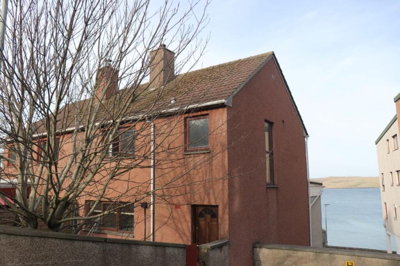
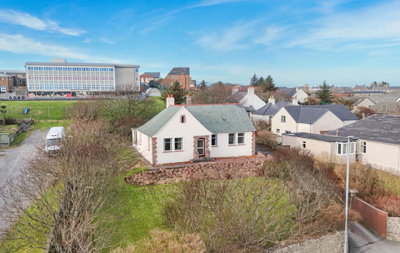
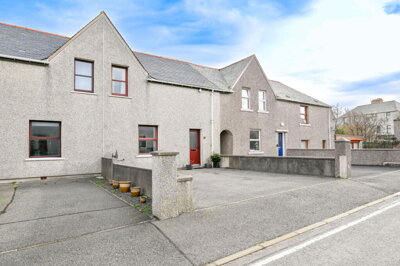
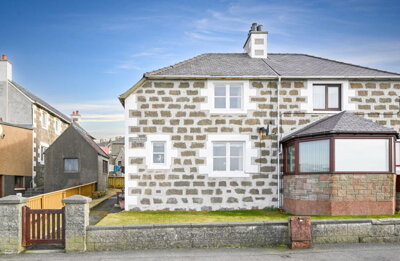
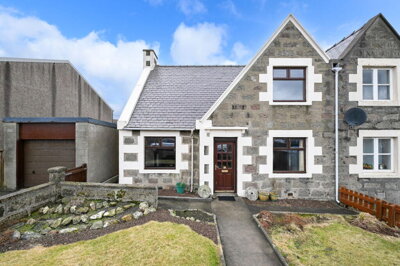
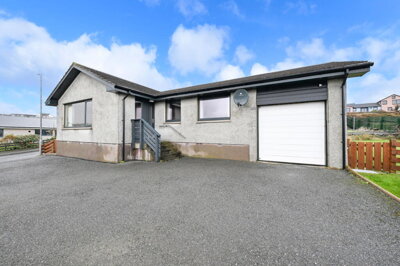
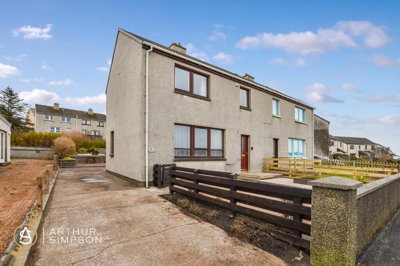
Browse 8 homes for sale in Lerwick, Shetland Islands from local estate agents.
Three bedroom properties represent a significant portion of the Lerwick housing market, offering space for families with multiple reception rooms and gardens in many cases. Browse detached, semi-detached, and terraced options ranging from period character homes to contemporary developments.
£195k
3
2
14
Source: home.co.uk
Showing 3 results for 3 Bedroom Houses for sale in Lerwick, Shetland Islands. 2 new listings added this week. The median asking price is £195,000.
Source: home.co.uk
Semi-Detached
3 listings
Avg £183,333
Source: home.co.uk
Source: home.co.uk
The Lerwick property market has demonstrated notable stability over recent years, with average prices hovering around the £205,000 mark according to multiple data sources. Rightmove records an average price of £203,931, while Zoopla reports £218,527 and OnTheMarket indicates £205,000 for properties sold over the last twelve months. This consistency across platforms suggests a mature market where properties are priced realistically according to local conditions, rather than experiencing the volatile swings seen in mainland urban areas. For buyers seeking value relative to space and quality of life, Lerwick presents a compelling proposition that compares favourably with many Scottish towns.
Breaking down by property type reveals clear pricing tiers within the Lerwick market. Detached properties command the highest prices at approximately £260,798, reflecting the desirability of generous gardens and privacy in this coastal environment. Semi-detached homes offer excellent value at £197,176 to £203,217, representing the most commonly sold property type in the area. Terraced properties range from £203,536 to £225,854, while flats provide the most accessible entry point at £149,343 to £171,679. The twelve-month price trend shows a modest correction of around 4% from previous highs, with the market sitting approximately 2% below the 2022 peak of £208,283. This healthy adjustment has created opportunities for buyers who missed previous buying cycles to enter the market at more realistic valuations.
The housing stock across Lerwick reflects centuries of adaptation to Shetland's demanding environment. Traditional stone properties, many featuring the distinctive harled rendering that protects against persistent Atlantic weather, predominate throughout the historic town centre. These solid-walled constructions offer excellent thermal mass and remarkable durability when properly maintained. Modern developments have introduced contemporary construction methods including cavity wall insulation, but the character of Lerwick's residential areas remains defined by traditional architecture. The mix of old and new creates a varied property landscape where buyers can choose between the charm of period homes and the convenience of recently constructed properties.

Lerwick offers an exceptional quality of life shaped by its dramatic coastal setting and strong community spirit. The town centres around the historic waterfront, where colourful traditional buildings line the harbour and ferries depart for outlying islands. Victorian architecture meets modern development along the main commercial streets, creating a townscape that tells the story of Shetland's evolution from a fishing port to a sophisticated island capital. Residents enjoy comprehensive shopping facilities, including national chains alongside independent retailers specialising in local crafts, fresh seafood, and traditional Shetland produce. The town's restaurant scene has flourished in recent years, with eateries showcasing the exceptional quality of locally caught fish, shellfish, and premium Shetland beef.
The cultural fabric of Lerwick enriches daily life with year-round events and attractions. The Shetland Museum and Archives provides comprehensive insights into the islands' Norse heritage, maritime history, and contemporary island life. The Clickimin Leisure Complex offers swimming, fitness facilities, and sports courts, while the Mareel cinema and arts venue brings live music, theatre, and film screenings to the heart of the community. Outdoor enthusiasts find their paradise in the surrounding landscape, with coastal walks, sea fishing, diving opportunities, and easy access to some of Britain's most spectacular scenery. The famous Up Helly Aa fire festival transforms the town each January, celebrating Lerwick's strong Viking traditions with a spectacular guizer procession through the illuminated streets.
Community life in Lerwick operates on a scale where neighbours become familiar faces and local events draw broad participation. The Anderson High School hosts community gatherings, the local leisure centre serves as a social hub for families, and the harbour area comes alive during the annual Tall Ships visit and fishing fleet celebrations. This strong community character distinguishes Lerwick from larger towns where anonymity prevails, offering buyers something increasingly rare in modern Britain. The population of approximately 6,000 within the town boundaries creates sufficient critical mass for comprehensive services while maintaining the intimate scale that defines Shetland island life.

Education provision in Lerwick serves students from nursery through to further education within the town itself. The Anderson High School provides secondary education for Lerwick and surrounding areas, offering a comprehensive curriculum that includes traditional academic subjects alongside practical and vocational qualifications. The school serves as a vital hub for the community, hosting events and facilities that extend beyond the standard school day. Primary education is well-represented through several schools including Bell's Brae Primary School, which occupies a prominent position in the town and serves families living in the central and eastern residential areas. These establishments benefit from relatively small class sizes compared to mainland schools, enabling more individualised attention and strong teacher-pupil relationships.
For families considering the move to Lerwick, the local education landscape offers particular advantages alongside some unique considerations. Smaller school populations often mean more involved parental engagement and community connections that strengthen the educational experience. Secondary students requiring specialist subjects or particular GCSE and Higher options may find that the school's smaller scale necessitates careful course planning, though modern technology increasingly enables access to resources and expertise that transcend geographical limitations. Further education opportunities are available through Lerwick's link with colleges on the Scottish mainland and distance learning options, with the islands' strong digital connectivity supporting these alternatives.
Shetland Islands Council maintains detailed information on school catchments, admissions policies, and transportation arrangements for pupils living beyond walking distance of their assigned school. Parents are advised to investigate specific catchment areas and school policies directly with the council to ensure properties under consideration align with preferred school placements. For families relocating from the Scottish mainland, the transition to Shetland's educational system requires some adjustment, as the academic calendar and term dates may differ from mainland authorities. However, the quality of education provision and the advantages of smaller class sizes make this transition worthwhile for many families establishing themselves in Lerwick.
Accessing Lerwick requires embracing the maritime character that defines Shetland life. The primary gateway is Tingwall Airport, located approximately two miles west of the town centre, offering flights to Aberdeen, Glasgow, Edinburgh, and Inverness on the Scottish mainland. These flights typically take 60-90 minutes, connecting Lerwick with major hub airports for travel beyond Scotland. The ferry terminal at Lerwick's Victoria Pier provides services to Aberdeen through NorthLink Ferries, with the overnight crossing taking approximately 12 hours and offering cabin accommodation for those preferring sea travel. This ferry link also enables vehicle transport, essential for bringing cars to an island where public transport options, while improving, cannot match mainland frequency and coverage.
Within Lerwick itself, the town is compact enough for cycling and walking to remain practical transportation methods for many residents. The main commercial and residential areas connect through a network of roads that handle moderate traffic volumes by Scottish standards, with parking generally readily available compared to congested urban centres. Bus services operated by the council provide connections to outlying settlements across Shetland, though frequencies reduce significantly outside peak weekday hours and on weekends. For those commuting to employment in Lerwick from surrounding areas, car ownership remains advisable despite the additional costs involved in island living.
The rugged interior landscape and limited road network mean that even short distances between communities may require circuitous routes, reinforcing the importance of factoring travel times into property location decisions. The single-track roads that characterise much of the Shetland hinterland demand patience and confident driving, while weather conditions can affect visibility and road surfaces throughout the year. Property buyers should consider how access to their preferred location may vary between fair weather summer conditions and the challenging winter months when daylight hours are short and Atlantic storms can affect both road travel and flights. Local knowledge proves invaluable when assessing whether a seemingly distant property will prove practical for daily commuting to Lerwick's employment centres.
Explore current listings on Homemove to understand available properties, price ranges, and typical timescales. Lerwick's market moves at its own pace, often more deliberately than mainland equivalents, so patience during the search phase typically proves worthwhile. With approximately 271 properties transacting across Shetland in recent years, the market is intimate enough that building relationships with local agents can reveal opportunities before they reach wider marketing.
Once you have identified properties of interest, schedule viewings through the listed estate agents. In Lerwick's tight-knit community, agents often have detailed knowledge of properties beyond their current listings and may alert you to upcoming instructions that match your requirements. Viewing properties in different weather conditions provides valuable insight into how homes perform when Shetland's challenging climate tests building fabric and occupant comfort.
Speak with mortgage brokers familiar with island lending to secure your agreement in principle before making offers. Lenders serving Shetland include mainland banks and building societies operating remotely, so comparison shopping ensures access to competitive rates. The LBTT thresholds in Scotland differ from English stamp duty, affecting the overall cost calculation for your purchase, so factor these differences into your budget planning from the outset.
Given Lerwick's often older housing stock and coastal exposure, a thorough survey is essential. The Level 2 report identifies issues including damp penetration, roof condition, and structural concerns common in traditional stone properties, enabling informed negotiation on price or required repairs. Properties within conservation areas or those listed for their architectural significance require additional specialist input beyond the standard survey scope.
Appoint a solicitor experienced in Scottish property transactions to handle legal work. Scottish conveyancing differs from English practice with distinct forms, deadlines, and procedures that local practitioners navigate routinely. Solicitors based in Lerwick or elsewhere in Shetland bring specific knowledge of local properties, boundaries, and any peculiarities affecting title that mainland practitioners may not immediately recognise.
Exchange and settlement in Scotland occurs simultaneously through the missives process, typically managed by your solicitor coordinating with all parties to achieve a coordinated completion date. Unlike the English system where exchange and completion are separate events, the Scottish missives process means you will have certainty about your moving date well in advance, allowing logistics planning for any ferry travel or freight requirements involved in relocating to an island community.
Properties in Lerwick present specific considerations that buyers should evaluate carefully before committing to purchase. The traditional stone construction found throughout many older properties offers excellent durability and thermal mass but requires attention to pointing, rendering condition, and signs of damp penetration. The harsh Shetland climate, characterised by strong winds, persistent rain, and salt spray, accelerates wear on external elements including roofs, windows, and external doors. A thorough inspection should assess whether maintenance has been kept current and whether previous owners have addressed the specific challenges of maintaining a property in an exposed coastal environment.
Flood risk awareness is essential for certain Lerwick properties given the town's coastal setting. While the harbour frontage represents an obvious consideration, buyers should investigate surface water drainage patterns and historical flooding records for any property under serious consideration. SEPA flood maps provide guidance, though local knowledge often reveals nuances that official mapping may miss. The underlying geology of Shetland, predominantly metamorphic and igneous rock, generally presents low shrink-swell clay risk compared to other parts of the UK, reducing concerns about clay-related subsidence that affect properties in some other regions.
Conservation area designations affect properties throughout Lerwick's historic core, imposing restrictions on alterations, extensions, and external changes that buyers should understand before purchase. St. Olaf Street exemplifies the historic character protected through conservation area status, where traditional architectural features including original windows, doors, and external finishes require sensitive maintenance. Listed buildings require particular care and specialist survey input, as obligations to preserve architectural features can significantly impact renovation budgets and practical possibilities. Properties along Commercial Street and the waterfront area frequently fall within designated zones where planning consent for external alterations follows stricter criteria than in non-designated areas.
Electrical and plumbing systems in older Lerwick properties warrant careful assessment during the survey process. Many traditional homes retain original wiring and plumbing that, while functional, may not meet current standards for safety and efficiency. The cost of upgrading these systems should feature in your renovation budget alongside any works identified through the survey report. Given the limited availability of specialist contractors in Shetland compared to mainland areas, obtaining quotes for significant works before purchase helps ensure your financial planning reflects realistic island costs.
Properties in Lerwick have sold at an average price of approximately £205,000 over the past twelve months, according to OnTheMarket data. Rightmove records £203,931 while Zoopla reports £218,527. By property type, detached homes average around £260,798, semi-detached properties £197,176 to £203,217, terraced homes £203,536 to £225,854, and flats £149,343 to £171,679. The market has experienced a modest correction of around 4% over the past year, sitting approximately 2% below the 2022 peak of £208,283, making this an opportune time for buyers seeking value in the Shetland capital. Shetland Islands Council recorded 271 house sales across the entire archipelago in 2024, with the majority occurring in Lerwick as the principal population centre.
Lerwick properties fall under Shetland Islands Council's jurisdiction, with council tax bands ranging from A through H based on property valuation. Band A covers properties valued up to £27,000, Band B covers £27,001 to £35,000, Band C covers £35,001 to £45,000, Band D covers £45,001 to £63,000, Band E covers £63,001 to £90,000, Band F covers £90,001 to £144,000, Band G covers £144,001 to £192,000, and Band H covers properties above £192,000. Given Lerwick's average property prices around £205,000, most homes fall within Bands D to F, placing them in the mid-range council tax brackets. The actual council tax amounts are set annually by Shetland Islands Council and tend to be competitive compared to mainland Scottish councils, reflecting the authority's commitment to maintaining essential services across the dispersed island communities.
Lerwick provides comprehensive education from nursery through secondary level within the town itself. The Anderson High School serves secondary students from across the Lerwick area, while primary options include Bell's Brae Primary School and other establishments serving different residential catchments. Shetland's small school populations offer advantages including smaller class sizes, individualised attention, and strong community connections that enhance the educational experience beyond academic outcomes. For post-16 education, students typically progress to further education colleges on the Scottish mainland or pursue distance learning options, with the islands' good digital connectivity supporting remote study programmes. Parents should contact Shetland Islands Council's education department directly to confirm catchment boundaries and any current admissions policies affecting their preferred school placements.
Lerwick connects to the Scottish mainland through a combination of air and sea services. Tingwall Airport offers flights to Aberdeen, Glasgow, Edinburgh, and Inverness with journey times of 60-90 minutes to these Scottish hub airports. NorthLink Ferries operates daily services from Lerwick to Aberdeen, with the crossing taking approximately 12 hours overnight, offering the advantage of transporting vehicles to the island where car ownership proves essential for convenient daily life. Within Shetland itself, bus services operated by Shetland Islands Council connect Lerwick to outlying communities across the archipelago, though frequencies reduce on evenings and weekends. Within the town, walking and cycling are practical for most daily needs given the compact nature of the urban area, and local taxi services supplement public transport options for those without private vehicles.
Lerwick offers distinct investment characteristics shaped by its island location and economic base. The local economy benefits from stable employment sectors including oil and gas support services, aquaculture, fishing, and public sector roles, providing foundations for continued housing demand. Property prices have demonstrated resilience with relatively modest fluctuations compared to mainland markets, suggesting limited risk of sharp corrections. Rental demand exists from oil industry workers, public sector employees, and students attending mainland colleges, though the market is relatively small. Long-term prospects connect to Shetland's broader economic trajectory and any changes to the energy industry's regional footprint, with Shetland Islands Council reporting 37 new house completions and planning permissions approved for 78 new homes in 2022-23, indicating continued development activity across the islands.
Stamp Duty Land Tax in Scotland operates under the Scottish Land and Buildings Transaction Tax system rather than English SDLT, with different thresholds and rates. For residential purchases in 2024-25, there is no tax on properties up to £145,000, 1% on the portion from £145,001 to £250,000, 2% from £250,001 to £325,000, 5% from £325,001 to £750,000, 10% from £750,001 to £1,000,000, and 12% above £1,000,000. First-time buyers in Scotland may qualify for relief on properties up to £175,000. Given Lerwick's average property prices around £205,000, most purchases fall within the lower tax bands, meaning a typical transaction would attract approximately £600 in LBTT on the portion above £145,000.
Secure financing for your Lerwick property purchase
From 4.5%
Scottish-qualified solicitors handling your Lerwick transaction
From £499
Essential inspection for Lerwick's older housing stock
From £350
Energy performance certificate for your property
From £60
The Scottish Land and Buildings Transaction Tax system applies to all property purchases in Lerwick, offering different economics compared to English stamp duty rates. For a typical Lerwick property priced at the market average of around £205,000, the tax calculation works as follows: the first £145,000 attracts no LBTT, with the remaining £60,000 taxed at 1%, resulting in a total charge of £600. This favourable tax position contrasts sharply with equivalent properties in Edinburgh, Glasgow, or Aberdeen, where higher purchase prices push transactions into steeper tax bands. First-time buyers purchasing properties up to £175,000 may qualify for relief, effectively removing LBTT from transactions at the lower end of the Lerwick market.
Beyond LBTT, buyers should budget for additional purchase costs including solicitor fees typically ranging from £500 to £1,500 depending on complexity and property value, mortgage arrangement fees of £0 to £1,500 depending on lender and deal type, survey costs from £350 for a standard RICS Level 2 report on properties at Lerwick prices, and mortgage valuation fees typically £300 to £600. Buildings insurance must be in place from completion, with premiums in Lerwick reflecting the coastal location and older property stock. Land registry fees in Scotland are generally lower than their English equivalents, and your solicitor will handle registration and search costs as part of their service.
For buyers relocating from the Scottish mainland, ferry costs for transporting furniture and vehicles should feature in the moving budget. The NorthLink service from Aberdeen accommodates vehicles and household goods, with costs varying by vessel and season. Those arriving by air may need to arrange shipping separately through freight services. These island-specific costs are easily overlooked by buyers focused on property price and legal fees alone, yet they form an essential part of establishing an accurate total budget for your Lerwick purchase.
Properties for Sale In London

Properties for Sale In Plymouth

Properties for Sale In Liverpool

Properties for Sale In Glasgow

Properties for Sale In Sheffield

Properties for Sale In Edinburgh

Properties for Sale In Coventry

Properties for Sale In Bradford

Properties for Sale In Manchester

Properties for Sale In Birmingham

Properties for Sale In Bristol

Properties for Sale In Oxford

Properties for Sale In Leicester

Properties for Sale In Newcastle

Properties for Sale In Leeds

Properties for Sale In Southampton

Properties for Sale In Cardiff

Properties for Sale In Nottingham

Properties for Sale In Norwich

Properties for Sale In Brighton

Properties for Sale In Derby

Properties for Sale In Portsmouth

Properties for Sale In Northampton

Properties for Sale In Milton Keynes

Properties for Sale In Bournemouth

Properties for Sale In Bolton

Properties for Sale In Swansea

Properties for Sale In Swindon

Properties for Sale In Peterborough

Properties for Sale In Wolverhampton

Enter your details to see if this property is within your budget.
Loans, cards, car finance
Estimated property budget
Borrowing + deposit
You could borrow between
Typical borrowing
Monthly repayment
Est. at 4.5%
Loan-to-value
This is an estimate only. Your actual budget may vary depending on interest rates, credit history, and personal circumstances. For an accurate affordability assessment, speak to one of our free mortgage advisors.
This calculator provides estimates for illustrative purposes only and does not constitute financial advice. Your home may be repossessed if you do not keep up repayments on your mortgage. Estimates based on 4.5% interest rate, repayment mortgage. Actual rates depend on your circumstances.
Homemove is a trading name of HM Haus Group Ltd (Company No. 13873779, registered in England & Wales). Homemove Mortgages Ltd (Company No. 15947693) is an Appointed Representative of TMG Direct Limited, trading as TMG Mortgage Network, which is authorised and regulated by the Financial Conduct Authority (FRN 786245). Homemove Mortgages Ltd is entered on the FCA Register as an Appointed Representative (FRN 1022429). You can check registrations at NewRegister or by calling 0800 111 6768.

We use cookies to show you personalised content and improve your experience of our website. Find out more in our Privacy policy and Cookie policy.