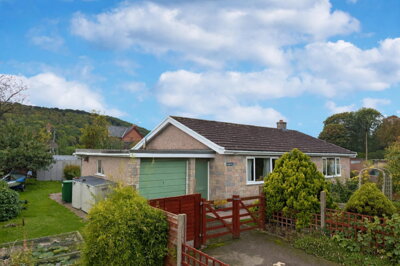
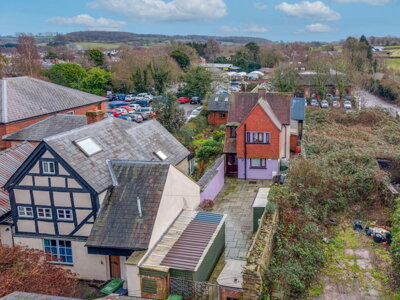
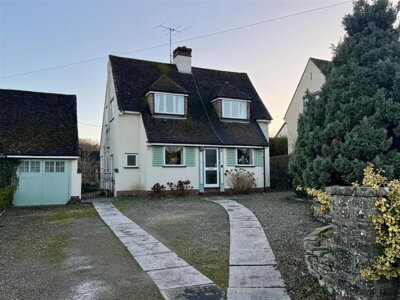
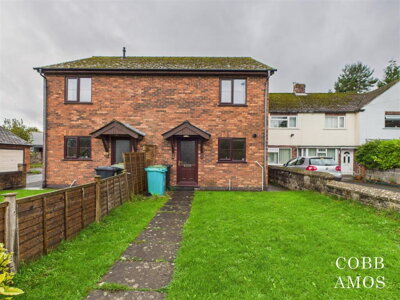
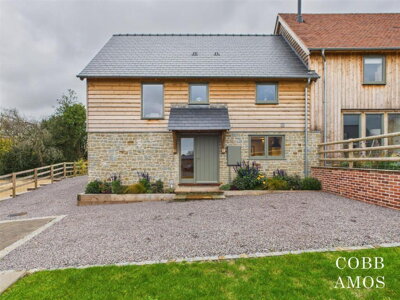
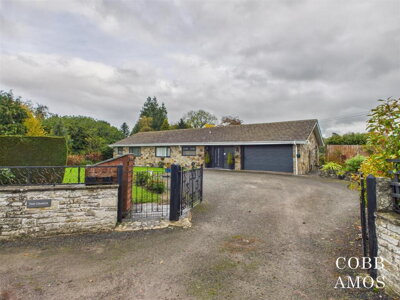
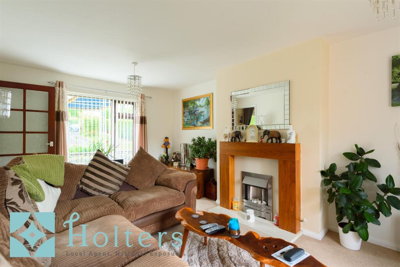
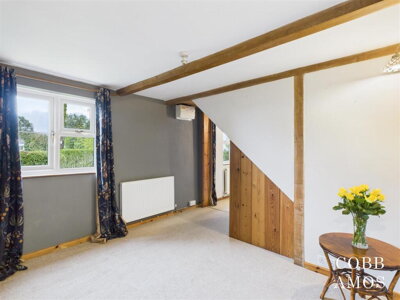
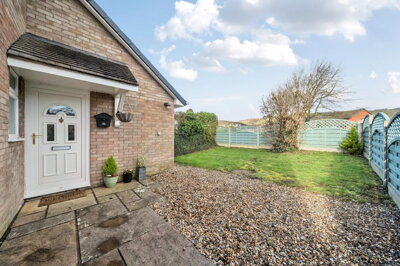
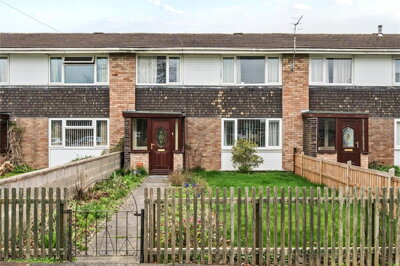
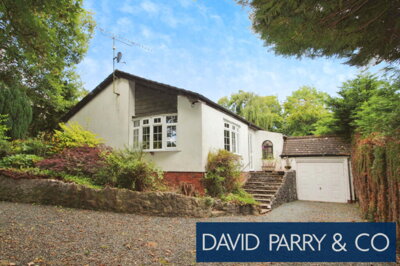
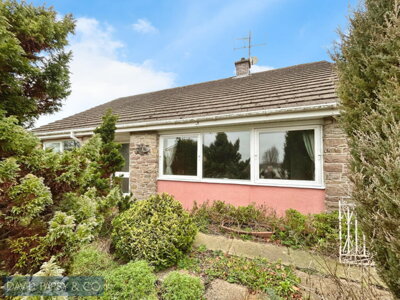
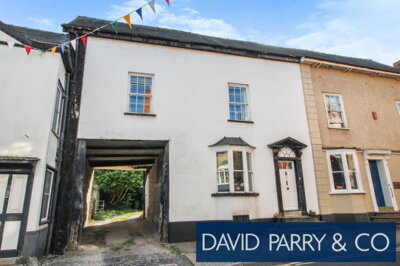
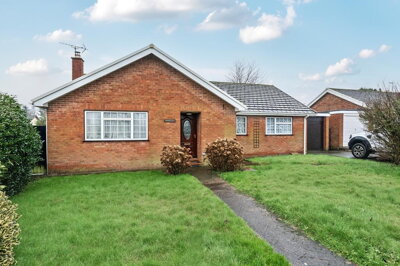
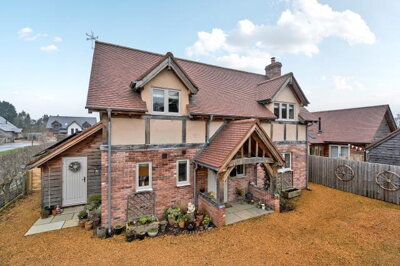
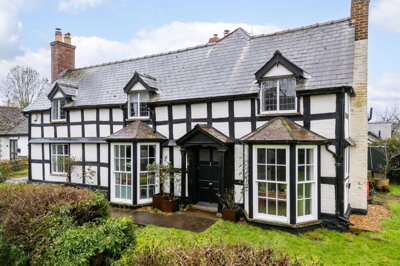
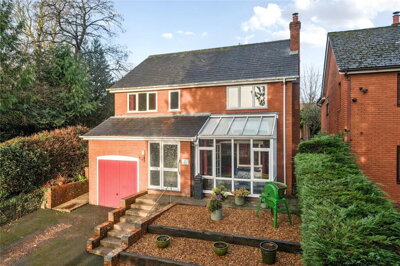
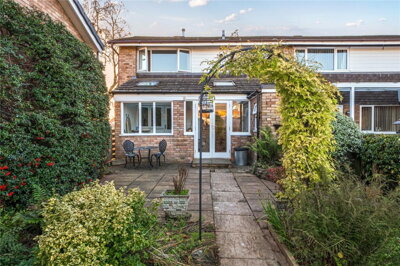
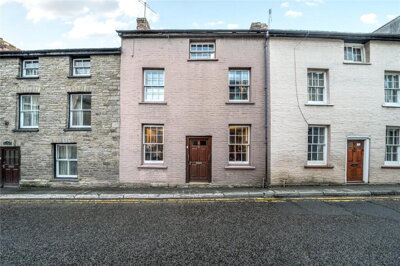
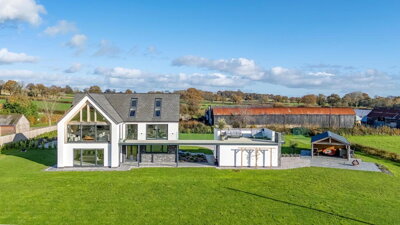
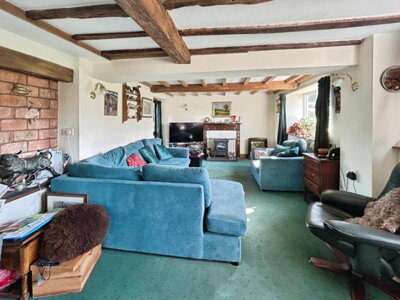
Browse 29 homes for sale in HR5 from local estate agents.
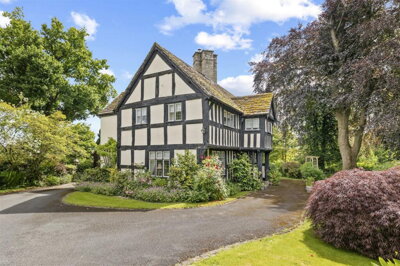
Three bedroom properties represent a significant portion of the HR5 housing market, offering space for families with multiple reception rooms and gardens in many cases. Browse detached, semi-detached, and terraced options ranging from period character homes to contemporary developments.
£223k
7
0
134
Source: home.co.uk
Showing 7 results for 3 Bedroom Houses for sale in HR5. The median asking price is £222,950.
Source: home.co.uk
Detached
3 listings
Avg £450,000
Semi-Detached
2 listings
Avg £195,000
Terraced
2 listings
Avg £216,475
Source: home.co.uk
Source: home.co.uk
The HR5 property market presents a diverse range of options for buyers across all property types and price points. Detached properties command the highest average prices at £375,000, reflecting the premium placed on space and privacy in this semi-rural location. Semi-detached homes offer more accessible pricing at around £220,000, making them popular choices for families seeking good value without compromising on the area's desirable postcode. Terraced properties in HR5 average £190,000, while flats remain the most affordable entry point at approximately £120,000, appealing to first-time buyers and investors alike.
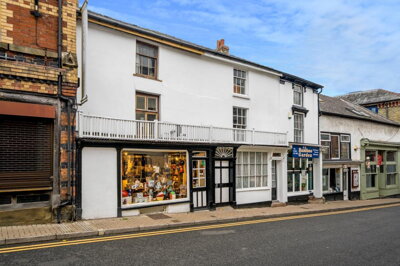
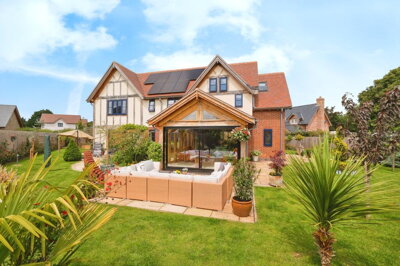
New build activity in HR5 continues to bring fresh options to the market. Kington Gardens, developed by Lioncourt Homes off Green Lane (HR5 3AL), offers 2, 3, and 4 bedroom homes priced from £229,950 to £425,000, providing modern living within easy reach of the town centre. The Laurels development by Freeman Homes on Eardisley Road (HR5 3EA) targets buyers seeking larger family homes, with 3, 4, and 5 bedroom options ranging from £295,000 to £550,000. Both developments represent attractive alternatives to older stock, offering contemporary construction standards, energy efficiency, and often the benefits of new build warranties.
The wider HR5 area includes numerous villages scattered across the rolling countryside, each offering their own character and property types. From stone cottages in traditional settlements to modern conversions of historic agricultural buildings, the variety ensures that different buyer requirements can be met. The Kington Conservation Area covers the historic town centre, indicating a concentration of buildings of architectural and historic interest. Properties in conservation areas and those with listed building status require specific consideration, as planning restrictions may apply to alterations and extensions. The market attracts buyers from diverse backgrounds, including those relocating from Birmingham and surrounding cities seeking more space, retirees drawn to the area's natural beauty, and local families establishing roots in the community.

Kington serves as the commercial and social heart of the HR5 area, a traditional market town with a weekly market dating back centuries. The town centre features an attractive mix of independent shops, traditional pubs, and essential services including a post office, pharmacy, and medical centre. The twice-weekly markets still draw visitors from the surrounding countryside, offering local produce, crafts, and a genuine sense of community that larger towns have often lost. The town's position near the Welsh border means influences from both English and Welsh cultures enrich local events and traditions.
The natural landscape defines daily life in HR5, with the area sitting within easy reach of the Black Mountains and the borderlands between England and Wales. Outdoor pursuits are well catered for, with walking routes including sections of the Mortimer Trail and Offa's Dyke Path nearby. The Hergest Ridge, immortalised in the music of Mike Oldfield, provides accessible walking with panoramic views. Golf, fishing, and equestrian activities are popular among residents, with several stables and riding schools serving the local community. The nearby towns of Leominster and Presteigne provide additional amenities for those seeking larger retail centres or entertainment venues.
The area encompasses approximately 6,500 residents across roughly 2,800 households, creating a close-knit community atmosphere where neighbours often know one another. The population includes a mix of families, working-age adults, and retirees, contributing to a balanced social fabric. The local economy centres on agriculture, with surrounding farmland producing Herefordshire beef, cider apples, and traditional hay and livestock. Tourism plays an increasingly important role, with visitors drawn to the area's walking routes, historic churches, and the proximity to Hay-on-Wye's famous book festival. Small businesses, professional services, and creative enterprises complete the economic picture, providing local employment without the need for lengthy commutes.

Education provision in HR5 serves families with children across primary and secondary levels, with several well-regarded schools within easy reach of the main residential areas. Primary education is available through several village schools serving the surrounding communities, with Kington Primary School providing education within the town itself. These smaller rural schools often benefit from close pupil-to-teacher ratios and strong community connections, though parents should research individual school performance and OFSTED ratings when considering specific properties. School transport arrangements connect outlying villages to primary provision in Kington.
Secondary education in the area centres on Lady Hawkins High School in Kington, which serves students from across the HR5 postcode and beyond. The school offers a range of GCSE and A-Level subjects, with sixth form provision for students continuing their education locally. Parents seeking alternative educational approaches may consider available options in nearby towns, with school transport or boarding arrangements potentially extending choices. The rural nature of the area means that school runs may involve longer distances than urban equivalents, a factor worth considering when evaluating property locations relative to school catchments.
Further and higher education options require travel to larger centres, with colleges in Hereford, Shrewsbury, and Worcester accessible by public transport or car. Parents with older children should factor these journeys into their planning, particularly for students pursuing vocational courses or apprenticeships that may require daily attendance. The area attracts families who appreciate the balance between rural schooling advantages and are prepared for the practical realities of transport arrangements. Early registration for school places is advisable given the rural nature of some catchments and the limited number of places available at popular schools.
Transport connectivity in HR5 reflects the area's rural character, with private vehicle ownership forming the backbone of daily travel for most residents. The A44 trunk road passes through Kington, providing direct connections to Leominster to the east and the market town of Rhayader in Wales to the west. This route serves as the primary artery for local travel and longer journeys, though drivers should anticipate winding sections and single-carriageway stretches typical of rural A-roads. The journey to Hereford takes approximately 45 minutes by car, while Birmingham is accessible in around 90 minutes via the A44 and M5 motorway network.
Public transport options are limited compared to urban areas, reflecting population density patterns across rural Herefordshire. Bus services connect Kington with surrounding villages and neighbouring market towns, though frequency varies significantly by route and weekday versus weekend services. Rail connections require travel to stations in Leominster or Hereford, with direct services to Birmingham, Manchester, and London available from the West Midlands. Many HR5 residents commute by car to larger employment centres, with flexible and hybrid working patterns increasingly enabling professionals to base themselves in the area while maintaining careers in regional cities.
For those considering HR5 as a base for commuting, realistic assessment of transport options is essential. The scenic beauty and quality of life advantages come with practical trade-offs in terms of journey times and transport costs. Cycling is popular for local trips, with the relatively flat terrain around Kington suitable for most fitness levels, though the hilly surrounding countryside presents challenges for longer recreational rides. Airport access is available via Birmingham Airport (approximately 75 minutes by car) and Bristol Airport (approximately 90 minutes), providing international connections for business and leisure travel.
Explore the area thoroughly, from Kington town centre to surrounding villages. Understand the difference between conservation area restrictions, listed building considerations, and standard properties. The average price of £316,500 provides a useful benchmark, but individual properties range widely based on type, condition, and location. Kington's position as England's highest market town and its proximity to Wales make it unique, so we recommend spending time experiencing the area at different times of day and week before committing.
Contact lenders or brokers to secure an Agreement in Principle before viewing properties. Given the rural nature of HR5, some properties may have unusual construction or access arrangements that require specialist mortgage products. Having your finance in place strengthens your position when making offers on desirable properties. Rural properties with land or non-standard construction may need specialist valuers, so factor this into your timeline.
View multiple properties across different price ranges and locations within HR5. Consider how each property's characteristics match your requirements, including commute times, school access, and proximity to amenities. New builds at Kington Gardens and The Laurels offer different advantages compared to characterful older properties. We always recommend viewing properties in different conditions, from renovation projects to modernised homes, to understand the full range of what's available.
Given that over 60-70% of HR5 properties are over 50 years old, professional surveys are particularly valuable. For a typical 3-bedroom semi-detached property, you should budget between £450 and £650 for a RICS Level 2 Survey. Our inspectors regularly identify issues common to the area, including potential damp in older stone properties, roof condition concerns, and any signs of subsidence related to local clay soils derived from the underlying Devonian Old Red Sandstone geology.
Appoint a solicitor with experience in rural Herefordshire properties to handle your purchase. They will conduct local searches, check for planning restrictions, and manage the legal transfer of ownership. Properties near the River Arrow may require specific flood risk enquiries, and conservation area properties need verification of any planning conditions. We can recommend solicitors familiar with HR5 transactions if needed.
Once surveys are satisfactory and searches returned, you can proceed to exchange contracts and set a completion date. The process typically takes 8-12 weeks from offer acceptance to completion for standard transactions in the HR5 area, though some rural properties with complex titles or planning histories may take longer. We recommend building flexibility into your moving plans.
Property buyers in HR5 should pay particular attention to construction materials and their implications for maintenance and renovation. Traditional stone and timber-framed properties, while full of character, may present challenges including older wiring, plumbing that does not meet current standards, and solid walls lacking modern insulation. Our inspectors frequently find that electrical systems in pre-1919 properties require complete rewiring to meet modern safety standards, while plumbing often uses galvanised steel or lead pipes that need replacement due to corrosion and potential water quality concerns. A thorough RICS Level 2 Survey is essential for any older property, identifying issues ranging from damp penetration to timber decay that may not be visible during viewings.
The local geology, featuring Devonian Old Red Sandstone with areas of Silurian rocks, means that some clay-rich soils are present, with potential shrink-swell risk affecting foundations in certain locations. This is particularly relevant for properties with large trees nearby or those with older foundations that may not be designed to accommodate ground movement. Our surveyors always check for signs of subsidence or heave, including cracking to walls, uneven floors, and doors or windows that stick or don't close properly. Properties with a history of subsidence may have had remedial works, and documentation of these should be verified.
Flood risk requires careful consideration given that the River Arrow flows through Kington and its tributaries drain the surrounding countryside. Properties near watercourses or in low-lying areas may face elevated flood risk, and this should be investigated through the Environment Agency flood maps before committing to a purchase. Insurance costs can be significantly higher for properties with flood history, and future flood events cannot be ruled out. Surface water flooding can also occur during heavy rainfall when drainage systems are overwhelmed, particularly in areas with poor natural drainage. We recommend obtaining insurance quotes before completing on any property where flood risk is a concern.
Conservation areas and listed buildings require special attention from prospective buyers. Kington's Conservation Area covers the historic town centre, protecting its architectural heritage. Properties within designated areas may face restrictions on alterations, extensions, and even external paint colours, requiring planning permission for changes that would be permitted on standard properties. Listed buildings carry additional obligations regarding maintenance of original features and materials. There are numerous listed buildings throughout HR5, including historic houses, churches, and agricultural buildings, each with varying levels of protection. While these designations protect the area's character and can enhance property values, they also require commitment to appropriate maintenance standards. We recommend requesting listed building consent records and speaking with Herefordshire Council's conservation officer before purchasing period properties in HR5.
The average house price in HR5 is currently £316,500 as of February 2026, based on Land Registry data aggregated across the postcode area. Property prices have increased by 5.0% over the past 12 months, reflecting growing demand for rural properties in this part of Herefordshire. Detached properties average £375,000, semi-detached homes around £220,000, terraced properties approximately £190,000, and flats roughly £120,000. These figures represent overall averages, with individual properties selling for significantly more or less depending on condition, location, and specific characteristics. With 40 property sales recorded in the past 12 months, the HR5 market remains active despite its rural location.
Properties in HR5 fall under Herefordshire Council's jurisdiction for council tax purposes. Bands range from A through H, with most traditional properties in the area typically assessed in bands B through E. The specific band depends on the property's assessed value, which was determined when first built or significantly altered. Prospective buyers can check current council tax bands through the Valuation Office Agency website using the property address. Herefordshire Council provides detailed information about current rates and any applicable discounts for single occupancy or qualifying disabilities. Council tax payments typically cover refuse collection, local policing, and maintenance of roads and public spaces within the Kington area.
Primary education in HR5 is served by Kington Primary School within the town and several village schools in surrounding communities. Lady Hawkins High School provides secondary education in Kington, offering GCSE and A-Level programmes with a sixth form. OFSTED reports should be consulted for current performance data, as inspection outcomes can change over time. Parents should verify school catchments against specific property addresses, as admission policies use geographic criteria that may affect placement offers. The rural nature of some school catchments means that school transport arrangements and journey times should be factored into property decisions, particularly for families with younger children.
Public transport connectivity in HR5 reflects the rural nature of the area, with bus services providing the main alternative to private vehicles. Routes connect Kington with surrounding villages and neighbouring towns, though service frequency is limited, particularly on evenings and weekends. The nearest railway stations are in Leominster and Hereford, offering connections to Birmingham, Manchester, and London. Most HR5 residents rely on cars for daily transport, with the A44 providing the primary road route connecting the area to the wider network. Those without access to private vehicles should carefully review bus timetables and consider journey times to essential services before committing to a purchase.
The HR5 property market has shown consistent growth, with prices increasing by 5.0% over the past year and the area maintaining strong appeal for buyers seeking rural lifestyles. Properties in conservation areas and those with character features tend to hold their value well, while new developments like Kington Gardens and The Laurels offer modern amenities attractive to a range of buyers. Rental demand exists from local workers, military personnel from nearby bases, and those awaiting longer-term purchases. However, property investment should consider the rural location, potential maintenance costs for older properties, and limited tenant pool compared to urban areas. Properties over 50 years old may require more frequent maintenance and updates, which should be factored into rental yield calculations.
Standard SDLT rates for 2024-25 apply to properties in HR5: 0% on the first £250,000, 5% on the portion from £250,001 to £925,000, 10% on the portion from £925,001 to £1.5 million, and 12% on any amount above £1.5 million. First-time buyers benefit from relief on the first £425,000, with 5% applying between £425,001 and £625,000. Given that the average HR5 property price of £316,500 falls within the first SDLT band, many purchases will incur no stamp duty at all. First-time buyers purchasing at the average price would typically pay no SDLT under current thresholds. Higher-value properties, particularly detached homes averaging £375,000, may incur SDLT on amounts exceeding £250,000.
Period properties in HR5, which make up a significant portion of the housing stock, require careful assessment before purchase. Our surveyors regularly encounter damp (rising, penetrating, and condensation-related) due to age and lack of modern damp-proof courses, particularly in solid-walled stone and brick properties. Roof problems with slate or tile coverings are common, including slipped tiles and decaying timbers. The local clay soils present potential subsidence or heave risk, especially for properties with inadequate foundations or those near large trees. Timber defects such as woodworm and rot affect structural elements in older buildings. Electrical and plumbing systems in pre-1919 properties often require complete rewiring and replumbing to meet modern standards. A comprehensive RICS Level 2 Survey is essential for any period property purchase in the area.
Flood risk varies across HR5, with properties adjacent to the River Arrow and its tributaries facing the highest fluvial flooding risk. Kington itself is situated near the river, meaning some properties in the town may be within flood risk zones. Surface water flooding can also occur in low-lying areas during periods of heavy rainfall. The Environment Agency publishes detailed flood maps showing specific risk levels for individual properties. Prospective buyers should review these maps, obtain insurance quotes before completing purchases, and consider flood resilience measures for properties in higher-risk zones. Properties with previous flooding events may have increased insurance premiums or difficulty obtaining cover, so we recommend thorough investigation before committing to a purchase.
From 4.5%
Compare rates from multiple lenders for your HR5 property purchase
From £499
Expert solicitors for HR5 property transactions
From £450
Professional property surveys by qualified inspectors
From £85
Energy performance certificates for HR5 properties
Understanding the full costs of purchasing property in HR5 helps buyers budget effectively and avoid surprises during the transaction process. Stamp Duty Land Tax represents the most significant government levy, though many HR5 purchases fall within bands that result in modest or zero SDLT liability. For a property at the HR5 average price of £316,500, a standard buyer would pay no SDLT, as the entire amount falls below the £250,000 threshold. First-time buyers benefit from even more favourable treatment, with no SDLT applying up to £425,000 under current relief provisions.
Beyond SDLT, buyers should budget for solicitor conveyancing fees typically ranging from £500 to £1,500 depending on complexity and property value. Local searches with Herefordshire Council and the Land Registry form part of the standard conveyancing process, with costs usually included in solicitor quotes. Survey costs should be allocated based on property type and age, with RICS Level 2 Surveys for 3-bedroom properties in HR5 ranging from £450 to £650, while larger detached properties may require £600 to £850. Given the prevalence of older properties in HR5, budgeting for survey-identified repairs is prudent.
Moving costs, mortgage arrangement fees, and removals complete the typical buying budget. Mortgage arrangement fees vary significantly between lenders, ranging from zero to around £2,000, and can sometimes be added to the loan amount. Buildings insurance must be in place from completion day, with premiums in flood-risk areas potentially higher than average. Land Registry fees for registering your ownership are modest, typically under £200. Overall, buyers should plan for additional costs equivalent to around 3-5% of the property price above the purchase price itself, though many costs are fixed or variable only by property value rather than percentage.
Properties for Sale In London

Properties for Sale In Plymouth

Properties for Sale In Liverpool

Properties for Sale In Glasgow

Properties for Sale In Sheffield

Properties for Sale In Edinburgh

Properties for Sale In Coventry

Properties for Sale In Bradford

Properties for Sale In Manchester

Properties for Sale In Birmingham

Properties for Sale In Bristol

Properties for Sale In Oxford

Properties for Sale In Leicester

Properties for Sale In Newcastle

Properties for Sale In Leeds

Properties for Sale In Southampton

Properties for Sale In Cardiff

Properties for Sale In Nottingham

Properties for Sale In Norwich

Properties for Sale In Brighton

Properties for Sale In Derby

Properties for Sale In Portsmouth

Properties for Sale In Northampton

Properties for Sale In Milton Keynes

Properties for Sale In Bournemouth

Properties for Sale In Bolton

Properties for Sale In Swansea

Properties for Sale In Swindon

Properties for Sale In Peterborough

Properties for Sale In Wolverhampton

Enter your details to see if this property is within your budget.
Loans, cards, car finance
Estimated property budget
Borrowing + deposit
You could borrow between
Typical borrowing
Monthly repayment
Est. at 4.5%
Loan-to-value
This is an estimate only. Your actual budget may vary depending on interest rates, credit history, and personal circumstances. For an accurate affordability assessment, speak to one of our free mortgage advisors.
This calculator provides estimates for illustrative purposes only and does not constitute financial advice. Your home may be repossessed if you do not keep up repayments on your mortgage. Estimates based on 4.5% interest rate, repayment mortgage. Actual rates depend on your circumstances.
Homemove is a trading name of HM Haus Group Ltd (Company No. 13873779, registered in England & Wales). Homemove Mortgages Ltd (Company No. 15947693) is an Appointed Representative of TMG Direct Limited, trading as TMG Mortgage Network, which is authorised and regulated by the Financial Conduct Authority (FRN 786245). Homemove Mortgages Ltd is entered on the FCA Register as an Appointed Representative (FRN 1022429). You can check registrations at NewRegister or by calling 0800 111 6768.

We use cookies to show you personalised content and improve your experience of our website. Find out more in our Privacy policy and Cookie policy.