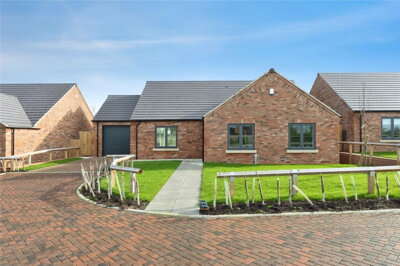
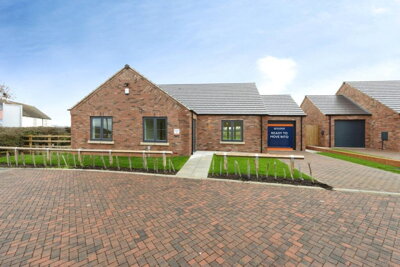
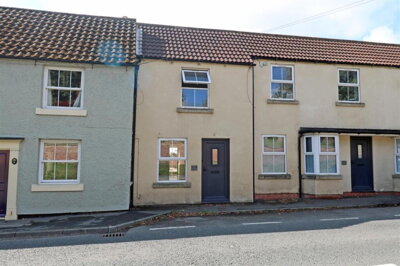
Browse 3 homes for sale in Hornby from local estate agents.
The 2 bed house market features detached, semi-detached, and terraced properties with two separate bedrooms plus living spaces. Properties in Hornby range from Victorian and Edwardian period homes to modern new builds, with pricing varying across different neighbourhoods.
The Hornby property market presents a compelling proposition for buyers seeking character-rich homes in a preserved Yorkshire village setting. Our listings encompass a range of property types reflecting the village's architectural heritage, from traditional stone cottages dating back to the 17th century to substantial detached family homes built predominantly in the second half of the 20th century. Recent transaction data from the DL6 2HE postcode area shows strong market activity, with prices rising by 3.5% over the past year, indicating sustained demand for properties in this sought-after location. The market has witnessed transactions ranging from £257,500 for smaller period properties to nearly £900,000 for prestigious detached homes with generous grounds.
Property prices in Hornby significantly exceed the North Yorkshire average of £272,000, reflecting the village's desirability and the quality of its housing stock. Detached properties command a premium in this area, with the North Yorkshire market showing a 1.9% increase in detached house prices during the year to December 2025. The broader Yorkshire and The Humber region experienced a 3.3% rise in average house prices over the same period, suggesting continued upward momentum in the local market. Hornby's Conservation Area status contributes to the preservation of property values by maintaining the architectural integrity that makes the village so attractive to buyers. Notably, there are currently no active new-build developments within Hornby itself, making existing character properties the primary option for buyers seeking to join this exclusive community.

Hornby offers an authentic Yorkshire village experience characterised by its timeless appeal and strong sense of community. The village grew historically as a minor commercial centre and livestock market, though it never developed a significant industrial base, which explains why it retains its unspoiled character to this day. This heritage is evident in the village's layout, with the medieval borough still discernible in the street pattern around Hornby Castle and its grounds. Residents enjoy a close-knit community atmosphere where neighbours know one another and local events bring people together throughout the year. The presence of the Grange Arms pub ensures that traditional village social life continues, providing a venue for meals, drinks, and community gatherings.
The natural environment surrounding Hornby forms a significant part of its appeal for residents and visitors alike. The River Wenning flows along the eastern side of the Hornby Castle estate, dividing the town and creating attractive riverside walks that are perfect for daily exercise or weekend strolls. The countryside beyond the village offers extensive opportunities for walking and cycling, with the Yorkshire Dales National Park accessible for longer adventures. The landscape is characterised by the locally quarried building stone that defines the vernacular architecture, with dry stone walls criss-crossing the fields and providing natural boundaries that have stood for centuries. North Yorkshire generally enjoys low unemployment and a preponderance of small to medium-sized businesses, providing stable local employment opportunities while maintaining the peaceful character that draws people to village life.

Families considering a move to Hornby will find educational provision available within reasonable travelling distance across the North Yorkshire region. The village's small population means that primary education is typically accessed through village schools in surrounding communities, with secondary education centred in nearby market towns. North Yorkshire maintains a network of primary and secondary schools serving rural communities, with many schools performing well in Ofsted inspections. Parents should research specific school catchments and admissions criteria when planning a move, as catchment areas can significantly impact school placement. The region's educational infrastructure reflects North Yorkshire's commitment to providing quality education despite its rural character.
For families seeking private education, several independent schools operate across North Yorkshire, offering alternatives to the state system. Secondary school options in the broader area include schools with strong academic records and good extracurricular programmes. Sixth form provision is available in nearby towns, with colleges offering a wide range of A-level subjects and vocational courses. Higher education institutions in Yorkshire, including the universities in Leeds, York, and Durham, are accessible for older students, with the train connections from nearby stations making university commutes feasible for those who wish to remain in the family home while studying. When purchasing property in Hornby, families should contact North Yorkshire County Council's education department to confirm current school placements and understand the admissions process for their specific circumstances.
Hornby's location in rural North Yorkshire means that access to major transport corridors requires some understanding of the local road network. The village sits within reasonable distance of the A1(M) motorway, providing connections to Newcastle upon Tyne to the north and Leeds to the south. For commuters working in regional centres, the journey times by car to larger towns need careful consideration, with Northallerton, the county town, providing a hub for services and amenities. The rural road network connecting Hornby to surrounding villages and towns is generally well-maintained, though some country lanes may require cautious driving during adverse weather conditions. Road distances to key destinations typically include approximately 10-15 miles to Northallerton and around 30 miles to the edge of the Leeds metropolitan area.
Public transport options in rural North Yorkshire revolve around bus services connecting villages to market towns, though frequencies may be limited compared to urban areas. Rail services are accessible from stations in nearby towns, offering connections to the east coast main line and onward travel to major cities. For those who commute to Leeds, York, or other Yorkshire cities, understanding the practicalities of combining car and rail travel is important for daily planning. Cycling can be a viable option for shorter local journeys, though the hilly terrain common in North Yorkshire requires reasonable fitness. Many residents of villages like Hornby choose to maintain dual transport options, using a car for some journeys while benefiting from rail connections for longer trips. Prospective buyers should assess their specific commuting requirements against the transport options available before committing to a purchase.
Begin by exploring available properties in Hornby through Homemove's comprehensive listings. Understanding local price ranges, from entry-level cottages around £250,000 to premium detached homes approaching £900,000, will help you establish your budget. Consider engaging with local estate agents who have specialist knowledge of the village and its unique property characteristics.
Schedule viewings of properties that match your criteria, paying particular attention to the condition of older stone buildings given their 17th to 19th century origins. Many properties in Hornby will be listed or within the Conservation Area, requiring careful assessment of their condition and any maintenance considerations.
Before making any offer, secure a mortgage agreement in principle from a lender. This demonstrates your seriousness as a buyer and strengthens your position when negotiating in what can be a competitive market for quality village properties.
Given Hornby's historic housing stock and Conservation Area status, we strongly recommend commissioning a RICS Level 2 or Level 3 survey before purchase. Older stone properties may have issues including damp, outdated electrics, or roof condition concerns that require professional assessment.
Choose a solicitor with experience in rural North Yorkshire property transactions, particularly those involving listed buildings or Conservation Area properties. They will handle legal searches, coordinate with your mortgage lender, and manage the conveyancing process through to completion.
Once all searches are satisfactory and financing is confirmed, you will exchange contracts and pay your deposit. Completion typically follows within days or weeks, depending on your agreed timeline, after which you will receive the keys to your new Hornby home.
Purchasing property in Hornby requires awareness of several area-specific considerations that differ from standard residential transactions. The village's extensive Conservation Area designation, established in 1973, means that planning permissions for alterations, extensions, or even some forms of renovation require consent from the local planning authority. Any demolition of structures within the Conservation Area also requires specific approval, protecting the village's historic character but potentially limiting your options for property modifications. Listed buildings within Hornby, of which there are 27 including Hornby Castle and St Margaret's Church, are subject to additional stringent controls that affect what owners can and cannot do to their properties. Before purchasing, verify whether the property is listed and understand the implications for future plans.
The geological characteristics of North Yorkshire introduce potential considerations for property buyers that warrant investigation. The region contains areas affected by peat compression and gypsum dissolution, which can lead to ground instability and subsidence issues. While specific risk levels for Hornby itself require professional assessment, the presence of the River Wenning indicates potential for fluvial flood risk in its vicinity. Properties with stone boundary walls, common throughout Hornby, may require ongoing maintenance as historic structures age. Building materials throughout the village predominantly feature locally quarried stone, which is beautiful but can require specialist repair techniques and costs differ from standard brick construction. A thorough survey by a qualified professional familiar with historic Yorkshire properties will identify any existing or potential issues before you commit to purchase.
The construction methods used in Hornby's historic buildings present both charm and challenges for prospective buyers. Properties dating from the late 17th to early 19th centuries typically feature solid wall construction rather than the cavity walls found in modern properties, meaning different approaches to insulation and moisture management apply. Many buildings were constructed using "brick and a half" thick masonry, described as solid construction, which contributes to their thermal mass but may require specialist damp assessment. The locally quarried limestone used throughout the village is beautiful but absorbs moisture differently than brick, and the occasional use of stone slates for roofing requires different maintenance knowledge than standard tile roofs. When viewing properties, look for signs of penetrating damp in solid wall constructions, condition of stone lintels above windows and doors, and the state of historic leadwork which often requires replacement on older buildings.
Given that the majority of Hornby's housing stock dates from the 17th to early 19th centuries, prospective buyers should familiarise themselves with the typical defects found in historic Yorkshire stone properties. Rising damp is one of the most common issues encountered in buildings of this age, as original damp-proof courses were either non-existent or have subsequently failed over time. Our inspectors frequently identify penetrating damp caused by the porosity of natural stone, particularly where mortar pointing has deteriorated or where stone slates have slipped on roof slopes. Stone boundary walls throughout the village, many featuring datestones and fine cut limestone work, often show signs of weathering and structural movement that requires ongoing maintenance attention.
Electrical systems in historic properties frequently require complete rewiring, as original installations rarely meet modern standards and may predate current safety regulations. Our team has encountered numerous properties where the electrical installation remains essentially unchanged since the mid-20th century, presenting both safety concerns and insurance implications. Plumbing systems in older Hornby homes similarly often comprise galvanised steel or even lead pipes, which deteriorate over decades and may be concealed beneath floors or within thick stone walls where access for replacement proves challenging. Timber decay, including both wet rot and woodworm activity, affects numerous elements in historic buildings, from structural floor beams to window frames and door joinery. The solid wall construction of most Hornby properties also means that modern insulation solutions must be carefully specified to avoid trapping moisture within the fabric of the building.
Average property values in the DL6 2HE postcode area serving Hornby stand at approximately £887,154, with individual properties selling for between £257,500 and £897,500 depending on size, condition, and location. This range reflects the variety of housing available, from smaller period cottages to substantial detached family homes. The Hornby market has shown resilience with prices rising by 3.5% over the past year, outpacing the broader North Yorkshire average of £272,000. Detached properties command the highest prices and have shown consistent value growth, with North Yorkshire seeing a 1.9% increase in detached house prices during 2025. Recent sales in the DL6 postcode area include a £897,500 detached property in May 2023, demonstrating the premium achievable for quality homes in this sought-after village location.
Properties in Hornby fall under the jurisdiction of North Yorkshire County Council for council tax purposes. Specific banding depends on the property's assessed value, with historic stone cottages and smaller homes typically in lower bands, while larger detached properties may be placed in higher categories. North Yorkshire County Council sets the annual council tax charges based on the band assigned by the Valuation Office Agency. Prospective buyers should obtain the specific council tax band for any property they are considering, as this forms part of the ongoing cost of homeownership. Contacting North Yorkshire County Council directly or checking their online portal provides current banding information and allows comparison with neighbouring properties of similar size and character.
Primary and secondary education in the Hornby area is provided through North Yorkshire's network of rural schools, with specific placement depending on your home address and school capacity. Parents should research individual school performance through Ofsted reports and consider visiting schools as part of their property search process. Catchment areas can be competitive for popular schools, making early inquiry essential. Secondary options in nearby market towns offer broader curriculum choices, and several schools in the region have strong academic records. Independent schooling options exist across North Yorkshire for families seeking alternatives to the state system, with several established institutions serving the wider area.
Hornby's rural location means that public transport options are more limited than in urban areas, centering primarily on bus services connecting to nearby market towns. These services typically operate at frequencies suited to occasional travel rather than daily commuting. Rail connections are available from stations in surrounding towns, providing access to the east coast main line and connections to major cities including Leeds, York, and Newcastle. For daily commuting needs, most residents rely on private vehicle ownership, with the A1(M) motorway accessible for travel to larger employment centres. Prospective buyers should assess their specific commuting requirements against these practical limitations before committing to a purchase.
Hornby presents an interesting proposition for property investment, combining strong heritage appeal with limited supply of homes for sale. The village's Conservation Area status and 27 listed buildings ensure that property values are supported by restricted development and maintained character. Price growth of 3.5% annually indicates healthy demand, while the absence of new-build developments means existing properties face less competition from new housing. Rental demand in rural North Yorkshire tends to be steady, though tenant pool size may be smaller than urban markets. Properties requiring renovation may offer value-add opportunities, though buyers should factor in the costs and planning considerations associated with older buildings and Conservation Area restrictions. The low unemployment in North Yorkshire and preponderance of small businesses provides a stable economic base supporting long-term property values.
Stamp Duty Land Tax (SDLT) rates from April 2025 apply as follows: 0% on the first £250,000 of property value, 5% on the portion from £250,001 to £925,000, 10% on the portion from £925,001 to £1,500,000, and 12% on any value exceeding £1,500,000. For first-time buyers, relief increases the nil-rate threshold to £425,000, with 5% applied between £425,001 and £625,000, though no relief applies above £625,000. Most properties in Hornby, which range from approximately £257,500 to £897,500, will fall within the standard SDLT bands. Given the higher property values in this area, understanding your precise SDLT liability is essential for budgeting your purchase costs accurately. For a typical Hornby property at the area average of £887,154, standard SDLT would amount to £33,858.
The River Wenning flows through Hornby, dividing the town and creating potential for fluvial flooding in its immediate vicinity. Properties located near the river or in low-lying areas adjacent to watercourses carry higher flood risk than those on elevated ground. North Yorkshire has experienced flooding issues in various locations due to the regional geology, including peat compression and groundwater conditions that can exacerbate flood impacts. Our inspectors always recommend requesting a flooding search as part of your conveyancing process and considering the flood risk category when assessing property condition and insurance requirements. Properties at higher flood risk may face elevated insurance premiums or availability challenges. Surface water flooding also presents a consideration during periods of heavy rainfall, particularly in low-lying areas adjacent to the river corridor.
Given Hornby's predominantly historic housing stock dating from the 17th to 19th centuries, a professional survey is essential before purchase. Solid wall construction, locally quarried limestone building materials, and the prevalence of listed buildings and Conservation Area restrictions all require specialist assessment by qualified surveyors. Common defects in Hornby properties include rising and penetrating damp in stone walls, deteriorated stone slate roofing, outdated electrical and plumbing systems, timber decay in structural elements, and the condition of historic boundary walls. A RICS Level 2 or Level 3 survey will identify these issues before you commit to purchase, allowing you to negotiate price adjustments or require remedial works as conditions of sale. Our team includes surveyors experienced in historic Yorkshire properties who understand the specific construction methods and common defect patterns found throughout the Hornby Conservation Area.
Understanding the full costs of purchasing property in Hornby extends beyond the property price itself to include SDLT, legal fees, survey costs, and ongoing expenses. For a typical family home in Hornby priced around the area average of £887,154, SDLT at standard rates would amount to £33,858 (5% on £887,154, as the entire value falls in the £250,001 to £925,000 band). First-time buyers purchasing qualifying properties up to £625,000 would pay reduced SDLT, though relief phases out for properties above that threshold. These calculations demonstrate why factoring SDLT into your overall budget is essential, as it represents a significant addition to the purchase price that must be paid upon completion.
Professional fees form another important category of purchase costs, with conveyancing typically ranging from £500 to £2,000 depending on complexity and property value. Given Hornby's Conservation Area status and the prevalence of older properties, searches and investigations may be more extensive than for modern properties, potentially adding to costs. Survey costs vary significantly based on property type and survey level chosen, with RICS Level 2 surveys starting from around £350 for modest properties while comprehensive RICS Level 3 surveys for larger or historic homes may cost £500 or more. Additional costs to budget include mortgage arrangement fees, valuation fees, land registry fees, and removals expenses. Building insurance must be in place from completion, and homeowners should be aware that older properties in North Yorkshire may face higher insurance premiums due to flood risk and subsidence considerations in the wider region.
Properties for Sale In London

Properties for Sale In Plymouth

Properties for Sale In Liverpool

Properties for Sale In Glasgow

Properties for Sale In Sheffield

Properties for Sale In Edinburgh

Properties for Sale In Coventry

Properties for Sale In Bradford

Properties for Sale In Manchester

Properties for Sale In Birmingham

Properties for Sale In Bristol

Properties for Sale In Oxford

Properties for Sale In Leicester

Properties for Sale In Newcastle

Properties for Sale In Leeds

Properties for Sale In Southampton

Properties for Sale In Cardiff

Properties for Sale In Nottingham

Properties for Sale In Norwich

Properties for Sale In Brighton

Properties for Sale In Derby

Properties for Sale In Portsmouth

Properties for Sale In Northampton

Properties for Sale In Milton Keynes

Properties for Sale In Bournemouth

Properties for Sale In Bolton

Properties for Sale In Swansea

Properties for Sale In Swindon

Properties for Sale In Peterborough

Properties for Sale In Wolverhampton

Enter your details to see if this property is within your budget.
Loans, cards, car finance
Estimated property budget
Borrowing + deposit
You could borrow between
Typical borrowing
Monthly repayment
Est. at 4.5%
Loan-to-value
This is an estimate only. Your actual budget may vary depending on interest rates, credit history, and personal circumstances. For an accurate affordability assessment, speak to one of our free mortgage advisors.
This calculator provides estimates for illustrative purposes only and does not constitute financial advice. Your home may be repossessed if you do not keep up repayments on your mortgage. Estimates based on 4.5% interest rate, repayment mortgage. Actual rates depend on your circumstances.
Homemove is a trading name of HM Haus Group Ltd (Company No. 13873779, registered in England & Wales). Homemove Mortgages Ltd (Company No. 15947693) is an Appointed Representative of TMG Direct Limited, trading as TMG Mortgage Network, which is authorised and regulated by the Financial Conduct Authority (FRN 786245). Homemove Mortgages Ltd is entered on the FCA Register as an Appointed Representative (FRN 1022429). You can check registrations at NewRegister or by calling 0800 111 6768.

We use cookies to show you personalised content and improve your experience of our website. Find out more in our Privacy policy and Cookie policy.